Pages Menu
RssFacebook
Categories Menu

Posted by on Dec 2, 2009

“Ready or Not, Here I Come!”

“Ready or Not, Here I Come!”


Advent Wreath

Advent Wreath

This past Sunday was the First Sunday of Advent – our New Year’s Day in the Church. I was visiting the parish in which I was raised, St. Patrick’s Parish in Spokane, WA. The homilist, Fr. Kenneth St. Hilaire, spoke of his experience on Thanksgiving Day with his family. His nieces organized a game of Hide and Go Seek. It’s a game we played many times in my family as children, and so had he.

In this game, one person is chosen to be “It” and everyone else runs and hides. The person who is “It” counts to 30, shouts, “Ready or not, here I come” and then tries to find the other ones who are hiding. When a person is found, he or she becomes the next “It” and the game continues. Sometimes the game goes on until all are found. Other times those found become “prisoners” of the one doing the seeking. In some versions, if a person who has not yet been found gets back to the base of the one who is “It”, all get to hide again and that original person continues to be “It”.

Fr. Kenny suggested that the spiritual life can be like this childhood game. Sometimes we even try to hide from the Lord – to pretend that maybe we won’t be found. But whatever we do, at some point in our lives, the Lord is going to say to us, “Ready or not, here I come.” Advent is a time to remember that and begin again to prepare our hearts and minds to meet the Lord – because He is coming, and when the time comes, we can’t say, “Just a minute, I’m not ready yet!”

So, whether the coming is our individual meeting with the Lord at the moment of our death, or the one at the end of time, Advent is a time to remember that the Kingdom is coming, the Lord is returning and the world as we know it will pass away.

Advent is a good time to make time for prayer, whether 2 minutes stolen from a busy day at work or 15 minutes of “walking prayer” or a Rosary offered at home or in church. Time spent remembering our Lord and King, speaking from our hearts to Him, then listening to His response will bring us closer to the Kingdom.

Another good thing to do in Advent is to look closely at our lives and see what is excess. What can be cut out to make room for something better? What can be shared with someone who is in need? It needn’t be something huge. But it’s pretty likely that most of us have something we can share or something that we don’t really need to be doing. Making space in our lives for the Lord’s coming brings a richness that material things cannot ever fill.

Finally, Fr. Kenny suggested that we look to Jesus’ mother, Mary, as a model and a helper in this great journey of Advent. She waited for his birth for 9 months. She prepared for the coming of her child. She raised him, loved him, cared for him and then stood by him as he entered into his adult ministry. At the cross, she stood and waited as he died. According to tradition, she was part of the community that welcomed him after the Resurrection and received the Holy Spirit at Pentecost. As our “big sister” in faith, she can help us to get ready for the Lord’s coming.

So, this Advent season, I invite you to join me in this “game” of preparing for the Lord’s coming. When we hear, “Ready or not, here I come”, may we all be ready to be found by our great Lord and King.

Read More

Posted by on Dec 1, 2009

“Ready or Not, Here I Come!”

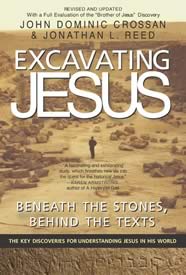
Excavating Jesus: The Real Christ?

excavatingjesus

John Dominic Crossan, the co-founder of the Jesus Seminar, is well known for his iconoclastic views on the historical Jesus. Excavating Jesus, written with archaeologist Jonathan Reed, is stimulating and challenging. Crossan’s argument that Jesus was a Galilean peasant who engendered a Kingdom movement after the murder of John the Baptist is compelling to me as an anthropologist, but it doesn’t seem to be the whole story.

The blending of archaeology and exegesis is intriguing. The use of ancient historical sources, such as Josephus and Pliny, and literature not included in the Bible, such as the Dead Sea Scrolls and the Gnostic Gospels, weaves a colorful and variegated tapestry. Is this the actual Jesus of history?

I’m not entirely convinced. To me it seems implausible that such a movement could arise from so unremarkable a prophet. The number of Jews killed by Rome for posing as popular leaders is very large. Why would one be singled out for such an inflation into the Word made flesh? If the Gospel stories are to be taken as parables or mythic metaphors about a deeper meaning, who created this literature and for what reason? If Christianity were created in this way, it would be a social and cultural process without parallel. Zoroaster (the Persian priest who founded Zoroastrianism), Sidartha Gauthama, (the founder of Bhuddism), and the Prophet Mohammed (the founder of Islam), are remarkable historical figures – but none of them according to their followers claimed to be God.

If somehow the peasant founder or spokesman for a resistance or “terrorist” movement is magnified by his followers, why would devout Jews be so blasphemous as to make him into the messiah and a god? Somewhere there is a missing link between this peasant of history and the Christ of history.

It is very curious how Crossan holds the Gospel accounts up to the measure of Josephus’s history. Crossan then compares the claims of other contemporary religions as part of a general magical mentality. Somehow, Josephus could write from an historical perspective of relating true events but the Gospel accounts of the life of Jesus are to be seen as parable and allegory? That isn’t to say that various oral and written sources weren’t involved in the development of the Gospel accounts. In fact Crossan goes to some effort to stress that the early Christian community took them to be true and those involved in their composition believed in their veracity.

All in all, there is still a core of speculation in this fascinating book. It is an attempt to put many puzzle pieces together. It seems, though, that the Jesus he finds would not be capable of inspiring a Jesus movement that would grow into Christianity. In many respects, Crossan’s Jesus of history could inspire a movement, but it does not seem plausible that it would endure, let alone become a world religion.

Read More

Posted by on Nov 1, 2009

“Ready or Not, Here I Come!”

Saints and Stained Glass Windows – The Feast of All Saints

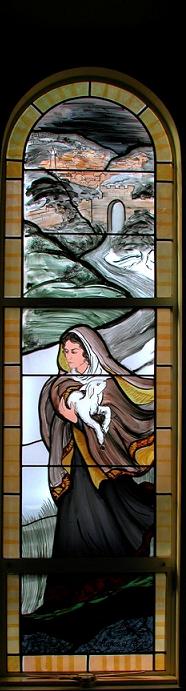
St. Agnes of Assisi - St. Joseph's Monastery of Poor Clares in Aptos, CA

St. Agnes of Assisi - St. Joseph's Monastery of Poor Clares in Aptos, CA

In his homily today at Mass, Fr. Ken Lavarone, OFM, included the story of a third grade girl’s response to the question, “What is a saint?” The little girl answered that saints are the people in the stained glass windows on the walls of the church. The light shines through all of them, spreading bright colors over all of us.  

Fr. Ken used this example to remind us that the light of God shines through the lives of the saints, all of them/all of us, both those living  in the here and now and those living with God in eternal life. That light brings color and joy, hope and beauty into our lives, through the good times and the hard times.

May the light and love of God shine into your life today and always and may you be, in turn, a window through which God’s light and love shine for others.

Read More

Posted by on Oct 15, 2009

“Ready or Not, Here I Come!”

“Let Nothing Disturb You” – St. Teresa of Avila

Teresa of Avila's Vision of the Dove - Peter Paul Rubens

Teresa of Avila's Vision of the Dove - Peter Paul Rubens

On this feast of St. Teresa of Avila, when all is so uncertain in our world and so many worries seem to plague us all, I offer her reminder of what really matters. This quote is sometimes called her “Bookmark” because after her death in 1582 it was found written on a piece of paper in her prayer book.

Let nothing disturb you,
Let nothing frighten you,
All things are passing away,
God does not change.
Patience obtains all things
Whoever has God lacks nothing;
God alone is enough.

In the original Spanish:

Nada te turbe,
Nada te espante;
Todo se pasa.
Dios no se muda.
La paciencia todo lo alcanza.
Quien a Dios tiene nada le falta:
sólo Dios basta.

Read More

Posted by on Aug 18, 2009

“Ready or Not, Here I Come!”

Aurelius Augustinus – You Done Us Wrong?

Redwoods

While camping recently with my wife and daughter in the redwoods near Santa Cruz, I spent some time with an enlightening and very readable book.

Christopher Hall in Learning Theology With the Church Fathers does a good job of summarizing St. Augustine’s notion of the fallen nature of humanity. St. Augustine is convinced that something went terribly wrong when Adam ate the forbidden fruit so that we are not capable of really loving and knowing the good until we are redeemed in Baptism. Of course this led not only to the notion of infant baptism but also to the notion that unbaptized infants would suffer the wrath of God in eternal punishment. It is logically consistent but it seems to be extreme and never became as much of a prominent idea in the Orthodox East as it did in the Catholic and Protestant West.

This doesn’t square with the Black civil rights assertion of human dignity: “God don’t make no trash!” In fact, it seems at odds with the fundamental goodness of creation which St. Augustine upheld in the face the Gnostic conception that creation was a mistake by a lesser god and matter is evil.

Today we might explain these things as laziness, psychological conflicts, compulsions, addictions, or unhealthy repression.

In St. Augustine’s defense, we should remember that he is also considered one of the founders of psychology. His concepts of memory, will, and understanding as the core of individual identity still hold up in the face of contemporary neuroscience. It seems that the key problem he wrestled with from his own experience and that of people he observed was our ability to know what is good and not to be drawn to it in a way that compels our will. In other words, we know the right thing to do and we do the opposite.

For Augustine, the arena of sexual behavior was particularly problematic. Unfortunately, for example, he didn’t have our understanding of human sexual anatomy and physiology and he felt that what we would call involuntary responses were a sign of lack of control and the conquest of the will. His promiscuous sexual behavior prior to his conversion appears to us post-moderns as bordering on addiction. Today, in contrast, we might view orgasm as something healthy and transformative. In fact, we have made it something holy at the core of the sacrament of matrimony. However, the momentary obliteration of memory, understanding, and will made it highly suspect for an upper class Roman like St. Augustine living during the decline and fall of the empire.

Relaxing in the redwoods enjoying creation seems an awful lot like a certain lost garden. Does God really need to be appeased or does he just continue to reach out to us in love – the beautiful love of creation? Are we only saved in Christ if we are baptized? Is salvation questionable outside the community of the baptized faithful? The traditional and orthodox answers are yes. Is everything else outside the assembly’s official teaching false? The official answer is yes.

What about the Spirit hovering over the abyss? About the eruption of God in space-time? Is our teaching about faith or about certainty? The church fathers sought revelation in the written books and the book of nature. Does not all creation shout the glory of God? Did not Jesus put all things right? Would a God of love do it for just a few?

Would a father or mother provide for only some of their children and leave the rest in eternal darkness? “Evil as you are would any of you give your son a scorpion when he asked for bread…” Would a father or mother require death by hideous torture of a beloved son?

In terms of making some sense of the death of Jesus in a culture in which thousands of animals were sacrificed each day as part of official worship, the notion of Christ as the final and only suitable victim is comprehensible. His final and complete sacrifice also explain the loss of the Temple and the genocide of a people lost in hopeless insurrection. How else could the death of God’s son make any sense? Yet once we begin this paternal projection and anthropomorphism of the One God, our words and images fall on hard ground.

Per usual, I have begun at the end, since Learning Theology With the Church Fathers actually begins with wonderful treatments of what we used to call De Deo Uno (the one God) and De Deo Trino (the triune God). Hall takes the wise course of not trying to explain the indescribable but begins by the efforts of the early Hellenistic church trying somehow to grasp the reality behind the hymns of praise to the Father, Son, and Holy Spirit as the one God and to Jesus as the Eternal Word.

How can this be? Yes, that is the question, whether one is caught up in the majesty of the redwoods or the radiant light from light, begotten not made causing them to break forth into the Song beyond all hearing that is Music, Word, and Divine Rhythm.

St. Augustine’s famous Chapter 10 of The Confessions says it much better than I could.

Late have I loved you,
O Beauty ever ancient, ever new,
late have I loved you!

You were within me, but I was outside,
and it was there that I searched for you.
In my unloveliness I plunged into the lovely things which you created.

You were with me, but I was not with you.
Created things kept me from you;
yet if they had not been in you they would not have been at all.

You called, you shouted, and you broke through my deafness.
You flashed, you shone, and you dispelled my blindness.
You breathed your fragrance on me;
I drew in breath and now I pant for you.

I have tasted you, now I hunger and thirst for more.
You touched me, and I burned for your peace.

Read More

Posted by on Jul 30, 2009

“Ready or Not, Here I Come!”

Having a Martha-like day on the Feast of St. Martha – July 29

Martha, Mary and Jesus

Martha, Mary and Jesus

I’ve spent the feast of St. Martha doing a lot of very Martha-like things. You’ll remember the story of the day Jesus came to visit Martha, her sister Mary, and their brother Lazarus. Jesus always traveled with something of an entourage in those days. There were the apostles, of course. But there were also many others who followed along the way or came out to see Him as He passed through their towns. When He came to visit, it was a big deal.

The role of women in Martha’s day was not unlike that of today in some ways. Women were responsible for making sure there was food and drink prepared for the guests. Martha took her role seriously and set out to make sure all the guests were treated well and had what they needed. I can understand her actions. I’ve often found myself doing the same thing – whether in my own home or in another’s. I’m an oldest child and a daughter. I learned very early in life to look out for the needs of others, whether younger siblings or visitors to our home. Yet much to Martha’s dismany (and sometimes to my own in a similar situation), her sister Mary wasn’t helping. Mary was sitting with the guests, listening to Jesus.

Martha complained to Jesus about Mary’s actions and Jesus’ reply must have astounded her and any others who heard it. “Marth, Martha. You are anxious and worried about many things. There is need of only one thing.  Mary has chosen the better part and it will not be taken from her.” (Lk 10: 38-42)

Throughout history, we’ve read this passage and debates have raged interiorly and publicly about the relative choices and positions of the two women and women in general. That’s not the theme of this post. Something else struck me this week. There’s another side to Martha.

We often get stuck on the image of Martha as anxious and concerned about many things. Yet another side of Martha appears in the story of the raising of Lazarus. In that story, Jesus arrives in Bethany after His friend has died and been in the tomb for three days. Lazarus is well and truly officially dead. Martha goes out to meet Jesus on the road. She chides Him for not arriving in time to save Lazarus from death. She also tells Him of her belief that God will do whatever He asks. She professes her belief in life after death and then makes a great statement of faith. “I believe that you are the Christ, the Son of God, he who is coming into the world.” (Jn 11:27) She makes this statement before Jesus raises Lazarus from death. Before His own death and resurrection. Martha – the woman worried about many things – is also a woman of great faith.

So, as I spent my day caring for a baby grandson, cooking, doing laundry, and squeezing in the bookkeeping for my household and business, I tried also to remember to be open to the Lord’s coming in all things. And at 11 pm, while the baby played happily after a too long nap, I penned these words!

Read More

Posted by on Jul 25, 2009

Theologika’s Birthday

Today, July 25, is the second  anniversary of Theologika’s blog. Two years ago we began this great adventure of researching and writing on topics we hope are of interest to our readers around the world. It’s been fun to learn about the lives of saints – both new to us and old friends from childhood. We’ve written about books we’ve been reading and mused about their philosophical and theological underpinnings.  We’ve shared some of our own thoughts about controversies of our times, both as Americans and as Catholics. We’ve brought our training as anthropologists to bear in considering some of the challenges we all face as citizens of the world.

In this coming year we plan to share with you some of the resources we’ve found – some organizations that exist to help make the world a better place, many, if not most, started by the response of ordinary people to the challenges they see in the communities around them. People of faith who belief in the depths of their being that injustices must be righted, that we must stand with the oppressed and help as best we can to end the oppression, that sometimes all we can do is be with those who suffer and share their lot. Christians have a long history of doing just that. Yes, we’ve made mistakes. Yes, sometimes we’ve gotten lost and acted more as oppressors. But through it all there have been people who listened to God’s call to serve. Many of them we recognize as saints today. Their witness lives on in the institutions that grew from their vision. And a new generation follows their example and reaches out to meet the challenges of today.

I hope you continue to check in with us in the coming year. There’ll be some interesting groups and individuals, as well as some very worthy causes, to broaden your horizons. And there are still lots of saints, books, controversies and everyday musings on the wonders our God has done and continues to do in our lives that will merit comment in our blog.

Thanks for visiting and reading our blog. See you again soon!

Read More

Posted by on Jun 23, 2009

“Ready or Not, Here I Come!”

Searching for Answers

Simple Gifts

 I have been blessed in many ways. One of the blessings I particularly cherish is that my many nieces , nephews, and younger cousins have welcomed me as a “friend” on Facebook. I’m from a large family and married into a large family, both with overlapping generations, so there are many teens and young adults, some with very young children, as well as my siblings and their spouses and even my parents, who communicate regularly through Facebook.

Periodically, there’ll be an entry such as “X is trying to figure it out” or “Y is looking for the answer” or “Z doesn’t know what to do.” (Substitute a person’s name for the X, Y or Z.) My heart always goes out to that person who is struggling with these great questions that have arisen throughout human history. Who am I? Why am I here? What am I supposed to do in this life? Where do I go next? Why do bad things happen to good people? Is there meaning to it all?

Particularly in difficult economic times, these questions come to the fore and seem to have no good answers. Folks who have “followed the rules,” saved for their retirement, lived frugally, given generously to those in need, never asked for a “hand-out,” suddenly find that their savings have dropped in value, costs have risen dramatically, and the social safety net has developed enormous holes. Illnesses come unexpectedly. Jobs are lost. Children need help getting started. The old answers no longer seem relevant. And that’s just what we of the middle-aged and older generations are experiencing! For those just getting started, it can be a frightening time.

So … what reassurance and advice can I give them?

Often the glib or joking answers come to mind first. “The answer is 42” (see The Hitch Hiker’s Guide to the Galaxy for the context of this response). “Didn’t anybody tell you babies take a lot of work?” “Welcome to adulthood!” “Quick, tell me your father’s middle name, your brother’s age and your sister’s hair color. See you have some answers!”

These responses are generally well received. They tell the questioner, “You’re not alone and you are loved. I care about you. You’ll be fine.” And that’s the kind of thing “netiquette” allows for posting on public “walls.”

But I always feel there’s so much more to be said. I want to say:

Take time to enjoy life just where you are. Notice the beauty of the sunrise and sunset. See the wild flowers and weeds  – how beautiful they can be. Watch a snail make its way across the garden. Watch how the ants cut up larger insects  to move them back to the hive for food. Listen to the birds and the hum of the bees. Watch for a baby’s smile and the lilt in the cooing and babbling that’s the beginning of language and communication. Live in the here and now, one day at a time. Tomorrow, do the same. Each morning, ask the Holy Spirit to guide your way, to smile through your face, to work through your hands, to speak through your voice. Pray the Our Father and mean it. “Give us this day our daily bread” – trust in God’s ‘just in time financing.’ There are no guarantees that human financial institutions will take care of you or your money. Yes, we need to work and be prudent and take responsibility for helping God provide for us, but God is much bigger than our understandings and plans. God has much more to give us than we can imagine. And as long as we are open to receive God’s gifts, we’ll continually be surprised by life and love and joy.

So don’t waste a lot of time trying to figure things out. Don’t spend time worrying about things that can’t be changed just now or for which there really are no answers at present. Do what you can. Spread a little patience and love. Laugh and sing and dance because that’s what God does through all of creation. Give thanks for what you’ve received already and what’s coming down the road. Know that we grow and learn wisdom only by going through rough times and that we are all called to grow in “wisdom, age and grace.” Each of us is ultimately called to return to union with God. We are called to become saints through the ups and downs of our lives. So try to relax, take one day at a time, and know that when all is done, you’ll shine like fine gold, refined and polished by a master craftsman who really, really loves you.

Read More

Posted by on Jun 15, 2009

“Ready or Not, Here I Come!”

Quote of the Day – Diarmuid O’Murchu on Ancestral Grace

Ancestral Grace

Orbis Books has published a new work by Irish Catholic priest, Diarmuid O’Murchu, entitled Ancestral Grace. It  offers a challenging new perspective on evolution, environmental bioregionalism, Christian tradition and their reconciliation into a comprehensive and optimistic vision of the future of humanity.

I offer this quote from the book and invite you to consider it with open mind and heart.

Being human is the gateway to access divine meaning. Indeed, ancestral grace thrives on the great story of humans being receptive and responsive to divine initiative over several million years. The humanity of Jesus is the key that unlocks the secrets of divinity, not the opposite, as we have believed for much of the Christian era. The mystery of God becomes transparent in the mystery of the human. . . Jesus is the first disciple of ancestral grace.

~ Diarmuid O’Murchu

Read More

Posted by on Apr 29, 2009

“Ready or Not, Here I Come!”

Emmaus: Pre and Post Christian

The supper at Emmaus' (1958) by Ceri Richards (1903-1970)

The supper at Emmaus' (1958) by Ceri Richards (1903-1970)

My favorite story is the Disciples on the Road to Emmaus (Luke 24: 13-35). Michael Traynor of the Lesscoolthanyou Channel captures the experience of the disciple before the Breaking of the Bread in a way that evokes a very current state of affairs.

Read More

Posted by on Apr 14, 2009

“Ready or Not, Here I Come!”

Easter Monday 2009: The Post Modern Blues

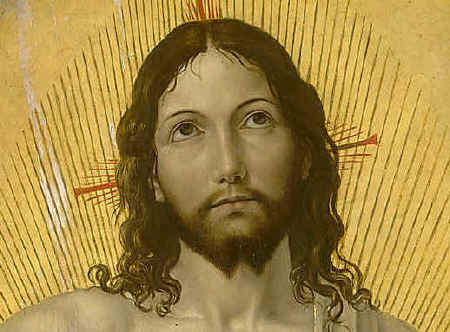
Borgognone 1510

Borgognone 1510

Easter time in the 21st century is a curious season. We are living in a time in which the rationality of the Enlightenment has been obliterated by the irrational violence and deconstruction of the Modern Era which ended with the creation of the atom bomb. In the 20th century we saw the the rise of the irrational as a counter to the idea of reason as the engine of human progress. Advances in science and engineering led to death on a massive scale whether in its industrial production form in the genocide of Jews and other peoples or its explosion from the sky in carpet bombing of Dresden or the incineration of Hiroshima and Nagasaki. The darkness within the brilliance of the human heart and mind was also manifest in the Vietnam War epic movie “Apocalypse Now” based on the theme that facing the horror of one’s evil can only lead to self destruction.

So here we are on the cusp of the third millennium. Human progress seems more of an illusion. In fact, our Post-Modern sensibility is all about the inability of reason and science to get at ultimate truth. Everything is examined and found wanting. Physics has become the study of relativity, uncertainty, and mathematical models. Religion and philosophy are the products of language we create. The scriptures of Christianity are cultural creations which tell us more of the people who wrote them. They are robbed of their revelation.

Human romance and love are reduced to methods for the socio-biological dispersion of one’s genetic load. Religious experience is suspect because there is no way to know whether one is just engaging in psychological projection to create a hideout from the ultimate reality of the purposelessness of human existence. We are here by virtue of  a cosmic accident with a very low probability.

In our world, there is the torture and death of Good Friday but there is no need for a Resurrection or any life beyond our current suffering because it is not possible since we can never know the nature anything beyond nature with any certainty. So here is the greatest event of all human history and our greatest personal hope – the Resurrection and it is a non-event on a beautiful spring day that is to be borne with a grim courage in a time when miracles cannot happen.

The news is too good. Maybe that is why we are stuck on the Friday of Crucifixion. The pain we know is better than risking its loss in the certain joy of Resurrection. As people of the Resurrection we would have to leave too much behind – hurt, anger, fear, and death.

Read More

Posted by on Apr 1, 2009

“Ready or Not, Here I Come!”

What’s In a Name?

mikey

The question of names has been on my mind recently. My son and his wife have a new baby. He’s our first grandchild. So naturally, the question arises, “What do you want to be called?”

It’s a question of some import. For the rest of my life, I will be known by the name chosen for this child to use in speaking to me.

Choice of a name would seem relatively straightforward except for a few complexities of life. For example, my mother’s mother wanted to be called “Gammy,” but I was the first grandchild and I couldn’t get that word straight. The closest I could get to it was “Grammy,” so for the rest of her life, she was known as Grammy by her grandchildren and great-grandchildren from four families. So reality number one is that whatever choice I make, what I actually come to be called will depend on whether or not my grandson can say it!

Another reality is that there can be certain traditions within families for naming of grandparents. I think of my own grandmothers and great-grandmother, as well as of the other older women whom we addressed as Grandma. In my family, we had a different name for each of them. It made it easy to know exactly which woman was the subject of our conversations within the family. They all knew each others’ title as well, so communication was very clear.

Then there is the question of which language to use for selecting a name. Both Spanish and English are spoken in our nuclear family. Only English is used in my daughter-in-law’s family. So if one grandmother is to have a Spanish title, I would be the one.

The preference of the parents of the child also enters into the picture. In this case, my son has asked that I use Spanish with his child. So my title would be Abuela or Abuelita. I wonder if Lita would be easier for him, but that’s a step even farther from standard names, so probably not the best choice, though I find I rather like it. I also like Grandmama, but that’s definitely not Spanish!

I find myself thinking that it’s all very much like the reality of some non-industrial societies in which names are given to people but the person to whom the name is given does not tell it to anyone else. If asked, “What is your name?” the response is, “What would you like to call me?”

In a way, that’s really how most of our names work anyway. We don’t choose the names we are given by our parents. The pet names we give each other within the family are not chosen by any of us. Some of them we might prefer would go away – somehow be forgotten forever. The only names we really get to choose are ones that denote a change in identity related to a change in social position. People may change their last names when they marry, for example. Within the Christian community, those old enough to choose for themselves may select a new name for Baptism or Confirmation. Sacramental names don’t carry the force of law in civil society, but they do tell something about the individual who chooses them if selected thoughtfully, with consideration of what the name might signify about one’s new role or calling.

So, unlike the Divine name, which within Jewish tradition no one may speak because no one is allowed to have or claim any control over the Lord and Creator of all, each of us has a name by which others call us. By knowing our name, they have a claim on our attention and care. They can make demands of us. They remind us that we are all part of the same family – whether it is our small nuclear family, or our larger extended families, or the family of all humans in the world. I find myself thinking, I guess I’ll wait and see what I’m called and that will become my new name. It will reflect a new relationship with the world and my community. And that’s OK.

Read More

Posted by on Feb 24, 2009

“Ready or Not, Here I Come!”

What are You Giving Up for Lent?

lent-cross-trinity-park-forest

In the “olden days when I was a girl,” the beginning of Lent was often met with the question, “What are you giving up for Lent?” The focus was on penance and self-mortification. Typically we gave up candy and television, though my mother allowed us to enjoy both on Sunday and my brother, whose birthday often fell during Lent, got to eat the candy from his slice of birthday cake.

The focus of Lent has changed in the past 40+ years and now we look to see what positive things we can do during Lent, to enrich our faith and to help those less fortunate around us. With this change of focus in mind, I’ve been reading the newspaper, listening to the  news on radio and TV and following the internet news on MSN.com in the past days and weeks. I’d like to share some gleanings from these sources obtained during the past 24 hours, with some thoughts about what maybe we should all give up for Lent!

The San Jose Mercury News reported today, February 24, 2009, that President Obama’s budget will include all government spending, including that for the military and the wars in which we are now engaged. The funding for war was never included in the budgets submitted by President Bush over the past 8 years, making it appear that total government spending was much lower than it actually was. (Hmm … I wonder how far my family would get if I left out a major portion of our expenses in my budget!)

Radio and TV news and talk radio shows: Critics of the proposed mortgage relief program are angry because they believe it will benefit people who “didn’t play by the rules” when buying or refinancing a home. They particularly condemn people who bought houses they now can’t afford or who got an adjustable rate mortgage whose payments have gone up too high, as well as those who are “upside down” on their loans because the real estate market has adjusted downward. (This despite the fact that lenders actively pushed such loans, encouraged refinancing into adjustable rate loans, and often left the self-employed with few options other than “stated income” loans for financing their homes as recently as 6 months ago.)

The SJ Mercury News again. As of 2007, 47% of senior citizens in California struggle to make ends meet. The Federal definition of a poverty level income was set at $10,000 annually in the 1950s and remains at that level. Nine to ten percent of California senior citizens fall below that income level. For the most part, these are people who played by the rules. Yet the funds to help them and those receiving disability payments from the state are being cut as part of the budget deficit solution here in California.  

Again the Mercury News. Public funding for family planning prevents an estimated 2 million unplanned pregnancies per year, resulting in approximately 800,000 fewer abortions. For each $1 spent on funding family planning, $4 is saved in Medicaid costs for prenatal care for lower income mothers. Nevertheless, opponents of funding these services claim that such services are a “shameful population control program that targeted low-income families.” [ Troy Newman of Operation Rescue speaking of the attempt by members of the House of Representatives to include such funding in the stimulus package.] (One wonders if there is any similar outrage about the ability of middle and upper income couples to pay for medications and/or services for planning the size of their families. Do only those with money have a say for themselves in such personal decisions?)

Also from today’s paper. Currently (2008), 46.6% of health care spending was paid by governments, including Federal, state and local funds. By 2018, over 51% will be paid by government sources, with no increase in entitlement programs (Medicare/Medicaid), amounting to a cost of $2.2 trillion. About 45 million Americans have no health insurance and the number is growing as people lose the jobs that provided it. COBRA coverage is too expensive for many of them because they no longer have jobs. Private insurance is also too expensive or cannot be purchased due to pre-existing conditions. The stimulus package helps those who lost their jobs after September 1, but not those whose jobs were lost in the 9 months of the recession which preceded that date. (The fact that care for the uninsured is much more expensive because they often wait until conditions are serious or life-threatening before seeking care at hospital emergency rooms has been well documented. Then hospitals charge everyone more to cover the cost of care that they must provide and write off in order to qualify for federal funding. Does this make sense?)

Federal deficits during the recent Bush administration began at $158 billion and ended at $455 billion, totalling $2.5 trillion. (Is that without including the war funding?)

The stock market continues to fall. Investors worry that there’s no end in sight to the recession, after one whole month of a new administration that had warned from the start that the economy would get worse before it could get better! (Hello… It’s going to take time to work our way out of this.)

So what should our response as Christians be?

We’re in a major recession. Many people have seen their savings lose 1/2 or more of their value. Lots of people who have had steady work, been responsible citizens, employers, employees, consumers, community members, etc. have lost jobs, taken pay cuts, lost their businesses. Even those with 30 year fixed rate mortgaes have seen them become unaffordable when unemployement, illness or disability hits a family.

It’s time to quit judging each other and instead exercise a bit of compassion. Yes, some made mistakes in judgement that got them into this trouble. Some spent more than they should have. A few have cheated on loans. More have been cheated on housing purchases. But most people played it straight. Most people honestly made their best efforts. Lots of them have been hit by forces beyond their ability to control or predict.

It’s time to quit blaming the victims.

For Lent this year, let’s give up judging others and instead focus on how each one of us can add 1 “brick” to rebuild our economy, our communities and the lives of our sisters and brothers.

Let’s nurture a spirit of hope, a hope that is essential before any change can begin and that will bring new energy to face the challenges.

Let’s stop the politics and rhetoric of division. It doesn’t help anyone to try to defeat the efforts of those trying to solve the tremendous problems we face. No one has all the right answers. Maybe if we actually talk with each other, we can learn from each other too and come up with better solutions.

Let’s remember that compassion is fundamental in this endeavor. The term itself refers to a sharing of passion, and passion includes both love and pain. So we share each other’s pain as we share each other’s love.

And finally, let’s care for God’s “Little Ones,” the ones who can’t care for themselves or solve their own problems without our help. As the past months have demonstrated, any one of us could become one of those needing help. And those who traditionally have needed help, generally need it even more now.

Read More

Posted by on Feb 18, 2009

“Ready or Not, Here I Come!”

Day to Day Evangelization

evangelization1

The term “evangelization” means to share or spread good news. For Christians, the Good News we spread is of Jesus’ life, death and resurrection. Evangelization has been the privilege and role of followers of Jesus, Followers of the Way, from the very beginning. In the Gospels we read that Jesus gave this directive to His followers after the Resurrection when He said, “Go therefore and make disciples of all nations, baptizing them in the name of the Father and of the Son and of the Holy Spirit …” (Mt 28:19) 

From the day of Pentecost forward, empowered by the Holy Spirit, Christians have shared their beliefs with family, friends, neighbors and total strangers. Sometimes sharing the Good News takes the form of words. More often, it comes through action. One of the first things we know about early Christian community and life was the recorded observation that they were “of one heart and mind, … they had everything in common.” (Acts 4:32) They were known for their love and caring for each other.

We evangelize and in turn we are evangelized by others. Each of us had had times when a kind word or a helping hand served as a reminder that we are loved. Someone taught each of us about God and God’s love for us in sending Jesus and their Holy Spirit.

I was reminded of this the other day at Mass. A mother was there with toddler firmly in arms. She has been bringing her son with her since he was tiny. Sometimes he sleeps, but increasingly he is awake, watching all with wide eyes. When it came time to pray the Our Father, his mother raised one hand and he raised his opposite hand. Together they joined in prayer with the rest of the community. Someday he’ll learn the words of the prayer, and perhaps some theology too. But the most important learning has already begun. He is part of a community of people who love God and care for each other. A community that bears witness through their everyday lives to the love they have received.

Pope John Paul II called the Church to a New Evangelization, reaching out again to our world, bringing the good news into every aspect of our lives and communities. We begin within our daily activities, sharing our hopes and dreams and visions, reaching out in love to those we meet, answering questions about our faith when asked, and trusting the Holy Spirit to guide our words and our ways. The men and women of faith who have gone before us have brought tremendous change for the better to the world. It’s our turn now. May we have the courage and grace to be evangelists in our day to day lives.

Read More

Posted by on Jan 31, 2009

“Ready or Not, Here I Come!”

January Reverie


pussy_willow_branch

Pussy willows blossoming,

Monarchs dancing in the sky,

Sour grass and wild radish blossoms

Punctuating fields of wildly growing grass,

January on California’s Central Coast.

Praise and Thanks to Thee,

Great Lord of all Creation!

Read More