Pages Menu
RssFacebook
Categories Menu

Posted by on May 24, 2008

Corpus Christi: The Body of Christ

Corpus Christi: The Body of Christ

Stephen’s bright blue eyes smiled as we said, “Lamb of God, Give us Peace.” According to the rubrics we were now to show each other a sign of peace. Yet with Stephen’s attention deficit disorder, which had already taken him in and out the brief service at least twice, it seemed that a little catechesis might help him be a little more aware of what we were about to do. Stephen is not a little boy. He is a handsome man in his early 30s, with a number of tattoos poking out of the v-neck and short sleeves of his starched jail issued smock.

The readings had been those of Pentecost. The second reading was from First Corinthians 12. “No one can say Jesus is Lord except by the power of the Holy Spirit.” This had struck all four of the men, but had made a special impression on Stephen. “Does that mean that when I pray the Holy Spirit moves my heart?” Stephen had asked. When I answered “Yes” his eyes got wide and he said that since his attention came and went and his thoughts were often jumbled, he thought his prayers were more bothersome and must be irritating. The notion that he is a temple of the Holy Spirit was as novel to him as it was consoling.

Stephen was back now and I shared a few words on the Lamb of God, recounting the Last Supper and the passion, death, and resurrection of the Lord. We do this in His memory as He requested of us. We are invited to the Lord’s table. Stephen and his companions were not new to the faith, but this brief memorial of our Great Memorial brought a renewed awareness to the others and a slack jaw from Stephen. He did not doubt, but could not help but marvel at the wonder of it.

As we shared the wonder of the Blessed Sacrament, our communion was truly a sharing in the Body and Blood of Christ. Bread blessed and broken at the Eucharist, celebrated in the parish, given to all, shared with all, and sent to those in need and to those in prison. The Body of Christ – Corpus Christi – saving us all from our prison of loneliness, our hunger for love, and admitting us to the feast of heaven here and now.

Read More

Posted by on May 15, 2008

Corpus Christi: The Body of Christ

Living in the Time of the Holy Spirit

Sunday we celebrated the Feast of Pentecost and the fulfillment of Jesus’ promise to send the Holy Spirit to His followers. Now we enter into a time called “Ordinary Time” — a name which suggests that nothing special is going on and nothing special is to be expected. That perception couldn’t be farther from the truth!

Ordinary Time is the time of the Holy Spirit in the Church. It’s a time for learning, growing, sharing, reaching out to each other and the world. It’s also a time for entering ever more deeply into the life of the Trinity, a reality we’ll celebrate this coming Sunday.

How do we recognize the coming of the Spirit? I’ve been reflecting on the symbols we use for the Spirit and the words of the songs we pray at this season of our liturgical year. There’s the dove, a symbol for gentleness and peace. The Spirit came upon Jesus like a dove when He was baptized (Jn 1:32). Then there are the mighty wind and tongues as of fire that marked the coming of the Spirit to those gathered in the Upper Room (Acts 2:2-3). In the Old Testament, the Lord came to Elijah in a gentle breeze as he waited by a cave on the mountainside (1 Kgs 19:12-13).

Each of those images tells us something important about the Spirit and what the coming of the Spirit into our lives might mean. The idea that the Lord doesn’t come in the form of earthquakes, wind storms, or the raging of nature is important. Destruction is not a characteristic result of the coming of our God. Peace and the time to live, breathe and grow are. And in times of destruction, God comes through the caring hands and presence of those who try to help alleviate the pain and suffering.

The dove is a bird that we associate with gentleness and a soft cooing call. I loved waking up to the sound of doves cooing when I was a child and visited my grandparents who lived in a warmer community, where there were doves. The dove is often a symbol of love and peace.

But then again, at Pentecost there’s wind and fire… Living in California, we’re very much aware of the power of wind and fire. In forested areas, as well as in the hills covered by chaparral (the native vegetation), fire can sweep across the land, driven by winds it creates itself, leaving a swath of seeming destruction behind it. Those who live outside of the cities and towns must be constantly vigilant to keep the underbrush back away from their homes, so there’s a chance of saving the home in a wild fire.

How does fire fit into the whole peace and love scene we associate with the Holy Spirit? The image of a forest full of brush, or the overgrown chaparral on the California hills gives a clue. Brush in a forest can become so dense that it begins to choke the life of the other plants and the animals living there. A healthy forest is one that is cleared out regularly. Nature does this with fire. The chaparral even has plants that ignite spontaneously when the temperature reaches a certain point. The whole area burns off and then new plants can grow. There are plants that depend on fire in order for new seedlings to sprout — in forests and in chaparral.

In a very real way, each of us needs cleansing fire sometimes too.  It’s not fun, but it clears the way for new growth and wondrous surprises.

Then there’s the other side of fire — the creative side. We speak of people being “fired by love” or “going like a house afire” into a new project or calling. Fire is powerful. Fire gives energy. Fire brings light. The Holy Spirit’s coming is to “light a fire” under each of us — to get us going as Christ’s body here on Earth. Hands, feet, voices, arms, legs, minds, hearts.

We sing, “Come, Lord Jesus, send us your Spirit, renew the face of the Earth.” And the Lord grants our request. The Spirit comes. And with the help and fire of the Spirit, we move forward to bring new life, to renew the face of the world around us – in our homes, our worksites, our communities, our world.

Read More

Posted by on May 7, 2008

Corpus Christi: The Body of Christ

Are You Ready for Pentecost yet?

holy-spirit.jpg

In the United States, we are used to hearing questions like, “Are you ready for Christmas yet?” or “Are you ready for Easter?” The assumption is not that we have been spending time in spiritual preparation for these wonderful feasts, but rather that we’ve done our shopping, wrapped our gifts, mailed surprises to our loved ones, sent the Christmas cards, and so on and on and on. There always seems to be one more thing that must be done to assure a perfect holiday experience for ourselves and our families. Spiritual preparation often takes a back seat in the excitement of getting ready for a holiday. Yet, if the holiday is all about the material gifts and the perfect meal and the family all being on best behavior, it is bound to be a disappointing experience. No matter how wonderful the toy looked in the catalog, or the meal looked in the recipe book, they cannot fill the empty spot in our hearts that is longing for the Divine. And certainly, no one can control the behavior of children, family or friends who may not always act in kind, loving, patient ways. If celebrating the feasts requires that all be perfect, the celebration will certainly not be joyful.

Pentecost is a different sort of holiday. It isn’t even seen as a holiday by the culture as a whole. We never see “Pentecost Sale” in the newspaper or on TV, for example. We don’t have special dishes we prepare for Pentecost. No candies are stacked by the check-out stands to tempt the unwary. No cards or wrapping paper displays vie for our attention. It is almost a secret festival – an un-event.

This year, Pentecost comes very early, because Easter was very early. Pentecost comes on the 50th day after Easter every year. It was originally a Jewish feast. It became a Christian feast because that was the day the Holy Spirit came to the Apostles and others who had been hiding out in the upper room, afraid of what would happen to them because they had been followers of Jesus. With the coming of the Holy Spirit, the fear that had bound them was dispelled. They went out and witnessed boldly to what they had seen and heard. That Jesus who had been crucified had been raised from the dead and, in Peter’s words, “… God has made him both Lord and Messiah…” (Acts 2:36)

Pentecost is the birthday of the Christian Church. If the Holy Spirit had not come, the followers of Jesus would never have found the courage to go out into the world and share the Good News. But as He promised, Jesus asked the Father and the Father sent the Advocate, the Paraclete, the Holy Spirit of Love to us. And so, two thousand years later, we can celebrate Pentecost, our birthday.

So how do we celebrate? Certainly with liturgy. Make time in your day to join with the larger community for Mass. Make a joyful noise, sing praise. Invite the Spirit to come into your life in a special way. Join often in that ancient prayer, “Come Holy Spirit,” both in the days leading up to Pentecost and on the feast itself. Be as open as you can be to the coming of the Spirit and you will receive wondrous gifts. Then, take time to enjoy nature. Spend time with your family and friends. Light a candle for dinner – maybe a red one. Use a table cloth – red any one? Bake a birthday cake. Wear a touch of red in your clothing or jewelry. Every reminder of the coming of the Spirit in “tongues as of fire” (Acts 2:3) is good.

And this year, when Pentecost and Mother’s Day fall on the same day in the United States, celebrate the love of your mother, and remember that although God is neither masculine nor feminine, the Holy Spirit of Love is often described in terms of qualities seen as feminine in our culture – loving, tender, wise, compassionate, patient.

So … are you ready for Pentecost yet?

Read More

Posted by on May 5, 2008

Corpus Christi: The Body of Christ

Ascension Blahs

water_ripple.JPG

There is only so much joy and sunshine the soul can take. There is a rhythmic moodiness to California’s central coast. Unlike the interior valleys and the Sierra, which have more constant moods in concert with the sun and stars, the ribbon world on the sands and coastal planes changes from delight to gloom overnight — or sometimes within the hour. On our street, the fog, known by its more fluffy image as “the marine layer,” sometimes tiptoes and sometimes billows through the cypresses on Lighthouse Field and blots out the sun, roiling half way down the block before stopping on a whim in an evanescent whirl.

The Resurrection blossoms and the fulgent greens are quickly muted in the filtered gray light of the salty chill. The natives, loath to give up their flip flops and shorts, shiver in their sweatshirts as they pull their hoods over their brows to the bridge of their sunglasses.

So where has the Son gone? Why do we stand here looking up in the chill? Who turned off the party? Just when we found Him, they took him away again. No that would have been easier. It would be renewed grief. He said that it was time for Him to return to the Father and that He would send the Advocate who would teach us all the things that He still had for us to learn. Left behind … our consolation turned to desolation.

… And what to do? According to Father Ignatius, it is time to discern, to prepare for the movements of the soul that eddy from the Paraclete, that ripple from the heart, and echo in the fountain drops of the barely conscious. What now? Be still and know that I am the Lord.

Read More

Posted by on Apr 25, 2008

Corpus Christi: The Body of Christ

A Theologian’s Reflections on Mark’s Gospel

on-your-mark.jpg

Theologian and storyteller Megan McKenna’s book, On Your Mark: Reading Mark in the Shadow of the Cross, is a powerful example of the contribution of theology and biblical research to our understanding of the Good News. When the gospels were written, nearly 2000 years ago, they were written for a specific audience, with certain shared beliefs and experiences. Each was written for a different audience, but each audience had much in common. They were written as teaching materials, to help new believers come to know about Jesus, become His faithful followers, and live according to His Way.

We live in a dramatically different world. Many things the ancients took for granted or understood to be significant, we don’t even notice in passing when reading Scripture.

In the past century, thanks to the work of theologians, biblical scholars, anthropologists, archeologists, linguists and many other professional researchers, we have gained a tremendous amount of knowledge about the world in which Christianity began and of the beliefs and life of the early Christian community. The Holy Spirit has worked through these people to bring the Word to us as excitingly fresh teaching. 

Megan McKenna’s presentation of Mark’s Gospel lays out the requirements of Christian discipleship through exploration of the meaning of the texts. She shows what their meaning might have been for the disciples and the early community – how they served as a roadmap for discipleship. Because she is also master storyteller, Megan presents other stories  as well that serve to reinforce the Gospel. And always, for Megan, the bottom line is, what this means for us today.

Take a look at her work. You won’t regret it!

Read More

Posted by on Apr 9, 2008

Corpus Christi: The Body of Christ

Theologika.net Welcomes Terry Hershey

terry-hershey.jpg

A sign of a person’s true enlightenment is how he or she handles the gods of the internet. Kathy and I had a wonderful telephone visit with Terry Hershey and his webmaster, Todd Roseman. We gave Terry and Todd a tour of Theologika.net and began the process of setting up the TerryHershey directory, where you can find many of his recommended books, materials, and web content. Generally, setting up a directory – which you can do by registering at www.theologika.net/search  – only takes a few minutes.

As fate would have it, we ran into a snag. My many years of experience in business, working with VIPs, began to haunt me. The pressure started to build. Not to worry, though. As advertised, Terry Hershey, a minister with degrees in philosophy and theology, landscape architect, speaker and writer, was delightfully calm and soothing. Just the sort of balance he talks and writes about. Terry is very upfront about the challenges of his life, which makes it easier to see our own lives in a calm and honest manner that helps us stretch and grow.

Kathy and I are sure that you will enjoy Terry’s newsletters and other great items on his website. You can find them easily by typing “Terry Hershey” into Theologika.net’s discovery engine at www.Theologika.net/search. Click on the items and you will be transported to the very peaceful and inspiring dimension known as www.TerryHershey.com.

Enjoy!

Read More

Posted by on Apr 6, 2008

Corpus Christi: The Body of Christ

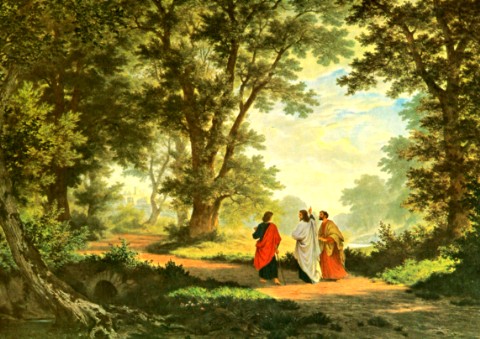
The Encounter at Emmaus

emmaus.jpg

I have been struck by the stories this Resurrection Season because for the first time, they strike me not as eye witness accounts of the Risen Christ, but as the challenge of faith for the disciples and us. The disciples on the way to Emmaus are leaving Jerusalem – returning home, perhaps, – grief stricken, but more importantly, disillusioned. The teacher has failed. The forces of evil have destroyed a very good and wonderful young man.

One way to see this story is to take it as another proof of the Risen Christ as encountered by his disciples. The story does convey this message. However, the story also tells us that we find the Risen Christ when He opens our minds to see the scriptures and when our hearts are opened at the Breaking of the Bread. Look for Him in the scriptures and invite Him in to dinner and your hospitality will be more than repaid.

There is just a glimpse – a flash of recognition and he disappears from our midst. The presence of the Risen Christ is a momentary and ongoing discovery. It is the result of searching, wandering, questing in grief and disillusionment and being open to the challenge of the Stranger.

All of us have moments, years, decades, in which everything we knew and had hoped for is swept away. The disciples had no clue of what was to become of their beloved teacher, but his torture and death threw them into utter grief and confusion. Yet their confusion only increased when they heard that other disciples had found the empty tomb and seen the angels. They were re-grouping, leaving town, trying to get some distance. A Stranger notices their grief and inquires. They listen and reflect on the scriptures and Break Bread.

This is the Christian life – the quest and the encounter in the village of Emmaus – continuing through all generations.

Read More

Posted by on Mar 26, 2008

Corpus Christi: The Body of Christ

St. Mary at Easter Tide

rejoice-monica-stewart.jpg

The Blessed Virgin Mary has many beautiful titles. St. Mary at Easter Tide is my very own. Scripture is very silent about the Mother of Jesus after the Resurrection. We know that she is present in the upper room when the Spirit comes upon the Apostles at Pentecost. At the Annunciation, the Angel Gabriel tells her nothing about her future, except that her Son will be destined for the rise and fall of many in Israel. Mary’s first post-partum visit to the Temple portends a life of sorrow. According to Simeon, a sword will pierce her heart seven times. This most beloved young woman is left to ponder these things in her heart.

There are many good years together, until He leaves to find his cousin John at the Jordan. Then things go from bad to worse. Her friends and neighbors toss Him out of Nazareth. Jesus dies a horrible death; His mission a failure; her maiden’s vision becomes a bitter delusion. In his final words, Jesus entrusts St. John and Mary to each other – a final testament that seals the depth of grief.

There is no record of how Mary hears the news; of how she reacts. Who tells her? Jesus Himself? It seems that this duty falls to us. The noonday prayer echoes a wonderful joy – Regina Coeli laetare alleluia! Queen of Heaven Rejoice alleluia! … Resurexit sicut dixit! He has risen as He said (he would)!

Even though the words echo from my childhood at “Mid-century,” how well I remember and still experience the delightful childish skip in our hearts and step that we shared at Easter Tide. These are not the inspired words of the Gospel in the Hail Mary, nor the briefest of summaries of the Mystery of the Incarnation in the Angelus. For a prayer, Regina Coeli seems strangely out of character. There is no formality, no reserve. In our joy, we proclaim the Good News to the Mother of the Word Incarnate. God has turned our mourning into joy, but how could we ever begin to fathom what his news meant to the woman whose faith gave birth to us all?

Read More

Posted by on Mar 25, 2008

Corpus Christi: The Body of Christ

Easter Monday: Whale Watching With Angels

light-house-pt-santa-cruz.gif

I had read in a book way back in grammar school at Holy Cross School in Ventura, CA, in a time that is now referred to as “Mid-Century,” about boys hiking in the Alps on Easter Monday for a traditional lunch at high altitude with the angels. That custom may or may not have been true, but the thought of having lunch with the angels has always intrigued me. Perhaps, because my patron is St. Raphael the Archangel, the thought has always been somewhat appealing. After all, if you were an angel, wouldn’t you want a little break after all the hullabaloo of Holy Week?

Circumstances prevented me from wandering into the Santa Cruz mountains looking for angels to share ham and Easter eggs. The day was perfect, with a mild breeze, as I headed out across Lighthouse Field to Point Santa Cruz. The sky and the water were dazzling as I headed west up the coast along the ocean before it rounds the Point into Monterey Bay. There was excitement in the air. Whales migrating south to the Sea of Cortez around the tip of Baja California were passing by 100 to 300 feet offshore. They showed some interest in a kayak heading in the opposite direction, but continued on in graceful arcs, undulating effortlessly in the current as they coursed through the water.

It was a strange moment. The moment the houses along West Cliff, the roiling waves and sunlight all got stretched onto an impressionist canvas. I could see the brush strokes, the layering of the oil, the weave of the canvas. My neighborhood of almost 20 years became completely magical, serene, and spirit filled. I had pounded this walk many, many times before and it was always striking, even when cares and illness were heaviest on my heart, but today it was literally unreal.

Well, I guess my patron Archangel and his buddies were not waiting for me in the redwoods after all. It wasn’t the picnic with the angels that I had imagined as a boy. Whale watching with the angels on Easter Monday is something else.

Read More

Posted by on Mar 24, 2008

Corpus Christi: The Body of Christ

Dance: The Easter Sacrament

dancing-children-nolde-1913.jpg

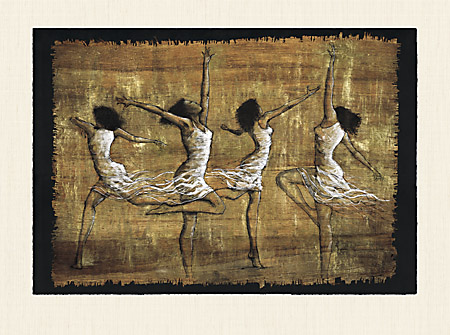
Yesterday on Easter Sunday, we sang a second communion hymn in Spanish and English “Resucitó” (He Is Risen). The latin beat, punctuated by conga drums and a driving bass line, turned most of us cradle Catholics into momentary Baptists, as our middle class “cool” gave way to clapping, toe tapping and widespread joyous singing. We were too well brought up to be too demonstrative, but this did not stop the smaller children from launching into a marvelously free dance of joy, aided by their older siblings. It was all in keeping with our name – Resurrection. Granted, we are not the most conventional group, which is saying something in Santa Cruz County. The concluding bars were punctuated by “gritos,” those characteristically Mexican musical shouts of joy, from the smaller children, whether Mexican or not. Things got more animated when we ended Mass with the spiritual, “O They Rolled The Stone Away”.

Terry Hershey, in the March 24, 2008 issue of his newsletter, Sabbath Moments, is also carried away by dance. Yes, Easter Week is a time to stop pursuing happiness and to just be happy.

Read More

Posted by on Mar 22, 2008

Corpus Christi: The Body of Christ

Good Friday: Identifying with Christ or Christ Identifying With Us?

christ-of-maryknoll.jpg

For those who love Christ, remembering His passion and death is always an occasion for sorrow. However, such human acts as compassion are never simple. The pain of the impending loss of a loved one – anticipatory grief – can be worse than the actual loss. In fact, when death finally comes, we often feel guilty about experiencing relief. My friend Jim lost his father when Jim was in eighth grade, after a protracted two year battle with cancer. When we talked about it a couple of years later, Jim confessed that he still felt more relief than grief.

Of course, we couldn’t experience compassion without a close identification with the other. This becomes very complex in the person of the Christ. He did not fight his enemies. He did not curse. He did not condemn. He forgave. He blessed. This human-divine reaction to an injustice that is almost as inconceivable as it is enraging provides no adequate psychological outlet for the post-Freudian soul. How can we proclaim and fight for justice if God Himself did not? Tragically, the consolation in the Gospels and the wider testimony of the New Testament – that no evil, no matter how overwhelming, how senseless, can ever separate us from the love of God in Christ Jesus – escapes us. (Romans 8:38-39) Instead of experiencing this Passover of the Lord – the Blood of the Lamb on the door posts and lintel of our home that spares us from the Angel of Death – we run out into that night of despair by focusing on the ways we have been complicit with that evil.

When we hear that we are saved from a life defined by suffering and pain without meaning and no exit, we can think that we were saved from something we deserved. “Evil as you are … who among you would give his son a scorpion when he asked for bread?” (Loosely taken from Luke 11: 11-13) is a stark reminder to the disciples that Jesus could not conceive of His Father wanting anything less than we ourselves would want for our own children. Just as our children are all too much in our own image and likeness, we are in God’s. The teaching and life of Jesus in this regard is at odds with the vengeful patriarch of the Old Testament who punishes and chastises. (Lest we be tempted to think that Jews hold or held onto to this concept, we should remember that Jesus was not the only Jew who presented a view that had grown beyond it. The are interesting similarities between Jesus and his contemporary, Hillel the Elder.)

Enter God’s protectors:

“Ah hah! Now he has said it on his very own blog! Your own words condemn you. God doesn’t care about sin, you say. There are no consequences, no punishment, no reckoning. You present a God who is merciful, but not just. If Christ did not die for our sins how was the Father appeased? How is he the sacrificial victim?”

The Blogger Offers a Parable:

Once upon a time, there was a wonderful teacher who healed by word and touch and saved people from all kinds of physical, psychological, and social maladies. He made the mistake of speaking truth to power and telling religious and civil leaders that outward observance only made them into whitened sepulchers. They waited for the right time and got a close friend to betray him, and they took him off to Guantanamo, and then transferred him to a third world country, where he was tortured to death by specialists trained at the School of the Americas. Like so many thousands of his time, he was supposed to have become one of the disappeared. Fortunately for us, He didn’t stay dead and he didn’t stay hidden. Strangely though, he left again, said he would return, and in the meantime the were supposed to wait for a Holy Wind to make everything clear.

Yet His disciples wanted an explanation. If He was truly God’s Son, how could this have happened to Him? If he really was the Messiah, how could he have failed? He was just as maddening as those parables he used to tell them. Where are the answers? It was like one of those Eastern religions. “The question is the answer.” And that other junk the Beatles found in India, under the influence of something other than the great American mystic, Jack Daniels.

God finally sent them someone they could understand – sort of. “Like, well, yuh see, dude- God don’t need sacafices, ” The voice of the aging surfer was hoarse with too many years of funny cigarettes, his faced etched with too much salt and sun, his eyes opaque while he waited for the waves to rise. “It’s like, all ’bout love. All God wants is love. The torture and sufferin’ part, that’s what we do to us and each other. Man, like the Teacher Dude, the Guru Guy, like he couldn’t hang out forever. ‘Cause like, you guys were all brain dead on a kind a gnarly bad trip. Like he let it happen. The tube was closin’. Like there was just the wipeout; like really bad at Mavericks. He did it to show y’all that if yah stay in the water and go for it, sooner or later it’s gonna happen if ya stay true to the search for the Big One.  Dude, got some extra change? My old lady’s on me for the rent, like ya know.”

The words of reproach, as the seeker turned away, were familiar. “That sucks man. What a waste. I came to hear some guy explain some @$#%?! blogger’s crappy parable. I could’a been watchin’ the game on my big screen.” So he zipped up his jacket and marched straight home, out of the saving mystery, ignoring the glory of the sky, the dazzle of the water, and the carpet of color and bird song all about him.

Read More

Posted by on Mar 20, 2008

Corpus Christi: The Body of Christ

Each Little Light …

western-electric-lantern.jpg

Dr. Megan McKenna uses many stories in her teaching, claiming that all stories are true and some actually happened. She tells this story, one that actually happened, about a community she visited in India. It was a very small village, with an even smaller Catholic community. The community generally gathered in the evening. As dusk fell, her hosts invited her to go outside and look around. In the gathering darkness, she saw the hills around the village come to life with little twinkling lights. The lights began to move across the hills and gradually to converge on the small building which served as their church.

In the middle of the church, there was a large iron contraption, with many arms jutting out from the center. As the people arrived, they hung their family’s lantern on one of the arms. When it became clear that no more people were coming, the contraption, now a chandelier, was hoisted up over the gathered people. It shone over the altar, giving light to the entire community as they celebrated Mass together. Then, when the time came to leave, the chandelier was again lowered and each family took its own lantern. But rather than go home, they went out from their celebration to visit the homes of the members of the community who had not been able to join them that night. They knew exactly who was missing because those lanterns had not been on the chandelier giving light to the community!

A lesson Megan drew from this experience and shared with my parish community is that we aren’t really a community until we know who is missing when we gather to worship.

I thought of this story when, along with many thousands of others, I attended Sunday afternoon liturgy in the Anaheim Arena as part of the Los Angeles Religious Education Congress 2008. The arena was beautifully decorated. The music was outstanding. Cardinal Mahoney was presiding, along with many bishops and priests of the archdiocese. The deacons were there with their wives, entering and leaving in the processions together. It was altogether a wonderful time and place to be.

It happened to be the Sunday when the Gospel is the story of the healing of the man born blind. This is one of the three Sundays when we celebrate “The Scrutinies” as part of the Rite of Christian Initiation for Adults (RCIA). The focus of the second Scrutiny is the ways in which we are blind. The prayer of those preparing for Baptism, Confirmation and/or Eucharist at Easter, as well as of the larger community, is for deliverance from those forms of blindness.

After the homily, when the time came for the Scrutiny, those preparing for the “Easter sacraments” (Baptism, Confirmation and Eucharist), were invited to kneel around the altar in the center of the Arena. Their sponsors stood before them as they knelt there. And we were all invited to pray with them, then raise our hands in prayer over them, asking the Lord’s blessing on them as they left with their catechists to continue reflecting on the Scriptures and preparing for Easter. Then they all rose and left the Arena.

I was sitting in the third tier of seats, so I had a great view of the floor and all the proceedings. It was an impressive sight, because approximately 5 rows of people on both sides of the aisle on the main floor left the room together. There was a huge hole in the middle of the community gathered there for worship. Although I didn’t know any of those people personally, I knew who was missing from that community! Those who will bring their own light of insights and God’s unique presence to our/their communities when they are welcomed into full participation in the Church at the Easter Vigil.

I remembered Megan’s story and also her statement that the gospels were written by the Christian community for those who were becoming new members of the community. They are for the instruction of new Christians, and the gift of the RCIA, and of those preparing to join the community, is the opportunity to see these stories anew and to experience their power to change lives – the lives of new followers of The Way and of those who maybe have begun to take it for granted.

As we celebrate the many liturgies of the next few days, I invite you to look around and see who is missing. Who needs us to reach out in love and ease a burden, or offer a word of hope and consolation? Who is homebound? Who is discouraged? Who has been hurt by our institution or our community? Who have we ourselves hurt? As we reach out in love to those missing, we will experience the Resurrection of Jesus in a deeper way and we will become a sign of love to the world, just as those little lights coming down the hillside were a sign of a loving community in one small Indian village.

Read More

Posted by on Mar 20, 2008

Corpus Christi: The Body of Christ

Holy Thursday on the California Coast

cal-coast-spring.jpg

Holy Week on the California coast, from Pt. Mendocino above San Francisco to the Mexican border, is a place of spring time sun, deep blue skies, and blossoming flowers. At the Equinox, the ocean loses its grayness and picks up more yellows, subtle greens and muted turquoise. The salt air becomes more pungent, as the kelp forests put on new growth to accommodate the explosion of trillions upon trillions of sea plants and animals. The succulents and coastal chaparral burst out in purples, roses, and pinks, peppered with the bright yellow of sour grass blossoms. The Santa Cruz redwoods seem to stretch, fresh washed from the winter storms, looking forward to the morning and evening fog that gives them sustenance and flourishes their layered ecosystems that change every 20 feet upward, dancing in the dappled ray filled sunlight of the forest canopy.

It is a time of happiness and rejoicing. Sunglasses come out, flip flops slap the pavement, and shorts replace the winter denim, even though the day time temperatures are barely in the mid-60s. It is the coming of First Summer, before the Fog Season that begins on Memorial Day in late May and ends on Labor Day in early September. On the Central Coast, we host our first guests during Spring Break and settle in to enjoy the peaceful days before our June to August onslaught of shivering, fog-bitten visitors and their much welcome tourist dollars.

Aren’t we supposed to be down or at least subdued during Holy Week? How can we rejoice Saturday evening and Easter if we have somehow not rationed that joy? We should at least lament our unfaithful adherence to our Lenten resolutions – right? Christ’s terrible torture and death stayed the arm of a rightfully vengeful Father, so shouldn’t we show at least some token of fear for not being swept out into hellfire? If God’s Spring and Passover are any indication, maybe Cotton Mather had it wrong. Maybe we are a lot more than “Sinners in the Hand of an Angry God.”

If we, and all creation, are the overflowing love of the Trinity, are we the products of a God who can somehow demand the death of the the Eternal Word Made Flesh, God’s very immediate recognition and instantaneous self-acceptance, who shares the eternal dance of the Three in the joy of the Holy Spirit? Yes, much of the language that shapes our souls is a reflection of the fallen world where the Word “pitched his tent” – the actual Greek expression we use in the Creed. Yes, Jesus died and saved us in his rising from the dead. Yes, Jesus is the Lamb of God. Yes, we are the reason, we are his motivation for sharing our lives and submitting to the capital punishment of being tortured to death by an occupying superpower. Perhaps, the gravest sin of pride is to even think that we were the cause. Yes, God as Love couldn’t bear to leave us to the fate of hatred, despair, and alienation.

Why should people celebrating their rescue be glum, depressed, lost in narcissistic guilt? Why is this night different from any other night? It is the Passover of the Lord. If we are not washed in joyful Spring, can we share the Passover meal? Can we have any part in Him?

Read More

Posted by on Mar 18, 2008

Corpus Christi: The Body of Christ

Holy Week – Salvation Through Suffering or Self Actualization?

cherry-blossom.jpg

The profound Christian mysteries of Holy Week – the Last Supper, the Passion, Death, and Resurrection – are part of a cycle that we often break up into pieces. We can focus on the suffering Christ or move more comfortably to the Resurrected Christ. We can focus on the suffering humanity of Christ or His triumphant divinity. The problem of course is holding the contradiction to arrive at the truth by affirming the opposites. Is Christ human or divine? Yes.

In our lives, are we supposed to unfold and blossom in all of our God given gifts or do we have to exercise discipline and self-scrutiny and trim away important parts of ourselves – our sensuality, our connectedness with the earth, our search for joy and happiness? It seems that from the 1700s to the mid-20th century there was an emphasis on asceticism – a word created in the enlightenment – for the rational and spiritual to dominate at the expense of the heart, the emotions, and all things physical. Even the great secular Freudian construct of the human person posits a dominant super ego, the besieged ego, and the troublesome impish id of desire and impulse that seeks to undo the ethical correctness of the super ego and the reasonableness of the ego.

The psychology of Maslow is known for its emphasis on the self-actualization of the human person. The focus of Christian existentialism in the 20th century was on authenticity. In the late 20th century, the immanence of God with us was emphasized, as opposed to the previous focus on God’s utter transcendence. The re-emergence of Catholic and Protestant teaching of the social gospel has focused on the rights and dignity of individuals and communities to develop their gifts, free of domination and exploitation.

Of course, as we all know, we pay a price for our self-actualization and for advocating this freedom for others. That price is suffering – due to our own imperfect attempts at being authentic or “real”, the fear and resistance of ourselves and others to freedom, and the forces of oppression which come upon us in violence, social disapproval, or our own lack of will.

When we come right down to it, it is often more comfortable to stay in our zone of known suffering than to accept the insecure joy of resurrection. If I experience love, joy, and some glimmer of self-actualization, it will always be imperfect, and the “blues” (the dark days) will return. It may be a spiral upward, but it’s also a lot of insecurity and hassle and change. We have to live ambiguously. We don’t have the answers. In fact, we have to affirm opposites. Who needs this tension?

The bad times and the good times – through both there is only one guarantee – challenge.

Read More

Posted by on Feb 14, 2008

Corpus Christi: The Body of Christ

Valentine’s Day Reflections 2008

 love.bmp

February 14 is Valentine’s Day, a day focused on love. Marketers have been promoting their products for several weeks now – trying to convince us that their particular product is the best possible way to say “I love you” to that special someone in our lives. And lots of us will buy something to express our love for those special people with whom we share our lives.

I remember one year when I received a waffle iron for Valentine’s Day. The women at the shop where my husband was getting his hair cut were horrified that he would get a small kitchen appliance for me. But he was right – I was thrilled. I love waffles and the old waffle iron I’d gotten 10 years earlier at a garage sale had finally broken – metal fatigue. It was a wonderful gift. We had waffles for dinner that night!

Valentine’s Day is a feast whose origins are found in legends about holy men who lived long ago. We don’t know much about St. Valentine, or even which man he actually was – there were several Valentines who were martyred in ancient days. The name means worthy and was popular in Roman times.

Many of the traditions related to Valentine’s day had their origins in the Middle Ages. It was believed then that birds began to choose their mates in mid-February, so the day seemed appropriate for celebrating romantic love. Fr. James McSweeney, on his website, www.todayismygifttoyou.com has a couple of lovely pieces about St. Valentine and love today.

Another essay I found this morning is by Timothy Chambers, a philosophy teacher at the University of Hartford in Connecticut. He talks about love potions mentioned in old legends and about what is really necessary for love – the stuff that can’t come out of a bottle. Of course, physical attraction is important in human love (and it might conceivably be produced by a “love potion”), but even more important are memories of happy times together, trust and faith in the beloved and the free choice to love in bad times as well as in the good times.

My wish for you today is that you know love. A love deeper than the sea and higher than the sky. The love that fills your being with the unshakeable certainty that nothing can ever come between you and the Lover, between you and your Creator. You are loved and loveable because you were loved into existence and are held in existence by that same love. Just as you are. With all your gifts and faults. You are loved.

Peace be with you. Now and always. Happy Valentine’s Day.

Read More