Pages Menu
RssFacebook
Categories Menu

Posted by on Oct 12, 2007

Everyday Thankfulness

Everyday Thankfulness

[Editor’s note: Sometimes comments get buried or overlooked. Kathy and I did not want you to miss this reflection on our quote from Thomas Merton from cousin, friend, coach, and eighth grade teacher Andrew Vasquez.]

Thanks Kathy for that beautiful quote! This is my second visit to the site. I am enjoying the thoughtful, insightful writing. I wanted to weigh in earlier, but I was short of time (Surprise, surprise!) Besides, the only thing I’ve really wanted to talk or write about is my daughter’s soccer team, which I just happen to coach. Did I mention that we are undefeated? So, how does this fit into a discussion on cultivating a grateful heart? Suffice it to say that I am grateful to have the opportunity to coach, moreover, coach my daughters! I’m grateful that they show me lots of grace and mercy as I rant and rave on the sidelines, still kidding myself that they are actually listening and willing to respond to me in the heat of “battle.” I could go on and on…

What I really wanted to say was that I have found that when I awake in the morning with a “Good morning, I love you, God Bless you Jesus” on my lips and then actively open my eyes, ears and mind to the manifold blessings He is bestowing on me, even just between the place I brush my teeth to when I get to my classroom and face that first wave of 8th graders, I am not only overwhelmed with thankfulness but I just plain enjoy my day more. The day is full and productive, leaving a lingering feeling of completeness and an anticipation of what tomorrow holds. Now, if I could just string a few more of THOSE days together. It all begins with a simple prayer, yet how easy it is to forget, and neglect that first simple acknowledgement of Him. “Good morning, God Bless, I love you!” It is a simple phrase with great power. It works good with grouchy people we share our homes with too!

Read More

Posted by on Oct 10, 2007

Everyday Thankfulness

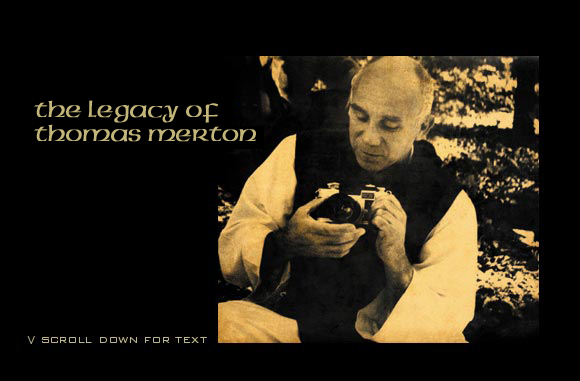
Quote of the Day – Thomas Merton on Gratitude

“Every breath we draw is a gift of God’s love,

every moment of existence is a grace, for it brings

with it immense graces from God. Gratitude

therefore takes nothing for granted, is never

unresponsive, is constantly awakening to new wonder

and to praise of the goodness of God. For the grateful

person knows that God is good, not by hearsay but by

experience. And that is what makes all the difference.”

                       Thomas Merton in Thoughts in Solitude

Read More

Posted by on Sep 23, 2007

Everyday Thankfulness

Subtle Signs of God

Changes in the seasons on California’s Central Coast are marked by subtle signs, especially near the ocean. The climate is classified as “Mediterranean,” meaning there’s a wet season and a dry season. There are some temperature variations between the two seasons, but the presence of the ocean tends to moderate the amount of change. A really hot summer day records temperatures in the 80s. A really cold winter day may have lows near freezing. But, generally, the temperatures are not extreme.

As the terms “wet” and “dry” imply, the biggest variable is the probability of measurable rainfall. Rain is scarce from late April to mid-October, sometimes even later. With the first major rainfall, children and even some adults are seen outside “dancing” for joy, twirling around with their hands raised over their heads, enjoying the freshness of the rain.

When I first arrived in California over 30 years ago, I often missed the signs of the seasonal changes. The changing color of the poison oak leaves was not at all as obvious to me as the changing color of the leaves of the maple and oak trees at home in Eastern Washington had been. The return of green grasses on the hills and fields by December didn’t signal the arrival of Advent and Christmas for me as they do now.

There are many other examples, but I won’t bore you with them here. Suffice it to say that I’ve become more aware of subtlety over the years.

A couple of days ago, I saw one of those subtle signs of transition while out walking near my home. The Monarch butterflies are returning. They come every year about this time to the eucalyptus groves near my home and stay until mid-March, the start of spring.

On sunny winter days, they flutter all over the neighborhood, sampling the nectar of winter blooming flowers and weeds. On cold, stormy winter days, as waves crash thunderously on the nearby beaches, they huddle together for warmth on the branches of the eucalyptus and cypress trees. They are beautiful.

Seeing the butterflies and the other subtle signs of the changing seasons here reminds me of the way God often works in our lives, very subtly, but with occasional flashes of brilliant beauty. Over time and through the seasons, we, like the butterflies, grow to be signs of His grace and presence in our world.

Read More

Posted by on Sep 22, 2007

Canning, A Little “Communion of Saints”

Monday this past week was a “Canning Day” at our house. The pears were ripe enough to be sweet even without the addition of a light syrup. Canning days cannot be easily scheduled. They can be predicted, but everything must wait for the right degree of ripeness. I had bought the pears nearly a week earlier, on Tuesday, with the hopes that they would be ripe on Saturday. (Saturdays are easier for canning because I can lasso a helper. Weekdays she’s in school.) But they were still green. Sunday they were smelling like ripening pears, but when we tasted one that was beginning to mold, it still had a green tang, so we waited. I washed the jars and made sure I had honey for making the syrup, but that was as far as I could go. Monday they were ready and I set to work.

Canning pears is not difficult, but it is time consuming because the pears must be pealed and the core removed before they are put into the jars for processing. I only had one box of them, but it still took an afternoon of work to get them into the jars and processed and the jam made to complete the day’s work. But oh, the wonder of them in the middle of the winter, when I enjoy them as part of my breakfast or for a midnight snack! It’s worth every minute spent.

So how does this relate to the “Communion of Saints?” I was blessed to know not only all of my grandparents, but also one set of my great-grandparents. Great Grandad died when I was very young and I really don’t remember him except from a picture. But my Great Grandmother Heitstuman lived until after I graduated from college and was engaged. She lived in town and we saw her frequently. We called her Grandma, because I was the first great grandchild and she didn’t like to think she was old enough to be a great grandmother. She even gave us lemon drops when we remembered for a whole visit to call her “Grandma” rather than “Great Grandma.”

Grandma’s birthday was July 3 and she liked to celebrate it on the 4th. We’d gather at her house for a potluck of all the relatives living in town, including three families of my Mother’s cousins who were children my age. (We called my mother’s mother, Grammy. Grammy’s brothers and sister had children much later than she did.) While awaiting the expected fireworks coming after dark, we children would play in the yards and basements of the three family houses on Grandma’s block. In a corner, safely tucked away on neat shelves, there were the jars and jars of canned fruits, vegetables, jams, and jellies. Everyone had them. By the end of the growing season, the shelves were full of the bounty of summer and ready to take us all through the coming winter.

My grandmothers, my mother, my aunts, and many of our neighbors and friends preserved both fruits and vegetables. When I got married, I too began to preserve foods for my family, despite the fact that by the mid-70s fresh fruits and vegetables were available in the stores year round. The variety, textures and flavors of commercially prepared or preserved foods did not match those I had grown up loving. Continuing the tradition, my married son and his wife have joined in the art of canning and preserving foods for the coming seasons.

While none of us is likely ever to be named officially as saints, and certainly we all have our share of faults, our sharing in this activity of canning brings us together in a very special way. I always feel very close to the women who have gone before me as I prepare the raw ingredients and fill the shelves with jars of pickles, jams and canned fruits. I’m sure they are smiling at the sight with their own memories of the work and the pleasure of the enterprise.

The Communion of Saints is somewhat like this communion of canners of fruits. Not people we worship in any way, but more like older sisters and brothers, aunts, uncles, cousins, grandparents. People who care about us, who are interested in what we do and how we do it, and who want to help us in whatever way they can to live our lives responsibly, do the good that God hopes we will accomplish, and have a little fun along the way. And, like an older brother or sister, if we need someone to put in a good word for us along the way, they’re happy to do that too!

Yes, Canning Days are special. They bring the reality of my little “communion of saints” into focus again in its relationship to the great Communion of Saints in which all of us share.

Read More

Posted by on Sep 19, 2007

Everyday Thankfulness

A Thread of Grace – Resisting The Italian Holocaust

Grace is a heavy topic in systematic and historical theology. It has been the center of a longstanding dispute between Catholics and Protestants. In many respects, this dispute that dates to the Reformation is about how much credit we can take for the good we do or whether we have to credit everything to God.

I must say that when I picked up Mary Doria Russell’s, A Thread of Grace, I thought that the title was more of a poetic touch than a solid theological theme. I was attracted to the subject of the Holocaust in Italy. Since we are now between Rosh Hashanah, the Jewish New Year, and Yom Kippur, the Day of Atonement, the timing of this post seems appropriate.

When I picked up A Thread of Grace this summer for some “light” reading on vacation, I was unaware of Mary Doria Russell’s previous books, The Sparrow and Children of God, which are both works of science fiction with theological and philosophical themes. The Sparrow is the story of a Jesuit mission to an alien planet told by the sole survivor, Fr. Emilio Sandoz. In Children of God, Fr. Sandoz is called upon to return to Alpha Centauri.

Even though it is a work of historical fiction, A Thread of Grace reads like a thriller. Italy withdraws from World War II. Nazis come pouring in, along with refugee Jews from areas of southern France that had been controlled by Italy. Italians resist the Nazi extension of the Holocaust and 85% of resident and refugee Jews in Italy survive the 20 months of German occupation. The story takes place in northwestern Italy and presents the complexity and richness of the stories of the major characters. Who lives and who dies and how they die appears to be largely a matter of chance or fate.

The desperate situation of the region, caught between the collapse of their government and military, the German invasion, the relentless Allied bombing, and various partisan factions, provides a relentless cauldron in which the Jews are offered refuge and protection. The plot is very complicated but the characters reveal a great deal about simple truths. Werner Schramm, a Nazi doctor guilty of horrendous crimes, finds a measure of redemption after he is given a place and help to recover from tuberculosis. The man responsible for this help is the main character, Renzo Leoni, a Jewish aviator and veteran of the Abyssinian War, who has his own guilt about war crimes. Fr. Osvaldo Tomitz, who refuses to give absolution to Dr. Schramm, later receives his final Communion and last blessings from the Nazi doctor who is too late to rescue him. Iacopo Soncini, the local rabbi, comforts Fr. Tomitz when the priest comes to warn him and the Jewish community. People act to help others at an unbelievable cost – torture, the loss of their family, friends, and communities.

While this is certainly not a “feel good” book about the Holocaust, it is a resounding testament to people doing the right things in moments of grace. Are they responsible for these heroic actions or is God? The lives of these believers and unbelievers, these saints and sinners all wrapped up in the same complex person, render the academic quarrel over grace moot. God does not overpower free will and free will snatches hope from despair.

“There is a saying in Hebrew… No matter how dark the tapestry God weaves for us, there is always a thread of grace.”

Read More

Posted by on Sep 7, 2007

To Trust the Incarnation: An Interview with Sara Miles

Editor’s Note: Sara Miles, author of Take This Bread: A Radical Conversion took the time to answer three questions which I felt might be useful to our readers. Very often the organized structures of “religion” are put at odds with those of our personal religious experience or “spirituality.” Many church goers are secure in their routine and not really open to the uncontrollable God. Many spiritual people rejoice in a the delights of a life lived far from the annoying humanity of our neighbors and the concerns of those struggling to get by on the margins. Sara Miles’ spiritual memoir challenges us to go beyond religion and spirituality and to live the Divine Mystery.

Randy Pozos: How would you advise parents and godparents to prepare their children for First Communion?

Sarah Miles: I’m probably not the best person to answer this, as I took my own first communion as an unbaptized adult, at the age of 46. My church, St. Gregory of Nyssa Episcopal Church (www.saintgregorys.org) offers communion to everyone, without exception, believing that Jesus welcomes everyone to his Table — and that his chosen sign was eating with outcasts, sinners, the unclean and the unprepared.

I believe that churches can prepare people to be members of churches; they can catechize children and adults to understand church doctrine and practices. But nobody can be “prepared” for the experience of God, because God is here, right now, making all things new: whether you are ready or not.

Randy Pozos: It seems that in your experience there is a direct, almost tangible, relationship between communion and your food pantry ministry of feeding and being fed by others. How would you encourage others to find and celebrate that transcendent experience of Eucharist in other ministries and occupations?

Sara Miles: Eucharist is a Great Thanksgiving: whenever we pour ourselves out, giving not only to our friends and loved ones but to our enemies and to strangers, we participate in Jesus’ feast, and share a “foretaste of the Kingdom” where all will be united in a heavenly banquet.

The connection between Eucharist and daily life is not mysterious: in fact, the liturgy is a reminder that it is precisely the most ordinary things of our lives (eating, drinking, kissing) that are suffused with God’s presence.

Randy Pozos: As a journalist and author, it seemed that you brought a poetic vision of a reality beyond the common sense experience of bread and wine. How can we engender this sensibility in ourselves and others and be ready for this experience of surprise and wonder?

Sara Miles: There’s a wonderful quote from Rowan Williams, now Archbishop of Canterbury, who says, in an essay on the martyr Etty Hillesum, “A religious life is a material life. Forget for a moment the arguments we might have about the definition of the ‘spiritual’; living religiously is a way of conducting a bodily life.”

To trust the Incarnation is to open yourself to God in the “common sense” experiences of human life. This means inevitably opening yourself to more pain, more suffering– and more joy.

Read More

Posted by on Sep 5, 2007

Everyday Thankfulness

Sara Miles – Food for the Journey

Sara Miles

Sara Miles’ book, Take This Bread: A Radical Conversion, is breathtaking in many ways for the traditional Christian who believes in the Holy Eucharist. Ms. Miles’ story of conversion does not follow the usual pattern of experiencing a call, undergoing instruction, receiving Baptism and being admitted to the Lord’s table. In Ms. Miles’ case, this ancient path is telescoped and reversed.

Ms. Miles experiences a longing and endures a search that begins with a political turned spiritual sojourn in Central America and her love of restaurants and feeding people. Along the way, she meets with her first catechist, a man who would later become one of the Jesuit martyrs of El Salvador, Father Martin-Baro. She finds not only an open door at St. Gregory of Nyssa Episcopal Church in San Francisco, but a communion table that is open to all comers. Her First Communion is a radically transforming experience. It is far from regular bread or even something special, it is, for Sara, the body and blood, soul and divinity of Jesus the Christ.

St. Augustine’s writings total five million words. (That is about 40 books, each with about 300 pages.) Almost none of his writings allude to that most secret of mysteries reserved only to the baptized – the Liturgy of the Eucharist. Those undergoing instruction, the catechumens were dismissed from the assembly after the Liturgy of the Word. In the restored Rite of Christian Initiation in the Catholic Church, this pattern is still followed, but the Mass is far from secret and is often broadcast around the world on television.

Nevertheless, making one’s First Communion is not the usual entry point into the Christian life. For those of us from the Catholic, Orthodox, Episcopal, Lutheran and other churches with a Eucharistic center, the Table of the Lord is closely guarded. The ultimate sanction is be excluded from the community and the heavenly banquet.

Everything about Sara Miles – her atheist family, her support of leftist causes, her lack of a formal degree, her being a lesbian and mother, make her an updated version of the Parable of the Woman Who Loved Much. She is also a woman whom many Christians would like to reject. Then again, we killed the prophets didn’t we?

Miles’ Eucharistic theology is all about feeding the multitudes – literally and spiritually. The food pantry program, into which she dragooned her reluctant fellow parishoners at St. Gregory’s, led to a broader network of food pantries throughout San Francisco. Her faith and her vision made it more than social work. She brought food and companionship to those trapped in the run down housing projects.

Like the rest of us on the path, the way was seldom clear and never easy. Sara Miles is woman of more questions than answers because faith is not about certainty and certainly not about judgment. Her candor is not only refreshing but it is also healing.

Take This Bread is not only well written. It is moving. For all of us who grew up with First Communion as rite of passage and for all who cherish the Eucharist, this book and its author are a bucket of cold water on a hot summer day. In its pristine truth, the Eucharist is all about community and compassion. The transcendent and the sacred is definitely present in Sara Miles’ experience, but it is a love that overflows into feeding each other and finding God not only in the consecrated host but in the host of all the poor and needy in ourselves and in the world.

This is not a book for the faint of heart but those who want to take heart. Do yourself a favor. As St. Augustine was commanded in a vision ,”Tolle, Lege” – Pick this up and read it! Go to www.saramiles.net.

Read More

Posted by on Aug 23, 2007

Harden Not Your Heart

Many years ago I was teaching a 5th and 6th grade religious education class (otherwise known as CCD in Catholic circles). It was a lively group of children, many of whom were quite outspoken. We gathered weekly in a church hall after their regular school day. I always let them move around a bit, talk with each other and work on a cross stitch project while I was getting the space ready for our class. It helped them transition into the time we would spend together. It also helped them get to know each other, because they came from four or five different schools.

One particular day, a very lively, expressive girl, I’ll call her Marcie, decided that she didn’t like something I had said in greeting or in calling the group together. I don’t remember now what it was, but none of the other children thought anything of it.

When I called the children to gather in a circle for our opening prayer verse and song, Marcie joined the circle but faced away from the rest of us, towards the outside, saying she wasn’t going to be part of the group because she didn’t like what I had said.

It’s not often that a teacher gets such a perfect example handed her on a platter, so I shamelessly moved ahead and used it! We were, after all, studying the sacraments, including Reconciliation, that year. I asked the other children to look at Marcie and notice what she was doing. She had chosen not to be part of the group and had turned away from us. We had not turned from her. None of us had rejected her in any way. It was her choice to turn away and would be her choice to turn back to join the group. That is the way it is between us and God. God never turns away from us. We may choose to turn from God — and we are the ones who can choose to turn back at any time. God will never force us to act in either direction. It’s entirely up to each of us.

And what did Marcie do while I was speaking? Before I finished the first sentence, she had turned back to the group and was apologizing to all of them for giving me the chance to make a “religion” lesson out of what she had done. They were quick to make her feel at ease again.

I remembered Marcie and that day today as we prayed the Psalm at Mass. “If today you hear God’s voice, harden not your heart.” (Ps 95:7-8) God’s voice calls us. I hope we can respond as quickly as Marcie and the other children did to join the circle listening to His voice.

Read More

Posted by on Aug 13, 2007

Edith Stein – A Woman For All Seasons

August 9 is the feast of St. Teresa Benedicta of the Cross. She was not only a Carmelite nun who went to her death at Auschwitz but also one of the foremost philosophers of the twentieth century, Edith Stein.

The broad outlines of her life are well known. The cherished youngest child of a Jewish family, the brilliant atheist student of Edmund Husserl converts to the Catholic faith after reading the autobiography of St. Teresa of Avila. She tries unsuccessfully to get an audience with the Pope in order to encourage him to issue an encyclical denouncing anti-Semitism. Edith Stein joins the Carmelites and becomes Sr. Teresa Benedicta of the Cross as the Third Reich begins its restrictions on German Jews. Her order tries to protect her by moving her to the Netherlands. She is once again in danger after that fall of the country to Germany. The Dutch bishops issue a statement denouncing Nazi anti-Semitism. In response the Nazis round up Catholic Jews including Edith Stein and send them to Auschwitz where she was gassed to death within a week of arrival.

Edith Stein resonates deeply within the major human questions facing faith and society today. Her life and work dealt with the foundations of human self-awareness, the ability to know, and empathy. Relations between Christians and Jews, the identity of Jewish Christians, the response of the Catholic Church to the holocaust were personal issues for Edith Stein and are major social and religious challenges today.

At the turn of the century, while Freud was trying to understand neurosis in women, Edith Stein was among a vanguard of scholars interested in the nature of human understanding and consciousness. Today we would say that she was interested in neuroscience and psychiatry. Psychology was still a sub-discipline of philosophy. This focus on the nature of experience and awareness is called the study of phenomenology. One of her major contributions was the notion that we become aware of ourselves by experiencing the awareness and feelings of others. This is, of course, a great oversimplification. However, she rescued the ego from an encapsulated shell and posited that our sense of identity and awareness is the product of the experience of the other. The “I” is not something I create but is created in the process of interaction based on feeling what the other feels, knows, and senses.

The term in German is broader than our sense of empathy. It is an experience of oneness or solidarity, we might say. This solidarity with her Jewish identity did not leave Edith Stein and it was her wish that her baptism would not spare her from the fate of her fellow Jews. Her courage derived from a faith in the cross and hope in the resurrection for all people even those who put her and her family to death. The realization of the self in selfless service – from philosophy to a life that might have been called tragic if it had not been suffused with so much meaning.

If you have an interest in philosophy, I recommend Marianne Sawicki, Ph.D.’s Personal Connections: The Phenomenology of Edith Stein.

American Catholic has an easy to read summary St. Teresa Benedicta of the Cross.

Read More

Posted by on Aug 3, 2007

Theology in Harry Potter?

So how can I follow posts on heavy topics such as the meaning of human suffering (Richard Rohr, OFM) and the consciousness of God in all things (Ignatius of Loyola) with Harry Potter? A lot of Christians would say the whole series is anti-Christian, pro-witchcraft, and neo-pagan, although some naysayers have had a change of heart. When we look at the basic themes, there is a similarity. Rohr’s focus on the discovery of God “at the bottom,” when everything has gone wrong, finds its echo in the story. The presence and activity of God in our daily lives, as taught by Ignatius Loyola, and our being led by the Spirit, finds an analog here as well.

Lev Grossman in his July 21, 2007 Time Magazine pre-publication review of the seventh and final volume of the series, Harry Potter and the Deathly Hallows, summarizes the “cosmology of the Potterverse”.

Though thematically speaking it’s a sidelight, it’s one of the key differences between Rowling and her great literary forebears. Rowling has been careful to build Harry up from boy to man, student to leader, but she has been equally attentive to the task of breaking Dumbledore down, from a divine father-figure to a mere human. Her insistence on this point is a reflection of the cosmology of the Potterverse: there are no higher powers in residence there. The attic and the basement are empty. There may be an afterlife, and ghosts, but there is certainly no God, and no devil. There are also no immortal, all-wise elves, as in Tolkien, nor are there any mystical Maiar, which is what Gandalf was (what, you thought he was human? Genealogically speaking, he’s closer to a balrog than he is to a man.) There is certainly no benevolent, paternal Aslan to turn up late in the book and fight the Big Bad. The essential problem in Rowling’s books is how to love in the face of death, and her characters must arrive at the solution all on their own, hand-to-hand, at street level, with bleeding knuckles and gritted teeth, and then sweep up the rubble afterwards.

According to Grossman, there is no God in the universe of Harry Potter. To quote The Hitchhiker’s Guide to the Galaxy, “Well that about wraps it up for God.” Or does it?

Earlier in his review, Grossman reviews the primary theme of the series:

Deathly Hallows is of course not merely the tying up of plot-threads, it’s the final iteration of Rowling’s abiding thematic concern: the overwhelming importance of continuing to love in the face of death. On this point, at least, we’re not waiting for a new wrinkle. Dumbledore has been schooling us on this subject since Goblet of Fire, if not longer — when in doubt Rowling tends to err on the side of quashing ambiguity, both telling and showing when one would probably do. So we have known for a while that Voldemort cannot love, that he has been spiritually ruined by his parents’ deaths, and he will kill anyone to stave off his own death. Harry, though also an orphan, has found the courage to love. “Do not pity the dead, Harry,” a wise man tells Harry in Deathly Hallows. “Pity the living, and, above all, those who live without love.”

Grossman does not give the ending – or even much of the story – away. So after reading his review, my hopes for a theology of Harry Potter appeared to meet the fate of most of my bright ideas. Nevertheless, I mentioned it to my in house Potter expert, my 14 year old Rosie. Her answer was prefaced by that sort of perplexed look she inherited from her mother prior to asking me to get down – very carefully – from my cloud. Her question was obvious. “How can there be a theology if there is no God in the series?”

Although my intellectual backhand has never been very good, I can sometimes get it to return the ball over the net. “Well,” I said, trying to sound neither too defensive nor too academically pompous “some German theologians published a paper on the theology of Harry Potter some years ago, so…” The flash in her eyes indicated that I was getting into the forbidden “lecture zone,” so I knew I had 5 milliseconds to change the topic before I got the dreaded wrinkling of the eyebrows, signifying an impending system lockout heralded by the morning comics coming up to somehow mask the rolling of the eyes that burned through the newsprint anyway.

Deciding that a diplomatic back channel through a third party might give me a chance to make my argument, I pivoted by gaze to my wife Kathy, whose eyes came up from her morning toast with her best “to the rescue” look of quizicality. I made my case.

In “Harry Potter and the Art of Theology 2” Wandinger, Drexler, and Peter (2005) present their analysis of an implicit theology.

J. K. Rowling’s novels are read as containing an implicit theology that is essentially Christian. We argue this case here for a theology of sacrifice and the novels’ allusion to a Messianic calling of their main character.

I pointed out that the basic themes were all there, even if they were buried beneath the post-modern, post-Christian rubble of a 21st century deconstructed worldview.

A few days later, after we had read the final book, I sat down at the table and Rosie said, “Do you always look so smug when you are right?” She continued “a sacrifice — he goes willingly to save others – a resurrection of sorts.” Flabbergasted and delighted, the only thing that I could think to say was the obvious. “I inherited it from my children.”

Post Script:

Behold A Phoenix, a blog about the Christian values in the Harry Potter series takes on Grossman’s atheistic interpretation and counters it with Rowling’s views as quoted in a Vancouver interview. The author declares that she is a Christian and that her admission would probably be more disturbing to the Christian right than to athiests. Harry Potter and the Deathly Hallows appears to reflect very central Christian themes of faith, love, and hope in the face of death and trust in the resurrection. Will Rowling be the new C.S. Lewis?

Read More

Posted by on Jul 30, 2007

Everyday Thankfulness

The Spiritual Theology of St. Ignatius Loyola

“Man is created to praise, reverence and serve God our Lord, and by this means to save his soul… Our one desire and choice should be what is more conducive to the end for which we are created.” – The Spiritual Exercises


Ignatius Loyola, by Francisco Zurbaran


July 31 is the feast day of one of the most influential people in the history of Christianity, Inigo de Loyola. Born in 1491, he was baptized Inigo and, almost 40 years later, added Ignacio. According to Hugo Rahner, S.J. in Ignatius the Theologian, the choice of the name Ignatius was based on Inigo’s understanding of the Bishop and martyr of Antioch as a model of selfless love and an advocate for the apostolic teaching authority. A substantial library has developed over five centuries about his conversion, spiritual teaching, and prudent practicality. Ignatius founded the Society of Jesus, a religious order of men also known as the Jesuits. As one of the Catholic Church’s largest and most influential orders, the Society has spread Ignatian influence throughout Christianity in its world wide network of schools and missions.

Although he was born on the eve of the Renaissance and the modern era, Ignatius was a product of the late Middle Ages. Surprisingly, his approach to the following of Christ was to propel Catholic Christianity into an amazing revival and laid the foundations for many Protestants and Catholics to confront the secular challenges of the Post Modern era.

Examination of Consciousness

Perhaps the best way to begin to understand the life and legacy of Ignatius Loyola is his distinctive method of prayer – his way of relating to God – the Examen.

It is not an examination of conscience in the sense of finding fault with oneself. Rather it is a method of heightening one’s consciousness about the ways we encounter God and freeing ourselves to move more deeply and consciously into that encounter.

The key themes of Ignatian spirituality are contained in The Examen: (1) finding God in all things, (2) “indifference”- in terms of a Zen-like detachment and trusting openness, (3) discernment – am I truly being led by the Spirit and, if so, where? (4) being “actively available” to serve God in others, to be a “contemplative in action.”

The Examen consists of five points, moments, or movements of the soul, mind, and heart:

1. Recall that you are in the Presence of God.

Much is said about Ignatius’ military background as a young minor Spanish noble and the orderly mentality he is supposed to have brought to the founding and development of the Society of Jesus. As an experienced man who came to conversion after a serious battle injury, however, Ignatius, in his path as a pilgrim to the Holy Land and to life, became more and more imbued with the overwhelming presence of God.

2. Look at your day with Gratitude.

The God of Ignatius is a loving God of gifts. God is not an aloof military officer or stern judge. In the imagination of Ignatius, God is somewhat analogous to a liege lord in the medieval sense, but without the human limitations. All that is good and wondrous about us and around us is only a veiled manifestation of the overflowing of that Ultimate Goodness. The response to this goodness is a profound gratitude.

3. Ask for help from the Holy Spirit

In keeping with ancient Christian tradition and belief, all true knowledge of God, and even faith, is the work of the Holy Spirit. What nature hints at, the Spirit reveals. Ignatius’ trust in God is shown in terms of his openness to the Spirit which drives out all fear.

4. Review your Day

The Examen was recommended as a midday activity, although it can be done a second time at the end of the day. The review is not an mental or written checklist. The aim is to be open to what the Spirit reveals about the occurrences of our daily lives and their deeper meaning. If you are in the process of reforming your life, the awareness may focus on basic do’s and don’ts of avoiding sin and acting out of love alone. For those further along the path, the challenge is more subtle. What have I seen? What have I heard? What have I touched? What did I miss? What did I encounter?

5. Reconcile and Resolve

This an act of renewed consciousness. If I messed up, now is the time to understand why and to make amends. Maybe an apology is in order. Maybe reducing stress or increasing awareness is in order. This is not a time to beat up on yourself. Ignatius commands gentleness and compassion. On the other hand, if I responded in a good or better way, it is important to feel how it came about so that I can continue to be open to the Spirit the next time as well.

Conclude with the Lord’s Prayer

We seldom realize that the mode of relating to God, as given to his followers by Christ, is his own prayer. This identification with the actual physical and mystical person of Jesus is central to the spirituality of St. Ignatius. Jesus came to do the will of the Father and that is our calling as well.

So how much time are we supposed to take with this beautiful method of prayer?

A. One hour. B. 30 minutes. C. 15 minutes. D. As Long As it Takes.

The answer: C. 15 minutes. You are supposed to be out and about doing God’s work which the Spirit is pointing out to you. Time’s a wasting! Then again, St. Ignatius would allow you some leeway, as long you worked it out with your spiritual director and weren’t dodging your responsibilities.

A Guided Meditation

Phyllis Zagano leads the everyday person on a beautifully guided walk through The Examen for everyday people at “American Catholic.”

For More Information

For a good overview of the life of St. Ignatius Loyola, with an excellent bibliography, see, “The World of Ignatius of Loyola”. The Ignatian Spirituality Center in the Seattle, Washington area presents a very contemporary and brief description on its home page. A summary of Ignatian Spirituality from the 1930’s by Fr. Pinard De La Boullaye, S.J. is concise and reasonably accessible.

Read More