Pages Menu
RssFacebook
Categories Menu

Posted by on Mar 8, 2008

Saint of the Day: St. John of God – March 8

Saint of the Day: St. John of God – March 8

st-john-of-god-2.jpg

St. John of God (1495 -1555) was born Joao Cidade in Montemor-o-Novo (Evora) in Portugal on March 8, 1495. He spent much of his life working in Spain for the Mayoral family in Oropeza as a shepherd. Later he became a soldier of fortune, enlisting twice in the army. After his second enlistment, which had taken him to Austria to fight the Turks, he traveled through Spain and North Africa. Juan Ciudad, as he was known in Spanish, settled in Granada and became a seller of books on chivalry and religion.

In 1537, St. John of God heard a sermon by St. John of Avila and underwent an intense conversion experience. His reaction was extreme. He destroyed his book shop and acted deranged for several days. He was finally committed to the Royal Hospital of Granada, since he seemed to have gone mad. A few months later, he left, calm of spirit, and put himself under the direction St. John of Avila. After a brief pilgrimage to the shrine of Our Lady of Guadalupe in southern Spain, he returned to Granada and took up his work in service of the poor.

He became known as Juan de Dios, John of God, because of his great love and service to the destitute and the ill. St. John of God was given a habit by the local bishop, who also confirmed the name everyone had given him. He was very good not only at soliciting money and support for his hospital but he also created a relationship between the donors and the recipients. Volunteers provided services and the recipients were encouraged to pray for their benefactors. He was at ease with all levels of society and was especially known for listening to people’s problems and offering encouragement if nothing else. St. John of God reached out to the most despised members of society, the prostitutes, and helped many to find other ways to support themselves and lead lives of dignity.

On his birthday, March 8, 1555, a day that would become his feast day, St. John of God went to his reward. The co-workers he had attracted, formed a religious order, the Hospitaller Brothers of St. John of God, to carry on his work all over the world. The core of St. John of God’s spirituality is hospitality – that virtue of acceptance and care that sees Christ in the guest at the door and among those most in need.

Read More

Posted by on Feb 21, 2008

Saint of the Day: St. John of God – March 8

Saint of the Day – St. Peter Damian – February 21

st-peter-damian.jpg

St. Peter Damian is the figure on the right, with Sts. Augustine, Anne and Elizabeth.

St. Peter Damian lived in the 11th century. He was orphaned at a young age and raised by two of his brothers. The first treated him as little more than a slave, but the second treated him kindly, took him into his own home and sent him to school. Peter took this second brother’s name, Damian, as part of his own name.

Peter Damian grew up to become a teacher and, later, became a Benedictine monk. He was always very devout and passionate about prayer, fasting, sacrifices and caring for the poor. He regularly welcomed poor people to eat with him. He spent so much time in prayer and reading Scripture that he developed insomnia. He had to learn to use his time more wisely, so that he could have the time he wanted for prayer and still get enough sleep to maintain his health.

He eventually became abbot of his monastery and founded 5 others. His reputation as a reformer of monastery life, peacemaker and troubleshooter led a series of popes to send him as their representative to settle problems in various monasteries and dioceses, as well as to be a representative of the Church with local government officials. If he saw a churchman or government official who was not living in a way that witnessed to the Gospel, he would intervene with that person and publicly call him back to a more appropriate lifestyle. He wrote passionately against practices which he saw as sinful and did not hesitate to argue with persons in authority.

Peter Damian never sought titles or office within the Church, but he was forced to accept the position of Cardinal-Bishop of Ostia. In this role he led the diocese and worked for reform among priests, bishops and laity. Though he had not wanted to be a bishop, he served faithfully until finally Pope Alexander II allowed him to retire. Even in retirement, he traveled extensively as the Pope’s representative. He died of a fever on his way home from a final journey to Ravenna as papal legate.

Though never officially canonized, Peter Damian is a Doctor of the Church, a title granted to him in part because of his efforts to reform the Church from within and to encourage the practice of prayer and study of Scripture. He was a prolific writer, a man of great influence in his world, and yet also a humble monk in spirit, retreating to the monastery whenever possible to live his preferred life of simplicity and prayer.

In the words of Pope Benedict XVI

“With his pen and his words he addressed all:  he asked his brother hermits for the courage of a radical self-giving to the Lord which would as closely as possible resemble martyrdom; he demanded of the Pope, Bishops and ecclesiastics a high level of evangelical detachment from honours and privileges in carrying out their ecclesial functions; he reminded priests of the highest ideal of their mission that they were to exercise by cultivating purity of morals and true personal poverty.

In an age marked by forms of particularism and uncertainties because it was bereft of a unifying principle, Peter Damien, aware of his own limitations – he liked to define himself as peccator monachus – passed on to his contemporaries the knowledge that only through a constant harmonious tension between the two fundamental poles of life – solitude and communion – can an effective Christian witness develop.”

This tension and these ideals are still the ones with which we wrestle today as we each try to fulfill the vocations to which we are called, in a world filled with controversy, using the gifts we have received for the larger community, and being renewed through prayer and Scripture.

Read More

Posted by on Feb 8, 2008

Saint of the Day: St. John of God – March 8

Saint of the Day: St. Josephine Bahkita – February 8

st-josephine-bakhita.jpg

St. Josephine Bahkita (1869-1947) was born in Olgossa in the province of Darfur, Sudan. She was kidnapped and sold into slavery at the age of 7 and was sold 5 times in the markets of El Obeid and Khartoum. Her suffering and abuse were immense. Her fourth owner, an Ottoman army officer, had her and his other slaves tatooed and scarred to mark them as his property. Once the sons of her owner beat her so severely that she could not move from her straw pallet for a month. Her fifth buyer was the Italian consul ,who treated her more humanely, but nevertheless gave the 16 year old to one of his friends, who made her a nanny to his daughter. St. Josephine and the girl she cared for were sent to the Canossian Daughters of Charity in Venice while the parents returned to Africa.

Upon their return, St. Josephine refused to leave with them. In the ensuing court case, the Canossian Sisters and the Patriarch of Venice intervened on her behalf. The court upheld her freedom and she returned to the Canossian Sisters. She spent the rest of her life happily as the door keeper in the convent in Schio and was in frequent contact with the community. St. Josephine was known for her cheerfulness and holiness. In her later years, her order asked her to write her memoirs and to give talks about her life story. Efforts to declare her a saint began soon after her death in 1947 and she was canonized (declared a saint) in 2000.

As terrible as her story of slavery is, it might be more bearable if we could relegate it to the horrors of 19th century Africa. Unfortunately, turmoil in Darfur and human trafficking are even more prominent today. There might be some solace in St. Josephine’s designation as the patron saint of Sudan, except that genocide in Darfur is directed at Christians and animists by a hostile government in Sudan which is protected from international sanction by its commercial ties with China. The persecution of Christians has spread to other African countries in recent years as well.

St. Josephine is remarkable not only because she was able to survive such a cruel childhood and adolescence, but because she rose from it in a spirit full of happiness. Bitterness, depression, anxiety, even hostility, and self-destruction are the more likely outcomes of such an horrendous youth. Credit also has to go to the Canossian Sisters who could have turned a blind eye to the plight of an African and not opposed a prominent family. St. Josephine could have taken a certain morose refuge with the Sisters, but instead she became an unassuming beacon of holiness.

I don’t think that she would want us to forget about Darfur and the resurgence of slavery in our globalized economy. What will we say when we meet her one day? Make a donation to help out.

Image of St. Josephine Bahkita from the website of the Canossian Daughters of Charity.

Read More

Posted by on Feb 7, 2008

Saint of the Day: St. John of God – March 8

Christ in the Desert and the County Jail

christ-of-maryknoll.jpg

On Shrove Tuesday, while much of the world was at Mardi Gras, I was praying and sharing scripture with a small group of inmates at the county jail. Our scripture was the Temptation of Christ (Luke 4:1-19). One thing that emerged in our prayer and reflection was Christ’s acceptance of the Father’s way of rejecting power and advantage in the announcement of the Kingdom.

Why take the hard way? God could have redeemed us in many different ways. Why such a horrible death? Why did the Spirit drive Jesus into the wilderness after his baptism by John? Why was the Son of God fasting and praying for 40 days?

One of our group restated a common view that the offenses of humanity had become so severe that God demanded the most severe appeasement. I suggested that maybe the answer was in the persistence of evil in our lives. For so many of the men I was praying with, their lives had been damaged by forces beyond their control – poverty, addiction, and mental illness. (Hardened criminals generally don’t come to a prayer meeting in our jail. The faith of those who do come is something, I am sure that Jesus did not find in Israel and does not find in most respectable Christians.)

Christ, who was like us in all things but sin, chose to identify with the powerless and to put his faith in the Father through non-violence. Utter foolishness – according to St. Paul. In our suffering and defeat how could we be one with a God who was not defeated – a God who was not an utter failure? Did the Father exact this humiliation out of a some perverse pleasure unworthy of a human father?

That community of Divine love – Father, Son, Holy Spirit – Creator, Redeemer, Breath of Life come to the heart as love. Love can never be forced. True love can never come through power, glamour, or glitz. As we reflected and prayed it became more obvious to us that God can only come to us in compassion and that is how we come to him. Yet compassion is not compatible with power, wealth, and success – like a camel passing through the eye of the needle.

God with us. God like us. Powerless in love.

Read More

Posted by on Jan 31, 2008

Saint of the Day: St. John of God – March 8

Saint of the Day: St. John Bosco – January 31

st-john-bosco.jpg

St. Giovanni M. Bosco (1815-1888) is commonly known in English as St. John Bosco or as Don Bosco.  The English honorific title of Don for a professor is well suited to a man who changed the teaching method from one of violence to one of encouragement and respect.

St. John Bosco was born in a cabin and grew up in poverty after the death of his father when Giovanni was still very small. He worked in the fields and as a shepherd and went to school as he could. From an early age, St. John Bosco had dreams about working with boys and bringing them to a better moral and social condition. As a young priest, he acted on this calling and started working with boys who had been imprisoned due to abandonment, neglect, abuse, and delinquency. Conditions in the mid-1800s in Italy were not unlike those chronicled by Dickens during the same period in England.

Although the bishop approved of his work, St. John Bosco met resistance and harassment from the public. He was forced to move his small chapel and school several times. The public saw these boys as a threat and as basically worthless. Finally, St. John Bosco was able to establish a school and workshop to give the boys training in printing and other trades of the early industrial revolution. The boys gravitated to him and his instruction because he showed that he cared about them and their physical well being. After grinding 12 hour days in the factories, the boys came to night classes to get the fundamentals of education and the faith.  The patron of his schools, and later of the order he founded, was St. Francis de Sales – another visionary educator who focused on the love of God.

It is important to remember that Italy was going through immense turmoil at the time and the Church was losing political control of the Papal States in the center of the peninsula.  Anti-clericalism was very strong as Italy made its way to political unification under a secular government. The work of St. John Bosco and his order, the Salesian Society, started a ministry based on social and economic development through technical and vocational education. Those boys and young men who had been considered disposable had their dignity restored and became productive members of society with a moral and religious foundation.

St. John Bosco’s work continues today among the lowest ranks of society all around the world in the schools and workshops of the Salesians of St. John Bosco.

Read More

Posted by on Jan 26, 2008

Saint of the Day: St. John of God – March 8

Saints of the Day – Sts. Timothy and Titus – January 26

friendship.jpg

Everybody needs friends – a real support network. St. Paul was no exception and he was very fortunate to have Timothy and Titus, not only as helpers and proteges in his missionary work, but as very close friends.

Their story, as told in the Acts of the Apostles and the Pastoral Epistles, shows their work on behalf of the Gospel. Yet there is so much more between the lines. Timothy went to be with St. Paul when he was under house arrest in Rome. St. Paul was anguished about Timothy’s own arrest. St. Paul made sure that Titus was not circumcised in Jerusalem – that he did not have to conform to that church’s notion that Baptism was not enough to enter the Kingdom of Heaven.

St. Paul could be lonely, discouraged, and moody like anyone else dealing with fatigue, mistrust, and the problems of the Christian communities which he founded. Even though his vocation was startling, miraculous and public, St. Paul wavered. He bargained with God. He was thoroughly human.

Timothy caught a lot of grief for being young and having to somehow soothe the roiling in various communities of the Faith. Titus had the unenviable task of delivering letters from St. Paul which were not exactly “good news” for the recipients. Unlike the postal service, he couldn’t excuse himself and take off. He had to stay and work things out.

The French saying, “The more things change, the more they stay the same,” applies to Christian communities from the very beginning to the present. As much as St. Paul and his friends relied on prayer, their friendship was a sacrament that many of us have experienced. Most of the time it is all too easy to forget that we are more than church members. To survive and reach past our own limitations and those of others, true devoted friends are the sacrament of God’s presence.

Read More

Posted by on Jan 22, 2008

Saint of the Day: St. John of God – March 8

Getting Robbed for Christian Unity – Sam Clear, Pilgrim

walk4one.jpg 

Thanks to a comment from Ed, I learned about Sam Clear’s pilgrimage around the world from Australia for Christian Unity.

Sam’s dangerous mishap in Costa Rica appears to be a tale from long ago, except that it’s all too modern. Here is an excerpt.

May 13, 2007

Aussie Pilgrim Mugged in Highway Robbery

At 2pm today Samuel Clear, a 28 year old Australian walking the globe to promote the unity of Christians, was attacked at knife point and robbed by a band of 4 thieves in Costa Rica. Sam was walking and praying with friend, Damian Burgur, and a Costa Rican World Youth Day Group, when they were set upon by the four assailants.

The robbers thrust long-blade knives at the group of 11, threatening them as they lined them up along the railing of the bridge as heavy traffic flowed past. The thieves then stripped the Christian prayer group of everything valuable, including 4 backpacks, cameras, mobile phones, wallets, watches and sunglasses.

Within minutes around 10 police vehicles took chase and opened fire on the robbers as they tried to escape off the end of the bridge and down through a canyon. 3 were successful, but the fourth, was apprehended and is now facing court in Costa Rica. Sam, Damian and the group were shaken and stunned by the surprise attack, but amazingly not injured.

Despite having a knife thrust at his stomach and losing around $2,000 worth of gear, Sam had this to say, after he met the young thief, who had been apprehended.

“He was just 16 years old. He was incredibly ashamed & very quiet as he stood there looking at the floor. We introduced ourselves & I explained why we had been walking.

I gave him a World Youth Day postcard/invitation & Damian popped some rosary beads into his hand. He looked up, smiled & said thankyou, before tentatively extending his hand. We each shook hands & he once again bowed his head & returned to his cell.

Two hours later I saw him entering the court house still holding his postcard and beads – the kid wasn’t the ring leader. “His name is Danny if you’d like to offer a few prayers for him,” said Sam.


The article goes on to tell about Sam, his pilgrimage for Christian Unity, and his dream of a “24 hour a day worldwide prayer session in the name of Christian unity.” You can get the whole story at walk4one.

Read More

Posted by on Jan 22, 2008

Saint of the Day: St. John of God – March 8

Saint of the Day? – Martin Luther King, Jr.

martin-luther-king-jr.jpg

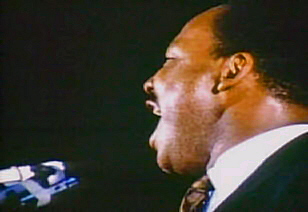
Martin Luther King Jr. (January 15, 1929 – April 4, 1968) achieved a moral stature and Christian witness that continues to inspire people of all faiths across the world. His life and work is commemorated not as a feast of the Roman Calendar but of the United States, on the third Monday of January each year. The human rights leader and Nobel Peace Prize laureate was 35 at the time of his assassination in Memphis, Tennessee.

Most people are familiar with his “I Have A Dream Speech” on the National Mall in Washington, D.C. However his final speech, delivered on April 3, 1968, “I Have Been to the Mountain Top,” not only presaged his death, but summarized his great vision for us all. You can hear by clicking on this link. It is well worth hearing in its entirety, not only because Dr. King was one of the great masters of English rhetoric, but the actual spoken message in its wonderful cadences, rich inflections, and profound rhythms stirs the soul with their inspiration.

Is Dr. King a saint? It is ironic to pose this question in regard to a Baptist minister, whose denomination – among others – has criticized the “worship” of the saints by Catholics. Like Dorothy Day, we can probably assume that Dr. King would dissuade us from giving him the title and remind us to return to the work of serving the least among us.

What is most remarkable about Dr. King’s legacy was the Christian witness of non-violence. Very easily, Dr. King could have kept the oppression of black people in the United States on a political level and built a base of power for himself. He also could have kept it on a “spiritual” level by focusing on the “next” life. Dr. King did neither. As a result, he elevated the whole movement to one of social justice and human rights for the children of God – of the “I” encountering the “thou” of the other person.

Let us develop a kind of dangerous unselfishness. One day a man came to Jesus, and he wanted to raise some questions about some vital matters of life. At points he wanted to trick Jesus, and show him that he knew a little more than Jesus knew and throw him off base….

Now that question could have easily ended up in a philosophical and theological debate. But Jesus immediately pulled that question from mid-air, and placed it on a dangerous curve between Jerusalem and Jericho. And he talked about a certain man, who fell among thieves. You remember that a Levite and a priest passed by on the other side. They didn’t stop to help him. And finally a man of another race came by. He got down from his beast, decided not to be compassionate by proxy. But he got down with him, administered first aid, and helped the man in need. Jesus ended up saying, this was the good man, this was the great man, because he had the capacity to project the “I” into the “thou,” and to be concerned about his brother.

Go and do likewise. (Luke 10:37)

Like anybody, I would like to live a long life. Longevity has its place. But I’m not concerned about that now. I just want to do God’s will. And He’s allowed me to go up to the mountain. And I’ve looked over. And I’ve seen the Promised Land. I may not get there with you. But I want you to know tonight, that we, as a people, will get to the promised land!

And so I’m happy, tonight.

I’m not worried about anything.

I’m not fearing any man!

Mine eyes have seen the glory of the coming of the Lord!!

Read More

Posted by on Jan 21, 2008

Saint of the Day: St. John of God – March 8

Saint of the Day: St. Agnes of Rome – January 21

st-agnes-gauld.jpg

St. Agnes (291-304) was a twelve year old Roman girl who was killed on January 21, 304 because she refused to marry the son of the Prefect Sempronius. Agnes was killed because she was a Christian virgin and wished to remain so. She is an early heroine of the church at Rome and is mentioned in the Eucharistic Prayer – the Great Thanksgiving – of the Mass.

There is very little we know about her except that she was a real historical person. Her faith and her strength at such a young age were seen as remarkable by Christian and non-Christian alike. In and of itself, it was considered a miracle. Agnes’s defiance of authority was not only rare, it was also foolhardy, particularly for a woman, let alone a girl, in her time and culture. In a culture which was licentious and in which the slaves and less powerful had no control of their own futures, let alone of their own bodies, Christianity would set a new standard which we take for granted today in a post-Christian world.

St. Agnes was martyred in the last great wave of persecution under the Emperor Diocletian. Within 20 years of her death, Christianity would become legalized in the Empire and the love of Christ for which she died would spread beyond her time and place throughout history. Human rights: dignity, autonomy, opportunity – the right to be whole, free, in love, caught up in the divine – were announced by the faith of a young girl of faith a long time ago.

Read More

Posted by on Jan 20, 2008

Saint of the Day: St. John of God – March 8

“Behold the Lamb of God” — “I did not know him.”

flower-gift.jpg 

The “Book of Signs” in the Gospel of St. John begins with the story of John the Baptist – the Baptist’s statement of his own role in preparing the way of the Lord and his witness to the role of Jesus. John the Baptist saw Jesus coming and told his disciples, “Behold the Lamb of God …” He also admitted to them, “I did not know him … but the one who sent me to baptize with water told me, ‘On whomever you see the Spirit come down and remain, he is the one who will baptize with the holy Spirit.'” (Jn 1: 29, 33) Based on the Baptist’s testimony, Andrew, brother of Simon Peter, and John, son of Zebedee, followed after Jesus and became his first disciples.

How truly even today we do not recognize the Lord came clearly to me about this time seventeen years ago. My husband and I had two wonderful sons, and we had been hoping to have another child. Everything seemed to point to it being the right time and I had become pregnant as we hoped. Then in mid-January, it all fell apart. The baby in my womb died. We found out the news on a Saturday, but there was no need to do anything immediately, so the decision was made to wait until Monday to arrange for further treatment.

We went ahead and took down our Christmas tree. We had the birthday party for our firstborn, with most of his classmates attending, as we had planned. And on Monday morning, as symptoms of the miscarriage appeared, we went to Kaiser and I had the procedure to complete the process.

It was a very difficult time. We had very much wanted that child. And it was not to be.

The previous year, we had received a free overnight stay at a nice hotel up in the California wine country, to be used at a time of our choice. So we decided to go there a week or so later. That evening, I went for a walk through the courtyard by myself. I was praying. It wasn’t easy to pray during those couple of weeks. I asked the Lord, “Where have you been?” And I received his response in a series of images of faces that came into my mind. The couple who had stayed into the evening after the birthday party, so we wouldn’t have to be alone with our sorrow. The nurse who did the preliminary exam and shared that she too had lost a baby, but now had a healthy child. Another nurse who held my hand and told me it was OK to cry, as the procedure began. The doctor who was so kind and gentle. My parents, who sent flowers. They had never sent flowers before that day, but they did when I needed them. The other relatives who sent cards and plant arrangements. My son’s teacher, herself a young widow, who came after school and spent a couple of hours with me, just being there.

As all of these images and memories came to me, I knew where Jesus had been. He was right there, in his body, the People of God, the Mystical Body of Christ, about whom I had learned as a child. He was with me.

Behold the Lamb of God. Like John the Baptist, I did not recognized him when he came in person through all those wonderfully kind and thoughtful people. But the Lord is kind, and, like the Baptist, I got a second chance to recognize him – in the images of their faces that came to me that night.

Where is the Lamb of God in your life today? Keep your eyes and ears open. He is here, hoping you’ll recognize him in those around you. He’s here, too, hoping you’ll be helping him today to reach those who need his touch today.

Behold the Lamb of God!

Read More

Posted by on Jan 17, 2008

Saint of the Day: St. John of God – March 8

Saint of the Day: St. Anthony the Great – January 17

stanthony-abbot.jpg

The feast of St. Anthony the Great (251-356) is January 17. In the Egyptian or Coptic Orthodox and Coptic Catholic Churches, the feast day is January 30. He is also known as St. Anthony the Abbot and is an early example of the Christian monk. What we know of his life comes from a biography written by St. Athanasius, the patriarch of Alexandria in Egypt. The account was written in Latin and had a major impact on the development of monasticism in the West. Devotion to St. Anthony is less prominent in the East.

St. Anthony is best known for his literal following of the Gospel. According to St. Athanasius, St. Anthony’s parents died when he was a young man. Hearing the call of Christ in St. Matthew’s Gospel to sell everything he had and come follow Christ, St. Anthony, who had inherited a substantial estate from his parents, did just that. He spent his life in the desert, primarily alone, although toward the end of his life he did supervise some other monks who had joined him. They lived with the fundamental rule to work and pray, which would later be echoed by St. Benedict of Nursia.

What is noticeable in the account of St. Athanasius is the theme of spiritual warfare with the devil. St. Anthony overcame many temptations through prayer and faith. His life in the desert brought him the same temptations that Christ encountered during His soujourn in the desert. What is even more notable is that St. Anthony emerged from his time of testing as someone enlightened who could comfort and heal, someone people sought out not for his wisdom or knowledge, but for his goodness and genuine holiness.

As postmodern people, we have a highly developed notion of individual psychology and it can be difficult to relate to someone like St. Anthony. Our notion of self-actualization appears to get in the way of such an extreme life style of self renunciation. However, it is hard to see how such enlightenment is not the highest form of self-actualization. Today our spiritual heroes, such as Mother Teresa, have chosen a very challenging path not unlike that of St. Anthony. What desert are we being called to?

Read More

Posted by on Jan 12, 2008

Saint of the Day: St. John of God – March 8

The Feast of the Baptism of the Lord

baptism-of-jesus.jpg 

The third Sunday after Christmas is the Feast of the Baptism of the Lord. On this day we recall that Jesus went out to the Jordan River, where his cousin John was baptizing, and himself entered into the water to be baptized. All four of the gospels tell of this event, in which the Spirit of the Lord came to rest upon Jesus, like a dove. Matthew, Mark and Luke tell us that a voice spoke from the heavens, saying, “You are my beloved Son; with you I am well pleased.” John tells us that John the Baptist told his disciples, “Behold the Lamb of God, who takes away the sins of the world.”

Jesus’ baptism was a life changing event for him. He went out into the desert to pray and to ponder and absorb the immensity of what had been revealed to Him as He stood in the water with John. This experience of coming to know that He is God’s Beloved Son was the foundation for His entire ministry. When He returned from the desert, He began going among the people and spreading the Good News that God cares about what happens to people here and now, that God loves even the most insignificant person, that loving actions speak louder that pious prayers, that joy and peace are signs of the presence of God.

Each of us, in our own baptisms, have been given the gift of sharing in the life and work of Jesus. This feast is a reminder to us of that great gift and of the fact that our response is to be like that of Jesus – to go out now and share the same Good News through our actions in our daily lives, with peace and joy and love.

Read More

Posted by on Jan 12, 2008

Saint of the Day: St. John of God – March 8

Quote of the Day – Megan McKenna

mckenna01.jpg

The majority of the world is struggling to survive under awful conditions, while the Church in the US seems preoccupied with in-house issues of liturgy, teaching, words, and a few issues in the US politics/power. The bulk of Catholics worldwide are struggling with poverty, the earth/resources/
globalization, immigration and how to love one’s enemies, not superficial issues. … The Church must become an alternative witness of hope and other ways to live than the dominant ones that are destroying people, cultures and the earth itself. The Church must become small communities living justice, caring for the poor.”

Megan McKenna, as quoted in “Prophetic Voices in the Church,” Observer, January 2008

Read More

Posted by on Jan 11, 2008

Saint of the Day: St. John of God – March 8

“Pretty Good News”

solar-flare.jpg

Many years ago, in the olden days when I was young (as one of my children once put it), we had a new young assistant pastor in our parish. He blew into town and began immediately making changes in the parish – cleaning out closets, tossing stuff for which he didn’t see an immediate need, organizing new people to participate in ministries, etc. It was not an easy time for those of us who had been ministering in the parish for many years and had just happened to be out of town for a couple of weeks when he arrived and found no one filling our places in the community. Some toes got crunched. Some feelings got hurt. Some people moved into new ministry in other communities. And some people got newly involved in service within the community who might never have stepped up to serve if he hadn’t asked them! As they say, with every cloud, there’s a silver lining.

I thought of this today as I reflected on this week’s readings from the First Letter of St. John that have appeared in the daily Mass liturgies. Their themes have been those of light shining in darkness, of love overcoming all else, and of living in the light, letting God’s light and love shine forth into our world through our love of those around us.

One day in that long ago time, I received a note in the mail from Fr. New Young Priest. I had done something for which he was sending a “Thank you” note. (I’ve no idea today what it was.) Those were the days when it was a new, exciting idea to cut a picture from a magazine and make your own notes and cards. He had cut a picture of a young woman from a magazine and glued it to a half sheet of blue paper. He wrote a quote from John’s Gospel beside it. “The light shines in the darkness, and the darkness has not overcome it” (Jn 1:5) It was a very simple note, but striking in its simplicity and power. On the back of the note, he wrote, “Pretty good news, huh!” and a simple thanks, with his signature.

The note really touched me. It was so lovely that I covered it with clear contact paper and taped it to the wall in my room. When I left home after college, I took it with me. Once in a while, I still find it in my attic, in a box of well loved treasures from my childhood and youth, and it always brings a smile.

He was right. And St. John was right. That the light cannot be overcome by even the greatest darkness is indeed “pretty good news.”

Read More

Posted by on Jan 8, 2008

Saint of the Day: St. John of God – March 8

5 Loaves, 2 Fish, and a Lesson for the Community

loaves-fish.jpg

Today’s Gospel reading is from St. Mark, the story known as “the feeding of the five thousand” (Mk 6:34-44).

In this familiar story, Jesus and the twelve apostles have traveled across the Sea of Galilee to a deserted area, to get away from the crowds of people and get a bit of rest. The people had seen where they were going and followed on foot, around the lake. Mark says that Jesus was “moved with pity” when He saw them and began to teach them. It was getting late and the disciples suggested that Jesus should send the people back to the towns so they could find food and places to spend the night.

Jesus surprised them by telling them to feed the people themselves. They protested that it would cost “two hundred days’ wages” to feed so many. This didn’t faze Jesus. Instead, He asked, “How many loaves do you have? Go and see.” They returned with the news that they had five loaves and two fish. Jesus instructed them to have the people sit down in groups. Then He took the food they had, blessed it, broke it into pieces and told the disciples to pass it out among the people.

When everyone had eaten their fill, they gathered up what was left and found they had 12 baskets full of leftovers.

In this last week of the Christmas season, following our celebration of the shining forth of the light to the Gentiles too, what are we to make of this story? Why is it told here?

It seems to me that it’s here with good reason.

First, however, it’s important to understand a bit about the customs of the people at the time. We’re used to going places and taking a food with us, which we can eat in front of others without experiencing any social requirement to share it with people who are not part of our group. That was not the case in Palestine at the time. If you had food, you could only eat it if you had enough to share with those in the group with whom you found yourself. Hence the disciples’ dilemma – where and how could they get so much food?

It seems to me that we should assume that families took some food along with them when going out into a deserted area with their children. Most of us would grab something for the children (and for ourselves too, in most cases) when racing out the door to see a celebrity, if for no other reason than to keep the children quietly occupied during the event. I don’t think it would have been that much different in those days.

However, no one would have had enough to feed all of those around them, so the food would have stayed packed up, hidden within the robes and traveling bags of the people.

When Jesus told the disciples to share what they had with the large crowd (5,000 men plus women and children), He didn’t tell them He was going to multiply the food miraculously. He just gave thanks for the food they had, asked a blessing on the meal, and began sharing it. With that example, everyone else who had food with them was freed to take it out too, and share it with those around them. It became a great picnic! No one was restricted to only what they owned or had brought. On the other hand, no would have felt compelled to hide or guard what they had. All could share it. And the result was that there were 12 baskets more of food than was needed!

During this week, as we reflect on the great gift of salvation having been extended to all peoples, this lesson is appropriate. We each have something. It may not be much. But it is something that we can share with the community, with our community on a local level and with our larger global community. There are problems that need to be solved. There are wrongs to be righted. There are joys and sorrows to be shared. None of us can do everything. None of us can change all of the structures of our society or our church. None of us can even meet all of the needs of our individual families. However, all of us can step out in faith and do a little bit. Show a little compassion. Give a hand to someone who is down. Listen to someone who needs a friendly ear. Pray with someone who is alone.

As we do this in faith, we join the larger community of Christian witnesses who have truly changed the world, one problem and one little step at a time. Jesus asks us to look at what gifts we have, give thanks for them, and then start sharing them with those we meet. As we respond to His leadership, “miracles” will happen in our world.

Read More