Pages Menu
RssFacebook
Categories Menu

Posted by on Dec 1, 2007

A Limrick for Christ the King

A Limrick for Christ the King

the-exalted-jesus.jpg

It’s nearly a week now since the feast of Christ the King, but today I received a limrick in the mail that was written last Sunday by a member of my home parish, St. Patrick Parish in Spokane, Washington. On this last day of the liturgical year, I share with you Dennis Johnston’s reflection on the readings for Christ the King. (The accented syllables are the ones to be stressed when reading the limrick.)

Sure we célebrate nów Christ the Kíng,
To his lóve and light álways we clíng.
In His Kíngdom Etérnal
We shun dárkness inférnal —
For forgíveness, faith, mércy we síng!

Thanks, Dennis, for your gift of this poem.

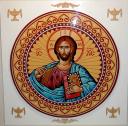
And thank you, Yom Jae Won, of Korea for your painting, “The Exalted Jesus” shown here.

Read More

Posted by on Nov 30, 2007

A Limrick for Christ the King

Saint of the Day – St. Andrew

st-andrew-apostle.jpg

November 30 is the feast day of St. Andrew, the first apostle called by Jesus. He was the brother of St. Peter and introduced Peter to Jesus. There is very little we know about his life. The Gospels show him present in the ministry of Jesus but in the background, while Peter, James, and John are out front.

The Gospel of Mark (1:16-17) tells of his call by Jesus.

As he passed by the Sea of Galilee, he saw Simon and his brother Andrew casting their nets into the sea; they were fishermen.
17
Jesus said to them, “Come after me, and I will make you fishers of men.”

The first chapter of the Gospel of John presents the call differently:

The next day John (the Baptist) was there again with two of his disciples,
36
and as he watched Jesus walk by, he said, “Behold, the Lamb of God.”
37
The two disciples heard what he said and followed Jesus.
38
Jesus turned and saw them following him and said to them, “What are you looking for?” They said to him, “Rabbi” (which translated means Teacher), “where are you staying?”
39
He said to them,”Come, and you will see.” So they went and saw where he was staying, and they stayed with him that day. It was about four in the afternoon.
40
Andrew, the brother of Simon Peter, was one of the two who heard John and followed Jesus.
41
He first found his own brother Simon and told him, “We have found the Messiah” (which is translated Anointed).
42
Then he brought him to Jesus. Jesus looked at him and said, “You are Simon the son of John; you will be called Cephas” (which is translated Peter).
43
The next day he decided to go to Galilee, and he found Philip. And Jesus said to him, “Follow me.”
44
Now Philip was from Bethsaida, the town of Andrew and Peter.

There is a tradition that St. Andrew was crucified on an X shaped cross at Patras in Greece. We don’t really know where he went to spread the Gospel. Many countries from Greece to Russia claim him. He is the patron saint of Scotland.

These few lines from the Gospels show us a working man who heard the call of John the Baptist with his brother Peter and then followed after the Man John had called the Lamb of God. There is always a human desire to know more about such a person, but what we do know is that St. Andrew challenges us to leave our nets behind and follow too.

Read More

Posted by on Nov 26, 2007

A Limrick for Christ the King

Feast of Christ the King – The Reign of God

pantocrator.JPG

“He is the image of the invisible God, the firstborn of all creation. For in him were created all things in heaven and on earth, the visible and the invisible, whether thrones or dominions or principalities or powers; all things were created through him and for him.

He is before all things, and in him all things hold together. He is the head of the body, the church. He is the beginning, the firstborn from the dead, that in all things he himself might be preeminent.

For in him all the fullness was pleased to dwell, and through him to reconcile all things for him, making peace by the blood of his cross (through him), whether those on earth or those in heaven.

And you who once were alienated and hostile in mind because of evil deeds he has now reconciled in his fleshly body through his death, to present you holy, without blemish, and irreproachable before him”

                                                                                     Colossians 1:14-23

The feast of Christ the King is very recent. Pope Pius XI established it in 1925 to reassert the centrality of Christ in a world confronted with communist atheism and secular agnosticism. The feast is widely observed by other liturgical denominations, including Anglicans and Lutherans.

The feast of Christ the King was originally observed on the last Sunday of October, closer to all Saints Day, November 1. After the reforms of the church calendar in 1965, the feast was moved to the last Sunday of Ordinary Time – the Sunday before the first Sunday of Advent. It is the last Sunday of the liturgical year and provides a culmination that is solemn but not triumphal.

Strictly speaking, the term “basilea” in Greek is not equivalent to our sense of “kingdom” in the sense of territory. Scholars prefer terms like reign or dominion. The reading from Colossians – the second reading of the day – more aptly summarizes the meaning of the feast. All creation was made for Him and in Him and the love of Christ rescues us from our alienation from ourselves and our true meaning.

Read More