Pages Menu
RssFacebook
Categories Menu

Posted by on Apr 16, 2023

That You May Have Life in His Name

That You May Have Life in His Name

The Gospel According to John concludes with the statement that “Jesus did many other signs in the presence of his disciples that are not written in this book.” The signs that have been included were selected to help others believe “that Jesus is the Christ, the Son of God” and as a result have “life in his name.” There is an Appendix that was added at some point after these final words from the twentieth chapter, but most scholars agree that the Appendix was written by someone else.

John divided his account of the Good News of Jesus’ life into two sections: The Book of Signs and The Book of Glory. The Gospel opens with the famous Prologue, “In the beginning was the Word.” The book of Genesis begins with the same phrase, “In the beginning.”

The Book of Signs starts with Jesus’ baptism at the Jordan River and concludes with his triumphal entry into Jerusalem on Palm Sunday. The Book of Glory begins with the washing of the feet of his disciples and a long teaching on love and trust in God at the Last Supper. It continues through his passion, death, resurrection, and appearances to his friends, including Mary Magdalene in the garden.

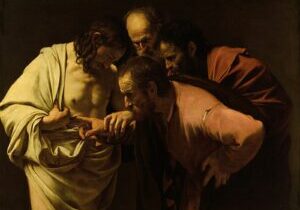
The story of Jesus’ appearance to his friends in the locked room on Easter Sunday night and his return visit a week later when Thomas was present as well, are the final stories of the Book of Glory. (Jn 20:19-31) In these two stories, Jesus appears among his friends without warning or notice of any kind. He is simply and suddenly there with them. His first word to them each time is the greeting, “Peace be with you.” This peace is a deeply existential peace. No matter what happens, this peace will remain. It is a peace that is lived. It is a peace that brings healing and forgiveness – a peace that leads to community and life. His words to Thomas sum up nicely Jesus’ love for all those who would never meet him in person but who would become his followers through the centuries: “Blest are they who have not seen and have believed.” The Resurrection peace of Christ extends to each of us as well.

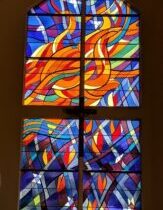
On the Feast of Pentecost, the Holy Spirit blew into the lives of the disciples in a very special way. They stopped being afraid and hiding from the authorities. Instead, they stepped into the public eye and began to witness boldly to their experience of Jesus’ coming and his resurrection. Many people believed their witness and began to gather together to live as a community. St. Luke describes their lives in the first part of the Acts of the Apostles. They shared what they had, cared for those who had little, gathered to pray at the Temple, broke bread in their homes as Jesus had instructed them to do, and shared their meals together. The community grew rapidly and shared a sense that they had been saved and given new life through the teaching and sacrifice of Jesus. The resurrection changed everything. New life was theirs. (Acts 2:42-47)

As the community grew and spread into other areas, the sense of new birth and a living hope through Jesus’ resurrection became a characteristic of its members. The letter of St. Peter (1 Pt 1:3-9) reminds those who believe in Jesus that an imperishable inheritance is waiting for those who remain faithful. Through their trust and perseverance in loving Christ, they will reach their goal, the “salvation of your souls.” The teachings of those who were witnesses to the actions and teachings of Jesus have led those who were not present to share the same faith with those who were. And all will have “life in his name.”

It has been one week since we began our celebration of the Resurrection. Will Jesus be present in our homes at the end of this day? Where and how will we see him? How will we offer forgiveness to each other for times we have been hurt? How will we seek forgiveness for the times we have hurt others? And as loved and forgiven sisters and brothers of Jesus, where is the Lord sending us? To whom will we bring the good news of God’s love?

Readings for the Second Sunday of Easter

Read More
Posted by on Apr 8, 2023

What a beautiful night – Resurrection!

What a beautiful night – Resurrection!

What a beautiful night!

¡La noche de la resurrección!

It is a night that burns brighter than day. The darkness is banished by the light of love. Death is vanquished by the light of joy. Our fears have been taken away. Our crucified Lord is dead no more. The blinding light of the angel and the earthquake rolling away the stone stuns all of us.

En la madrugada las tinieblas moradas se rompen por el terremoto y el relámpago del ángel. Conmovidos, nos asustamos cuanto más al oír la consolación del ángel, “No temas.” Dios llega con su poder y gracia para rescatarnos. No temas.

Yet, the blinding light of the Angel’s voice tells us not to be afraid. We are shaken and our legs are trembling. But is this true? Yes! Our fear gives way to excitement. Go tell the others. You wept for him and anointed his body, torn and broken on the cross. You stayed with him until the end and now you have come to mourn him, but he is not here!

Al amanecer, la resurrección, se evanescen nuestros miedos, nuestras angustias, nuestra tristeza. Hemos visto el sufrimiento de los inocentes, hemos encontrado desconsolados la matanza de niños escolares. Hemos visto y tocado la fiebre del temor del COVID. No temas. Están sueltos de los lasos de la muerte como El Señor. Todo el sufrimiento de las cruces de la humanidad ha sido vencido por la cruz y resurrección del Salvador Victorioso.

Christ is victorious! Death has no power over him. Joined to him we have the promise of everlasting life. Heaven and earth are reconciled. With Him and in Him all glory, honor, and praise are given to the Almighty Father.

The forces of evil, despair, and distrust fell on Him and He vanquished them with compassion. “Father, they know not what they do.” In this priceless witness, the forces of derangement became only more furious. But He conquered them not by force but by coming forth from the sealed tomb.

Cristo en su triunfo ha vencido las fuerzas del pecado y furia por su humilde fe en la voluntad de su Padre. Lo captaron y crucificaron por su miedo, por su temor de que El los derribara de sus tronos y elevara a los humildes y mansos. Una luz resplandeciente que hace mover la tierra en sí misma nos ha amanecido en esa noche de nuestras velas de esperanza como estrellas en el domo del cielo.

Through the sin of Adam, a promise is made and fulfilled. God comes to pitch his tent with us. Light from light, True God from True God, begotten not made.

El cirio de la luz eterna rompe las cadenas de la oscuridad. La llama vacilante abofeteada por los vientos de nuestros tiempos, impulsados por la indiferencia, el enojo, y la desesperanza, la luz del cirio brilla aún más. Nos guía a través de las brisas de nuestra peregrinación, a través del Mar Rojo a pesar de nuestra duda. Anda en frente de nosotros por noche en el desierto desconocido y mostrándonos el camino al Padre.

“Go to Galilee.” “Go tell the others.”  You will see him there. He is not here. But surely, He is here. We go to tell the others. Leaving our jars of spices and unguents to perfume the dead; leaving our wine and spices to wash the dead. We find him! We fall at his feet. He smiles and lifts us up. Go tell the others.

Mary of Magdala, relieved of seven devils by the Lord’s touch, weeps at the open tomb. His body has been stolen. Where have they taken him? The gardener must know. He must know. “Tell me sir, tell me where have they laid him?” So quietly, so gently, kindness meets my ears. “Mary!” He calls through my tears. The gardener tends a new paradise where sin cannot enter, nor ugliness, but only the sweetness of blossoms. “Mary!” I look up. “Rabboni, it is you!”

Nos da nueva vida el jardinero del paraíso. Su voz suave seca nuestras lágrimas. Con precaución levantamos nuestros corazones. ¿Puede ser? La tumba fue vacía. Ni sabemos por donde lo llevaron. Señor Jardinero, ¿sabe usted a dónde lo llevaron? y nos llama por nuestro propio nombre. ¡Cómo queremos quedarnos en este jardín de dulce alegría!

¿Sólo era en el pasado la tumba vacía?

The Angel tells tourists today, “He is not here.” We come with our phones and cameras, in our sandals and shorts. We are here to see the empty tomb. “Have you listened to the women and gone to Galilee?” the lightening voice asks. This is not history. This is your story. What are you going to do with this second chance? How will your sorrow be turned into joy? How will your smile conquer the frown in your heart? Is it enough to marvel at the paschal candle, the singing, the flowers and the lights? This holy night is only the beginning. On your way, as you leave the garden, pay heed to the Gardener to find your name and yourself.

Ya amanece el sol, Víctor de la madrugada. La estrella de la mañana surge en nuestros corazones. Cristo Rey victorioso, crucificado y muerto por las fuerzas de la maldad, triunfador resucitado desde la muerte llevando a nosotros consigo a la derecha del Padre.

Cristos Anesthe, Alethos Aneste, Christ is Risen, Truly Risen.

¡Viva Cristo Victorioso!

Readings for Easter Vigil– Lecturas para la Vigilia Pascual

Readings for Easter Sunday – Lecturas para Domingo de Pascuas


Read More

Posted by on Apr 2, 2023

A Destination is Reached

A Destination is Reached

We have arrived at the end of Lent. Today we enter, with Jesus, into Holy Week. We have traveled with him from Galilee, through Samaria, to Judea and Bethany. We have heard that he brings living water, sight to the blind, and life to the dead. Today we see him enter Jerusalem, riding on a donkey. Kings and conquering heroes entered cities on horseback, with great fanfare, welcomed by throngs of people. Jesus entered on a donkey, as had been foretold in ancient scriptures (Zec 9:9). This is not a conquering hero. This is a man of peace.

On Palm Sunday, as we enter into Holy Week, we hear of Jesus’ triumphal entry into Jerusalem. Immediately afterwards, we hear Matthew’s account of his Last Supper, the agony in the Garden, his trial, and his execution as an enemy of Rome. It’s a week of powerful readings, profound emotions, and great mystery.  We travel with him from the heights of praise to the ignomy of death on a cross, outside the walls of the city, by the city dump.

God did not choose to come among us as a conquering hero. He did not choose an easy life, filled with praise and luxury. He didn’t worry that the powerful might not like to hear the news that the poorest among them were cherished by their maker. He chose to experience all of the ups and downs of human life. Security in family life and career. Excitement in working with people. Wonder in seeing the growing faith and hope of the community. Joy in being able to help relieve suffering. Courage in speaking truth to power. Fear in knowing that great suffering would soon be unavoidable, especially if he did not back down from the truth he had been called to proclaim. Betrayal at the hand of a trusted friend. Terrible pain in the end, as he suffered a death reserved for those who had committed great crimes, including rebellion against Rome. Burial in a borrowed tomb.

Yet through it all, Jesus did not back down. The Son of God, the Word made flesh, who pitched his tent among us, held on to the reality he had come to understand and proclaim. A new day had dawned. Creation was new again. The relationship between God and humans was healed.

As he was dying, Jesus prayed one of the most powerful psalms ever written. “My God, my God, why have you abandoned me?” It sounds like the words of a man who is despairing. They are certainly the words of a person in great distress, and Jesus had to have been in great distress. But more than that, it is also a song/prayer of great faith and hope. Psalm 22 describes the agony of a man who has been betrayed, abandoned, and mocked by all. “He relied on the Lord; let him deliver him, let him rescue him, if he loves him,” say his tormentors. The prayer continues, with more description of the agony being endured, until finally a great song of praise and hope bursts forth, “I will proclaim your name to my brethren; in the midst of the assembly I will praise you…”

As we travel with our Lord through this week, may we too know the love and consolation of our God, who didn’t hesitate to enter into human life and share it all, especially the hard times, when hope seems far away. He will be there to meet us in those hard times, because he experienced them himself.

Blessed Holy Week to all.

Readings for Palm Sunday of the Lord’s Passion

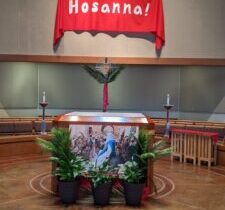
Palm Sunday liturgy – Resurrection Catholic Community – Aptos, California

Read More

Posted by on Jan 8, 2023

Epiphany – The Light Shines Forth

Epiphany – The Light Shines Forth

A great light shining forth in the darkness. A manifestation of something unusual. A new understanding of something. All are included as meanings of the term epiphany and are not mutually exclusive. More than one meaning can apply to any particular situation.

Since ancient times, Christians have referred to various events in the life of Jesus of Nazareth as epiphanies. He was born. He was visited by wise men from the east. He was baptized. He was seen after the resurrection. All of these events have been described by the term Epiphany.

The Epiphany of the Lord, celebrated in the Roman Catholic Church on the first Sunday following January 1, is the day we remember the visit of the sages from the East. These scholars watched the skies for signs that something important was happening somewhere in the world. Each part of the sky, each constellation, carried a meaning. If something changed within that section, it meant something was changing for humans too. Accordingly, when they noticed a new light appearing in a region of the sky related to the land of Israel and to royalty, they went to see who had just been born. (They lived close enough to this event to go for a visit!)

St. Matthew (Mt 2:1-12) tells of their visit and gives us an historical time frame that also tells us approximately when Jesus was born. “In the days of King Herod …” Herod was king from 37 to 4 BC, so Jesus was born during that time. The travelers stopped at the royal palace to inquire for the new child, a reasonable thing to do, given that the child was born to be a king according to the stars.

The wise ones were sent on to Bethlehem, where indeed they found the child and his parents, no longer in a stable, but in a house. Their gifts were shared and they returned home without checking in again with Herod. An angel had warned them in a dream that Herod was not to be trusted.

This event was and is seen as the first time non-Jews were welcomed into the new manifestation of God’s kingdom of love for all humans. In the past, it had been understood that people would come from all over the world to Jerusalem, to the house of the Lord. But the full meaning of the prophecy of Isaiah (60:1-6) was not totally obvious. “Nations shall walk by your light … your sons come from afar and your daughters in the arms of their nursemaids.” These words originally were spoken in terms of the return from Babylon to Israel. But the early followers of Jesus understood them to refer to people of all nations who would become part of the people of God, children of the covenant centered in Jerusalem.

On this day we celebrate that we are included among the many nations that rejoice at the light dawning with the coming of Jesus. We bring the gift of ourselves to the community of faith. Together we offer our gifts and talents along with the bread and wine on the altar. We sing of three kings coming to visit a baby. May we also sing with reference to our own lives. “Star of wonder, star of night … guide us to the perfect light.”

If you have time and are so inclined, it’s fun to make a Kings Cake / Rosca de Reyes to share with family and friends on this day.

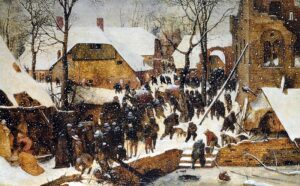
Illustration: The Adoration of the Magi in the Snow – 1563 by Pieter Bruegel the Elder – Look for the magi in the lower left corner of the painting!

Read More

Posted by on Jan 1, 2023

Mary of Nazareth – Mother in Faith

Mary of Nazareth – Mother in Faith

The first day of each new calendar year we celebrate the wonder of God’s blessing in becoming one of us. Without the consent of a young woman, barely past girlhood, it could never have happened. This is not a case of a deity forcing himself on a woman or seducing her. The child is not a demi-god. This child, born of this young woman, is fully human and fully divine. It’s a mystery that we can’t explain and it took many years before it was established as the formal, uncontested, belief of the community of Followers of the Way, the Christians.

We hear the blessing the Lord God instructed Moses to bestow on the people. (Num 6:22-27) “The Lord bless you and keep you! The Lord let his face shine upon you, and be gracious to you! The Lord look upon you kindly and give you peace!” And how does God do that? In the fullness of time, God comes among us as a child, his very own Word made flesh, a son. And because of this great gift, we too share in the reality of being children of God. (Gal 4:4-7)

Was this just for the rich and powerful of the world? No. It was first announced to a teenage girl, who agreed to become the mother of this very special child, then to the man who would be his earthly parent, and when he was born, to shepherds. Shepherds were not admired or particularly respected folks. They lived with their sheep. But they heard the words of the angels and believed. They visited the child and his parents, then returned praising God for this gift. (Lk 2:16-21)

The Gospel today concludes with the statement that on the eighth day after his birth, the child was circumcised (making him a member of the Jewish community) and given the name Jesus, as instructed by the angel before his birth.

“And Mary kept all these things, reflecting on them in her heart.”

We too are called to reflect on them. Mary became Mother of God. She wasn’t protected from the hardships of daily life. She didn’t always understand what was happening. She certainly didn’t expect this baby to grow up to become an itinerant preacher and miracle worker. Her heart was broken as she saw him die. Yet from the beginning, she agreed to be his mother, raising and loving him, reflecting on it all in her heart.

We honor her today and imitate her faith in our daily lives.

Read More

Posted by on Dec 30, 2022

Family In Its Many Facets

Family In Its Many Facets

Families come in many shapes and sizes. It’s something of a cliché to say that, but it’s true. We are each part of a family. Some are born into the family in which they grow up. Others are chosen and adopted into a family. Some are sheltered and loved by a family into which they were not originally born. But families are an essential part of the healthy development of any human being.

And about that many shapes and sizes part – there’s a lot of variation there too.

In some cultures, only one’s father’s side of the family are considered to be relatives. In others, it’s mother’s side. In a few (our own included), both sides of the family are relatives.

Then there are the “fictive kin” – the folks with whom relationships are established by choice of adults in the life of a child, or later by the individuals themselves. Godparents are fictive kin, for example, considered to be sharers in the responsibility of raising the child.

There are folks to whom we give kinship titles simply because they are older adults in our community or the network of friends of our relatives. We had several older women whom we called Grandma when I was growing up. One was the mother of an uncle by marriage. Another was the mother of friends who generously shared her love with us too. In some cultures, adult men and women are addressed as Uncle or Aunt.

And then there are the families that grow together in close friendship through many years spent together. We shared our lives with another family as children. Our parents became very close friends over the years. We traveled to see each other often and spent Thanksgiving together nearly every year. (The roads were too dangerous for regular travel again until February or March after that weekend.) When they moved to our community, we shared meals and time together at least a couple of times a week. We are still fond of each other and enjoy our time together.

These thoughts come to mind as we celebrate the Holy Family. Jesus was born into a family. When Joseph accepted Mary as his wife, he became the legal and social father of Jesus. How the conception of Jesus occurred didn’t matter. Joseph became Jesus’ father, responsible for loving him, teaching him, raising him to be a good man. Joseph did a fantastic job of being a father, just as Mary did a marvelous job of being a mother.

Jesus, Mary, and Joseph were not an isolated family. They lived, loved, and grew together within a community of other people in their village. This foundation prepared Jesus to go out when the time came and share the news that each of us is loved as a child by the Creator of all. We are so loved that we are to call that creator Dad/Daddy/Papa/Father. The term he used is Abba and is used by children to this day to speak to their fathers.

On this Feast of the Holy Family, let us rejoice in the gift of family and pray that in our lives we too will grow in wisdom, age, and grace through our days spent in ordinary activities and the special times that we share. May we each become part of a Holy Family too, dancing our way into eternity.

Readings for the Feast of the Holy Family

Read More

Posted by on Nov 20, 2022

A King with the Common Touch

A King with the Common Touch

Most of the time, we Americans don’t pay a lot of attention to what’s going on in the world of royalty, except for the times there are scandals or public disagreements among the royals. But this year was different. Queen Elizabeth of England passed away and we witnessed the transition of positions among members of her family. Her son Charles is no longer Prince of Wales. He is now King Charles. His own firstborn son is now next in line for the throne, becoming Prince of Wales. There was much pageantry, much emotion, and great interest in the process, not only in Great Britain, but around the world.

Part of the reason for so much interest in the lives of royalty is that most of us have lives that are far from royal. We are fascinated by the power and the privileges of these men and women. We don’t see the day-to-day reality of their lives as human beings behind the scenes of their royal duties. Privacy gets maintained for the most part by those who work in the palaces and for members of the royalty. But the freedom to slip out of the palace and go to the grocery store or down the street to the park on a short walk is not part of the reality and privilege of royal life. What we might call “the common touch” is not a general feature of life for kings, queens, and their families. They are kept in a royal bubble.

As we come to the last Sunday of our liturgical year, the question of kingship arises. This is the Solemnity of Our Lord Jesus Christ, King of the Universe, more commonly known as the Feast of Christ the King. What does it mean for us to say that Christ is King? We don’t have kings and queens whose actions affect our daily lives. The majority of humanity does not. Yet we speak of Jesus as King of the Universe.

This feast celebrates the reunion of the human with the divine. The readings remind us of the ways kingship and down-to-earth relationships with ordinary people go together in God’s world.

We begin with the story of how David, a former shepherd boy, came to be king of all the tribes of Israel. (2 Samuel 5:1-3) David was anointed by the prophet Samuel to be the second king of Israel while Saul was still king. He was the youngest son of his parents and not at all seen as a person who might one day be king. However, the Lord told Samuel that each of the older brothers was not the one He had chosen. Finally, after Samuel had met and rejected each of the older boys, David’s father called him in from tending the sheep. Samuel anointed him immediately and David went back to tend the sheep.

As time went on, David left the sheep to take supplies to his brothers in Saul’s army. There he defeated Goliath, then as time went on, led soldiers against the enemies of Israel, avoided being hunted down and killed by King Saul’s armies and allies, and eventually was asked to be king of some of the tribes. After Saul’s death, the leaders of the tribes joined together and asked him to be king of them all. They noted, “The Lord said to you, ‘You shall shepherd my people Israel and shall be commander of Israel.’” This man, who had literally been a shepherd, was entrusted with the care of all his people. There was no hereditary monarchy yet in Israel. Saul’s sons did not inherit their father’s throne automatically. A man with the common touch, who knew a life of caring for animals and people, became the leader and ruler of the tribes.

St. Paul, in his letter to the Colossians, (1:12-20) reminded his brothers and sisters to thank the Father for making them ready to share in the life of God’s kingdom, for rescuing them from the power of darkness and transferring them to the kingdom of the beloved Son. He quotes a beautiful statement of the role of Jesus in history: the image of the invisible God, firstborn of all creation. Creation came about through him. All things are held together in him. He is the beginning, the firstborn, head of the church, the one who holds all together. And how can this be? “All the fullness was pleased to dwell” in him and “through him to reconcile all things for him.” Jesus, through his death, made peace between heaven and earth once again. This King, this word that brought all into being, didn’t hesitate to become a human being, a “common person.”

As Jesus hung on the cross, a sign was placed above his head. The sign read: “This is the King of the Jews.” It was a mocking notice to all who passed along the road that opposition to Roman rule would not be tolerated. Those passing by saw the sign and taunted Jesus, “If you are King of the Jews, save yourself.”

St. Luke described the scene for us. (Lk 23:35-43) Two men were crucified with Jesus. One of them joined the folks who were taunting him, but the other spoke up. He reproached the other man and then spoke directly to Jesus. “Remember me when you come into your kingdom.” Jesus did not look down on or condemn the man who was being executed for having committed a serious crime. Instead, he promised, “Today you will be with me in Paradise.”

Jesus had the “common touch.” He was an ordinary person, who just happened to be the one in whom the fullness of God was also dwelling. He brought the Almighty and the created ones into union again. He was and is a King in the best sense of the word. He is also one of us, in the best sense of what that means.

Today we celebrate the gift of such a King. We are called to live as he did and help build the kingdom through our daily lives. He led the way. We follow and model our lives on his. And in times of trouble, he reaches out from the place of suffering that he experienced and holds us tight, helping us bear our pain and remain trustingly in his embrace, until we too are raised to new life. He did it for the thief on the cross. He does it for each of us too. We give thanks for this great gift.

Readings for the Solemnity of Our Lord Jesus Christ, King of the Universe – Cycle C

Read More
Posted by on Jun 19, 2022

We remember, We Celebrate, We Believe

We remember, We Celebrate, We Believe

The second Sunday after Pentecost we celebrate the Solemnity of the Most Holy Body and Blood of Christ. On this day we remember Jesus’ words and actions at the Last Supper, when he took the bread, blessed it, broke it, and gave it to his disciples. He told them to take it and eat it. It was his body, given for them. They were to do the same in remembrance of him. He also took the cup of wine that would normally close the meal with a toast to God. He told his friends it was the cup of the new covenant in his blood. Again, “Do this … in remembrance of me.”

How, you ask, do we know this? It’s there in the Gospels, but they were mostly written later. Today, however, we hear one of the earliest voices telling of this event. St. Paul, in his first letter to the Corinthians, tells us of Jesus’ words and actions on this last night of his life. (1 Cor 11:23-26) Paul doesn’t say he was an eyewitness. He wasn’t and never makes that claim. But he tells us that he is passing on to us what he had been told by the eyewitnesses. This is what Jesus did and said.

It’s important to understand what it means to remember in Jewish tradition. Remembering means to enter again into the reality of what happened. When we remember, we are present at the event. When we share in the bread and wine at Mass, we are present with the disciples in that upper room when Jesus spoke those words and shared that bread and wine. A traditional Jewish saying goes like this, “Our ancestors crossed the Red Sea and our feet are wet.” Jesus gave that bread and wine to his friends, and we receive his body and blood just as they did. We are now part of the New Covenant with God.

OK, so why the emphasis on eating and drinking a sacrificial victim? And how can bread and wine take the place of a real animal sacrifice?

Humans have a long history of offering something of value as a sacrifice to their deities. It may be to ask for a favorable outcome in daily activities. It may be to ask the deity to have mercy and take away something that is causing hardship to the community. It may be to give thanks for blessings received. There are many reasons for offering a sacrifice.

In pastoralist communities, especially before money began to be used commonly, a gift of a young animal as sacrifice was not uncommon. The animal might be killed and the entire body burned in sacrifice. Sometimes, choice parts of the animal were burned and the rest was shared and eaten by the priests or together with the community. Blood of the animal might be poured on the altar and burned as part of the sacrifice too.

For the Hebrew people, the blood of a lamb held a powerful meaning. It was the blood of the lambs sacrificed for the meal shared by the people on the first Passover that marked their doors and protected their children from the Angel of Death who moved through Egypt, killing the firstborn children of people and animals. This truly was blood that marked a covenant of protection between God and his people.

We see a different tradition of sacrifice in the first reading, from the book of Genesis (14:18-20). Abram, not yet known as Abraham, had entered the land promised to him by God, along with his brother, Lot, and their extended family. They had been there many years already, including a time in Egypt. Abram was living in the western part of the land and Lot had moved with his family to the eastern side.

There were many kings in the area and a great battle broke out among them. Lot was captured by those in the east. Abram gathered a large group of men from his side and set out to rescue Lot. His actions were successful. It was quite a battle and a major victory for Abram and his allies. The victorious kings gathered to celebrate with Abram and praise his success. One of the men who came was Melchizedek. He was known as king of Salem and was a priest. Melchizedek brought bread and wine to offer in sacrifice to God. He offered the sacrifice and blessed Abram, describing him as “blessed by God most High, the creator of heaven and earth.” As was customary, Abram gave a tenth of what he had in thanks to the priest.

Melchizedek is remembered in Jewish history and celebrated in Psalm 110. “You are a priest forever, according to the order of Melchizedek.” Jesus is also described as a priest forever, the new high priest who needed only to offer sacrifice once to redeem all the people – to restore harmony between the Most High and humanity.

We again see bread blessed, broken, and shared in today’s Gospel. St. Luke (9:11b-17) tells of the day a large crowd of people went out into the countryside to hear Jesus and bring their sick to be healed. At the end of the day, it was time to eat. Jesus’ disciples asked him to send the people to the local villages to get something to eat. But Jesus responded, “Give them some food yourselves.” This was not at all feasible to the minds of the disciples. There were around 5,000 men in the crowd! (That didn’t necessarily include any women and children.) They had among themselves only five loaves and two fish. Nowhere nearly enough to feed all of those people.

But Jesus was undeterred. “Have them sit down in groups of about fifty.” (Fifty people would be about like having a good family party.) He took the little bit of food he and the disciples had, offered a blessing, broke the loaves and fish, and gave them to the disciples to feed the crowd.

Who knows whether people laughed or stayed solemnly quiet at this bold action of faith. But food was in plenty for all. In fact, there was more than enough. After all had eaten their fill, the scraps were picked up and filled twelve baskets! Did people share what they had brought with them? Not at all unlikely. Does that make it less of a miracle? Not really. We humans don’t always share very freely.

One commentator on the Gospels, Stephen Wilbricht, CSC, in a series of explanations for Lectors and readers of the Gospels, has noted that this story is placed between the account of the time Jesus sent the disciples out in pairs to preach the good news and the first time that Peter professed his faith in Jesus as the Messiah. The preaching is followed by service (the feeding of the hungry). Out of that service, came the realization that the time of salvation was at hand. The Messiah had come at last.

The fact that there were twelve baskets of food left is also important. Twelve tribes of Israel. Twelve disciples. Twelve baskets of food. This is enough for all and represents all.

We remember. We celebrate. We believe.

Today we remember what Jesus has done for us. We celebrate and participate in it. We believe what we have heard. We also believe what we have seen and experienced. We have seen communities of peoples of all nations coming together as one family of God. We have seen resources shared. We see work for social justice. We hope for peace and security for all to return to our world.

This day we begin a three-year celebration of Renewal of our understanding and celebration of this mystery of Jesus’ gift of his Body and Blood. We celebrate this gift in our Eucharist. It is the “source and summit” of our lives as Christians, as taught by the bishops in Lumen Gentium – the Dogmatic Constitution on the Church – at Vatican II.

Marty Haugen wrote a song and Mass setting many years ago that sums it all up nicely. The refrain goes like this:

“We remember how you loved us to your death, and still we celebrate for you are here; and we believe that we will see you when you come in your glory, Lord. We remember, we celebrate, we believe.”

Let us remember today and in the days to come. Let us celebrate this great gift. And Lord, help us to believe always this great good news of God’s presence and loving entrance into our lives.

Read More

Posted by on Jun 5, 2022

Filled with the Holy Breath of God – Sharing the Good News

Filled with the Holy Breath of God – Sharing the Good News

Fifty days after the celebration of Passover, Jews celebrate another great festival, Shavuot. Shavuot is a celebration both of the early summer harvest (in more southerly climes) and the giving of the Torah to Moses on Mt. Sinai in the early days of the 40 years the people traveled in the desert following the Exodus and before their entry into Palestine.
The first reading for Pentecost Sunday, fifty days after Easter, describes an event that forever changed the lives of Jesus’ followers. They had been staying together as instructed, spending time at the temple in prayer, and waiting to see what would happen next. It had been a pretty amazing set of weeks since the Resurrection. When would they see Jesus again?

That morning, as they were gathered for prayer together, they heard what sounded like a strong wind blowing. It filled the whole house. Then they saw what looked like tongues of fire that separated and rested on each of them. “They were all filled with the Holy Spirit and began to speak in different tongues, as the Spirit enabled them to proclaim.”

The Holy Spirit – the holy Breath of God – came to each of these men and women who were close friends and family of Jesus. They experienced the love and joy with which God holds each one of us in this moment of deep union. The Holy Breath of God breathed in them, surrounded them, and set their hearts on fire with love.

Sometimes these experiences of the presence of God are very quiet and not externally obvious to other people. But this was not one of those times. The noise was noticed by people outside the building. A crowd began to gather. There were people in town for the festival of Shavuot from all over the known world. It was one of three annual celebrations that brought visitors to Jerusalem for prayer and celebration every year. But this was something different. What was the noise all about?

Then something even more astounding was noticed. These uneducated Galileans were speaking and each person could understand what was being said. There were no spontaneous translators. There was no need for translators. The words spoken by Jesus’ friends were heard in the language of the people who listened to them in the crowd. What words were they hearing? They were hearing “of the mighty acts of God.”

The reading from Acts for this Sunday stops at this point. But take a little time and read more on your own. You will hear about Peter speaking to the crowd, pointing out that it’s too early in the day for them all to be drunk. What the crowd is hearing is the fulfillment of an ancient prophecy about the coming of the promised one. Peter shares the good news of Jesus’ coming as Messiah, of his death and resurrection, of the new life promised to all. Many people believed what Peter told them and asked to become a follower of Jesus too.

There is a story in the early Hebrew Scriptures that is meant to explain how it came to be that there are so many peoples and languages on Earth (Gn 11:1-9). In this story, all humans spoke the same language and could understand each other. But they got too confident in their own ideas and ways. They decided to build a tower to the heavens so they could never be scattered. The Lord saw what they were doing and intervened, making them unable to understand each other’s words. Without a common language, they scattered to all parts of the world. The tower is known as the Tower of Babel.

The events of Pentecost were in direct contrast to what had happened at the Tower of Babel. Now peoples from all over the world understood the words spoken to them. It was not necessary for all of them to become one again. God came to them and met them where they were and loved them as they were. For this to happen at the time of remembrance of the gift of the Law, the Torah, is especially noteworthy. The Torah was/is the guide for living a life pleasing to the Most High. And now, the Holy Breath of the Most High is breathed out into peoples from all over the world, speaking many different languages, and living in many different ways.

All are one in sharing the love of the Father. And all can be different in the gifts and perspectives they bring to the community. God is Father to peoples of many lands. It’s not necessary for all to be identical.

The other readings explore aspects of this reality. There are two options for both the Epistle and the Gospel readings. St. Paul writes to the people of Corinth (1 Cor 12:3b-7, 12-13) about the variety of gifts given by the Spirit within the community. He notes, “As a body is one though it has many parts, and all the parts of the body, though many, are one body, so also is Christ.” Regardless of our background, we are all part of the same body and share in the one Breath of God as source of our life.

In his letter to the Romans, Paul contrasts the status of those who live only according to ordinary human ways with those who live in union with and according to the Spirit of God who raised Jesus from the dead. Without the presence of the Spirit, there is no hope for the deeper life and freedom of the adopted children of God. It is the Spirit, the Holy Breath of God, who bears witness to this and makes it possible for us to call God “Abba, Father” (or as we might say it, Dad).

Usually, the Gospel reading follows directly after the second reading, but on Pentecost Sunday, there is another prayer, the Pentecost Sequence, which traditionally has been sung. “Veni  Sancte Spiritus” Come, Holy Spirit, come! With this song we ask the Spirit to come into our lives too, with all the gifts and fruits of faith, hope, love, peace, joy, and richness that a life of faith includes. As we open our hearts to receive these gifts, we grow in faith. Our own individual gifts deepen and we know the joy of being loved by God.

The two options for the Gospel both come from St. John. The first option tells of Jesus’ visit to his friends on the evening of the Resurrection (Jn 20:19-23). After greeting them and showing them his wounded hands and side, he wishes them Peace and tells them he is sending them now as the Father sent him. He breathes on them, giving them the Holy Spirit (Holy Breath), to bring forgiveness of sin to those whom they meet.

The other option comes from a section of Jesus’ teaching at the Last Supper ( 14:15-16, 23b-26). Jesus promises to ask the Father to send another Advocate to remain with them forever. This Advocate will be the Holy Spirit, sent by the Father in the name (power, authority) of Jesus. When the Advocate comes, he will teach Jesus’ followers everything and remind them of what Jesus has told them.

Again, the Holy Spirit comes to enlighten the minds and hearts of the followers of Jesus. He doesn’t come to make everyone identical. He doesn’t expect everyone to do exactly the same thing or to think exactly the same things. What he will enable is for these many people to share their gifts and talents in love with the rest of God’s people in our world.

We celebrate the time of the Spirit at Pentecost. God lives within us now, breathing life and love into our daily activities. Teaching us new things as new situations and understandings of how creation works come to light, God does not expect us to remain frozen in time at some ancient date. We live and learn of the wonders of creation and of God’s presence in each person.

Come, Holy Breath of God. Fill our lives with your presence and open our eyes to see you in all the wonders of your world and the people with whom we share it.

May this day be filled with joy as you celebrate with your families and communities this great gift.

Read More

Posted by on May 29, 2022

A New Act Begins – The Ascension

A New Act Begins – The Ascension

Forty days after Jesus rose from the dead, another milestone event occurred – he ascended to his Father, to heaven. We celebrate this event today – the Solemnity of the Ascension.

Historically, the Ascension occurred on the 40th day after the Resurrection. That would have been a Thursday. Until recently, it was celebrated on a Thursday, Ascension Thursday! It was a holy day of obligation (when everybody was supposed to attend Mass) and we had a school holiday to celebrate it. However, our modern way of life and secular society model in the United States didn’t recognize this religious feast as a reason to cancel ordinary activities, so relatively few people were easily able to gather for Mass. The decision was made to move the feast to the Seventh Sunday of Easter, the one just before Pentecost. This is where we have arrived this weekend.

Two of our readings this day tell the story of the Ascension. We begin with the very beginning of the Acts of the Apostles, written in around 75 A.D. “In the first book, Theophilus …” St. Luke addressed both of his account of the life of Jesus and that of the early church to Theophilus. The name Theophilus means “God’s friend.” It is equally important to remember that as we are God’s friends, it is also addressed to us.

A time period of 40 days, weeks, months, or years is also important in the Bible. Many things happened in 40 days or years, including the great flood during Noah’s time, the 40 years of traveling in the desert between Egypt and Palestine after the Exodus, the 40 days of Jesus’ fasting in the desert between his baptism and the beginning of his public ministry. This is a time of preparation for something that will be different, something better and long promised or awaited. Something new.

Jesus appeared many times to his friends during the 40 days following the Resurrection. He simply appeared in their midst. He didn’t come and go, knocking on doors and waiting for someone to let him in. The door was locked, but he was suddenly there among them. Then, just as suddenly, he was gone. They met him in the garden. They met him on the road to Emmaus. He joined them in the locked upper room where he had eaten that last supper with them. They met him at the seashore in Galilee.

The last time they met, he told them to remain together in Jerusalem and wait for the “promise of the Father” when they would be “baptized with the Holy Spirit.” (The word baptize means to be plunged into something.) Clueless as ever, the disciples asked Jesus when he planned to restore the kingdom to Israel. When would Israel again become an independent and mighty world power?

Jesus sidestepped the question of restoration of an earthly kingdom and spoke of the more important kingdom, that of the Father. “It is not for you to know the times or seasons…” The promise for which they are to wait is the coming of the Holy Spirit. The Holy Spirit will empower them to become Jesus’ witnesses in all the land, even to “the ends of the earth.”

Once again, Jesus is taken from their sight after these words. This time, he is lifted up and a cloud “took him from their sight.” Many images show him standing on a cloud as if on an elevator arising into the sky. The text doesn’t tell us how it happened. Just that it happened. Two men dressed in white clothing appeared among them and promised that Jesus would one day return in the same way they had seen him leave. These words have been the basis for other images of the Second Coming which depict a victorious Jesus returning to Earth for a final judgement. They also led the early Christian communities to expect a relatively rapid return of Jesus and the end of days. After all, he had been coming and going a lot during the preceding 40 days!

St. Luke’s Gospel (24:46-53) tells of the same event, in a more compact manner. Luke tells us that after Jesus had blessed his friends and been taken up to heaven, they “did him homage” and then returned rejoicing to Jerusalem. There they spent their days in the temple praising God.

Two options are offered for the second reading on the Feast of the Ascension. Each is lovely in and of itself. Parishes have a choice which to include in the day’s liturgy. Here a few thoughts about each.

The reading from Paul’s letter to the Ephesians (1:17-23) is a lovely prayer of blessing that comes at the beginning of a letter which very well might have been written for sharing with several of the early Christian communities founded by Paul. According to tradition, it was written while he was a prisoner in Rome.

Paul asks that God give the many gifts of the Spirit to Christians who receive these greetings he is sending. “A Spirit of wisdom and revelation resulting in knowledge of him.” He asks that our eyes be enlightened to see and hope in the great riches of glory offered and promised to those who believe.

This is a beautiful statement of the wonders of God’s identity and promise of blessing in and through our lives of faith. All is possible because of the great might he worked in Christ, raising him from death and placing him as head over all of creation. Christ is the head and his body is the church – all of us in the community of Christians.

What an amazing vision and blessing for all of us!

The second possible reading is from the letter to the Hebrews (9:24-28, 10:19-23). In this reading the focus is on Jesus’ role as the high priest who offered the sacrifice that could bring final reconciliation and healing of the rift between God and all humanity. This sacrifice does not ever have to be re-done. It was a one-and-done event, unlike the annual sacrifice offered by the high priest once each year at the temple in Jerusalem.

No matter how badly we mess up, no one has to be sacrificed again to reconcile us with God. All we need to do is turn back to God in confidence that his love and forgiveness are unchanging. God’s promise is trustworthy.

Also an amazing blessing.

We know that the Second Coming didn’t happen right away. But the coming of the Holy Spirit did. Ten days later, on the Feast of Pentecost, the Holy Spirit came upon the disciples with a sound like a mighty wind and tongues as of fire. Their hearts and minds were fired with the experience of the Spirit of God, the Holy Breath of God. And a new act in salvation history began. The public witness and sharing of the Good News of Salvation burst onto the world scene, beginning in Jerusalem

Today, however, we celebrate the promise. We anticipate the mystery to come. We recognize the puzzlement of the disciples, who really had no clue what was happening or why. We rejoice in the promise and blessing of the Holy Spirit living among us and of the great honor and gift of being part of Christ’s body.

So, how to celebrate? This is an important feast. Important enough for it to be moved from its usual spot to a Sunday, so we can take time to enjoy it.

Food traditions can be fun. Some ideas I’ve come across are in our Theologika website here: https://theologika.net/ofs-other-fun-stuff/feast-of-the-ascension/

I like to make orange meringue pie. Just use a regular lemon meringue pie recipe, but substitute orange juice. It doesn’t need quite as much sugar as a lemon one does and has a lovely flavor. I might just do that this year!

What will you do?

Whatever you decide to do, be sure to celebrate this day. Pray today and during the coming week for the Holy Spirit to come into your life in a special way as well. This is a time to open our hearts ever more deeply to receive Love. And next week, set aside time for Pentecost… Amazing things can happen!

Read More

Posted by on May 8, 2022

A Light to the Gentiles

A Light to the Gentiles

“Paul and Barnabas continued on from Perga and reached Antioch in Pisidia.” (Acts 13:14) These words describe an event early in the first missionary journey of St. Paul, formerly known as Saul of Tarsus. They caught my attention as I realized I really didn’t know where Perga or Antioch in Pisidia were located. So, I did a little research.

As it turns out, Antioch is the name of at least two cities in the ancient world. One is in what we know today as Syria. This is the Antioch in which followers of the way were first called Christians (Oil Heads). The other Antioch is a city in what is now Turkey, near the southwestern edge of the great central plains in the center of Turkey. This Antioch was known as Antioch in Pisidia (a region of Asia Minor and part of the Roman Empire).

Tarsus, the home city of St. Paul, is also in southern Turkey, but much farther east, closer to Syria. It was to Tarsus that Paul retreated for safety after his encounter with Jesus on the road to Damascus led to his conversion. Following a time of retreat in the desert, he went to Jerusalem and gained acceptance from the community he once had persecuted there. But the authorities were angered by his conversion and he was not safe there, so the community in Jerusalem advised to go back to Tarsus, for everyone’s safety.

About eleven years after his conversion, the community in Antioch (in Syria) sent him on a missionary journey with Barnabas, one of the early followers of Jesus. They traveled to Cyprus and then to Turkey, landing at Perga on the southern coast in a region known as Pamphylia. From there they traveled over the mountains to Antioch in Pisidia.

The readings for the Fourth Sunday of Easter begin with the story of what happened in Antioch in Pisidia. (Acts 13:14, 43-52) As was their custom, when they first visited a new community, they went to the synagogue on the sabbath to worship. After the initial prayers, they were welcomed as visitors and asked if they would like to share anything with the community gathered there. A major section of the narrative is left out of today’s reading, but it’s good to know what it was. Paul stood up and went through the history of God’s dealings with the Jewish people, from the time of the exodus from Egypt to the present. He reminded them of the prophecies of the coming of a Messiah and of God’s care for them through the centuries. Then he presented the good news that the Messiah had come, had been put to death, and had been raised from the dead. As they left the synagogue that day, they were invited to return again the next week to tell more about these events.

The reading picks up again at this point, noting that many of the Jews and others who were converts to Judaism followed them and were excited to hear this news. Paul and Barnabas continued to speak with them during the week. The next sabbath, when they went to the synagogue, a large crowd, including non-Jews, gathered to hear them speak. Leaders of the synagogue became jealous and argued “with violent abuse” against what they were saying.

Paul and Barnabas did not back down in the face of this opposition. Instead, they boldly stated that although it was essential first to present this news to the Jewish community, they were now going to obey an ancient command of God – to become “a light to the Gentiles” and an “instrument of salvation to the ends of the earth.” This command is from the Book of Isaiah (49:6). It would have been well known to this community in Antioch.

Non-Jewish residents of Antioch were delighted with the news of salvation extended to them. But opposition from the Jews of the city, including some prominent women, stirred up enough opposition that Paul and Barnabas were tossed out of the territory. So they continued their journey to Iconium, another city to the southeast of Antioch. We are told that they “were filled with joy and the Holy Spirit.”

In this account, we see the beginnings of Paul’s mission to the Gentile world, to all of us who are not genetically descended from Abraham, Isaac, and Jacob. Paul and Barnabas continued this practice of going first to the synagogue in communities they visited, and then to the Gentiles. They traveled extensively throughout Asia Minor (Turkey) and Greece. Eventually, they even went to Rome. Paul was martyred there in 68 A.D.

The second reading, from Revelation (7:9,14b-17) speaks of a great multitude of people “from every nation, race, people, and tongue” who stood in front of the throne of the Lamb. These people represent the entire world, gathered to praise the Lamb. They have survived a time of great suffering, washing their clothing in the blood of the Lamb, and thus being purified. The Lamb will provide all they need and lead them “to springs of life-giving water) as a shepherd. God will wipe every tear from their eyes.

Not long after Jesus described himself as the good shepherd who knows his sheep and whose sheep follow him, St. John tells us of an encounter between the authorities and Jesus at the Feast of the Dedication (the re-dedication of the altar at the temple in 164 B.C.). The authorities were pressing him to state clearly whether he was the Messiah or not. Jesus refused to say so directly. Instead, he pointed to his works and his teachings. “The works I do in my Father’s name testify to me.” (Jn10:25) Then he told them the reason they didn’t believe in his teachings was that they were not among his sheep.

John quotes Jesus in the reading today (10:27-30). “My sheep hear my voice …” He describes his followers as his sheep, given to him by the Father. Then he sates, “The Father and I are one.”

The Shepherd, who is also the Lamb, calls people from all the world, Jews and Gentiles alike. He cares for them and provides for all their needs.

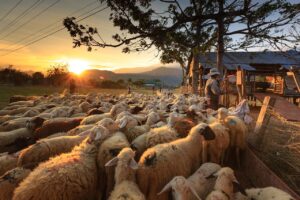
This is the great good news which we receive each day as we join in prayer and reflection on the scriptures. Ours is not a faith that excludes anyone. All are welcome. All share in the gift of salvation. All are called to share this good news with everyone we meet by the way we live our lives. We are all the sheep of the Good Shepherd – cared for, protected, and guided by the One who loves us.

Do I really believe this? Do you? Does my life reflect this reality? How does the love of the shepherd/lamb shine through in my life? Do I care for others whom I meet? Am I gentle and loving in my dealings with others? Will others see His love because my life is a window rather than an obscuring wall? Much to consider, both as individuals and as a community of faith.

Read More

Posted by on Apr 24, 2022

Mercy – A welcoming back into the circle

Mercy – A welcoming back into the circle

Easter is both a day and a season. For fifty days, we bask in and reflect upon the great mystery of the Resurrection. The Sunday after Easter, the Second Sunday of Easter, is also known as Divine Mercy Sunday. We have a chance on this day to notice God’s loving presence in our lives, even when we are not consciously aware of that presence and possibly even actively turning away from it.

Many years ago, I was teaching a group of 5th and 6th graders in our parish religious education program. I had the children for two years at a time, so we got to know each other well. One year I had a girl in the class who was quite bright. She could also be quite impulsive and outspoken. Everyone liked her and she was a natural leader.

I always started class by calling the children into a circle. We recited a verse, sang a prayer, and then prayed for their special intentions before I began to present the topic of that day. One day, she was not feeling ready to begin class when I called them together. We met after school on a Thursday, so they were all tired of school by that time of day. I made class as little like school as possible, to help them enjoy our time of learning together. But she was not ready to stop visiting with her friends and enter into our lesson. Instead, she turned her back to me and commented that she didn’t like what I had just said to her, so she wasn’t going to join us.

There we were. A group of ten to fifteen people in a circle, ready to begin our time together and one person had turned away from us. The other children were astounded at her behavior and clearly wondered what I would do.

What would you do?

Here’s what I did. I spoke to the other children and called their attention to what we were seeing. We were all there together happily, in a circle and ready to begin our activity. One person had turned away. It was a beautiful example of what happens when we choose not to do what the Lord is asking us to do. What happens when we choose to go our own way and refuse to go the Lord’s way. The Lord and the community are still there waiting and inviting us to join the circle. We turn away. As soon as we turn back, we are immediately incorporated back into the group.

When my student realized that she had just given me a perfect example of what we were going to be learning that day, she turned back immediately, filled with apologies to her classmates for giving me a chance to teach them through her example. Of course, all was forgiven and we continued with the lesson. That year we were learning about God, prayer, and sacraments. It was just perfect timing!

The Gospel reading from St. John today speaks of something similar (Jn 20:19-31). It is Easter Sunday evening. The disciples are gathered in the upper room. They don’t really understand what has happened. It’s the first day of the new week, the day after the Sabbath. And here appears Jesus. The first thing he says to them is, “Peace be with you.” To show them he wasn’t a ghost, he showed them his hands and his side, pierced by nails and sword. Again, he spoke to them, “Peace be with you.” Not a word of condemnation or scolding for having run away or denied him. Just Peace.

Then he went even further, breathing on them the power of the Holy Spirit, the Spirit who is love, giving them authority to forgive the sins of other humans. This is pretty amazing stuff. Humans can forgive like God does and on behalf of God?

Thomas wasn’t there that night. He didn’t believe a word of it. No sir, not a word of it. Furthermore, he made clear, he would not believe until he had seen for himself and touched the nail marks and the sword wound in Jesus’ side. A week later, Jesus appeared again and called Thomas to touch his hands and his side, instructing him to believe now. Jesus also spoke words that ring through the centuries to all of us, “Blessed are those who have not seen and have believed.” We are some of those millions and billions of people who have believed without physical evidence of the Lord’s resurrection.

The people of Jerusalem saw the evidence of his resurrection in the community that formed among them, caring for each other and those around them (Acts 5:12-16). They recognized the power of healing that flowed through them and brought the sick out to be seen and healed. Many joined the community because of the love they saw among those who were already followers of the way.

We too see the Lord’s presence in the community around us. We experience it in the actions of other members of our community. We see healing and forgiveness that draw families and communities back together. As the early followers of Jesus were noticed, people who have seen the love within our families and communities have also been drawn to seek the Lord.

On Easter Sunday, the eighth day of creation dawned. A new start for humans and for our relationship with God burst forth. A community came into being that would grow and eventually encircle the globe, a community of love and forgiveness. A community led by “one like a son of man” who is “the first and the last, the one who lives.” The author of the Book of Revelation shares with us this vision he received and the encouragement to continue in faith as a community (Rev1:9-11a, 12-13, 17-19). In obedience, he writes down what he has seen, because it is happening and continues to be happening, not just then, but into our times and into the future. The circle of Divine Love and community is always present. We are free to turn toward the circle or to turn away. Divine mercy waits patiently for each of us to turn back into the circle and rejoin the dance of life.

As we move forward during this season of Easter, how do we welcome those from whom we may have become estranged?  How do we reach out in love and forgiveness? How do we seek reconciliation with those whom we have hurt? How do our communities welcome the stranger or encourage the one who has grown tired and lost hope? How can we be the face of the Lord’s mercy and love? How do we receive it in our own lives?

It’s a new day. Creation is new and our relationship with God is fresh and ready to grow. The Lord is Risen! Mercy is ever-present! Alleluia.

Read More

Posted by on Apr 16, 2022

He Is Risen as He Said!

He Is Risen as He Said!

Our celebration of the Resurrection of Our Lord, Jesus, begins with Easter Vigil, beginning on Holy Saturday evening.

The three days leading to Easter are known as the Triduum – literally “Three Days.” The first of those days, Holy Thursday, we celebrate the gift of the Eucharist and the ministry of service and sacrifice. On Good Friday we recognize the tremendous cost of reconciliation which comes when we humans turn away from God. God goes to unbelievable lengths to bring us back – even to becoming one of us and dying rather than deny the message and example he brought to us.

On Holy Saturday, we sit quietly in the face of loss, the emptiness of the absence of ones we have loved. It’s important to take the time this day to experience quiet, especially as we find ourselves hurrying to prepare for Easter celebrations.

Easter Vigil begins our celebration on Saturday evening. The new day has begun, according to traditional Judeo-Christian measuring of time. We gather in darkness and the new fire is kindled. The Easter candle is lighted and its light shared with all present. The deacon sings a hymn of praise for the light that shines undimmed in the darkness. We enter into the darkened church, bringing the Light of Christ with us.

As part of Easter Vigil, we remember the history of God’s relationship with humanity and all of creation. We read and tell the stories. We sing the ancient psalms. We hear the words of the prophets. Only then, when we have remembered our history and the great deeds of our God, do we sing the Gloria and light the room fully.

We hear a reading from St. Paul’s letter to the Romans and from the writers of the Gospels. Tonight we will hear from St. Luke. They tell of the great good news of the Resurrection, and of the confusion felt by Jesus’ followers as they beheld such an amazingly impossible reality.

New members of our community profess their faith with us as they receive the Sacraments of Initiation: Baptism, Confirmation, and Eucharist. We celebrate our Mass together, then go forth in joy with a final blessing, to share this great gift with all we meet.

The celebration continues Easter morning. Again we gather as a community to celebrate. We hear from the Acts of the Apostles, St. Paul, and the writers of the gospels. There are different sets of readings for different times of the day. So much to tell. So much to celebrate. So much to share.

These few days are the most important days in Christianity. If Jesus had simply said, “Forget it. I’m out of here!” when faced with the mighty power of those who opposed him, we would not likely be celebrating his life, death, and resurrection today. These were the events that changed the history of the world, of our understanding of the relationship between God and humans. At Pentecost, with the coming of the Holy Spirit, the witnesses of the Resurrection received the grace and courage to go out fearlessly and share what they had seen. But first they had to see. They had to experience the great mystery.

We today are called to do the same. Experience the mystery. Then go out into our own worlds and live the reality to which we have been witnesses. Christ is Risen. A new day has begun in creation. We are the ones who will make it real for our world today.

Happy Easter. Christ is Risen, He is Truly Risen! Alleluia.

Read More

Posted by on Apr 15, 2022

Good Friday – Time to celebrate?

Good Friday – Time to celebrate?

Good Friday.

Sometimes it seems that the really hard things aren’t good at all. Why call this Good Friday?

The great mystery of life and love is that sometimes the hardest times are the most important. These are the times of growth, times of stretching. This is when we learn to depend totally on others to help us get through. When the others aren’t there for us, the Other who brought us forth into being from the great Dance of Love of the Trinity is there for us. This Other is not really “other” in the usual sense. This is the source of our deepest life and being. It’s in the deepest realms that we learn the truth of what matters. We learn compassion, patience, endurance. We understand the suffering of others in a new and deeper way. We realize that the easy answers of our childhood may not be the final answer. We grow in wisdom as we grow in age. With God’s help, we grow in grace too, that fundamental sharing of divine life.

Jesus didn’t know that he would rise. In this he was a human like any other one of us. But he was a man of great integrity, faithful to the God he called Abba (Dad), and willing to testify to what had been revealed to him about God’s love for us. He went to his death forgiving those who had condemned him, those who crucified him, those who mocked him, and the thief who was dying beside him. Mercifully, he did not have to suffer long. His Father claimed him quickly. His friends claimed his body and buried him, then returned home for the Sabbath rest.

We know the surprise that awaited them on Sunday morning. But for now, let’s take time to experience the great mystery of unknowing. The mystery of trust in a God we cannot see.  The mystery of life and death.

Happy Good Friday!

Readings for Good Friday

Image is of one side of the altar at St. Patrick Church in Spokane, WA – Artist: Harold Balazs

Read More

Posted by on Apr 10, 2022

Recognizing the Lord when He Comes

Recognizing the Lord when He Comes

Holy Week begins. This is the most important week in our entire year as Christians. The mystery of reconciliation of humans and the divine plays out graphically in the events we celebrate this week.

Sunday of Holy Week is known as Palm Sunday of the Lord’s Passion. Traditionally, we begin our liturgy outside the church building. We gather with palms around our presider and hear the proclamation of the Gospel which tells of Jesus’ triumphal entry into Jerusalem a few days before his arrest. Following the reading, we process into the building and continue with our liturgy, formally opening this week of prayer and celebration of the mystery in which we participate.

The Gospel reading for the blessing of the palms will be from one of the Synoptic Gospels – the three oldest versions of the events of Jesus’ life – as narrated by Matthew, Mark, and Luke.  In Cycle C (which we celebrate in 2022), it is Luke’s account that we will hear.

These accounts all tell of Jesus coming into the city riding a young donkey. Kings and conquering military heroes of his day rode into cities mounted on great war horses, with banners flying, triumphal music playing, and crowds of grateful (or at least cheering) people to welcome them. Coming into town, riding a steed, and attracting a crowd of cheering people speaks to the Jewish dream of a Messiah in those times, a hero who will rescue the nation from captivity to a conquering nation (Rome). This was the kind of hero long-awaited – the kind many hoped Jesus would be.

Jesus, however, came riding a young donkey. One version says it had never been previously ridden by anyone. This is an important detail. In the prophecies of Zechariah, written almost 500 years earlier, there was a statement that the Messiah would come riding a donkey, just as had princes and leaders from before the period of kings in Israel. This person would be a leader who was humble and would bring peace. He would not be a warrior or a conquering hero. The symbolism of this entry riding on a young donkey would not have been lost on the people welcoming Jesus, nor was it lost on the authorities. In fact, they asked him to tell the people to be quiet and go away. They were quite likely afraid of the potential negative Roman response to the commotion. Jesus’ response was that even if the people went away, the very stones would shout out against the injustice of the social structure.

Another detail of interest in Luke’s telling of the tale is the question of palm branches. In Luke’s version of the story, there is no mention of palm branches or fronds having been waved in greeting or salute to Jesus. Palms are there in the other three gospels, but not in Luke.

In Luke, as in the others, the fact that people lay their cloaks out to make a road and that Jesus sat on cloaks that had been placed on the back of the donkey is noted. A cloak was a very valuable possession in those days. It was an outer garment that served as coat when the weather was cold and as a sleeping bag at night, especially for those who were not inside a building for the night. Ordinary folks were putting their coats on the ground for the donkey and any following closely behind to trod. That’s a pretty major commitment. I’m glad I didn’t have to pick my coat up and sleep in it after having a donkey and a large crowd of people walk over it!

Once inside the walls of Jerusalem, Jesus went to the temple. Matthew, Mark, and Luke all tell that Jesus disrupted the markets in the temple, chasing out the money-changers and others who were cheating the poor. He spent time teaching there as well, presumably not immediately after shaking everything up! The point is, he was not a quiet, meek, “what-ever” kind of guy. He had a vision and a mission. He was passionate about following the spirit of the Law and living what he had preached in the years leading to this visit to Jerusalem. He was not a person who could be ignored.

The first and second readings on Palm Sunday of the Lord’s Passion are the same every year, as is the Psalm. Our attention is drawn to the events that followed Jesus’ triumphal entry into Jerusalem.

The first reading is from Isaiah (50:4-7), the Suffering Servant’s declaration of his determination to speak words of hope and encouragement to the people, despite opposition and persecution against him. This is a proclamation of great hope in the face of overwhelmingly negative odds. The prophet declares, “I have set my face like flint, knowing that I shall not be put to shame.”

Psalm 22 is the one Jesus prayed on the cross. The psalms were much like our traditional “prayers” such as the Hail Mary or Our Father. These were prayers that could be offered any time and at any place by anyone. There’s a psalm for just about every situation in life. “My God, my God, why have you abandoned me?” A cry for help when in desperate straits, with a conclusion that declares a joyful recognition of the Lord’s power to overcome all – “I will proclaim your name to my brethren; in the midst of the assembly I will praise you.”

Paul’s letter to the Philippians (2:6-11) includes another ancient hymn. Modern musicians have put it to music for our communities too, celebrating the great mystery of the incarnation. Jesus did not hesitate to become one of us and experience all that we experience, including rejection and death. God raised him up and gave him a name (power and authority) above all others. This is one of the earliest proclamations of our belief – “Jesus Christ is Lord, to the glory of God the Father.”

St. Luke’s telling of the Passion and Death of Jesus is the Gospel reading for Cycle C. It is a powerful story that begins with the narrative of the Last Supper and the gift of Jesus’ body and blood for our Eucharistic celebrations. It continues through the agony in the garden, Jesus’ trial, condemnation, carrying of the cross, and execution. His words of forgiveness and his prayers on the cross speak to us. We close with the quiet sorrow of his death and hasty burial in a borrowed tomb.

We are not called to be saddened by all of this. It is to be a source of great hope, but a hope that is so outrageously improbable and powerful that we are in awe of it. We enter this week with quiet hope for our own lives and the world in which we live. We pray for insight and the ability to see the Lord’s presence in all the times and ways he comes into our lives.

This can be a very busy week. There are liturgies and preparations for Easter. Work and school don’t necessarily take the time off. Yet it is a solemn time too. Liturgies for the blessing of the Holy Oils, Holy Thursday and Good Friday services, Easter Vigil, and then the great feast of Easter all await.

How will I mark this time? What things can wait, what need attention? What do I normally neglect that maybe I should spend some time doing?

May these final days of preparation for Easter be ones of peace and quiet joy, as we trust that through all the ups and downs of life, our God is with us, loving and supporting us each step along the way. Hosanna in the Highest.

Here are links to sample a couple of versions of the song from the Philippians that St. Paul shared with us.
In English, from Ken Canedo
In Spanish, from Pedro Rubalcava

Read More