Pages Menu
RssFacebook
Categories Menu

Posted by on Jan 2, 2022

Epiphany – The Glory of the Lord is Revealed

Epiphany – The Glory of the Lord is Revealed

The Solemnity of the Epiphany of the Lord was traditionally celebrated on January 6. However, since 1969, we have celebrated this feast on the Sunday following the celebration of Mary, Mother of God. This celebration is part of the Christmas season, which officially ends with the Baptism of the Lord on the Sunday after January 6.

The word Epiphany tells us what the celebration is all about. Epiphany means manifestation or appearance, particularly of a deity. It also refers to a sudden realization. The reading from St. Matthew’s Gospel (2:1-12) tells of the visit of wise men, astronomers and astrologers from the east, who saw a star rising in the heavens signaling the birth of a king in the land of Judah. These men traveled to the capital city and asked about the birth of the child who would be King of the Jews. Herod was not thrilled to hear of a potential rival. He found out where such a child might have been born and instructed the wise men to go to Bethlehem in search of the child, then return with the information to him. He planned to have the child killed, to eliminate his rival.

The wise men found Jesus and his family. They offered gifts of gold, frankincense, and myrrh, then returned to their own land by a different way, having been warned in a dream not to return to Herod. Joseph was also warned of Herod’s plan in a dream. He took the family and fled to Egypt until after Herod’s death, but that part of the story is not part of today’s reading.

These were the first non-Jews, the first Gentiles, who learned of the coming of Jesus. It was an Epiphany.

St. Paul speaks of this great news in his letter to the Ephesians (3:2-3a, 5-6). He proclaims that God has revealed to him an amazing mystery which had been unknown to those of earlier generations – The Gentiles are members of the same body and promise in Christ Jesus. The Good News proclaimed by Jesus was not just for Jews. It was for all people. Salvation has come for all. Another epiphany!

The light of Jerusalem has come and the glory of the Lord shines forth. Just as Isaiah (60:1-6) wrote to the exiles returning from Babylon, the Lord shines on his people. Sons and daughters return from afar. The riches of the sea are emptied out for all and the wealth of nations comes to Jerusalem, to God’s people. It is a time of great rejoicing. Out of a time of darkness, the Lord’s light has shone forth – an epiphany.

What does all of this mean for us? As we remember and rejoice in the coming of the wise men in search of the Lord, revealing the promise of salvation to all the world, may we too be open to the ways God’s presence is seen in cultures and peoples around the world, particularly those on the margins of society.

We hope and pray for the gift of openness to the rising of new generations of leaders as we get older. Can we rejoice in the wisdom and insights that come from our children and grandchildren as they experience life in a world very different from the one in which we grew to adulthood? Or will we be like Herod, clinging to power and fearful of the future?

Will we share the many blessings we have received with those who need a hand to meet the daily necessities of life? What gifts of gold, frankincense, and myrrh do we have to offer? The gold of respect and encouragement? The incense of loving support and prayerful accompaniment? The myrrh of compassion and understanding during difficult times?

The Lord has come. The wise ones traveled far in search for him and they found him. Now it’s our turn to look for him in the days and weeks to come. Where will we find him?

Read More

Posted by on Jan 1, 2022

A Day for Celebration – January 1, 2022

A Day for Celebration – January 1, 2022

January 1 is a day for celebration and hope. Of course, we celebrate the beginning of a new calendar year that we share world-wide. We hope for health, friendship, peace, prosperity, good fortune, love, and so on. We know that challenges will arise and losses will occur. But we look forward with hope.

After two years of global pandemic, with a new and more contagious variant of COVID-19 spreading quickly, we face another year of uncertainty and challenges. Still, we are cautiously optimistic. Vaccines have been developed. They seem to be working. Human immune systems, in those vaccinated, are going beyond just forming anti-bodies against the virus and are now awakening the T-cells that provide longer lasting protection. We know much about the virus, including preventive measures and treatments that help. We’ve come a long way.

On the religious front, we also have many things to celebrate. It’s the Solemnity of Mary, Mother of God. This is what we celebrate in our liturgies for January 1. Mary, a simple young Jewish woman, became the mother of the child who grew up to be the long-awaited Messiah, the one who gave himself totally to the will of God and in so doing restored the family ties between God and humans. Jesus, the Word of God, was fully human and fully divine. Mary was his mother, the woman who taught him and nurtured his relationship with their God. She and Joseph, her husband, did not understand all that was happening through them. They were ordinary people called to do something truly extraordinary. We hear in the gospel (Lk 2:16-21) that after the visit of the shepherds, Mary reflected on all the things she had seen and heard there in Bethlehem where her son was born.

At the end of the reading from St. Luke’s gospel, we hear that on the eighth day after his birth, Jesus was circumcised and given his name, “the one given him by the angel before he was conceived in the womb.” The circumcision of the Lord is another thing traditionally celebrated on this day. Jesus became one of God’s chosen people, a member of the Jewish community on this day. He received his name, Yeshua (in Hebrew and Aramaic), which means God saves.

As a child, Jesus grew up as a member of the Hebrew people, with all the traditions of his people. He lived under the law given to Moses and was blessed with the same words of blessing that God gave to the people through Aaron and the priests who followed him down through the centuries. “The Lord bless you and keep you!” (Num 6:22-27)

When he was grown, he was called at his baptism in the Jordan River from his career as a tradesman in Nazareth to preach the good news of the coming of the kingdom of God. As St. Paul explains (Gal 4:4-7), he was born under the law, yet he was the one who would move beyond the restrictions of the law that kept humans and God separated. He was the one whose coming set free those born under the law, ransomed them to become children of God and heirs of the kingdom. This kingdom expanded to include all peoples, because God created and loves all peoples.

The final thing we celebrate today is World Day of Peace, a day to celebrate and work towards a culture of care and tolerance for each other. As children of one heavenly Father, we are called to reach out to each other, both in our own communities and around the world. We are to see each other as members of the same family. We can have our differences of opinion and do things differently, but we are still all God’s children. We must love each other and care for each other.

Pope Francis shares his vision for the 55th annual celebration of World Day of Peace in his message: Dialogue Between Generations, Education and Work: Tools for Building Lasting Peace.

On this day of many celebrations, may we continue to receive the blessing offered by Aaron for the people of God. May the Lord’s face shine upon us. May he be gracious to us and grant us peace!

Happy New Year!

Read More

Posted by on Dec 25, 2021

God’s Recipe for Change: Step Two – Get Personally Involved!

God’s Recipe for Change: Step Two – Get Personally Involved!

Christmas is upon us. The word itself tells us much. This is the day and season during which the Mass we celebrate, our Eucharist, is specifically a celebration of thanksgiving for the coming of the Christ, God’s Chosen and Anointed One. Christ’s Mass!

Usually, I would look at the readings for the Mass of the day and talk about them. Who is featured? What is the message for us? Are there any common themes? How do the themes of the readings speak to me (and to us) today?

However, there are many Masses for Christmas Eve and Christmas Day. Many parishes only choose one set of them, because it’s easier to prepare just one homily, worship aid, set of hymns, etc. But which one will my parish choose? Which one will your parish choose? Will your parish celebrate each of them in turn?

The first set of readings is for Christmas vigil – Christmas Eve – and features Matthew’s listing of the genealogy of Jesus from Abraham, through David, to St. Joseph (Mt 1:1-25). This is followed by the narration of the decision of Joseph to accept Mary as his wife, even though she was pregnant before they were living together as man and wife. He believed and accepted the word of the angel who came to him in a dream with the message that this was God’s child.

The second set of readings is for Christmas night (midnight Mass). In these readings, St. Luke (2:1-14) picks up the story with the decree of Caesar Augustus that all must return to the town of their ancestors for a census and taxation. There are very specific names of officials in various regions of Palestine given, which tells us historically the timeframe of the events which follow. Luke tells us of Jesus’ birth in the stable and of the message to the shepherds carried by the angels. “Glory to God in the highest and on earth peace to those on whom his favor rests.”

The Mass at Dawn has Luke (2:15-20) telling of the decision of the shepherds to go and find the child. They find him in Bethlehem, lying in a manger, just as the angels had described. When they leave the stable, they tell everyone they meet about what they have heard and seen, “glorifying and praising God.”

The final Mass for Christmas is for Christmas Day. This one gives us the Prologue from the Gospel of St. John (1:1-18). This gospel was written many years after the Resurrection. It reflects a long period of theological reflection on the mystery of what has happened in history. In John’s Gospel, the focus is more on the divinity of Jesus. What he does is done deliberately and because God is in charge of the whole process.

The Prologue begins: “In the beginning was the Word, and the Word was with God, and the Word was God.” It goes on to say that “He was in the world, and the world came to be through him, but the world did not know him… And the Word became flesh and made his dwelling among us…”

The combined readings of all the Masses of Christmas tell the story of Salvation History from the beginning of creation through the birth of Jesus. The first and second readings of each of these Masses also differ – but the themes are similar in their focus on Salvation History. In the first readings, we see in great joy the coming of the Lord, or a return from exile, a rebirth of the community. In the second readings we hear of the early Church’s proclamation of the good news to the Jewish community (Acts 13:16-17, 22-25) and also their reflection on the effects of the coming of “our great God and savior Jesus Christ” (Ti 2:13) in the letters to Titus and the Hebrews.

In the weeks and months to come, we will learn more about the continued unfolding of that history in the life of Jesus and the birth of the Church, but for today, we stop and celebrate a wondrous reality. God cares enough about us that God chose to become one of us. This is the crux of the matter that we celebrate today. God’s plan for change included getting personally involved. God became a human being, with a name, a family history, a life story. In doing this, God shows a total commitment to making things better for all of us. We are not condemned to everlasting battles, unhappiness, struggles for justice. God got involved personally to lead the way into a new way of being human.

Let us take time today to rejoice and be glad. The Lord has come!

God’s Recipe for Change: Step Two – Get Personally Involved!

Merry Christmas!

Read More

Posted by on Nov 21, 2021

King of the Universe!

King of the Universe!

Sometimes when children are playing, one or another will exclaim, “I’m King of Everything!” Today we celebrate the final Sunday of our liturgical year, The Solemnity of Our Lord Jesus Christ, King of the Universe. In this case, it’s not a question of the exuberant, excited cry of a child in a game. The Christian community, through the centuries, has proclaimed this truth, both in direct statements and in apocalyptic images.

Predictions of the coming of a savior often appear in the Hebrew Scriptures during times of exile and persecution. This savior comes and acts as the agent of God in opening the final age of salvation history, the time in which God will become the ruler over all things. The human (Son of Man) who is the instrument of God in all this upheaval and transition is to be raised to a heavenly level, implying a divine status of some sort.

Our reading from the Book of Daniel (7:13-14) describes a vision received in the night. Someone like a Son of man is coming, but not with a human army or traveling in a normal human way. This individual is coming on the clouds of heaven. The destination of this Son of man (human) is not a standard one either. The Son of man comes to the Ancient One. Who is the Ancient One? This is a title for God. This human, who has served as agent to open the new age, comes before God. God gives him dominion (authority as a ruler), glory (renown, magnificence, splendor), and kingship over all times and peoples. This new status and role will continue for all eternity.

In Psalm 93, the term Lord is used. In this context Lord is the word used to speak of God. Jews do not use God’s actual name, because if a person knows the name of another, there is some power over the other individual. Call that individual’s name and the individual will respond. God made clear from the beginning that no one else will be in charge. This is the reason for the prohibition on using God’s actual name and substituting the word Lord.

The Lord is king, dressed in strength, making the world firm and ruling from everlasting to everlasting. The decrees/statements/commands of the Lord are worthy of trust. This is a hymn of great trust and joy.

The early Christians had to figure out where their friend and teacher, Jesus of Nazareth, fit into the whole picture. The book of Revelation was probably written sometime in the years 81-96 CE, during the persecution of Christians under the reign of the emperor Domitian. The identity of the author is unknown, though the name John is assigned to this person.

Today’s reading is from the very beginning of the book (Rev 1:5-8). John sends greetings to the seven major Christian communities (the churches) of Asia. The greeting is also extended in the name of Jesus, faithful witness and firstborn of the dead. Jesus is identified as ruler of the kings of the earth. It is through the death of Jesus that the new kingdom has been brought into existence. Jesus is coming and all will see him. His sisters and brothers will be raised through him, conquering sin and death, triumphing over persecution and unbelief. The Lord is the beginning and the end, just as the Greek letters Alpha and Omega represent the beginning and end of the alphabet. (The Christian scriptures were written in Greek, making this a relevant note.) God’s life-giving power now operates in the world through Jesus, the Christ.

On this feast of Christ the King, we leave the Gospel of Matthew and instead hear from the Gospel of John (Jn 18:33b-37). Jesus stands as a prisoner in front of the Roman governor of Palestine, a man named Pilate. Pilate was responsible for keeping the territory free of revolutionaries and imposing Roman law. He asked the leaders of the Jewish court why they had brought Jesus to him for judgement. They responded that they could not legally condemn him to death.

Pilate is not interested in religious arguments between Jesus and the Jewish authorities. Their reason for the death penalty was blasphemy – the claim to be God. However, the most important issue for Pilate is whether this man standing before him has committed treason by claiming to be a king. Only Caesar in Rome gets that title. Anyone else will be executed. So Pilate asks Jesus directly, “Are you the King of the Jews?” He is expecting a simple Yes or No, but Jesus instead asks Pilate a question, essentially, why are you asking me this? If Pilate is interested in Jesus’ teaching, the conversation has potential. If not, then other issues arise. Pilate makes clear that he is not asking because he has heard of Jesus and his teaching and wants to know more. What he wants to know is: “What have you done” that the authorities of your country have turned you over to their enemies for execution?

Jesus does not answer the way Pilate expects. He explains, “My kingdom does not belong to this world.” He points out that if he were a king in the worldly sense, he would not be standing there alone. Others would be fighting for him. But his kingdom is elsewhere. Pilate takes this answer as a statement that Jesus is claiming to be a king and asks for confirmation of that interpretation. Legally it matters. “Then you are a king?” But Jesus still refuses to claim an earthly kingdom. “You say I am a king.” He doesn’t deny being a king, but he is king in a very different way. He explains that his mission is to present the truth of God’s love for humans. Any who accept that truth will be members of his kingdom. God’s gift to humanity, the self-giving love leading to God’s becoming one of us, is the source and power of this kingdom. Those who belong to the truth, listen to Jesus.

Here’s a person who really is King of Everything! Do I listen to his voice? Do I hear the truth of God’s love and the Kingdom of Love? When he comes, will I be ready?

Today let’s not get bogged down in worries about how we are doing in following our Lord. Let’s take some time and simply celebrate the wonder of this gift from our Father. He loves us so totally that he became one of us. Jesus brings this love to each one of us each day of our lives and with every breath of our bodies. Long live Christ, the King of the Universe!

Readings for the Solemnity of Our Lord Jesus Christ, King of the Universe – Cycle B – Christ the King

Read More

Posted by on Aug 15, 2021

Layer upon layer of meaning for the Feast of the Assumption

Layer upon layer of meaning for the Feast of the Assumption

The Feast of the Assumption of The Blessed Virgin Mary pre-empts the usual celebration of the Sundays of Ordinary Time when it falls on a Sunday as it does this year. It is a feast that has been celebrated by the Church for many centuries, but it was only officially promulgated as a feast in 1950. The Assumption refers to the belief that Mary’s body was taken into heaven at the time of her death. In the Eastern Church, the feast is called the Dormition and the belief is that she when she died, she simply went to sleep and was taken, body and soul, into heaven.

The readings begin with one from the Book of Revelations (Rev 11:19a; 12:1-6a, 10ab). This book is an example of apocalyptic literature, in which there are many layers of meaning. It is not to be taken literally, because the characters and events described are symbols of other realities. Numbers, colors, objects – all carried deeper meanings than their face value. Revelations was written during a time of persecution of the Christian community. Those for whom it was written understood it as an encouragement in time of trouble. Through all the suffering and trials, Christ and the Church would prevail, because God was on their side.

In today’s reading, first a sign appears in the heavens – a woman laboring to give birth. Then comes a huge red dragon, with seven heads and ten horns, ready to devour the child. There were said to be seven diadems on its seven heads, each of which had ten horns. Seven and ten were numbers signifying completeness and power. Horns are symbols of power. The diadems also referenced power. Red symbolizes war, destruction, and bloodshed. This dragon symbolized the forces of evil, arrayed against the woman and her child. The woman herself relates to two layers of meaning. She represents both Israel, from whom the savior would be born, and Mary, the Israelite mother who would give birth to Jesus and the church.  The child born and saved from the dragon was both Mary’s son, the Christ, and the community of believers who form his body today, the Church.

The triumph of the forces of good does not appear seamlessly in this story. There are many ups and downs, many triumphs and tribulations. However, the focus is on the ultimate victory of God, brought to fruition through the life, death, and resurrection of Jesus and the faithfulness of the Church. The inclusion of a woman in the mix, as the one giving birth, makes clear the importance of the feminine and of matter in the story of salvation. God is not one who despises matter or the feminine. God unites heaven and earth, male and female in the story of salvation.

The readings continue, with St. Paul reminding the people of Corinth that Christ was raised from the dead. Christ is the first of “those who have fallen asleep” and been raised to new life. (1 Cor 15:20-27) Death came through the first human, Adam. All humans die. Now, because Christ is the new Adam, all humans will rise as he did. This will happen at the end of time, when all enemies of life have been conquered, including death.

The role of women is again featured in the Gospel according to St. Luke (Lk1:39—56) In this story, a newly pregnant Mary leaves Nazareth shortly after her encounter with the angel Gabriel. Gabriel has informed her that her elderly cousin, Elizabeth, is having a baby and is now six months pregnant. This is a miracle because Elizabeth was past child-bearing age. Mary hurries to Elizabeth’s side to help her in the final months of the pregnancy.

When Mary approaches Elizabeth, her cousin cries out to her in the words we use in the Hail Mary: “Blessed are you among women and blessed is the fruit of your womb.” The child in her womb had leapt with joy when Mary greeted Elizabeth. This child grew up to be the final prophet, John the Baptist, who pointed to Jesus as the one who was to come. Elizabeth praised Mary for believing the angel’s words and consenting to God’s request of her.

If you or I heard such a greeting, we might well focus on our good deed or we might be embarrassed and brush off the greeting as excessive. Mary responded differently. Her response takes the form of a Canticle, a song of praise to God. “My soul proclaims the greatness of the Lord, my spirit rejoices in God my Savior…” This song is sung by the Church every evening as part of Evening Prayer. She sings of God’s great love and mercy throughout history, of the way the Lord comes to lift up the lowly and cast down the mighty from their thrones. She rejoices that the Lord has always come to the aid of his servant Israel and remembers the promise made to Abraham and his children forever. We too are children of Abraham in faith. She sings our song.

On this, the feast of the Assumption, let us rejoice in the courage and faithfulness of Mary, a teenager who met an angel, believed the messenger of God, and accepted a role that would bring danger, hardship, and sorrow, but also joy as she shared the journey of Jesus’ life. She understands what it is to be a mother, a wife, a faithful woman. She is ready to help all who ask for aid.

See you at Mass.

P.S. Many years ago I wrote another blog post for the Feast of the Assumption. If you’re interested, you can find it at:  https://blog.theologika.net/feast-of-the-assumption/

Image: Dormition of Mary – unknown artist – public domain

Read More

Posted by on May 30, 2021

Trinity Sunday – A celebration of a fundamental mystery of our faith

Trinity Sunday – A celebration of a fundamental mystery of our faith

The mystery of the Holy Trinity is celebrated today, the first Sunday after Pentecost. It is a mystery that Christians have been contemplating and trying to comprehend since the earliest days of the faith. We believe in a God who is One, yet we also claim that God is Father, Son, and Holy Spirit. How can that be? Most religions simply say that there are many gods. Maybe there’s one high god in their system, but there are may others too. We Christians don’t agree. God is One. Yet there is a wondrous complexity to that One.

In the first reading today, we hear Moses reminding the Israelites of the history of their relationship with God. These are the children of the people who first left Egypt forty years earlier. Moses reminds them of the wonder of the fact that the same God who created the heavens and the earth has chosen them to be his special people, his special friends. More than that, he rescued them from slavery and now has led them through the desert to a land that will be their own. God cares about them and has given them a set of rules and guidelines that will allow them to live together in peace in their new homeland. God has chosen to enter into a relationship of love with humans. God will provide for his people as a parent provides for children.

The second reading, from the letter of St. Paul to the Romans, reminds us of the role of the Spirit of God. The Holy Spirit, the holy breath of God, the Spirit of Love leads the children of God. But this relationship between humans and the divine Spirit is not one of slavery or coercion. There is no need to fear God who is Spirit. God calls us children. We are to think of God as a Father, a Dad, a Papa. With Jesus, the Son of God, the Word of God, we become heirs of the glory of God as we live the life to which we are called. All the wonders of a loving relationship are ours.

In the Gospel reading, we hear the end of St. Matthew’s account of the life of Jesus. Jesus calls his remaining eleven disciples to a mountaintop. There he commissions them to be apostles, the ones who will go out and tell the world what they have seen and heard: that the man Jesus, Son of God, has been “given all power in heaven and on earth.” He sends them forth to baptize people from all the world, bringing them into a relationship of love with the same God and Father who chose the Israelites so long ago. They are to baptize in the name – the power and authority – of the Father, and of the Son, and of the Holy Spirit. He also promises that he will remain with them always, to the end of the age.

We live today in this love of God. Baptized into this relationship. Most of the time we are as conscious of it as a fish is of the water in which it lives. But the love of God surrounds us and permeates our being. Father Creator, Beloved Son, and Holy Spirit. One God, in a dancing trinity of love and relationship which catches us up into the dance.

Read More

Posted by on Jan 10, 2021

The Baptism of the Lord – 2021

The Baptism of the Lord – 2021

What a week we’ve all had! What should have been a routine process in the Congress of the United States of America – the certification of the results of the presidential election in the United States – was anything but routine. Challenges to state totals by representatives of other states. Rioters invading the capital building. Law-makers taken to safety and in hiding for their own protection. A president who encouraged the rioters. Senators and Representatives being accosted and booed when they are in public. Is there any good news? Where can we find hope? Lots of questions rise in everyone’s minds.

This Sunday, as a new week begins, we celebrate the feast of the Baptism of the Lord. Jesus was a good man, a carpenter, son of a carpenter, in a small town in Galilee. He lived in a conquered land. All knew the power of Rome and of the soldiers who enforced order. Those who wanted to live to an old age didn’t make waves or draw attention to themselves. But a prophet, who happened to be Jesus’ cousin, was baptizing people at the Jordan River – not too far away. John was telling people that the long-awaited Messiah was near, maybe already in their midst. It was time to get ready – to turn from their sins and welcome God’s Anointed One.

Jesus went to see for himself what was happening. He felt a call to enter into the water and become closer to the Lord God. As he entered the water and was plunged into it (to be baptized means to be plunged into ….) he experienced the coming of the God’s Holy Spirit, gently filling his heart and telling him, “You are my beloved son: with you I am well pleased.” He left the river with much to contemplate – a changed man, with a new awareness of who he was and who he was called to be. He went to the desert to pray and sort things out. When he returned, he began sharing what he had learned of God’s love and plan for humanity. The mission had begun.

Listen carefully to those words spoken to Jesus at his baptism. Our Father speaks those words to each of us as well. We who have been plunged into the life of God at our baptism and anointed with the Holy Spirit in Confirmation, are God’s beloved children.

We are called to the water. We are offered all we need for life, given freely by God. We are offered forgiveness when we mess up. We are promised life.

May we hold fast to this promise as we reach out to those with whom we agree and those with whom we disagree. Respect for each other as human beings, compassion, sharing of visions for the future, rejection of violence, and work for reconciliation are now our calling. We are children of one Father, brothers and sisters of the Lord, anointed by God’s Spirit. With Jesus we go forth into our world to bring words of peace, justice, and healing in times of great distress. Can we be peacemakers? Can healing occur? Will justice become a reality for all. Will we be part of the solution or part of the problem?

On this day, we pray for courage, wisdom, and strength to listen to each other and seek common ground. Our country and our world have need of these gifts.

Read More

Posted by on Apr 5, 2020

Palm Sunday – Jesus Comes to Jerusalem

Palm Sunday – Jesus Comes to Jerusalem

Palm Sunday has arrived once more. In 2020, as we deal with the challenges of a worldwide pandemic, it seems a good time to look carefully at the story of Jesus’ entrance into Jerusalem as he began the last week of his public ministry.

Here’s a word search puzzle to try, share it with children and friends, and reflect on what it all meant then and now. If you can’t find all the words, check here for the solution, but spend some time searching for them and reflecting first!

Read More

Posted by on Jun 4, 2019

Ascension and Rituals of Farewell

Ascension and Rituals of Farewell

“Parting is such sweet sorrow,” Shakespeare wrote. We have a chance to contemplate what that means as we celebrate Jesus’ leave-taking, also known as The Ascension of the Lord. We certainly can relate at this time of year with so many goodbyes happening. Graduates are saying goodbye to the schools that have educated them as they look forward to new and exciting experiences in high school, college, graduate school, or a career. Parents are saying goodbye to the young people they’ve protected, supported, and guided at home, watching them start their own lives.

Each goodnight prayer and kiss is a promise to your children that your love stays with them through the night, just as God’s love stays with them through life. Goodnight and goodbye rituals are important for the development of spiritual strength and faith.  They teach us that there is a connection between the loved and lover that doesn’t end when one is invisible to the other.

The words goodbye, adieu, and adios all mean “God be with you.” They are words of blessing that commit another person to the care of God. Jesus exemplifies this power of blessing when he greets his disciples in Galilee after the Resurrection. He assures them of his presence as he directs them to “go and make disciples of all nations.” His final words are clear and powerful: “I am with you always, until the end of the age.” Matthew’s Gospel ends with these words.

“I am with you always.” This is what a child knows when parent kisses or signs her with a cross at night or when leaving for school. It’s what is understood by a friend’s hug, a blown kiss, or hands waving. One of our family rituals involves standing on the curb waving until the people leaving have disappeared around the corner, taking our blessings and presence with them.

The final blessing at Mass is the liturgy’s goodbye. The words empower us to go forth and make disciples of nations, to be God’s peace in the world, to serve and love one another. The words acknowledge that between the entrance and dismissal rites, God has been present to us in a wonderful and mysterious way, and we are now being commissioned to do what we gathered to do. Poised at the threshold of the church, we are ready to bring Christ into the world. Everything we have experienced at Mass – our gathering, listening to the Word, and coming to the Table – has prepared us for this moment of departure.

Let’s try to acknowledge the importance of those last moments of Mass by paying attention, listening to the words of the final blessing, and taking them into our hearts. Jesus’ promise to his disciples that he would be with them always is our promise too. Let’s receive that promise with gratitude and pass it on to others, letting each “goodbye” become a promise of our love and presence.

God be with you.

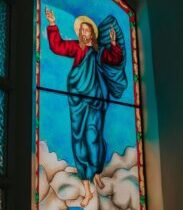
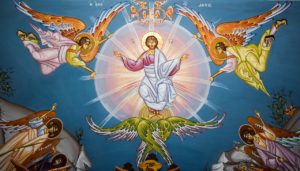
Public domain image – Ascension of Christ

Read More

Posted by on Jan 13, 2019

Success or Significance?

Success or Significance?

The Feast of the Baptism of the Lord marks the end of the Christmas season.  Jesus’ baptism in the River Jordan signaled the formal beginning of His mission.

For today’s gospel scene we see the Holy Spirit descending upon Jesus in visible form.  For the evangelist Luke, contrary to the three other evangelists, the baptism of Jesus is not important in itself, for he does not even describe it.  He is more concerned with the coming of the Holy Spirit on Jesus.  And after this initial scene, Luke will be at pains to mention the Holy Spirit as often as possible in connection with the ministry of Jesus.  Seventeen times in his gospel he will mention the Holy Spirit in connection with Jesus.  This is Luke’s way of telling us that Jesus was inspired (inspirited) in all his actions, empowered with his heavenly Father’s energy, enabled always to act as a beloved Son fulfilling a beloved Father’s wishes. And so, it is not a mere coincidence that, with the appearance of the Holy Spirit in this baptism scene, the son-ship of Jesus is emphasized, “You are my beloved Son.”  Essentially, Jesus is a Son in his innermost being.  And the Holy Spirit is the burning fire of love which unites him to his heavenly Father.  For him to receive the spirit is to experience his son-ship at a new depth.  It is the Holy Spirit that leads Jesus to accomplish his mission and made the Father say, “with you I am well pleased.”

I remember two years ago, I was on a vacation back home in the Philippines.  After celebrating Mass at my home parish, one of my friends from high school came up to me for a small chat.  He grew up in a poor family but worked his way to success with sheer talent and perseverance.  He is a self-made man.  He heads four businesses today that are making good money.  “There’s nothing more I can ask for, Father. God is good.  He has given me everything that I need and more,” he shared with me.  But after a short pause he added, “except that I never knew if my father was proud of what I have accomplished.”  His relationship with his father has been strained since after college.  After that conversation, it hit me.  The human heart is not made for success.  It is made for significance.

Success is a matter of doing.  Significance is a matter of being.  And since we are not human doings but human beings, it makes sense that our heart yearns for something more than just success.  It yearns for significance — the significance of meaningful relationships, mission, and yes, affirmation.  Success does not always lead to significance, but significance always leads to a deep sense of success.  Like the voice from the heavens that affirmed Jesus in His baptism, every human heart longs to hear the words, “in you I am well pleased.”

Isn’t it a wonder that, according to studies, almost eighty percent of substance abusers are successful people, and almost fifty-five percent of these successful people end up committing suicide?  Without meaning to pass judgment, could it be that significance was missing on top of their successes?

The Baptism of the Lord reminds us not only about Jesus’ mission, but our very own mission to make a difference, to be a significance in the lives of others by showing them what really matters in our Christian lives.  So that like Jesus, the Father would say to all of us, “In you I am well pleased.”

Fresco by Giotto di Bondone in the Scrovegni Chapel – 1303

Read More
Posted by on May 9, 2018

“It is Time for the Lord to Act”

“It is Time for the Lord to Act”

“It is time for the Lord to act.” These words proclaimed by the deacon to the priest in the Eastern Catholic and Orthodox churches just before the beginning of the Divine Liturgy (known as the Mass in the Roman Catholic church) tell us something important about God’s participation in human life. The word for time used in this statement is “kairos,” meaning the perfect or decisive moment in which conditions are right for something very important to take place — a time when God acts. The beginning of a Eucharistic celebration (Mass or Divine Liturgy) is one such time.

In a very real way, the celebration of the Rite of Initiation of Christian Adults (RCIA), culminating at Easter Vigil with Baptism, Confirmation, and first reception of Communion, is a series of kairos events in the life of believers.

In Roman Catholic tradition, we have baptized infants and children for centuries. Most members of the church have no memory of their baptism. First Communion, around the age of reason, is more commonly remembered. Confirmation, when received in adolescence, is remembered more clearly. Nevertheless, the three Sacraments of Initiation are designed to be received at the same time. In fact, since Vatican II, the Church has asked dioceses around the world to re-unite them, including with the initiation of children. This is the practice in the Eastern churches.

But children are not the only source of new Christians. Adults have always come to the Christian community and asked to be admitted to membership. The process of instructing and welcoming new members has taken many forms over the 2,000 year history of our community. Since Vatican II, returning to the tradition of the early Church, the RCIA has been the way we have welcomed new believers.

This year at Easter Vigil, as we again lit the new fire and blessed the waters of baptism, we welcomed our new sisters and brothers by plunging them into the newly blessed baptismal waters or pouring the water over their heads. We have anointed them with chrism, the oil blessed by the bishop during Holy Week.  Chrism is used to anoint the hands of priests, the heads of bishops, the altar and walls of a church, and the newly baptized. In Confirmation, it is also used to anoint and strengthen the new Christian, bringing the wisdom and strength from the Holy Spirit to witness to the presence and activity of God in all creation. Finally, we complete their initiation by sharing the very Body and Blood of our Lord with them as food for the day-to-day journey of faith.

Such a lot happens in a very short time! It’s far too much to fully comprehend in the moment. It will take a lifetime to ponder and experience the growth and flowering of the seed brought to birth at Easter Vigil – the new life of faith and community of travelers on the way in God’s kingdom.

The newly baptized ideally are continuing their journey in a time of sharing and learning known as mystagogy – a time of awakening in the Spirit and entering ever more deeply into the mystery. Common reactions/experiences of those who have newly received these sacraments include a hunger for scripture, a desire to learn more, a longing for community and sharing, an urge to step away to pray and ponder what they have experienced, excitement, wonder, and joy. Eventually, they may also experience a quieting of the initial excitement, a sense of God not being so close anymore, disillusionment upon discovering the “warts” or “clay feet” of other members of the community. All of this is normal. It’s all part of the journey of faith.

Jesus’ disciples and friends did not fully understand what happened in that Kairos moment of Easter and resurrection. Two thousand years later, we still cannot explain it. God acted in a decisive way, defeating the power of death and separation between God-self and humanity by becoming one of us and experiencing human life fully. Now it is our turn to enter, as members of the Christian community, into the life of the Trinity. It is a journey of a lifetime, lived step by step by the baptized.

Welcome, Sisters and Brothers to this amazing journey. Our thoughts and prayers are with you. We look forward to learning from you of the wonders our God is doing in your life and we promise to share with you the wonders we have seen. The Kairos moment has come into our lives. Christ is Risen! He is truly Risen!

Read More

Posted by on Apr 4, 2016

“It is Time for the Lord to Act”

Visited by an Angel – The Annunciation

The Annunciation - Henry Ossaw TannerGabriel’s visit to a very young woman in the small town of Nazareth was a momentous event, though mostly unnoticed at the time. Gabriel is the archangel tasked to serve as special messenger of God. On this visit, the message was actually a request: will you consent to become my mother? It wasn’t exactly phrased this way, according to the narrative we have from St. Luke, but in essence that was the question. Gabriel told Mary that she would bear a son who would be the Son of the Most High and would sit on the throne of his father David (as in King David), rule over the house of Jacob forever and have an unending kingdom. (Lk 1:26-38)

Now this would be challenging even to a married woman, but this young woman was not married. In her culture, having a child out of wedlock could result in death by stoning. At best, she would be shunned and excluded from polite society. Yet Mary had the courage to ask for more details about how such a thing could happen and to listen with deep faith to the response. Then she answered “yes,” Jesus was conceived, and God’s plan for salvation could go forward.

Christians have celebrated the Annunciation for centuries. Typically, the feast is scheduled for March 25, exactly nine months before the celebration of Christmas. However, in the West, when March 25 falls within Holy Week or the first week of Easter, the feast is moved to Monday following the Second Sunday of Easter (now known as Divine Mercy Sunday).

As adults we celebrate many events such as the Annunciation with prayer – Liturgy of the Hours, Mass, the Angelus, etc. However, for children, these ways of celebrating are not always experienced as much fun. So, with that in mind, I’d like to suggest an alternative way to celebrate: Make Angel cookies!

To make Angel cookies, take any recipe for a cookie that allows rolling out the dough and cutting out a cookie. (Even brownies could be used for making Angel Cookies if time is short.) Use an angel shaped cookie cutter to shape the cookies before baking. Be sure to decorate them with frosting/icing or with some  kind of “sprinkles” of colored sugar to make them festive. Then share them as part of a festive meal. Light a candle, have a special drink, use nicer dishes than normal, have a food that is a treat for your family — any or all of these things will make the day special for the children and family who share them.

As you share this day, keep your ears open for the voice of angels in your life. God’s messenger still comes, though perhaps not as momentously as in the visit to Mary. What is God saying to you and me today?

Peace.

Read More

Posted by on Mar 26, 2016

“It is Time for the Lord to Act”

A Few Minutes to Pray

Winter Sun on the Central Coast 2.1.16Holy Saturday can become one of the busiest days of the year, especially for those preparing for church services or hosting Easter dinner. Finding a moment to stop and pray is not easy. There are rehearsals for those playing a part at Easter Vigil or other Easter services. There are last minute Easter basket details to handle. The floors need sweeping. The furniture is dusty. The windows have splotches that testify to recent rains. Shirts to iron, shoes to shine, etc., etc., etc.

Yet Holy Saturday is really a time that is supposed to be holy: a time to stop, reflect on what we have just experienced with Christ and his early family and friends, and wonder how it all applies to our lives here and now. A time to step out of time and space and enter into (or remain within) the realm of the Sacred, the Holy, the Other.

We Christians are not always conscious of the reality that God and God’s presence/activity exist outside the confines of time and space. We mistakenly think that what we celebrate took place two thousand years ago and we simply remember in historical, or maybe collective, terms the events and the people to whom these things happened. In reality, for God everything is NOW. There is no past, present, or future. When we enter into the mysteries of the life, passion, death, and resurrection of Jesus, the Pascal Mystery, those mysteries are not history. They are happening in our lives as well. Our Jewish sisters and brothers will say, “Our ancesters walked through the Red Sea and our feet are wet.” They understand that the events they remember in story and ritual are truly real today as well. This reality is equally true for us.

Today we remember that day when all seemed lost for Jesus’ mother Mary, for his friends Peter, James, John and the other disciples, for Mary of Magdala and the other women who traveled with Jesus. Jesus had been publicly tortured to death as a traitor to the Empire, a political enemy of the state. His death was that reserved for the worst of criminals, those seen as fomenting revolution. It was meant as a warning to any who would attempt to change the status quo, the way things are/were. His family and friends recognized the warning and were crushed with sadness and fear, on top of the emptiness we all feel when someone we love has died. It was the Sabbath. They couldn’t even go to the tomb to care for his body properly. They simply had to wait and pray, try to make some sense of the past three years of their lives with him, and console each other as best they could.

We know the rest of the story — the events of the next morning changed history. God intervened, raising Jesus up on the third day, the day on which God came to the rescue of the faithful one. As a result, it’s easy for us to forget what this day, the day in-between, is about, easy to get busy rushing around to prepare to celebrate. They didn’t have a clue what was coming.

But we have entered into the mystery. We have celebratedPalm Sunday with cries of Hosanna and waving of palm branches. We rejoiced on Holy Thursday, celebrating the institution of the Eucharist. We have heard the passion narrative, prayed for all the peoples of the world, and venerated the cross on Good Friday. We are still in the midst of the mystery. It is not over yet. This is a time of quiet hope and awe in the face of loss and the unknown. It’s a time to experience our solidarity with those who suffer today because they are disciples of this Jesus, the crucified one. Time for quiet and prayer.

It’s a beautiful day here on California’s Central Coast. I’m going to leave the floors unswept, the furniture undusted, the weeds growing happily in all the flower beds, and go for a walk with my Lord alongside the ocean.

Holy Saturday blessings to all.


Read More

Posted by on Dec 31, 2015

“It is Time for the Lord to Act”

A Prayer at Christmas time


Almighty God and Father of light,

a child is born for us and a son is given to us.

Your eternal Word leaped down from heaven

in the silent watches of the night,

and now your Church is filled with wonder

at the nearness of her God.

Open our hearts to receive his life

and increase ouf vision with the rising of dawn,

that our lives may be filled with his glory and his peace,

who lives and reigns for ever and ever.

From Liturgy of the Hours, Morning Prayer
Christmas

Read More

Posted by on Jun 18, 2015

“It is Time for the Lord to Act”

Treat Them with Tenderness – Pope Francis

father_piggy_backPope Francis celebrated Mass for the Third Worldwide Retreat for Priests on June 12, 2015, the Feast of the Sacred Heart. In his homily for the priests he spoke of God’s tenderness — a tenderness like that of a father or a mother teaching a child to walk. A tenderness that binds his people in freedom, attracting them “with bonds of love, with ties of love.” He explained that God then tells us and his people, “For you I am like one who lifts a child to my cheek and kisses her as I bend down to feed her. Considering this tenderness of God how would it be possible for him to abandon us to the enemy?” When we find ourselves in difficulty or insecurity, the Lord tells us, “If I do all of this for you, how can you even think that I would leave you on your own, that I would abandon you?”

Referring to the Coptic martyrs of Libya, Pope Francis noted that they died with the name of Jesus on their lips, entrusting themselves to the love of God. God promises,“How can I treat you as an enemy? My heart rises within me and arouses all my tenderness.” It is not a day of wrath that awaits you but a day of pardon for sins and the tenderness of a Father, the Holy One in our midst. This love and tenderness is the gift of the Father to all of his children, for each one of us.

A lot of the time we are afraid of the tenderness of God and we refuse to let ourselves experience it. In these moments “we are hard, severe, punishers” of our neighbors (and even of ourselves). Although he was speaking to priests, the message is something that we should all hear, as it applies to us as well. He also explained that that we should not be like the shepherd who cared for only one sheep and left the other ninety nine sheep to wander about, lost.

The Pope explained, “the heart of Christ is the tenderness of God. This is the way that pastors (and the people of God) should shepherd each other – with the tenderness of God and they should leave the whip in the sacristy (or in the cabinet) and be tender shepherds even with those who are the most troublesome.”

Finishing his homily, Pope Francis said “We do not believe in an ethereal God. We believe in a God who became flesh, who has a heart, and this heart today tells us, ‘Come to me if you are tired, worn out, and I will refresh you, but treat my little ones with tenderness, with the same tenderness with which I care for you.’ This is what the heart of Christ is telling us today and this is what I am praying for you today at this Mass and for myself.”

(Pope Francis’ homily was written for a priests’ retreat, but the ideas he expressed are important for all of us, the People of God. Accordingly, I have included mention of the rest of us in parentheses.)


Read More