Pages Menu
RssFacebook
Categories Menu

Posted by on Apr 26, 2026

Shoe-d Away or Welcomed In?

Shoe-d Away or Welcomed In?

We always had dogs when I was a girl and there were many individual quirks that distinguished each of them. One did not like my Grandmother. Another disliked my Aunt. We knew what had caused the issue with Grammy, but none of us was ever sure what my Aunt might have done to make the dog believe she was an enemy. Regardless of the reason, he was absolutely convinced.

She lived in another town several hours away, so he didn’t see her often, but he always barked ferociously when he saw her and moved to guard the door of the house to prevent her entry. As a result, she usually simply came in through the front door rather than the back. It was just easier on the dog and the rest of us that way.

One day, she was in town for a gathering at the home of another family member. She had traveled several hours that day to get there and was tired, so she left earlier than the rest of us did. When we stopped to think, we realized she didn’t have a key to the house, so how was she going to get in?

We hurried home and found the lights on inside the house and the dog loose in the backyard. He had been locked in the kennel when we left, so he wouldn’t go over the fence and take an unsanctioned walk for a bit before we returned. (He had no hesitation about going over the fence when it seemed urgent to him. He also knew how to open the latch on the gate, but that’s another story.)

We went into the house and asked my Aunt how she had gotten in past the dog. The key, after all, was kept inside the locked kennel. She laughed and said, “I shoed him out!”

We all heard shoo-d (past tense of shoo) and were confused. What would shooing a barking, angry dog do that would allow her to get past, retrieve the key, and get safely into the house? But that wasn’t the word she used. It was shoed, but not in the sense one would use to describe putting a shoe on a horse. She explained that she simply picked up the tennis shoe that he loved to chase and retrieve in a game of fetch and tossed it to the far corner of the yard. She stepped into the kennel, got the key, and went into the house before he returned and realized what had just happened. We all had a good laugh at that. She had shoe-d the dog.

I find myself remembering this story as I reflect on Jesus’ description of himself as both shepherd of a flock that is protected in a locked, gated sheepfold and as the gate himself. He reminded his listeners that the shepherd enters and leaves the enclosure through a gate, opened by a gatekeeper. The sheepfold has sheep from many flocks, but his sheep recognize his voice and, reassured by his presence, follow him out the gate and into the pasture for the day. Each sheep has a name and is known to the shepherd, who uses the name to call the sheep to come along. Anyone who doesn’t have the key or the gatekeeper’s permission to enter must find another way in. Thieves come in over the fence, not through the gate. The sheep do not voluntarily come to the thieves and follow them.

A bit later, Jesus adds another layer to the image. “Amen, amen, I say to you, I am the gate for the sheep.” “Amen, amen…” We might phrase it as, “Listen up, guys, this is important!” Jesus is not only the shepherd. Jesus tells us he is the gate through which those who follow his call will enter and leave the sheepfold to go out to the pasture for the day, before returning to its safety for the night. (Jn 10:1-10)

As a good shepherd, he comes to bring abundant life to his sheep, unlike the thieves who steal them in order to kill and eat them.

Our challenge is to hear and recognize the call of this Good Shepherd in our lives. We hear so very many voices, many of which sound very rational and reasonable. Nations and peoples are described as enemies who can never be trusted. Former allies are criticized and insulted. Bombs are dropped and children are killed. It seems like the world has gone mad, made to dance like a puppet in the hands of a mad puppeteer.

Which voices are we to trust? Which people are the dangerous Aunt who must not get past us in our role as guard dogs? Are they really dangerous? Do they throw a shoe for us to chase, so we forget we don’t like or trust them? Or do others who want to fool us throw the shoe, so we won’t notice what they are doing? Are they trying to “shoe” us?

As we celebrate Good Shepherd Sunday, let’s keep our eyes and ears open to hear the voice of the Lord, our Shepherd, calling us to be kind and gentle with those we meet, and to be careful not to judge or jump to conclusions about the intentions of other people, especially those whose ways are different than our own. Let’s be hopeful, knowing that we and the rest of our human brothers and sisters are also loved by God and called to relationship with each other and with our divine Father, our brother Jesus, and the Holy Spirit, the Holy Breath of God, our sister Wisdom. Let’s not get distracted by that “shoe,” whatever it is.

In the Kingdom of God today, here and now as well as in the future, will we be shoe-d away or welcomed in as we welcome others to come with us? Which will we choose?

Readings for the Fourth Sunday of Easter – Cycle A


Read More

Posted by on Apr 19, 2026

Breaking the Bread of Peace

Breaking the Bread of Peace

The story of the disciples on the way to Emmaus is one of my favorite passages in the Bible. The disciples are shattered. Their messiah has been killed. A stranger accompanies them and opens the scriptures to them, showing them why the Master had to suffer and die. They feel better and are consoled but they are joyous when they recognize him in the breaking of the bread. (Lk 24:13-35)

This is how we as disciples encounter the Risen Christ. The disciples didn’t recognize who the stranger was. Many of Jesus’ other disciples did not recognize Him after his Resurrection. Mary of Magdala thought that he was the gardener and asked him where they had taken the body of Jesus. Later, Peter and the apostles saw a man on the beach when they were fishing. He had started a fire and was grilling some fish for them. Only then did Peter recognize him.

The Risen Christ is seen only through Faith in his death and Resurrection. We find him in the scriptures even when our lives have fallen apart. We know that Christ identifies with us in our suffering and the difficulties of everyday life. God was supposed to save us from this suffering, we thought, and we lose heart. However, in the scriptures we see how the Christ had to suffer and die and come into the glory of his resurrection. But we still don’t see Him.

The Emmaus story gives us the outline of our own journey to the Risen Christ. It is the Mass, the Eucharist. We hear God’s word and we respond by inviting him into our homes, into our hearts. As we enter the Mystery of the breaking of the bread we are overcome with peace. It is the Lord’s Easter greeting. “Peace be with you.” When we hear the word of God in our hearts, a peace overcomes us if this is what we want. We cannot recognize him in the Breaking of the Bread unless we have united with each other and say the prayer that He himself gave us. “Our Father who art in heaven.” We celebrate that oneness, that unity, by being in a state of peace and sharing that with each other.

“Lord Jesus Christ, who said to Your Apostles: Peace, I leave you, my peace I give you; look not on our sins, but on the faith of Your Church, and graciously grant her peace and unity in accordance with Your will. Who lives and reigns for ever and ever.”

Let us now give each other the sign of peace. Now our hearts and souls are ready to recognize him. We cannot have peace without faith and without faith we cannot see the Risen Christ.  We often think that peace is something that is personal. And so, it is. We often think that peace is for those of us gathered around the Lord’s table. And so, it is.

Yet, Christ did not just die for us or those at Mass, but for all of humanity. So, peace is just not an ideal or a feeling. We find peace when we embody it and when we base our social systems on it.

Pope Leo and other Popes and theologians throughout history have had the same teaching on peace as being something that is real and tangible. It is a holiness within us. Whether we are involved in family disputes such as divorce and child custody, backstabbing at work, or discrimination, we can embody a peaceful grace-filled presence in our thoughts, in our words, and in our deeds. In our community and nation, we stand in the peace-filled presence of the Risen Christ. Our goal is dialog and reconciliation. It is not more fighting, slogan throwing, or name calling.

Recently, Pope Leo XIV restated the message of Popes throughout the centuries, “Peace cannot be reduced to a slogan: it must be embodied in a way of life that renounces all forms of violence, both personally and institutionally.”

In our lives, peace is an action word, and we make it a daily practice to foster justice and dialog. Whether it is free or low-cost housing, health insurance for all, or programs that provide help for mothers and children and for those at risk, for those who live by the side of the road and at the margins of society. Justice is always the first step to peace in our hearts, in our streets, and in our world.

Currently, a few men have great power in the world and can wage war on a massive scale at the press of a button. On a more regional level there are war lords, drug lords, and those who traffic in drugs and human lives who bring about great harm and evil.

This week Pope Leo has been visiting four countries in Africa in which conflict is currently raging or has recently come to an end. During this tour, he declared: “The world is being ravaged by a handful of tyrants, yet it is held together by a multitude of supportive brothers and sisters!”

Most of us are aware of negative comments President Trump and Vice President Vance have made about the Pope’s position on the Israel-Iranian war as an unjust preemptive strike against a country that posed no immediate threat. St. Pope John Paul II admonished President Bush not to pre-emptively attack Iraq. Similar papal statements about Afghanistan were ignored.

Pope Leo had previously called Mr. Trump’s threat to destroy Iranian civilization “truly unacceptable,” and encouraged people to “contact the authorities — political leaders, congressmen — to ask them, tell them to work for peace and to reject war, always.”

The challenge for those of us who are privileged to live in a democratic society is to use our votes and our voices to embody justice. Much has been said about our moral ability to wage a just war. In a few words, this teaching states that a defensive war is only a last resort when all other efforts have failed. Pre-emptive/preventive wars are never allowed under the Church’s just war teaching.

Vice President Vance admonished the Pope earlier this week that he should be careful about making theological pronouncements. The US Catholic Conference of Bishops, in response, admonished the Vice President, who has been a Catholic for six years:

“When Pope Leo XIV speaks as supreme pastor of the universal Church, he is not merely offering opinions on theology, he is preaching the Gospel and exercising his ministry as the Vicar of Christ.”

Moral teaching is not an issue of politics in the sense of advocating the right, left, or center. The Gospel of Jesus Christ is amazingly pacifist. His teachings and actions show the power of good over evil, of justice over oppression, and the power of life over death, even when life is crucified. Lest we think that working for peace is just wearing sandals and singing guitar songs, there was a moment when a peacemaker saved the world from nuclear annihilation.

In one of our most dangerous moments as a country and as a planet, St. Pope John XXIII played a key role in preventing nuclear war during the Cuban missile crisis. From October 16 to 28 in 1962, the United States and The Soviet Union threatened to use nuclear weapons over the placement of nuclear missiles in Cuba. The United States had escalated the threat to its highest-level, Def Con 3.

At the time, there was no red phone. There was no direct communication between Kennedy and Kruschev. Convoluted cables and diplomatic protocols meant that it could take 12 hours for both leaders to communicate. To improve communication, the United States made back-channel connections to the Soviet Union through St. Pope John XXIII. Using the phone, he became the intermediary and was able to convince both leaders to de-escalate the crisis and to come to an acceptable settlement.

Pope Paul VI also spoke of peace and the absolute imperative to end war as a solution to conflicting perspectives and goals on the international stage when he visited the United Nations and addressed the representatives of the nations assembled there. “No more war. Never again war!” He repeated this admonition frequently during his time as Pope.

St. Pope John Paul II, talking about the Iraq War, declared “No to War!” War is “never inevitable” and is “always a defeat for humanity.” That defeat is not inevitable and can be avoided by “international law, honest dialogue, solidarity between States, the noble exercise of diplomacy.”

At the same time, Cardinal Joseph Ratzinger, who later became Pope Benedict XVI, added his voice. He said that these circumstances (of a just war) were not met with Iraq, in part because preemptive war is not a justification for war. Cardinal Ratzinger explained that supporters of the war would find that “the concept of preventive war does not appear in the Catechism of the Catholic Church.The Vatican’s response was clear. “No to War” included preventive war precisely because preventive war is not just. An example of a defensive just war would be World War II. Attacking another country because we think that they will do something is not justified.

In Pope Leo’s homily for the Mass for Peace in Bamenda, Cameroon, prepared two weeks before his trip began, he declared,

“Woe to those who manipulate religion and the very name of God for their own military, economic and political gain, dragging that which is sacred into darkness and filth.”

Let us, then, draw near to the table of the Lord in justice and peace. Through faith let us see Him in the breaking of the bread.

“Deliver us, Lord, we pray, from every evil, graciously grant peace in our days, that, by the help of Your mercy, we may be always free from sin and safe from all distress, as we await the blessed hope and the coming of our Savior, Jesus Christ.”

Readings for the Third Sunday of Easter – Cycle A


Read More

Posted by on Apr 12, 2026

One Wave at a Time – Love Flows

One Wave at a Time – Love Flows

I stood on a cliff beside Monterey Bay one afternoon and watched the waves coming ashore. It was a relatively calm day, the big storms were a day and a half away yet and the ocean was peaceful. Wave after wave came ashore, washing up over the rocks at the base of the cliff and the seawall built a few years earlier when waves from a very strong storm had washed away much of the cliff and threatened to take the road along its edge too. Now it was all peaceful.

The waves came in, broke gently on the rocks, and retreated back into the Bay. Another set came in gently, broke on the rocks, and retreated once again. The process continued long after I walked on along the path. The waves came in, broke on the rocks, and returned to the deeper water.

Was it the same drop or molecule of water each time? Not any easy way to know the answer to that one. Any particular molecule of water might come in and out innumerable times and I would never be able to see any difference in the picture of the waves coming and going. Yet there is no reason to assume that every drop of water might not eventually have a chance to come in and kiss the rocks at the shore. The ocean has been here for a very long time! And so has the shore, though it changes more frequently.

And there’s the lesson for us who have such short lifespans in comparison to the water and shore. Each time the water comes to the shore, its kiss softens the rock against which it meets with a bump. Some bumps are soft and gentle. Others are fierce and strong, tearing at the very foundation of the cliff. Either kind of wave contributes to the change in shape of the shoreline. Even the very gently touching waves change the shape of the shore by softening and washing away a tiny bit of the rock each time they touch. Just so, each time we act with kindness and gentleness, the rock of pain and suffering born by another person is touched and softened. It’s rarely a dramatic event, but over time, change happens.

On the Second Sunday of Easter, we celebrate Divine Mercy. The merciful love of God might be compared to the ocean. It is, of course, even bigger than the ocean or anything else we can imagine, but stick with me and the image anyway for a moment.

God chose to become one of us in Jesus of Nazareth, to share everything we humans experience, including betrayal at the hand of his friends and a painful death. The wave of divine love washed up on the shore with a kiss of gentle love and healing for those whom Jesus met in his life. Then it washed back out to the great sea, finding strength and perseverance through times spent in prayer. Even in the garden the night before he died, Jesus stepped back to find the strength to continue to move forward, sharing  and witnessing to the love of the Father. He died trusting in the Father’s love as his mission was finished.

But God wasn’t finished yet. Just as the ocean keeps sending waves to wash up on the shore, God didn’t stop. Death could not destroy the one who is Love any more than the shore can stop or hold the waves. Jesus rose from death and returned to continue his mission through his friends.

On the evening of that first Easter, Jesus’ friends were locked away, hiding from the authorities, afraid they might be the next ones to face death for having been his friends. They were also embarrassed about having denied or deserted him when he was arrested.

Without warning, he was there among them. The first words he said were, “Peace be with you.” He didn’t scold them or make them feel bad about having failed. He spoke words of healing and love – “Peace be with you.” And then, St. John tells us, he passed his commission from the Father on to his friends. “As the Father has sent me, so I send you.” And to give them the strength and ability to carry the mission forward, he breathed on them, sharing the Holy Spirit with them and giving them the authority to forgive sin. (Jn 20:19-31)

The unlimited ocean of Divine Love would now continue to touch the shores of human worries, fears, pain, and failure with the joy and peace of forgiveness and healing. More little waves would begin to wash up against the rocks of anger, fear, pain, and loss in their communities, softening the hardness to allow them to float in a love that wants to surround and carry them forward.

The community of believers grew as the word was shared and their lives attracted others who would share in the work of caring for each other and those in need. (Acts 2:42-47) The example of their lives and service would speak louder than words through the centuries. Sometimes people forgot the importance of living in humble service and tried to impose their ways on others. In the long term, that never works well. The example of those who instead trusted the presence of that great ocean of Love as they washed up against the hardened rocks and hearts are long remembered as we see the fruits of their labor within our communities and world.

As we move through these weeks of Easter, may we remain open to being a small part of that ocean of love that fills and sustains our lives and our world. May we be willing to be gentle rather than violent, hopeful rather than despairing, sharing rather than scrabbling greedily for the riches of the world, healing rather than wounding.

Each of us has multiple opportunities to be the face, voice, and hands of the Lord each day. I pray that we hang onto this calling as it seems the world around us grows colder and crazier each day. The ocean sometimes rages, but the raging of the ocean of Divine Love, the Lord, is an even stronger experience of love and healing than what we know in ordinary life. It is not destructive. It builds up stores of hope and joy that are stronger than anger or fear. These moments of encounter with the power of Love, sharing in the experience of Jesus’ friends on the first Easter, give us the strength and courage to become part of the little waves that will change our lives and our world.

Let’s keep our eyes, ears, and heart open to become a part of this marvelous adventure.

Easter peace and joy be yours.

Readings for the Second Sunday of Easter – Divine Mercy Sunday – Cycle A


Read More

Posted by on Mar 22, 2026

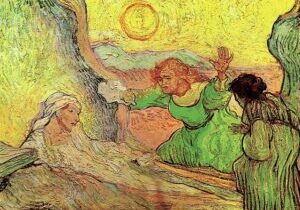
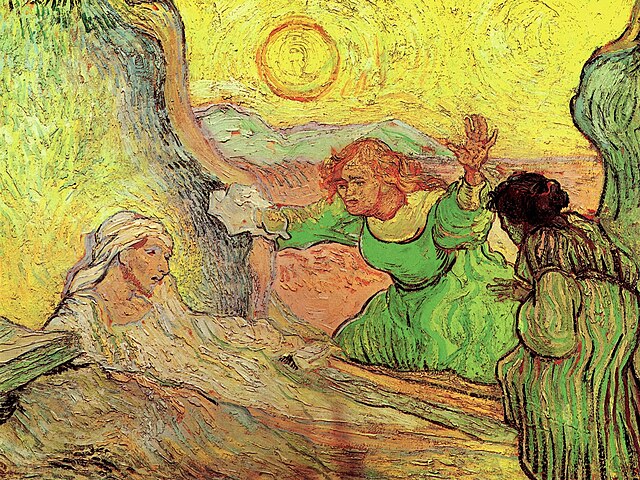
The Raising of Lazarus

The Raising of Lazarus

Jesus had close friends beyond his inner circle of the apostles. Martha, Mary, and Lazarus were friends who lived in Bethany not far from Jerusalem.

We know of an earlier time when Jesus had come to visit, and Mary was intently paying attention to Jesus while Martha was trying to get things ready for dinner and needed her sister’s help. I think that we can all relate to having company over for dinner and having family members duck out, leaving you with the whole project. Most of us can remember times when we were young and a brother or sister ran out to play instead of helping with the dishes.

At the time of Jesus, and even today, women are supposed to take care of the men and to be seen but not heard, as if they were children. This continues to be the pattern in the Middle East and most parts of the world. Even in the United States, women are often told to be submissive to their husbands, referring to St. Paul’s letters to the Ephesians (5:22-24) and to the Colossians (3:18). These passages also tell us that men should willing die for their wives. However, this has never been popular with men. As men, we usually ignore it. St. Paul’s message is that husbands and wives are equal in status. They should be submissive to each other and show mutual respect.

So, here is Mary who wants to be with Jesus, and she is breaking two rules. She is not helping her sister, and she is sitting at the foot of the Master with the men. When Martha complains, Jesus does not tell Mary to be a good “little lady” and return to the kitchen. He tells Martha that Mary is doing the better thing. He is implying that breaking these social norms and living on the teachings of the Master are greater nourishment than the food that is being prepared.

Martha, Mary, and Lazarus were his friends and he loved them deeply. It isn’t particularly obvious how deeply until Lazarus dies. Jesus knows that his friend is sick. He knows that the time is limited. His disciple Thomas, whom we know as the doubting Thomas, is as rational and practical as ever. Giving voice to what everyone is thinking, he says that it is suicidal to leave Galilee and return to Judea. All too recently, they had to flee when their lives were threatened. But if the Master is going to go back to Judea, particularly to Bethany, which is so close to Jerusalem, Thomas shows his loyalty and says that they should all go with him to die.

We see the pictures, the statues, and the stained-glass windows and we forget that Jesus and his friends were real people. Yes, he was their teacher, their Rabbi, but he was not lecturing to students in a class called Salvation 101. They were his followers, but he was willing to die for them and for us. They all said that they would die for him, but they disappeared when he was arrested. They did give their lives later, but not when he was the one arrested.

We worship a God who is not a distant powerful entity. We enjoy a special and deep friendship. We are in Christ and Christ is in us. This incredible friendship is something we celebrate when we enter a complete communion, when we receive the Holy Eucharist.

Lazarus is dying but Jesus does not get on the next plane. He doesn’t get in his truck and drive through the night. He waits for two days and tells his disciples that the glory of God will be revealed so that others might come to believe and to see Jesus for who he is. He says something about being able to walk in the day and to stumble at night. The light of God’s glory will banish the night and show the way to salvation. But what does that mean in practice?

Still, Jesus is upset. He is grieving. If he knows that he will raise Lazarus, why is he upset? He knows his friend is dead and that fact swallows him just as it swallows us and throws us into sadness and tears. He says that this is all for a purpose. That there is a reason. He trusts in His Father and knows that His Father will give him anything that he asks for. But his walk into the danger of Judea is not a happy one.

Martha comes out to meet him and does not criticize him. She utters a deep act of faith. “Lord, if you had been here, he would not have died.” When Jesus says that Lazarus will rise again, Martha agrees, saying that Lazarus will be raised on the last day. But that is not today!

Jesus said to her, “I am the resurrection and the life. The one who believes in me will live, even though they die; and whoever lives by believing in me will never die. Do you believe this?”

“Yes, Lord,” she replied, “I believe that you are the Messiah, the Son of God, who is to come into the world.”

Now we would think that the mood should change. Yet despite Martha’s profession of faith, they stand there in their grief. Mary comes out to join them. She repeats her sister’s lament. “If you had been here my brother would not have died.” Everyone is in tears and Jesus asks Mary

“Where have you laid him?” As he follows her and the mourners, he is overcome with grief and he cries. It is so obvious that people remark, “See how he loved him.”

Jesus’s friend had died. When they get to the tomb, he wants them to roll the stone away, but Martha objects, seeing it as the act of a grieving friend. She warns him that the body has already started to decompose after four days. But on his command, they roll the stone away and Jesus at the top of his voice tells his friend to come out.

And the glory of God is revealed. Jesus is the way the truth and the life. But the glory of God is revealed in the suffering and grief of friends. Tears run down the face of the Master as they approach the tomb. It is not a confident triumphant procession to the tomb.

Jesus suffers with us in our deep losses – losses of our parents, our spouses, or the unbelievable pain of losing a child. As we get old, the news comes more often. A friend, a relative, a co-worker has died. We go to more funerals than weddings and anniversaries.

Jesus does not stand aloof at a safe distance. We are his friends and he weeps for us and with us in a deep communion. We do not walk this road alone. We have our close friend and companion even in the worst of times right there beside us. (Jn 11:1-45)

Jesus said to her, “I am the resurrection and the life. The one who believes in me will live, even though they die;  and whoever lives by believing in me will never die. Do you believe this?”

 “Yes, Lord,” she replied, “I believe that you are the Messiah, the Son of God, who is to come into the world.”

Do we believe?

Readings for the Fifth Sunday of Lent –  Cycle A

Read More

Posted by on Mar 7, 2026

Water – Gentle or Wild?

Water – Gentle or Wild?

Living beside the ocean for over 35 years, I have seen water’s gentleness and fury. Sometimes the surface of the ocean is flat – barely a wave to be seen. Not many surfers seen either on those days! Other times, the ocean wildly rages – waves crashing against the cliffs and roaring as they hit. Large sections of the mudstone rock of the cliffs fall into the water, as if sliced by a great knife. No surfers those days. It’s just too dangerous.

A few years ago, we had one of those long winter storms. Major areas of the cliffs were washed into the ocean. One in particular was impressive. The slice fell off from a section of cliff that jutted out into the ocean beside a beach. The rocks sat there as if wondering what to do. But by the next day, they too had been washed away. Only the sand remained.

Sand is washed away and beaches become much smaller in the stormy winter months. Then the more gentle waves of spring bring back the sand and the beaches grow larger again.

Most of the time, the ocean waves are not too high and not too low. However, the ocean is never to be trusted. Sneaker waves have caught more than one person who turned their back to the ocean, sometimes with disastrous results, others with rather funny ones. A person I heard speaking at a conference once told of the time he had turned his back on the ocean, gotten caught by a wave, and emerged without his swim trunks. He didn’t make that mistake again!

Swimmers caught in a rip tide are all too frequently found a few days later as their bodies wash up on shore somewhere else along the coast. Coast Guard helicopters fly back and forth over the water. Fire department surf rescue teams go out to try to find them. But the water is simply too cold for them to survive very long and they are gone.

These thoughts come to mind as we ponder the images of water and the Lord’s gift of protection and life in the readings for this Third Sunday of Lent. The water in question in the readings was not found in oceans but rather was hidden behind walls of rock or deep below the surface of the land. Much less easily accessible and more controlled, but even more precious because it could be consumed and used to sustain life there. Ocean water is too salty for drinking and watering crops.

Water in the desert

Water is essential for life as we know it. Wandering in the desert, far from the lives they had known in Egypt, the Hebrew people felt how tenuous life could be. Where would food be found? Where was water? It was so very, very dry. At least in Egypt, though they weren’t free, at least they had food and water! Whose fault could it be that things were in such a difficult state now? They hadn’t asked to be led into the desert. Well, maybe they had asked the Lord to deliver them, but through the desert? That hadn’t been part of the plan. Why not an arrangement to be free again in Egypt as once they had been?

And so, as humans do, they grumbled and complained. “Why did you ever make us leave Egypt? Was it just to have us die here of thirst with our children and our livestock?”

Poor Moses. What could he do about it himself? He hadn’t counted on that either, though he had experienced traveling through dry, desert lands when he left Egypt as a young man.

Wisely, he turned to the Lord he had first met in a burning bush when he was a shepherd. “What shall I do with this people? A little more and they will stone me!”

The Lord, ever faithful and caring, instructed him to go to the front of the people and strike the stone wall there with the same rod he had used at the parting of the Red Sea as they fled Pharoah’s army when leaving Egypt. Water flowed forth from the stone, to the amazement of all.

The event was memorialized through the name given the place at the time – Massah and Meribah.  The names refer to legal accusations and a trial and testing. This was the time and place at which the Israelites argued with and tested the Lord. The answer to their question, “Is the Lord in our midst or not?” was a resounding Yes! (Ex 17:3-7)

Psalm 95 is just one of the songs and references to this event in Hebrew scripture. “Oh, that today you would hear his voice; ‘Harden not your hearts as at Meribah, as in the day of Massah in the desert.’” They had seen his work and still doubted – something all too commonly done to this day among even those who call him Lord. (Ps 95:1-2, 6-7, 8-9)

So at at Meribah and Massah, we see regular water provided in an unconventional way. More commonly, we see things that happen around wells, springs, lakes, or cisterns in more populated regions. One of those occurred as Jesus and his disciples were traveling through Samaria one day.

A new understanding of water from an unexpected visitor

Jews and Samaritans were not on friendly terms, to say the least. There was a solid disdain and even hatred between the two communities. Jews often traveled many extra miles to go around Samaria rather than through it when traveling from Galilee to Jerusalem. But for some reason, Jesus decided to go directly through Samaria.

It was around noon, St. John tells us, and they stopped in Sychar to find food. This town was very near the land Joseph had inherited from his father Jacob. Jacob’s well was there. This was an historic town as a result.

Jesus waited by the well while his disciples went into town to buy food. A woman approached to draw water. The fact that she came at noon rather than in the morning with the other women is important to note. This meant she was not a person of good reputation. Likely, she was shunned by everyone else in town.

Yet Jesus spoke to her. Jews didn’t speak to Samaritans casually or in a friendly manner. Men didn’t speak to women they didn’t know. And a Jew would never think to ask a favor or help from a Samaritan. But Jesus ignored all that and asked, “Give me a drink.”

She was shocked. This was unheard of. “How can you, a Jew, ask me, a Samaritan woman, for a drink?”

Jesus calmly responded that rather than be shocked, she should be asking for “living water” from him. That phrase, living water, referred at face value to running water. So, she was puzzled what he might mean by that. There was no running water anywhere near and he had no bucket with which to collect it!

Jesus explained that the water he came to give to people was different – it would become “a spring of water welling up to eternal life.”  She was a practical woman and responded, “Sir, give me this water, so that I may not be thirsty or have to keep coming here to draw water.”

At this, Jesus asked her to bring her husband. Turns out, she was not currently married, had been married five times and was now living with another man. This was a shock for her to hear. There was no way he could have known that about her. “Sir, I can see that you are a prophet.”

A discussion of where people should worship followed and Jesus told her the time was coming when neither the temple in Jerusalem nor the mountain in Samaria would be the place to worship. “Salvation is from the Jews.” Yet the time had come when all that would change and worship would now occur “in Spirit and truth.” All this would happen because “God is Spirit and those who worship him must worship in Spirit and truth.”

The narration continues for a while, with the return of the disciples and the return of people from the village to meet Jesus, based on the testimony of the woman of Samaria. He stayed there in the town for several days and many came to believe in him. (Jn 4:5-42)

We must choose – Rage or Gentleness?

So, what does this all have to do with water? How does water in its gentle or wilder forms fit into the picture?

As humans, we all too often think that only a strong, forceful response to opposition, oppression, or wrong-doing will bring about a change of heart in the one who acts that way.  We believe that war or other forms of aggression are justified as a way to make others behave the way we see as correct and just. We see the cost in innocent lives as something that can’t be avoided. And yet, when the ocean waves crashing on the shore cause the cliff to collapse, it doesn’t get restored. It simply washes away. There is no possibility of change or “redemption” that keep the destruction from being permanent. The cliff is diminished, and with enough storms, it will eventually be gone completely.

The Lord does not call us to use violence or anger in addressing injustice or oppression. Those only create more anger and a desire for vengeance.  The cycle becomes unending – like a feud between two families that continues generation after generation. There can be no end until someone decides to forgive and find a way to work together.

That is our call as followers of Jesus. We are to be the peacemakers who work to find common ground. We are to work together to find and demonstrate the reality that the Good is not limited. There can be enough of existing resources to go around. No one needs to be left out. It’s just that no one can or should have an excess of those resources either.

It’s absolutely the case that some political systems, some governments, some organizations, are not committed to working towards the common good of their people, to say nothing of all humanity. It’s very easy to want to keep a lavish lifestyle or power over others. All too often that can be phrased in religious language or the language of tradition – “that’s just the way it is!” But violence does not bring about positive change any more than the crashing of the waves against it makes the cliff stronger.

The quiet water of love, reconciliation, respectful communication, good-will in conversation, and solution-seeking is what the Lord offers as a spring that wells up inside us and leads to peace among all humans. Bombs will never change hearts. Drone operators can hit where other weapons cannot reach. Security will never come from violence. Those things only provoke anger and a desire for revenge.

Jesus didn’t come with armies. He came with a promise of living water and its power to change our lives, our traditions, our stories and histories. We haven’t always been good at following his lead. But we are called again and again to remember that Jesus didn’t come with armies to force change. He came and offered himself and his life to reopen our relationship with the Father. The Son through whom God proved his love for us, though we were still sinners who kept trying to do it our own way and failing miserably, proved his love with his life, death, and resurrection. (Rom 5:1-2, 5-8)

We are called to the same on this day as we remember both the water at Meribah and Massah and the living water offered to a Samaritan woman at Jacob’s well.

Readings for the Third Sunday of Lent – Cycle A


Read More

Posted by on Feb 21, 2026

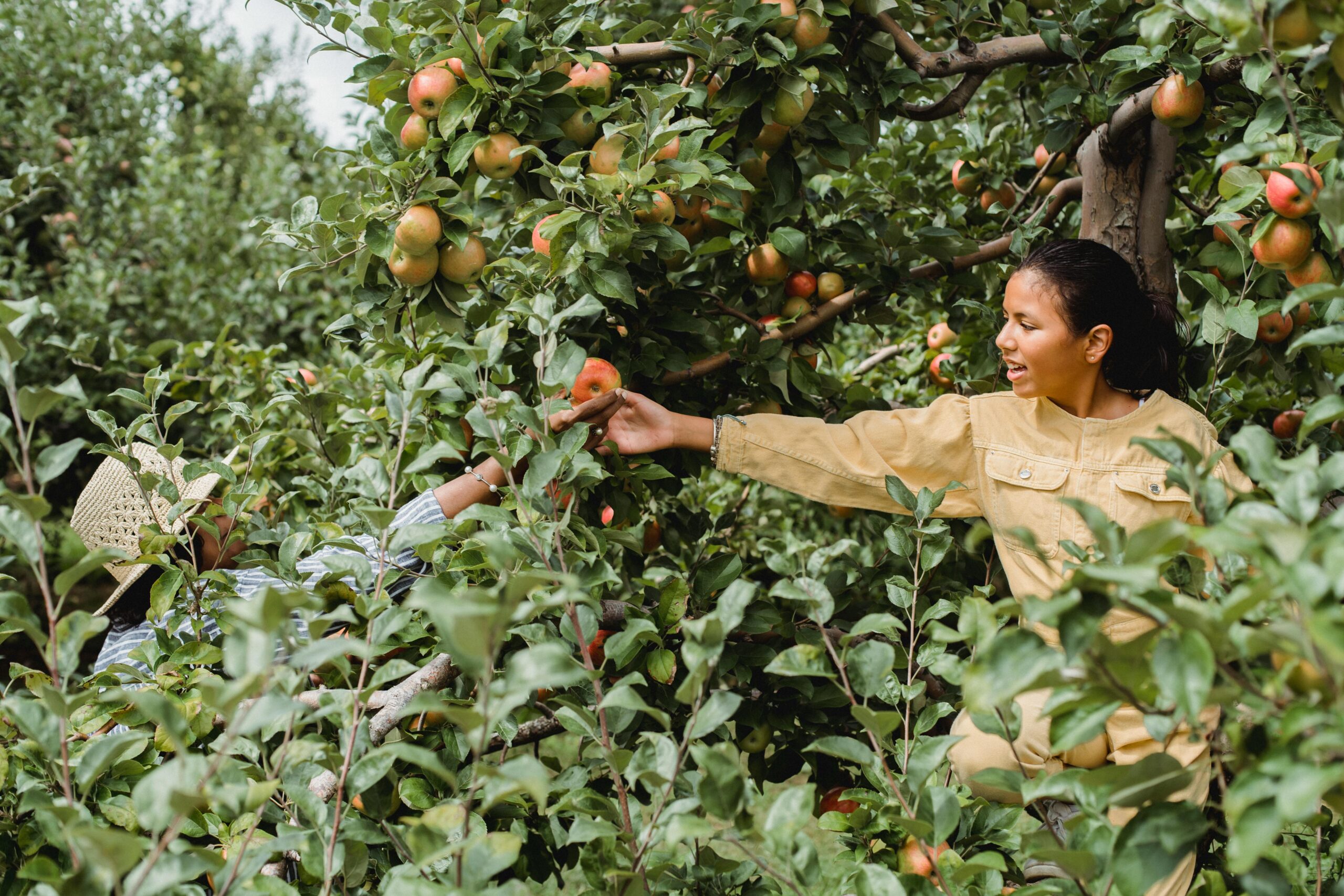
Apples in the Garden – Do We Eat?

Apples in the Garden – Do We Eat?

I sat today beside a fountain in the middle of a college campus. It was a beautiful sunny day after a week of torrential rain. More rain is expected again soon. But this day had been gorgeous. Children were playing with sticks in the pool around the fountain. The water, blown by the wind, was sprinkling those of us standing or sitting nearby. School is in session, so families and students were going through the plaza. A group of musicians entertained all who were present, whether sitting attentively listening or hurrying past on the way to somewhere else.

Usually, Saturday is a busy day, filled with activities at home and left-over ones from the work week that urgently call my attention. But today, I was with a grandchild and mother, savoring some time away and seeing the world through the eyes of an almost three-year-old. What a wonder it is! Water splashes. Sticks are laying around on the ground just waiting to be used to stir the water. People are smiling. All is well in the world, in at least some very fortunate places. And we happened to be in one of them.

We are entering into the season of Lent, a season of waiting and of turning away from the busyness and worries and habits of thinking of ourselves first and only secondarily of the needs of others. “Repent and believe in the Gospel”  “Remember that you are dust and unto dust you shall return.” “Turn from sin and believe the Gospel.” All are words we may have heard on Ash Wednesday as this season began.

We hear in the second story of creation that the Lord God created humans from the clay of the earth, blowing his breath of life into them. He placed them in a beautiful garden in the land between two great rivers. Everything they could ever need was provided there for them. Only the fruit of two trees was to be left untouched – The Tree of the Knowledge of Good and Evil and The Tree of Life.

One day, a cunning tempter suggested that the Lord God might not have been totally truthful about the consequences of eating fruit from the Tree of the Knowledge of Good and Evil. Surely, death would not be the result. Maybe the creator just wanted to keep it all for himself! It would taste really good…

The woman decided to try it for herself and tasted the fruit. It tasted good, so she gave some to her husband to try as well. Immediately, they knew more than they had ever suspected – good and evil. Everything in the garden had been good. Now everything had become more complex. There were things to worry about. Things that were to be feared. They found themselves ashamed of their very bodies! So, they hid when the Lord came to enjoy the evening with them in the Garden.

The Lord was very disappointed, made clothes for them, and escorted them out of the garden into a world that was much more difficult and complicated than they had ever imagined. Now they would make their clothes, grow their food, build their homes. All would be different. There was a barrier now between them and the joy of the Lord in the Garden. (Gen 2:7-9; 3:1-7)

I thought about this story as I sat by the fountain. It would be so easy to fret about the time lost when I should be cleaning the house, returning calls to clients, writing posts to share, preparing dinner, planning next week’s activities, and so much more. But here I was, sitting by the fountain. And … I set aside the worries. Decided I might or might not write a post this week. I simply enjoyed the time in the sunshine, with a child delighting in the world and time to rest.

Jesus had a life-altering experience in his baptism in the Jordan River. He went into the desert afterwards to be by himself and pray for 40 days. He fasted and prayed for understanding of what it all meant. What could it mean to be the Beloved Son of the Lord God? What could he possibly have to share with others that they should be told to listen to him?

Three suggestions came to him. Idea number one: change stones into bread. You can eat and feel better. Imagine what people will think about you when you give them bread from stones! His reaction: No.

Idea number two: how about throwing yourself off the top of the Temple. If you’re really God’s son, he will send angels to rescue you. His reaction: NO.

Idea three: Look at all the kingdoms of the world. Just worship me and they will all be yours! His answer: Absolutely not – Only God is to be worshipped.

Then the Lord sent his angels to minister to Jesus. He found peace. (Mt 4:1-11)

In many ways, we too face these same questions and challenges. We leave our Gardens of Eden as we grow from early childhood into more mature stages of life. We begin to learn how to care for ourselves and our families. We learn the ways of our societies and cultures. We experience joys and sorrows.

But sometimes, we need to step back, sit in a plaza by a fountain, being sprinkled by the water blown by the breeze. We step back from the craziness of daily life. We set aside the worries about the conflicts in the world. We rest in the love of the Lord who made such a beautiful world for us to enjoy for a time before we travel on to live with Him.

Today, as we move into Lent, let’s resolve to take the time to rest in the Lord. Take the time to watch the beauty of the world around us. See the innocent joy of the very young children and rejoice in it.

Forty days. A journey begun anew each year. A time for renewal.

Which apples do we choose? Those of peace or those of stress and worry.

Choose carefully. I will pray for you. Please pray for me too, that we all may grow in joy and peace during this season of Lent.

Readings for the First Sunday of Lent – Cycle A


Read More
Posted by on Feb 8, 2026

Let Your Light Shine – Light the Way

Let Your Light Shine – Light the Way

“You are the light of the world … (Y)our light must shine before others, that they may see your good deeds and glorify your heavenly Father.”

Jesus spoke one day on a mountainside to the crowds of people who came out to hear his words. He gave them a series of principles to guide their actions in ways that would embody holiness in their daily lives. We call these principles the Beatitudes – “Blessed are they who…”

The Beatitudes might be taken as a beautiful image of an impossible goal, to be achieved by only a few very holy people. But Jesus intended them to be taken as a new way of life. Those words were not just beautiful ideals, concrete actions must follow and Jesus was clear that this was expected of those who would be his followers.

“You are the light of the world.” Light on a mountaintop shining from a city – it cannot be ignored. Light hidden under a basket does no good for anyone. Light must shine. The light of lives based on the Beatitudes is the calling of Jesus’ followers. It leads to the glory of the Father becoming visible. (Mt 5:13-16)

It’s an interesting parallel that the first thing created by God in the beginning, according to the book of Genesis, was light. “Let there be light.”  And light came into the darkness. The light of creation and the creator, bursting forth into the creation of all that is in our universe, will shine through the lives of those who live according to the Son’s teachings that day on the mountain. Through our lives, the light shines forth or not. This light of holiness shining through each of us shows a bit of the wonder and awesome reality of the Father, the Father’s glory.

This is a pretty daunting thought. How can any one of us ever hope to live our lives in ways that will truly shine forth the Father’s love? How can we do anything so heroic that people will throng to the community, begging to become one of us? Is any of that humanly possible?

Fortunately, it doesn’t require superhuman qualities or behaviors or actions to live as children of the Father, shining the light of holiness into our world. It comes through the little things we say and do as well as through the big, bold, brave things we may have to do once in a while.

How will we know what we are to do to share the light? Most of the time, I think we don’t actually know just what this means. We go about our daily lives, meeting people, doing our daily tasks, and sometimes wondering what it all means. We don’t often think about the reality that the little things we do, the way we speak to others, the way we are patient when things or people move slowly, the times we smile rather than scowl at someone we meet on the sidewalk, or in the grocery store, or driving another car, the times we find the humor in an unexpected delay and trust that all will work out in the end – these are the times light shines in the darkness. When we offer a word or a hand of help or comfort – the light shines forth. When we spend time helping as volunteers to feed the hungry or help young people get the training needed for new careers – the light shines forth. When we simply help get our families up and out the door in the morning with a smile to carry on their way to a new day – the light shines forth.

We don’t have to look far and wide to find what we are to do and how we are to serve. Each of us has gifts and talents. Those are what we are to use.

What comes easily to you? What is as easy as falling off a log? What do you love doing? Those are your gifts. Find ways to use them.

What is hard? What do you never quite get around to doing? Those may not be your gifts. Find someone for whom they are easy and become a team! When each of you uses your gifts, amazing things can happen. The light shines forth again.

As bread is shared with the hungry, the homeless are sheltered, those without warm coats for the winter receive ones of their own, and the suffering receive help and hope – the light breaks forth. The glory of the Lord shines forth in support. And the impossible becomes possible. A new, richer community is formed. Life is transformed. Opportunities are broadened for all.

As we move through this coming week, may we remember to trust the Lord to be with us. We don’t have to do it all by ourselves. Most often, we simply have to step out in trust that others will show up to help when we step forward in faith. Sometimes, it seems like people will join the effort simply because they recognize our inability to do it all by ourselves. They throw up their hands and join in – not because they are convinced it’s something that has to be done, but because they know we are sincere and they don’t want to see our efforts fail. And amazing things happen as a result. The light shines forth!

May the Lord be with you this week, shining through each of our lives, pointing the way to our amazing Father.

Readings for the Fifth Sunday in Ordinary Time – Cycle A


Read More

Posted by on Jan 25, 2026

Naphtali and Zebulun – Peoples Crushed and Hope Reborn

Naphtali and Zebulun – Peoples Crushed and Hope Reborn

Times of upheaval and turmoil come all too frequently in human history. Tribes or nations move from place to place. Ambitious, greedy rulers seek even more territory and riches. Peoples are crushed as others invade and take their lands. Yet somehow, hope is reborn again and again. Naphtali and Zebulun are only two of the lands in which this has happened.  Those who have taken over the lands of others are themselves defeated and replaced, sometimes by descendants of those originally defeated, other times by people moving in from other lands.

The prophet Isaiah lived during one of those times. Originally, the land into which the Hebrews moved when they returned from Egypt was divided among the 12 tribes descended from Jacob. The tribes of Naphtali and Zebulun lived in lands in the north, an area west of the Jordan River. They and the rest of the tribes in the northern part of Palestine  (known then as Israel) were conquered by the Assyrians after many years of fighting. The residents of those lands were sent into exile in other lands and Assyria took over. The people ceased to worship the God of Abraham, Isaac and Jacob and instead worshiped the gods of Assyria. It became known as the District of the Gentiles.

The lands in the south were known as Judah. Their king, Ahaz, refused to help Israel and the Syrians against the Assyrians. This didn’t stop the eventual invasion of Assyria into their lands, but it held it off for a while.

Isaiah speaks of the lands of the north having been “degraded” or abandoned by the Lord when they were conquered. However, the Lord would come to the rescue and hope would be reborn. “The people who walked in darkness have seen a great light,” as the Lord smashes the power of Assyria through the power of other nations. (Is 8:23—9:3)

This rebirth of the lands of the north, which came to be known as Galilee, had come to pass long before the coming of Jesus. The connection with the southern part of the country had been reestablished. However, the equality in status of those from Galilee and those from the south was not an absolute given. The fact that Jesus was from Nazareth did not automatically give him status as a person whose ideas were worth hearing. The Messiah was to come from the line of David, rooted in Bethlehem in Judea, the lands of the south.

John the Baptist was from the south and his ministry was at the southern end of the Jordan River, closer to Jericho. Jesus and others traveled there to see and hear the prophet.  After his baptism, Jesus went into the wilderness for 40 days to pray and make sense of all he had experienced. During that time, John was arrested and imprisoned by King Herod. Emerging from the desert, Jesus heard the news and returned to Galilee. However, he did not remain in small town Nazareth where he had lived and worked. He moved to the big city, Capernaum, on the banks of the Sea of Galilee. There he began telling all he met that the kingdom of heaven is near.

St. Matthew links the beginning of Jesus’ ministry in Galilee to the prophecy of Isaiah, noting that when Jesus moved from Nazareth to Capernaum, it was in fulfillment of Isaiah’s prophecy – “Land of Zebulun and land of Naphtali, the way to the sea, beyond the Jordan, Galilee of the Gentiles, the people who sit in darkness have seen a great light, on those dwelling in a land overshadowed by death light has arisen.” With these words, he introduces the active ministry of Jesus. “Jesus began to preach and say, ‘Repent, for the kingdom of heaven is at hand.’”

Yet the mission of preaching the kingdom is not limited to one person. If only one man is saying anything, and no one is paying attention or asking to hear more, we humans tend to disregard what is being said. If it’s important, the dream must be shared by others too.

As Jesus walked along the shore, he saw two men working there, casting their fishing nets into the sea. He called to them, “Come after me, and I will make you fishers of men.” Amazingly, they left their boat and nets at the shore and walked away with him. Then he saw two others fishing in a boat with their father. He called them too and they immediately left their boat and father and walked away with Jesus. No hesitation. It was a powerful and compelling call.

The lands of Zebulun and Naphtali were hearing a new voice and the beginning of a new age – the coming of the kingdom of heaven. Jesus “went around all of Galilee, teaching in their synagogues, proclaiming the gospel of the kingdom, and curing every disease and illness among the people.” This renewal and preaching continued for most of the three years of his active ministry.  (Mt 4:12-23)

It wasn’t the well-educated, the wealthy, the powerful, the famous who followed Jesus. With few exceptions, it wasn’t they to whom he spoke. They weren’t the ones who benefited from his healing touch. In fact, they were the ones most suspicious of him. It was the poor, the ill, the handicapped, the powerless, who thronged to him. These were the ones he described as entering the kingdom first, because they relied first on God for their help.

In a similar way, we too are called to follow the example and leadership of Jesus. World conquest, is not to be our goal. Domination of other lands is not a sign of the kingdom. Taking control of natural resources, particularly of those in other lands, is not high on the list of things for followers of Jesus to be doing as part of living the coming of the Kingdom of God.

Who are the ones we are to serve? Who are the ones we are to welcome? Who are the ones whose needs are of greatest concern to the Father? If Jesus were walking physically among us today, where would we find him?

These are the questions we must ask in our lives, especially as powerful men and women work to take control of more and more lands, toss out those who have come seeking a new start in a safe place, and put their individual wishes and desires above concern for the common good.

The situation in Corinth which St. Paul addressed first in his letter is somewhat analogous to ours today. In that case, it was a question of which apostle’s preaching had been responsible for the birth in faith of an individual. Loyalty to that particular apostle and the particular set of memories shared with new converts was dividing the community. Paul reminds all that our baptism does not tie us to any particular preacher. Our baptism is into the life of Christ, including the witness of his cross and resurrection. Wisdom or fancy words are not the key. What matters is how we share in his ministry of service to all. That is where the gospel and its foolishness find their richness. (1 Cor 1:10-13, 17)

Do we choose whom we will welcome and protect? Do those coming to our shores have to pay large sums of money to the powerful to be welcome? Do we look first at skin color or language spoken before we see the human person? Do we assume everyone in a group is exactly the same as every other one?

How do we preach the gospel, the Good News of the Kingdom in our lives today?

This is the critical question for us as followers of Jesus in 2026. What is our response to the needs around us?

I pray that we will have the courage to speak truth to power, to encourage those with the authority to restrain others in their efforts to dominate, and to continue to work for the most vulnerable among us. Because that is where we will meet the Lord. Among those crushed, the Lord brings the gift of rebirth and hope. As his body here and now, it’s our time to provide the hands and heart needed.

Readings for the Third Sunday in Ordinary Time – Cycle A


Read More

Posted by on Jan 17, 2026

Dream Big – God’s Vision for Us

Dream Big – God’s Vision for Us

God’s vision for us as humans is amazingly grand – God dreams big. No half measures for God. God “is in it for the long run” as the saying goes.

It’s critically important for us to remember this basic reality as things in our world seem to careen wildly out of control and towards disaster. God dreams of better things, better outcomes for all of us than the division, anger, hatred, and discord we hear in the news and in our encounters with others.

Throughout the Scriptures, the prophets speak of the glory of the Lord that will break through into the world and draw all peoples to unity. Often the texts speak specifically about the Hebrew people. This is totally understandable in light of the fact that the prophets are speaking to their fellow descendants of Abraham, a people who were formed through the experience of being wanderers out of the great civilizations of Mesopotamia into Palestine, then into Egypt and back. They experienced many times of peace and times of conflict. Many of the transitions were not marked by compromise and mutual agreement with other powerful nations but rather by armed conflict and conquest.

Some of the most powerful words came from prophets speaking in times of conflict or of defeat. These are words of comfort and a promise of better times to come. Reminders of God’s dream and patience are commonly part of these prophecies.

Isaiah says: “Now the Lord has spoken who formed me as his servant from the womb, that Jacob may be brought back to him and Israel gathered to him … my God is now my strength!”

Yet the restoration of Israel following times of exile was never the ultimate goal of the Lord.
“It is too little … to restore the survivors of Israel; I will make you a light to the nations, that my salvation may reach to the ends of the earth.” (Is 49:3, 5-6)

Not enough to restore earthly kingdoms and power to any particular people, not even to those chosen long ago. God’s vision is for salvation to reach all peoples.

In a world that is all too often filled with violence as individuals and groups strive to impose their beliefs and their ways on the rest, this kind of vision can be dangerous. Crusaders, missionaries, zealots of many kinds have ridden forth to force others to conform to their own beliefs for far too many years. They follow the paths of conquerors and invading peoples recorded over the past 5,000 years! All were seeking some “good” and justified their violence in view of that.

Yet that is not God’s vision or dream for humanity.

God speaks to individuals, offering love, unconditional love. This is the key to God’s big dream. Love – selfless, offered without expectation of repayment, and to all.

It sounds crazy. Totally impossible, highly risky, sure to lead to disaster, and not at all likely to turn out well for its proponents and those who work to bring it into focus.

Yet God is patient and consistent. Centuries don’t really matter when one exists outside of time itself!

Perhaps more importantly, God is willing to start small – with individual people. Abraham, Moses, Samuel, Isaiah, Micah, John the Baptist. The fields were prepared for many centuries before God became one of us, coming as a carpenter from a small town in a conquered country.

John the Baptist came preaching repentance, like so many prophets before him. The time for the coming of the anointed one of the Lord is coming close. “Prepare the way of the Lord.” Yet similar words had been spoken by prophets through the ages. Who could have imagined the time had actually come!

One day, after his baptism in the Jordan, Jesus was walking towards the people again gathered there. John had a group of followers, disciples, who believed his message and gathered to help prepare the way, whenever it might come. John looked up and saw his cousin, Jesus.  He exclaimed to his disciples, “Behold, the Lamb of God, who takes away the sin of the world.” This man, this man you see with your own eyes. This man is the one for whom we have been waiting.

In the Gospel according to St. John, the Baptist goes on to explain. “I did not know him, but the reason why I came baptizing with water was that he might be known to Israel.” In other words, “My job is done!”

A reasonable question would be, how did John know? John’s testimony continued. “I saw the Spirit come down like a dove from heaven and remain with him.” Blessedly, the Lord had told John what to look for ahead of time. “On whomever you see the Spirit come down and remain, he is the one who will baptize with the Holy Spirit.” John declared, “He is the Son of God,” the one who is to come. (Jn 1:29-34)

Once again, God’s dream doesn’t come to pass through great force or massed armies. God’s dream continues to unfold through the Spirit, the Holy Breath of God, coming and remaining with one who is truly human and seeks to do the will of the Lord.

Years later, after Jesus had lived his life and mission, died, and risen from death, the men and women who heard the story of his life and believed his word shared what they had received from the first witnesses.  Bit by bit, the word spread and communities of faith sprang up around the empire.

In Greece, the apostle Paul founded many such communities, including one in Corinth, a major cosmopolitan seaport. As might be expected, as the community grew, Paul kept in touch. In his first letter to the Corinthians, his greeting illustrates the development in his world of God’s dream. He addresses the “church of God that is in Corinth,” to all who shared in the grace poured out through Jesus there and throughout the world. “Grace to you and peace from God our Father and the Lord Jesus Christ.” (1 Cor 1:1-3)

Grace and peace. These are the dream of God for all of us.

How will it come about? Only through decisions made on a daily basis to care for others. The rich certainly need our prayers and have special challenges. However, those to whom Jesus points us through his words and the example of his ministry are those who don’t have all they need. The hungry, the thirsty, those in prison, those who seek refuge in other lands, those who need work, the unhoused, the sick – all these are part of the dream of God. As the community of people around the world reach out and help, that dream comes closer to fulfillment.

It’s not enough to expect only local communities to be able to assure that all people there have what they need. Some things require people to work together on a larger scale. In our world today, it’s even more important for us to reach across boundaries of community, state, nation, and region to help each other. When some have more resources than they can ever possibly expect to need and others must pick up pennies off the street to get enough money to buy a sandwich, the dream of God is not fulfilled. When nations have funds to build and use massive military weapons but will not spend a fraction of that amount to help children in less wealthy countries get health care and schooling, that dream of God in not fulfilled. When those who can pay large sums of money for permission to live in another country, but that same country turns away or mistreats those whose farm lands and orchards have been mined by drug gangs who have driven them out, that dream is not fulfilled.

So, this week, as we ponder the words of Isaiah, the witness of John the Baptist, and the cry of the Psalmist who prays, “Here I am Lord, I come to do your will,” I pray that we have the courage to continue to work for justice. The strength to keep showing up. The hope to believe God’s promises.

Peace be with you.

Readings for the Second Sunday in Ordinary Time – Cycle A


Read More

Posted by on Jan 10, 2026

The Spirit of God Descending on Him Like a Dove

The Spirit of God Descending on Him Like a Dove

How does God come to us? What signs or wonders are seen? Will there be lightning or thunder? Will the earth shake? Will the winds blow fiercely? How does God come to us? Would we recognize his coming when it happened?

All four Gospels describe the moment when Jesus experienced the coming of the Father to him personally.

Jesus’ cousin John, son of Elizabeth and Zacharia, was a prophet. When they were both around 30 years old, John came out of the desert and began preaching and baptizing people in the waters of the Jordan River. He preached repentance from sin and spoke of the imminent arrival of the one who would bring the reign of God to the world. John described himself as a “voice crying in the wilderness.” His role – to call all people to prepare for this world-transforming event.

And then the day came.

Jesus came to the Jordan from his home in Galilee. He listened to John and then approached the river to be baptized. John was taken aback. “I need to be baptized by you, and yet you are coming to me?” But Jesus was adamant. “Allow it for now, for thus it is fitting for us to fulfill all righteousness.” In more contemporary words, “It’s OK. We need to do it this way!”

Jesus entered the water and John poured some of it over him. As he left the river, “the heavens were opened for him, and he saw the Spirit of God descending like a dove and coming upon him.” Wow.

As if that weren’t enough, a voice from the heavens spoke: “This is my beloved Son, with whom I am well pleased.” (Mt 3:13-17)

Of those present, John the Baptist also heard the words, because each of the gospels describes them as having been heard. Did all hear them as clearly spoken words? John did, because in at least one instance he told his followers what he had heard. But who knows what anyone else heard. Another gospel says the voice thundered. For those to whom it mattered, the words were clear!

The image of the Spirit descending like a dove is also important here. While the landing of any bird is not without a certain amount of fluttering wings and outstretched feet, a dove coming out of the sky unexpectedly is much different than a bird of prey such as a hawk, falcon, or eagle – smaller and with a much less fearsome beak, among other things!

A dove is a sign of peace. In the time of Noah, for example, it was a dove that was sent forth to see if dry land was appearing again – the earth no longer covered by the flood waters. The return of the dove with a small branch that had leaves was a great sign of hope. God’s anger had abated and the flood would end. People could again live on the earth.

We all too often think only great signs and wonders will announce the coming of important changes or personages. Strong leaders will be needed to bring peace and keep away enemies. Powerful armies will guarantee peace. Organized companies will provide the products and services we need most efficiently. And so forth and so on.

But what all too often happens is that we forget that it’s in the small, everyday interactions that true peace and justice are born. Only there do they gain the traction to spread. Mighty armies and powerful nations simply cannot do it.

Jesus was called by a voice from the heavens. However, it was not a mighty bird but rather a dove that came upon him at that moment. In the same way, when the Lord comes to individuals, it’s not typically with a great display of power and energy. It’s in a quiet embrace of love that permeates every pore of that person’s being and gently says, “I love you.” After receiving that gentle, quiet embrace, everything is different. Nothing can be the same again, because “I am loved.” And if I, who am not perfect, am loved, then so must you be loved.

Another prophet, Isaiah, spoke of the coming of the Lord’s servant long ago. “Here is my servant whom I uphold, my chosen one with whom I am well pleased, upon whom I have put my spirit.” This chosen one is not a person who is going to go out shouting at people, breaking things, or otherwise breaking up the society and world in which they live. This servant is coming to establish justice on earth. How? What will be the sign of the coming of the servant? This person will be “a light for the nations” who opens the eyes of the blind, releases prisoners, and brings people into the light out of darkness. (Is 42:1-4, 6-7)

Is this for one nation only? Blessedly, not at all. As the apostle Peter discovered when he was called to the home of the Centurion Cornelius and found the Lord had already poured the Spirit out on that household as well, “God shows no partiality. … in every nation whoever fears him and acts uprightly is acceptable to him.” Peter also declared as he spoke that day, “God anointed Jesus of Nazareth with the Holy Spirit and power. He went about doing good and healing all those oppressed by the devil, for God was with him.” (Acts 10:34-38)

With the celebration of the Baptism of the Lord, we close the Christmas season and enter into the mysteries of the adult life of Jesus.

What will this new season bring? How will we live the love we have received? Where will we seen Christ in those around us? What concrete actions will show the presence of the Holy Spirit in our lives, reaching out through us to those in need or those most vulnerable to the harmful results of local, national, or international policies and actors.

Pray with me for the courage to open our eyes, to open our hearts, and to open our ears. The courage to notice the Spirit coming into our lives and hear the voice of the Lord whispering and calling to us, “This is who you are – one whom I love dearly, my beloved child.”

Peace be with you.

Readings for The Baptism of the Lord – Cycle A

Cyprian Consiglio, O.S.B. Cam has a wonderful song I share with you today. This is Who You Are

Read More

Posted by on Jan 5, 2026

Governing With Justice – Rescuing the Poor and Afflicted

Governing With Justice – Rescuing the Poor and Afflicted

“O God, with your judgment endow the king, and with your justice the king’s son.”

With these words from Psalm 72 at Epiphany, we are introduced to a new vision of what it means to govern – to govern with justice.

When the king and his son govern with the Lord’s judgment, the result is not what so often happens historically. Historically, many rulers have come to power through violence or trickery. Others grow up as children of rulers, having their every whim granted. They assume this will continue for the rest of their lives and set out to make it so. The result of this common pattern is not peace and justice for the community. It is all too often oppression, poverty, anger, frustration, and sometimes outright rebellion and wars. The opposite result occurs when governing with the Lord’s judgment.

The psalmist sings of justice flowering and profound peace from sea to sea for all time, and, in a reference some might have heard in recent years, “from the River to the ends of the earth.” The term, the river, refers to the land of Abraham’s birth, in Ur of the Chaldees – a land currently known as Iraq. In other words, this justice and peace are to flow through all the world.

Kings will bring gifts and tribute/money and pay him homage. Nations will serve this king. Why? Because he rescues the poor and the afflicted. He takes pity on the poor and saves their lives. Not a common picture of the typical reason kings or rulers receive tribute from others. (Ps 72:1-2, 7-8, 10-11, 12-13)

The promise of Isaiah for Jerusalem seems in many ways to contrast dramatically with the image from Psalm 72. “Rise up in splendor, Jerusalem! Your light has come, the glory of the Lord shines upon you.” This prophecy speaks of darkness covering the earth until the Lord comes, shining over the land with glory – a light to guide the way of nations and kings. Prosperity, reunion of peoples gathering from afar, rich gifts from the powerful – all will be part of the splendor of Jerusalem. This was a great promise made to a people returning from exile, yet it is much more as well.

Notice, the psalm also speaks of kings bringing tribute and peoples of all nations serving the Lord. This isn’t the kind of kingdom or nation state we see in human history. This is something greater. Jerusalem is not just the capital of Israel. It’s not the city or land over which so many have fought through the centuries and continue to fight. This is the place where the Lord’s justice and glory shine forth. Those who approach it from all over the world bring rich gifts to share with all. Yet it is not those rich gifts that make it the wondrous place that it is. What matters is the presence of the Lord, the light shining forth to the world. Those who come to this place proclaim their praise of the Lord, the Lord appearing in glory. (Is 60:1-6)

St. Paul explains that this gathering of peoples is enlarged through the coming of Jesus to include all peoples of the earth – Jews and Gentiles alike. All are now heirs of God’s kingdom and grace. All are “members of the same body, and copartners in the promise” received through the gospel, the good news, of Christ Jesus. The old barriers that divided the world into those chosen and those rejected have been destroyed. All are invited to this relationship with the Lord whose light shines forth through the darkness. (Eph 3:2-3a, 5-6)

Light shining forth – new understandings – Epiphany.

The Lord came into the world as a baby, part of a normal human family. Yet his coming was not a humdrum event. Born during a census that required people to move from the towns in which they were living to the towns of their ancestors, he was greeted by the poor – shepherds who received word from heavenly messengers.

Shepherds were not the only visitors Jesus received. Wise men from eastern lands also came to visit, according to St. Matthew. Constellations in the sky which they had observed indicated a very special king was to be born in the land of Israel. They set out to visit the newborn and bring appropriate gifts. Being practical people, they first checked in at the palace to see the newborn, but that wasn’t where this king was to be found. The ruling king’s advisors checked the predictions for where the great king, the anointed one of the Lord, was to be born and reported that he would likely be found in Bethlehem.

The wise men, magi, found Jesus and his parents in Bethlehem. They offered their gifts and praise – gifts for a king. A greater king than any other. The one foretold in Psalm 72 and Isaiah. The one who would rule with justice and mercy, caring for the poor.

The magi returned home by a different route, to protect this child from Herod, the local king. They were changed by the experience of meeting this child and his family and carried that with them on their journey home. (Mt 2:1-12)

Shortly after the magi left Bethlehem, so did Joseph with Mary and Jesus – in the middle of the night. Into Egypt they traveled to escape the danger posed by Herod. As political refugees, they left everything behind to protect their child. Had they remained, he would have been killed with the other baby boys by Herod’s soldiers.

How are we to respond to these images and promises today? How and where does the light shine forth through our words and actions. Where do we look to find justice and peace? How do we care for the poor and afflicted? Is this only a personal responsibility or is it a communal one – something local and national governments are also called to do?

As we enter into another calendar year, with wars raging, countries competing economically and ideologically, arguments among peoples who have different visions for the future and understandings of who is responsible to help the young, the old, the newcomer, the neighbor, we will be forced to address these questions.

Epiphany, light shining forth, new understandings – justice and wise judgment as gifts from our God – may all these be characteristic of all who are followers of the Lord God. May we keep our eyes and hearts open to find the child sent from on high, bringing light and life to our world. And may we be partners in the great task of serving those least able to protect themselves and prosper. With this heavenly king, may we have pity for the lowly and the afflicted, reaching out to save the lives of the poor.

Readings for The Epiphany of the Lord – Cycle A

Read More

Posted by on Dec 21, 2025

I Do It Myself – A Step in Growing Up But Not the Goal

I Do It Myself – A Step in Growing Up But Not the Goal

“I do it myself” declares the young child as a new skill is proudly claimed. Mom, Dad, Brother, Sister – “I can do it on my own. I don’t need your help for this” is the way we older folks might express the same thought.

Sometimes we simply smile when we hear a young child express such feelings. It’s a sign of growing maturity and competency with the skills they will need throughout their lives. Other times, it can be very frustrating for those of us who must stand by and wait for the child to accomplish the task or do it less perfectly than we might like to see. After all, time doesn’t wait for anyone and sometimes we need to get out the door!

This reality struck me as I was reading some background information on King Ahaz and his response to the Lord’s work spoken to him by the prophet Isaiah. “I will not ask! I will not tempt the Lord!”

In a world and society in which doing things ourselves is highly valued, these words seem rather admirable. Why not act responsibly and behave like grown-ups? Isn’t that what Ahaz is doing?

Well, as it turns out, that’s not what Ahaz should have been doing. Ahaz was king of Judah, the southern kingdom. Judah was being threatened by Syria and Israel (kingdoms to the north). Those kingdoms, in turn, were being threatened by Assyria. As a king from David’s line, Isaiah reminds him, he can call on the Lord for insight and help in making the decision about how best to protect his people. The Lord has traditionally come to the aid of leaders who ask for this help.

But Ahaz refused to ask.

Isaiah didn’t simply tell Ahaz that whatever he wanted to do would be all right. He spoke a prophecy – a sign the Lord would send. “The virgin shall conceive, and bear a son, and shall name him Emmanuel.” (Is 7:10-14)

The meanings of the words are important here. Emmanuel means “God with us.” The original Hebrew term used to describe the woman who would bear the child was “almah,” meaning essentially a young woman who was old enough and free to marry. When the scripture was translated into Greek, the word used was “parthenos,” which is translated as virgin.

The technical details of how it would all come to pass were left to the Lord to figure out.

Centuries passed before this promise came to fruition. By the time Jesus was born, the nation had passed through the Babylonian captivity, the return to Israel when Persia defeated Babylon, and later conquests by other regional empires. Finally, under the Roman empire, the prophecy was fulfilled.

St. Matthew described the reaction of Joseph, an honorable man who discovered that his bride-to-be was expecting a child before they were married. Shocked, he still did not want to denounce her for punishment, but he planned to divorce her quietly and move on with his life. However, the Lord’s messenger, an angel, appeared to him in a dream before he acted.

“Joseph, son of David,” said the angel, “do not be afraid to take Mary your wife into your home. For it is through the Holy Spirit that this child has been conceived in her. She will bear a son and you are to name him Jesus, because he will save his people from their sins.”

Joseph believed the angel, God’s special messenger, and took Mary into his home as his wife. He cared for her and the child born to them, loving and supporting them both for the rest of his life. (Mt 1:18-24)

Joseph’s approach was in many ways the complete opposite of Ahaz, who assumed he knew just what to do and could do it himself. Joseph accepted the word that came to him from the Lord and trusted that the Lord would be there to help. Rather than “I do it myself,” he trusted the Lord enough to go against tradition and love Mary and raise a son with her as a loving father.

After Jesus’ death and resurrection, as the community of believers grew and expanded out from Israel into surrounding lands, St. Paul received a call to share the Good News with non-Jews, those known as Gentiles. In his letter to Roman Christians, Paul begins by introducing himself as subject to the rule of Jesus, the Christ, called to share the gospel, the Good News, of God with all. Though Jesus was descended from David, his power and authority stem from being the Son of God. This power and authority open to all peoples the gift of sharing in the life of grace in the new kingdom of God. He concludes his introduction with a special greeting and blessing. “Grace to you and peace from God our Father and the lord Jesus Christ.” (Rom 1:1-7)

Hear these words with fresh ears again today. They are meant for all of us too and echo across the ages. “Grace to you and peace.”

Although we have been encouraged to be independent and earn everything on our own, in reality, “I do it myself” is a reflection of childhood and a stage of growing into adulthood. As we grow, we are to learn wisdom as well. We learn to trust our God and Father to be there to help. We help each other and in doing so, we grow in God’s life (grace) and experience the peace of knowing God is there supporting us.

The coming of the Lord is near. We remember his birth so long ago. We remember his parents and their “yes” to God’s request of them. We listen to hear God’s request of us.

Grace and peace be with you in this time of quiet waiting for the Lord’s coming.

Readings for the Fourth Sunday of Advent – Cycle A


Read More

Posted by on Nov 29, 2025

Come Let Us Climb the Lord’s Mountain

Come Let Us Climb the Lord’s Mountain

Most of us don’t live on mountains. We live lower down, where the land is flatter and living is easier. But hills and mountains are special places in our experience. It takes some effort to get up or down a hill and even more to get up towards the top of a mountain. Some mountains are easier to climb than others, but all offer a special something that leads us to them.

When we get up on the mountainside, the views that stretch out in front of us are amazing. From a simple meadow, we look down into valleys, across to broad fields or other mountains rising in the distance. The worries and concerns of the day can slip away as we see the broader world and its beauty. As we open to take it all in, we find refreshment and rest before we return to the day-to-day activities of our lives.

In ancient times, mountains were the site of encounters between God and humans. Moses was called up to the top of Mt. Horeb to receive the Law from the Lord. The prophet Elijah waited high up on the same mountain to meet the Lord, who came to him in a quiet whisper of voice. The temple itself was built on a mountain. It wasn’t the tallest mountain in the area, but it was certainly a point of focus within the city of Jerusalem because this was the place of the dwelling of the Most High, rebuilt after the exile in Babylon.

Isaiah describes this mountain, Zion, as the house of Jacob’s God. People from all over the world come to this mountain, seeking to learn how to walk in the Lord’s paths. There they will turn from war to peace, learning to “walk in the light of the Lord.”

The view from the Lord’s Mountain turns towards peace and acceptance of others, regardless of which nation is their homeland, because the Lord calls and guides all peoples. “Come let us climb the Lord’s mountain” – all are welcome and called. (Is 2:1-5)

Jesus too traveled to the mountain of the Lord, the temple in Jerusalem. He was known to pray by himself on mountains and hillsides as he traveled through the land. Yet he didn’t focus on the mountaintop experiences. His mission was to all who lived ordinary lives.

He made clear in his teaching that the kingdom of God begins here and now. It’s not something far away. Nevertheless, the day and time that the Son of Man will come is unknown. “Stay awake” he tells us. “Be prepared … at an hour you do not expect, the Son of Man will come.” (Mt 24:37-44)

With the coming of Jesus, we have a change. No longer is God to be found mainly on mountaintop temples. God has become one of us, living in the everyday world with us. All will end one day, but in the meanwhile, look around. The Lord is here, present in each person we meet.

St. Paul reminded the people of Rome, “it is the hour now for you to awake from sleep.” Salvation is near and getting nearer every day. The risen Christ will come again. It might be very soon, but that is no reason to simply take it easy and sleep away the time until then. Be awake and actively living. Move away from rivalry, jealousy, and other negative actions. Turn always to the light and live as the Lord would. (Rom 13:11-14)

Climb the Lord’s mountain and find him also on the way, along the path, through the day-to-day activities. Sometimes, those daily patterns can be as challenging as climbing a mountain. Then remember to take time out, step onto the mountain for a bit, and see the bigger picture. Rest in the Lord’s presence for a while, before returning to the everyday challenges and joys.

Advent is here. We wait for the Lord’s coming. We celebrate the promise of the Lord’s coming. We rest in a bit of quiet as the world races around us, knowing that it is in the quiet times and places that we will find him newly born in our hearts.

Come, let us find the Lord together in this new year.

Readings for the First Sunday of Advent – Cycle A


Read More