Pages Menu
RssFacebook
Categories Menu

Posted by on Jan 29, 2016

Entering into the Mystery

Entering into the Mystery

people-walking-on-streetAs the Church’s New Year began in Advent, in communities around the world, men and women took a huge step into  a special journey: a journey that will take them deeply into the mystery of God’s relationship with humans. These people stepped forward with their sponsors and were introduced to the people of the communities they will join. Welcomed with blessings and prayer, they entered a time of study and reflection through which they will become increasingly aware of God’s call to journey on The Way.

The Way?

Christian life in earliest times was known as The Way: the way to the Kingdom of God, begun here and now with the life, death and resurrection of Jesus and unfolding through time to its ultimate fulfillment when Jesus returns and all are reunited in the mystery of God’s life. This way of living differs from the ways of others who have not chosen to follow it. It requires loving and forgiving enemies, caring for the most vulnerable in the world, acting with justice and mercy, being stewards/caretakers of the environment, and trusting that God will bring good out of all that happens, even if what happens is not what God would have wanted to see.

That doesn’t sound easy. It might even be dangerous!

Following the Way has never been a safe or easy option. Jesus, who called Himself the way, the truth, and the life (Jn 14:6), was tortured to death, hanging naked on a cross, reviled and mocked by passers-by and abandoned by most of his friends and followers. Many of those who have followed Him have witnessed with their lives to His resurrection over the past 2000 years. The martyrs (witnesses) we remember from those early centuries are still being joined by Christians around the world today who choose death rather than renounce their Lord.

Whether called to witness with our blood or not, each of us will face times when we must speak out, saying unpopular things to people we know and whose respect we treasure. Our choice of lifestyle, leisure activities, business/work behavior, sexual ethics, and treatment of the poor and ill will all be shaped by our faith. Not all of those choices will be understood or endorsed by our peers.

Then why do it?

Despite the counter-cultural nature of a life of faith, the call to enter into the mystery is profound. The joy, peace, mercy, love, and comfort of a hug from God surpass anything of human origin. Some doors open while others shut. Funds materialize just in time to keep a project going, or they don’t come at all and something else must be done to move forward in service. Prejudices get overturned as we meet and get to know folks from other social or ethnic groups in communities of worship and service. We are continually challenged and helped to grow in wisdom and grace as we grow in age.

A life of faith is not for the faint of heart. It’s a great adventure into realms not often noticed through everyday eyes. As poet Elizabeth Barrett Browning said, “All of Earth is crammed with heaven, and every common bush aflame with God; but only those who see take off their shoes.”  The glory of God shines forth in all of creaton. Those called to enter into this mystery are truly blessed. We journey forward together — those just beginning and those who’ve travelled long. Difficulties, doubts, second thoughts, and times of desolation will arise, but the promise and faithfulness of God, the overwhelming power of love and mercy, will accompany us and welcome us to an even richer life when we reach our journey’s end.

Away we go together — on The Way!

Read More

Posted by on Dec 31, 2015

Entering into the Mystery

A Prayer at Christmas time


Almighty God and Father of light,

a child is born for us and a son is given to us.

Your eternal Word leaped down from heaven

in the silent watches of the night,

and now your Church is filled with wonder

at the nearness of her God.

Open our hearts to receive his life

and increase our vision with the rising of dawn,

that our lives may be filled with his glory and his peace,

who lives and reigns for ever and ever.

From Liturgy of the Hours, Morning Prayer
Christmas

Read More

Posted by on May 22, 2015

Entering into the Mystery

Why Mary is Important

Hail Mary - F Fong

When we think or speak of Mary, the Mother of God, it is always important to keep in mind that she is best understood in the context of her relationship with her son, Jesus. Said formally, Mariology is always constructed in the context of Christology. This is so because Christ is the redeemer and the sole source of salvation. Everything in creation came to be through him. Mary, because of her role, participates in the creative and redeeming action of God in a special way.

Mary’s exceptional conception as sinless affords her the choice to live fully for God. She was not programmed to be good, but rather, Mary did not carry the deep fear of interference and resistance against God that exists in all other human beings. The rest of the human race has the grace and possibility to work with and overcome fear and anger, but we must work to limit our desire for control and instead surrender to God’s grace. We often do not choose right away to stop being resentful or angry. We often project onto others the responsibility for our own self-inflicted injuries. Mary had a clear vision of her place in life. She was born totally honest and prepared to grow. She chose to say “yes” over and over to these qualities, even when they brought suffering.

According to the Scriptures, Mary grew in her understanding of her son, herself, and the work of God in the world for salvation. We read more than once in the Gospel of Luke that she “pondered” how their lives were unfolding and what God was doing. She did not have a road map to reassure her of where they were going, but she had given her consent at the Annunciation and she trusted over and over. Her pregnancy was unexpected and controversial. The choices that Jesus made had consequences. His declaration in the synagogue that he was the Messiah brought immediate violence and ejection from the community. We find him and Mary later in the Gospel living in a completely new town, Capernaum, not a hill village like Nazareth but a fishing village.

Icon of the Wedding at Cana - Lucia 398 - CCWhen Jesus began his itinerant preaching and healing ministry we know that Mary, her sister and a group of women accompanied him as well as the crowds. This was not a normal lifestyle for first century Jewish women. Mary had to give up her reputation, village, old friends and the comforts of a house. In all of these ways she was an excellent listener of God as he called her out of the usual, the expected. She had to be quite aware of the danger that Jesus was in. In the Gospels, in village after village, the rage and jealously grew in the scribes and Pharisees. They hated his penetrating honesty, his clear perception of their air of superiority. They despised Jesus’ humility and closeness to the cast-offs of society. Mary must have constantly had to put her worries in the hands of God. She modeled an exceptional surrender to God and acceptance of His will. No one could have gone through this without being in deep prayer and interior connection to God all the time. She stood by Jesus from Cana to Golgotha and we have no reason to believe that she knew that “everything was going to be all right.”

Throughout the centuries Mary has been understood as the second Eve who reversed the willfulness and disobedience of the first Eve. Even when this story is understood metaphorically, Mary still is understood as the first human to be perfectly and happily obedient. She is also appreciated as the mother of the Church because she remained as the center of the early church community and loved them as her own. But it is her maternity of Jesus which stands out as the most important role she has because of its eschatological (future reaching) character. What is meant by this is that she is not just a person who did something unique in the past. Mary was and is “full of grace.” In the spiritual relationship which she has with her son and the whole of creation, Christ’s grace pours through her as the first disciple to all of humanity. Mary mothers us (protects and strengthens us) if we let her. Catholicism understands all of humanity, living and dead, to be in spiritual solidarity, a mystical body. Because of this solidarity or communion, Mary can help us to have a readiness to commitment, trust even in unbearable loss, and unimaginable joy when we are united to her son.

Read More

Posted by on May 19, 2015

Entering into the Mystery

Hispanic-Mozarabic Rite from Spain Celebrated

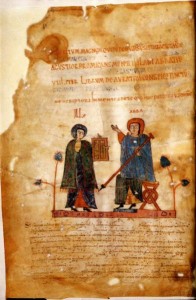
AntifonarioDeLeón - Mozarabic - public domainOn May 16, 2015 the Holy Sacrifice of the Mass was celebrated at St. Peter’s Basilica according to the Hispanic-Mozarabic Rite for the 4th time in history. The first time was in 1963 during the Vatican II Council. In 1992 it was celebrated by Saint John Paul II when the revised Mozarabic Missal and Lectionary were promulgated. And most recently, on December 16, 2000 the Feast of the Annunciation was commemorated according the Hispanic-Mozarabic Calendar.

The Hispanic-Mozarabic Rite, sometimes called either the Gothic or Visigothic Rite, is the ancient liturgy of Spain. (The term Hispanic in this case refers to its origin and reference to Spain itself.) The rite was formed and codified over the centuries by many great Saints, most notably St. Isidore (San Isidoro) of Seville and his brother and predecessor, St. Leander (San Leandro). Later, the councils and saintly bishops of Toledo took an active role in its standardization. Since the 11th century, the city of Toledo has been its primary home, with the city’s archbishop as its custodian and protector. Today Toledo’s archbishop is Braulio Rodríguez Plaza, who celebrated the venerable liturgy at St. Peter’s during a pilgrimage to the Eternal City.

The liturgy he celebrates is as ancient as the memory of Christianity in Spain. There are elements of the liturgy that remind people of the great liturgies of the East, such as the chanting of the closing words of the Holy, Holy in Greek and the standardized prayers of the faithful called The Diptych. There are elements that remind people of the Roman Rite, with its opening prayer after the Gloria and the structure of the Eucharistic Prayer. Then there are things that are familiar but seem to be out of place for a Roman Catholic, for example the Creed is prayed after the Eucharistic prayer, before the Our Father, and the “Final Blessing” is given right before Communion. People who are fond of dialogue at Mass will like that there is more interactive participation by the people. The same people might be turned off by the priest praying the Our Father for the whole assembly. But, then again, they might be excited by the fact that to each of the seven petitions of the Our Father the people sing “Amen”.

As a celebrant, I particularly like that the Mozarabic rite has ten proper (thematic) prayers for each Mass. This makes for a celebration of Mass that is unified in theme from beginning to end. In the Roman Rite we have only three proper prayers per Mass, plus a few proper Prefaces and Final Blessings. Whereas in the Roman Rite the introductions to the Our Father and the Sign of Peace are standardized and unchanging, in the Mozarabic Mass they are proper for each Mass and unique for each Sunday and thus contain the themes of the Mass.

The prayers of the Mozarabic Mass in general are longer than a Roman Rite Catholic would be used to, but they are very rich. A Roman Rite Opening Prayer (the Collect) is typically one sentence. By contrast, the Opening Prayer (Post-Gloria) in the Mozarabic Rite might be as long as a page or so. A Roman Preface is about a page while a Mozarabic Preface (Illatio) can range from a half of a page to three or four pages. Roman prayers are said to have a noble simplicity; Mozarabic prayers tend to be poetic and full of scriptural stories and teachings. Sometimes a Mozarabic prayer will even be a poem with rhyme and meter. One year I returned to Mt. Angel Seminary for a little R&R after Christmas and brought my Mozarabic Missal with me. As my old Latin teacher read through the Preface (Illatio) for Christmas he audibly gasped three or four times. As he finished, he looked up and said, “This is really beautiful Latin.” Then with a smile and love in his voice he added, “It’s about the Blessed Virgin.” I responded, “Who knows, maybe the great St. Isidore wrote that one himself.”

As the kings of northern Spain fought their way south during the Reconquista (Reconquest), they brought with them the liturgical books of the Roman Rite. When they arrived in Toledo, they found Catholics who had maintained their faith and liturgy during the 400 years of Islamic rule. While living under Islamic rule these Catholics had learned Arabic and adopted new fashions of clothing, but never lost their identity. They were dubbed, “Mixto-Arabs” or Mozarabes and the rich faith and liturgy that sustained them against persecutions and trials then, still nourishes and inspires them and many others today.

During this season of the Resurrection, let us close with the Prayer for Peace (Ad Pacem) for the Sixth Sunday of Easter from the Hispanic-Mozarabic Mass.

Conserve in your peace, Lord, those whom you redeemed with the abundant out-pouring of your blood; free from scandal those for whom you hung upon the wood. Make worthy, through works of charity, those who, being guided by your grace, you adopted as sons and daughters. So that we who celebrate the victory of your resurrection, rising at the time of the Last Judgment, will be placed crowned at your right with the sheep. R/. Amen

Grant this, Oh God, through the author of peace and love, our Lord Jesus Christ, with whom you are one lone and co-equal essence in the unity of the Holy Spirit, God, reigning for ever and ever. R/. Amen.

Image: 11th Century Mozarabic Antifonary Folio from the Cathedral of León, Spain
Public Domain

Read More

Posted by on Apr 17, 2015

Entering into the Mystery

The Easter Proclamation and the Identity of the Deacon

exsultet1In his blog, Deacons Today: Servants in a Servant Church, Deacon William Ditewig, PhD reflects on the role of the Deacon in singing the Easter Proclamation, the Exsultet: “Exult, Let them exult, the hosts of heaven.”

Deacon Ditewig traces the history of the Easter Vigil liturgy and the important role of the deacon in the lighting of the Paschal candle, as well as his proclamation of the Light of Christ in “Christ, Cross, Candle, and Gospel: An Early Lenten Reflection on the Deacon and the Exsultet.”

From the earliest times of the Church, according to Deacon Ditewig, the bishop was likened to God the Father, the presbyters (elders, priests) were viewed as the apostles, and the deacon was the Alter Christus (Another Christ). In fulfilling this calling, the deacon proclaimed the Gospel — the Kingdom of Heaven — and provided for the sick and needy in mind, body, and spirit.

The blessing and lighting of the Easter Candle and the proclamation of God’s saving power symbolize the deacon as Christ carrying the cross which is now transformed into the glorious light of salvation, dispelling the gloom and bringing new life and vision into the world.

Listen to the Exsultet sung here:

Read More

Posted by on Apr 17, 2015

Entering into the Mystery

The Resurrection of Christ and Planet Earth – It’s not all about us.

Earthrise (NASA photo ID AS11-44-6552)The Catholic Church and the broader world community are looking forward to Pope Francis’ forthcoming encyclical on the environment. Generally, Christians tend to see the earth and all of creation as a motion picture studio back drop for God’s saving action in the Christ Event — the incarnation, death, and resurrection of Jesus. However, there is more to our relationship with the Earth and with Christ than a motion-picture-type approach suggests. Patheos, a collection of blogs focused on faith, presents a panel discussion representing many viewpoints on the impending human-caused collapse of our planetary life-support system.

Overflowing love

What we tend to overlook is that all of creation is the ongoing reality of God’s overflowing love. Nature is a major facet of God’s self-disclosure. Creation is God’s great art project, which the Holy One holds in existence. The Book of Genesis makes it clear that we are part of this great Divine creativity. Humanity is taken from the earth and given life through the Divine breath. The Christ Event is God’s very immersion into creation. The Divine Word, God’s highest and most complete God Self disclosure, becomes truly human and remains truly divine in Jesus of Nazareth. God’s irruption into human history is part and parcel of the divine irruption to bring all creation to fulfillment in Christ according to St. Paul and the ancient tradition of the Church.

The Jesuit paleontologist and philosopher, Pierre Teilhard de Chardin, gave us a post-modern vision of all creation spiraling upward to its fulfillment: the Omega Point which is the Cosmic Christ. His book, the Divine Milieu (The Divine Environment / Context), and his mystical poem, La Messe Sur le Monde (The Mass on the World), convey the ongoing creativity in the universe and that facet of creation which is the human species. This does not mean that everything is God – pantheism – any more than art we might produce is identical with us. The things we make reflect our creativity, but they are not us. According to Chardin, our gift of consciousness not only allows us to be aware of God’s activity but to take part in it by God’s out-poured love for us.

Participating in God’s saving activity

The ongoing Christ Event sweeps us and all of the cosmos toward creation’s fulfillment in Christ, the Omega point. The Second Vatican Council, in its key documents the Church and the Modern World (Gaudium et Spes – Joy and Hope) and The Light of Nations (Lumen Gentium), affirms the centrality of God’s action in human society and creation and our need to participate in this saving activity. Social and political oppression generally go hand in hand with the destruction of the environment and the human life-support system, resulting in poverty, war, and ignorance and the degradation of humanity.

As the Council Fathers wrote:

Therefore, the council focuses its attention on the world of men, the whole human family along with the sum of those realities in the midst of which it lives; that world which is the theater of man’s history, and the heir of his energies, his tragedies and his triumphs; that world which the Christian sees as created and sustained by its Maker’s love, fallen indeed into the bondage of sin, yet emancipated now by Christ, Who was crucified and rose again to break the strangle hold of personified evil, so that the world might be fashioned anew according to God’s design and reach its fulfillment. – Gaudium et Spes #2 (emphasis added)

Image: Earthrise (NASA photo ID AS11-44-6552)
public domain

Read More

Posted by on Apr 16, 2015

Entering into the Mystery

Easter and “Eastering”

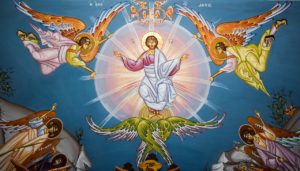
Icon of the ResurrectionEaster is a celebration of Jesus’ resurrection and what that means for all human beings and the whole of creation. It is an event which gives us hope; a time to remember that good is stronger than evil and death is not the end of life. But the resurrection also has divergent interpretations. For some, Jesus never really died but instead was revived. Some say that he died but his body was stolen and buried somewhere else. For some, it is a question of the resuscitation of a corpse so that Jesus had a revived human body and had to die completely at a later time. For others, it is the return of Jesus in a transformed body. Still others believe that Jesus came back as a vision, seen either interiorly or externally but in a ghostly form.

Catholicism (and most of Christianity) teaches that Jesus returned as fully human and fully divine in a transformed body. He could walk through walls, yet he could eat (Lk. 24:36-23). He could vanish in a moment but had wounds that were of flesh and could be touched. The story of the encounter with Thomas the Apostle (Jn. 20:26-29) is one example. The people closest to him did not recognize him at first. Both Mary Magdalene in the garden (Jn. 20:11-18) and the disciples on the road to Emmaus (Lk. 24:13-35) mistook him for someone else, a gardener or a fellow traveler respectively. Only through his words and actions did they come to recognize him.

Various traditions of Christianity also emphasize different aspects of Easter. A few focus primarily on the symbolic nature of this miracle, i.e. that all human beings can experience a new life in Christ at the time of death. Most Christians, however, believe that the entire Paschal drama (the Paschal Mystery) from Holy Thursday, Good Friday, and Holy Saturday to Easter cannot be separated into parts. With Easter, in this understanding, creation was made fundamentally new in the here and now. It also means that the risen Christ manifested an existence that all will share in in the future Eschaton (the last days) — the reconciliation of all to God.

Because of the entire Paschal Mystery, the Holy Spirit and grace are understood as active in the day-to-day world, inviting and drawing people to God in very tangible ways. According to St. Paul all of us are recapitulating in our lives the life, death and resurrection of Jesus (Phil. 3:10-11). The famous Catholic paleontologist, geologist, philosopher, and theologian, Pierre Teilhard de Chardin, S.J. saw this movement of human history towards its fulfillment in Christ as taking place in everything in the entire universe. As he examined every level of creation from the most basic subatomic (as much as he could know in the 1950s) to the macrocosmic realities of the galaxies, he saw a movement toward greater unity (communion) and consciousness.

What Jesus did at the Last Supper was to place himself as a unique offering of love to the Father, an offering that is shared by us. His self-giving and adoration, and their rejection by those in power, became a historical event on the cross the next day. But, out of the sacrifice of his life came the triumph of God over death and sin for all humanity. No evil or tragedy is beyond the reach of God’s love and redemption. Easter is the absolute promise that the human condition and the way the world currently is is not a meaningless lonely journey to oblivion. Jesus “Easters” us every day when we let his love and guidance into ourselves and our lives as we struggle with our crosses of loss, hurt, or disordered living. We live Easter here and now imperfectly, but this Easter will be fully realized in the future in the Kingdom of God.

Icon of the Resurrection, by Surgun. Public Domain

Read More

Posted by on Feb 26, 2015

Entering into the Mystery

Pope Francis’ Lenten Message – 2015

Cropped -Pope Francis - Canonization_2014-_The_Canonization_of_Saint_John_XXIII_and_Saint_John_Paul_II_(14036966125) - Jeffrey Bruno - Creative CommonsPope Francis, in his 2015 Lenten message, reminds us that Lent is a time of renewal, a “time of grace.” He reminds us that God loved us first and is never indifferent to what happens to us. However, we too easily become indifferent to what is happening in the world when we are not directly affected.

Speaking of the “globalization of indifference,” the Holy Father calls us to an interior renewal that keeps us from becoming indifferent or withdrawn into ourselves. He asks us to reflect on three biblical texts:

1. “If one member suffers, all suffer together” (1Cor 12:26) — The Church

2. “Where is your brother?” (Gen 4:9) — Parishes and  Communities

3. “Make your hearts firm!” (James 5:8) — Individual Christians

 Read the entire message …

Read More

Posted by on Feb 26, 2015

Entering into the Mystery

Mensaje del Santo Padre para la Cuaresma 2015

El Santo Padre FranFrancisco_(20-03-2013) - small -CC 3.0 attribution license - Brazilcisco, en su mensaje para la Cuaresma en 2015 dice que la Cuaresma es un tiempo de renovación, un «tiempo de gracia». Nos recuerda que Dios nos amó primero y nunca se pone indiferente frente a lo que nos está pasando. Sin embargo, nuestro corazón se cae en la indiferencia fácilmente, especialmente cuando lo que pasa en el mundo no nos afecta directamente.

Describiendo el problema de la globalización de la indiferencia, el Santo Padre nos llama a una renovación interior para que no nos cayéremos en la indiferencia ni nos cerráremos adentro de nosostros mismos. Nos invita a meditar acerca de tres pasajes bíblicas:

1. «Si un miembro sufre, todos sufren con él» (1 Co 12,26) – La Iglesia

2. «¿Dónde está tu hermano?» (Gn 4,9) – Las parroquias y las comunidades

3. «Fortalezcan sus corazones» (St 5,8) – La persona creyente

Para leer el texto completo.

Read More

Posted by on Feb 24, 2015

Entering into the Mystery

Growing: From the Celebration of Light at Candlemas into Lent

lent-cross-trinity-park-forestThe arrival of Lent always seems too fast. Christmas season is so short yet so intense following the four weeks of Advent. We get a brief few weeks of Ordinary Time to ponder the baptismal experience of Jesus and his response, and then, BOOM, here we are in Lent again! It sometimes feels like maybe we should just postpone it for a few more weeks. Maybe Easter wouldn’t really have to be the first Sunday after the first full moon of spring. Would that be such a big deal? But then I think a bit further and decide that maybe 2000 years of tradition have something to tell me/us today as well.

February begins with the celebration of Candlemas on February 2. This day recognizes events in the life of Jesus and his parents when they visited the temple both for the ritual purification of Mary 40 days after childbirth and the presentation of Jesus, as her firstborn son, to God. It is also known as Candlemas because the prophet Simeon recognized Jesus as the Promised One and foretold that he would be a light to all the nations. Candles have been the primary source of light for most of the history of Christianity, so they became associated with these feasts.

As we listen to the Gospel accounts of the ministry of Jesus, we see him discovering the special relationship he has with God as Father and the mission for which he has been sent. He accepts that mission, to gather the people of Israel and bring them back with him to the Father, beginning with the poor and marginalized of his land. It’s not without reason that he calls fishermen and tax collectors to be his special friends or that he uses images of farming, tending flocks, baking bread, keeping house, and fishing to explain God’s love for the people. These are realities deeply understood by his audience.

Jesus had three years in which to grow into the man who would stand before the religious and political leaders of his country and testify to the truth of who he was/is. During that time he preached and healed many of those who were brought to him. He also retreated regularly into the hills or off onto the Sea of Galilee to pray. We are told more than once that he slipped away to pray early in the morning and his disciples had to go looking for him. To their insistent reminders that people were waiting for him, Jesus responded that time to be with his Father was even more important. That time away with his Father was what made it possible for him ultimately to face and accept his death and the apparent failure of his mission.

We are called to live in the light of the Resurrection, but we are also called to live as Jesus did. That means we must deal with many of the same realities faced by the people of his time. Poverty, injustice, hardship, the unfairness of life — these things are not unique to the ancient world nor to our world. It is through prayer, fasting, and other activities of Lent that we grow in strength to follow the Lord. When Easter arrives, we rejoice with the newly baptized as we once again rise with the Lord in our daily lives. All is renewed and hope springs forth eternally. From the Light come into the world, through the time of deepening prayer and growth in faith, to the joy of the Resurrection.

It’s time to celebrate Lent!

Read More

Posted by on Feb 21, 2015

Entering into the Mystery

Light

800px-Sunrise on Mt Sinai in Egypt - June2006 - by Mabdalla - public domainLight is fascinating. At Christmas time we are enthralled with the lights all around us, candles and Yule fires. We feel safe in light. Light is beautiful to us. At Epiphany and the Feast of the Presentation (Candlemas) we hear that a light for the nations has come into the world and that people from afar have come to witness its arrival. Light is a physical, energetic reality so fundamental that it takes on symbolic meanings as well.

An energetic force

Light is so basic and essential that we take it for granted. It travels at 186,000 miles per second. So amazingly fast. It is an electromagnetic radiation, a specific energy, that has a spectrum of forms from short waves (ultraviolet) to long waves (infrared). In the middle are the manifestations of light we can see, such as colors. Its most notable characteristic for humans is that light stimulates the organs that help us see: the retina, the optic nerve, etc. We are richly blessed to see ourselves, people, and objects. Light is so important to humans that we can become very ill if we lack it for a long time.

A symbolic image

But, light is much more. It is also spoken of as mental illumination or insight. The word itself can mean to understand. It can also be used to describe being guided, as John of the Cross describes his own journey in spiritual darkness during which he is guided by nothing “save only the light burning in my heart.” (Dark Night of the Soul).

Light has been experienced as God presence, enlightenment and strength (Psalm 27:1). God is described in the Scriptures as our light, a light that shines in our darkness (John 1:5), a light who calls us out of darkness
(1 Peter 2:9). Jesus himself tells us in turn to be the light of the world and not to hide our light (Matt 5:14).

God is our light. Our lives can be in darkness, darkness from letting ourselves be in agitation from bad habits or denial. We can give in to negative thoughts or fear. On the other hand, if we practice openness to seeing and hearing God speaking in our hearts, we can see and hear a desire in us to be illuminated and strengthened. We can feel the fog lifting and an ability to live in light. It is our choice to say yes to this. We don’t have to earn it or produce it, we just have to consent to it.

Image by Mabdalla, Sunrise at Mt Sinai in Egypt, public domain

Read More

Posted by on Jan 17, 2015

Entering into the Mystery

Would You Baptize an Extraterrestrial? – The Gift of Inquiry


Hubble's View of NGC 5584Vatican astronomers, Br. Guy Consolmagno and Fr. Paul Mueller have penned this provocative question as the title of their new book. Would You Baptize an Extraterrestrial? deals with the most common questions they receive. Generally the questions assume a conflict between science and faith. Their first task is to reduce the assumption of conflict and to look at the information in an analytical and thoughtful way.

For example, they take on the star of Bethlehem and rule out many of the scientific explanations. It was most likely not a supernova as Kepler had proposed. It may have been a conjunction of planets as proposed by Molnar in his 1999 book, The Star of Bethlehem: The Legacy of the Magi. However, limiting the question to how it occurred and which laws of nature were violated can miss the point. According to Fr. Mueller, miracles don’t always mean a suspension of the laws of nature. The point of the star of Bethlehem is that God gave a great sign. According to Fr. Mueller, miracles, whether they accord with the laws of science or not, are some great sign of the coming of the Kingdom of God.

Br. Consolmagno defines science as an ongoing conversation about facts. It is not a book of rules. Likewise religion is conversation we have within our church, among ourselves, and with God. He concludes, “One of the joys of science and philosophy is learning how to live and enjoy a mystery.”

Read More

Posted by on Jan 16, 2015

The Magi and the Gift of Holy Discontent

The Magi and the Gift of Holy Discontent


http://youtu.be/m8jHx7W-iI4
Fr. Geoffrey Plant of Sydney, Australia has prepared a multimedia homily for the feast of the Epiphany. In his homily, Fr. Plant presents the main points of the feast.

The term “epiphany” comes from the Greek meaning to “shine forth”. We tend to assume that there were three kings because there were three gifts named: gold, frankincense, and myrrh.  Fr. Plant notes that they were not called kings but “magi” in Greek, with stands for wise men or sages.

The gifts are symbolic of the nature and meaning of Jesus. Gold is a symbol of royalty, frankincense is a sign of the divine, and myrrh is for burial, indicating that Jesus will triumph through suffering and death.

Fr. Plant suggests the wise men also brought the gift of Holy Discontent. Examples of holy discontent may be seen in the character of Popeye. An example of unholy indifference is seen in the the character of Bilbo Baggins in The Hobbit. Fr. Plant sees the magi as showing a holy discontent: a willingness to search, to be changed, and not to feel comfortable again. He compares them to Herod’s wise men who despite being so close to Bethlehem fail to see the signs in the heavens though others have seen them from afar.  Quoting W. H. Auden, Fr. Plant compares the hardness of heart of Herod’s wise men to our own post-modern era:

We would rather be ruined than changed

We would rather die in our dread

Than climb the cross of the moment

And let our illusions die

W.H. Auden, The Age of Anxiety

This gift of Holy Discontent — the gift of prophecy and activism — is what the wise men bring to the Christ child and to us according to Fr. Plant. It is the divine call to the kingdom through suffering, death, and resurrection.


Read More