Pages Menu
RssFacebook
Categories Menu

Posted by on Apr 3, 2009

Obama at Notre Dame: Why the Catholic Right is Wrong

Obama at Notre Dame: Why the Catholic Right is Wrong

notre-dame-indiana-dome1

The Cardinal Newman Society has launched a petition drive objecting to President Barack Obama’s appearance at Notre Dame University’s commencement this year. Here is another approach to the issue.

George B. York III sent this letter to the National Catholic Reporter. It is presented here by permission of the author.

God and Man at Notre Dame

Notre Dame’s President, Fr. Jenkins, has extended
an invitation to President Obama to speak on
campus; the President has accepted. Some object,
asking, How could the President of Notre Dame
compromise with abortion? Closely observing
Jesus’ behavior in the Gospel of Luke, (7:40 and
following), I find Fr.Jenkins’ position consistent
with Jesus’ behavior, and in no way a compromise
with abortion.

In the story of Jesus’ evening in Simon’s
house an outsider, a woman, washes Jesus’ feet
with her tears and dries them with her hair. Simon
thinks, `Doesn’t he know what kind of woman she
is?’ Knowing what Simon is thinking, Jesus
surprises him by simply pointing to ways in which
Simon did not welcome Jesus; in so doing, Jesus
invites Simon to convert from hypocrisy to a
different way of judging and acting toward fellow
humans. While Jesus is uncompromising toward
misdeeds or sin, isn’t he also uncompromising when
it comes to accepting others, friend and foe alike, in
this case, welcoming the woman and challenging
but not rejecting Simon? Are humans defined only
by their real or supposed misdeeds?

About the strategy of some of his brother
bishops to `make war’ on abortion, South Dakota
Catholic Bishop Cupich told them: `…a prophecy of
denunciation quickly wears thin …what we need is a
prophecy of solidarity, with the community we
serve and the nation that we live in’. (quoted in
Commonweal Editorial, 5/12/08).

The way of implementing a prophecy of
solidarity is indicated by American Jesuit
Cardinal Avery Dulles. In commenting on
envisioning unity among Christians; he says, `The
first condition . . . is that the various Christian
communities be ready to speak and listen to one
another. . . . The process of growth through mutual
attestation will probably never reach its final
consummation within historical time, but it can
bring palpable results. . . . The result to be sought is
unity in diversity.’ (First Things, ’07)

Those are not just a Christian condition and
result; they are fully human. Does experience not
validate a claim that the better way between
different, opposed individuals and groups is one
leading to “unity in diversity”? Are exclusion and
isolation anything but impotent and sterile? Aren’t
Simon and the woman drawn within a more human
process? As a result don’t they depart from their
evening with their ability to hear reason and with
their freedom intact? In fact, is it not credible that
both Simon and the woman are invited, if not
actually drawn, closer not only to Jesus but also to
one another? Finally, to return to Bishop Cupich’s
solidarity, doesn’t `E pluribus unum’ mean unity in
diversity — union, not in sameness, but in
difference?

Such solidarity is impossible when one’s
starting point is that expressed in Simon’s initial
attitude: “Doesn’t Jesus know what kind of woman
she is?” Therefore, I have to wonder, Is it truly
Christian or even human to start, as some seem to
start, with a question like: “Doesn’t Fr. Jenkins
knowwhat kind of man Obama is?”

Isn’t the call to every Christian to put on the
mind of Jesus who Christians believe emptied
himself of power and the ways of power and drew
others neither by compromise with sin nor by
isolating rejection or coercion? To the extent a so-
called `prophecy of denunciation’ expresses a spirit
like that of the Pharisees (Simon’s initial attitude),
isn’t it a betrayal of the mind of Jesus? ? Isn’t such
prophecy animated by a spirit aiming at institutional
control, expressing a desire to force conformity in
the name of real or supposed truth? In the case of
NotreDame, doesn’t it express an ill-advised wish to
forceFr. Jenkins to dis-invite a supposedly unclean
Obama?

To the extent your answer is `Yes’, you see
why I say that Fr. Jenkin’s invitation to Obama
could be called a compromise with abortion only if
Jesus’ firm but friendly challenge to Simon could be
called a compromise with hypocrisy.

George B. York, lives in Denver. His
publication, `Michel de Certeau or Union in
Difference’ (2009, ISBN 978 0 85244 684 3),
concerns Faith in the understanding of a celebrated
French Jesuit historian.

Read More

Posted by on Feb 24, 2009

Obama at Notre Dame: Why the Catholic Right is Wrong

What are You Giving Up for Lent?

lent-cross-trinity-park-forest

In the “olden days when I was a girl,” the beginning of Lent was often met with the question, “What are you giving up for Lent?” The focus was on penance and self-mortification. Typically we gave up candy and television, though my mother allowed us to enjoy both on Sunday and my brother, whose birthday often fell during Lent, got to eat the candy from his slice of birthday cake.

The focus of Lent has changed in the past 40+ years and now we look to see what positive things we can do during Lent, to enrich our faith and to help those less fortunate around us. With this change of focus in mind, I’ve been reading the newspaper, listening to the  news on radio and TV and following the internet news on MSN.com in the past days and weeks. I’d like to share some gleanings from these sources obtained during the past 24 hours, with some thoughts about what maybe we should all give up for Lent!

The San Jose Mercury News reported today, February 24, 2009, that President Obama’s budget will include all government spending, including that for the military and the wars in which we are now engaged. The funding for war was never included in the budgets submitted by President Bush over the past 8 years, making it appear that total government spending was much lower than it actually was. (Hmm … I wonder how far my family would get if I left out a major portion of our expenses in my budget!)

Radio and TV news and talk radio shows: Critics of the proposed mortgage relief program are angry because they believe it will benefit people who “didn’t play by the rules” when buying or refinancing a home. They particularly condemn people who bought houses they now can’t afford or who got an adjustable rate mortgage whose payments have gone up too high, as well as those who are “upside down” on their loans because the real estate market has adjusted downward. (This despite the fact that lenders actively pushed such loans, encouraged refinancing into adjustable rate loans, and often left the self-employed with few options other than “stated income” loans for financing their homes as recently as 6 months ago.)

The SJ Mercury News again. As of 2007, 47% of senior citizens in California struggle to make ends meet. The Federal definition of a poverty level income was set at $10,000 annually in the 1950s and remains at that level. Nine to ten percent of California senior citizens fall below that income level. For the most part, these are people who played by the rules. Yet the funds to help them and those receiving disability payments from the state are being cut as part of the budget deficit solution here in California.  

Again the Mercury News. Public funding for family planning prevents an estimated 2 million unplanned pregnancies per year, resulting in approximately 800,000 fewer abortions. For each $1 spent on funding family planning, $4 is saved in Medicaid costs for prenatal care for lower income mothers. Nevertheless, opponents of funding these services claim that such services are a “shameful population control program that targeted low-income families.” [ Troy Newman of Operation Rescue speaking of the attempt by members of the House of Representatives to include such funding in the stimulus package.] (One wonders if there is any similar outrage about the ability of middle and upper income couples to pay for medications and/or services for planning the size of their families. Do only those with money have a say for themselves in such personal decisions?)

Also from today’s paper. Currently (2008), 46.6% of health care spending was paid by governments, including Federal, state and local funds. By 2018, over 51% will be paid by government sources, with no increase in entitlement programs (Medicare/Medicaid), amounting to a cost of $2.2 trillion. About 45 million Americans have no health insurance and the number is growing as people lose the jobs that provided it. COBRA coverage is too expensive for many of them because they no longer have jobs. Private insurance is also too expensive or cannot be purchased due to pre-existing conditions. The stimulus package helps those who lost their jobs after September 1, but not those whose jobs were lost in the 9 months of the recession which preceded that date. (The fact that care for the uninsured is much more expensive because they often wait until conditions are serious or life-threatening before seeking care at hospital emergency rooms has been well documented. Then hospitals charge everyone more to cover the cost of care that they must provide and write off in order to qualify for federal funding. Does this make sense?)

Federal deficits during the recent Bush administration began at $158 billion and ended at $455 billion, totalling $2.5 trillion. (Is that without including the war funding?)

The stock market continues to fall. Investors worry that there’s no end in sight to the recession, after one whole month of a new administration that had warned from the start that the economy would get worse before it could get better! (Hello… It’s going to take time to work our way out of this.)

So what should our response as Christians be?

We’re in a major recession. Many people have seen their savings lose 1/2 or more of their value. Lots of people who have had steady work, been responsible citizens, employers, employees, consumers, community members, etc. have lost jobs, taken pay cuts, lost their businesses. Even those with 30 year fixed rate mortgaes have seen them become unaffordable when unemployement, illness or disability hits a family.

It’s time to quit judging each other and instead exercise a bit of compassion. Yes, some made mistakes in judgement that got them into this trouble. Some spent more than they should have. A few have cheated on loans. More have been cheated on housing purchases. But most people played it straight. Most people honestly made their best efforts. Lots of them have been hit by forces beyond their ability to control or predict.

It’s time to quit blaming the victims.

For Lent this year, let’s give up judging others and instead focus on how each one of us can add 1 “brick” to rebuild our economy, our communities and the lives of our sisters and brothers.

Let’s nurture a spirit of hope, a hope that is essential before any change can begin and that will bring new energy to face the challenges.

Let’s stop the politics and rhetoric of division. It doesn’t help anyone to try to defeat the efforts of those trying to solve the tremendous problems we face. No one has all the right answers. Maybe if we actually talk with each other, we can learn from each other too and come up with better solutions.

Let’s remember that compassion is fundamental in this endeavor. The term itself refers to a sharing of passion, and passion includes both love and pain. So we share each other’s pain as we share each other’s love.

And finally, let’s care for God’s “Little Ones,” the ones who can’t care for themselves or solve their own problems without our help. As the past months have demonstrated, any one of us could become one of those needing help. And those who traditionally have needed help, generally need it even more now.

Read More

Posted by on Feb 2, 2009

Obama at Notre Dame: Why the Catholic Right is Wrong

February 2 – A Day to Celebrate Three Feasts and a Blessing

The Meeting of the Lord - Orthodox Icon from Belarus (1731)

The Meeting of the Lord - Orthodox Icon from Belarus (1731)


February 2, a day falling 40 days after Christmas in the western Christian calendar, is a day when we celebrate 3 feasts and a blessing – The Presentation of Jesus at the Temple, The Purification of the Virgin, The Meeting of the Lord and Candlemas.

There’s a sort of game going around Facebook these days in which people are asked to give 25 random bits of information about themselves to their friends and ask 25 others to do the same. It’s been fun to see what people have to say about themselves and who they ask for information.

In the spirit of the game, I’d like to give 25 bits of information about today’s feasts and blessing.

1. The Presentation of Jesus has been celebrated since at least the 4th Century AD.

2. First-born sons belong to God in Jewish tradition – originally to serve as leaders of worship/sacrifice. Fathers of the boys were required to offer a sacrifice to “redeem” them from the obligation to serve at the temple rather than remain with their families. This tradition continues in modified form today.

3. Today’s feasts are not the same as the Feast of the Naming of Jesus or the Circumcision – celebrated 8 days after Christmas.

4. When Joseph and Mary offered the sacrifice to “redeem” Jesus, they were allowed to choose between offering a lamb and a dove or simply two doves or two pigeons. They offered the birds, the gift of those who were not wealthy.

5. Childbirth rendered a woman ritually “unclean.” A purification ceremony was required to restore her freedom to interact socially with family, friends and community, including her worship community.

6. Periods of time for this unclean status varied by sex of the child born. A woman was unclean for 80 days following the birth of a girl. For a boy she was only unclean for 40 days. In both cases, a ritual was required to purify her.

7. Mary went to the temple in Jerusalem for her purification ceremony.

8. Simeon was an old man who had been promised by God that he would see the Messiah before he died. He recognized Jesus as the fulfillment of that promise when Jesus was presented for the sacrifice of his redemption at the temple and Mary for her purification.

9. Simeon told Joseph and Mary that their son was “destined for the fall and rise of many in Israel.” (Luke 2:34)

10. Simeon told Mary that she would be pierced with a sword. Our understanding is that this was the sword of sorrow as she watched her son’s life and mission unfold.

11. Anna was an old woman who spent her days and nights at the temple. She too recognized Jesus and his family, blessed God for the gift of seeing him and told all she met about him.

12. The Feast of the Purification has been celebrated since at least the 7th century.

13. The Feast is known as The Meeting of the Lord in some Eastern Christian churches.

14. Candlemas is a celebration of the blessing of candles (traditionally beeswax ones) for use in homes and churches in the coming year.

15. First evidence of the celebration of Candlemas dates from the 4th century in Rome, but it spread to the rest of Europe more slowly. It had reached England by the 10th or 11th century.

16. Candlemas is probably a feast whose focus was changed to a Christian one from older non-Christian ones that included fire, candles, ash and purification in a variety of European cultures.

17. Before the Second Vatican Council, the Christmas/Epiphany season lasted until Candlemas. It was considered bad luck to have Christmas decorations (including holly, ivy and bay leaves) still in the house on Candlemas.

18. Some cultures had celebrations in which young women carried candles in a procession at this time of year or in which young men and women had to jump over fires for purification before they could be married.

19. These are the last feast days whose date is set based on the date of Christmas.

20. Many traditions link Candlemas to the actions of animals as predictors of future weather – including bears, wolves and groundhogs!

21. Candlemas was one of the days certain taxes had to be paid in Scotland until 1991.

22. The French celebration of Candlemas includes eating crepes for dinner after 8 pm.

23. Mexican tradition includes tamales on the menu for Candlemas.

24. Some believe Candlemas was a “Christianization” of the feast of  Brigid the Goddess – an oracle and predictor of the success of the growing season – but little historical evidence exists for this claim. The feast of St. Brigid, an Irish abbess, is February 1. 

25. These feasts are celebrated in both Eastern and Western Christianity, but on different dates. In all traditions, however, they are celebrated 40 days after Christmas.

Whew!  So … there you have it. More than you probably ever wanted to know about Christian celebrations for February 2!

I think we’ll put the last of the Christmas decorations away, light some candles, and have tamales for dinner!

Read More

Posted by on Jan 6, 2009

Obama at Notre Dame: Why the Catholic Right is Wrong

Epiphany

Hieronymus Bosch - The Adoration of the Magi

Hieronymus Bosch - The Adoration of the Magi

The Feast of Epiphany is traditionally celebrated January 6 in the Western Church. Recently, we have begun to celebrate it as a community on the first Sunday of January after the Feast of Mary, Mother of God (January 1st).

Epiphany, from the Greek “to manifest” or “to show forth,” is a celebration of God’s presence bursting forth and becoming visible in human lives. For Western Christians, the focus has been on the visit of the Magi, the wise ones, who followed a star from the East to find the newborn king. In this story, we see God’s presence being revealed to non-Jews, to Gentiles. For Eastern Christians, the focus is on the Baptism of Jesus, when Jesus became identified as the Son of God. The feast is sometimes known as Theophany in the East. (In the Western Church, we too celebrate the feast of the Baptism of Jesus, but on the Sunday after we celebrate Epiphany.)

In many Christian countries, especially those bordering the Mediterranean and in former colonies of those countries, gifts are exchanged at the Feast of Epiphany. This is because the Magi brought gifts to the child Jesus – gold, incense (frankincense) and myrrh. The gifts named in Matthew’s gospel can be seen as symbolic of the roles Jesus would play in salvation history – as king, deity, and human victim/sacrifice – as a result of the incarnation. Songs such as “The First Nowell” and “We Three Kings” remind us of the story and tell it again to our children.

During this season of Epiphany, may our eyes be open to see God’s presence in the people around us – the children, the babies, the old ones, the ones on the street, the ones at our work or in our homes. God is forever peeking around corners, knocking on doors in our hearts, smiling out of flowers, singing through the voices of birds and trying in every way possible to shine forth into our lives. May we be gifted to see and to smile in return.

Read More

Posted by on Dec 5, 2008

Obama at Notre Dame: Why the Catholic Right is Wrong

Celebrating Hope and Light in Advent

Our Advent Spiral

Our Advent Spiral

One of the wonderful things about having children is that as they go through school, there are many chances for parents to experience new things too. One of the new experiences I discovered was the Waldorf School custom of celebrating the beginning of Advent with an Advent Spiral.

Children from kindergarten through about 3rd grade typically celebrate this ritual. A spiral is made on the floor of a large room using greenery, generally evergreens. Holly and other wintery plant materials can be added to make it more beautiful and colorful. Stars are placed along the edges of the green spiral. In the center, there’s a candle. Sometimes a person is there to hold the candle. Sometimes it’s just the candle.

After dark, the children and their families assemble and enter the room. It’s quite dark. Usually there’s only a little light for singers or musicians. An “angel” enters carrying a lighted candle and walks into the spiral path, around and around to the center. There he or she lights the candle at the center, extinguishes the one carried in, and walks back out of the spiral. At that point, each child in turn is given an apple with a candle held in its center – where the stem has been. The bottom of the apple has been cut so that the apple will sit safely level when it’s put down. The child carries the apple candle into the center of the spiral, lights it there, then carries it back out from the center. Finding a star, the child puts the apple candle down on the star and then walks the rest of the way back out the spiral.

As each child lights his or her candle and deposits it around the spiral, the room takes on a lovely golden glow. When all have had their turn, the “angel” returns to the center and extinguishes the candle there, leaving the room lighted by the candles of the children. All then leave the room and go to another for a treat.

No explanation is given to the children or their families of the significance of the ritual. The children have been told what they are to do, but not why. It is understood that when the time comes that they are old enough to understand its significance, they’ll figure it out for themselves. In the meanwhile, it is a lived experience to see the way the light each brings from the center helps light a dark room/world.

This year, at a time of financial chaos in the world and great uncertainty, my family and I again celebrated an Advent spiral. We invited a few relatives who live nearby to come to our home after dark on the First Sunday of Advent. We had made a spiral on our patio using greens trimmed from around our yard. We don’t have evergreens, but willows, morning glory, bouganvillea, and other blooming plants made the spiral beautiful. (It is the central coast of California, after all!) This time all walked the spiral. There were only a few of us, but again the light shone forth and it was beautiful to see. A simple dinner of stew, salad and pie followed, with much conversation and laughter. A renewal of hope and commitment to each other for the new year.

If you choose to celebrate Advent with a spiral of your own, be sure you have water or sand close at hand in case of fire. Children should not wear long skirts, and hair must be tied back – away from flames. We used tea candles in votive lamps instead of the apples, so the breeze would not blow out the fire. It was a bit more challenging to light them, so our “angel” stayed in the center to help light each candle.

Wishing you all the blessings of hope, faith, light, joy and love in Advent and the new year to come.

Read More

Posted by on Nov 25, 2008

Obama at Notre Dame: Why the Catholic Right is Wrong

The Last Week of the Year – From the Feast of Christ the King to Advent

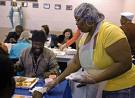
Feeding the Hungry in Jesus' Name - Baton Rouge

Feeding the Hungry in Jesus' Name - Baton Rouge, LA

Last Sunday we celebrated the Feast of Christ the King. The Gospel reading was from Matthew, speaking of the judgement of the nations on the last day. The King, a.k.a. The Son of Man, invites “the righteous” to enter the kingdom saying, “For I was hungry and you gave me food, I was thirsty and you gave me drink, a stranger and you welcomed me, naked and you clothed me, ill and you cared for me, in prison and you visited me.” When they ask when they gave him this service, He assures them, “Whatever you did for one of these least brothers [and sisters] of mine, you did for me.” He goes on to tell those who are not invited to enter the kingdom that when they denied this same care to the least, they denied it to Him. (Mt 25:31:46)

At this time of global economic crisis, with millions of people facing financial troubles they never expected to see, and other millions finding resources that were never enough in the first place becoming even more limited, these words ring loudly. They are a challenge to all of us – those who have just barely enough, those who still have plenty, those who have not enough at all. How do we recognize the Son of Man around us and what do we do to reach out and help?

I suggest that we look at this time as one for affirmation of hope and trust in our King. We have a King who cares so much about all of us, who loves us each so deeply, that He was willing to live among us and share in all that we experience. He was willing to challenge unjust structures and interpretations of the Law. He spoke up for God’s “little ones,” however old they were, who couldn’t speak up for themselves. He insisted that we are all created for the freedom of God, a freedom that allows us to do what is right and good for those in need, without worry about whether it is approved by those in power or authority. A freedom that lets us give of the little we have to help those with less. A freedom that can lead to the cross, but also to the joy of new life.

In the United States we celebrate Thanksgiving this week. Churches, schools, even gyms have been collecting food for weeks to share with “those less fortunate.” Many will offer dinners on Thanksgiving for those who are homeless or have no one with whom to share a meal. It is a special time when we reach out to each other in care.

The outreach will continue through Christmas. Gifts will be collected again at churches, schools, banks, and gyms for children and adults who might not receive a gift otherwise. Food baskets aren’t prepared and distributed for Christmas dinner, but collection of food for food pantries will continue throughout the year.

Then one calendar year ends and a new one begins – with hope and expectation of better times to come. It will be a time of especially high hopes in this country, as we see the beginning of a new presidency. And I wish all the best to those who will govern us. It’s not an easy job in the best of times – and these are not the best of times!

But what do we as people of faith bring to the party?

As Christians, we begin our new year at the end of this week. The first Sunday of Advent is next Sunday. A new year. New hopes. New expectations. New dreams.

Let us together move into this new year with a commitment to hope, to service, to caring for each other. Most of us will not ever have the chance or the means to effect dramatic change in this world. But remember, the little things are the ones that can be HUGE for an individual or a family. A gift of food, a gift of a smile, a gift of a kind word, a gift of hope, a gift of time for a visit. All of these affirmations of the value of the other person help ease the burden of hard economic times. Jesus wants to live in us and through us. We are to be His face, His voice, His touch to those around us. And when we reach out in service, we reach out to serve Him. When we graciously accept the loving help and kindness of people who reach out to us as well, we receive His love as well as return it to them.

As we move from the Feast of Christ the King into the new season of Advent, let it be with hope, trust and joy. Our God is with us. The Kingdom has begun. “Whatever you did for one of these … you did for me.”

(Picture from http://www.2theadvocate.com/news/16945146.html in Baton Rouge, LA.)

Read More

Posted by on Nov 11, 2008

Obama at Notre Dame: Why the Catholic Right is Wrong

Martinmas and Veterans Day

St. Martin as a bishop: modern icon in the chapel of the Eastern Orthodox Monastery of the Theotokos and St Martin, Cantauque, Provence.

St. Martin as a bishop: modern icon in the chapel of the Eastern Orthodox Monastery of the Theotokos and St Martin, Cantauque, Provence.

The feast of St. Martin of Tours, sometimes known as Martinmas, falls on November 11. In the United States, we celebrate November 11 as Veterans Day – a day we honor those who have served in the military of the country. It is a national holiday, though many businesses are open and retailers offer sales in the hope of luring people who are enjoing a day off!

As a child, I remember hearing people from my grandparents’ generation speak of the day as Armistice Day. This was the day, in 1918, on which World War I stopped. The Armistice was declared and hostilities were set to end at the 11th hour of the 11th day of the 11th month – and so they did. That was a war called “The War to End All Wars,” but unfortunately, it didn’t. So, when World War II followed all too soon afterwards, the name of the day was changed to Veterans Day, in honor of all veterans.

It seems appropriate that the feast of St. Martin of Tours coincides with this day of honoring those who have served their countries militarily, as he too served in the army. His life and contributions to the Christian community are discussed in greater detail in an earlier post, and they were impressive. Nevertheless, he is most commonly known for the legend told about him, in which he is approached by a begger and asked for help. Martin is said to have cut his military cape in half and given half of it to the beggar. Later, in a dream, he saw Christ in the form of the beggar, wearing the cape.

Martin was not a Christian at the time he served in the Roman cavalry, but had entered the Catechumenate before entering the military. Before he left the army, he had been baptized. As his faith grew and deepened, he became convinced that as a Christian, he could not kill, even as a member of the military. He accepted arrest and imprisonment rather than fight. He volunteered to go to the front of the troops, unarmed, but a peaceful solution was reached before the battle, so he did not have to prove his courage and commitment to non-violence in that way.

It seems to me that Martin’s insight that killing is not the calling of Christians is one that has been shared by many men and women who have served or refused to serve in military forces through the centuries. Certainly, there have been times when Christians have turned their backs on this belief, even claiming that killing was done on behalf of God. For those times we must beg God’s forgiveness and that of those harmed. However, the veterans I have known generally will say that war is never the best answer to human disputes. Terrible things happen in war. It does not really resolve the problem between nations. Sometimes it seems to be the only way to stop a terrible evil, but it’s never the best option. (Stopping the Holocaust is often given as an example of a good reason to go to war, but it must be acknowledged that even World War II was fought not to stop the Holocaust – of which there was very little awareness outside of Europe – but rather to stop the military aggression of certain nations.) Martin of Tours would agree that war is never to be the first response of nations or their people to conflicts with others.

But what, you ask, is Martinmas? Martinmas is the name of the celebration of Martin’s feast in Europe. I first experienced the celebration of Martinmas when my sons were little and attending Waldorf school. (Waldorf schools celebrate many European Christian holidays.) It is a harvest festival. It is a festival that marks the end of Autumn weather and the beginning of Winter weather in many nations. The thing that was most fun about the feast was the custom of making lanterns and going out after dark to walk with the lanterns.

For a week or more before the feast, the children would make lanterns of paper. Some were simply construction paper colored by the children and rolled into a cylinder with a bottom and a wire handle. Others were more elaborate. Sometimes a balloon was inflated as a base and tissue paper layers glued over the balloon to form the lantern. Once a wooden frame was built in the form of a star. Then layers of tissue paper were applied to form the walls. Leaves and glitter were included on that lantern. That one hangs in our living room to this day, a beautiful reminder of a school festival and a saint’s feast day.

(In some schools, glass jars are decorated for lanterns. They are also beautiful, but tripping in the dark can result in dangerously broken glass. Plastic peanut butter jars might be a reasonable solution to that problem!)

Once completed, the lanterns are hung by wire from a stick, a candle placed in the bottom, and children and parents sally forth in a procession around the school or neighborhood. In some countries, children visit neighbors and receive candy or other treats – much like Halloween in the US.

Martinmas Lantern Walk - From Today in Faerie School

Martinmas Lantern Walk – From Today in Faerie School

If you decide to celebrate Martinmas with a lantern walk, be very careful with lighted candles. There are now battery-operated “candles” that you might consider using, especially for very young children. We never had any serious accidents, but I’m sure Martin wouldn’t mind opting for safety on his feast.

After you go out for a little lantern walk, follow up with a warm dinner and/or dessert, lots of laughter and fellowship and a happy night’s sleep.

Happy Martinmas! Happy Veterans Day! And may the Lord help us all to find better ways to resolve our differences.

Read More

Posted by on Aug 6, 2008

Obama at Notre Dame: Why the Catholic Right is Wrong

The Feast of the Transfiguration of Jesus – August 6

The Transfiguration of Jesus was reported in the Gospels of Matthew, Mark and Luke, as well as in the second letter of Peter. Jesus and three disciples, Peter, James and John, went up a high mountain (traditionally identified as Mt. Tabor) and “He was transfigured before them; his face shone like the sun and his clothes became white as light.” Two men joined Jesus on the mountain top and spoke with Him there, Moses and Elijah – representing the Law and the Prophets. Peter, ever ready to act, offered to put up three tents for Jesus, Moses and Elijah. But just then a cloud overshadowed them all and a voice from the cloud proclaimed, “This is my beloved Son, with whom I am well pleased; listen to him.” The disciples fell down and were terrified when they heard the voice, but Jesus touched them and told them not to be afraid. He also told them not to tell anyone else about what they had seen “until the Son of Man has been raised from the dead.” (Mt 17:1-9)

Following the Transfiguration, Jesus continued on his way to Jerusalem and his eventual death and resurrection. Only following the Resurrection did the experience on the mountain top make sense to Peter, James and John.

While most of us don’t have such dramatic “mountain top experiences,” in the course of our lives as believers we do have special times. It may be our Baptism or First Communion. It may be Confirmation. It may be an experience of healing through Reconciliation or Anointing of the Sick. It may be a homily that particularly spoke to a trouble or concern and gave the hope needed to continue moving forward in faith. Sometimes the mountain top comes during private personal prayer. Sometimes it comes during a group activity.

Mountain top experiences are to be treasured. They don’t happen often. And they are always followed by a return to the ordinary activities of life – activities that seem dull, boring, unimportant, even worthless, in comparison with where we have been and what we have experienced. Yet both are part of life and both move us forward on the path to our ultimate goal, union with the Lord.

When you’ve had a mountain top experience, be patient with yourself and with your family and friends who may or may not have shared it with you. It’s not easy to jump back into the hustle and bustle of daily life. Do what has to be done to keep soul and body together (i.e. prepare meals, get some rest, go to work, “chop wood, carry water”), but do these activities with an awareness that there’s a transcendent reality just beyond your ability to perceive it normally, that gives meaning to all of the day to day activities of life.

As time goes on, you’ll undoubtably have cause to remember the mountain top and draw on the strength and consolation you experienced there. Jesus went from the mountain top to the cross. His followers rarely have to crash quite so dramatically into disgrace and apparent failure as He did, but the hard times will come – no need to go looking for them. And when they come, try to remember the love you experienced on the mountain top. Our God loves you – just as you are – and will be with you in the hard times as well as the good times. Jesus went before us, and He stands with us. On the mountain top and in all the other times as well.

Read More

Posted by on Jun 30, 2008

Obama at Notre Dame: Why the Catholic Right is Wrong

The Feast of Sts. Peter and Paul – June 29

It’s the time of year when we remember and celebrate the witness of two men who played foundational roles in the community of believers that has grown to include well over 1 billion people – St. Peter and St. Paul.

Peter was a fisherman from Galilee. He was known as Simon. He was brash and decisive and protective of his friends. He didn’t hesitate to argue if he thought a request was unreasonable (but we’ve been fishing all night and haven’t caught anything!) or a plan was unwise (they want to kill you in Jerusalem!). Yet when Jesus came into his life, he was open enough to the Spirit that he left everything and followed when he was called. Jesus named him Peter, calling him the Rock on which the community would be built. (Jn 1:42)

Peter became the leader of Jesus’ followers, at least in part because he spoke his mind and looked out for the safety of them all. He was the one who answered Jesus’ question, “Who do you say that I am?” with the profession of faith, “You are the Messiah, the Son of the living God.” (Mt 16:15-16)

Peter was not perfect. He expressed his doubts about Jesus’ plans to go to Jerusalem, trying to dissuade him from that plan, and was rebuked as “Satan” for his efforts. He walked on water towards the Lord, and sank into the waves when he stopped to think about what he was doing. He promised undying support for Jesus at the Last Supper, and denied him 3 times before the sun came up.

No, Peter was not perfect. But he was a perfect leader for the new community because he knew he was imperfect and still loved, chosen, and trusted to do his best. It was a big job for a big person. Figuring out who this Jesus was and is, how to live as a community who follow His ways, how it all fit into the faith in which he was born and raised, what to do about all those non-Jews who also received the Spirit and wanted to be part of the community. A big job.

Paul was from Tarsus, a Roman city. So he was a Roman citizen. He had been trained as a tent maker, but he had also been educated. He was a Pharisee, the son of a Pharisee, and a student of the great teacher Gamaliel. He was not a follower of Jesus before the Crucifixion and Resurrection. In fact, he was one of those who saw the new Way of living as a huge threat to the larger Jewish community and to their faith. The Romans were not gentle with those who opposed them or to those who upset the day-to-day routine of life in the provinces. And certainly, the Jews had seen time after time through history what happened to the whole people if groups of them stopped worshipping according to the traditional ways of their people. War, exile, persecution by conquerors. It was not something to risk.

The first time we hear of Paul is at the trial and stoning of St. Stephen, the first martyr. He was called Saul at the time and he consented to Stephen’s death. Saul was an enthusiatic participant in the persecution of Jesus’ followers that followed. He saw that the new teachings were doctrinally quite different from those of traditional Jewish Law and worship at the temple. He was determined to crush the new movement. (Acts 8:3)

When the persecution began in Jerusalem, followers of the Way (as Christians called themselves at that time) had scattered throughout the surrounding area. So Saul got letters from the authorities and traveled north to Damascus, to arrest them there too and bring them back to Jerusalem for trial. It was on the road to Damascus that he met the Lord. A bright light flashed around him. He fell down. A voice called to him, “Saul, Saul, why are you persecuting me?” He asked who was speaking and was told, “I am Jesus, whom you are persecuting. …” Acts 9:1-30 tells the story of his conversion, his first preaching, the reactions of his fellow Christians and of his fellow Jews, and his return to Tarsus (where he would be safe from those who wanted to kill him). And then in Acts 9:31 we read, “The church throughout all Judea, Galilee and Samaria was at peace.”

Peace. A lovely thought. But peace is a state that seems never to last very long – perhaps because growth so often brings unexpected changes, stresses, and strains in its wake. Perhaps because some growth can’t happen except in times of difficulty, when new ideas and new solutions must be discovered. Perhaps because God is too unlimited, too expansive, too inclusive, TOO BIG to be kept in any of our human boxes.

And so the Fisherman baptized a Gentile, Cornelius, and his family. And the community adjusted its thinking about who could be called to the new Way. (Acts 10:1-49, 11:1-18)

Those who had been scattered from Jerusalem shared their faith in new communities in Phoenicia, Cyprus and Antioch. They spoke not just to Jews, but also to Greeks and many believed. The community in Jerusalem sent Barnabas to meet them. Barnabas was so impressed that he went down to Tarsus, collected Saul, and went back to Antioch for a year, teaching the growing community there – where followers of Jesus were first called Christians.

Saul and Barnabas were sent forth from the community at Antioch, to proclaim the word of God in Cyprus. It was the first of Saul’s many missionary trips. (From this point on, he is called Paul in the Acts of the Apostles.)

And things would never again be the same. The Fisherman and the Pharisee didn’t always see eye to eye. They argued. They tussled. They sent letters and messengers back and forth to each other. They had meetings. And through it all, they (and the community) worked things out. And the Christian community became more and more a separate community and faith from the Jewish one into which they had been born.

It was not a time of perpetual peace and smiles. But at the end of their lives, both Peter and Paul, in Rome, died as witnesses to their faith in the Lord – Peter upside down on a cross and Paul, the Roman citizen, by the sword. And the tensions and struggles within the growing community, as well as the growth in understanding of the Good News, and of who Jesus was/is, and of how we are to relate to the Father, and of many, many other things, continued.

In future posts, I’ll talk about some of those “other things” that came along, and use some of the tools of anthropology to look at them. For now, it’s enough to say that Peter and Paul can be seen as representing two essential roles within our community of faith. Their passion and courage in hearing the Lord’s call and stepping out faithfully to spread the Good News is a gift to us all.


Read More

Posted by on Jun 5, 2008

Obama at Notre Dame: Why the Catholic Right is Wrong

Saint of the Day – St. Boniface, June 5


I must confess that I never knew much about St. Boniface until I began to do a little research about him today. My maternal Grandmother’s home parish was St. Boniface in Uniontown, Washington. So his name was familiar to me, but not any details of his life.

Uniontown was, and still is, a very small town in the middle of fertile farmlands. People spoke mostly German there when Grammy was a girl in the years leading up to World War I. Sermons at Mass were always in German, a language she did not speak well because her parents did not speak the same versions of German. They spoke English at home. (She could never understand why we complained about bad homilies when we were kids. After all, at least they were in English so we could understand them!) Uniontown was settled largely by Catholic German immigrants. They chose the patron of their former homeland as patron of their local community.

St. Boniface is known as the Apostle of Germany and is its patron saint. He was born in England around 672 and named Winfrid. He studied at Benedictine monasteries near Exeter and Nursling in the diocese of Winchester. He was noted for being a fine student and scholar, compiling a Latin Grammar during his time there.

In 716 he set off to Frisia to convert the residents of that area. However, there was a war raging in Frisia at the time and people were otherwise occupied. So he returned home without success. In 718 he traveled to Rome and in 719 Pope Gregory II gave him the name Boniface and commissioned him to return to Germany to evangelize and reorganize the church there. He also learned from people who had been working already among the German tribes how best to reach them. He spent most of the rest of his life working in Germany.

The felling of Thor’s Oak at Frizlar in northern Hesse is one of the stories told of his work. In the presence of leaders of the local people, he called on Thor to strike him dead if he destroyed an oak tree sacred to Thor. Then he began to chop down the tree.  A great wind blew the tree down. Thor did not strike down Boniface, so the people became Christians. Boniface used some of the wood from the tree to build a chapel at the site.

Boniface chopped down other oak trees dedicated to Thor as well, in challenges to the ancient pre-Christian religion. It is said that at Geismar, there was a fir tree growing out of the roots of the oak tree that fell. Boniface told the people, “This humble tree’s wood is used to build your homes: let Christ be at the centre of your households. Its leaves remain evergreen in the darkest days: let Christ be your constant light. Its boughs reach out to embrace and its top points to heaven: let Christ be your Comfort and Guide”. The German tradition of using evergreen trees in the celebration of Christmas may have come from this event. (Think of him next time you see a Christmas tree!)

The years in which Boniface lived and worked were far from peaceful. Battles raged between the Franks, the non-Christian Saxons, and the northern Germanic tribes. Struggles for power over the church by civil authorities and for independence from civil authority by church leaders were common. The conversion of the Germanic tribes was part of the process that eventually led to their incorporation into Charlemagne’s empire. In 754, while again working to convert the Frisians, Boniface was killed by a group of brigands.

It seems fitting that Boniface was chosen as patron of the church at Uniontown. Many Catholic Germans who came to the United States during the 19th century did so as religious refugees. It wasn’t something they spoke about much. My grandparents weren’t sure why their parents or grandparents had come here, except they knew the men came so they would not have to serve in the Kaiser’s army. But from an old German Dominican nun, my mother learned that many came because their only choice at home was to convert to the Protestant religion of their new ruler, the Kaiser, or to worship secretly in defiance of the curfews. The young men came because they would have to leave the Catholic church when they were drafted into the Kaiser’s army. They chose to leave instead, bringing their faith with them to little towns like Uniontown all over the United States. Once here, they chose St. Boniface to continue to be their patron.


Read More

Posted by on May 30, 2008

Obama at Notre Dame: Why the Catholic Right is Wrong

Feast of the Day – The Sacred Heart of Jesus

Sacred Heart of Jesus - Fronhofen Pfarrkirche

The Feast of the Sacred Heart is celebrated 19 days after Pentecost each year. It is always on a Friday.

Devotion to the Sacred Heart began to develop in the Middle Ages, but it was considered a private devotion, not a specific feast day. Saint Margaret Mary Alacoque  (1647-1690), a French nun and mystic, promoted devotion to the Sacred Heart in its current form and over time it was adopted as a formal feast. This devotion also includes Mass and Communion on the first Friday of each month.

A friend of mine was raised Catholic in an Irish family in Rhode Island. One day we were talking and laughing about some of the funny things that had happened when we were girls. She told of the time a non-Catholic friend of hers was visiting her family for the first time. The friend, a young man, commented that he was always shocked when he went into Catholic homes and was immediately confronted with a statue or picture of Jesus, with his heart showing – pierced and bleeding. He said something about how glad he was not to find that image in her parents’ home. He had begun to think that all Catholics were somehow off balance with this insistence on having the image around them. Then they went around the corner into the living room, and there was the picture on the wall, where it couldn’t be missed by anyone!

My friend and I were working together at the time. As we went around the corner into my home office, what was on the wall, but a picture of the Sacred Heart – more modern than the traditional one in her home, but unmistakably still, the Sacred Heart. We just laughed and knew again how much we had in common!

So what is it about the Sacred Heart? First, it’s important to remember that it’s not really about worshipping a physical human heart. The Feast of the Sacred Heart reminds us of the overwhelming love of God for us, as seen in the love of Jesus for us. As the Son of God, second person of the Blessed Trinity, Jesus became one of us, lived as one of us, died as one of us. God’s overflowing love poured through Jesus to us. It still does. Symbolically, Jesus’ pierced heart is a reminder that love is not always easy. It can be costly. Love flows out of the heart of God as the water flowed out of the heart of Jesus when pierced by the centurion’s sword. Nothing can stop that love’s flow but our refusal to accept it.

The Sacred Heart also reminds us that Jesus always forgives. God always forgives. Nothing we can do will keep God from loving us and forgiving us. We can turn away, but God is always there calling us back. Hoping we will once again accept love and mercy. Because God’s mercy is unfailing, all we need do is ask and accept it.

In celebrating the Feast of the Sacred Heart, we are called to love as Jesus loves, forgive as Jesus forgives and be compassionate and merciful as Jesus is compassionate and merciful. A tall order for our human hearts, but one to which, with the help of Our Lord, we are called.

Read More

Posted by on May 24, 2008

Obama at Notre Dame: Why the Catholic Right is Wrong

Corpus Christi: The Body of Christ

Stephen’s bright blue eyes smiled as we said, “Lamb of God, Give us Peace.” According to the rubrics we were now to show each other a sign of peace. Yet with Stephen’s attention deficit disorder, which had already taken him in and out the brief service at least twice, it seemed that a little catechesis might help him be a little more aware of what we were about to do. Stephen is not a little boy. He is a handsome man in his early 30s, with a number of tattoos poking out of the v-neck and short sleeves of his starched jail issued smock.

The readings had been those of Pentecost. The second reading was from First Corinthians 12. “No one can say Jesus is Lord except by the power of the Holy Spirit.” This had struck all four of the men, but had made a special impression on Stephen. “Does that mean that when I pray the Holy Spirit moves my heart?” Stephen had asked. When I answered “Yes” his eyes got wide and he said that since his attention came and went and his thoughts were often jumbled, he thought his prayers were more bothersome and must be irritating. The notion that he is a temple of the Holy Spirit was as novel to him as it was consoling.

Stephen was back now and I shared a few words on the Lamb of God, recounting the Last Supper and the passion, death, and resurrection of the Lord. We do this in His memory as He requested of us. We are invited to the Lord’s table. Stephen and his companions were not new to the faith, but this brief memorial of our Great Memorial brought a renewed awareness to the others and a slack jaw from Stephen. He did not doubt, but could not help but marvel at the wonder of it.

As we shared the wonder of the Blessed Sacrament, our communion was truly a sharing in the Body and Blood of Christ. Bread blessed and broken at the Eucharist, celebrated in the parish, given to all, shared with all, and sent to those in need and to those in prison. The Body of Christ – Corpus Christi – saving us all from our prison of loneliness, our hunger for love, and admitting us to the feast of heaven here and now.

Read More
Posted by on May 21, 2008

Obama at Notre Dame: Why the Catholic Right is Wrong

Trinity Suggestions

I asked our Theologika trustees for recommendations of materials on the Trinity for our readers. Patrick Conway, M.Div., Pastoral Associate at Resurrection Parish in Aptos, CA sent these ideas.

“On the Trinity: Abhishiktananda (Henri Le Saux) was a contemplative theologian who wrote of his mystical intuition of the Trinity, so anything by him. One of his landmark writings was Saccidananda: A Christian Approach to Advaitic Experience (Delhi: ISPCK Press, 1974). There is also an article, “Abhishiktananda’s Mystical Intuition of the Trinity”, by Wayne Teasdale in Cistercian Studies 18:1 (1983). In fact, I believe that entire issue was dedicated to Abhishiktananda.

“Then there is Rahner’s “Remarks on the Dogmatic Treatise ‘De Trinitate'” in Theological Investigations, Vol. 4, pp. 77-102. In this article he notes that, given the post-modern mentality, the only Christians would have to be mystics, particularly when it comes to faith in the Trinity. Perhaps he had Abhishiktananda in mind.

Also, Catherine LaCugna’s God For Us: The Trinity and the Christian Life. San Francisco: Harper, 1992.”

Some of these materials are easily available. Others are more likely found in libraries. If you come across them online, please let me know so I can tag them for other readers to access.

My thanks to Patrick for his quick and thoughtful response.

Read More

Posted by on May 20, 2008

Obama at Notre Dame: Why the Catholic Right is Wrong

Celebrating the Trinity

Trinity by Andrei Rublev (ca 1410-1420)

The first Sunday after Pentecost is celebrated as Trinity Sunday. God is Father, Son, and Holy Spirit, yet one God. The Trinity is a reality over which Christians have puzzled for centuries. Jesus spoke of His Father. He stated that He and the Father were One. He promised to send their Holy Spirit. But what did it all mean?

We speak of the dogma of the Trinity as being a mystery. The use of the word mystery can be problematic. It can imply that if we just focus our attention and uncover the right clues, we can solve the mystery and get to its core. After all, that’s the way it works in detective novels and television shows! But that’s not the kind of mystery we’ve got in the Trinity. The reality of God is so much more than we can ever imagine, let alone comprehend, that the best we can do is look for threads that give us a small sense of the dimensions and reality of the whole.

Fr. Richard Rohr, OFM and the late Fr. John O’Donohue have both gifted us with meditative reflections on the Trinity in recent years. They speak of the Trinity in terms of rhythms and flow and surpise. Richard Rohr speaks of a “family resemblance” between the Trinity and all of creation, from the depths of the atom to the furthest extent of the universe, there is a similarity of pattern. All are in movement, all are in relationship to each other, the power is in the “in between.” Life is in the movement, the flow.

Fr. Rohr notes that the Greek Fathers of the Church described the Trinity as a relationship of perichoresisa mutual interpenetration and indwelling. He explains that perichoresis can be translated as dance. God is the dance and we come to know God only from within the dance of the Trinity. As long as we remain open and allow ourselves to be pulled into the flow of mutuality, to the perfect giving and perfect receiving that is the life of God, we will experience the communion, intimacy and relationship characteristic of God’s life. Anything that stops the flow of loving – anger, resentment, judgement – cannot be part of who God is. To the extent that we harbor those blocks to love, we block the flow of God’s life/love in ourselves.

John O’Donohue, in a workshop for the Religious Education Congress of the Archdiocese of Los Angeles in 2005, also spoke of the Trinity in terms of rhythm and flow, touching on many of the same themes described above. A poet and storyteller, he looks at the mystery of the Trinity through poetic images – the flow of a river, a dream of the divine, dance, music, between-ness. He speaks of God as the “secret music of the heart and the universe… the primal music and dance of all that is.”

We most often experience the world in terms of dualities such as inside/outside, masculine/feminine, divine/human, light/dark and so forth. Yet O’Donohue points out that in reality we actually find ourselves at the threshold between those dualities most of the time. It’s a threshold that must be permeable if we and our relationships are to be healthy, so that the qualities of each side of the duality can pass between, refreshing, supporting and enlivening the other. As he points out, there’s the one side, the other side and the place in between. For O’Dononue, the place in between is where we find the Holy Spirit, holding “all the between-ness together.”

The insights of these two men are well worth hearing and pondering. There’s far more to what each has said than can be described in a short blog post. But the depth of the wisdom they bring resonates with the insights of the mystics from all the ages. As John O’Donohue notes, “Once you get a taste of God, nothing else tastes the same.” And again, “That’s what it’s about – coming fully alive to the dream of the Divine within you.”

May the dream of the Divine resonate within you and lead you ever more deeply into the life of the Trinity.


Read More

Posted by on May 15, 2008

Obama at Notre Dame: Why the Catholic Right is Wrong

Living in the Time of the Holy Spirit

Sunday we celebrated the Feast of Pentecost and the fulfillment of Jesus’ promise to send the Holy Spirit to His followers. Now we enter into a time called “Ordinary Time” — a name which suggests that nothing special is going on and nothing special is to be expected. That perception couldn’t be farther from the truth!

Ordinary Time is the time of the Holy Spirit in the Church. It’s a time for learning, growing, sharing, reaching out to each other and the world. It’s also a time for entering ever more deeply into the life of the Trinity, a reality we’ll celebrate this coming Sunday.

How do we recognize the coming of the Spirit? I’ve been reflecting on the symbols we use for the Spirit and the words of the songs we pray at this season of our liturgical year. There’s the dove, a symbol for gentleness and peace. The Spirit came upon Jesus like a dove when He was baptized (Jn 1:32). Then there are the mighty wind and tongues as of fire that marked the coming of the Spirit to those gathered in the Upper Room (Acts 2:2-3). In the Old Testament, the Lord came to Elijah in a gentle breeze as he waited by a cave on the mountainside (1 Kgs 19:12-13).

Each of those images tells us something important about the Spirit and what the coming of the Spirit into our lives might mean. The idea that the Lord doesn’t come in the form of earthquakes, wind storms, or the raging of nature is important. Destruction is not a characteristic result of the coming of our God. Peace and the time to live, breathe and grow are. And in times of destruction, God comes through the caring hands and presence of those who try to help alleviate the pain and suffering.

The dove is a bird that we associate with gentleness and a soft cooing call. I loved waking up to the sound of doves cooing when I was a child and visited my grandparents who lived in a warmer community, where there were doves. The dove is often a symbol of love and peace.

But then again, at Pentecost there’s wind and fire… Living in California, we’re very much aware of the power of wind and fire. In forested areas, as well as in the hills covered by chaparral (the native vegetation), fire can sweep across the land, driven by winds it creates itself, leaving a swath of seeming destruction behind it. Those who live outside of the cities and towns must be constantly vigilant to keep the underbrush back away from their homes, so there’s a chance of saving the home in a wild fire.

How does fire fit into the whole peace and love scene we associate with the Holy Spirit? The image of a forest full of brush, or the overgrown chaparral on the California hills gives a clue. Brush in a forest can become so dense that it begins to choke the life of the other plants and the animals living there. A healthy forest is one that is cleared out regularly. Nature does this with fire. The chaparral even has plants that ignite spontaneously when the temperature reaches a certain point. The whole area burns off and then new plants can grow. There are plants that depend on fire in order for new seedlings to sprout — in forests and in chaparral.

In a very real way, each of us needs cleansing fire sometimes too.  It’s not fun, but it clears the way for new growth and wondrous surprises.

Then there’s the other side of fire — the creative side. We speak of people being “fired by love” or “going like a house afire” into a new project or calling. Fire is powerful. Fire gives energy. Fire brings light. The Holy Spirit’s coming is to “light a fire” under each of us — to get us going as Christ’s body here on Earth. Hands, feet, voices, arms, legs, minds, hearts.

We sing, “Come, Lord Jesus, send us your Spirit, renew the face of the Earth.” And the Lord grants our request. The Spirit comes. And with the help and fire of the Spirit, we move forward to bring new life, to renew the face of the world around us – in our homes, our worksites, our communities, our world.

Read More