Pages Menu
RssFacebook
Categories Menu

Posted by on Jul 30, 2023

Wisdom – Thinking with the Heart

Wisdom – Thinking with the Heart

“Use your head!” “Don’t be a fool!” “Don’t waste what you’ve got, use it carefully!” “They wouldn’t be in this position if they’d just been more sensible!”

How many times have we all heard these kinds of statements, sometimes addressed directly to us? It’s a common understanding in Western culture that decision making is best done with the mind, a.k.a. the head. We think of the heart as the center of emotions, and emotions are not regarded as the best sources of good decisions.

In ancient Israel, the heart was seen as both the center for emotions and the center for decision-making. When the Lord came to King Solomon in a dream at night and asked what gift Solomon would like to receive, Solomon gave an unusual answer. He had become king at a young age and had to defeat many enemies, including one of his brothers, to establish control over the kingdom. Once that was settled, still a young man, he began to build his own palace and a Temple for worship of the Lord. Up to that point, the tablets of the Law had been kept in the Ark of the Covenant. Now it was time for a permanent home for them and a center for worship and sacrificial offerings.

Solomon recognized his inexperience and the challenges ahead of him in governing a large group of people. So, he asked for “an understanding heart to judge your people and to distinguish right from wrong.” (1 Kings 3:5, 7-12)

This pleased the Lord, who had expected a request for the usual kinds of things people wanted – long life, riches, conquest of enemies and so forth. But Solomon had asked for an understanding heart. The Lord’s response was heartfelt: “I give you a heart so wise and understanding that there has never been anyone like you up to now…”

Solomon is known to this day as Solomon the Wise. His reputation for wisdom spread throughout the ancient world and people traveled long distances to meet with him. As long as his decisions were based on the wisdom that came from thinking and listening with his heart, they bore good fruit. Later in life, when he forgot some of his earlier experience with the Lord and good decision-making, things didn’t always go so well. But the reputation from his earlier years remains. Solomon the Wise.

St. Paul spoke of something similar in his letter to the Romans. (Rom 8: 28-30) “All things work for good for those who love God.” Paul used a term in his letter that is often misunderstood today. Predestined.

We tend to think the word predestined means that everything is set up firmly and unchangeably ahead of time. Nothing anyone can do will change it. Some will succeed. Some will fail. It’s like a sports activity in which the winner is determined before the match begins and the competitor who may be better will deliberately compete more poorly, to meet the predetermined setup. On the big picture, spiritual side of things, some will go to a heavenly reward and some will go to eternal damnation. This can lead to a belief that we can tell who is going to be rewarded in heaven by how monetarily successful they are here on earth! Entire cultural systems have been set up based on this premise. We do our best and if we are pleasing to God, we will prosper. If we aren’t pleasing, then nothing we can do will help and no matter how hard we are working, we will be eternally punished.

What a terrible way to go through life! Who would want a God who would treat people that way? And yet, if that’s all we’ve ever heard, that’s likely to underlie much of our understanding of life.

Fortunately for all of us, predestined in the sense used by Paul doesn’t mean the same as what we expect. Predestined in this context means that God has decided to call us and help us become like Christ, ready to be in a positive, loving relationship with God both now and into eternity. Paul assures us all that God has chosen us from all eternity to become like his Son, the one firstborn of the many humans who will join together as sisters and brothers in the family of God. This is something worth celebrating and allowing to be a foundation of our lives.

So, what is this family of God, the Kingdom of God to be like? Jesus spent a lot of time trying to explain what the kingdom is. (Mt 13:44-52) “The kingdom of heaven is like a treasure buried in a field.” The kingdom of heaven is like “a pearl of great price.” Those who find the treasure or the pearl put it back where they found it in Jesus’ parables. Then they go and sell everything they have in order to buy the field (and the treasure) or the pearl. They don’t set up a spreadsheet and compare their assets and liabilities and determine whether this new asset will be more beneficial than sticking with their existing plans. No, they simply drop everything and choose the greater prize, the one they have marvelously come upon.

Jesus tells stories of wheat growing alongside weeds and fish, good and bad, swimming in the sea. Life is not set up with only good things happening to the good people and bad things happening to the bad people. There’s a share of good and bad for all. The trick is, how do we respond? And how do we respond to others whose situation may be more difficult than the one in which we find ourselves? Do we use our heads and try to protect what we already have at all cost? Or do we sometimes go out on a limb and saw madly behind us, hoping to help someone who is struggling or in need of a hand?

Wisdom is thinking with our hearts. As our hearts are soft, or softened, they become more pliable, more ready to love as our Lord has loved.

As we move through this week, let’s pray that areas of our hearts that are hardened will be softened, so that we can hear and think with the freedom and abundance of our God.

Readings for the Seventeenth Sunday in Ordinary Time – Cycle A


Read More

Posted by on Jul 23, 2023

To Weed or Not to Weed

To Weed or Not to Weed

When I was a girl, we had a big vegetable garden. The largest crop by far was the green beans. We all liked to eat them and we were a good-size family. Mom liked one particular variety of bush beans. She didn’t like pole beans, so we never grew them. The challenge with growing the beans was that there was a fungus in the soil that killed the beans if it got on the leaves. So, every year, when the soil was ready, we planted the seeds and watched the beans grow. As the beans sprouted, so did the weeds. Every year, just the same. As the bushes grew bigger and the beans began to grow, the weeds kept pace with them. That part of the garden looked a fright! But we never pulled the weeds as the beans were growing.

When the beans got big enough to harvest, we picked the first batch. It filled several washtubs and we all sat around the tubs of them on hot summer afternoons, cutting them to put into the jars for canning. We would eat those beans for the entire next year. A week or so later, a second picking would be ready and we again filled the washtubs with them for canning.  The difference was that after the second picking, we pulled out both the weeds and the bean bushes. There would not be another picking. By that time of the summer, the bushes were becoming infected and were going to die anyway.

I thought of this when I read the story Jesus told about the farmer who planted good wheat seed in his field and went home to a well-deserved rest. During the night, an enemy came and scattered weed seed in the field too. The scenario was not seen as outrageously improbable to Jesus’ audience. Family feuds were a part of life and such things would and could happen. With a grain crop, it can take a while before it becomes obvious that not everything growing in the field is the grain that was planted. An enemy who can ruin the crop would dishonor the farmer in the eyes of his peers. “How could he have planted weeds along with his wheat? Didn’t he know better? He must not be as good as we thought he was!”

When the treachery was discovered, the stalks of wheat and the stalks of the weeds were completely intermixed. The farmer would have had every right to take action against his enemy and the family of his enemy. At the very least, those who worked his fields expected that he would want them to pull the weeds out, so no one would see that they were growing among the good plants.

But the farmer took a different approach. Like Mom with the beans, he let the weeds continue to grow. Pulling them would have damaged the crop, because the stalks of the wheat would be trampled in the process of getting all the weeds out. Instead, he waited until the grain was ripe. Then the weeds could be pulled and destroyed. The wheat could be gathered and stored in the barn for use during the year.

Jesus explained to his disciples later that he himself, the Son of Man, was the farmer. The field is the world and the good seed represents the children of the kingdom. Those children of the kingdom can be led astray by others who are not of the kingdom, who deceive them and lead them to do evil. At the end of time, the children of the kingdom who have remained faithful “will shine like the sun in the kingdom of their Father.” The others will be like the weeds, destroyed as worthless instruments of hatred as were the weed seeds sowed by the farmer’s enemy.

This can be a rather frightening teaching. Would God really judge people so harshly and condemn the wrongdoer? What hope is there for any of us if that’s the way it is?

We get a hint of the answer in the book of Wisdom. This book was written sometime during the last hundred years before Christ. The author was probably Jewish, but Greek-speaking and possibly from Alexandria, Egypt. Alexandria was a great center of power and learning in the ancient world.

The author points out that God does not have to justify to anyone else actions He takes, because there are no other, or superior, gods. God’s own power is the source of justice. But that justice is not harsh. God’s mastery over everything leads to lenience to all. God teaches His people through mercy that they are to be kind and merciful themselves. “You taught your people, by these deeds, that those who are just must be kind…”

Those who choose to turn away from God and refuse to turn back and accept forgiveness, will remain separated, because God has given freedom to each person to choose how to respond. But God is merciful, and at the slightest turn toward the good, God will be waiting with open arms to welcome the one returning.

God is willing to wait, like the farmer with a field full of weeds, until each person, aided by the Spirit, turns to the Father of all, becoming part of the good harvest.

There’s a lesson for each of us here as well. When we are hurt or disappointed or embarrassed by someone else, we too have to decide whether to pull the weeds or patiently wait and hope that the situation will improve with time. Sometimes, things get better on their own. Sometimes they don’t. Sometimes, for our own safety, we have to pull the weeds – moving out of dangerous relationships or situations. But other times, we simply need to wait for someone to grow up or to realize that a change is needed. At that point, it’s better not to pull the weed and cut off the possibility of reconciliation.

Let’s pray this week for wisdom to know when to weed and when to wait as we deal with the good times and the challenging times of our lives.

Readings for the Sixteenth Sunday in Ordinary Time – Cycle A


Read More

Posted by on Jul 16, 2023

Rain, Seed, Harvest – the Word of God

Rain, Seed, Harvest – the Word of God

“My word shall not return to me void.”

One of the great mysteries of life is the way everything grows from a tiny beginning. Even single cell creatures must start somehow. Division of a single cell into two is a common mode of birth for such beings. But they are not fully grown at the time they pop into being. Both the old and new cells are smaller than the original one had become at the time of the division.

For larger creatures, dividing and forming an exact copy of an older one is not an option. The pattern we see is of a very small cell with genetic material that somehow guides it as it grows and changes into increasingly more complex states. Eventually, the organism gets large enough and developed enough to survive on its own and even reproduce.

The prophet Isaiah reminds the people of his time (and all of us) that the rain and snow which fall on the earth are essential for the growth of the plants on which we all depend. They come from the heavens and return only after fulfilling their role on earth. The Lord, through his prophet, says that his word is the same in this regard. The Lord’s word goes forth from heaven and does not return until its purpose has been attained.

Jesus speaks of this same reality and the conditions that affect the way the process unfolds. “A sower went out to sow.” Those who are not close to the land may never have experienced the scenario Jesus presents. Seeds are very small. Traditionally, they were scattered by hand out onto the fields. Later, machines were invented to throw the seeds out in a pattern onto the fields. Today, there are even more precise machines that poke the seeds into the soil one-by-one and add a bit of fertilizer to help the seed grow. There is much more accuracy to today’s planting methods, and presumably, better yields at harvest time. The newer method also allows farmers to care for the soil more effectively, not having to plow under the remaining short stalks and roots of the prior year’s crop and risk having the soil blown away in a windstorm or washed away in the rain.

But when Jesus was speaking, and even today for farmers around the world, seeds were tossed out across the land by the farmers. Fields are not typically surrounded by solid walls. They are bordered by roads or paths. The soil on the path or road is hard. Seeds may sprout, but only with difficulty. Lots of them become food for the birds or other small animals. Then there are the areas where there are lots of rocks. Not a lot of soil to cuddle around the roots of the plants there either. Again, they don’t survive in large numbers. They are easy to pull and dry out quickly. And then the thorns. Have you ever tried to grow a lawn or garden beside a berry patch? The berry plants send out roots far into the area around them. Anything growing inside the berry patch is not going to produce well. The berries pull the nutrients for their own fruit. It’s a continual battle to beat back the berries and let the grass grow. The same goes for wheat and other grain crops growing beside thorny plants.

Fortunately, there are large expanses of land which are not filled with rocks or thorns onto which the seeds also can fall. In a good year, with adequate rain and dry weather as the grain matures and harvest time nears, a good crop will be harvested.

I grew up in a family in which some members were and still are farmers. In Eastern Washington, farmers often grow winter wheat. It is planted in the fall and sprouts before everything gets too cold. Then the snow comes and covers the land. Growth stops, but the plants are protected from the extreme cold that would kill them if they weren’t small and insulated. As the snow melts, the ground is watered and growth resumes. By June, the crop is growing beautifully, forming heads of seeds for the next season. The plants don’t know it, but they are also growing to be food for humans and animals. As the season moves on to August, we all hold our breath. Will the weather hold until the grain can be harvested? Will the storms that inevitably come through go around the family farms?

Lives can be and have been changed dramatically by the luck of the weather. Two harvests-hailed-out in a row sent my grandparents from Montana to Spokane, Washington, where Grandpa worked as a brake mechanic for the city bus lines for the rest of his career. Other relatives had better luck. The harvests were good enough to keep going another year. It’s not surprising that farmers take pictures of their fields as the grain is growing. It’s so beautiful. And then they take pictures of the harvest too!

For Jesus, there was a lesson to be learned from the sowing and harvesting. The word comes forth from the Father. It lands in different ways among the people who hear it. Some simply don’t understand what they are hearing and are easily convinced that it means nothing for them. Some receive it happily, but when opposition arises, they don’t hold on to it. Some hear it and want to grow, but they get worried about the future and how they’ll get along, and they can’t keep going. But there are some who hear the word and it takes deep root within them. These are the ones whose faith sustains them, allows them to share with others, and carries the Father’s word forward in the world. The community grows as the word is shared and lived.

Sometimes we can get to thinking in very abstract ways about questions of faith. How does God do this or that? Who or what is God? Why does God let bad things happen? Why can’t God do bad things? Or can he? Many, many questions and concerns. But the very basic reality is that God is both practical and optimistic. God sends out a word to bring forth all of creation. God’s word is like a tiny seed, that grows and bears fruit, including seeds to continue the cycle. Each time, more are created.

St. Paul tells us that creation itself is waiting, groaning in labor pains, for the triumph of the harvest of the freedom of the children of God. The word of the sower grows in all of creation and in human society, as we learn to care for each other and this home we have in common, our Earth. When we accept the love and forgiveness of God, and become God’s children, the word is fulfilled and returns to the Father.

As we move through this coming week, may we be alert to the ways in which the word has been sown in our lives. Are we open to growing in love? Are we sharing a smile? Are we patiently helping a family member or friend who simply needs a hand now and again? Where are the seeds sown in our lives taking us? Are we ready and willing to go?

Readings for the 15th Sunday in Ordinary Time – Cycle A


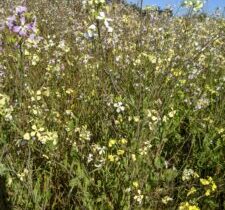
Many thanks for this photo to my “cousin” Scott whose uncle and my aunt were married. Scott took this photo of one of his fields a few years ago.

Read More

Posted by on Jul 9, 2023

Easy Yokes and Light Burdens

Easy Yokes and Light Burdens

What do you expect of a ruler? Someone strong and decisive? Someone confident and willing to make decisions? Or someone who asks questions and listens carefully to the answers that come even from the lowest social and economic tier of workers?

Zechariah speaks in prophetic form of the ruler who will come to Jerusalem. “Thus says the Lord …” lets all know that these are not the thoughts or dreams of the one who speaks. They are words received in prophecy, oracles that shed light on the thoughts and plans of the divine.

And what does the oracle foretell? “Rejoice heartily, O daughter Zion, shout for joy, O daughter Jerusalem!” Why should Zion shout for joy? Because a king is coming who will not be a warrior. A ruler who is just and humble, so humble, in fact, that he will ride a young donkey into town. Kings typically arrived with a great retinue of folks – trumpeters, chariots, archers, foot soldiers, and finally, the carriage in which the ruler rode. Servants and courtiers also traveled with the ruler, to make a luxurious camp or set up housekeeping in the home of a local noble. Rulers didn’t ride donkeys, especially not very young donkeys. They rode majestic horses or in fabulous chariots or carriages.

But this ruler foreseen by Zecharia is to come proclaiming peace to the nations. This one will rule over all the land, not just the land of Israel. All the ends of the earth. When Jesus chose to enter the city of Jerusalem riding on a donkey, he was absolutely aware of this oracle and what it would mean to the people of his community. This was a claim to being the one who was to come, the king who would rule the entire world. The people who witnessed his arrival understood clearly what he was saying. So did the rulers of Jerusalem.

What kind of ruler would he be and who would recognize and accept him? Jesus had thought about who would be open to recognizing this long-awaited king. It would not be the wise and learned, the teachers and priests of the temple or the most educated people in each little town. It would be the ordinary folks, the “little ones” who must depend totally on God’s care and help to get by in their lives. These would recognize the Father’s presence in the Son’s love and teaching.

What kind of ruler? That’s the big question. Would this one who knows the Father personally throw his weight around and demand great works of daring and costly sacrifice to elevate his stature?

Jesus answers clearly. “Come to me all you who labor and are burdened, and I will give you rest.” I’m not going to demand that you keep working so hard before I love you. I don’t expect you to give me rich gifts and build up my ego. “I will give you rest.” I am humble and will serve gently those who come to me. “My yoke is easy, and my burden light.” I don’t ask for costly sacrifices, or long, unhappy, pressured hours of work. I will be there helping to make our time together pleasant and to share the carrying of life’s burdens.

As we move through this coming week, let us remember and rejoice with Daughter Zion that the Lord has come. The yoke of servitude has been replaced with a shared journey through life. No one is alone. The Lord is always with us, our partner in the yoke, helping us handle the challenges life throws our way and reminding us to reach out to each other in love and trust, so no one is left with an unbearable burden.

“My yoke is easy and my burden light.”

Readings for the Fourteenth Sunday in Ordinary Time – Cycle A

Read More

Posted by on Jul 2, 2023

What Goes Around Comes Around?

What Goes Around Comes Around?

A very human urge is to try to understand why something happens. If that something was something negative, we want even more to know why and then we ask what the consequences of that something might be. Think of children in the school yard. Some are very good at sports. Others are not. If those who are good at sports begin to pick on those who are not, there is every expectation that the teachers or other adults in charge will step in and stop the bullying. There is an expectation, or at the very least, a hope, that justice will prevail. In the eyes of those on the receiving end of the bullying, the hope may well be that the guilty ones will be punished. That doesn’t always happen. Sometimes, the guilty ones overstep and pick on someone who is stronger. In such instances, the originally bullied ones may take glee in the notion that “what goes around comes around” and the former bullies have gotten their comeuppance!

Now this is not necessarily the way we want to approach the world. If we all keep cheering for bad things to happen to the “bad guys,” things aren’t going to get a lot better. In fact, they will just keep getting worse. We might even discover to our dismay that we are starting to be seen as “bad guys.”

So, what to do?

The Scriptures point to another option. What if we assume that love is a stream of energy that flows continuously through all of creation and through each of us? That love doesn’t try to get even with those who behave badly and hurt others. Instead, that love aims to bring out the best in all it touches.

Elisha experienced that gift of love through the generous hospitality of a woman in Shunem who first invited him to dinner one day. As time went on, she and her husband hosted him often. Eventually, she arranged for a room to be prepared for him to use whenever he was in the area. Elisha was grateful for her hospitality and asked what gift might be given her in thanksgiving. His servant suggested that a son would be the best gift for her, because she had never had a son and so the gift was promised. The story continues beyond the short bit in today’s reading to tell of the birth of a son to her. It’s worth reading, especially remembering that women typically had no say in such matters as to who would be invited to dinner or to stay in a family home. Men made all such decisions. But this woman’s generosity was rewarded abundantly. The gift of loving welcome and hospitality was returned and amplified with the gift of a son. (2 Kings 4:8-11, 14 – 16a)

St. Paul speaks of baptism as an entry into the death and resurrection of Jesus. In entering into the water, a person enters into death. Upon rising out of the water, new life springs forth. The love of God flows like a stream of life, deeper than our physical world would lead us to imagine. With Jesus’ death, the power of sin was broken and the cycle of tit-for-tat was broken. Followers of Jesus live for God in Christ Jesus. (Rom 6:3-4, 8-11)

Jesus spoke strongly about what living in accordance with his teaching would require. The words are as jarring today as they were when he first uttered them. “Whoever loves father or mother more than me is not worthy of me…” Aren’t we supposed to love our families? Yes, but there’s more to what Jesus said than just the literal meaning of the sentence.

Jesus lived in a culture very different from our Western industrial culture of nuclear families with the expectation each will make their own way in life. In Jesus’ culture, the extended, corporate family was the basic unit of society. One was known in terms of the larger family. The head of the family was the oldest man, from whom the rest were descended. Women left their own family upon marriage and became part of their husband’s family. If they did not produce male heirs, they were considered worthless and might even be returned to their original extended family.

In this type of culture, the honor of the family is everything. One’s responsibility is to behave in a way that will not embarrass or otherwise harm the reputation of the family. If one’s family has a dispute with another family, there is no expectation that individuals will step outside their own family and do anything good for a person of the other family. Think of family feuds like that of the Hatfields and McCoys. Or the families of Romeo and Juliet, for that matter. When Jesus speaks of loving father or mother more than loving him, this is what he means. Loyalty to one’s family over loyalty to Jesus and the way he taught is not acceptable for his followers.

Do families take that kind of independent thinking and acting happily? Not usually. Even in our own nuclear families, it’s hard to take a stand that is contrary to the beliefs of parents or even siblings. Yet this is what Jesus expects of his followers – a willingness to take the risk of being misunderstood and even condemned for the refusal to conform to the expectations or the decisions of family or social group. This is taking up the cross, accepting the disapproval, the scolding, the mocking, even the rejection by those one has held dear, rather than conform to expectations that are contrary to the teachings of Jesus.

So what is expected of Jesus’ followers? What will come to them along the way? How will the stream of love show up? “Whoever receives you receives me, and whoever receives me receives the one who sent me.” The rewards for passing love along will correspond to those received by others. If one is receiving a righteous person because that person is righteous, then the reward will be the same as the one received by the righteous person. (Mt 10:37-42)

The actions that flow along in this stream of love may be grand and noteworthy. They may also be small and commonplace. A cup of cold water given to one of God’s little ones will be rewarded abundantly.

We are called to be channels of love and peace in our world. What goes around in a channel of peace may also come around, but it comes around in an ongoing, ever-increasing stream of loving action that will remake our world in God’s image. We don’t have to be perfect. We don’t have to do it all by ourselves. We just need to be open and generous in sharing the gift of love we have received. As we share in love, both the love and the basic requirements of life, we are carried along in the stream ourselves.

May we notice this week the times and ways in which the stream of divine love touches us. May we then open our hearts and hands to let it pour forward to others as well.

Readings for the Thirteenth Sunday in Ordinary Time – Cycle A

Read More

Posted by on Jun 25, 2023

We are Never Forgotten

We are Never Forgotten

Isolation is one of the most damaging factors that impacts our mental and physical health and well-being. It doesn’t need to be as extreme as solitary confinement in a prison or torture center. Isolation socially creates lasting scars. A child who is rejected and teased by peers grows up feeling unworthy of love and respect. An adult whose ideas are regularly mocked begins to think they are just foolish whims, not accurate perceptions of reality. An older person with no family or friends is more likely to die early than one surrounded by both. A people whose customs are different from those of the other people among whom they live can easily become hesitant to continue those customary activities. This is especially true for younger members of the community. Isolation sets in and fears of being forgotten.

As humans, we are social beings. We share this quality with other primates and many, many other types of creatures. We need each other for support, for development of necessary skills, for the basics of survival, and for physical and mental health. Those who are isolated do not survive as long.

In the recent past, we have all had a taste of isolation from family and friends when the COVID-19 pandemic shut down our freedom to venture out without worry into the world outside our homes. The difficulties of being with the same people all the time or of being alone all the time was somewhat mitigated by our access to social media and the internet. Zoom parties, meetings, school classes, and even wedding receptions filled some of the holes in our social lives. Our parish stepped up with Zoom gatherings in which we played actively as household teams in trivia contests and scavenger hunts. We’re still laughing here about the time my daughter-in-law grabbed me and put me in front of the camera as “something in the house older than you are!”  We won that point!

Prophets often find themselves in situations of isolation. Speaking truth to power does not typically go over well. Jeremiah, for example, didn’t want to be a prophet. He often complained to God about what a raw deal he had gotten in being called to prophesy. He tried hard not to speak, but the words burned within him until he simply had no choice but to let them out. And then, “I hear whisperings of many … all those who were my friends are on the watch for any misstep of mine.” (Jer 20:10-13) He was nearly killed for his telling of the truth he heard from the Lord about the coming conquest of Jerusalem by the Babylonians. Yet he remained faithful. “The Lord is with me, like a mighty champion.” He trusted that he was not forgotten and that he would experience vindication. The Lord “has rescued the life of the poor from the power of the wicked!” The Lord is to be praised for supporting those who depend only on him. They will not be on their own to get by. They are not forgotten.

St. Paul reminded the people of Rome that human imperfection (aka sin) has been part of our experience from the very beginning. The story of the sin of Adam is a way of explaining both this imperfection and the death in all its forms that accompanies imperfection. Paul spoke as a teacher of the Law, from within the Jewish tradition, as he proclaimed the wonder of “the gracious gift of the one man Jesus Christ” whose willingness to die rather than deny the truth overcame death for all. When one human being chose not to obey God’s command, all who followed were also separated from God. But when one human being chose to obey and give himself for the truth, all who followed were freed of that separation from God, that death. It was the grace of God, given as a gift from Jesus, that overflows to all. (Rom 5:12-15) No one is forgotten or excluded. No isolation anymore!

Does this mean no one will be in danger anymore? Or that no one will feel alone? Or that everyone will welcome the prophet who comes speaking truth to power? Unfortunately, the answer must be “No.” However, when Jesus was sending out his disciples to witness to what they had seen in their time with him, he reassured them. “Fear no one.” Speak boldly of what you have heard whispered or in the dark. All is to be proclaimed to the world now. It may not be well-received, but don’t worry. Those who can kill the body can’t kill the soul. (Mt 10:26-33)

Jesus used a beautiful image to express the loving care of the Father. “Are not two sparrows sold for a small coin! Yet not one of them falls to the ground without your Father’s knowledge.” For the poor, a sacrifice of small birds rather than of a larger animal allowed for compliance with the requirement to offer sacrifice at such times as the birth of a first son. The sparrows are of little monetary value, but even they are treasured by the Father.

In another homely image, Jesus reminded his hearers that the Father even knows how many hairs are on each person’s head. I’ll guess that most of us have no idea how many that might be, even as our hair gets sparser with age.

“So do not be afraid; you are worth more than many sparrows,” he says. Speak the truth you hear from me. Admit that you are my friend and follower of my teachings. I will support you and acknowledge you when you meet my Father.

Jesus ends these instructions with a rather disturbing image. “Whoever denies me before others, I will deny before my heavenly Father.” That would be pretty awful. However, it might be seen as a reminder that we all have a choice to be in union with God and others or to turn away. The Father never forces anyone to come for a hug of divine love. Neither does Jesus. It is always our choice to join with him or remain in isolation. When and if we turn back and acknowledge the Lord’s love, we will be welcomed. We won’t have been forgotten!

Today and this week, let’s pray that we will be open to see the Lord’s presence in our daily lives – through those we meet and the activities in which we are engaged. We are not alone. Even when we are by ourselves, the Lord is with us. May we always know the love of our family and friends. And may those who have been hurt or abused or otherwise traumatized and those who are suffering isolation and abuse right now, find a bit of healing and relief each day through the love and care of their friends.

Peace be with you. You are never alone or forgotten.

Readings for the 12th Sunday in Ordinary Time – Cycle A


Read More

Posted by on Jun 18, 2023

Without Cost You Have Received

Without Cost You Have Received

“Money can’t buy love.” God’s interaction with humanity might be summed up in this simple phrase.  It seems self-evident and we assume our interactions with family, friends, and strangers will start with this premise. However, all too often we forget. We start worrying if the person we are will be attractive enough, if the clothes we wear are of the “right” style, if the things we like to do are “cool” enough, if our economic or social situation will work against us. So many things to burden our hearts and minds.

For better or for worse, God doesn’t work that way. God met Moses on the mountain and reminded him of the way He had treated the Egyptians when He led the Israelites out of slavery. The Lord promises to love and care for this specific people above all others. In return, the Lord asks only that they live in covenant with Him. (Ex 19:2-6a)

Jesus too, in looking around at the people among whom he was living, teaching, and ministering, took pity on them because “they were troubled and abandoned,” like sheep without a shepherd. He envisioned an abundant harvest of hearts waiting for love, but not enough people willing to reach out and work in the harvest. He sent his followers to proclaim the coming of the kingdom by healing the sick, driving out demons, raising the dead. All this was and is to be done without charge, because all has been freely given to them. (Mt 9:36-10:8)

Jesus himself gave everything, including his life, as a free gift of reconciliation between humanity and the Father. The shepherd laid down his life for the sheep. It cost the sheep nothing. (Rom 5:6-11)

Today we too are called to love freely and share love with all we meet. We don’t typically cure illnesses or raise the dead to life again literally. However, a smile, a kind word, a patient willingness to wait our turn in line even when someone else is moving slowly ahead of us, all are gifts of healing we can bring.

The other day, an older man at the grocery store was trying to complete a purchase. At first, he couldn’t find his wallet, so he walked away from the checkout stand. The checker knew him and simply put the goods aside, ready to start on my purchases. Then the man called out the checker’s name and returned in great joy. He had found the wallet, in a different pocket than where he usually kept it. I told the checker I would wait for the man to complete his purchase. It should have been very simple, but it wasn’t. When the final total was reached, the man tried to use his debit card to make the payment. He tried two different PINs, neither of which worked. He didn’t want to try too many times and lock the card, but decided to try one more time. Very carefully, he entered the number, and it worked! He was amazed and delighted. I smiled at him and said simply. “See, third time was a charm,” echoing what he had said just before trying the third PIN. He had been feeling upset and ashamed that it had taken so long to do a simple task, but now his spirits were lifted and his embarrassment ended. As he picked up his purchase to leave, he tipped his hat and bowed to me, with a happy smile. I responded in kind and he went on his way, with a spring in his step. For a short while anyway, something within him was healed.

We are all called to serve our world, our sisters and brothers, in simple, everyday, ordinary ways. When we do, the Kingdom of God is here. We have received without cost. Now we give freely of what we have received.

Readings for the Eleventh Sunday in Ordinary Time – Cycle A

Read More

Posted by on Jun 4, 2023

Mystery of Mystery – The Trinity

Mystery of Mystery – The Trinity

The first Sunday after Pentecost, we celebrate the greatest “unsolved mystery” of all, the Most Holy Trinity. God is One, Holy, Uncreated, Indivisible, Father, Son, and Holy Spirit. How this could be true has puzzled people for generations and likely will continue to puzzle those who are yet to be born. Yet this is the fundamental belief of our faith. God is creator of all. God became the human man, Jesus, who lived and died as a fully human man and was raised back to life by the Father. God comes as the Holy Spirit to enlighten and guide each of us. And this is just one God.

I don’t know if any of you who read this will have had this kind of experience, but my husband and I find ourselves talking about subjects like the Trinity from time to time. Most recently, I was washing dishes and he mentioned that he was thinking about what to include in his homily for this day. (He’s a deacon and preaches regularly in his parish.) Coincidentally, I had been thinking about the Trinity as well, wondering what to say in this week’s post. So we discussed the mystery of the Trinity over the dishes. I don’t know what he will share with folks at Mass, but here are my thoughts as developed since that brief conversation.

The readings this week don’t give us a lot of explanation, though the second letter from St. Paul to the Corinthians (2 Cor 13:11-13) ends with a blessing that we often use at the beginning of Mass. “The grace of the Lord Jesus Christ and the love of God and the fellowship of the Holy Spirit be with all of you.” This is a clear statement of the early understanding of God as more than simply creator, but no more explanation of how it can be is given. It simply is the way it is, as understood by Christians by around 57 A.D. Who could ask for more than the grace of the Lord Jesus, the love of God, and the fellowship of the Holy Spirit?

And yet, we are human. We continually ask why and how, from the time we are very, very young. (Parenthetically, one of my favorite songs is “Why Oh Why,” originally by Woodie Guthrie and modified and sung for children by Anne Murray. It’s worth a listen if you haven’t heard it. It concludes with the confession that the reason many questions can’t be answered is that “I don’t know the answer…”)

Part of the challenge, I think, is with the word we use – mystery. We’re used to thinking of a mystery as something to be solved. Classic examples are seen in the stories of Sherlock Holmes, Hercule Poirot and Miss Marple, even the Perry Mason television shows of my childhood. Something has happened. Someone is dead or injured. “Who dunnit?”

However, the classic meaning of mystery in a religious sense is something that has been revealed and cannot be understood in human terms. The mystery of the Trinity is not something we can explain. We humans like order and logic. But that is not necessarily the ultimate reality. The ultimate reality is unbridled, unlimited love that overflows into creation, gives freedom to the created to love or not, and will do anything and everything to renew and sustain that bond of love. As Jesus told Nicodemus, “God so loved the world that he gave his only Son, so that everyone who believes in him might not perish but might have eternal life.” (Jn 3:16-18)

From the very beginning of creation, when God looked at all of creation and pronounced it good, God is there, loving and guiding and coaxing humans to live in love. When humans choose not to love, or they get frightened and start following other ways, God doesn’t turn away and refuse to give another chance. On Mount Sinai in the desert, after the people had created idols of gold and Moses had broken the stones on which the Law was originally inscribed by God, the Lord met again with Moses. (Ex 34:4b-6, 8-9) What name did the Lord give to express his identity when he and Moses met again? “The Lord, the Lord, a merciful and gracious God, slow to anger and rich in kindness and fidelity.” This is the name, the power, of our God – mercy, kindness, graciousness, fidelity.

God is complex. God is beyond our ability to name or otherwise confine. And we are made in God’s image. So I am daughter, mother, grandmother, woman, anthropologist, bookkeeper, insurance professional, blogger, Scout leader, teacher, wife, artist, lover of science, music, art, gardening, camping, and so much more. If one human being can wear so many hats, so many identities, and still be simply one person, I guess it’s OK for God to be the Holy Trinity of Father, Son, and Holy Spirit.

But enough logic and thinking deep thoughts for one day. Today is a day to rejoice in the mystery of God who is love and who comes to us in the ins and outs of our lives, always there, always hoping we’ll notice and enjoy.

Let’s just give thanks  and enjoy this great mystery!

Readings for the Solemnity of the Holy Trinity – Cycle A

Read More
Posted by on May 28, 2023

Like Wind and Fire – The Holy Spirit Comes

Like Wind and Fire – The Holy Spirit Comes

Images we often see of the Holy Spirit show a dove, wings outstretched and preparing to settle gently. The descriptions of Jesus’ baptism at the Jordan tell us that the Spirit hovered over or rested on him like a dove. All very gentle and peaceful. Yet the coming of the Spirit upended his life completely. He left his life as a village carpenter and went from the Jordan into the desert to pray. He emerged from the desert as a teacher, healer, prophet, Messiah.

Fifty days after the Resurrection, the Spirit came again. (Acts 2:1-11) This time, it wasn’t a quiet, gently-settling-like-a-dove event, though how gently a dove settles as it lands is another question. There was a sound “like a strong driving wind” and “tongues of fire” that rested on each of Jesus’ followers who were still gathered together in Jerusalem, praying. The disciples were “filled with the Holy Spirit and began to speak in tongues” that were heard and understood by visitors from all over the world. And of what were they speaking in these tongues, these languages? “The mighty acts of God.”

It’s quite a contrast.

Winds, fire, earthquakes, floods, and other natural events that are destructive have consistently been interpreted by peoples around the world as having been caused by divine beings. We see again and again the myths/stories of gods sending fires, thunderbolts, mighty winds, and other terrifying forces when they are angry with each other or the people who worship them. This includes stories we see in the Bible as well. Our ancestors in faith also used stories to explain the powerful and mysterious movements of nature and of human experience. As we have grown in understanding of the forces of nature, the rules of physics, the workings of human psychology, and more, we have developed other ways of explaining what we experience. However, the power of nature when it is raging still brings us to silence.

Over the past few years, we have seen up close and personal the power of fire and the power of wind here on the Central Coast of California. When the fires consumed the forests on the hills and mountains of our region a few years ago, the skies were blackened all day and the sun shining through was the color of a blood orange. Blessedly, the fog returned before too many days and cleaned the air, but it was an enduring experience. Folks who don’t live beside the ocean don’t get such a blessing as fog when they are going through this kind of fire experience. It lasts a lot longer.

When the ocean stormed and the cliffs collapsed into the sea last winter, we saw the power of water. When the winds howled and trees fell over or went “surfing” down hillsides, we saw the power of wind and flood. The landscape was changed. We were also changed. Now when I hear an electric bus climbing up a hill during the night in a big city, I find myself waking and wondering if it’s the wind blowing again and if everyone is OK.

The coming of God into the world is a powerful thing. From the beginning of creation, when our creation story says a mighty wind swept over the waters before there was even light, God has acted with power. (Gn 1:1-3) One of the words used in the original language to describe the movement of the Spirit over the waters in creation conveys the image of a bird flapping its wings and beating its feet against the water to take off in flight or of a bird flying so close to the water that the water itself is stirred up. A word of God brings light to a world that waits in darkness for the divine breath/power to awaken all of creation.

The coming of the God, the Spirit, awakens change. Sometimes God’s presence is revealed quietly, as when Elijah encountered God on the mountainside, not in wind or fire but in a quiet breeze. (1Kgs 19:9-13) Sometimes it’s like a mighty wind and tongues of fire as at Pentecost. But whether through a quiet breeze or a mighty wind, God’s coming into our lives brings powerful change.

The disciples were empowered to tell of all they had seen after the Spirit came upon them. They spoke in tongues, they began to heal people, they preached fearlessly, and eventually, they took the message of God’s love and presence out into the ancient world. It has come to us through the ages.

Did it all end then? Did the Spirit never do anything more for the community? Would God be like a clock-maker who set all going and then simply sat back to watch it work? Not by a long shot.

God has continued to be present in the world. This is the time of the Holy Spirit, a time of action and witness. We continue to receive the Spirit’s gifts: Wisdom, Understanding, Counsel/Knowing right from wrong, Fortitude/Courage, Knowledge, Piety/Reverence, Fear/Awe of the wonder of God. These gifts are given to help us, to give us the power to speak of what we have seen and experienced of God’s love and care for us and our world.

We each receive specific callings as well. Some are to preach. Others are to teach. Some are to care for God’s little ones. Others are to lead in service. Many gifts, many works. All, as St. Paul reminds us, are part of the Body of Christ here today. (1 Cor 12:3b-7,12-13) We all share of the same Spirit, breathed out long ago (Jn 20:19-23) and upon each member of the community even today.

We celebrate today. We look forward to seeing where the Spirit will take us in this coming year. A holy year is coming soon – 2025 will be here before we know it. The Synod process is continuing. Our leaders are listening to what members of the community have shared of their hopes and dreams for the church and its future direction in service. We continue to gather together at Eucharist to give thanks for all the gifts we have received and to be strengthened to continue in service to the world.

Power has come upon us. Quietly or dramatically, lives are changed and hope renewed.

“Come Holy Spirit, come!” Renew the face of the Earth!

Readings for the Feast of Pentecost

Read More

Posted by on May 21, 2023

Transition Times – Ascension

Transition Times – Ascension

A consistent rule in life and time is the reality that things change. Transitions invariably occur. People are born. People grow up. People die. Even mountains, valleys, continents, planets, and solar systems change over time.

As humans, we typically use words to describe the variety of stages in which each part of creation is found at any given moment. The development of awareness of self and other is a huge part of growth for infants. When the first smiles come, when the first smile at the baby in the mirror appears, when awareness of strangers pops up, when the first “Mama” or “Dada” is voiced – all are moments of joy for parents and family to witness. Each milestone is a transition on the way to full sharing in the human experience. Each of us has passed through these transitions and more. We rejoice in witnessing and celebrating them.

For Jesus and the disciples, transitions were also characteristic events in life. Jesus went a step farther in the transitions of his life. He rose from death to new life. And he came back to bring the news to his friends… Death is not the end of life. Death is a transition. The Son has returned to the Father. His sisters and brothers will share in this transition too, returning to the Father.

But did the story end there? The Savior has come, died, risen, and appears among us once in a while and that is the end of the story? No, not by a long shot. God had other plans.

Jesus’ passion, death, and resurrection were just the beginning. Now it was time to share this Good News of reconciliation between humanity and Creator. Time to let even more people know how loved they are and how gifted they are to share in God’s life (a.k.a. grace). God had not yet finished the project. And God needed/wanted more folks to share in it.

This is what we celebrate with the Feast of the Ascension. Jesus has come, shared the Good News with his friends, died, and risen. He has met with them again and explained more of what has happened. They are beginning to get a sense of the wonder and reality of it. But they are still afraid to say much about it. Who would ever believe it? They know what happens to prophets.

Forty days after the resurrection, Jesus met his friends again on a mountain top – the traditional place of encounter with God. He told them to remain in Jerusalem and wait for the promise of the Spirit who would come from the Father. They would be baptized with the Holy Spirit. (To be baptized means to be plunged into something and emerge transformed.) Through this baptism, they would receive power to become witnesses, first in Jerusalem, then branching out to Judea and Samaria and ultimately “to the ends of the earth.” (Acts 1:1-11)

A transition. No longer silent, fearful witnesses. Now they are to become bold witnesses, filled with the Spirit of wisdom and revelation who know God personally. The eyes of their hearts will be enlightened and hope based on being part of those called to new life will fill their lives. They will share what they have seen. (Eph 1:17-23)

But on this day, Jesus had been taken from their sight. Two men dressed in white appeared and reassured them that he would return in the same way one day. That’s all they knew.

They returned to Jerusalem as instructed, to wait for his return. Down through the centuries even to our days, Jesus has not yet returned in glory on the clouds in judgement over all the earth. (God’s time is very different than human time.)  Nevertheless, in Jerusalem those many years ago, something very important was about to happen. The Holy Spirit was coming. It was time to wait and pray. Whenever the Spirit comes upon humans, amazing things happen. But the disciples didn’t know that yet.

This week we wait with them. We pray for the coming of the Spirit in our lives and times as well.

Sometimes folks have been told that the Spirit doesn’t come upon people today in the same way. “Don’t expect anything special to happen in your life with God today.” But that is not actually true. The Spirit is still active. The Spirit still guides the Church, the People of God. The Spirit still is teaching us better ways to love and serve each other as faithful children of God, sisters and brothers of the Lord. Keep your eyes, ears, and heart open. Transition times are here once more. Wondrous things are afoot!

Readings for The Ascension of the Lord – Cycle A

Image is from the Rabbula Gospels, a Syriac manuscript completed in 586 at Monastery of St. John of Zagba.

Read More

Posted by on May 14, 2023

Good News Travels Far

Good News Travels Far

We have become accustomed in our contemporary world to the fact that events great and small around the world are quickly reported in our news sources. A lot of what we hear is about unfortunate events, but we hear about some of the happy ones too. Coronations and elections are broadcast around the world for anyone to see. The aftermath of earthquakes, floods, wars, and shootings are also seen by millions. News travels far and fast.

In the months after Jesus’ resurrection and the coming of the Holy Spirit, events also moved quickly. Large numbers of people were baptized and entered the community of Followers of the Way. They weren’t yet called Christians. That came later. The community’s life was centered in Jerusalem and included people who were native to Palestine and those who came from Greece and other areas. All were living as one big community. They worshipped in the Temple, and broke bread in their homes.

As the community grew, a few people were selected as deacons to attend to the mundane details of managing such a large and diverse community. The most famous of them was probably Stephen, who was the first to die as a martyr. A fierce persecution of the community began shortly afterwards and many folks moved out of Jerusalem.

One of the deacons, Philip, went to Samaria. He told everyone he met about Jesus and the Resurrection. He performed miracles as he went through the countryside, healing many and teaching. Many people asked for baptism and joined the community of believers. When the apostles in Jerusalem heard of Philip’s work and of the conversion of the people in Samaria, Peter and John went to join him. They prayed over the new believers and asked that the Holy Spirit be poured out over them too. They laid hands on them as they prayed, and the Spirit came upon them. (Acts 8:5-8, 14-17)

In this description of the conversion of the Samaritans, we see the historic roots of the sacraments of Baptism and Confirmation. Baptism is typically the entry point into the life of the Christian community. But there was and is more to Christian initiation. The Holy Spirit comes in a special way to Christians, bringing gifts that strengthen their faith and help them bear fruit as followers and companions of Jesus. When the apostles and their successors, our bishops, lay hands on the baptized and anoint them with Chrism (the holy oil), the Spirit flows into their lives in a special and deeply powerful way. Philip, the deacon, baptized. Peter and John, the apostles, confirmed the newly baptized. All shared in the breaking of the bread, a prayer that has characterized the Christian community from the very beginning. Together these three practices, Baptism, Confirmation, and Eucharist, bring Christians into their new life and sustain their faith in their daily activities.

Jesus had promised his disciples that he would not leave them orphans when he returned to the Father. Rather, he would ask the Father to send another one, another Advocate, to remain with the community and its members forever. This Advocate would be the Spirit of truth, unrecognized by the world at large, but remaining always with believers; guiding and strengthening them in their journey of faith. (Jn 14:15-21)

It is the Spirit who continues to guide us today. The Spirit helps us live in hope, with gentleness and reverence, doing good things for others and caring for our world and those with whom we share it. The Spirit gives us strength to carry on when we face opposition or disbelief and helps us to bring about positive change in our world. In choosing the path of goodness, we live our witness to our life in Christ. (1 Pt 3:15-18) When that witness is challenged but remains faithful, powerful change is planted in soil that hungers for goodness. As time passes, the fruit of the Spirit, the holy breath of God, blossoms into the world.

Are we there yet? Has heaven come to Earth yet? No. Not yet. But is it coming? Yes. Slowly but surely, the Good News of our Lord travels into our worlds of home, work, and play.

We are still in Easter Season. Still learning with the disciples of the gifts that Jesus wants to share with us. In just a couple of weeks we will celebrate Pentecost and the coming of the Spirit. Until then, let us rejoice in the wonder of the Resurrection and the promise of Jesus not to abandon us or run off to some distant Heaven and forget us.

Jesus is alive and well and present among us. Look around and see him. See the good works that spring from his life in us. Watch as good news touches the lost and those who are forgotten in our world. Celebrate the small victories. Hope for the longer-term ones and do what you can to move forward toward them.

Good News travels far. It has come to us over many centuries and thousands of miles. May we continue to pass it forward through our lives and words.

Readings for the Sixth Sunday of Easter – Cycle A

Read More

Posted by on May 7, 2023

The Way – Expanding Understandings

The Way – Expanding Understandings

Following Pentecost, large numbers of people joined the community of believers, who spoke of themselves as Followers of the Way. Jesus had told his followers, “I am the way and the truth and the life.” (Jn 14:1-12) But when it came right down to the day-to-day project of living out the teachings of the master, it was challenging.

When the community began to grow beyond the Jewish faith tradition and include non-Jews from around the known world, it got even more challenging. Who gets the most of the shared resources? If I am responsible for distributing goods, do I make sure my family and friends have enough even if that means some others didn’t get as much as they wanted? Do I favor the folks who have come from another country? Should they get the same share as I do? They didn’t bring as much wealth to the community. Why should they get as much as the folks who were here first?

We hear some of these same questions and have some of the same arguments today. Why should immigrants get extra help? If a child came to the country illegally, why should they get free education and health care? Why should we care if they are sent to do unsafe work by unscrupulous “hosts”? If people don’t have jobs, why should we give them health care or food?

The apostles had to address these issues of justice and fairness in their community too. They were being distracted from the preaching and teaching of the Good News by the need to mediate these disputes. So after talking and praying about it, they decided to select some members of the community to handle the day-to-day administration the communal life and distribution of resources. They selected a group of people to take this role, including Stephen, the first martyr. (Acts 6:1-7)

Although the roles they played are somewhat different from the roles of deacons today, we often speak of these men as the first deacons. They took as their responsibility the care of the community in its daily life. The apostles were the preachers and teachers. The deacons made sure everyone got what they needed to live a good life together. Women also served as deacons in the early community, but they are not named in the reading describing the selection of the first deacons.

Deacons today preach and teach, both in words and deeds. They assist with the celebration of Eucharist, welcoming those gathered and leading the Penitential Rite. They also bring the needs of the broader community to the attention of the Church community. As they prepare the gifts for the sacrifice and raise the cup of the precious blood at the conclusion of the Eucharistic Prayer, they bring the needs and hopes and joys of the world to the Father in the sacrifice. They dismiss the community gathered in prayer to go into the world and serve the needs of all those they meet, including the poorest of the poor. They call forth leaders from the community to organize helpers and address those needs.

Just as the early church leaders adjusted their practices to meet the growing and changing needs of the community, we today listen to the Holy Spirit speaking to us through the everyday, ordinary folks we meet. The Spirit calls the Church anew in every age to meet new challenges as we continue to share the good news Jesus brought to all – that God is with us and loves us dearly.

May we remember this as we move through the coming weeks and months. Those we meet along the way speak to us of the hopes and dreams of God for all of us and for the marvelous creation we share. I pray we will be open to hear the Spirit calling us to service.

Readings for the Fifth Sunday of Easter – Cycle A

Read More

Posted by on Apr 30, 2023

The Good Shepherd – Here and Now

The Good Shepherd – Here and Now

Shepherd with dog and sheep

It’s Good Shepherd Sunday, the Fourth Sunday of Easter.

I didn’t have a lot of experience with sheep or the role of shepherds when I was growing up. We lived in town and more cattle were raised in our area than sheep. Farmers in the area surrounding us raised wheat and other grains. Some raised grass for seed. There were orchards too. When I was in high school, some folks began planting grape vines as well, realizing that the climate was much like that in areas of Germany famous for fine wines. But we didn’t see a lot of sheep.

My first real introduction to the realities of raising sheep came on a trip to southern Idaho to visit friends there. We drove through a great treeless area with high mountains that looked somewhat like piles of sand that God might have stacked up in a sandbox while playing during the time of creation. As we came down from the pass into the valley, there was a large flock of sheep grazing in the scrub lands there. The shepherd had his wagon and lived in it as he traveled with the sheep and protected them. His dogs were busy monitoring the movements of the flock, so none of the sheep wandered off and all were safe from predators. It was a very solitary life and he seemed very happy in his work.

More recently, a couple members of my family have raised sheep and other ruminants. It takes a lot of time and care to keep them healthy and to harvest and process the wool. It’s fun to visit and feed them, but I’m not planning to get any myself!

Jesus calls himself the Good Shepherd. A good shepherd knows the sheep and is recognized by his or her sheep. Though they don’t realize it, they depend on the shepherd for protection and for knowing where they should go and when. They travel together as a group. The sheep don’t always go in the same direction at the same time. Sometimes they try to wander away, to taste the grass just over there… The shepherd brings them back to the group, so they aren’t lost (or eaten by somebody else).

We are much like the sheep. We don’t always know what we should do or where we should go. We don’t always go in the same direction as the rest of our community, our flock. But we are stronger when we work together and help each other. Our Good Shepherd is there to guide us along the way, with a nudge here and an opportunity there. People come into our lives whom we might never have expected to meet and we learn from their journey through life as we share a time together.

On Good Shepherd Sunday, we traditionally pray for vocations. That used to mean vocations to priesthood or religious life. Today the concept has broadened. Deacons serve our community once again, as they did in the early church. Lay men and women fill various roles within the community. Beyond the bounds of our religious communities, we also recognize that each person has a calling in life. Some will be parents. Some will not. Some will be teachers, healers, students, explorers, engineers, scientists, anthropologists, software developers, and so forth. Each role we are called to live out in our lives is our individual vocation. All are called to serve. And so we pray not only for vocations to service in clerical and religious life, but also for vocations to the many roles we all play in our families and communities. In all of these, we follow our Lord, the Good Shepherd who knows and calls us each by name.

As we move through this week, let’s keep our eyes open to see our shepherd in the day-to-day events of our lives. He’s not always very obviously marching in front of the group of us, but we can be sure he’s there among us, keeping an eye out for danger and guiding us into good pastures with plenty to nourish us.

Readings for the Fourth Sunday of Easter – Good Shepherd Sunday


Read More

Posted by on Apr 23, 2023

Walking Together on the Road to Emmaus

Walking Together on the Road to Emmaus

The morning after… Most of our lives are passed with relatively few surprises or major transitions happening on any given day. Each day follows the one before it in a predictable way and we don’t spend a lot of time going over it in our minds or talking about it with family and friends. But once in a while, something major happens. There is a transition and nothing is the same. It is the morning after and everything is different.

In Anthropology, we speak of these times as liminal times, from the Latin word for threshold. The term comes from the experience we commonly have of passing through a doorway, over a threshold between two different places. On one side of the door, for example, we experience the warmth of the kitchen and home. On the other side, we are in the stormy weather of winter. Passing through the door is a liminal experience of a very ordinary sort.

Rites of passage, in which an individual moves from one social status (child) to another (adult) for example, were some of the first transitions identified and studied as liminal experiences. They may take place over a period of days. Once the ritual begins, the persons who are transitioning are neither who they were originally, nor who they will be at the end. They are inside the threshold.

Many kinds of transitions today are recognized as liminal, including times of political and social transitions. The days and weeks following the birth of a child or the death of a family member or friend are examples of liminal times. Nothing is quite the same as it was before. Everything gets experienced in a new way and everyday ordinary things no longer feel quite the same.

The time between Jesus’ death and Pentecost were in many ways a time of liminality for his friends as well. Their friend/teacher/master had been executed. They had hoped he was the one who would bring freedom from domination by a foreign power and new hope for the nation. But he had been executed and buried. Now some women were saying he was alive again! How foolish could a person be! They must be hysterical. But still, a few of the men had gone to the tomb to check out the women’s story and they didn’t find his body there either. They didn’t see him, though a woman said she had seen him in the garden. What were they to believe? It couldn’t possibly be true. Best just go home and face the music from family and friends who had said all along that they were fools to go tramping around the country following a “prophet.”

As they walked along, talking about all of this, a stranger joined them. He asked what they were discussing. When they told him, the stranger began to explain the events from the perspective of their own religious history and traditions. So many things began to make sense.

It was getting late and time to stop for the night. The stranger agreed to stop too and they ordered dinner. When the food arrived, the stranger offered the blessing, but in a way that opened their eyes. He took the bread, blessed it, broke it, and gave it to them, just as Jesus had done at the Last Supper. In that instant they knew who he was and he vanished from their sight. They recognized him in the breaking of the bread.

They didn’t waste any time. They got up and returned to Jerusalem to tell the others. Upon their arrival, they were greeted with “The Lord has truly been raised and has appeared to Simon.” (Lk 24:13-35)

Fifty days after the Resurrection, the Holy Spirit blew into town, igniting a whole new time in their lives and the world. No longer frightened and hiding away from the authorities, they went out into the world and spoke boldly of what they had seen of God’s actions through the life, death, and resurrection of Jesus. They proclaimed their belief that God had raised Jesus to life again and poured the Holy Spirit forth into his followers and the world. It was a new day, a new world, a new reality for all. (Acts 2:14,22-33)

Did the period of liminality end then? In one respect, yes. The initial phase of it did anyway. The disciples headed out into the world, telling everyone what they had seen and learned of God’s love for humanity. There were many controversies along the way. Much to learn and sort out about living this new way as a community of faith.

We have letters from some of the original leaders and teachers that give us a peek at what was going on in those early days. Some were written by the individuals whose name is on the letter. Others were written by people who learned from the one to whom the letter is attributed. The letters continually remind the community of the great love of God in sending Jesus, like a spotless lamb, to restore the relationship between humanity and the creator.

For a pastoral people whose history included centuries of offering lambs in sacrifice to God and whose very survival and exodus from Egypt involved the sacrifice of a lamb and the placing of its blood on the door frame, the image of Jesus as a lamb offered in sacrifice to restore the relationship with God made perfect sense. We see it again and again in the letters. Peter reminds us all that we are to behave with reverence while we live, remembering that we have been saved from the old behavioral traps and set free to love because of the sacrifice of “the precious blood of Christ as of a spotless unblemished lamb.” (1 Pet 1:17-21)

Nevertheless, the time of liminality is not yet over and done. The final days have not yet arrived. The community of followers of Jesus continues to share the good news with those among whom they live. Controversies continue to arise. We need to be reminded to speak the truth we hear boldly, and to listen equally deeply to others as they speak of what they have known and experienced. We live and learn. We share our hopes and dreams. We listen to the hopes and dreams of our sisters and brothers around the world. We ask the Holy Spirit to move among us today and in the days to come as well, that we too be energized and empowered to speak of God’s great love to all those we meet and to share it in concrete ways of service.

As we move through our days, we find ourselves meeting the Lord in unexpected times and places. He is present in the stranger who is kind to us when we are in a new town, or the friend who calls with a word of encouragement when times are hard, or the child who smiles at us while we wait in line at the grocery store. He is also in the un-housed person begging for spare change whom we pass on the street or the clerk at the local store who works the late shift and hopes the children at home are all right. We all walk on the road to Emmaus each day. When and where will we meet the Lord? When and how will we share the Lord’s love with our sisters and brothers?

“Were our hearts not burning within us while he spoke to us on the way and opened the Scriptures to us?” May these be our words too, as we watch for and listen to the Lord whom we meet in our daily travels along the way of life.

Readings for the Third Sunday of Easter


Read More

Posted by on Apr 16, 2023

That You May Have Life in His Name

That You May Have Life in His Name

The Gospel According to John concludes with the statement that “Jesus did many other signs in the presence of his disciples that are not written in this book.” The signs that have been included were selected to help others believe “that Jesus is the Christ, the Son of God” and as a result have “life in his name.” There is an Appendix that was added at some point after these final words from the twentieth chapter, but most scholars agree that the Appendix was written by someone else.

John divided his account of the Good News of Jesus’ life into two sections: The Book of Signs and The Book of Glory. The Gospel opens with the famous Prologue, “In the beginning was the Word.” The book of Genesis begins with the same phrase, “In the beginning.”

The Book of Signs starts with Jesus’ baptism at the Jordan River and concludes with his triumphal entry into Jerusalem on Palm Sunday. The Book of Glory begins with the washing of the feet of his disciples and a long teaching on love and trust in God at the Last Supper. It continues through his passion, death, resurrection, and appearances to his friends, including Mary Magdalene in the garden.

The story of Jesus’ appearance to his friends in the locked room on Easter Sunday night and his return visit a week later when Thomas was present as well, are the final stories of the Book of Glory. (Jn 20:19-31) In these two stories, Jesus appears among his friends without warning or notice of any kind. He is simply and suddenly there with them. His first word to them each time is the greeting, “Peace be with you.” This peace is a deeply existential peace. No matter what happens, this peace will remain. It is a peace that is lived. It is a peace that brings healing and forgiveness – a peace that leads to community and life. His words to Thomas sum up nicely Jesus’ love for all those who would never meet him in person but who would become his followers through the centuries: “Blest are they who have not seen and have believed.” The Resurrection peace of Christ extends to each of us as well.

On the Feast of Pentecost, the Holy Spirit blew into the lives of the disciples in a very special way. They stopped being afraid and hiding from the authorities. Instead, they stepped into the public eye and began to witness boldly to their experience of Jesus’ coming and his resurrection. Many people believed their witness and began to gather together to live as a community. St. Luke describes their lives in the first part of the Acts of the Apostles. They shared what they had, cared for those who had little, gathered to pray at the Temple, broke bread in their homes as Jesus had instructed them to do, and shared their meals together. The community grew rapidly and shared a sense that they had been saved and given new life through the teaching and sacrifice of Jesus. The resurrection changed everything. New life was theirs. (Acts 2:42-47)

As the community grew and spread into other areas, the sense of new birth and a living hope through Jesus’ resurrection became a characteristic of its members. The letter of St. Peter (1 Pt 1:3-9) reminds those who believe in Jesus that an imperishable inheritance is waiting for those who remain faithful. Through their trust and perseverance in loving Christ, they will reach their goal, the “salvation of your souls.” The teachings of those who were witnesses to the actions and teachings of Jesus have led those who were not present to share the same faith with those who were. And all will have “life in his name.”

It has been one week since we began our celebration of the Resurrection. Will Jesus be present in our homes at the end of this day? Where and how will we see him? How will we offer forgiveness to each other for times we have been hurt? How will we seek forgiveness for the times we have hurt others? And as loved and forgiven sisters and brothers of Jesus, where is the Lord sending us? To whom will we bring the good news of God’s love?

Readings for the Second Sunday of Easter

Read More