Pages Menu
RssFacebook
Categories Menu

Posted by on Jul 25, 2014

Vocation as a “Worthy Dream”

Vocation as a “Worthy Dream”


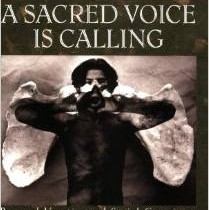
A Sacred Voice is Calling: Personal Vocation and Social Conscience is a remarkable book. John Neafsey argues that vocation is the seeking and finding of a “worthy dream” that makes all other possible options for spending one’s life pale in comparison. Social justice is a key component of vocation for all Christians since it flows from our call at Baptism and Confirmation to proclaim and make present the Kingdom of Heaven, God’s reign of peace and justice. Ordained ministry or a consecrated religious life might be that worthy dream for some. For others, the worthy dream will lead to a very different life path. All are calls to vocation.

Vocation Just for a Few?

Before and to some extent even after Vatican II, the notion of vocation was focused on ordained ministry or consecrated religious life. Vocation directors were and still are official recruiters for dioceses and religious orders. Today, when we hear of the “vocation crisis” or the shortage of “vocations”, the general reference is to the decline in the number of priests, brothers, and nuns.

While the concept of vocation continues to be applied more commonly to that of ordained or consecrated individuals, Neafsey demonstrates that Vatican II is gradually changing our understanding of what a vocation is. The concept of vocation as a sacred calling is developing today based on newly emerging understandings of human development, the Church itself, and our scriptural calling to live out the Good News. In particular, working toward social justice is a key component of any vocation and plays a primary role in deepening our relationship with God.

Vocation as a worthy dream for all

Neafsey’s notion of vocation as a worthy dream is radically different from the more static pre-Vatican II notion of becoming a priest or a consecrated religious. Limiting the concept of vocation to priests and religious is not optimal in a faith community in which all are seen as called and gifted: the community as presented in the Vatican II documents, particularly Gaudium et Spes (On the Church in the Modern World) and Lumen Gentium (On the Church). The worthy dream may indeed take one person on the path of servant leadership as a priest or deacon, but the worthy dream is the result of a perpetual vision quest and may lead another to a different path. This path of the servant leader is also the path of charity and of justice shared by all. It is our participation in the ministry of the Risen Christ.

Our lives in the Trinity are dynamic love encounters of each moment in chronological time (chronos) with God’s designated moment of divine action (kairos). Our calling to live fully in the Trinity is all about the agony and the ecstasy of falling, being, and remaining in love. Certainly, there is a close connection between our special gifts and talents or charisms and the Church as a structured community, since our gifts flow from the Holy Spirit. Working out our vocations is not necessarily free of conflict, doubt, and suffering. Yet we are called in Christ to the messiness of relationships with others in a relational God. We have only to read the letters of St. Paul to see that this is nothing new.

Yes, we need “vocations” as an institution, but in another sense “vocations” don’t exist. Spirit-filled, joyous people, however, do exist. By encouraging, nourishing, and loving each other, we are part of a larger cosmic focus of Divine Love that brings and holds everything in being. Dancing in that love is vocation. As an organization, all we have to do is to be open not to a job applicant but to someone on fire in Divine Love. Then we will be open to the Christ in our midst. Any other talk of vocation is merely a temptation to careerism, clericalism, or conceit.

Just as married love is a vision, a reality, a dream, and an ongoing quest, the same is true of the experience of hearing, hoping, believing, and the joyous union that is “vocation” in the more traditional sense. This notion of being in love with God and being called deeper may sound “non-traditional”. However, we have to look no further than the Scriptures and the tradition of the Church to realize how much the notion of the Church – the assembly of the faithful – as a modern industrial organization with job descriptions is a novel folly. It is certainly understandable due to our experience of government agencies and corporations that we might look at vocations as filling job positions. Unfortunately, we can lose sight of the sacred dimensions of the Church as a charismatic community incarnated into a human world and caught up in the divine spiral toward the Omega Point of fulfillment in Christ.

The gift of a worthy dream will take many shapes and forms. To be of service to others in teaching, healthcare, music, the arts, exploring nanotechnology, or astrobiology can be a worthy dream, taking many twists and turns. The same is true in ministry. We present ourselves to the community and test whether our deepest gladness meets the deepest need. We test the spirits that may be affecting us in discernment, and follow the Spirit in the Mystical Body of Christ that is the Church.


For more of Neafsey’s insights on vocation, read this interview from Programs for the Theological Exploration of Vocation.

Read More

Posted by on Jun 13, 2014

Crepe Paper and Sticks Become a Bird for Pentecost

Crepe Paper and Sticks Become a Bird for Pentecost


Feathers all ready for flying

Feathers all ready for flying

The primary image of Pentecost is that of tongues of fire that accompanied the sound of a rushing wind and settled over the heads of the disciples, both men and women, gathered in the upper room of the home in Jerusalem where Jesus had celebrated the Last Supper with his friends and then appeared to them on several occasions after the Resurrection. In this unforgettable moment, the Holy Spirit came upon the disciples and empowered them to witness to what they had seen and heard of the love of God and the coming of God’s Kingdom to the world. The Church was born on that day nearly 2,000 years ago and the Holy Spirit continues to breathe life and love into God’s world through ordinary men, women, and children.

Many ways of celebrating Pentecost exist around the world, beginning with the gathering of the community to celebrate the Lord’s Supper. For children, other activities can make this a special day as well.

Common symbols of the Holy Spirit include a dove, the wind, and a flame. A craft I learned many years ago makes an enjoyable activity for children to celebrate during Easter Season and Pentecost.

Crepe Paper & Stick Birds

Supplies:

2 thin sticks or branches – about 1 1/2 to 2 feet long
String or yarn – 1 foot length
Cellophane tape
Crepe paper – white, yellow, red, orange
Orange ribbon (optional)

Making your bird

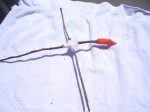
Take two sticks of unequal length and tie them together in the form of a cross. Use string or yarn to tie them securely and help hold them in the cross shape.

2012-04-17 17.02.28

Next take a bit of the crepe paper and wrap it around the yarn to help stabilize the bird’s body.

Take the orange ribbon or a bit of orange crepe paper and wrap it around the tip of the shortest end of the sticks. Go around the stick enough times to make a beak and a head for your bird. If you use ribbon, you can use crepe paper to cover the body-end of the beak and build up a head.

2012-04-17 17.07.17

Once the head has been formed and the center stabilized, take a long strip of crepe paper, tape it to the stick or to itself, and begin wrapping it around the sticks.

2012-04-17 17.14.49

Cover both sticks completely with crepe paper. Leave only a little of the beak showing.

Close-up of head

Close-up of bird’s head

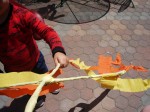
Take strips of whatever color of crepe paper you are using and tape them to the bird’s wings and tail. Some will want to tape them all along the wings. Others will put them only at the tips. Either way works just fine.

Feathers all ready for flying

Feathers all ready for flying

When the feathers have all been attached, the bird will be ready to fly.

Away we go!

Away we go!


This bird can be constructed to celebrate Easter, the Resurrection (as a phoenix), or Pentecost (as a reminder of the Holy Spirit who comes igniting the fires of love and settles like a bird on those called to God’s family).

Come Holy Spirit. Fill our hearts with the fire of your love. Blow where you will in our lives. Strengthen us to respond with the freedom of a bird flying in your love.

Read More

Posted by on May 29, 2014

Savoring the Feast of the Ascension

Savoring the Feast of the Ascension


The Feast of the Ascension is traditionally celebrated on the 10th day before Pentecost. In many places these days it is celebrated on the Sunday before Pentecost so more people can attend Mass.

On this day we remember and celebrate the day, forty days after the Resurrection, that Jesus was taken into heaven, hidden from the disciples’ sight by a cloud. (Acts 1:9) Following His instructions, they returned to Jerusalem and spent the next days in prayer, until the Holy Spirit came upon them at Pentecost.

One traditional way to celebrate the Ascension is to go fishing. Why? An ancient symbol by which Christians identified themselves and each other was a fish. The Greek letters that spelled fish (ΙΧΘΥΣ – ICHTHYS) could also be taken as the first letters for the words, Jesus Christ, God’s Son, Savior.

Going fishing is not always possible, however, so another way to celebrate is through a festive meal. A fish pie is a special treat.

Fish Pie

Ingredients:

Pie crust for a two crust pie.

Sauce:

3 Tbsp. margarine or butter
3 Tbsp. cornstarch
1 Cup water
1/4 Cup white wine or light fruit juice
1/4 Cup onion, minced
1 Tbsp. parsley
Balsamic vinegar to taste (optional)
Salt, pepper, chili powder, thyme, tarragon, savory to taste

Filling:

Tuna or other canned or fresh fish
Potatoes
Vegetables: Carrots, Green Beans, Peas, Corn or others liked by your family

Saute the onion in the melted margarine or butter. Add the cornstarch and stir. Add water and wine. Stir frequently as the mixture heats and thickens. Add the spices and mix well. When the sauce has thickened, add fish, boiled, cubed potatoes, and steamed vegetables.

Put the filling into an unbaked pie crust and cover with a top crust. If desired, cut a fish and some “rays of glory” into the top crust for venting.

Bake at 400º for 35-40 minutes until golden brown.

Serve the pie hot, with a nice salad, a bit of sparkling cider, juice or wine, and a light dessert for a special family celebration of the Ascension.


Read More

Posted by on Feb 2, 2014

Candlemas: Light Candles to Celebrate the Light of the World

Candlemas: Light Candles to Celebrate the Light of the World

On the Feast of the Presentation of the Lord, also known as Candlemas, we remember that Joseph and Mary took their firstborn son to the temple to present him to God, according to the traditions of their faith. An old man and an old woman met them at the temple. Each recognized the baby (only forty days old) as the One who had been promised from of old.

The man, Simeon, who had come “in the Spirit” to the temple, took Jesus in his arms and gave thanks to God, saying, “Now Master, you may let your servant go in peace, according to your word, for my eyes have seen your salvation, which you prepared in the sight of all the peoples: a light for revelation to the Gentiles, and glory for your people Israel.” The old woman, Anna, was a prophetess who lived in the temple. Her words are not recorded, only that she gave thanks to God and spoke to all she met of the child she had seen.

In this feast we see a continuation of a theme begun in Advent and celebrated through the Christmas season. “A light shines in the darkness.” (Jn 1:5) “A people who walked in darkness have seen a great light.” (Is 9:1) “Rise up, Jerusalem, and shine forth” (Is 60:1) “Sing joyfully to the Lord, all you lands.” (Ps 110:1b) “We saw his star at its rising and have come to do him homage.” (Mt 2:2) “This is my beloved Son, with whom I am well pleased.” (Mt 3:17) We hear these strains again and again in the first months of our liturgical year, calling to us to listen and understand what has come to pass.

The Holy Spirit opens our eyes and our hearts to see the coming of the Promised One among us, just as was the case with Simeon, Anna, the Magi, and John the Baptist. When our eyes have been opened, we see the light shining through and overcoming the darkness. It is a light for all peoples; no more “us vs. them”, no more exclusion of anyone simply because he or she is different or a stranger. The Spirit fills Jesus and leads him into his public life. The Spirit fills Simeon and leads him to the temple. The Spirit leads the Magi to notice the star and set out on a journey to find the child it heralds. The same Spirit calls us too. We are to be lights for our world. We receive a candle at our Baptism and we are told to keep it shining brightly until the day the Lord comes for us.

And so we take candles and light them again, as we celebrate the coming of the Light of the World and the presence of the Spirit among us, helping us to recognize His coming.

Read More

Posted by on Nov 2, 2013

Soul Cakes in November

Soul Cakes in November


Pope Francis reminds us that the Feast of All Saints (November 1) is a day to celebrate peacemakers. Pope Francis also tell us to remember on the Feast of All Souls (November 2) that when we die what matters most is how we have treated the poor and those at the margins of society. Many traditions for celebrating these feasts are found around the world. El dia de los Muertos – the Day of the Dead in Mexican culture is an elaborate remembrance of the dead. A northern European tradition is making, giving, and eating of Soul Cakes.
Soul Cakes are small cake-like pastries. Typically they are made with spices including ginger, nutmeg, allspice, cinnamon, and/or cloves. They may have raisins or currents baked into them. They may be frosted or sprinkled with powdered sugar. They may also be made of sweet dough like a sweet roll.

During the Middle Ages, especially in northern Europe, England and Ireland, soul cakes were baked and shared as part of the celebration of All Hallow’s Eve, All Saints Day and All Souls Day. Each cake was marked with a cross. People called “soulers” went from house to house, offering songs and prayers for the dead. They received these cakes as gifts and ate them. Each cake eaten was believed to represent a soul released from Purgatory.

Today, the custom of giving and receiving soul cakes, especially as a way of freeing souls from Purgatory, has fallen by the way. Nevertheless, making and eating soul cakes is an enjoyable way to mark these feasts and celebrate them in family or community.

The recipe for Soul Cakes here is one I have developed from several basic cookie recipes. I like it because it is easy to make and includes pumpkin, for a special seasonal flavor. It doesn’t include raisins or currants, but a handful of either could be added to the dough if you like. Nuts could also be added, but they are not essential.

Pumpkin Soul Cakes

Ingredients:

Wet:
1 C Shortening (Butter or margarine)
1 C Sugar or 3/4 C Honey
1 Egg
1 C Pumpkin (cooked and pureed)

Dry:
3 1/3 C Flour (either white or whole wheat will work – I used whole wheat.)
1 t Salt
1 1/4 t Cinnamon
3/4 t Ginger
1/2 t Baking powder
1/4 – 1/2 t Cloves, Nutmeg and/or Allspice (to taste)

Cream shortening and sugar. Add pumpkin and egg and mix together well. Combine dry ingredients then add gradually to the wet ones, stirring well.

This dough can be chilled and rolled out for cut cookies or it can be baked as drop-cookies. I make them as drop cookies using a teaspoon to scoop about a tablespoon of the dough from the pan and drop it onto a greased baking sheet. Flatten them slightly before baking if you want to put a cross on the top of them.

Bake at 350º for 10-12 minutes.

When cool, frost with a powdered sugar or other icing in the shape of a cross. A little bit of vanilla in the icing adds a nice flavor.

(If not planning to use the cookies as soul cakes, swirl the frosting over the top with a knife or leave them unfrosted. They’re good either way.)

Enjoy with friends and family — and remember to offer a prayer for those who have gone before us.


Read More

Posted by on May 6, 2013

Crepe Paper and Sticks Become a Bird for Pentecost

When Christian Life is Like Going to the Library with a Cat

Orange-Tabby-Cat_Big-Cat_14052-480x320 by Robert and Mihaela Vicol


Living a Christian life requires a great sense of adventure, curiosity, trust, and a recognition that some things are too serious to be faced alone. In a real way, Christian life is like going to the library with a cat.

This morning, my grandson and I set out walking to our local library for story-time. Our cat noticed our departure and began to follow after us. She often follows us around the block or to the local park, so it was not out of character for her to come along. None of the cats that normally give her an argument about passing through their territory were around today, so it was smooth sailing until we got half way around and surprised her. Instead of turning the second corner, we walked across the street and down the next block. She was a bit surprised, but gamely followed, probably thinking we simply planned to walk around two blocks instead of one. By the time we had crossed two more streets and were still going away from home, she was getting a bit nervous, but now she wasn’t sure she wanted to let us out of her sight. We were getting to be a long ways from her territory. A few more blocks and she was positive she was on very thin ice.

One block from the library, two relatively busy streets meet at a four-way stop. We waited for the cat to catch up with us just before the corner. My grandson carried the bag with the book we were returning and I picked up the cat. This in itself was quite a feat as she and I have had a rather rocky relationship through the years due to differing opinions regarding the place of a cat in a household. Nevertheless, she was quite willing to be carried across the the first street and tolerated being carried across the second. Then she wanted DOWN. NOW! So I let her down.

At that moment, what should arrive but two large, noisy dragons, screeching in protest as they bore down on the intersection from opposite directions. (Humans might have said they were garbage trucks, but she knew the truth of the matter. They were definitely fearsome dragons.) She tried to escape through a picket fence but found that she was too big. So in a moment of total panic, she turned and raced across the street in front of the dragons, hoping they would not turn and chase her. Fortunately, they did notice (or at least their drivers did) and they patiently waited for her to make her escape.

We followed after her when it was safe, calling to her reassuringly, but she remained safely hidden in the bushes in front of one of the houses. So we left her there and went to story-time, where we enjoyed some lovely tales of children’s gardening adventures. The librarian had bean seeds for the children to plant after decorating a pot in which the seeds could sprout. We returned our library book and found another before leaving the library about 45 minutes later.

Crossing the street again, we called and whistled for our cat. (Yes, she does come when we whistle for her.) With obvious relief, she emerged from the bushes and once again began to follow us, but the cars zooming down the street clearly were frightening to her. When we got to the corner, we waited and again called her. She came and allowed me to pick her up once more to cross the street. By the time we got to the other side, she was jumping out of my arms with nervousness, wanting to be sure she could find a safe place if necessary. We continued on our way home and she followed a little ways behind. Sometimes she stopped to explore something interesting, then hurried to catch up with us. By the time we got home, she was one tired cat. She spent most of the rest of the day sleeping close to the screen doors on the deck, not wanting to be far away from me at all. Once she even invited me to pet her.

Reflecting on our adventure, the thought struck me that our Christian lives are not all that different from the experience of that cat. We may start out our daily journey with an idea of what is ahead of us. We’ve been down this road in the past. We know where we’re going and what to expect along the way. But then someone throws us a curve ball. Something is different and unexpected. We trust the Lord, so we keep going forward, but we look around nervously, watching for those who might challenge or hurt us. Sometimes we hide for a bit until we’re sure it’s safe to come out. Sometimes we try to stay very close to anything or anyone familiar to us, even those who haven’t been our favorites in the past. When things get really dangerous or hard for us, sometimes the Lord picks us up and carries us across to a safer place. But then we get scared again and run away to hide. Always, though, the Lord sticks around and waits for us. He calls us by name and carries us to safety again and again. Then, when we reach our home again, he strokes us kindly and smiles at us fondly. And who would not melt with joy to be safely at home with such a One.

Yes, the Christian life can be like going to the library with a cat.

 Orange Tabby Cat by Robert & Mihaela Vicol, PublicPhoto.org

Read More

Posted by on Dec 20, 2012

Las Posadas: Food, Fiesta and Community

Singing echoes through the softly lit streets of the towns, cities, and neighborhoods of Mexico as residents prepare for Christmas, through the para-liturgical tradition of Las Posadas. Processions of townspeople, led by a couple dressed as Mary and Joseph, wind their way through the streets, going from home to home asking for “posada” (shelter). Finally, the procession is welcomed into a home, and the people pray together as the “fiesta” commences.

Las Posadas is a Mexican Catholic Advent tradition that marks the beginning of the Christmas season. Taking place from the 16th-24th of December every year, Las Posadas is a nine day community celebration in preparation for the birthday of Christ; a novena that is a mix of religious devotion and relaxation. Ultimately, Las Posadas is about accepting Christ, the Bread of Life, into one’s home and heart. It functions as an extension of the Eucharist, catalyzed by the fiesta culture. Food, both physical and spiritual, is an important element of the fiesta, because it is nearly impossible to have a Christian festival without food.

Las Posadas is a fiesta; a religious fiesta in the sense that it provides sacred time and space to show a sacred event.  The fiestas of Las Posadas reenact Mary and Joseph’s journey to Bethlehem, a journey that is considered sacred because it directly led to the birth of Christ in Bethlehem. Also, the fiestas gather the community in a ritual that parallels the structure of a Mass, emphasizing two more sacred elements of Las Posadas: the community and the Eucharist.

Evangelization in a New World

Las Posadas began in 1578 in Mexico in the village of San Agustín Acolman. Augustinian missionaries received permission from Pope Sixtus V to celebrate special Masses in order to make Christianity more attractive and  to evangelize the Aztecs. Because of the syncretism that occurred when the missionaries introduced Catholicism to indigenous Americans, Las Posadas resembles the Aztec celebration of the birth of the sun and war god, Huitzilopochitli. The missionaries wanted a way to teach the gospel and extend the Eucharist to a large, illiterate population and needed a way that the Aztecs would accept, so they took advantage of the timing of the birth of Huitzilopochitli to introduce the birthday of their own important, sacred figure, Jesus Christ. In las misas del Aguinaldo (special Masses for the Advent season), they included nativity scenes and lights, sang villancicos (Christmas carols), and broke a piñata. The celebration of Las Posadas grew from these original Masses. Mary and Joseph’s journey to Bethlehem, as told in Luke 2:1-7, is featured in Las Posadas, a celebration that includes elements similar to those of the celebration for Huitzilopochitli. (All night and during the day after Huitzilopochitli’s birthday, people customarily had parties in many houses throughout the town, at which guests delighted in foods and statues of their gods made from blue corn dough.)

Days of Prayer and Celebration

Las Posadas begins on the evening of December 16th and ends on Christmas Eve. These nine days dedicated to prayer are called a “Novena.” Originally, a novena referred to the nine days of prayer before the Feast of Pentecost, but in Las Posadas it also represents the nine months of Mary’s pregnancy. Each night, a young woman and a young man – usually teenagers – dress as Mary and Joseph and go to three different, predetermined houses, asking for posada (shelter). They are accompanied by a candle-lit procession that includes musicians, children dressed as angels and shepherds, and anyone else who would like to join. At the first two houses, the procession of peregrinos (pilgrims) is turned away by groups of people inside the houses, who play the part of the innkeepers who denied Mary and Joseph shelter. The interactions between the peregrinos and the “innkeepers” happen in the form of call-and-response songs. Through several verses, the peregrinos ask for shelter and are denied entry by the innkeepers. The last verse is sung only when the procession is welcomed into the last house.

At the last house, the peregrinos are welcomed and the whole community gathers for prayers and a party. Once all the peregrinos have entered, everyone prays the Act of Contrition, asking for forgiveness for their sins. Often, they will also pray the rosary, and/or hold a short prayer service. This part of the fiesta mirrors the Liturgy of the Word (the first part of a Mass). Soon the prayerful ritual gives way to food, games, and dancing. Nevertheless, ritual that promotes spiritual communion is still present in the fiestas, and parallels the Liturgy of the Eucharist (the second part of a Mass) — sharing a meal and celebrating the forgiveness of sin in the Eucharist. The fiestas grow in excitement with each passing night, but at each are ritual elements, including food and drink, candles, Nativity scenes, and piñatas filled with fruits, nuts, and candies.

Piñatas, Sin and Forgiveness

Traditional piñatas are shaped like stars and have seven points, each point representing a cardinal sin. People swing at the piñata with their eyes covered by blindfolds to signify their true faith in God and His mercy. Thus, when they break the piñata and are showered with sweet candies, the people act out the experience of conquering sin and receiving forgiveness and blessing from God. This is also a dramatization of how everyone’s sins are forgiven during the Eucharist, when Catholics remember how Christ died so that the sins of the world would be forgiven and confess their own sin through the Confiteor. Although perhaps not broken every night, the piñata nevertheless demonstrates the way food is used to teach religion, extend the message of the Eucharist into the home, and catalyze the fiesta spirit.

Sharing Food and Creating Communitas

The fiesta spirit continues through each of the nine days, never seeming to lag. On Christmas Eve, the final stop for the peregrinos is the church, where they celebrate La Misa de Gallo, a Midnight Mass, in which they share in the Body and Blood of Christ – a shorter but still powerful religious fiesta in which a sacred meal is re-enacted. After the Mass, the longest fiesta of Las Posadas commences. Along with a piñata and the small dessert items served at the fiestas on each of the previous nights, people prepare and share their favorite foods at the reception after Mass. Typical foods include tamales, pozole (pork soup), sopa de albóndigas (meat-ball soup), pollo con mole (chicken in mole sauce), bacalao (codfish stew), natillas (a type of thick custard), and buñelos (deep-fried pancakes sprinkled with sugar). Champurado (spiced hot chocolate), atole (a corn based drink), and ponche (punch) are also served. Although these are some of the more traditional foods consumed during the Advent and Christmas seasons, there are no foods that are specifically reserved for Las Posadas. Therefore, it does not matter what food is served, since the sharing of food itself symbolizes and strengthens the community.

Las Posadas makes the Gospel come alive in a cultural experience of spiritual communion in which the people welcome Christ into their homes and lives. This spiritual communion results from the transformation of Jesus’ body, “…the living bread that came down from heaven” (John 6:51), in the Eucharist into spiritual food. The ritual of Las Posadas reflects the mystery of the Eucharist because the people of the community act as living bread through their acts of hospitality and generosity in caring for others. Additionally, the fact that Las Posadas is a religious fiesta, and thus directly tied to Catholic Hispanic fiesta culture, draws the community together and builds the spirit of communitas. Communitas is a deep spirit of community – a spiritual communion where all the members are united in the same consciousness, usually through a ritual. Las Posadas is a way in which Mexican Catholics realize communitas through the Eucharist and fiesta. Thus, the fiesta catalyzes, yet also results from, the ritual of Las Posadas and is thoroughly intertwined with food, both spiritual and physical; physical food is the visceral symbol that gathers the community and provides the base for rituals, in which it is transformed into spiritual food. Therefore, it nourishes the body and the spirit.

Although there are traditions around the world in many different religions that fulfill the same functions, Las Posadas is one of the best examples of the way Mexican Catholics have taken the Eucharist and made it part of their cultural experience through the fiesta. Today, the fiesta spirit is spreading beyond Mexicans and Latinos. In some cases non-Latinos are attracted to the religious and spiritual aspects of Las Posadas. For others, Latinos and non-Latinos, a more secularized version of Las Posadas, in which the prayerful aspects are downplayed or ignored and the focus is on family and community, is more comfortable and attractive. Nevertheless, although those who celebrate a secular version of Las Posadas think that they are leaving Catholicism behind, they cannot escape the fact that even in any secular form, Las Posadas is still a religious fiesta celebrating and strengthening the spiritual connection between community members. Despite dropping all of the prayers, they are living the communitas of the Eucharist in their celebration, since even the secularized ritual parallels the structure of a Mass. Thus, without realizing it, many people are attracted to the religious and spiritual aspect of Las Posadas. What they experience is a community dimension of the Eucharist as seen in the transformation of profane (non-sacred) food into sacred nourishment for the spirit and community. Through that shared experience of celebrating a religious fiesta, people of all cultures strengthen their bond with their communities, uniting community, religion, and food.

Read More

Posted by on Dec 14, 2012

Crepe Paper and Sticks Become a Bird for Pentecost

“The New Translation of the Roman Missal” One Year Later

Roman Missal

A New Translation for a Worldwide Faith Community

On the first Sunday of Advent in November 2011, English speaking Roman Catholics began using the new translation of the Roman Missal, Third Edition. New principles for translation were originally approved in 2001 and many years of work went into the development and distribution of the new Roman Missal. While updates to the Missal and to the book of instructions on how to use the Missal (The General Instruction on the Roman Missal) have occurred on several occasions since the original decision of the bishops at the Second Vatican Council to encourage use of the vernacular (the language of the people) rather than Latin in Roman Catholic worship, this update engendered more controversy than its predecessor.

The reason for the controversy was simple: the guidelines for translation had been changed to emphasize literal translation rather than the more interpretive, idiomatic, inclusive language that the earlier version had favored. As a result, in addition to the need to deal with a change of language patterns, people were being required to change from familiar formulations to newer, sometimes stilted or more ornate, and/or less inclusive ones. For example, in the new version of the Nicene Creed, the phrase “consubstantial with the Father” replaces “one in being with the Father.” When asked how to explain the word “consubstantial” to people in the pews, the response was to explain that it means, “one in being.” Such changes and explanations left many people scratching their heads in puzzled amazement that anyone would think the newer phrase was an improvement.

Nevertheless, the decision was made that a new revision was needed — if for no other reason than to update feasts of saints to include newly canonized ones. So a new revision of the Roman Missal was prepared and promulgated and the People of God began to adapt one year ago.

Perspective of a Translator and Anthropologist

In the interest of transparency, I will note here that as an anthropologist and professional translator, I was not thrilled with the new translation. I do not speak Latin, but I speak Spanish and read enough Latin to recognize familiar prayers and liturgical usages. The new translation, in my professional judgment, is too literal. As a result, its phrasing is sometimes awkward and confusing. The ornate feel of some of the prayers is foreign to our cultural experience, making them almost seem like parodies of an older time and sensibility. As a translator, the works for which I have been most seriously criticized have been those in which I was more literal in my approach. Even technical bio-medical translations, instructions for patients, and informed medical consent forms require a certain degree of  freedom from the literal and conversion into idiomatic, more culturally-based constructions. Pastoral letters, poetry, fiction, and essays require use of poetic and culturally specific phrasing and word selection. In fact, word choice will even vary based on the national dialect of the target audience. An American in Southern California, for example, may well be puzzled at hearing that guests entered the room and were seated on the chesterfield. An individual from Alberta, Canada will immediately know that the item of furniture in question is what the Californian would know as a sofa and someone from Eastern Washington might call a davenport.

The idea that one literal translation will meet the needs of all English speakers in the world, or even of all English speakers in a country the size of the United States, fails to recognize the impossibility of expressing the inexpressible in any one set of words. Of course, no words can really capture the reality of God and our personal relationships with the divine, but literal phrasing can make it more problematic. Since words are both based in cultural understandings of reality and formative of them, words do not always convey the same idea when used in different languages or cultural contexts. The words used may also be indicative of a different emphasis or understanding of the same event from one language to another.

I appreciate the effort to make clearer reference to biblical sources for the prayers of the Mass (e.g. the “Lord, I am not worthy” before Communion is taken from the words of the Centurion whose servant was healed by Jesus [Mt 8:5-13]). However, in this and other instances, the “new” version is a return to the earliest translation we had immediately following the Council. That one was replaced for pastoral reasons: it was too literal, tended to be confusing to the faithful, and was non-inclusive in its gender references at a time when the position and status of women in societies around the world was changing towards greater inclusivity and equality! We have come full circle and the original  version’s limitations have not gone away.

Enough of Theory, What Actually Happened?

Despite the reservations felt by many as the transition date approached, the first day using the new translation arrived in parishes around the world and we all stumbled through the new wordings. We learned new music to go with the new words. We found ourselves reciting the old words when our attention strayed or when we were deeply into the ritual and its mystery. Sometimes the celebrant forgot the new wording. Sometimes we did.

We’ve now had a full year to experience the new translation. How has it gone? I have visited parishes in California, Oregon and Washington state and seen some common patterns.

  1. The first insight is one I originally heard many years ago from Professor George Foster of the Anthropology Department at the University of California, Berkeley. “People are pragmatic.” If we have to learn new words, we might as well start learning them as new songs; and so we did. If there’s an option regarding which prayer to use, we choose the more familiar or the less awkward one. The Apostles’ Creed is now much more commonly used, for example, in the parishes I’ve visited than the Nicene Creed with its “consubstantial with the Father” and “incarnate of the Virgin Mary.”
  2. No one worries if a celebrant or participant in the liturgy gets something wrong. We just smile and go ahead with the celebration.
  3. Perhaps the most reassuring thing I’ve seen is that so very few people have left the community in a huff over the new translation. I remember when we first began to use English. There were a lot of people who left because in their view it was no longer a Church that was faithful and unchanging. What we have learned is that revelation is on-going. Christ is still present in His Body. The Holy Spirit still breathes life into each of us and our communities. And God’s glory shines out into the world as we gather for worship and then go forth in service in our daily vocations. We are, all of us, faithful and faithfully Catholics. Awkward translation or not, we aren’t going away. We’re going forward!

What have you noticed in your parishes? How has the new translation been introduced and put into practice? Are you seeing a deepening of understanding of the liturgy? Have you experienced new efforts to offer classes or workshops to help the people of your community participate more fully in the liturgy? Has there been a resurgence or deepening of faith in your community in the past year?

Please share your experiences here or visit us on Facebook. We’re looking forward to hearing from you as we move into this second year with “the new translation.”


Read More

Posted by on Nov 30, 2012

Crepe Paper and Sticks Become a Bird for Pentecost

Dorothy Day, Servant of God and Follower of Christ the King


Dorothy Day, 1934

Dorothy Day, cofounder with Peter Maurin of the Catholic Worker Movement, died 32 years ago, on November 29, 1980. Like many other activists who have struggled for social justice and worked among the poorest, most forgotten members of society, she is more respected by mainstream Americans, religious leaders, and commentators now than she was during all but the last decade of her life. In life she had the annoying habit of pointing out the discrepancies between our Gospel calling to serve the Lord in those around us, especially in the poor and most vulnerable, and our national focus on the value of making money and enjoying a middle class or higher lifestyle. She opposed war and participated in demonstrations against all wars, including World War II. She supported Cesar Chavez and the labor union movement. She was not unwilling to go to jail and did so on multiple occasions. She lived and died in a Catholic Worker house of hospitality in New York, providing services including food, clothing, shelter, and a cup of good coffee to the poor and homeless. With other activists, she also participated in non-violent direct actions aimed at changing the social structures that lead to poverty and homelessness.

Movies have been made and books written about this woman whose work led to the establishment of the Catholic Worker. Church leaders today speak of her with respect and support her cause for sainthood. Men and women around the world join together in soup kitchens, hospitality houses, and communal farms to carry on the work she began.

This year, Dorothy Day’s feast falls outside of Advent. Last Sunday we celebrated the Solemnity of Christ the King. The convergence of  our celebration of a King who was crucified, died, and rose from the dead with our celebration of the life of a woman whose life was focused on serving that King in the poorest of the poor is one that does not happen often. Yet it seems fitting that this connection should be noticed. Serving the poor and disenfranchised is hard, dirty, smelly, frustrating work. Most people who live on the street are not there by choice, yet some prefer to remain on the streets rather than deal with the requirements of the various shelters or programs in their communities. Some have mental illnesses that are untreated. Some battle post-traumatic stress. Some have lost their homes as a result of loss of employment or long-term illnesses. Families and single people live on the streets. Children and old men and women live on the streets. It’s cold, lonely and dangerous there and all too often, the rest of us pass by without noticing them or if we do see them, we somehow assume it’s their own fault and feel no compulsion to try to help.

Those who enter pastoral ministry, social workers, and others who regularly deal with the homeless and disabled quickly learn that it is not glamorous or easy to provide support and care for this population, particularly with scant resources and personnel. Yet as Dorothy noted, “The mystery of the poor is that they are Jesus, and what you do for them you do to Him.” This doesn’t mean she was never frustrated or angry with God. Anyone who regularly deals with impossibly difficult individuals, bureaucracies, social structures, and disdainful or fundamentally unaware fellow church members or citizens will experience times of total anger and frustration. Faithfulness to the call to serve Jesus in this way requires continuing anyway — telling God what a mess it all is, maybe telling God how angry one is feeling, complaining about how hard it is to keep going or to deal with the physical realities of life on the street or in poor neighborhoods, and then going out and continuing the work. This is the connection with Christ the King: faithful following of the call to service of the poor and vulnerable and to change those social institutions that keep so many people trapped in poverty.

Dorothy Day is on her way to officially recognized sainthood. Nevertheless, we would all do well to remember her thoughts about what might result in such an eventuality, “Don’t call me a saint. I don’t want to be dismissed so easily.”

Photograph from New York World-Telegram & Sun Collection

Read More

Posted by on Aug 26, 2012

A Refreshing Perspective on Respect, Love, and Obedience in Marriage

Today I’m giving this platform to the Rev. Mr. Patrick Conway, Deacon serving at Resurrection Catholic Community in Aptos. Patrick is Pastoral Associate in our parish, married for well over 20 years, father of 5, and a fine musician. He brings a welcome perspective to the study of scriptures such as the reading from St. Paul’s letter to the Ephesians (5:21-32) in which Paul addresses the relationship between husbands and wives. With Patrick’s permission, I share it with you.

Elbow Sunday 8-26-2012 Deacon Patrick Conway

Today is officially called the 21st Sunday in Ordinary Time. But unofficially it’s called “Elbow Sunday”. That’s because in Catholic churches all over the world today, during the Second Reading from Paul’s letter to the Ephesians when he says that wives must obey their husbands, husbands elbow their wives, and when he says that husbands must love their wives as Christ loves the Church, wives elbow their husbands right back!

Actually, this is a tradition that’s sort of gone by the wayside, because for decades now the Church has made that first paragraph about wives obeying their husbands optional, and most parishes don’t read it anymore, because most lectors, especially women, don’t want to read it, and most Catholics, especially women, don’t want to hear it, and most preachers don’t want to touch it with a 10-foot pole! But I, just back from vacation and feeling strong, relish the challenge! Either that, or fools rush in where angels fear to tread!

So, what about it? It says here in the Word of God that wives must submit to their husbands in everything. 12 years ago the second-largest group of Christians (after Catholics) in the United States, the Southern Baptists, included it in their Statement of Faith, and many evangelicals and other Christians also believe and teach that wives must submit to their husbands. So what does the largest Christian Church in the world, the Roman Catholic Church, say about this?

Nothing. If you look at all the current Church teachings on marriage – in the Catechism, Canon Law, teachings of John Paul II, Engaged Encounter, Marriage Encounter – you won’t find a word about it. So now hear this, wives (and husbands): the Catholic Church does not teach that wives must submit to their husbands. Wives, you get to give the final elbow!

Just has it has in the lectionary, the Church has basically dropped or at least de-emphasized that notion of inequality that is wrongfully implied in Paul’s letter. The Church takes the rest of the passage to come up with a wonderful understanding of marriage as an equal partnership in which both husband and wife submit to one another out of reverence for Christ. Both husband and wife give one another the love of Christ, loving each other as Christ loves the Church.

It’s like a dance – one partner leads, the other follows. But it’s not always the man who leads. In some things the woman can lead better, and so she should, and her husband should follow. Other times, the wife should follow her husband’s lead. Mutual submission to one another, and always, to Christ. There is no place for domination in this relationship. Domination is a serious and destructive sin, whether it is done by a husband or a wife.

Paul says that the marriage relationship is like the relationship between Christ and the Church, and so it is. But, unlike our relationship with Christ, who is always the Christ to us, husbands and wives take turns being Christ to one another. Now, as a husband, I take very seriously my call to love my wife as Christ loves the Church, and that’s my prayer every day. But every day I see all the ways that I fail to do that, unlike Christ who never fails me. And I see that, regardless of my best efforts to be Christ to my wife, it is more often she who is Christ to me. The greatest incarnation of Christ in my life is, and has been, my wife, whose constant love, faithfulness, mercy, care and devotion never cease to amaze and humble me. She has given herself to me completely, just as Christ has given himself to me. She gives herself to me through Christ, and Christ gives himself to me through her.

But marriage is not just for the good of the married, or even for the children that may come from a marriage. Marriage is for everyone, that is, for the good of everyone. That is Paul’s greatest gift in his teaching about marriage, that marriage is a sacrament, a sign and symbol for the whole world of the relationship between Christ and the Church, between Christ and humanity. Marriage reveals that this relationship between Christ and humanity is not one of divine domination, but of tender, intimate love, like the tender, intimate love between a husband and wife. It is deeply personal.

Marriage is to remind each one of us of what is possible between us and Christ, a tender, intimate, profoundly personal relationship that is truly everlasting. And each one of us is called to this dance of love with Christ, with Christ who has first loved us and who has come down from heaven into our world to give us his love, to give us himself, and who seeks only our love in return.

That’s all he’s been trying to tell us in these Gospel readings these past few weeks, that he’s giving us himself, his whole self – flesh and blood, body and soul, humanity and divinity, and he’s just dying with passion for us to receive him.

May our response to him be like St. Peter’s: “Lord, to whom else shall we go? You have the words of eternal life and love. We know that you’re the one for us.”

Reprinted with permission.

Read More

Posted by on Jul 31, 2012

Crepe Paper and Sticks Become a Bird for Pentecost

Planting Love and Seeing Its Flowering: The Two Ends of Life in a Weekend

Easter Candle

In the life of a Catholic community, all of the events of life are celebrated by gathering for liturgy. Most of us don’t see the ebb and flow of joyful and sorrowful events clearly in our day-to-day lives, though parish staff do. Saturday and Sunday this past weekend, the rhythm was clear for all to experience.

A wonderful, long-term member of the parish was killed in a traffic accident. Blessedly, the three passengers in her vehicle survived, but she died at the scene. Because she had been so involved in the life of our community, most people knew her and her family. The church was as full on Saturday morning for her funeral as for a normal Sunday morning “family” Mass. We cried, laughed, remembered, sang, and prayed with her family for a couple of hours, then joined together for a feast in the hall, courtesy of the Women’s Guild. We all went home afterward with many memories shared and a certain numbness at the way all can change in a instant – the ephemeral quality of our time here on earth, the strength of faith and love shared in family life, and the many ways an individual in her life touches those around her.

Sunday morning, many of us gathered again in the same space for liturgy. This time as we walked in the door, the many visitors were smiling and towels, candles and baptismal oils were waiting near the font from which we take water to bless ourselves as we enter and leave our sacred space. The water was warmed and the Easter candle was again burning. This time, two babies awaited entry to our Catholic family. The love of their families and friends was plain to see, and the joy of the community welcoming them was clear. The joy of their baptisms, after the sadness of the prior day, raised everyone’s spirits.

It’s not often that we see the two ends of life in a community so clearly. The same Easter candle — once welcoming new lives into the community and once reminding everyone of the life lived in faith by one of its members. The same white garments, the same Eucharist shared, the same wish shared that all would live in “the Peace of Christ.”

Jessica Powers’ poem, “The Flower of Love,” spoke to me in this experience. Reflecting on the experience of planting the seed of love in soil that had never seen it, then cultivating and supporting the love that grows, she proclaims:

“Blessed are they who battle jest and scorn
to keep love growing
from embryo immaculately born
to blossom showing.

Primarily for them will petals part
to draw and win them.
It, when the pollen finds their opened hearts,
will bloom within them.”

Poem from, The Selected Poetry of Jessica Powers
Image by Chris Nyborg – GNU Free Documentation License

Read More

Posted by on May 18, 2012

Crepe Paper and Sticks Become a Bird for Pentecost

Seven Gifts and Nine Fruits – Come, Holy Spirit!


Holy Spirit as Dove

The final nine days of  Easter Season are a time of prayer for the coming of the Holy Spirit more deeply into our lives today. Each baptized Christian has already received the Holy Spirit. Through Confirmation the gifts of the Spirit are strengthened in our lives, so we become adult Christians, ready and able to bear fruit in the world as Christ’s Mystical Body. In a very real way, we are Jesus’ eyes, hands, feet, and heart in our world.

What are these gifts that are so powerful? The prophet Isaiah first listed them in describing the one who, springing from the family of Jesse, would bring justice to the land. “The spirit of the Lord shall rest upon him: a spirit of wisdom and of understanding, a spirit of counsel and of strength, a spirit of knowledge and of fear of the Lord.” (Is 11:2).

Each of these gifts comes from the Spirit of God. The gift of Counsel is sometimes known today as Right Judgement — choosing to act in accord with God’s wisdom and understanding of the way of love. Strength is sometimes called Courage — a courage that goes the distance, even to sharing in the cross. Fear of the Lord is better understood as Wonder and Awe before the powerful love of our God — a sense of “Wow” or “Isn’t God amazing!”

Gifts from God are meant to bear fruit in the lives of their recipients. They are never given to be cooped up or to be a source of personal pride. The fruits of God’s favor are not what we commonly consider to be signs of success, however. They don’t include gaining personal wealth or holding on to a good job. Becoming a celebrity, even if a celebrity because of doing lots of good works, isn’t a fruit of God’s favor. Feeling happy all the time and loving one’s work is not a fruit of the Spirit.

The Fruits of the Holy Spirit are listed by St. Paul in his Epistle to the Galatians. “But the fruit of the Spirit is love, joy, peace, patience, kindness, goodness, faithfulness, gentleness, and self-control.” (Gal. 5:22) These characteristics are not dependent on our success in our work or our efforts to spread the Good News. Even if everything is crashing around us, these qualities will be a sign to all that God is still in charge and will bring good out of what is happening. Some may be more obviously present at one time than at another, but even when God seems far away, the strength to remain faithful to the Gospel’s call is a fruit of the Spirit. The presence of these Fruits of the Holy Spirit also helps us discern whether the way we are following is the way God would choose for us. To the extent that these fruits of the Spirit are present, God’s Spirit is present in our lives and reaching out into our worlds.

Now is the time to pray together for the Holy Spirit to pour out these gifts anew, that we may bear fruit in God’s garden.

Image by Gian Lorenzo Bernini – From Throne of St. Peter stained glass
St. Peter’s Basilica – Public domain


Read More

Posted by on May 15, 2012

Crepe Paper and Sticks Become a Bird for Pentecost

Words of Wisdom from Peter Maurin


Peter Maurin

Peter Maurin, with Dorothy Day, was a cofounder of the Catholic Worker — the newspaper and movement begun in 1932 to advance the social message of the Gospel for our times. Maurin believed that disconnecting social values from their basis in the Gospels causes the majority of the problems of contemporary society. He believed in the power of individuals to make a difference by living according to a new set of values — ones based on the radical social message of the Gospel.

Though Maurin died in 1949, these words of his offer hope for those who work to create a more just society today.

“The future will be different if we make the present different.”

Image from the Marquette University Archives.

Read More

Posted by on May 7, 2012

Crepe Paper and Sticks Become a Bird for Pentecost

Quote of the Day: Thomas à Kempis


Thomas von Kempen

These words of Thomas à Kempis are a good reminder to us today, as they were to his contemporaries of the 15th Century and have been to thousands of  Christians in the intervening centuries. As we decide what we will do each day and why, the better course is to choose based on God’s criteria.

“God regards the greatness of the love that prompts a man, rather than the greatness of his achievement.”


Read More

Posted by on May 1, 2012

Crepe Paper and Sticks Become a Bird for Pentecost

Spiritual Growth and Discernment


We make hundreds of decisions every day.  Over and over we express our desires and choices.  In the process we are literally creating ourselves.  This is a very active and hopeful thing.  In the process of decision-making we may make decisions with reflection, deliberation and conscious intent or we may decide out of habit or in reaction to a feeling, without much thought.

Most people think they choose freely what they will have in their lives and what they will become.  I prove that wrong every time I get near most pastries or warm, newly-baked bread.  I am immediately consumed by an intense desire for these.  I really have to remind myself of my commitment to feeling better rather than to reveling in sugar and all that baked goods symbolize for me.  Simple carbohydrates make me feel terrible physically but they also temporally fill an empty hole inside my psyche.  When I chose not to eat them I feel strong emotional forces pulling me toward that class of foods.

Noticing the different feelings inside me and my thought patterns as I struggle to get past the Cinnamon and Almond Ring at Trader Joe’s is really revealing.  I’m a grown person but I become very little and whiny as I  crawl over to the vegetables and lettuce just beyond the bread and pastries.  After all, I work hard and deserve a treat!  I could just eat a slice and throw the rest away.  I actually could do that  (and I have in the past).

The desire to be closer to God requires letting God tell me what would please him.  That sounds very old fashioned and odd.  But, there’s no way around it.  Knowing God is knowing what is best — best for me and best for the world.  I cannot eat sugar and refined carbohydrates and feel good.  I just can’t.  I love that stuff!!  Knowing God and growing in holiness means that I would like to know which actions in my life would help me to be happy.  Discernment is the skill with which I can learn to evaluate what is the best choice at any juncture in my road every day, all day long.  There are certain feelings and thoughts that characterize good decisions and others which characterize poor decisions.

Learning those and applying them seems easy enough.  One of the problems is that most of us have been fooling ourselves for years about what seems best — because we all love a plausible excuse to eat coffee cake or to buy new clothes when we really don’t need any, etc.  And, some of us have been unconsciously choosing what we think other people want for us,  so we do not know how we feel about most things in life.  What if I dislike red sweaters but have been given a number of them because I look good in red?  What if I really dislike a timeshare at Tahoe but almost the whole family loves it? What if I want to go back to school but would have to inconvenience a lot of people?  There are ways to know the truth of what is best and to know the ways I postpone the truth and get in my own way.

Becoming mature in these skills, also called discernment, involves attention to our minds, feelings and imaginations.   I realized many years ago that my imagination can be both helpful and unhelpful.  My imagination can help me image myself as a happy person when I learn new skills or improve relationships.  My imagination can also tell me that facing someone’s anger will destroy me.  That frightening image is probably not true.  Someone’s displeasure at me does not have to harm me.  My imagination does not have to motivate me to do actions that are not necessary or helpful.  My mind can help me get to the truth of how I make decisions.  My mind can also help me slow down as I go through life.  I can become an observer and can use my mind to see what my usual processes in life are.  I can use my mind to consider my feelings and images.  I can recognize if I am peaceful or afraid.  I can also see if frightening images are being thrown up in front of me which are not true but set me back.

This reflection process sounds cold to me but in fact I find it an adventure.  When I know that someone is upset with me I automatically feel that any interaction with that person is going to be frightening.  But, I have found lately that not avoiding a conversation and instead standing my ground has been almost exhilarating.   Nothing bad happened.  The other person may have a point or may be wrong, but either way I am not overwhelmed.  I can listen to his or her words and make decisions in the midst of the confrontation.  I can observe myself wanting to run away and talk myself into being calm.  Wow, what an advance!

Everything so far applies to any situation in which I want to know what my unconscious mind is doing and also when I want to observe what others are doing.  In the midst of worry or upset, I can pray for the peace to see what the influences are: whether feelings, thoughts or images.  I can use this information to make decisions.

Of the three sources of information, our feelings usually provide the most important information for discernment.  Although I have in mind emotional feelings when I say this, I also believe that our bodies provide valuable information in their reactions to thoughts and circumstances.  If I make a decision about my job and do not sleep that night, I want to ask why that reaction happened.  In the morning I may feel terrible physically but still feel I have made the right decision.   It may be that my mind worked during the night to consider all the options once again.  If I decide to move to another city but feel inner turmoil which I try to shut up, I may need to dig deeper, beyond my conscious reasons for moving to see if I am also moving for another reasonable but destructive reason e.g. to please my mother.  The saints are people who became good at distinguishing between inner peace and inner anxiety or deception.

To use the example above, my mother may be lonely.  I may feel guilty for not visiting her or calling her. But, I may have a very good job which I love and so I should not move.  There are ways to work with the circumstances and feelings of guilt without moving.  Doing that work requires facing the truth and the possible displeasure of someone.  But, it would also mean that I am honoring my true self at this time.  I need help to do discernment.  I cannot have detachment from my feelings of fear or attachment to approval on my own.  I pray throughout the day.  I first ask for insight —  that I not be blind.  I want to see if I am avoiding anything.  I prefer to know what my reality is.  Secondly, if I have to decide about something, I ask for help to see what is best and to be able to do it.  This happens a lot with how I use my time.  I usually have a mental or written list of what I want to do in a day.  I ask God to help me know what is most important.  I usually see what is best, but I often argue about it.  I want to do it all.  I want to paint the front door when it is 50 degrees and damp outside.  I want to spend the morning sewing when I need to file paperwork and write.  I want to cook three different recipes when I should just get one done.

The discernment which is going to make me happier is going to be a process in which I see what my feelings, thoughts and images are.  It is going to require that I make a commitment to follow what brings me inner peace.  It is also going to require that I use strategies to counter negative thinking and pressure from others or the Enemy of our human nature.  The more skilled at countering this, the more likely I am to be at peace.  When I am ambivalent, I experience much more pressure than when I am clear that I am not going to be doing actions motivated by emptiness,  fear, or pride.

At some point we have to surrender to the truth if we want to be happy.  We have to follow the footprints of inner peace.  If an option before us brings us peace and joy, then we are on the right path.  If an option brings us turmoil or a feeling of shame, we are operating out of poor motives.  We need to go back to see what is driving us and pray for the strength to make the right decision.

“A Fork in the Path” – Image by K. Pozos


Read More