Pages Menu
RssFacebook
Categories Menu

Posted by on Jan 20, 2015

¿Por qué Sufren los Niños? Papa Francisco a Los Jóvenes en Filipinas

¿Por qué Sufren los Niños? Papa Francisco a Los Jóvenes en Filipinas


El Santo Papa dejó su texto preparado para contestar la pregunta que le había puesto una niña rescatada de la calle.  Con lágrimas, gemiendo, Glyzelle Palomar contó en pocas palabras las miserias que había padecido y preguntó, “Hay muchos niños abandonados por sus propios padres, muchas víctimas de muchas cosas terribles como las drogas o la prostitución. ¿Por qué Dios permite estas cosas, aunque no es culpa de los niños? ¿Y por qué tan poca gente nos viene a ayudar?” En este video podemos ver el escenario y la compasión del abrazo del Santo Padre.

¿Qué respuesta es possible al perenne problema de la maldad? El Papa Francisco no trataba de evadir la cuestión con palabras blandas y dulces. Enfrentó la cuestión enseñándoles a unos 30 mil de los fieles y desafíandoles. Primero notó la escasez de mujeres en las presentaciones y la importancia del punto de vista feminino. Dijo el Pontífice que la mujer se puede hacer preguntas que los hombres “no terminamos de entender.”

Podemos entender algo añadió El Santo Papa “cuando el corazón alcanza a hacerse la pregunta y a llorar.” Solamente por lágrimas llegamos a la verdadera compasión que se puede transformar al mundo. El Papa Francisco describió una compasión mundana por lo cual solamente sacamos una moneda del bolsillo. Añadió que si hubiera Cristo demonstraba esa compasión, hubiera pasado unos momentos con algunas personas, y se hubiera vuelto al Padre. Jesucristo entendió nuestros dramas, dijo El Papa, cuando fue capaz de llorar y lloró.

Declaró, “Al mundo de hoy le falta llorar, lloran los marginados, lloran los que son dejados de lado, lloran los despreciados, pero aquellos que llevamos una vida más o menos sin necesidades no sabemos llorar. Solo ciertas realidades de la vida se ven con los ojos limpiados por las lágrimas.”

El Papa desafió a los fieles “No olvidemos este testimonio. La gran pregunta ‘por qué sufren los niños’ la hizo llorando. Y la gran respuesta que podemos hacer todos nosotros es aprender a llorar.”


Read More

Posted by on Jan 5, 2015

Experiencing and Celebrating God-With-Us Through Gifting

Experiencing and Celebrating God-With-Us Through Gifting


Presents-under-the-Christmas-treeby Petr KratochvilGifting, the giving and receiving of gifts during the Christmas season, serves to remind us of God’s great gift in coming to live with us personally. In Jesus, the Word of God, became a human, like us in all things but sin. God chose to enter into the vulnerable, imperfect, uncertain, but wonderful reality of life as a fully human being, starting as a baby with normal human parents, family, and friends in a small village. Through the gift of incarnation and redemption, God healed the division between the divine and the human, giving humans the chance to be re-united with their source.

Christians have celebrated this great gift from the very beginning through their celebrations of the Lord’s Supper, the Eucharist. Sharing of gifts of time, talent, and money has also been a hallmark of the Christian life, not just within the community but also reaching outside to the most vulnerable members of society. The world has never been the same since God entered personally into our human experience, because now God lives as Holy Spirit within each of us and reaches out to make a difference in the lives of those around us.

Diverse gifting traditions

Traditions for giving and receiving gifts vary around the world. In some areas St. Nicholas brings gifts on his feast day, December 6. In others Santa Claus or the Christ Child bring gifts at Christmas. In still others, the gifts arrive at the celebration of the Feast of the Epiphany in early January, when the coming of Jesus was shown forth to the Gentile world as well as to the original children of Israel.

The gifts arrive in different ways as well. Some are placed in shoes, others in stockings. Some are placed under a tree, others arrive carried by family or friends. Some are wrapped, others shine in all their glory to delight children who wake early to find them. Some even come via the postal service and other freight delivery trucks! However they arrive and however they are packaged, they carry love in their wake.

As we have moved through Advent and into the Christmas Season this year, I have also been noticing the ways that traditional holiday foods arrive in or as packages. Many candies and baked goods arrive in lovely containers. The tamales we enjoy at Christmas and New Year’s Day have meat or vegetables seasoned with chili hidden inside the corn dough. Chinese dumplings eaten to celebrate the New Year have a mixture of meat and/or vegetables hidden inside the noodle dough that we see. King cakes have a figurine or other surprise hidden inside. Steamed puddings have nuts and raisins inside. Each of these traditional forms of gifts and food (and others from around the world) is a way that we as humans express the wonder of God’s gift of himself to us through the birth of Jesus.

May the joy of Christmas and the wonder of Epiphany be yours now and into the year we have begun.

 Image by Petr Kratochvil – public domain


Read More

Posted by on Dec 18, 2014

Experiencing and Celebrating God-With-Us Through Gifting

La Revolución de la Ternura

Francisco_(20-03-2013) - small -CC 3.0 attribution license - Brazil

Mariano Delgado, Miembro de la Academia Europea de las Ciencias y de las Artes ha escrito un comentario sobre la Exhortación Apostólica del Santo Papa Francisco, La Alegría del Evangelio. El tema del comentario es el sueño del Papa de que comprendiéramos la encarnación del Hijo de Dios como una invitación a “la revolución de la ternura”. Animados por esa revolución, podríamos anunciar la Buena Nueva, es decir el evangelio, logrando una nueva etapa en el camino de la Iglesia marcada por la alegría del evangelio. Así pasaríamos de una pastoral de mera conservación a una pastoral misionera.

Este tema resuena el espíritu del documento de la V Conferencia General del Episcopado Latino-americano y del Caribe en Aparecida, Brasil en 2007. El origen del sueño del Papa se pone más claro considerando que en ese tiempo, como Arzobispo Jorge Bergoglio de la Argentina, él mismo fue nombrado coordinador de la Conferencia por el Papa Benedicto.

Este aliento fresco y alegre viene de una renovación de la asamblea de Cristo a enfrentar al mundo corriente con confianza proclamando el reino de Dios en vez de guardarnos detrás de muros altos para conservar la fe.

El estilo del Santo Papa Francisco sigue el “magisterio pastoral” originado por Juan XXIII y el Segundo Concilio Vaticano y ampliado por el Papa Pablo VI en su encíclica Evangelii Nuntiandi en1975. El énfasis del Santo Papa viene de este corriente papal desde el Concilio. Sin embargo, el Santo Papa Francisco lo ha dado una lustre de alegría personal e informal. Su estilo relajado y abierto ha llamado la atención del mundo al mensaje del evangelio.

 Imagen de Agência Brasil


Read More

Posted by on Dec 16, 2014

Experiencing and Celebrating God-With-Us Through Gifting

The Gabriel Project: Help for Pregnant Women in Crisis

Gabriel Project Icon The Gabriel Project is a national program endorsed by the US Catholic Conference of Bishops as an important pro-life parish activity that lends spiritual, emotional, and practical support to pregnant women in crisis.

Following Roe v. Wade in 1973, Rev. Msgr. John Perusina of St. Michael Parish in Houston began the Gabriel Project by putting up a sign that said , “If you will have your baby, this parish will help you in every way.” The sign still stands.

By the early 90s, the project was well established in the dioceses of Houston-Galveston and Corpus Christi. It is now a national organization that provides spiritual, emotional, and practical support for pregnant women in crisis. The Gabriel Project does not limit itself to serving Catholic women. It provides services to all women regardless of race, ethnicity, or religion. The main portal website is www.TheGabrielProject.us.

Parishes have trained volunteers who respond to requests and inquiries from pregnant women in crisis. According to Virginia Kaufmann, coordinator for the Gabriel Project at Resurrection Parish in Aptos, CA, each case is unique. One involved a young woman who could not continue to live with her mother and needed help finding housing. Generally, the women don’t have enough money to meet their basic expenses. One needed help with breastfeeding issues.

The San Francisco Archdiocese has posted several stories about “Angels” as the volunteers are called. Many times the situation requires helping the family to accept and welcome the new child. In one case a teenage mother’s father refused to have anything to do with her unless she got an abortion. Eventually, he came around, loves the baby, and now plays the proud grandpa. One young woman felt completely alone and abandoned until, through her tears, she saw a Gabriel Project sign outside a church. Within a few days she had an Angel, rent, and all the things she would need to welcome the new baby. Angels have also been known to provide childcare and parenting instruction. In one case a woman who had lost custody of her two-year-old because she was homeless was able to welcome back that child not long after giving birth to the new baby. This happened shortly before Christmas.

The women and the Angels develop very close bonds that have led to ongoing friendships in many cases. The volunteers, through their concern and practical help, bring alive the reassurance of the Angel Gabriel when he appeared to a very young Mary and told her not to be afraid, that she had found favor with God. Together, volunteers and new mothers discover that they too are loved dearly by God.

Read More

Posted by on Nov 20, 2014

Experiencing and Celebrating God-With-Us Through Gifting

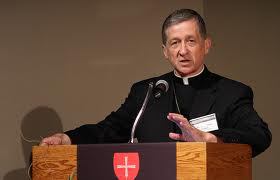
New Chicago Archbishop Blase Cupich

Chicago has new archbishop

Archbishop Blase Cupich

The Chicago Archdiocese officially has a new archbishop, Blase Cupich (soopitch) as of November 18. Cupich became the bishop of Spokane, WA in 2010. He has graduate training in Liturgy and has studied at the Pontifical Gregorian University in Rome. Originally from Omaha, Nebraska he was the third of nine children born to Blasé and Mary Cupich.

The Chicago Tribune calls him a charismatic clergyman, the grandson of Croatian immigrants, with a strong emphasis on social justice and a pastoral approach that involves listening and dialog. The same newspaper quotes him as saying, “The church can challenge society, but society also challenges the church.”

Cupich has become known for his more moderate approach for dealing with controversial issues such as abortion and gay marriage. As the bishop of Rapid City, South Dakota, Cupich was one of the bishops in 2004 who was not in favor of denying communion to candidates who supported abortion rights.  He said that we cannot cherry-pick particular issues. We have to be willing to talk about all issues. He emphasized that, while the Catholic position begins with protecting the unborn,  it doesn’t end there.

In 2011 Cupich headed the US Catholic Conference of Bishops Committee for Protection of Children and Young People. At that time there was a Grand Jury finding that the Archdiocese of Philadelphia had allowed 37 priests accused of abuse or inappropriate behavior to remain in active ministry. Cupich’s response to this failure to comply with the reforms listed in the Dallas Charter of 2002 was to express frustration and disappointment since so many people were working hard to implement the reforms. He later said that the Philadelphia situation was unusual.

As bishop of Spokane, Cupich lived in simple suite of rooms in the seminary. In Chicago he has announced that he will be living in the cathedral rectory and not in the opulent Gold Coast mansion with is the Archbishop’s official residence. Many have pointed out a similar tone and style in Archbishop Cupich and Pope Francis. Their simplicity, cordiality, and focus on engagement as opposed to separation or denunciation of those who disagree with the church are attributes they share.

Cupich gave a talk in June 2014 at the Catholic University of America in Washington, DC on the contradiction between Catholic social teaching and libertarianism in the United States. He supported the position of Pope Francis which focuses on encounter and accompaniment in society and the economy. In other words, Catholic social teaching focuses on our obligations to each other. This contrasts with the Libertarian view that the one’s interests as an individual come first.

Cupich is the first major appointment in the United States by Pope Francis. Additional appointments by the Pope will likely bring significant change to the church in the United States.


Read More

Posted by on Nov 15, 2014

Experiencing and Celebrating God-With-Us Through Gifting

Te Deum – Our Catholic Song of Thanksgiving

Te_Deum_window_by_Whall - cc-by-2.0 license


Te Deum Laudamus — We Praise You O God — is a traditional song of thanksgiving in the Church that is used on special occasions outside of the liturgy or in formal worship.

The videos below are of the ancient chant version dating from the fifth century, followed by Mozart’s version 12 centuries later.

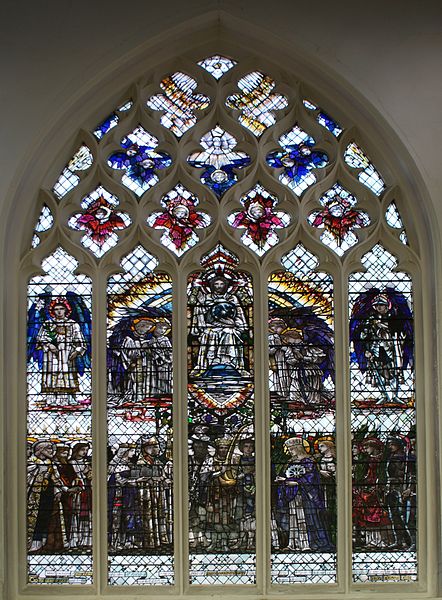
The Te Deum window by Christopher Whall, from the church of St Mary the Virgin in Ware, England is an example of a physical structure depicting the church community joining with the heavenly realms in praise and thanksgiving.

Text and translation of the Te Deum.

TE DEUM laudamus: te Dominum confitemur. O GOD, we praise Thee: we acknowledge Thee to be the Lord.
Te aeternum Patrem omnis terra veneratur. Everlasting Father, all the earth doth worship Thee.
Tibi omnes Angeli; tibi Caeli et universae Potestates; To Thee all the Angels, the Heavens and all the Powers,
Tibi Cherubim et Seraphim incessabili voce proclamant: all the Cherubim and Seraphim, unceasingly proclaim:
Sanctus, Sanctus, Sanctus, Dominus Deus Sabaoth. Holy, Holy, Holy, Lord God of Hosts!
Pleni sunt caeli et terra maiestatis gloriae tuae. Heaven and earth are full of the Majesty of Thy glory.
Te gloriosus Apostolorum chorus, The glorious choir of the Apostles,
Te Prophetarum laudabilis numerus, the wonderful company of Prophets,
Te Martyrum candidatus laudat exercitus. the white-robed army of Martyrs, praise Thee.
Te per orbem terrarum sancta confitetur Ecclesia, Holy Church throughout the world doth acknowledge Thee:
Patrem immensae maiestatis: the Father of infinite Majesty;
Venerandum tuum verum et unicum Filium; Thy adorable, true and only Son;
Sanctum quoque Paraclitum Spiritum. and the Holy Spirit, the Comforter.
Tu Rex gloriae, Christe. O Christ, Thou art the King of glory!
Tu Patris sempiternus es Filius. Thou art the everlasting Son of the Father.
Tu ad liberandum suscepturus hominem, non horruisti Virginis uterum. Thou, having taken it upon Thyself to deliver man, didst not disdain the Virgin’s womb.
Tu, devicto mortis aculeo, aperuisti credentibus regna caelorum. Thou overcame the sting of death and hast opened to believers the Kingdom of Heaven.
Tu ad dexteram Dei sedes, in gloria Patris. Thou sitest at the right hand of God, in the glory of the Father.
Iudex crederis esse venturus. We believe that Thou shalt come to be our Judge.
Te ergo quaesumus, tuis famulis subveni: quos pretioso sanguine redemisti. We beseech Thee, therefore, to help Thy servants whom Thou hast redeemed with Thy Precious Blood.
Aeterna fac cum sanctis tuis in gloria numerari. Make them to be numbered with Thy Saints in everlasting glory.
V. Salvum fac populum tuum, Domine, et benedic hereditati tuae. V. Save Thy people, O Lord, and bless Thine inheritance!
R. Et rege eos, et extolle illos usque in aeternum. R. Govern them, and raise them up forever.
V. Per singulos dies benedicimus te. V. Every day we thank Thee.
R. Et laudamus nomen tuum in saeculum, et in saeculum saeculi. R. And we praise Thy Name forever, yea, forever and ever.
V. Dignare, Domine, die isto sine peccato nos custodire. V. O Lord, deign to keep us from sin this day.
R. Miserere nostri, Domine, miserere nostri. R. Have mercy on us, O Lord, have mercy on us.
V. Fiat misericordia tua, Domine, super nos, quemadmodum speravimus in te. V. Let Thy mercy, O Lord, be upon us, for we have hoped in Thee.
R. In te, Domine, speravi: non confundar in aeternum. R. O Lord, in Thee I have hoped; let me never be put to shame.


Read More

Posted by on Nov 15, 2014

Experiencing and Celebrating God-With-Us Through Gifting

Showers for the Homeless at the Vatican

OLYMPUS DIGITAL CAMERA

A significant part of our faith journey is growing and being ministered to by the people we serve.  Bishop Konrad Krajewski is the Pope’s Almoner, which means that he is responsible for raising money for the poor and distributing it. When he took a homeless man to dinner at a Chinese restaurant for the man’s 50th birthday, Bishop Krajewski discovered an unmet need.The homeless get by with handouts of food but they have almost no bathing facilities.

Beginning with the public restrooms in St. Peter’s Square and parishes in Rome with large concentrations of the homeless, Pope Francis is paying for the construction and operation of showers. In addition to sanitation and promoting human dignity, Bishop Krajewski cites a deeper element of faith: “The Basilica exists in order to keep the Body of Christ, and we serve Jesus’ suffering body by serving the poor.”

Read more about this new apostolate.

Read More

Posted by on Nov 15, 2014

Experiencing and Celebrating God-With-Us Through Gifting

Discurso del Papa Francisco

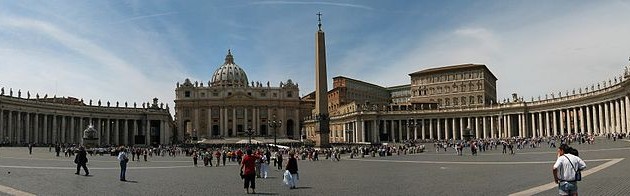
800px-Petersdom_von_Engelsburg_gesehen - public domain

La conclusión del Sínodo Extraordinario termina la primera etapa del proceso de los obispos a reflexionar sobre cuestiones y necesidades pastorales de familias y los del sacramento de matrimonio. En su discurso al concluir el Sínodo, el Papa Francisco les agradeció a los participantes y al Espíritu Santo por el  éxito del sínodo. Tambíen el Papa recomienda a todos que sigan madurando las reflexiones y las ideas propuestas en sus conferencias episcopales como  segunda etapa del proceso. Luego, regresarán los obispos de nuevo para la tercera etapa del proceso, El Sínodo Ordinario sobre la Familia que empezará in Octubre de 2015.

Para el texto entero del discurso, haga clic abajo.

Discurso del Papa Francisco al concluir Sínodo Extraordinario de los Obispos sobre la Familia

Read More

Posted by on Nov 9, 2014

Experiencing and Celebrating God-With-Us Through Gifting

Synod on the Family – The Unfolding Story

Deacon William Ditewig, PhD

Deacon William Ditewig, PhD, served as the Executive Director of the Secretariat for the Diaconate for the US Catholic Conference of Bishops from 2002 – 2007. He is a professor at Santa Clara University and directs the diaconate, faith formation, and pastoral planning programs for the Diocese of Monterey, California.

Deacon Ditewig wrote an excellent review of the synod process in his blog Deacons Today – Servants in a Servant Church. He points out that we have just seen the end of Act One, The Extraordinary Synod, and the curtain is going up on Act Two, The Global Reflection. The current document or “relatio” is now a draft that will be studied by each of the bishops’ conferences around the world. The United States Catholic Conference of Bishops has it on the agenda for their November 2014 meeting. Individual bishops will then work with it in their own ways in their individual dioceses. The methods will vary as they did when Rome asked for contributions of ideas and comments on the pastoral needs of families in preparation for the just concluded Extraordinary Synod. Some bishops worked only with their clergy and others held meetings on the issues throughout their dioceses.

Act Three will begin next October with opening of the Ordinary Synod on the Family. The Pope will then take those deliberations and write his own apostolic exhortation. (Pope Francis has already issued his first apostolic exhortation Evangelii Gaudium – The Joy of the Gospel. )

Deacon Ditewig makes it clear that the current document under consideration is a draft and does not constitute Church teaching. He also points out that there has been a mistranslation into English of the Pope’s remarks. In the Italian original version, the Pope speaks of welcoming homosexuals (accogliere) but it was translated as “to provide for”. In his address, the Pope again says that we should welcome homosexuals, but then he corrects himself and says that welcoming them is not enough. The Pope says we have to go and find them, to seek them out.

Read More

Posted by on Oct 9, 2014

Experiencing and Celebrating God-With-Us Through Gifting

Synods and Councils — What is Going On?

Mark Shea

Mark Shea


“Mark, have you been following the news coming out of the Synod? I’m sick with worry! Some of the ideas they are talking about aren’t at all what I learned from reliable Catholic sources!”

Yes. That’s true. And that’s *normal*. A conciliar event in the life of the Church is when, in the memorable description of Fr. Robert Barron, the Church “holds itself in suspense” as it makes up its mind. We do this too in moment of discovery and decision-making (if we are smart). We find that we face a problem, one which does not seem to yield to ways we have hitherto thought or methods we have hitherto used for navigating life. Click here for more…

Read More

Posted by on Oct 6, 2014

Experiencing and Celebrating God-With-Us Through Gifting

Music Evokes the Sacred – The Piano Guys

The Flame of Music

The Flame of Music


The Piano Guys have produced many inspiring productions. Generally the Piano Guys will do a medley of two compositions. In this one they mix the theme from the movie The Mission with How Great Thou Art.  The Mission was a 1986 film which told the story of the Jesuit missions in Paraguay. The Iguassu Falls which form the backdrop of this video are also the general location of the Jesuit missions. The combination of the native Guarani music and dance with the European musical instruments and forms created a wonderful music that is still heard today.

The Guarani fought to maintain their freedom when Europeans sought to enslave them. In the war that followed, the missions were destroyed along with the Jesuits who stood with their Catholic parishioners. It is a tale of light and shadow, of grace and sin, and a struggle that still goes on in South America today as Pope Francis reminds us. Yet the music does not die but reflects the light of the Burning Bush.

Read More

Posted by on Oct 5, 2014

Extraordinary Synod on the Family Begins

Extraordinary Synod on the Family Begins


Shortly after his election, Pope Francis called for an Extraordinary Synod of the bishops of the Catholic church to meet in Rome. The meetings of this synod began today, October 5, and will continue for 2 weeks (October 5 – 19, 2014).

A synod is a gathering of leaders of a church community in which questions of doctrine or administration are addressed. In the Roman Catholic Church, a synod is a meeting of bishops. Synods have been regularly scheduled meetings since Vatican II, but extraordinary synods may be called by the Pope to address specific issues. This is only the third Extraordinary Synod since the Council ended.

The Synod which has just begun has as its focus the family, specifically, “The Pastoral Challenges of the Family in the Context of Evangelization.” Pope Francis not only called the bishops to Rome, he invited the people of the church to gather as well and Saturday evening, before the Synod opened, he led the people and the assembled bishops in prayer to the Holy Spirit. “May the Wind of Pentecost blow upon the Synod’s work, on the Church, and on all of humanity,” Francis prayed. “Undo the knots which prevent people from encountering one another, heal the wounds that bleed, rekindle hope.”

In his homily for the opening Mass of the Synod, Pope Francis preached on the readings for the 27th Sunday in Ordinary Time, Cycle A, the vineyard of the Lord. He reminded those gathered, “Synod Assemblies are not meant to discuss beautiful and clever ideas, or to see who is more intelligent. We are all sinners and can also be tempted to ‘take over’ the vineyard, because of that greed which is always present in us human beings. God’s dream always clashes with the hypocrisy of some of his servants. We can ‘thwart’ God’s dream if we fail to let ourselves be guided by the Holy Spirit.”

In the synod, the bishops, having consulted with the people of their dioceses around the world, will wrestle with pastoral issues faced by many families, including questions of divorce and remarriage, reform of the annulment process, contraception, celibacy, and other topics. This first meeting is a time for discussion and prayer. No decisions on policy will be made until a second meeting next year.

As we enter this time of study and consideration by our bishops, we join with Pope Francis in his prayer for the Synod and in praying the Rosary.


Prayer to the Holy Family for the Synod
composed by Pope Francis

Jesus, Mary and Joseph,
In you we contemplate
The splendor of true love,
To you we turn in trust.

 Holy Family of Nazareth,
Grant that our families too
May be places of communion and prayer,
Authentic schools of the Gospel
And small domestic Churches.

 Holy Family of Nazareth,
May families never again
Experience violence, rejection and division:
May all who have been hurt or scandalized
Find ready comfort and healing.

Holy Family of Nazareth,
May the approaching Synod of Bishops
Make us once more mindful
Of the sacredness and inviolability of the family,
And its beauty in God’s plan.

 Jesus, Mary and Joseph,
Graciously hear our prayer. Amen.

Read More

Posted by on Oct 2, 2014

Holiness Throughout the Day – The Liturgy of the Hours

Holiness Throughout the Day – The Liturgy of the Hours

Many people of a “certain age” remember when priests would sometimes wander around the church yard holding a black leather bound book. It was called the Divine Office and was re-christened the Liturgy of the Hours after Vatican II.

The Liturgy of the Hours is the official prayer of the Church. Many religious orders such as the Dominicans, Franciscans, and  Benedictines pray the liturgy of the hours in a formal church setting with chant. St Dominic’s Church in San Francisco has a wonderful series on the Liturgy of the Hours in their online newsletter. The Liturgy of the Hours can be shared at home by couples and the entire family in ways that are suitable for children, making it a happy experience. In the home church, example is everything. Many people pray two of the hours – morning (lauds or praise) and evening prayer (vespers). Night prayer also know as compline makes a beautiful ending of the day.

For the digital generation, the Liturgy of the Hours can be found on sites such as www.bookofhours.org, www.universalis.com, and www.ibreviary.org. You can open the Liturgy of the Hours on your mobile phone or tablet and click on the links as opposed to the marking of sections with colored ribbons in the printed version. If you are not praying with a monastic community, some people recommend the digital version as a way to get started. For a special treat listen to the daily podcasts by the Sisters of  Perpetual Adoration of the Liturgy of the Hours.

Read More

Posted by on Sep 5, 2014

A Church for the Poor – The Vision of Pope Francis

A Church for the Poor – The Vision of Pope Francis


What of kind of church does Pope Francis envision? Jorge Bergoglio, in his initial public statements and even in the choice of his Papal name, Francis, has made it clear that the church needs to be a servant of the poor and the herald of the gospel. These terms come from Cardinal Avery Dulles’ Models of the Church and are based on the documents of the Second Vatican Council (1961-1965). While most of us tend to see the church as an institution and perhaps as a sacrament, Pope Francis is highlighting the notion of the church as a community, a school of disciples, which is the servant of the poor in its role as herald of the gospel.

This emphasis began before Vatican II but it became especially pronounced after the council in a movement called liberation theology. For St. John Paul II, this approach was more reminiscent of Marxism than the gospel, so he took certain steps to curtail it. Pope Benedict XVI, his successor, took a more measured view and focused on aspects of this theology that started from a pastoral and community viewpoint as opposed to a political one. At an important conference to promote this view in Aparecida, Brazil in 2007, Pope Benedict XVI chose Jorge Bergoglio, Archbishop of Buenos Aires to formulate this renewed expression of a church for the poor.

In a recent opinion column in the New York Times, Paul Vallely, Director of The Tablet, an international Catholic weekly publication based in London, outlines the history of Liberation theology and the Pope’s restoration and enhancement of it. The pope welcomed Fr. Gustavo Gutierrez to the Vatican earlier this year. Fr. Gutierrez began the movement with his 1971 book A Theology of Liberation. Pope Francis has also removed the block placed by St. John Paul II to the canonization process of Archbishop Oscar Romero of El Salvador who because of his opposition to political repression was shot while saying Mass. An even more telling sign is the Pope’s treatment of Nicaragua’s former foreign minister, Fr. Miguel D’Escoto Brockman. Fr. D’Escoto had been suspended from the priesthood by St. John Paul II and Pope Francis has lifted the suspension.

A pope who lives in a guest house and stands in the cafeteria line with his own tray has taken hold of the attention and imagination of the Catholic and non-Catholic world alike by being a voice for the voiceless. Pope Francis is leading us to be a different kind of church, one that is closer to the gospel, less secure, less majestic, ready to serve the suffering Christ in the destitute of the world.

Read More

Posted by on Aug 5, 2014

Stepping Out, Stepping Overboard

Stepping Out, Stepping Overboard


Peter sees Jesus coming toward him walking on the water in the wind and waves.
“Lord if it really is you – Call me”
In our troubled stormy lives we think we see Jesus
“If it is you – Call me”

When our job has crashed, when we have problems with our children, with our marriages
When we are dealing with illness or the death of a loved one
Our world is rocked – our boat is too small in this wind and waves
Jesus appears or does He?

We pick up the phone to ask for help — we start, we get overwhelmed
We are going to talk with our spouse or our children — we start, we get overwhelmed
We are going to tell the therapist about that terrible thing that happened to us — we start, we get overwhelmed
We start to deal with our diabetes, our obesity, our negativity — we start, we get overwhelmed

We are overwhelmed by the wind and waves of our own pain, our own fear, by the truth

Why do we doubt?
Jesus can walk on the wind and the waves
He heals the sick, raises the dead, drives out demons
Why do I think that He cannot help me? Cannot save me?

When the wind of my fear, the waves of my own pain, and truth are too much
He will reach out to save me,
Bring me back to the boat and
Calm the wind and the waves.

All we have to do is to step out, to step overboard.

A reflection on Matthew 14: 22-34

Read More