Pages Menu
RssFacebook
Categories Menu

Posted by on Jun 13, 2018

Asking for Pardon / Getting Rid of Shame – Examen: Fourth Point

Asking for Pardon / Getting Rid of Shame – Examen: Fourth Point

According to Brené Brown

Shame is a focus on self, guilt is a focus on behavior. Shame is, “I am bad.” Guilt is, “I did something bad.” How many of you, if you did something that was hurtful to me, would be willing to say, “I’m sorry. I made a mistake?” How many of you would be willing to say that? Guilt: I’m sorry. I made a mistake. Shame: I’m sorry. I am a mistake.

One of the key challenges in even looking at our behavior and our relationships is not guilt, but shame. Our thoughts and feelings can run off the rails and we think, “I did something bad. That means that I am bad.” Guilt becomes confused with shame. That’s why shame is such a big part of addiction, depression, anxiety, eating disorders, and bullying. According to Brene Brown, shame for women is, “Do it all. Do it perfectly and never let them see you sweat.” For men, shame is, “Do not be perceived of as weak.”

Shaming is something we see often with pets. When a dog misbehaves we are tempted to say, “Bad dog!” We don’t say,” You chewed my slipper. You did something wrong, but you are a good dog.”  However, that can be very confusing and threatening for the dog. According to animal behavior specialists, it is much clearer if we say, “No chew!” when the dog is chewing a slipper. “Good dog” should be an ongoing message that is conveyed by the way we handle the dog.

Invalidating or shaming others is a fundamentally evil act, since it contravenes God’s view of us and all creation as fundamentally good. For someone to take on the view that they are bad is to identify with evil, to identify with non-being. Some people can reject the notion that they are bad but respond by defining the people who are shaming them as fundamentally bad. Through this fundamental rejection of a person, we make them something completely apart from us. They are the other. This unfortunate behavior in ourselves and other primates makes it possible for us to destroy members of our own species and even our own families. David Eagleman explains in an episode of The Brain how genocide occurs when we turn off our empathy.

Asking for God’s pardon is an acknowledgement that we have not lived up to what we actually are. Yes, we have done something wrong, and we feel bad about what we have done, but we know that we are loved and good because God sees all that he has made and says that it is good.

The important thing in this step is not to get overwhelmed. Pick one area that you would like to work on in consultation with your spiritual director and reflect on it over time – or not.

Read More

Posted by on Jun 13, 2018

Asking for Clarity about my Sins and Feelings – Examen: Third Point

Asking for Clarity about my Sins and Feelings – Examen: Third Point

Pia Mellody, in her post on “Honesty and Accountability in Relationships,” underscores the core dynamic of human relationships that is also the core dynamic for our relationship with God.

If I am honest and accountable, I will keep my word and commitments, accepting responsibility for my behavior without trying to justify it based on another’s behavior. It is, of course, appropriate to confront the other’s behavior and to own our feelings about that behavior. It is very different to say, “When I witnessed this behavior, I had this feeling,” than to say, “Your behavior caused me to feel this or caused me to behave in this manner.” Inappropriate behavior is inappropriate. If my boundary system and self-discipline are so poor that I rage, demean, call names, etc., it is my responsibility to protect you from me. My emotional reaction to you or to a situation does not lessen my responsibility to be appropriate. Blaming and whining are close relatives. It is manipulation if I try to affect the outcome by blaming others or by trying to evoke pity so that I am not held accountable and consequences disappear.

Mellody provides a good check list for personal integrity and healthy relationships. Very often it is easy to look at various “failings.” I was rude. I was impatient. I had too many doughnuts. Yet, what is it that gets in the way of my being the person God made me to be? What keeps me from being whole, happy, and healthy?

Most of the time we focus on our individual actions or failures to act. However, the question is really about the nature of my relationship with myself, others, and God. A few of us can behave “perfectly” in terms of our manners and speech. But what is in our hearts?

Sometimes we focus on the notion of sacrificing our self for others. After all, didn’t Jesus do that? Aren’t we supposed to do that?  As the Divine Word Made Flesh, Jesus has his being in the healthiest of all relationships – pure relation. Jesus gives of himself by having compassion and empathy and serving others because of their own inherent dignity. He set limits and boundaries. Jesus took time for Himself. Jesus did not try to impress or control others. He was at peace within Himself and had close friends.

If we look carefully, we find that our unhappiness has to do with our relationships. Some types of dysfunctional relationships are called codependence. Mellody describes five symptoms of codepedence. They are signs of these unhealthy ways of relating to other people that keep us from realizing God’s Dream for Us.  These types of dysfunction can be very minor in ourselves and our relationships. However, most of our problems in life are all about relationship.


Wait a minute! Shouldn’t I be examining my conscience keeping the Ten Commandments and the Laws of the Church? That’s the big difference between going through a checklist of failings and offenses and understanding how I hang onto sin and misery that are the causes of these “listed” sins. I can focus on bad acts or good things left undone. The only problem with that approach is that I am not working on a healthy relationship with God and people in my life.

If we don’t pay attention to the health of our relationship with God and with others, we can become bitter, resentful, holier-than-thou, or worse. We can become self-satisfied and cut ourselves off from love and happiness. This is what Hell is. In the fire of our pain and hurt which we keep receiving and inflicting, all kinds of problems and addictions are rooted. Tragically, we often do this to our children and perpetuate the cycle. How holy, and righteous am I if I observe all the details of the religious law outwardly but all of my relationships are suffering, and I am cold and alone in my self-satisfaction? I am rejecting Christ.

St. Ignatius talks about temptation in the “guise of good.” In other words, people who are living fairly good lives can be tempted to do things that look good. St. Ignatius always advised moderation and encouraged people to take a closer look at their motivations and the effect of their outcomes. It may look like we are doing something good for someone, but are we really? Dysfunctional behavior can be motivated by the best of conscious intentions, but something else can be at work.

In an article in Psychology Today, Dr. Shawn M. Burn lists six signs of dysfunctional or codependent behavior:

  1. Have an excessive and unhealthy tendency to rescue and take responsibility for other people.
  2. Derive a sense of purpose and boost your self-esteem through extreme self-sacrifice to satisfy the needs of others.
  3. Choose to enter and stay in lengthy high-cost caregiving and rescuing relationships, despite the costs to you or others.
  4. Regularly try to engineer the change of troubled, addicted, or under-functioning people whose problems are far bigger than your abilities to fix them.
  5. Seem to attract low-functioning people looking for someone to take care of them so they can avoid adult responsibility or consequences or attract people in perpetual crisis unwilling to change their lives.
  6. Have a pattern of engaging in well-intentioned but ultimately unproductive, unhealthy helping behaviors, such as enabling. (This means helping people by making it easier or possible for them to engage in harmful behaviors such as helping an alcoholic get liquor.)
Read More

Posted by on Jun 13, 2018

Be Grateful – Examen, Second Point

Be Grateful – Examen, Second Point

Being grateful and spreading the message is the 12th step of recovery. If we look at recovery from addiction in its many forms – drugs, alcohol, food, sex, or work – it seems like starting with gratitude is starting at the end and not the beginning. To the extent that the 12 steps are an ongoing process jumping on the recovery wheel at Step 12 not only represents a transformation but also occasions a deeper one. Gratitude connects us with God directly because we can see beyond the world of “want and need” to the riches around us and in our souls. You can’t be grateful without feeling good to some degree about yourself and your sobriety.

Gratitude is the acceptance and return of love’s expression as complete self-giving. Hip Hop is often a style of dancing that can be foreign and off-putting for older generations and yet it is the common world language of youth culture today. “Clean Love” speaks to the dynamic of Love / Gratitude and Gratitude / Love.

It is easy in some ways, to think of the Examen as something for people who already have things figured out. We can think that the Examen is for people without any problems. They always make good choices and it is merely a question of discerning a better choice. Once we have really entered the presence of God, there can only be gratitude. If there isn’t, there is something between us and God. Clearly, that is why the regular sequence of the 12 steps is necessary. For St. Ignatius Loyola, the key problem or sin is ingratitude toward God. “Godspell” the 70’s musical reflects a take on Love / Gratitude and Gratitude / Love that reflects a divine naivete and fearless authenticity.

Since gratitude is a positive socio-emotional-physical experience, it can heal those deep wounds and injuries from early in our lives that pain us into various methods of non-feeling expressed in addiction. It is important to be grateful for ourselves and our talents. Having appropriate self-esteem is to acknowledge that God gave us certain gifts and talents. This is acknowledging the truth and it can help us to affirm other people in their gifts and talents.

Read More

Posted by on Jun 11, 2018

Finding God’s Dream for Us

Finding God’s Dream for Us

The expanded treatment of St. Ignatius Loyola’s Examen that follows is meant to show the richness of this format of prayer for incorporating spiritual / psychological learning and insights for closer union with God through a genuine repentance of our sins and freedom from shame, so that we can “praise, reverence, and serve God Our Lord.” For St. Ignatius, that is what life is all about: life to the full for the Glory of God.

Given our linear style of thinking in the West, it can be easy to look at the Examen of St. Ignatius as a set of check boxes. However, it is an ongoing dynamic spiral that moves us closer to perfect freedom and love or moves us away into the realm of shame and darkness.

God has a dream for each of us. As we journey through each day of our lives, we move towards or away from that dream. We move freely into  God’s life and dream for us or we move away from God

How can we move freely and fully into God’s life every day? How do we know if we are on track or headed in the right direction? Once again Jesus has shown us the way and even explicitly told us to pray and to listen attentively with our heart, soul, and mind. Becoming aware of God’s activity in our lives, intuitively and consciously, is the act of theological reflection. According to Donald D. St. Louis, the Examen of St. Ignatius Loyola can be a method for theological reflection on one’s ministry. It can also be a method of reflection on one’s daily life that can help us focus on the Way of Jesus, the path of our calling that is God’s Dream for Us.

St. Ignatius shows the way in the five points of the Examen.

The Examen can take on many forms while following this general pattern.  Theologian Susan Mahan presents her own adaptation in Seeking God – Decision Making and the Ignatian Examen.

“Taking time each day to practice centering in God for the direction of our day and our lives is necessary. There are many ways to do this: journaling, walking a labyrinth, and having a spiritual counseling session are ways to think and pray through where I am in my life, where I feel drawn, and what God sees in me that I might benefit from.  Another way to have an experience of being counseled by God is the Ignatian Examen.

Very briefly, sit quietly and think of or imagine things you are truly grateful for. They can be big or small: Clean sheets, good food, your dog, ways you have been loved, accomplishments, a family member or friend, your house or job etc.  Tell God what you are grateful for. See, if God has given you things you are grateful for: a rescue in life, money you needed, safety, a trip you took.  Then think of the things in yourself or your life which you have chosen that have harmed you, undermined your wellbeing, or side-tracked you.  These can also be big or small: being resentful, feeling superior, or not being willing to do something new that you need to do. Ask God to help you with these fears or hurts that have held you away from Him. Lastly, ask God how you can spend the next part of your day or life doing what is best.  You will get answers. You can surrender to what is best and see how much more peace-filled you are. I do this every day, sometimes more than once. I act on what I hear, and I am much more at peace”

The core of the Examen is discernment, which is all about growing in awareness and freedom. Susan Mahan provides a succinct over-view into the spiritual psychology of discernment.

The desire to be closer to God requires letting God tell me what would please him.  That sounds very old fashioned and odd.  But, there’s no way around it.  Knowing God is knowing what is best — best for me and best for the world.  I cannot eat sugar and refined carbohydrates and feel good.  I just can’t.  I love that stuff!!  Knowing God and growing in holiness means that I would like to know which actions in my life would help me to be happy.  Discernment is the skill with which I can learn to evaluate what is the best choice at any juncture in my road every day, all day long.  There are certain feelings and thoughts that characterize good decisions and others which characterize poor decisions.

The End is the Beginning

Certainly, St. Ignatius never intended for the Examen to be a long exercise – perhaps 10 or 15 minutes. It was part of his view of being a contemplative in action. We see and experience God all around us every day in everything. The Examen, in my view, was meant to reinforce a fundamental behavior and mindset that action for the Kingdom of Heaven is contemplation. Clearly, prayer and contemplation are prominent in the Spiritual Exercises.

As we move through our daily lives, the Examen offers a quick opportunity to check our direction through the day’s activities. It should not take a long time. It is simply a tool, like a road map, to help us stay on the road, on the Way of Jesus to God’s dream for us.

Read More

Posted by on Jun 11, 2018

Psychology, Spirituality, and the Glory of God

Psychology, Spirituality, and the Glory of God

Spirituality

Spirituality is often seen as something separated from the everyday. It is something for the life beyond according to many. Holiness is sometimes seen as something not related to the physical. It is above the emotions and promises a respite from the messiness of daily life. From the earliest years of Christianity, we have a very different view.

We enter the mystery of God by following the grace and example of Jesus. In one of the earliest songs we have from the Christian community to whom St. Paul wrote in his letter to the Philippians, the way of Jesus is complete self-giving in freedom.

Although He existed in the form of God, he did not regard equality with God a thing to be grasped, but emptied Himself, taking the form of a bond-servant, and being made in the likeness of men. Being found in appearance as a man, He humbled Himself by becoming obedient to the point of death, even death on a cross. (Phil 2:6-8)

St Irenaeus writes around the year 185 that the human person fully alive is the glory of God. As we grow and develop in our new life in Christ, we become like unto God through the mystery of God’s death and resurrection. We become “divine-ized” or more properly “divinized.” Like Jesus, we become truly human and truly divine in the gift of God’s Holy Spirit. The divinity of Christ raises humanity to its highest manifestation in the Word Made Flesh.

Many times, there can be an apparent tension between “human fulfillment” and complete self-giving in freedom. There can be the mistaken notion that we are supposed to be miserable in this world and happy in the next. The more we “deny” ourselves, the holier we become. St. Irenaeus and the early followers of Jesus saw it differently. Our complete human integration in happiness is God’s dream for us. This doesn’t mean that life is without striving, suffering, and confusion. It does mean that being true to the person God intended us to be from all eternity is our purpose. Being “real” or authentic, being the person that we really are at our core, can cause serious problems if we deny it. On the other hand, being true to our calling, to be who we are, can cause serious problems as it did for Jesus.

There are also the negative forces of people not following God’s love and inflicting their pain and hurt on newborns and small children. Despite their best intentions, their hurts and wounds, whether they are parents, grandparents, or caregivers, “infect” the most vulnerable little ones and even strong adults. This is what we call original sin. It helps us to explain or come to terms with a world that is messed up, relationships that are toxic, and why things seem to never work out.

Our baptism is God’s way of pulling us out of this mess through His death and resurrection and placing us squarely in the triune God, that is, the relation of love itself. The Three Persons welcome us to their eternal dance of the Speaker / Creator, the Word / Redeemer, and the Spirit of Infinite, Unconditional Love – the Father, Son, and Holy Spirit. We are blessed and anointed in Confirmation in the Trinity and enter into that ever-present joy of Thanksgiving called the Eucharist when we attend Mass and share in the banquet that celebrates and renews all creation.

Psychology

So, what has psychology got to do with it? All we need to do is to believe, obey the commandments, and say our prayers. Right? Shrinks are for people who are sick and messed up. I don’t need a padded cell! Then again, maybe each of us has built our own custom padded cell to keep away the hurt and pain we suffer.

St Augustine in his study

Often we think of psychology as something secular. Actually, the study of the soul, psychology is a key part of western philosophy from Greek times to the present. St. Augustine (354 – 430) is considered to be one of the great psychologists of the west. His autobiography, The Confessions shows a depth of insight into the conflicts within his own personality. St Ignatius Loyola (1491-1556) was also known for his spiritual psychology as seen in his Spiritual Exercises. Freud and other 20th century secular psychologists talked about the way we use religion, saying that it is an illusion. Carl Jung and Erick Erickson took psychology in a more spiritual direction. Catholic philosophers and theologians in the 20th century, such as Bernard Lonergan and Karl Rahner, used many of these insights to give us a deeper insight into the study of the soul. There is an entire area of study in Catholic and secular philosophy that focuses on how we perceive things.

Common Ground

Contemporary psychology – both secular and spiritual – provides a framework for pastoral counseling and spiritual direction. These powerful tools can bring physical and mental wellness through profound spiritual insights and healing: “the glory of God is man fully alive.”

Read More

Posted by on May 14, 2018

Psychology, Spirituality, and the Glory of God

Mystagogy: A Journey with the Holy Spirit into Deeper Faith

Mystagogy is the fourth and last stage in RCIA (the Rite of Christian Initiation for Adults). The term comes from the Greek for “secret.”  The reason this term is appropriate for Christianity is that the tradition understands much of its focus as being on the supernatural. By definition the supernatural is often not known nor experienced through ordinary reasoning or empirical interaction. During the time of Mystagogy, RCIA neophytes are called to deepen their experience of the Sacraments (or Mysteries) received at Easter and to understand them. The sacraments are a primary encounter of Christians with God and thus events with an ineffable dimension.

This time after the Easter Sacraments therefore includes opportunities for experience, reflection and learning.  The most important goal is that neophytes grow in closeness to God. The second goal is that they know the joy of sharing their faith in the community of the Church. Neophytes are then encouraged to reach out eventually to those not part of the church community.

For new Catholics, the Eucharist, a mystery itself, is the model and the means of why and how one can live the life of a new creation. In the Eucharist, Jesus gives himself to believers in a humble and personal way and models the self-giving and purest kind of love that happened at the Crucifixion. The Eucharist transforms and empowers recipients to live a life that is full of the kind of love we see in Jesus. As they are fed, they can go out and feed others.

This new life is not something one can read about and just do. It is not a skill. It is a relationship. As a living relationship with God, it takes time. This relationship grows through the reception of the sacraments, prayer, and doing service. The period of Mystagogy is the beginning of what St. Paul calls “putting on Christ.”  (Romans 13:14)

After the intense months of RCIA, it can be a shock for new Catholics suddenly not to be a part of a group attending the liturgy and practicing prayer, learning, and reflection. Many people involved in RCIA teams, as well as new Catholics, feel that Mystagogy, which usually lasts a month to six weeks, is not nearly long enough. Some parishes have RCIA programs that run one and one half years to two years. Other parishes encourage RCIA graduates to join Bible studies, prayer groups, adult religious education, parish retreats, and ministries within the parish community.

In the end, Mystagogy and the ensuing Christian life are a matter of trust. God lives in our depths and graces us in unseen ways. We often do not know exactly where we are going in life, but we know that Jesus is with us. During Mystagogy, the New Christian is led by the Holy Spirit deeper into God and the life of faith, both a matter of intellectual knowledge and unfathomable mystery. It is the beginning of a great adventure.

Read More

Posted by on May 9, 2018

Psychology, Spirituality, and the Glory of God

“It is Time for the Lord to Act”

“It is time for the Lord to act.” These words proclaimed by the deacon to the priest in the Eastern Catholic and Orthodox churches just before the beginning of the Divine Liturgy (known as the Mass in the Roman Catholic church) tell us something important about God’s participation in human life. The word for time used in this statement is “kairos,” meaning the perfect or decisive moment in which conditions are right for something very important to take place — a time when God acts. The beginning of a Eucharistic celebration (Mass or Divine Liturgy) is one such time.

In a very real way, the celebration of the Rite of Initiation of Christian Adults (RCIA), culminating at Easter Vigil with Baptism, Confirmation, and first reception of Communion, is a series of kairos events in the life of believers.

In Roman Catholic tradition, we have baptized infants and children for centuries. Most members of the church have no memory of their baptism. First Communion, around the age of reason, is more commonly remembered. Confirmation, when received in adolescence, is remembered more clearly. Nevertheless, the three Sacraments of Initiation are designed to be received at the same time. In fact, since Vatican II, the Church has asked dioceses around the world to re-unite them, including with the initiation of children. This is the practice in the Eastern churches.

But children are not the only source of new Christians. Adults have always come to the Christian community and asked to be admitted to membership. The process of instructing and welcoming new members has taken many forms over the 2,000 year history of our community. Since Vatican II, returning to the tradition of the early Church, the RCIA has been the way we have welcomed new believers.

This year at Easter Vigil, as we again lit the new fire and blessed the waters of baptism, we welcomed our new sisters and brothers by plunging them into the newly blessed baptismal waters or pouring the water over their heads. We have anointed them with chrism, the oil blessed by the bishop during Holy Week.  Chrism is used to anoint the hands of priests, the heads of bishops, the altar and walls of a church, and the newly baptized. In Confirmation, it is also used to anoint and strengthen the new Christian, bringing the wisdom and strength from the Holy Spirit to witness to the presence and activity of God in all creation. Finally, we complete their initiation by sharing the very Body and Blood of our Lord with them as food for the day-to-day journey of faith.

Such a lot happens in a very short time! It’s far too much to fully comprehend in the moment. It will take a lifetime to ponder and experience the growth and flowering of the seed brought to birth at Easter Vigil – the new life of faith and community of travelers on the way in God’s kingdom.

The newly baptized ideally are continuing their journey in a time of sharing and learning known as mystagogy – a time of awakening in the Spirit and entering ever more deeply into the mystery. Common reactions/experiences of those who have newly received these sacraments include a hunger for scripture, a desire to learn more, a longing for community and sharing, an urge to step away to pray and ponder what they have experienced, excitement, wonder, and joy. Eventually, they may also experience a quieting of the initial excitement, a sense of God not being so close anymore, disillusionment upon discovering the “warts” or “clay feet” of other members of the community. All of this is normal. It’s all part of the journey of faith.

Jesus’ disciples and friends did not fully understand what happened in that Kairos moment of Easter and resurrection. Two thousand years later, we still cannot explain it. God acted in a decisive way, defeating the power of death and separation between God-self and humanity by becoming one of us and experiencing human life fully. Now it is our turn to enter, as members of the Christian community, into the life of the Trinity. It is a journey of a lifetime, lived step by step by the baptized.

Welcome, Sisters and Brothers to this amazing journey. Our thoughts and prayers are with you. We look forward to learning from you of the wonders our God is doing in your life and we promise to share with you the wonders we have seen. The Kairos moment has come into our lives. Christ is Risen! He is truly Risen!

Read More

Posted by on Mar 23, 2017

The Catechumen’s Song

The Catechumen’s Song

The Catechumen’s Song

A still gentle voice
rills upon the waves
Laughs in the gulls and
sparkles in the sand

A longing deep and still
beyond believing
Within hope
a throb of love


Late have I loved thee
beauty ever ancient ever new
Let me die in your arms
and rise up anew

Where are those to take
me to you?
How a path upon the stars
your love does trace

Where is this beauty
in the path?
What turn forsakes
all else?

Sweeping low the
the salt breeze calls
My name, my name
across the dunes

Balanced against all else
the stones of life
For a season in a day
guard the path of ocean sway

Across the waves
our hulls delight
Spinnaker buckle and roil
a tack and yaw

Roll and deep
a crash and rise
At harbor’s sunset
across the bar

Day’s lagoon at tide resets
sways the dock
A fire in the mountain
challenges purple

The path a million lighted wings
sweet sage upon the mountain breath
Dawn’s sparkle bubbles
the font of agate

Upon the forest fence
descends the Dove
Beneath the flood
a rush of three

Strong arms my breath
does save anew a light
From the tomb a laugh
as butterfly does dash

Hold the colors of that flame
anointing soothes
A priest a prophet does proclaim
the Spirit of Love comes upon me

A table a gentle fare
so dearly won
The bread the wine
in faith eyes so much more

Risen, one Body
one host divine
Comes at table
in our hearts to recline

Where tells the mystery sweet
upon my ears to dance
Where finds my mind
my heart

Away from lover’s trance
to delight
In my Love’s laughter
steal away, steal away

No more I dwell alone
my loneliness meets its end
Among the lilies
I lay down my head

At one in peace
one Heart
In the one Lord
one Heart

A chance upon the breeze
swings on gossamer wings
A sweet entrance with
nectar a rainbow’s trance

Who calls in sunset’s
green flood
Whose footsteps
bid your path

Come hear the music
and the dance
Come play, steal away
and dance

Leave all else
lose yourself
Upon the even tide
on the shore He sets His Fire

Read More

Posted by on Oct 3, 2016

Finding God in All the Wrong People – A Look at the Emerging Church

Finding God in All the Wrong People – A Look at the Emerging Church

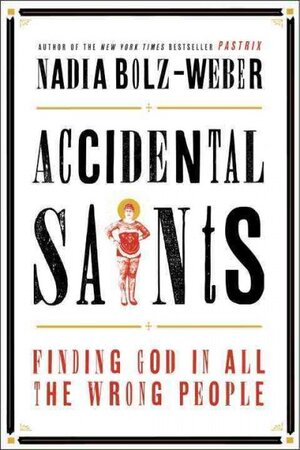
Accidental Saints


Seeing the Underside and Seeing God: Nadia Bolz-Weber with Krista Tippett at the Wild Goose Festival from On Being on Vimeo.

Nadia Bolz-Weber is a Lutheran Minister who is described as “not your mother’s minister.” This is a marvelous interview with the woman who is the pastor or “pastorix” as she jokes of the House of  Sinners and Saints in Denver. Raised in the Church of Christ with no drinking, dancing, and no instruments in church Nadia has gone through many years of addiction and stand up comedy. In her Denver church,  she has incorporated the four part a capella singing of her childhood and focuses her preaches on the ongoing death and resurrection of Christians.

Before meeting her husband she had not found a Christianity with a care for the poor and a liturgy. Her getting clean and sober she describes as a “completely rude thing for God to do.” In Lutheranism she discovered a long articulation of belief that she “did not have to get rid of half her brain to accept.” She found an emphasis on God She doesn’t feel responsible for what her congregants believe but she feel responsible for what they hear and experience in the preaching and in the liturgy. they are anti excellence but pro participation. She calls her liturgy “high church and tent revival.”

For a fresh take on traditional Christianity in contemporary language enjoy this interview.


Read More

Posted by on Sep 8, 2016

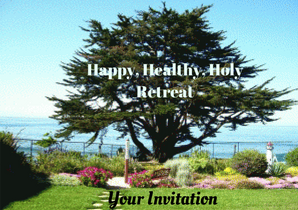
Happy, Healthy, Holy – Move, Pray, Enjoy!

Happy, Healthy, Holy – Move, Pray, Enjoy!

Your Day of Renewal at Villa Maria del Mar

Saturday – October 15, 2016  9:00 AM to 3:00 PM

On the beach in Santa Cruz – 21918 E Cliff Dr., Santa Cruz, CA

Ocean Peace

Peace Garden

We fulfill our human potential – God’s dream for us – by being healthy, happy, and holy

Movement, reflection, sharing, music, drawing, journaling, photos, Taize prayer

$85 fee includes morning snack, lunch, and all materials. Save $30 bring a friend for $140. Special bonus – ocean views. Scholarships available.

Information, questions: RandyPozos@gmail.com, call / text 831-588-3423  Online registration: https://happyholyhealthy.eventbrite.com

Your Day of Renewal

Part One

  • Opening Exercise: Chair yoga: Breathing, Coming into the Presence, Music, Reading, Movement
  • Visioning Exercise – What is God’s Dream for Me?
  • Reflection and Sharing
  • Journal Exercise – How do I respond to God’s dream for me?
  • Writing, drawing, sculpting

Part Two

  • Nutrition and Exercise: What part of my life gives energy, wholeness, and peace? Are foods merely physical? How does spiritual nourishment feed my physical body and change it.
  • Mind, Body, Spirit Exercise: Breathing, Music, Movement, Prayer, Reconciliation
  • Reflection Period
  • Angelus – guided meditation and movement

Part Three

  • Relaxation Exercise: Paying attention to your body after lunch; rest and awakening
  • Affirmation Exercise: (Guided Meditation) Happiness, Health, Holiness: Self Affirmation and Encouragement
  • Taize prayer and Movement

Closing

  • Sharing insights, observations, blessings
  • Sending Forth: Music, movement, and singing.

Your Hosts: Randy and Kathy Pozos

Drs. Randolfo and Kathleen Pozos are graduates of Gonzaga University and are members of the Jesuit honor society Alpha Sigma Nu. They received their doctoral degrees in anthropology with concentrations in religion, health care, and social inequality from UC Berkeley

In addition to their professional work in healthcare services including wellness programs, Randy and Kathy have integrated wellness, positive psychology, and spirituality into this program. As educators and catechists, they have presented programs in English and Spanish for many years.

Randy and Kathy have been members of Resurrection Catholic Community in Aptos, CA for 28 years. They have three children and two grandchildren. Randy is a deacon candidate for the Diocese of Monterey and has been assigned to Holy Cross Parish in Santa Cruz for his pastoral internship

Read More

Posted by on Feb 10, 2016

Psychology, Spirituality, and the Glory of God

Prayer as Lent Begins


Humanitarian Aid
Today God our Father brings us to the beginning of Lent.

We pray that in this time of salvation he will fill us with the Holy Spirit, purify our hearts, and strengthen us in love. Let us humbly ask him:

Lord, give us your Holy Spirit.

May we be filled and satisfied,
— by the word which you give us.

Teach us to be loving not only in great and exceptional moments,
— but above all in the ordinary events of daily life.

May we abstain from what we do not really need,
— and help our brothers and sisters in distress.

May we bear the wounds of your Son in our bodies,
— for through his body he gave us life.

Intercessions, from Morning Prayer for Ash Wednesday,
Liturgy of the Hours

Read More

Posted by on Jan 29, 2016

Psychology, Spirituality, and the Glory of God

Entering into the Mystery

people-walking-on-streetAs the Church’s New Year began in Advent, in communities around the world, men and women took a huge step into  a special journey: a journey that will take them deeply into the mystery of God’s relationship with humans. These people stepped forward with their sponsors and were introduced to the people of the communities they will join. Welcomed with blessings and prayer, they entered a time of study and reflection through which they will become increasingly aware of God’s call to journey on The Way.

The Way?

Christian life in earliest times was known as The Way: the way to the Kingdom of God, begun here and now with the life, death and resurrection of Jesus and unfolding through time to its ultimate fulfillment when Jesus returns and all are reunited in the mystery of God’s life. This way of living differs from the ways of others who have not chosen to follow it. It requires loving and forgiving enemies, caring for the most vulnerable in the world, acting with justice and mercy, being stewards/caretakers of the environment, and trusting that God will bring good out of all that happens, even if what happens is not what God would have wanted to see.

That doesn’t sound easy. It might even be dangerous!

Following the Way has never been a safe or easy option. Jesus, who called Himself the way, the truth, and the life (Jn 14:6), was tortured to death, hanging naked on a cross, reviled and mocked by passers-by and abandoned by most of his friends and followers. Many of those who have followed Him have witnessed with their lives to His resurrection over the past 2000 years. The martyrs (witnesses) we remember from those early centuries are still being joined by Christians around the world today who choose death rather than renounce their Lord.

Whether called to witness with our blood or not, each of us will face times when we must speak out, saying unpopular things to people we know and whose respect we treasure. Our choice of lifestyle, leisure activities, business/work behavior, sexual ethics, and treatment of the poor and ill will all be shaped by our faith. Not all of those choices will be understood or endorsed by our peers.

Then why do it?

Despite the counter-cultural nature of a life of faith, the call to enter into the mystery is profound. The joy, peace, mercy, love, and comfort of a hug from God surpass anything of human origin. Some doors open while others shut. Funds materialize just in time to keep a project going, or they don’t come at all and something else must be done to move forward in service. Prejudices get overturned as we meet and get to know folks from other social or ethnic groups in communities of worship and service. We are continually challenged and helped to grow in wisdom and grace as we grow in age.

A life of faith is not for the faint of heart. It’s a great adventure into realms not often noticed through everyday eyes. As poet Elizabeth Barrett Browning said, “All of Earth is crammed with heaven, and every common bush aflame with God; but only those who see take off their shoes.”  The glory of God shines forth in all of creaton. Those called to enter into this mystery are truly blessed. We journey forward together — those just beginning and those who’ve travelled long. Difficulties, doubts, second thoughts, and times of desolation will arise, but the promise and faithfulness of God, the overwhelming power of love and mercy, will accompany us and welcome us to an even richer life when we reach our journey’s end.

Away we go together — on The Way!

Read More

Posted by on Nov 28, 2015

Psychology, Spirituality, and the Glory of God

Synod on the Family: A Brief Summary

KampalaFamily-255x275 Wiki_PublicDomain_The Synod on the Family in October 2015 had as its focus “the vocation and mission of the family in the Church and the modern world.” Meeting in Rome for a second time in as many years, and following consultation with members of the Church around the world, Bishops came together to consider the challenges facing families and make recommendations for ways to help couples and families live out their vocations.

The final report to the Pope of the Synod on the Family calls for all Catholics to reach out to couples and families and to attempt to understand and help with their needs and struggles. The church’s teaching on the importance and lifelong nature of marriage between a man and a woman has not changed. However, when people are divorced and remarried or living together without being married, the Catholic community should not reject or abandon them or their children. Catholics who are divorced and remarried outside the Church are not supposed to receive communion. However, the Synod has said that people in this situation should work closely with their pastors to examine their conscience and their relationship with God. In other words, priests and all Catholics should look on these situations from a pastoral standpoint. How do we walk with them? How do we encourage them?

The Synod recommended that divorced and remarried Catholics should be included in the life of the Church as much as possible, even as lectors, catechists, and godparents. Homosexuals should also be welcomed and treated with equal respect and dignity. Pope Francis encouraged the synod to take this approach which focused more on the person’s own conscience as opposed to focusing exclusively on Church law. What is often hard for us to understand is how it is that someone can be doing something that is objectively wrong,like living together without being married, and yet there may be internal reasons of conscience that keep them in this situation. For example, the couple involved may have come from homes in which there was violence or great unhappiness and the thought of marriage for them means repeating what they suffered as children. Sometimes they see marriage as “only a piece of paper.” Yet these couples often show a great deal of commitment and unconditional love for each other and create a happy home.

Some critics are upset that the synod did not condemn people who are not following the rules, arguing that if you are not harsh with them you are approving the wrong things that they are doing. The pastoral approach recommended by the Pope and long tradition of the Church upholds the ideal of how we should live while helping people to see what God is doing in their lives and where He is leading them.

Two reports provide some highlights:


English translation of the final report: Synod 15 – Final Report of the Synod of Bishops to the Holy Father Francis – 24.10.2015

Read More

Posted by on Nov 15, 2015

Psychology, Spirituality, and the Glory of God

Families and Faith: Helping Your Children to be Faith-Filled

woman-and-child-RenoirFamilies today are struggling with the challenge to fit in a day all the things they need to do. School, childcare, meals, commute, work, marriage, parenting, pets, athletics, extended family, finances, church, house, local and broader civic issues, friends, medical needs, and recreation all require thought and planning. Everyone wants their children to be happy and, for parents with faith, this includes wanting their children to be close to God, part of a community of believers, and to have a faith-filled life.

Parenting Styles

Usually families adopt some form of three parenting styles: Authoritarian, Permissive or Dialogue. The style used may vary based on situation and/or age of the child.

Some rules, such as “No running into the street,” start out as authoritarian with a very young child but with older children there can be a dialogue about the reasons. Brushing a two-year-old’s teeth is a decision from the top down (authoritarian). Later on there can be conversations about it. Permissive parenting, in which the children run the house and are allowed to break the rules or to not do the chores is usually never helpful. At times, when a child has exams, she can skip her chores or go to bed late, but that can be decided in a negotiation about the special situation. Going to church for parents with faith will be at the top of the hierarchy of choices about the family schedule. Hopefully the parents know that they need to be there — to hear the Scriptures, the preaching, or to receive the Eucharist. There may be exceptions, but being consistent will make the liturgy a natural and essential part of the rhythm of life. Church can also be a place for other involvements for children, such as religious education, roles in the liturgy, youth group, outreach, or choir. Making the liturgy more meaningful for children by providing a book to read or color can also help them engage in the Mass and enjoy it more.

But all of this will not necessarily help children to have a relationship with God or stay in the Church. A big help in this direction is if the parents have a living relationship with God, can naturally talk about it, and enjoy spending time with their children. The best approach is both organic to the parents’ entire orientation and planned strategies. Parents who know and experience God and the saints in their lives think, feel and do everything out of a spiritual orientation and discernment. In their adult relationships, home/family, work, and the world, everything hopefully is referred to God and what God is loving for them to love (even learning to trust him in little things like losing your keys). Feelings and actions that come from fear can be recognized and given to God (Discernment). If a parent grows in discernment and asks for wisdom and courage, God will give it and everything goes much better. Planning, conversations, and family problems — all are more productive. Everyone in the family can grow in peace, understanding, generosity and trust in God.

Stress and worry are a part of family life. Painful things will happen. Feeling loved by God will not prevent or remove all suffering. It will reduce anxiety and even anger. For the faith-filled family, unavoidable forms of suffering can be understood as a sharing in Jesus’ redemptive work in the world. (Mk. 10:44 ff.) We also know that he never leaves us. He asks us to lean on him and ask him for the grace to bear the heavier loads. Daily prayer — both talking to God and listening to God — can help parents to keep perspective and not take personally the problems that will come. (For work and faith ideas, see: Heroic Leadership by Chris Lowney, Loyola Press: Chicago, 2005. Excellent, well written.)

Protecting Children, then Letting Them Go

One of the biggest issues that comes up in child-raising is that of control. Parents are responsible for working through the process of protecting their children and then letting go of them. Parents pour love, energy, resources, and sacrifices into family life but do not “own” their children, who in fact are gifts from God. At some point, offspring will start making their own decisions and these may not reflect the values of the parents. They may have abilities and desires that are foreign to the parents. There will be a period of time when children are learning who they are and trying out many experiences available to them. If the child has been exposed to a healthy and holy way of dealing with decisions (e.g. trust in God and discernment) in the family from infancy, they have a very good chance of seeking what God wants for them.

Adults and children can develop an interior life with God in which they recognize when they are doing actions from fear, insecurity, laziness, and/or to impress others. Children encounter many negative things in their lives both in themselves and others. Bullying, cheating, and lying are all around them. There is no harm is letting them know about the influence of the Evil Spirit too when they are older. In middle school they will encounter many forms of social climbing and meanness right next to kindness and generosity. Parents can spend time by both listening to the child and talking about the fact that God will be with them as they make the choice to be friendly to an outcast or to own up to a bad choice.

Understanding the developmental stage of your child is important for both their moral understanding and experience of faith. The work of the religious psychologist Dr. James Fowler is very helpful. His work is summarized in an article entitled “How God Invites Us to Grow: the Six Stages of Faith Development” by Richard J. Sweeney, Franciscan Media, Catholic Update, No. CU1087.

Discernment as Part of Family Life

God dwells within us and will help us sort out destructive feelings from those of courage, strength, hope, and self-worth. If parents are doing this themselves day after day and sharing this at times with their family, the children will share their successes in being strong and discerning too. Listening to our kids, wanting to know their interests and worries, will help them to feel understood. The goal is not control. The goal is that we surrender to God our desires, worries, and problems and let him tell us how best to work with them. The prayer of St. Ignatius of Loyola called The Examen is very helpful in going over each day what is working and not working in my thoughts and behaviors and what I can ask God to help me with. There are many modern versions of this prayer available. Children can be taught to do this little review without dwelling on the mistakes but simply asking Jesus to be there when I am feeling pressure.

It is not by accident that our present Pope Francis speaks constantly of dialogue and seeking understanding. According to Francis, we should never be frightened of being open to understanding those who disagreed with us. (Pope Francis, homily October 4 in the Mass opening the Synod on the family, St. Peter’s Basilica) To the pope that does not mean that we cannot condemn certain philosophies and behaviors, but it does mean that we must understand and love others no matter what. Once we surrender our lives and our children’s lives to God, we can expect and ask God to help us. (E.g. blind Bartimaeus, Mk. 10:46-52) In his encyclical, Laudato Si, Pope Francis points out that in creating a new human ecology ​​in which we all nurture the Earth, marriage ​and family are a natural base for this kind of universal solidarity. The self-giving of marriage can be taught to children, who can learn to care for the Earth and share its resources with others. Parents and children can forge a strong bond while living these values together. Parents can communicate the ways in which God reveals his love in the beauty, mystery and rhythms of Creation.

Practical Suggestions

Some practical suggestions for family life are to selectively sprinkle in your talk how you react to problems or make decisions out of your relationship with God, find times for family prayer, and ask your kids individually how things are going. One time for prayer is before dinner. Take a little time to ask people at the table if there is someone or something they would like everyone to prayer for. This can also be a bedtime ritual. It is great if parents purchase appropriate lives of the saints and read parts to younger children each night, etc. Acknowledging to a child that you know they have a concern: an exam, tryouts for a sport, a difficult subject at school, a dance coming up and saying, “I’ll pray for you,” is a good thing if it is not constant. Children are very perceptive. If you are sincere and are seeking God, they will be too. But, if God is abstract for you, children will sense this. You might consider seeing if there is a spiritual director in your parish to talk to or a retreat center in the area where you can go on a retreat, spend a few hours, or see a spiritual director. There are also wonderful websites to visit regularly, even for just 10 minutes, that have articles, mini-retreats and music. A wonderful article on prayer,  “Never Lose Heart” by Robert P. Maloney, CM, for example, is found on the America Magazine website.

Discussion (or Reflection) Questions

1. Have I experienced God or the saints ?  In what ways?

2. Do I pray? What kinds of prayer am I familiar with? Speaking and listening?

3. Can I share my faith or thoughts about spiritual things in a natural way or is this difficult?

Image: “Woman and Child” – Renoir – public domain

Read More

Posted by on Jun 18, 2015

Psychology, Spirituality, and the Glory of God

Trátenlos con ternura – Papa Francisco

dad_with_daughterPapa Francisco celebró la Misa para el Tercer Retiro Mundial de Sacerdotes el 12 de Junio de 2015, la Fiesta del Sagrado Corazón. En su homilía a los sacerdotes les habló de la ternura de Dios: una ternura como la de un padre o una madre que enseña a su criatura a caminar. Una ternura que ata en la libertad a su pueblo, atrayéndolo «con lazos de amor, con ataduras de amor». Explicó que luego Dios nos dice a nosotros y a su pueblo, «Yo era para ti como los que alzan a una criatura a las mejillas y lo besaba, y me inclinaba y le daba de comer». Pensando en esa ternura de Dios, ¿cómo podría ser que nos abandonara al enemigo? Cuando nos encontramos en momentos de dificultad o de inseguridad, el Señor nos dice: «pero si hice todo esto por vos, ¿cómo pensás que te voy a dejar solo, que te voy a abandonar?»

Dando el ejemplo de los mártires coptos de Libia, Papa Francisco notó que se murieron con el nombre de Jesús en los labios, confiándose en el amor de Dios. «¿Cómo te voy a tratar como un enemigo? Mi corazón se subleva dentro de mí y se enciende toda mi ternura». No es un día de ira que les espera sino un día de perdón de pecados y de la ternura de un Padre, el Santo en medio de nosotros. Ese amor y ternura son el don del Padre para todos sus hijos, para cada uno de nosotros.

Muchas veces le tenemos miedo a la ternura de Dios y no nos dejamos experimentarla. En tales momentos «somos duros, severos, castigadores» con nuestros prójimos (y hasta con nosotros mismos). Hablando a los sacerdotes, pero con palabras que los demás debemos escuchar también, explicó que no debemos ser como un pastor que cuidaba a solamente una oveja y dejaba andar perdidos a las noventa y nueve otras ovejas. Dice, «El corazón de Cristo es la ternura de Dios». Así que los pastores (y el pueblo de Dios) han de ser pastores (y pueblo) «con ternura de Dios, que dejen el látigo colgado en la sacristía (o el gabinete) y sean pastores (y pueblo) con ternura, incluso con los que le traen más problemas.»

Concluyendo su homilía, Papa Francisco dice, «Nosotros no creemos en un Dios etéreo, creemos en un Dios que se hizo carne, que tiene un corazón, y ese corazón hoy nos habla así: “vengan a mí si están cansados, agobiados, y los voy a aliviar, pero a los míos, a mis pequeños trátenlos con ternura, con la misma ternura con que los trato yo”. Eso nos dice el corazón de Cristo hoy y es lo que en esta misa pido para ustedes y también para mí».

(La  homilía del Papa Francisco fue escrita para una misa celebrada con un grupo de sacerdotes, pero las ideas son importantes para todos nosotros, el pueblo de Dios. Así que he incluido mención de los demás de nosotros entre paréntesis.)


Read More