Pages Menu
RssFacebook
Categories Menu

Posted by on May 15, 2009

Do Not of Mary a Stone Make

It is only fitting that during May, Mary’s month, friend Bill Reichmuth during lunch today recalled Martin Luther’s admonition not to turn Mary into a rigid statue. Luther reflected on Mary’s youth and courage in dealing with all of the challenges and difficulties involved in her yes to God.

Ave mundi spes Maria – English

Hail, hope of the world, Mary, hail, meek one, hail, loving one, hail, full of grace
Hail O singular virgin, who wast chosen to not suffer flames through brambles
Hail, beautiful rose, hail, staff of Jesse:
Whose fruit loosened the chains of our weeping
Hail whose womb bore a son against the law of death
Hail, O one lacking comparison, still tearfully renewing joy for the world
Hail, lamp of virgins, through whom the heavenly light shone on these whom shadow holds.
Hail, O virgin from whom a thing of heaven wished to be born, and from whose milk feed.
Hail, gem of the lamps of heaven
Hail, sanctuary of the Holy Ghost
O, how wonderful, and how praiseworthy is this virginity!
In whom, made through the spirit, the paraclete, shone fruitfulness.
O how holy, how serene, how kind, how pleasant the virgin is believed to be!
Through whom slavery is finished, a place of heaven is opened, and liberty is returned.
O, lily of chastity, pray to thy son, who is the salvation of the humble:
Lest we through our fault, in the tearful judgment suffer punishment.
But may she, by her holy prayer, purifying from the dregs of sin, place us in a home of light
Amen let every man say.

Benedictine Monks of santo Domingo de Salo Ave Mundi Spes Maria

Read More

Posted by on Feb 2, 2009

February 2 – A Day to Celebrate Three Feasts and a Blessing

February 2 – A Day to Celebrate Three Feasts and a Blessing

The Meeting of the Lord - Orthodox Icon from Belarus (1731)

The Meeting of the Lord - Orthodox Icon from Belarus (1731)


February 2, a day falling 40 days after Christmas in the western Christian calendar, is a day when we celebrate 3 feasts and a blessing – The Presentation of Jesus at the Temple, The Purification of the Virgin, The Meeting of the Lord and Candlemas.

There’s a sort of game going around Facebook these days in which people are asked to give 25 random bits of information about themselves to their friends and ask 25 others to do the same. It’s been fun to see what people have to say about themselves and who they ask for information.

In the spirit of the game, I’d like to give 25 bits of information about today’s feasts and blessing.

1. The Presentation of Jesus has been celebrated since at least the 4th Century AD.

2. First-born sons belong to God in Jewish tradition – originally to serve as leaders of worship/sacrifice. Fathers of the boys were required to offer a sacrifice to “redeem” them from the obligation to serve at the temple rather than remain with their families. This tradition continues in modified form today.

3. Today’s feasts are not the same as the Feast of the Naming of Jesus or the Circumcision – celebrated 8 days after Christmas.

4. When Joseph and Mary offered the sacrifice to “redeem” Jesus, they were allowed to choose between offering a lamb and a dove or simply two doves or two pigeons. They offered the birds, the gift of those who were not wealthy.

5. Childbirth rendered a woman ritually “unclean.” A purification ceremony was required to restore her freedom to interact socially with family, friends and community, including her worship community.

6. Periods of time for this unclean status varied by sex of the child born. A woman was unclean for 80 days following the birth of a girl. For a boy she was only unclean for 40 days. In both cases, a ritual was required to purify her.

7. Mary went to the temple in Jerusalem for her purification ceremony.

8. Simeon was an old man who had been promised by God that he would see the Messiah before he died. He recognized Jesus as the fulfillment of that promise when Jesus was presented for the sacrifice of his redemption at the temple and Mary for her purification.

9. Simeon told Joseph and Mary that their son was “destined for the fall and rise of many in Israel.” (Luke 2:34)

10. Simeon told Mary that she would be pierced with a sword. Our understanding is that this was the sword of sorrow as she watched her son’s life and mission unfold.

11. Anna was an old woman who spent her days and nights at the temple. She too recognized Jesus and his family, blessed God for the gift of seeing him and told all she met about him.

12. The Feast of the Purification has been celebrated since at least the 7th century.

13. The Feast is known as The Meeting of the Lord in some Eastern Christian churches.

14. Candlemas is a celebration of the blessing of candles (traditionally beeswax ones) for use in homes and churches in the coming year.

15. First evidence of the celebration of Candlemas dates from the 4th century in Rome, but it spread to the rest of Europe more slowly. It had reached England by the 10th or 11th century.

16. Candlemas is probably a feast whose focus was changed to a Christian one from older non-Christian ones that included fire, candles, ash and purification in a variety of European cultures.

17. Before the Second Vatican Council, the Christmas/Epiphany season lasted until Candlemas. It was considered bad luck to have Christmas decorations (including holly, ivy and bay leaves) still in the house on Candlemas.

18. Some cultures had celebrations in which young women carried candles in a procession at this time of year or in which young men and women had to jump over fires for purification before they could be married.

19. These are the last feast days whose date is set based on the date of Christmas.

20. Many traditions link Candlemas to the actions of animals as predictors of future weather – including bears, wolves and groundhogs!

21. Candlemas was one of the days certain taxes had to be paid in Scotland until 1991.

22. The French celebration of Candlemas includes eating crepes for dinner after 8 pm.

23. Mexican tradition includes tamales on the menu for Candlemas.

24. Some believe Candlemas was a “Christianization” of the feast of  Brigid the Goddess – an oracle and predictor of the success of the growing season – but little historical evidence exists for this claim. The feast of St. Brigid, an Irish abbess, is February 1. 

25. These feasts are celebrated in both Eastern and Western Christianity, but on different dates. In all traditions, however, they are celebrated 40 days after Christmas.

Whew!  So … there you have it. More than you probably ever wanted to know about Christian celebrations for February 2!

I think we’ll put the last of the Christmas decorations away, light some candles, and have tamales for dinner!

Read More

Posted by on Dec 12, 2008

February 2 – A Day to Celebrate Three Feasts and a Blessing

Our Lady of Guadalupe – December 12

Once again, today we celebrate the feast of Our Lady of Guadalupe.

When I was a girl, this feast was not a major focus of my life. Growing up in Eastern Washington, in a community with relatively few Mexican Americans, we simply didn’t celebrate this feast.

Then I married into a Mexican American family and all that changed. I learned much more about Our Lady of Guadalupe. I discovered the traditions associated with her feast day. I got up early one morning to join the community in Oakland in singing the mañanitas at 5:30 a.m. We celebrated together in the liturgy and then had a wonderful breakfast of posole, champurrado and pan dulce (soup, chocolate/cocoa, and sweet Mexican bread) with the Mexican immigrants who were our English language students and friends.

When I was pregnant with our first child and nervous about the course of the pregnancy, my mother-in-law advised, “Just put it in Our Lady of Guadalupe’s hands. It’ll all be OK.” She was right. More than once since then Our Lady has gotten a problem dumped into her hands. It always turns out OK – not always the way I expected, but always OK.

Tonight we’ll again celebrate the feast of Our Lady of Guadalupe. We don’t get up for mañanitas these days, but we do celebrate. We’ll get out the nice dishes, have a tasty dinner, and eat pan dulce with champurrado for dessert. And once again, we’ll celebrate the special relationship with Our Lady we enjoy as a Mexican American family.

Read More

Posted by on Nov 2, 2008

February 2 – A Day to Celebrate Three Feasts and a Blessing

A Prayer for America At Election Time and Beyond

Immaculate Heart of Mary - Artist unknown - U. Dayton

Immaculate Heart of Mary - Artist unknown - U. Dayton

In the days and weeks leading up to the 2008 election in the United States, we’ve seen tons of ink, forests of paper and kilobytes of words on the internet used to address issues of life and freedom that we face as a nation. We at Theologika.net and sister site, 21stcenturycatholic.net offer our prayer for America at this time of the election and as we move into the challenges of the days, weeks and years to come. It is a prayer to Our Lady because she is the patroness of our country.

Most Blessed Virgin, Mary,

Our country is at its most critical crossroads in its history. We entrust it to your loving care.

Most Holy Mother, we beg you and your Son to be with us as we face this crossroads.

Overwhelmed by our problems and sins, we cry from the depths of our pain for your motherly protection and guidance.

Look with mercy on us and touch the hearts of your imperfect people.

Open our minds to the broader responsibilities of caring for your human family, which comes from our divine gift of freedom.

Guide and inform us so we can best deal with the issues of life and death, which have so grievously divided us.

Pray for us that we may receive the wisdom, clarity and openness of thinking we need to make the best choices we can on behalf of our human family, for our common good.

Oh Merciful Mother, intercede for us with your Son, who through the power of the Holy Spirit has entrusted to us the care of your people and creation and is the true source of our cherished rights of life, liberty and the pursuit of happiness.

We ask for this grace in the Name of Your  Son, our Lord Jesus Christ, who lives and reigns with the Father in the Unity of the Holy Spirit forever and ever. Amen.

May the Lord bless and guide each of us as we vote in accordance with our own individual consciences.

Read More

Posted by on Aug 15, 2008

February 2 – A Day to Celebrate Three Feasts and a Blessing

Marian Theology: The Feast of the Assumption – August 15

The Assumption by Murillo

The Assumption by Murillo

August 15th, the Feast of the Assumption, dates to the 6th and 7th centuries. The official proclamation of the Assumption by Pope Pius XII in Munificentisimus Deus as an article of faith for Catholics occurred recently, on November 1, 1950. Objections to this teaching cite the absence of support for it in Scripture and in the Fathers of the Church. These same arguments are also made against the doctrine of the Immaculate Conception, which states that Mary received the benefit of the redemption in advance from the moment of her conception. However, since the theological significance of Mary is intertwined with that of Christ, as mother and son, much of what we say about Mary (Mariology) derives from what we say about the identity and meaning of Christ (Christology).

For most Catholics, Orthodox, Coptics, and Anglicans, images and veneration of Mary, the Mother of Jesus, are part of the very fabric of their faith. This emotional and doctrinal emphasis on Miriam of Nazareth gives many in the Anabaptist and Calvinist traditions emotional and doctrinal heartburn. Some evangelicals are strident in their belief that Marian devotion – at best – detracts from the key act of salvation, which they formulate as “accepting Jesus as your personal Lord and Savior.”

The notion of salvation in the apostolic churches is centered on the church community. Christ’s death and resurrection has saved all and we enter into this paschal mystery embodied in the church. Our salvation is entering the faith community, the Body of Christ. From the earliest days, the Fathers of the Church identified Mary as the model of the Church. The following excerpt, taken from Wikipedia’s article on Roman Catholic Mariology, summarizes the position and importance of the Blessed Mother. Please note that the words in parentheses are my own.

Pope Benedict XVI addresses the issue, why Mariology is related to ecclesiology (the theology of the Church). On first sight, he argues, it may seem accidental, that the (Second Vatican) Council moved Mariology into ecclesiology. This relation helps to understand what “Church” really is. The theologian Hugo Rahner showed that Mariology was originally ecclesiology. The Church is like Mary.[96]

The Church is virgin and mother, she is immaculate and carries the burdens of history. She suffers and she is assumed into heaven. Slowly she learns, that Mary is her mirror, that she is a person in Mary. Mary on the other hand is not an isolated individual, who rests in herself. She is carrying the mystery of the Church.[97]

Pope Benedict XVI lamented that this unity of Church and Mary was overshadowed in later centuries, which overburdened Mary with privileges and removed her into a far away distance. Both Mariology and ecclesiology suffered under this. A Marian view of the Church and an ecclesiological view of Mary in salvation history lead directly to Christ. It brings to light what is meant by holiness and by God being human.[98]

It is interesting to note that Pope Benedict XVI laments the removal of Mary “overburdened … with privileges.” This is also the image of Mary lamented by the reformation. However, the close identification of Mary with the Church, in the sense that “Mary is carrying the mystery of the Church,” represents a notion of church that many of the reformers rejected. Consequently, they rejected the image and role of Mary, and with it, the redemptive grace and power of the feminine.

Read More

Posted by on Mar 26, 2008

February 2 – A Day to Celebrate Three Feasts and a Blessing

St. Mary at Easter Tide

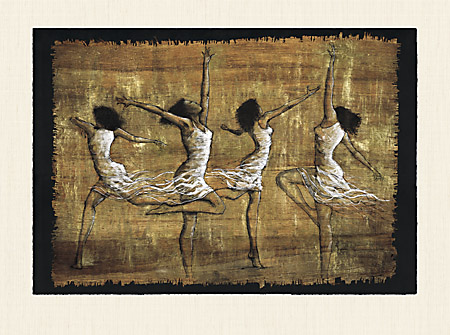
rejoice-monica-stewart.jpg

The Blessed Virgin Mary has many beautiful titles. St. Mary at Easter Tide is my very own. Scripture is very silent about the Mother of Jesus after the Resurrection. We know that she is present in the upper room when the Spirit comes upon the Apostles at Pentecost. At the Annunciation, the Angel Gabriel tells her nothing about her future, except that her Son will be destined for the rise and fall of many in Israel. Mary’s first post-partum visit to the Temple portends a life of sorrow. According to Simeon, a sword will pierce her heart seven times. This most beloved young woman is left to ponder these things in her heart.

There are many good years together, until He leaves to find his cousin John at the Jordan. Then things go from bad to worse. Her friends and neighbors toss Him out of Nazareth. Jesus dies a horrible death; His mission a failure; her maiden’s vision becomes a bitter delusion. In his final words, Jesus entrusts St. John and Mary to each other – a final testament that seals the depth of grief.

There is no record of how Mary hears the news; of how she reacts. Who tells her? Jesus Himself? It seems that this duty falls to us. The noonday prayer echoes a wonderful joy – Regina Coeli laetare alleluia! Queen of Heaven Rejoice alleluia! … Resurexit sicut dixit! He has risen as He said (he would)!

Even though the words echo from my childhood at “Mid-century,” how well I remember and still experience the delightful childish skip in our hearts and step that we shared at Easter Tide. These are not the inspired words of the Gospel in the Hail Mary, nor the briefest of summaries of the Mystery of the Incarnation in the Angelus. For a prayer, Regina Coeli seems strangely out of character. There is no formality, no reserve. In our joy, we proclaim the Good News to the Mother of the Word Incarnate. God has turned our mourning into joy, but how could we ever begin to fathom what his news meant to the woman whose faith gave birth to us all?

Read More

Posted by on Dec 31, 2007

February 2 – A Day to Celebrate Three Feasts and a Blessing

The Feast of the Holy Family

flight-to-egypt.jpg

The Feast of the Holy Family falls on the Sunday between Christmas and the Feast of Mary, Mother of God, January 1. The readings for the day focus on qualities that make for happy relationships between people, including members of families.

Sometimes when we focus on the Holy Family as the model for family life, we get bogged down with the perfection of Jesus and Mary, the holiness of St. Joseph, and the impossibility of actually living a perfect life ourselves. Then we write off their example as just another bit of pious nonsense that has nothing to do with the reality of crying babies, mortgage payments, difficult bosses, and all the other stresses that come with marriage and family. For those who are not married and/or don’t have children, the feast can seem irrelevant or even be a painful reminder of unfulfilled hopes.

So, I find myself wondering, what is it that makes a family, any family, “holy?” It seems to me that if the Holy Family is to be a model for the rest of us, that must mean that we are also to be “holy.” What made them holy?

Being holy does not mean having no problems or challenges in life. Holiness, it seems to me, lies in how we handle those difficulties that come in every life. After all, without the problems, difficulties, challenges, “crashes,” struggles, “hitting bottom,” or whatever we call it, we would never need to turn to God for help. We could just continue blithely on our way, assuming everything is fine, and in the best American cultural sense, be “rugged individuals” who can make it on our own.

But that isn’t what the spiritual life and journey are all about. Our spiritual lives are about learning from our mistakes, growing in wisdom, reaching out for help and community, being purified in God’s love, so that we can run joyfully to the Lord at the end of our days.

When we look at the lives of Mary, Joseph and Jesus, we find that they were filled from the beginning with many of the same challenges faced by other families. An unexpected, unplanned pregnancy, one outside the marriage; governmental demands that upset a family’s plans; taxes; inconvenient timing of a birth; the necessity to leave home and become refugees in another land; a child who feels grown up enough to go off on his own at the age of 12 without telling anyone where he’ll be; the death of a spouse or parent; a child whose life choices and career don’t meet the expectations of the family or community; the untimely death of a child. All these things were part of the lives of the Holy Family, as they can be part of our own lives. What made Joseph, Mary and Jesus holy as a family was their response to these challenges and their loving support of each other through them.

Joseph’s first recorded response to Mary’s pregnancy was compassion. He did not want to expose her to the penalties of the Law. He loved her and wanted her to be safe. When the angel told him in a dream that Mary had not been unfaithful, he accepted her as his wife. He made a home with her and supported her through the pregnancy and birth. He took her and Jesus to safety in Egypt, again following the instructions received in a dream. When it was safe, he took them back to their home in Nazareth cared for them and made a home for them.

Both Mary and Joseph must have “pondered” many things along the way. Many things did not make sense at the time. They really didn’t know what God had in mind. Jesus was a normal child. He had to learn how to be a man and how to respect and love the people around him. Mary and Joseph taught him by their actions as well as their words, just as we teach our children more by the way we act than by our words. It’s no surprise that people in families tend to share many gestures, facial expressions, attitudes and beliefs. The Holy Family would not have been different in this. The characteristics we seen recorded about Jesus were probably in great part those he learned from his parents.

In this week following the Feast of the Holy Family, as we enter a new calendar year, I hope we can take their lives as ones that exemplify the kind of relationships that result from heartfelt compassion, kindness, humility, gentleness, patience, forgiveness, and love (Col 3:12-17). These qualities are not ones that stem primarily from feelings, but rather they are attitudes and behavioral choices to which we are all called.

Read More

Posted by on Dec 11, 2007

February 2 – A Day to Celebrate Three Feasts and a Blessing

Saint of the Day – Our Lady of Guadalupe

guadalupe-roses.jpg

On December 12, 1531, a middle aged Indian convert, St. Juan Diego opened his “tilma” where he had placed the roses that the Lady on the Hill had told him to take to the bishop, Fray Juan de Zumarraga. His earlier attempts to tell the bishop of the Lady’s request to build a shrine on the hill of Tepeyac in her honor had met with polite skepticism. The bishop had wanted a sign, and roses in December in the high altitude and cold temperature of Mexico City would have been enough of a sign. However, when St. Juan Diego let down the poncho-like cold weather garment, made of century plant cactus fiber, maguey, the roses tumbled down on the floor and the reluctant messenger followed the eyes of the astonished bishop as he gazed on the Indian’s tilma and fell to his knees. Unique among all of the apparitions of the Virgin Mary, this one produced a physical artifact. On the tilma was the image of the Lady who would come to symbolize a new mixed-race people, a nation, and the aspirations of Catholics throughout the Americas.

Like most Mexicans and Mexican-Americans, my earliest memories are of this miraculous image. Our Lady of Guadalupe is so much a part of the culture, and so pervasive, that the miraculous image is a symbol with multiple layers of meaning. The words of Psalm 147 in Latin “Non Fecit Taliter Omni Nationi” – “He has not done so with any other nation” – are often associated with the image. More idiomatically, they are taken to mean, “He hasn’t done this for anyone else.” While the Psalmist originally applied these words to God’s unique relationship with his chosen people, the meaning has been appropriated by Mexicans and the Latin peoples of the Americas.

From the first days of the apparition to the present, the miraculous image has symbolized a heavenly acceptance of the indigenous and mixed native and European inhabitants. The Virgin does not have blond hair and blue eyes like the Virgen de las Mercedes ( Our Lady of Mercy) of the Spanish conquerors. She is dark complected, with brown eyes and black hair, this Lady of Tepeyac. However, she does not have the pronounced Moorish features of the black Madonna of Guadalupe found in Extremadura in southern Spain.

guadalupe-extremadura.jpg

The devotion to the Spanish Madonna of Guadalupe reached its height in Spain in the 1400s and 1500s, since she was the patroness of the global explorers who set sail from Extremadura and also the patroness of all the Spanish lands of the New World. Many years before the apparition in Mexico City, Columbus named an island in the Caribbean Guadalupe (now Guadaloupe) in her honor. Historians can probably fill us in on the details of how the Lady of Tepeyac became identified with Guadalupe. Perhaps the Spanish preferred to believe that their explorer patroness had made an appearance in the Americas. Nevertheless, the secret password of identity for Mexicans and those of Mexican descent is Tepeyac. For those who have been conquered, scorned, and rejected and yet have built a vibrant and dynamic civilization, what greater recognition could there be? Non Fecit Taliter Omni Nationi.

Read More

Posted by on Dec 8, 2007

February 2 – A Day to Celebrate Three Feasts and a Blessing

Saint of the Day – St. Juan Diego Cuauhtlatoatzin

st-juan-diego.jpg

December 9 is the feast day of St. Juan Diego (1474-1548), who was born Cuauhtlatoatzin (kwah-oot-laht-oh-ahtzin) – Talking Eagle. St. Juan Diego was declared a saint – on July 31, 2002, – by Pope John Paul II on his visit to Mexico City. The Pope declared him protector of the indigenous peoples of the Americas and reminded the thousands who gathered of their responsibility to promote social justice and equality for their oppressed and marginalized brothers and sisters.

Juan Diego was a member of the Chichimeca nation, in the Anahuac Valley, near Tenochitlán – present day Mexico City. He was a landowner, farmer and weaver of mats, and a married man. He was 47 when he witnessed the conquest of Tenochitlán by Hernán Cortez in 1521. He and his wife were baptized in 1524 or 1525 by the first missionaries, who were Franciscans. He took the baptismal name of Juan Diego and his wife’s baptismal name was María Lucía. A few years later, María Lucía became ill and died.

On Sunday, December 9, 1531, while he was walking to Mass, he saw an apparition of the Virgin Mary on the hill of Tepeyac. Our Lady of Tepeyac would become known more widely as Our Lady of Guadalupe, because of the similarity of the dark complexioned Virgins in both Tepeyac and Guadalupe in Spain.

St. Juan Diego spent the rest of his life as a hermit and caretaker of the chapel which had been built on the hill of Tepeyac after the apparition, at the request of the Lady. The Virgin Mary appeared as a Native American to a Native American Christian. The impact on the vast indigenous population and the Spanish conquerors was stunning. Not only did this apparition mark the beginning of massive conversions, it was also the beginning of the Great Mixing – El Gran Mestizaje – the creation of a new uniquely Mexican ethnic group, blending Europeans and the indigenous peoples.

While it would be nice to give this post a Hollywood ending by enlarging the camera angle from the Indian kneeling before the Virgin Mary and panning to a sweeping vista of sunrise over the great volcanoes surrounding Mexico City, we really should not. St. Juan Diego’s life was a very gritty reality. The death of his wife and millions of other native people from European conquest and disease was another layer of bitter sadness laid on top of the hardships of being subject to the Aztecs. St. Juan Diego saw everything he knew and understood swept away before his eyes – something that later generations of Mexicans would also experience more than once.

He appears to be one of the few saints who tried to avoid The Lady he knew was waiting for him, because his uncle was very ill and he needed to get a priest for his uncle before he died. Instead, she met him as he tried to get around the hill of Tepeyac. The Lady reassured him that his uncle would be okay and that he should just trust in her. He did, and as they say, the rest is history – the history of a new day for a vanquished people.

Read More

Posted by on Dec 8, 2007

February 2 – A Day to Celebrate Three Feasts and a Blessing

Feast of the Day: The Immaculate Conception of the Blessed Virgin Mary

immaculate-conception.jpg

December 8 is the feast day of the Immaculate Conception, a solemnity celebrating the conception of the Virgin Mary. According to apocryphal writings, Mary’s parents were Joachim and Anna. Mary’s conception, which occurred in the natural way, was special in that Mary was spared the “stain” of original sin.

There has been a long tradition of celebrating the feast of the Virgin’s conception by her mother. There has also been a long tradition that Mary was redeemed in anticipation of the redemption of all humanity by her son Jesus. St. Thomas Aquinas and others taught that Mary’s redemption occurred sometime after her conception, to conform with the scripture that all men and women have sinned except Christ. The issue has to do with the fact that God’s becoming fully human in the mystery of the Incarnation, when Mary conceived Jesus, could only have occurred in one who was sinless and not subject to the pain and weakness of a fallen human nature. When the angel Gabriel saluted Mary, he addressed her as Full of Grace. This greeting would not have made sense – according to the long tradition of theology – if Mary were tainted by the fallen state that afflicts every other human until Baptism.

Devotion to Mary, the mother of Jesus, was recorded in early feasts emphasizing her role in salvation history. Mary’s “yes” to the angel Gabriel set everything in motion when she was overshadowed by the power of the Most High. During the controversies about the nature of Christ in the early centuries, titles given to Mary became very important. If Jesus was truly human and divine, Mary became Theotokos – Mother of God. If Jesus was not truly God, Mary was called Christotokos – Mother of Christ.

Exactly how and when Mary was delivered from the sinful state all humans share was not formally defined by the Catholic Church until 1854 by Pius IX. Contrary to the theology of several prominent saints, Mary, from the first moment of her existence, was spared the blockage of grace we call original sin.

An Episcopalian priest, Fr. Matthew Moret, has produced a very short You-Tube video, “Making Sense of Sin,” which succinctly reviews previous conceptions of sin and what these conceptions say about our conception of God. The common concept of sin as a transgression sets God up as the cosmic Judge. Our relationship is not personal but juridical. God’s love becomes conditional on our surrendering our will to His. This concept can be one of a vindictive or manipulative God. Our concept of sin can alienate us from God, contrary to His Divine mercy, love, and grace, which never leave us. Fr. Moret’s short but excellent video presents Kathryn Tanner’s concept of sin as blockage. God continues to heal us, to provide for us in all ways, but we have a diminished capacity to accept or even recognize God’s continual outflowing of good and love to us. Sin is far from trivial, as demonstrated by the brief slide of an entrance to a Nazi death camp.

Mary, Full of Grace and Mother of God. There must have been no blockage. How did that happen?

Read More