Pages Menu
RssFacebook
Categories Menu

Posted by on Oct 9, 2022

Two simple words that open new worlds

Two simple words that open new worlds

Thank you.

These two simple words are among the most powerful in any language. As parents, we teach them to our children from the time they first begin to use words, along with “please” and “you’re welcome.” Even before they can speak the words, children who learn baby sign language can begin to use the signs for them correctly.

“Thank you” establishes a mutual relationship between two people. A gift has been given and received. In the acknowledgement of the giving and receiving, a relationship is established that with time becomes mutual. Sometimes I am the giver. Sometimes I am the receiver.

There are many ways to express gratitude. When in person, a big smile and the spoken words are very appropriate and common. When the giver and recipient are not together, it’s a bit more challenging. Phone calls, letters, texts, and so forth are all ways of conveying gratitude.

I think one of the big challenges we face as people who live in larger communities and not in small family villages is the best way to express our gratitude. The moment in which a gift is received is not always the one in which it is possible to offer a personal response of gratitude. Gifts are placed in the mail and sent around the country and the world. When they arrive, they are opened in the privacy of home. It’s not always possible to call the sender immediately. Then a day or two pass, then a week or two, then it gets embarrassing that so much time has passed and nothing sent to the one who has given us the gift. Sometimes we’re so overwhelmed by the generosity of the gift, that we don’t have the words to express our amazement and gratitude, so we delay until it seems too late to say anything. It’s not, but it feels that way and so we don’t.

Naaman finds healing

This challenge is not new to our lives and times. In the time of Elisha the prophet, Naaman, a military commander in the army of King Aram, suffered from a skin condition that was called leprosy. It may or may not have been the condition we now know as Hansen’s disease. Any condition that made the skin splotchy in color or with flaking or scaly texture was called leprosy. Lepers among Israelites had to live away from the community until their skin returned to a normal condition.

Naaman was not an Israelite. He was from a neighboring country. But one of the servants of his wife was a child who had been captured from an Israelite village during a raid. The child noticed his skin condition and suggested that Naaman might be healed by the Israelite holy man and prophet. Naaman traveled with his own king’s permission to visit the king of Israel and ask for healing. Eventually, he was directed to Elisha, whom he and his large retinue visited in the desert. Elisha did not come out to meet Naaman. Instead, he sent instructions that Naaman should go to the Jordan River and plunge into it seven times in order to be healed.

The Jordan River was not a pristinely clean waterway. It was muddy and not at all appealing. Naaman was used to beautiful, clean rivers. He felt quite insulted and was inclined to turn around and go directly home. Fortunately for him and for us, his advisers suggested that he give it a try. After all, if Elisha had asked him to do something hard, he would do it. Why not try the easy thing? So Naaman went to the Jordan and plunged into it seven times. When he emerged after the seventh plunge, his skin had been restored to the condition of a child. The lesions were all healed and the skin looked young again.

Naaman returned to Elisha to give his thanks and offer payment for the great gift he had received. Elisha refused to accept any payment. The healing was a free gift from the God of Israel. Elisha had simply been the channel through which the instruction had passed.

Naaman was blown away by this notion of God’s care and healing with no price attached. He asked Elisha to allow him to take two mule-loads of soil from Israel back to his home country. He intended to place the soil over the ground there and build an altar on top of it. In this way, he would be able to worship the God of Israel who had saved him. Elisha granted his request.

Why did he need to take soil with him, you ask? Well … it’s because in those days people believed that gods were local. They only ruled in certain areas. When you left that territory, the god you had worshipped was no longer going to be able to protect you. This was one of the amazing discoveries that Abram had made centuries earlier when he traveled from Ur of the Chaldees to Palestine and found that God was there too! Naaman had not had this experience of a God who was present everywhere. He took some soil home so he could worship the Lord to whom he now gave his allegiance. He had received the gift of faith in the Lord. (2 Kings 5:14-17).

A Samaritan finds healing

Lepers continued to be isolated from the community in Israel into the time of Jesus. We may shake our heads with amazement at this practice today, but the past two years of experience with COVID-19 around the world make this ancient reaction to contagious disease more understandable. When there is no known cure for a disease that is easily transmissible and for which no one understands the transmission process, isolation of the ill person is the fastest and most certain defense for the larger community. In ancient times, skin conditions, including Hansen’s Disease, were difficult or impossible to treat and could lead to serious deformities and death. Until all the skin looked the same again (either with no lesions or completely covered with lesions), the individual could not rejoin the community. Priests had to certify that the person was once again whole before they could return to their families and normal community life.

Jesus was traveling on his way to Jerusalem, according to St. Luke, when ten lepers met him at the edge of a village. (Lk 17:11-19) They called out to him, “Jesus, Master! Have pity on us!” They had heard of his power to heal and hoped for this gift themselves. Jesus didn’t touch them or approach them directly. Instead, he called out to them, “Go show yourselves to the priests.” Without any evidence of healing having been received, they headed off to find the priests. It was only as they traveled forward that they realized they had been healed. With great amazement and joy, nine of them continued on the journey. But one of them stopped, turned around, and went back to find Jesus. The man spoke of the goodness of God for healing him, fell at Jesus’ feet, and thanked him.

At this point, Luke tells us that the one who returned was a Samaritan. As you will remember, Samaritans and Jews did not get along with each other. They avoided each other as much as possible. Jews sometimes even traveled far out of their way to go around Samaria when they traveled between the Galilee and Judea. Yet the one who returned was from Samaria and was grateful. Jesus spoke and asked, “Where are the other nine? Has none but this foreigner returned to give thanks to God?” He told the man, “Stand up and go; your faith has saved you.” This non-Jew, this man who was not one of the Chosen People, had received the gift of faith and gratitude because he said, “Thank you.”

Paul continues in faith

Several decades later, St. Paul was nearing the end of his life. He had become a Christian a few years after the Resurrection of Jesus, and after being one of the leaders of the first persecution of Christians. He had spent nearly thirty years traveling through the Middle East/Asia Minor, preaching the Good News of Jesus’ coming and of the Resurrection. Now he was in chains in Rome, awaiting trial as a Roman citizen for treason. He was facing death. He wrote to his friend Timothy, who was one of the many men and women who became Christians due to his teaching and ministry. “Remember Jesus Christ, raised from the dead, a descendent of David…” (2 Tim 2:8-13)

We too speak in our liturgies of remembering the Lord. Part of what we do at each Eucharist is to remember and enter again into the mystery of this coming of Jesus into our world and the reuniting of our humanity with the God who loved us into being.

Paul notes that the gospel, the good news, for which he is suffering as if he were a dangerous criminal, cannot be chained. Nothing can stop it. It has been passed on to others, who will themselves continue to pass it on to more people. His continued witness will help strengthen them in faithfulness and trust. “If we have died with him we shall also live with him; if we persevere we shall also reign with him…”

It’s our turn to be grateful

Jesus has come. Salvation is here. Our response of gratitude and service to others will pass it forward to those we meet. Whether we respond in love and service or not does not change the reality of the coming of salvation to those who will receive it.

May we be found among those who have accepted gratefully the gift of salvation, of becoming one of God’s children, a sister or brother of Jesus and of all those created by our Father.

Today, I send my thanks to you who read these words for the time you spend reading them, to those whose vision made possible this means of sharing the good news, and to those who have encouraged me to write.

I thank those who have supported me from childhood into later adulthood: my parents, grandparents, aunts, uncles, siblings, cousins, husband, children, grandchildren, extended family, teachers, friends, and others – and all those who formed and loved them. We are all part of a great web of being, sustained in love.

Thank you. Two simple words that open new worlds of connection. May they be our common entry into a life of deep joy and inner peace.

Readings for the Twenty-eighth Sunday in Ordinary Time – Cycle C

Read More
Posted by on Aug 28, 2022

Hard to be Humble?

Hard to be Humble?

Well over forty years ago, my husband and I liked to go square dancing once a week. We were with a club of mostly older couples, though there were a few younger ones too. The caller was an older man, rather small, with plenty of grey hair – truly ancient… As is done in square dancing, he sang the words of the song, as he inserted the instructions telling us all what to do next in the dance.

A new song at that time was It’s Hard to be Humble, by Mac Davis. We all enjoyed it as our caller sang the chorus, “Oh Lord, it’s hard to be humble, when you’re perfect in every way. I can’t wait to look in the mirror, ‘Cause I get better looking each day …” It went on in that vein for several lines, concluding, “Oh Lord, it’s hard to be humble, But I’m doing the best that I can!”

Humility, as exemplified in the song, is a tricky thing. There’s the false humility that has a person denying their talents and strengths, because speaking of them has brought, or might bring, charges of boasting. There’s the opposite of humility, in which people consider themselves or their talents to be so much greater than those of their peers that no one can possibly measure up to their standards. Humility does not mean denying one’s gifts and talents. Nevertheless, the fellow boasting of his humility in the song does not particularly impress his listeners as being all that humble.

Part of the challenge with humility is in the multiple meanings of the word when we use it in speaking of our relationships with God and with other humans. Sirach, a Jewish teacher of wisdom around 200 – 175 BC, wrote originally in Hebrew. When it was translated into Greek, the word for humility used is one that can include courtesy, gentleness, and consideration of the feelings of others as part of its meaning. It’s not just knowing one’s own strengths and weakness, it’s also being gentle and careful with the self-image and feelings of others.

Since humility is multifaceted, Sirach presents his insights through a series of proverbs. (Sir 3:17-18, 20, 28-29) He points out that those who behave with humility will be more loved than those who give a lot of gifts, but do it in a way that makes the recipients feel less worthy. It’s not necessary to seek wisdom in new ways of thinking or in philosophies from other cultures and traditions. Paying attention to the ways God reaches out through the lowly and through the wonders of nature will result in more fruitful growth in humility and wisdom. This is where the humility pleasing to God is to be found, because God is present with the poor. As the Psalmist points out, God is father of orphans, defender of widows, releaser of prisoners, and the one who provides a home for the needy and those who have been driven from their land. (Ps 68) It is with the humble of the earth that the blessings and rewards of humility will be found.

St. Luke presents Jesus speaking of humility in practical terms. (Lk 14:1, 7-14) Jesus has been invited to dinner at the home of a leading Pharisee, an influential man. Everyone is watching him closely to see what he will do. He, in turn, is watching the other guests, observing their efforts to select places of honor at the table. (The table was probably U-shaped, with the places of greatest honor being on the shorter side that joined the two longer sides. The places of lowest honor were at the far ends of the long sides.) As they select their places, Jesus tells them a parable – he presents a picture of a better way to behave both as guests and as hosts.

Imagine a wedding feast to which you have been invited, he tells them. Don’t make the mistake of sitting at the head of the table or other place of honor. If someone more distinguished arrives, you will be told to move to a place of less honor at the table. Do yourself a favor – select a place at the end of the table’s long sides. Then you may be the one instructed to move closer to the wedding party, to the places of honor. “For everyone who exalts himself will be humbled, but the one who humbles himself will be exalted.”

Then Jesus speaks to the host (and to the rest of us). Invite the folks who are normally ignored to celebrate with you at your banquets. They can give you nothing in return, but God will repay you on their behalf, because of the kindness you have shown, the humility of your service.

In all of this, it is God who lifts up and exalts those who act with kindness and compassion, those whose lives demonstrate humility.

The kingdom of God, according to the author of the Letter to the Hebrews, will be seen in “the city of the Living God, the heavenly Jerusalem.” (Heb 12:18-19, 22-24a) The old law was given to Moses in a terrifying manner at Mt. Sinai – with blazing fire, darkness, storms, and the blast of trumpets. The voice that spoke was terrifying and those who heard begged for it all to stop. But the new covenant is found at Mt. Zion, the heavenly Jerusalem. Angels are gathered at the festivities. So are those enrolled in heaven through baptism and those whose spirits have been made perfect through the experiences that purify their very lives. All are joined and reunited with God through the life, death, and resurrection of Jesus, whose blood “speaks more eloquently than that of Abel” (whose blood shed by his brother cried out to God from the earth).

It’s not easy to be truly humble. Fortunately, we get lots of opportunities to learn humility. As we come down off our pedestals and open our hearts to hear the stories of those around us, we grow closer to our God, who lives intimately with those at the bottom of our human societies. With quiet smiles, gentle words, patient listening, and generous hearts, we meet our God in those whom we encounter on our journey through life. May we be always open to receive God’s smile in return from those whom we serve.

Find the readings for the Twenty-second Sunday in Ordinary Time – Cycle C.

Read More

Posted by on Nov 21, 2021

King of the Universe!

King of the Universe!

Sometimes when children are playing, one or another will exclaim, “I’m King of Everything!” Today we celebrate the final Sunday of our liturgical year, The Solemnity of Our Lord Jesus Christ, King of the Universe. In this case, it’s not a question of the exuberant, excited cry of a child in a game. The Christian community, through the centuries, has proclaimed this truth, both in direct statements and in apocalyptic images.

Predictions of the coming of a savior often appear in the Hebrew Scriptures during times of exile and persecution. This savior comes and acts as the agent of God in opening the final age of salvation history, the time in which God will become the ruler over all things. The human (Son of Man) who is the instrument of God in all this upheaval and transition is to be raised to a heavenly level, implying a divine status of some sort.

Our reading from the Book of Daniel (7:13-14) describes a vision received in the night. Someone like a Son of man is coming, but not with a human army or traveling in a normal human way. This individual is coming on the clouds of heaven. The destination of this Son of man (human) is not a standard one either. The Son of man comes to the Ancient One. Who is the Ancient One? This is a title for God. This human, who has served as agent to open the new age, comes before God. God gives him dominion (authority as a ruler), glory (renown, magnificence, splendor), and kingship over all times and peoples. This new status and role will continue for all eternity.

In Psalm 93, the term Lord is used. In this context Lord is the word used to speak of God. Jews do not use God’s actual name, because if a person knows the name of another, there is some power over the other individual. Call that individual’s name and the individual will respond. God made clear from the beginning that no one else will be in charge. This is the reason for the prohibition on using God’s actual name and substituting the word Lord.

The Lord is king, dressed in strength, making the world firm and ruling from everlasting to everlasting. The decrees/statements/commands of the Lord are worthy of trust. This is a hymn of great trust and joy.

The early Christians had to figure out where their friend and teacher, Jesus of Nazareth, fit into the whole picture. The book of Revelation was probably written sometime in the years 81-96 CE, during the persecution of Christians under the reign of the emperor Domitian. The identity of the author is unknown, though the name John is assigned to this person.

Today’s reading is from the very beginning of the book (Rev 1:5-8). John sends greetings to the seven major Christian communities (the churches) of Asia. The greeting is also extended in the name of Jesus, faithful witness and firstborn of the dead. Jesus is identified as ruler of the kings of the earth. It is through the death of Jesus that the new kingdom has been brought into existence. Jesus is coming and all will see him. His sisters and brothers will be raised through him, conquering sin and death, triumphing over persecution and unbelief. The Lord is the beginning and the end, just as the Greek letters Alpha and Omega represent the beginning and end of the alphabet. (The Christian scriptures were written in Greek, making this a relevant note.) God’s life-giving power now operates in the world through Jesus, the Christ.

On this feast of Christ the King, we leave the Gospel of Matthew and instead hear from the Gospel of John (Jn 18:33b-37). Jesus stands as a prisoner in front of the Roman governor of Palestine, a man named Pilate. Pilate was responsible for keeping the territory free of revolutionaries and imposing Roman law. He asked the leaders of the Jewish court why they had brought Jesus to him for judgement. They responded that they could not legally condemn him to death.

Pilate is not interested in religious arguments between Jesus and the Jewish authorities. Their reason for the death penalty was blasphemy – the claim to be God. However, the most important issue for Pilate is whether this man standing before him has committed treason by claiming to be a king. Only Caesar in Rome gets that title. Anyone else will be executed. So Pilate asks Jesus directly, “Are you the King of the Jews?” He is expecting a simple Yes or No, but Jesus instead asks Pilate a question, essentially, why are you asking me this? If Pilate is interested in Jesus’ teaching, the conversation has potential. If not, then other issues arise. Pilate makes clear that he is not asking because he has heard of Jesus and his teaching and wants to know more. What he wants to know is: “What have you done” that the authorities of your country have turned you over to their enemies for execution?

Jesus does not answer the way Pilate expects. He explains, “My kingdom does not belong to this world.” He points out that if he were a king in the worldly sense, he would not be standing there alone. Others would be fighting for him. But his kingdom is elsewhere. Pilate takes this answer as a statement that Jesus is claiming to be a king and asks for confirmation of that interpretation. Legally it matters. “Then you are a king?” But Jesus still refuses to claim an earthly kingdom. “You say I am a king.” He doesn’t deny being a king, but he is king in a very different way. He explains that his mission is to present the truth of God’s love for humans. Any who accept that truth will be members of his kingdom. God’s gift to humanity, the self-giving love leading to God’s becoming one of us, is the source and power of this kingdom. Those who belong to the truth, listen to Jesus.

Here’s a person who really is King of Everything! Do I listen to his voice? Do I hear the truth of God’s love and the Kingdom of Love? When he comes, will I be ready?

Today let’s not get bogged down in worries about how we are doing in following our Lord. Let’s take some time and simply celebrate the wonder of this gift from our Father. He loves us so totally that he became one of us. Jesus brings this love to each one of us each day of our lives and with every breath of our bodies. Long live Christ, the King of the Universe!

Readings for the Solemnity of Our Lord Jesus Christ, King of the Universe – Cycle B – Christ the King

Read More

Posted by on Nov 14, 2021

The End Draws Near

The End Draws Near

There is a saying, “All good things come to an end.” In our daily lives, we experience this again and again. But sometimes, the end turns out to be a transition to something better. Sometimes, it’s just the end of a cycle and things begin anew.

This is the case with the readings for the Thirty-third Sunday in Ordinary Time, the next to the last Sunday of the Church year. We have traveled through the life of Jesus, from the time shortly before his birth through his Passion, Death, and Resurrection. We have heard the stories he told and met the people he met along his way from Galilee to Jerusalem during the three years of his public ministry. Now the end of the cycle draws near and we hear from both Hebrew and Christian scriptures of what will happen in the final days of salvation history. What will happen at the end of time?

The Book of Daniel tells the story of the Hebrew people during their time of exile in Babylon, but it was not written during that time. It was written much later and is an example of apocalyptic literature – literature that deals with end times. This type of literature often arises during times of persecution and suffering. The story of Daniel, a prophet, was probably written during the time the Jews were being persecuted under the reign of King Antiochus IV, just over 150 years before the birth of Jesus. The prophet hears and proclaims the word of the Lord. “At that time there shall arise Michael, the great prince, guardian of your people.” Michael is an archangel, the one who is God’s defender of the people. Michael protects the good people during a time of great distress. These people escape and will shine brightly, leading the multitudes to justice and eternal life. (Dn 12:1-3) It is noteworthy that by this time in Jewish history, the idea of life after death is seen as a reality for the righteous. It was an idea still being debated during Jesus’ lifetime, but it was accepted by large numbers of people and their leaders.

Stones Thrown to the Ground        by Roman Soldiers

Jesus was familiar with the apocalyptic literature of his people and spoke of the coming end of time during his final days in Jerusalem. The Romans were known to tolerate no dissent and no rebellions among the people they governed. Yet there was a continual undercurrent of discontent among the Jews and an absolute refusal to tolerate worship of the gods of other peoples. The coming of a Messiah to overthrow the foreign conquerors and re-establish a Jewish kingdom was eagerly anticipated. People wondered whether Jesus might be that hero and welcomed him to Jerusalem with all the fanfare they would give to a conquering hero returning home. Jesus knew that military might was not the way the kingdom of God was going to come to the world. He continually reminded his followers that this was not the path he would take. One day, after teaching in the temple, someone commented on the size of the stones that formed the building. Jesus responded that the stones would soon be demolished and not one left upon the other. (Around the time this gospel was written, the temple in Jerusalem was destroyed by the Romans following a rebellion by a group of Jews known as Zealots. The people had  been scattered into exile.)

Later that day, Jesus spoke with his friends and warned them that hard times were coming. They personally would suffer because of their loyalty to him. The entire nation would suffer because many others would come later and try to overthrow the Romans. Many would claim to be the long-awaited Messiah, but they would be false prophets and false messiahs. All would suffer as a result.

It is at this point that our reading today picks up (Mk 13:24-32). Jesus speaks of the last days of the world and his return to gather the faithful to the kingdom. He speaks of himself as the Son of Man, a title from the book of Daniel used to name and describe the Messiah.

No one knows when that last day and the return of the Son of Man will occur. Even the Son does not know. But all are to live their lives prepared for that last day to arrive. We are all to keep our eyes open and notice the signs of the times, just as we notice the changing of the seasons

It’s been a long time since these prophecies were first spoken. Many generations have passed, and likely many more will come and go before the end of the world. But the sacrifice made by our High Priest, Jesus, does not ever need to be offered again, according to the author of Hebrews (10:11-14, 18). The reconciliation between God and all of creation has been accomplished. No matter what happens, a new age has dawned. Salvation has come.

We sing with the psalmist, “You are my inheritance, O Lord! … my heart is glad and my soul rejoices … You will show me the path to life … the delights at your right hand forever.” (Ps 16)

Our liturgical year is drawing to a close. The end of days has not yet come. We face many difficulties, misunderstandings, deliberate lies, political divisions, pandemics, and other trials in our daily lives. But this is really nothing new. It has happened again and again in history. May we cling to the promises of our Lord and live in the way he taught us, being peace-makers and healers of division in our world. Very soon we begin a new year as a community. Let us take the remaining days of this year to celebrate  the protection and love of our God and prepare for the coming of the Lord into our lives today and in the days to come.

Read More

Posted by on Oct 31, 2021

Hear, O Israel! A Call Ever Ancient and Ever New

Hear, O Israel! A Call Ever Ancient and Ever New

The ancient world was home to many peoples and traditions. Like peoples today, questions arose in these cultures about how things came to be the way they are. Why does the sun shine only during the day? Why do the seasons change? Why do people do bad things sometimes? Why do they ever do good things? What will happen if nothing changes?

Cultures throughout the world and throughout history have struggled with these types of questions and have developed their own explanations of how things came to be and what is possible. In the ancient world, most peoples explained the physical world they saw around them and the events in their world with stories of gods – supernatural, immortal beings who were responsible for the creation of the world and the major events that affected the lives of humans. Is there a drought? It’s because the god of rain has been offended. Is there too much rain? Might be the same reason. Are we hoping for a good harvest? Then pray to the god of the harvest and offer a sacrifice of something that god likes.

There were many cultures and all had their own gods, with their own names. Yet as people from these cultures met, traded goods, and sometimes fought with each other, they noticed that many of their gods were the same as in the other culture. They realized some of these might actually be the same god, but with different names. It didn’t bother them. Sometimes they welcomed a new deity into their own religious beliefs, especially if that new one offered something new of value to them. Only when one people was conquered by another and the new one demanded that everyone worship the conquering people’s deities did issues arise. Generally, there was simply a sense that gods were active in particular areas and not in others. This was why Abram was surprised to find God present in all the lands he visited during his lifetime. Abram and his family lived in many different lands, yet God was present in all of them.

The Israelites differed from the people of surrounding countries and even of the land of Canaan in which they lived. They believed in a single deity. This deity was not like humans, with wives and children and battles with rival deities. Theirs was one God. Period. End of conversation.

The first reading for the Thirty-first Sunday in Ordinary Time reminds us of this unique perspective of the Hebrew people and its formulation. Moses has brought the tablets of the Law down from Mt. Sinai to the people. God has offered a contract, an agreement, a holy covenant to them. God will be their God and they will be His people. He is Lord (ruler) of all. He can command and they will obey. In return, He will protect them and give them rich harvests and security in the lands they inhabit. (Dt 6:2-6)

Moses speaks powerful words, words that have echoed through the centuries and are recited as part of both morning and evening prayer by faithful Jews. They are even worn in special garments as a reminder. “Hear, O Israel! The LORD is our God, the LORD alone!” This proclamation is known as the Shema. It is known and recited by Jews around the world and throughout history. What follows this first bold statement is a summation of the covenant responsibilities of the people: Love the Lord with all your heart, soul, and strength. This is the first and fundamental requirement of the Law and the Covenant.

The Psalmist sings with love and joy of this relationship with the LORD (Ps 18:2-4, 47, 51). “I love you, Lord, my strength.” He speaks of the LORD as a rock, a fortress, a shield, a stronghold. He praises the LORD for being a savior and bringing victory to the anointed king of the nation.

As a good Jew, Jesus also knew and recited the Shema.

After he entered the city of Jerusalem, he began going to the temple daily and teaching there. The priests, scribes, and elders of the temple noticed his activities and began to speak with him. His reputation had preceded him and many were likely concerned that he would awaken the hostile interest of the Romans, bringing danger to all. Members of various schools of thought among the Jewish leaders and scholars began to question him in the temple. Jesus answered many questions. Sometimes he asked another question instead of answering them directly, because he knew they were trying to trap him using his own words. Sometimes he told a story as answer to the question.

One day, a scribe heard Jesus talking with a group of Sadducees. He was impressed by Jesus’ answer to their questions and his manner of interacting with them. The scribe, a man who had specialized in study of the Law, asked Jesus a simple question (Mk 12:28b-34). “Which is the first of all the commandments?” Jesus responded by reciting the Shema. “Hear, O Israel! The Lord our God is Lord alone!” Jesus recited the entire verse. Then he added a second commandment, taken from the book of Leviticus 19:18, “You shall love your neighbor as yourself.”

The scribe complimented Jesus on his response. “Excellent, Teacher! You are right…” He noted that loving one’s neighbor was much more important in pleasing God than offering many sacrifices. Jesus saw that this scribe was a man of great insight, not focused on the letter of the law so much as on the implications of what it meant. Jesus complimented him in return, “You are not far from the reign of God.” These words echo the belief that reciting the Shema and making its words the fundamental basis of one’s life is really receiving the kingdom of Heaven (of God).

Jesus spoke as one with authority. The author of Hebrews (Heb 7:23-28) describes him as the one whose priesthood is not based on being a descendant of Jacob’s son Levi but rather on an eternal priesthood stemming from the earlier promise God made to Melchizedek, a promise of eternal priesthood. This new high priest, Jesus, is not a descendant of Levi, but as high priest he brings the ancient Levitical priesthood to a close, offering himself to bring reconciliation between God and humanity. He is the son who has been made perfect forever.

You and I are not expected to be perfect. We will never be perfect. However, we too are called to remember the two great commandments. “Hear, O Israel…” We are children of Abraham through our adoption as sisters and brothers of Jesus. God is One. There is no other. We are to love God with all our being and our neighbors near and far as ourselves. These commands are to be written in our hearts and minds and entire being.

How am I doing with that? Am I expecting God to act like I would act when dealing with the challenges and frustrations I face in daily living? Or am I taking time to remember instead that I am to try to love as God loves in response to those challenges? Do I take time to pray each morning? Do I remember to chat with God during the day? Do I say thank you at the end of the day?

Hear, O Israel … and Kathy too!

Read More

Posted by on Oct 10, 2021

Word and Wisdom – The Depths of the Heart

Word and Wisdom – The Depths of the Heart

Suppose God came to you and instructed you to ask for one gift. What gift would you request? You could have anything at all. Lands, power, wealth, recognition, admiration, skill, fame… What would you request?

Solomon, one of the ancient kings of Israel, was confronted with just this dilemma. His response was to request the gift of wisdom and it was granted to him. He has come down in history and tradition as Solomon the Wise.

The author of the book of Wisdom was writing about 100 years before Jesus was born. As is common in Scripture, the author’s words are ascribed to a well-known and respected figure from the past. In the reading today, the Twenty-eighth Sunday in Ordinary Time, the figure in question is Solomon. Solomon is praising Wisdom and begins with the story of how Wisdom came to him (Wis 7:7-11).

Solomon declares, “I prayed, and prudence was given me; I pleaded and the spirit of wisdom came to me.” Solomon could have had greater riches, more lands to govern, heaps and heaps of gold and jewels, but he begged for wisdom. And his request was granted. He was not disappointed, nor did he regret his choice. He tells us, “… the splendor of her never yields to sleep.” Wisdom opens the door to appreciation of countless riches that might otherwise be completely overlooked.

Wisdom is personified as a feminine figure in Jewish tradition and is an attribute of God. Wisdom dwells in the heart of women and men. For Jews of this time, the heart was the center of a person, the very core of one’s being. This is where decisions are made and the place from which actions follow. Wisdom is not based in the head. Reason on its own doesn’t lead to wisdom. Wisdom is born from the heart.

The Psalmist asks, “Teach us to number our days aright, that we may gain wisdom of heart.” (Ps 90:12-13, 14-15, 16-17) This isn’t a request to have everything go well as a sign of the Lord’s favor. The very next statement is, “Return, O Lord! How long? Have pity on your servants!” Clearly, things have not always gone well. Yet hope remains and the psalmist asks the Lord to give what might seem a strange gift, “Make us glad, for the days when you afflicted us, for the years when we saw evil.” How can this be? How does this make sense?

One thing I have noticed in my life is that when all is going well, I don’t learn as much about loving, forgiving, and depending on God as when things have been harder. It’s easy to tell others how to live and what they should do when one has never walked in the same shoes, let alone shoes a couple of sizes smaller and tighter. But once having gone through tough times, it’s much easier to react with compassion to the suffering of others.

God’s work shines through our lives, especially if we keep our eyes open to see it. As the Lord is present and our eyes are open to see, we can notice and rejoice in the gifts received. In times of trouble, we can grow in wisdom if we are open to see.

For the author of the Letter to the Hebrews (Heb 4:12-13), the same divine wisdom is described as the word of God, which is living and has an effect, reflecting the inmost thoughts of the heart. Again, the heart is the seat of our humanity. The word is alive and active and it comes from God. Nothing can hide from the word of God. The reading is short, but very powerful.

So how are we called to live? What is necessary to “inherit eternal life?” The young man in today’s Gospel runs up to Jesus and respectfully asks just this question (Mk 10:17-30). Jesus reminds him of the Law that has come down through the ages from Moses. We refer to this particular part of the law as the Ten Commandments. The young man is a bit puzzled. “Teacher, all of these I have observed from my youth.” Jesus can see his goodness and loves this about him. So he offers him one last challenge, “Go, sell what you have, and give to the poor… then come, follow me.” This the young man could not do. He had many possessions and they held him bound. Jesus watched sadly as the young man walked away.

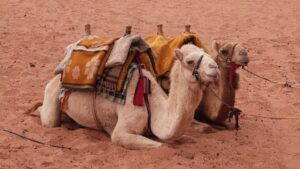
How tightly do things hold us bound? Jesus speaks of entering the Kingdom of God as being as hard for the rich as it is for a camel to pass through the eye of a needle. This was a reference to a very small gate into the city of Jerusalem. Camels were too tall to enter through the gate without getting on their knees and essentially crawling through. The followers of Jesus rightly noted that such conditions for entry to the Kingdom were pretty much impossible to meet. Jesus agreed that in human terms it would be impossible. This is the reason that God’s help is necessary and wisdom springs from the heart. To the extent that we can hold on to things lightly, letting them go and sharing them whenever the need arises, we can become more like generous children and able to see the Kingdom as it is present around us.

Through the eyes of the heart and wisdom, we approach the Kingdom. How do we, you and I, open our eyes, our hearts, and our hands to allow Wisdom, the Word of God, to fill our being and overflow into our world today?

Read More

Posted by on Jul 10, 2021

Kindness and Truth, Justice and Peace – Signs of the Kingdom

Kindness and Truth, Justice and Peace – Signs of the Kingdom

The readings for the Fifteenth Sunday of Ordinary Time (Cycle B this year) begin with an event in the life of Amos the prophet (Am 7:12-15). A priest from the temple in Bethel named Amaziah essentially tells him, “Get lost!”

This might at first glance seem like a clash between the roles of priest and prophet. Anthropologists have noted these clashes in many societies. The priest’s role is to uphold the religious system and offer the necessary sacrifices to the local deity. The prophet’s role is to stand outside the gates and call for changes in the status quo when things get too unbearable for the poor and others outside the favored classes. Once the changes have been made in a society, the priestly class re-establishes a new status quo and all moves forward peacefully again.

To a certain extent this is what we see happening here. But there’s more to it than meets the eye. The Promised Land has divided into two kingdoms. The northern kingdom is known as Israel. The southern is Judah. Bethel is in the northern kingdom which has been quite successful in expanding into lands we now know as Syria and Iraq. The nobles are doing very well personally. The religious leaders are also profiting from the elaborate religious ceremonies, including sacrifices to local gods of the conquered areas. The religious establishment is favoring the ruling class rather than reminding them to care for the poor as well, and that favor is being returned.

Roving bands of prophets move throughout the land, speaking in the style of oracles – using puzzling language and leaving people to figure out what the oracle means. These prophets earn their living as they move from place to place from people who want to know what the future will bring – much like “fortune tellers” today.

Amos is from Judah. He is a shepherd and “dresser of sycamores.” He is not a member of any band of prophets. He is a respectable man who earns a good living from his work. But God called him, instructing him to go to Israel (the northern kingdom) and call the rulers and people there back to the covenant. When Amos obeys, his message is not welcomed and Amaziah tells him to go home!

This might have been the end of the story, but Amos does not back down. He explains his professional background as nothing remotely resembling a prophet and makes it abundantly clear that he has been called by God to deliver the message. The very next sentence he speaks is: “Now hear the word of the Lord.”

The Book of Amos was the first prophetic book in the Hebrew Scriptures. It became something of a template for the prophets and prophetic books that followed, including Isaiah, Jeremiah, and Ezekiel. The primary offense of the Kingdom of Israel? Failure to care for the poor, the widows and orphans, the conquered, and foreigners.

Psalm 85 puts it very clearly: kindness and truth meet, justice and peace kiss. Truth springs from the earth, while justice looks down from heaven. Justice, the right order of things, is based on kindness to each other. Only when the conditions of justice are met can there be peace and salvation.

The letter to the Ephesians (Eph 1:3-14) begins with a reminder of God’s blessings for those called to the community of believers. All things are summed up in Christ, according to God’s plan from before the world was created. We are chosen to be the adopted children of God, through his son, Jesus.

Finally, we see Jesus (Mk 6:7-13) sending out his twelve closest followers two by two to heal the sick and drive out “unclean spirits.” They are not to take anything but a pair of sandals with them on the journey. Their mission is not to the rich. Those who judge the importance of the messenger by appearances only would never give these messengers the time of day! But to those who welcome them and their message of repentance (turning back to God), healing of the sick and deliverance from demons is possible.

Remember, in those days what we know as mental illness was attributed to possession by evil spirits. This is not to say that such spirits don’t exist. They can cause a lot of trouble for any who listen to them. However, healing of the hurts, anger, frustration, and divisions that plague human relationships and can make mental illnesses worse is truly a form of driving out unclean spirits/demons too. When minds and hearts are healed, it can lead to obviously changed lives.

Kindness and truth, justice and peace – all are signs of the kingdom. May they characterize our lives in this coming week and into the years to come.

Read More

Posted by on Jun 11, 2018

Entering God’s Presence – Examen First Point

Entering God’s Presence – Examen First Point

Our thankfulness can take many forms, but it is rooted in God’s love for us in the life, death, and resurrection of Jesus and what that means for us. From the earliest times we enter the divine presence in song and dance.

Let them praise His name with dancing and make music to Him with tambourine and harp.
For the LORD takes pleasure in His people; – Psalm 149: 3-4


Responding fully to God’s grace is far from intellectual. It requires a joyful choreography of mind, body, and spirit. What is it like to be fully alive, to be an integrated human being, to praise, reverence, and serve God our Lord? These young dancers give us a glimpse of what this feels and looks like. We see the person fully alive. A little too “young” for you? Remember, just sitting in your chair and moving with music evokes all of those wonderful physical and emotional movement of the dancers in your own body and soul. This is the basis of culture, society, and dance therapy.

Okay. So how about something more traditional?

Entering God’s presence is not a “head trip.” It is a leap into the profoundly unknown and unknowable. Come, enter the dance!

Read More

Posted by on Apr 4, 2016

Visited by an Angel – The Annunciation

Visited by an Angel – The Annunciation

The Annunciation - Henry Ossaw TannerGabriel’s visit to a very young woman in the small town of Nazareth was a momentous event, though mostly unnoticed at the time. Gabriel is the archangel tasked to serve as special messenger of God. On this visit, the message was actually a request: will you consent to become my mother? It wasn’t exactly phrased this way, according to the narrative we have from St. Luke, but in essence that was the question. Gabriel told Mary that she would bear a son who would be the Son of the Most High and would sit on the throne of his father David (as in King David), rule over the house of Jacob forever and have an unending kingdom. (Lk 1:26-38)

Now this would be challenging even to a married woman, but this young woman was not married. In her culture, having a child out of wedlock could result in death by stoning. At best, she would be shunned and excluded from polite society. Yet Mary had the courage to ask for more details about how such a thing could happen and to listen with deep faith to the response. Then she answered “yes,” Jesus was conceived, and God’s plan for salvation could go forward.

Christians have celebrated the Annunciation for centuries. Typically, the feast is scheduled for March 25, exactly nine months before the celebration of Christmas. However, in the West, when March 25 falls within Holy Week or the first week of Easter, the feast is moved to Monday following the Second Sunday of Easter (now known as Divine Mercy Sunday).

As adults we celebrate many events such as the Annunciation with prayer – Liturgy of the Hours, Mass, the Angelus, etc. However, for children, these ways of celebrating are not always experienced as much fun. So, with that in mind, I’d like to suggest an alternative way to celebrate: Make Angel cookies!

To make Angel cookies, take any recipe for a cookie that allows rolling out the dough and cutting out a cookie. (Even brownies could be used for making Angel Cookies if time is short.) Use an angel shaped cookie cutter to shape the cookies before baking. Be sure to decorate them with frosting/icing or with some  kind of “sprinkles” of colored sugar to make them festive. Then share them as part of a festive meal. Light a candle, have a special drink, use nicer dishes than normal, have a food that is a treat for your family — any or all of these things will make the day special for the children and family who share them.

As you share this day, keep your ears open for the voice of angels in your life. God’s messenger still comes, though perhaps not as momentously as in the visit to Mary. What is God saying to you and me today?

Peace.

Read More

Posted by on Nov 18, 2015

Visited by an Angel – The Annunciation

A Prayer for Our Times


Gift of Flowers

God of Love, whose compassion never fails,
we bring you the griefs and perils of people and nations,
the pains of the sick and injured,
the sighing of prisoners and captives,
the sorrows of the bereaved,
the necessities of the homeless,
the helplessness of the weak,
the despair of the weary,
the failing powers of the aged.
Comfort and relieve them, O merciful Lord.
Amen.

St. Anselm of Canterbury

Read More