Pages Menu
RssFacebook
Categories Menu

Posted by on Jan 26, 2008

Saints of the Day – Sts. Timothy and Titus – January 26

Saints of the Day – Sts. Timothy and Titus – January 26

friendship.jpg

Everybody needs friends – a real support network. St. Paul was no exception and he was very fortunate to have Timothy and Titus, not only as helpers and proteges in his missionary work, but as very close friends.

Their story, as told in the Acts of the Apostles and the Pastoral Epistles, shows their work on behalf of the Gospel. Yet there is so much more between the lines. Timothy went to be with St. Paul when he was under house arrest in Rome. St. Paul was anguished about Timothy’s own arrest. St. Paul made sure that Titus was not circumcised in Jerusalem – that he did not have to conform to that church’s notion that Baptism was not enough to enter the Kingdom of Heaven.

St. Paul could be lonely, discouraged, and moody like anyone else dealing with fatigue, mistrust, and the problems of the Christian communities which he founded. Even though his vocation was startling, miraculous and public, St. Paul wavered. He bargained with God. He was thoroughly human.

Timothy caught a lot of grief for being young and having to somehow soothe the roiling in various communities of the Faith. Titus had the unenviable task of delivering letters from St. Paul which were not exactly “good news” for the recipients. Unlike the postal service, he couldn’t excuse himself and take off. He had to stay and work things out.

The French saying, “The more things change, the more they stay the same,” applies to Christian communities from the very beginning to the present. As much as St. Paul and his friends relied on prayer, their friendship was a sacrament that many of us have experienced. Most of the time it is all too easy to forget that we are more than church members. To survive and reach past our own limitations and those of others, true devoted friends are the sacrament of God’s presence.

Read More

Posted by on Jan 25, 2008

Saints of the Day – Sts. Timothy and Titus – January 26

Feast of the Day: Conversion of St. Paul – January 25

st-paul-conversion.jpg

January 25 is the feast of the Conversion of St. Paul (Acts 22). Most of us are familiar with the story. Saul – his original name – was a Pharisee who was persecuting the very first Christians. (At that early stage believers called themselves Followers of the Way. The name Christian would come about later in Antioch)

St. Paul was on his way to Damascus with documents authorizing him to arrest and bring back Christians to Jerusalem for trial by the religious authorities. Scripture makes no reference to a horse, which is usually part of the depiction of the scene in which St. Paul is blinded by a bright light and falls to the ground. He hears a voice utter the now famous words “Saul, why are you persecuting me.” In the exchange, St. Paul asks who it is that is speaking to him – the response, “I am Jesus, the Nazarene..”

According to scripture, we know that Paul was from Tarsus and that he was also a Roman citizen. His letters to the early congregations (churches) are the oldest documents in the New Testament. They reveal a man who is thoroughly Jewish in his mode of thinking and speech. Yet he is Christianity’s link to the larger Hellenistic world.

For those who like to emphasize the important role of St. Peter in the development of the Church, it can come as a shock that he and St. Paul disagreed so strongly about the incorporation of non-Jews, or gentiles. Some of us contemporary Catholics – with a certain sense of ironic humor – see this conflict as the first among many between a Pope and a theologian.

What is most significant about St. Paul’s conversion is his acceptance by the leadership of the early Christian community. Although they had substantial reasons to distrust his sincerity, they forgave an enemy – even one who had been an accomplice in the stoning of St. Stephen, the first martyr. They forgave a man who arrested and imprisoned their family members and friends. The book of the Acts of the Apostles shows that the leadership and the community had their misgivings, but they helped the repentant Saul to demonstrate his conversion, acting as mentors, teachers, and friends. Some helped more than others, and many not at all, yet it was enough.  And as they say… the rest is history.

Read More

Posted by on Jan 24, 2008

Saints of the Day – Sts. Timothy and Titus – January 26

Saint of the Day: St. Francis de Sales – January 24

st-francis-de-sales.jpg

St. Francis de Sales (1567-1622) is an interesting counterpoint to John Calvin (1509-1564) who preceded him. Both men are united by the City of Geneva. Calvin was its spiritual leader and made it a great center of the Reformation and St. Francis de Sales would become bishop of Geneva, although his headquarters were in Annecy, since Geneva no longer permitted Catholicism. Both men were well educated. Their fathers had intended for them to be lawyers and high government officials. Both studied theology and were perplexed by the issue of predestination – that certain people were saved and others were not because it had all been determined by God from eternity.

The notion of predestination overwhelmed St. Francis as a young student at Paris and almost crushed him, because he felt that he had been damned from all eternity for all eternity. He became physically ill and depressed and could barely get out of bed. Calvin dealt with it by assuming that he and members of his Reformed Church had been predestined for salvation.

St. Francis left his bed and in prayer at church, in front of a statue of the Blessed Mother, he affirmed his belief in God as a God of love. Our salvation rests on our faith and reliance on a God of love; on God who is love. This transformative experience would lead not only to a long life spent reforming and re-establishing Catholicism, but more importantly, suffusing that Catholicism with the gentleness of the Love of God.

This focus on divine love renewed a sense of spiritual priorities as seen in the Gospels. Exterior practices and observances, including penance and mortification, were second to a conversion of the mind, heart, and spirit. He led many back to Catholicism not so much by his learned teaching and writing but by the simplicity of his life as a bishop and his comfort in visiting the small towns and the countryside of his diocese at risk of his personal safety.

It might be easy for Catholics to focus on the triumph of St. Francis as a major figure in the Counter-Reformation, but this would miss the point of his life. St. Francis called people to an authentic Christianity based on the history and tradition of the Catholic Church. Yet his focus on the faith and its sacraments was a focus on the Divine Love. It was a protest against the emptiness of a faith based on predestination and severity and it was also a re-affirmation of a joyous faith of love as presented in the Gospels. His life and teaching presented a path of profound reformation and conversion for all Christians and those who seek God with a sincere heart.

St. Francis de Sales’ spirituality became a centerpiece for the religious order of The Visitation that he would found with St. Jane Frances de Chantal and for centuries of Catholics who would follow. St. Francis de Sales also inspired the founding of the Oblates of St. Frances de Sales and the Salesians of St. John Bosco.

His great works include: Introduction to the Devout Life, Treatise on the Love of God, and The Catholic Controversy.

Read More

Posted by on Jan 23, 2008

Saints of the Day – Sts. Timothy and Titus – January 26

Leaps of Faith – Church Bulletin Bloopers

Faith is never supposed to be deadly dull. This is the first of a series of items supposedly taken from Church bulletins. Additional contributions are welcome. Keep the faith lively!

man-eating-hamburger.jpg

Church notice: “The Fasting and Prayer Conference includes meals.”

walking-on-the-water.jpg

Sign outside of church:

Sermon this morning: “Jesus Walks on the Water.” Sermon tonight: “Searching for Jesus.”

Read More

Posted by on Jan 22, 2008

Saints of the Day – Sts. Timothy and Titus – January 26

Getting Robbed for Christian Unity – Sam Clear, Pilgrim

walk4one.jpg 

Thanks to a comment from Ed, I learned about Sam Clear’s pilgrimage around the world from Australia for Christian Unity.

Sam’s dangerous mishap in Costa Rica appears to be a tale from long ago, except that it’s all too modern. Here is an excerpt.

May 13, 2007

Aussie Pilgrim Mugged in Highway Robbery

At 2pm today Samuel Clear, a 28 year old Australian walking the globe to promote the unity of Christians, was attacked at knife point and robbed by a band of 4 thieves in Costa Rica. Sam was walking and praying with friend, Damian Burgur, and a Costa Rican World Youth Day Group, when they were set upon by the four assailants.

The robbers thrust long-blade knives at the group of 11, threatening them as they lined them up along the railing of the bridge as heavy traffic flowed past. The thieves then stripped the Christian prayer group of everything valuable, including 4 backpacks, cameras, mobile phones, wallets, watches and sunglasses.

Within minutes around 10 police vehicles took chase and opened fire on the robbers as they tried to escape off the end of the bridge and down through a canyon. 3 were successful, but the fourth, was apprehended and is now facing court in Costa Rica. Sam, Damian and the group were shaken and stunned by the surprise attack, but amazingly not injured.

Despite having a knife thrust at his stomach and losing around $2,000 worth of gear, Sam had this to say, after he met the young thief, who had been apprehended.

“He was just 16 years old. He was incredibly ashamed & very quiet as he stood there looking at the floor. We introduced ourselves & I explained why we had been walking.

I gave him a World Youth Day postcard/invitation & Damian popped some rosary beads into his hand. He looked up, smiled & said thankyou, before tentatively extending his hand. We each shook hands & he once again bowed his head & returned to his cell.

Two hours later I saw him entering the court house still holding his postcard and beads – the kid wasn’t the ring leader. “His name is Danny if you’d like to offer a few prayers for him,” said Sam.


The article goes on to tell about Sam, his pilgrimage for Christian Unity, and his dream of a “24 hour a day worldwide prayer session in the name of Christian unity.” You can get the whole story at walk4one.

Read More

Posted by on Jan 22, 2008

Saints of the Day – Sts. Timothy and Titus – January 26

Saint of the Day? – Martin Luther King, Jr.

martin-luther-king-jr.jpg

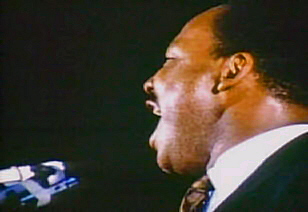
Martin Luther King Jr. (January 15, 1929 – April 4, 1968) achieved a moral stature and Christian witness that continues to inspire people of all faiths across the world. His life and work is commemorated not as a feast of the Roman Calendar but of the United States, on the third Monday of January each year. The human rights leader and Nobel Peace Prize laureate was 35 at the time of his assassination in Memphis, Tennessee.

Most people are familiar with his “I Have A Dream Speech” on the National Mall in Washington, D.C. However his final speech, delivered on April 3, 1968, “I Have Been to the Mountain Top,” not only presaged his death, but summarized his great vision for us all. You can hear by clicking on this link. It is well worth hearing in its entirety, not only because Dr. King was one of the great masters of English rhetoric, but the actual spoken message in its wonderful cadences, rich inflections, and profound rhythms stirs the soul with their inspiration.

Is Dr. King a saint? It is ironic to pose this question in regard to a Baptist minister, whose denomination – among others – has criticized the “worship” of the saints by Catholics. Like Dorothy Day, we can probably assume that Dr. King would dissuade us from giving him the title and remind us to return to the work of serving the least among us.

What is most remarkable about Dr. King’s legacy was the Christian witness of non-violence. Very easily, Dr. King could have kept the oppression of black people in the United States on a political level and built a base of power for himself. He also could have kept it on a “spiritual” level by focusing on the “next” life. Dr. King did neither. As a result, he elevated the whole movement to one of social justice and human rights for the children of God – of the “I” encountering the “thou” of the other person.

Let us develop a kind of dangerous unselfishness. One day a man came to Jesus, and he wanted to raise some questions about some vital matters of life. At points he wanted to trick Jesus, and show him that he knew a little more than Jesus knew and throw him off base….

Now that question could have easily ended up in a philosophical and theological debate. But Jesus immediately pulled that question from mid-air, and placed it on a dangerous curve between Jerusalem and Jericho. And he talked about a certain man, who fell among thieves. You remember that a Levite and a priest passed by on the other side. They didn’t stop to help him. And finally a man of another race came by. He got down from his beast, decided not to be compassionate by proxy. But he got down with him, administered first aid, and helped the man in need. Jesus ended up saying, this was the good man, this was the great man, because he had the capacity to project the “I” into the “thou,” and to be concerned about his brother.

Go and do likewise. (Luke 10:37)

Like anybody, I would like to live a long life. Longevity has its place. But I’m not concerned about that now. I just want to do God’s will. And He’s allowed me to go up to the mountain. And I’ve looked over. And I’ve seen the Promised Land. I may not get there with you. But I want you to know tonight, that we, as a people, will get to the promised land!

And so I’m happy, tonight.

I’m not worried about anything.

I’m not fearing any man!

Mine eyes have seen the glory of the coming of the Lord!!

Read More

Posted by on Jan 21, 2008

Saints of the Day – Sts. Timothy and Titus – January 26

Saint of the Day: St. Agnes of Rome – January 21

st-agnes-gauld.jpg

St. Agnes (291-304) was a twelve year old Roman girl who was killed on January 21, 304 because she refused to marry the son of the Prefect Sempronius. Agnes was killed because she was a Christian virgin and wished to remain so. She is an early heroine of the church at Rome and is mentioned in the Eucharistic Prayer – the Great Thanksgiving – of the Mass.

There is very little we know about her except that she was a real historical person. Her faith and her strength at such a young age were seen as remarkable by Christian and non-Christian alike. In and of itself, it was considered a miracle. Agnes’s defiance of authority was not only rare, it was also foolhardy, particularly for a woman, let alone a girl, in her time and culture. In a culture which was licentious and in which the slaves and less powerful had no control of their own futures, let alone of their own bodies, Christianity would set a new standard which we take for granted today in a post-Christian world.

St. Agnes was martyred in the last great wave of persecution under the Emperor Diocletian. Within 20 years of her death, Christianity would become legalized in the Empire and the love of Christ for which she died would spread beyond her time and place throughout history. Human rights: dignity, autonomy, opportunity – the right to be whole, free, in love, caught up in the divine – were announced by the faith of a young girl of faith a long time ago.

Read More

Posted by on Jan 18, 2008

Saints of the Day – Sts. Timothy and Titus – January 26

Christian Unity: A Week of Prayer – Chair of Unity Octave

chair-of-unity-poster-2008.jpg

One hundred years ago, a group of Episcopalians – the Franciscan Friars and Sisters of the Atonement – led by Fr. Paul Thomas Wattson and Sr. Mary Lurana White in Garrison, New York at Graymoors, started the observance of a week of prayer for Christian unity. The whole story is fascinating and encouraging since it traces the emergence of ecumenism in the 20th century. Fr. Wattson and the Franciscan Order of Atonement, which he co-founded, entered the Catholic Church in 1909 but continued to promote Christian Unity.

During the 1920s and 30s there was a growing movement for Christians to observe a week of prayer for Christian unity. During the Second Vatican Council (1962-1965), interfaith dialogue and prayer received a new emphasis with the 1964 issue of the Decree on Ecumenism, which called prayer the core of the ecumenical effort and encouraged Catholics to observe a week of prayer. In 1966, the Faith and Order Commission of the World Council of Churches and the Vatican Secretariat for Christian Unity began working on a common set of prayers for the Octave. Since 1968, The Graymoor Ecumenical and Interreligious Institute has facilitated and published the international texts for use in the United States. In 1991, a Sunday was incorporated into the week of prayer. Each year’s theme is developed by an ecumenical group whose members are appointed by the World Council of Churches and the Pontifical (Catholic) Council on Ecumenism. The 2008 theme is “Pray without ceasing” (1 Thes. 5-17).

Read More

Posted by on Jan 17, 2008

Saints of the Day – Sts. Timothy and Titus – January 26

Saint of the Day: St. Anthony the Great – January 17

stanthony-abbot.jpg

The feast of St. Anthony the Great (251-356) is January 17. In the Egyptian or Coptic Orthodox and Coptic Catholic Churches, the feast day is January 30. He is also known as St. Anthony the Abbot and is an early example of the Christian monk. What we know of his life comes from a biography written by St. Athanasius, the patriarch of Alexandria in Egypt. The account was written in Latin and had a major impact on the development of monasticism in the West. Devotion to St. Anthony is less prominent in the East.

St. Anthony is best known for his literal following of the Gospel. According to St. Athanasius, St. Anthony’s parents died when he was a young man. Hearing the call of Christ in St. Matthew’s Gospel to sell everything he had and come follow Christ, St. Anthony, who had inherited a substantial estate from his parents, did just that. He spent his life in the desert, primarily alone, although toward the end of his life he did supervise some other monks who had joined him. They lived with the fundamental rule to work and pray, which would later be echoed by St. Benedict of Nursia.

What is noticeable in the account of St. Athanasius is the theme of spiritual warfare with the devil. St. Anthony overcame many temptations through prayer and faith. His life in the desert brought him the same temptations that Christ encountered during His soujourn in the desert. What is even more notable is that St. Anthony emerged from his time of testing as someone enlightened who could comfort and heal, someone people sought out not for his wisdom or knowledge, but for his goodness and genuine holiness.

As postmodern people, we have a highly developed notion of individual psychology and it can be difficult to relate to someone like St. Anthony. Our notion of self-actualization appears to get in the way of such an extreme life style of self renunciation. However, it is hard to see how such enlightenment is not the highest form of self-actualization. Today our spiritual heroes, such as Mother Teresa, have chosen a very challenging path not unlike that of St. Anthony. What desert are we being called to?

Read More

Posted by on Jan 7, 2008

Saints of the Day – Sts. Timothy and Titus – January 26

Astronomy and the Star of Bethlehem

star-of-bethlehem.jpg

As we approach the end of the Christmas season in this week after the Epiphany, I wanted to share two interesting astronomical sites about the Star of Bethlehem.

Astronomynotes.com blends historical, scriptural, and astronomical sources to take us back to the birth of Christ.

BethlehemStar.net is a well done site blending scientific and excellent historical information to arrive at dates and times for the Christmas Star and also for the Crucifixion. This site is more devotional and more evangelical in that is desires to elicit a faith response.

Both sites are excellent blends of faith and reason. However BethlehemStar.net makes a definite but discrete appeal to conversion.

Read More