Pages Menu
RssFacebook
Categories Menu

Posted by on Feb 8, 2008

Saint of the Day: St. Josephine Bahkita – February 8

Saint of the Day: St. Josephine Bahkita – February 8

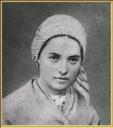
st-josephine-bakhita.jpg

St. Josephine Bahkita (1869-1947) was born in Olgossa in the province of Darfur, Sudan. She was kidnapped and sold into slavery at the age of 7 and was sold 5 times in the markets of El Obeid and Khartoum. Her suffering and abuse were immense. Her fourth owner, an Ottoman army officer, had her and his other slaves tatooed and scarred to mark them as his property. Once the sons of her owner beat her so severely that she could not move from her straw pallet for a month. Her fifth buyer was the Italian consul ,who treated her more humanely, but nevertheless gave the 16 year old to one of his friends, who made her a nanny to his daughter. St. Josephine and the girl she cared for were sent to the Canossian Daughters of Charity in Venice while the parents returned to Africa.

Upon their return, St. Josephine refused to leave with them. In the ensuing court case, the Canossian Sisters and the Patriarch of Venice intervened on her behalf. The court upheld her freedom and she returned to the Canossian Sisters. She spent the rest of her life happily as the door keeper in the convent in Schio and was in frequent contact with the community. St. Josephine was known for her cheerfulness and holiness. In her later years, her order asked her to write her memoirs and to give talks about her life story. Efforts to declare her a saint began soon after her death in 1947 and she was canonized (declared a saint) in 2000.

As terrible as her story of slavery is, it might be more bearable if we could relegate it to the horrors of 19th century Africa. Unfortunately, turmoil in Darfur and human trafficking are even more prominent today. There might be some solace in St. Josephine’s designation as the patron saint of Sudan, except that genocide in Darfur is directed at Christians and animists by a hostile government in Sudan which is protected from international sanction by its commercial ties with China. The persecution of Christians has spread to other African countries in recent years as well.

St. Josephine is remarkable not only because she was able to survive such a cruel childhood and adolescence, but because she rose from it in a spirit full of happiness. Bitterness, depression, anxiety, even hostility, and self-destruction are the more likely outcomes of such an horrendous youth. Credit also has to go to the Canossian Sisters who could have turned a blind eye to the plight of an African and not opposed a prominent family. St. Josephine could have taken a certain morose refuge with the Sisters, but instead she became an unassuming beacon of holiness.

I don’t think that she would want us to forget about Darfur and the resurgence of slavery in our globalized economy. What will we say when we meet her one day? Make a donation to help out.

Image of St. Josephine Bahkita from the website of the Canossian Daughters of Charity.

Read More

Posted by on Feb 7, 2008

Saint of the Day: St. Josephine Bahkita – February 8

Christ in the Desert and the County Jail

christ-of-maryknoll.jpg

On Shrove Tuesday, while much of the world was at Mardi Gras, I was praying and sharing scripture with a small group of inmates at the county jail. Our scripture was the Temptation of Christ (Luke 4:1-19). One thing that emerged in our prayer and reflection was Christ’s acceptance of the Father’s way of rejecting power and advantage in the announcement of the Kingdom.

Why take the hard way? God could have redeemed us in many different ways. Why such a horrible death? Why did the Spirit drive Jesus into the wilderness after his baptism by John? Why was the Son of God fasting and praying for 40 days?

One of our group restated a common view that the offenses of humanity had become so severe that God demanded the most severe appeasement. I suggested that maybe the answer was in the persistence of evil in our lives. For so many of the men I was praying with, their lives had been damaged by forces beyond their control – poverty, addiction, and mental illness. (Hardened criminals generally don’t come to a prayer meeting in our jail. The faith of those who do come is something, I am sure that Jesus did not find in Israel and does not find in most respectable Christians.)

Christ, who was like us in all things but sin, chose to identify with the powerless and to put his faith in the Father through non-violence. Utter foolishness – according to St. Paul. In our suffering and defeat how could we be one with a God who was not defeated – a God who was not an utter failure? Did the Father exact this humiliation out of a some perverse pleasure unworthy of a human father?

That community of Divine love – Father, Son, Holy Spirit – Creator, Redeemer, Breath of Life come to the heart as love. Love can never be forced. True love can never come through power, glamour, or glitz. As we reflected and prayed it became more obvious to us that God can only come to us in compassion and that is how we come to him. Yet compassion is not compatible with power, wealth, and success – like a camel passing through the eye of the needle.

God with us. God like us. Powerless in love.

Read More

Posted by on Feb 5, 2008

Saint of the Day: St. Josephine Bahkita – February 8

Feast of the Day – Ash Wednesday

ash-wednesday.jpg

“…As we live through this Ash Wednesday, may the crosses of ashes that mark our foreheads be a reminder to us and to those we meet that we belong to your Son. May our worship and prayer and penitence this day be sustained throughout these 40 days of Lent. Bring us refreshed and renewed to the celebration of Christ’s resurrection at Easter.” – A Prayer for Ash Wednesday

Ash Wednesday marks the beginning of the Lenten season of preparation and renewal for the Easter Triduum. The season of Lent has an ancient and interesting history. From the earliest centuries there were various periods of preparation for Easter. The tradition of prayer, fasting, and alms giving has evolved over time. Lent used to begin on Sunday like the other liturgical seasons. However, Pope St. Gregory the Great moved it to Wednesday to acurately mark 40 days – not counting Sundays – prior to Easter.

Ashes have a long history and deep significance in the Bible. Sack cloth and ashes are ancient symbol of mourning and repentance. Fasting and almsgiving are also prominent in the Old and New Testaments. Fasting focuses our attention on our need for God and alms giving reminds us that our service to the poor and the marginalized is service to God.

With the renewed focus on the baptism of adult catechumens at the Easter Vigil, Lent has become, once again, a time in which the community recalls, relives, and renews its life in the Paschal Mystery – the Crucifixion, Death, and Resurrection of Christ.

Read More

Posted by on Feb 5, 2008

Saint of the Day: St. Josephine Bahkita – February 8

Saint of the Day: St. Agatha – February 5

st-agatha.jpg

St. Agatha was a virgin martyr around the year 251 in Catania, Sicily. That is all we really know about her. She was honored widely in many parts of Europe and, centuries later, legends were written about her martyrdom. However, The Catholic Encyclopedia gives little credit to this story, since it appears that it was written much later to depict heroism and miracles without any real historical information.

The legend is almost stylized. She was a beautiful young woman from a noble family who refused the advances of a Roman official. She was tortured and put through many trials but was steadfast in her faith. While it is unfortunate that we know so very little about St. Agatha, it is telling that such a male dominated society as Rome would focus on the importance of young women and their great courage.

Women played a significant role in the development of early Christianity. St. Paul refers to the deaconness Phoebe and to other prominent women leaders. There is good historical evidence that well-to-do Greek and Roman women were among the first believers. Widows, who generally had very little power and wealth, would find a secure place in Christian communities, which saw to their needs.

Perhaps the best legacy of St. Agatha and these brave women, a legacy that we can truly celebrate, is a commitment to and a concern for the women and girls in our midst. Despite the advances made in industrialized societies, the lot and fate of women and girls is one of continued oppression and exploitation throughout the world. While I could recount some of the cultural celebrations observed on St. Agatha’s feast day or mention that she is invoked to protect people from eruptions of Mt. Etna, there is a greater import in the brief historical note that gives us her name and documents her martyrdom. The power and strength of God are manifest in the feminine.

Read More

Posted by on Feb 4, 2008

Saint of the Day: St. Josephine Bahkita – February 8

Mardi Gras / Carnaval – A Non-Moveable Feast?

carnival-brazil.jpg

Shrove Tuesday, the day before Ash Wednesday, has often been a raucous holiday throughout the Catholic world. In New Orleans we have “Fat Tuesday” – literally Mardi Gras. In Rio de Janeiro and Venice, the day before the beginning of the Lenten season of preparation for the Easter Triduum is called Carnival, or Carnaval in Portuguese.

The Carnival celebration in Rio de Janeiro has become a major part of the economy, due to the tourist trade and large expenditures for floats, constumes, and neighborhood performance groups. Although the celebration was only introduced in 1845 by European elites imitating the Parisian celebration, Carnival has taken on a life of its own and has incorporated African and Amerindian elements. In 2008, Carnival will attract 700,000 tourists and $510 million dollars. Like New Orleans, the party can start a whole week before the actual day of Carnival.

Of course there are always problems with success. The key one for Mardi Gras is that the date is 50 days before Easter. This means that the actual date of Carnival floats in relation to the date of Easter, following the lunar calendar. Easter is celebrated on the first Sunday after the first full moon of Spring. For Brazil, Carnival marks the end of the southern hemisphere’s summer vacation season. If Carnival comes too early, as it does this year, on February 5, the vacation and tourist trade can dry up. In fact, the date of Carnival can range from February 3 to March 9 – a span of 5 weeks.

The big problem is that when Carnival is over, the party is over. Lent begins with its fasting, penance, and almsgiving. Big parties are not in keeping with the season. The hotel and tourism industry in Brazil are concerned that this will mean a huge economic loss. The “summer” economic season would end 7 weeks early. There is a movement in Brazil to make Carnival the first Sunday of March to avoid these economic dislocations. The Secretary General of the Brazil’s Catholic Conference of Bishops, Dom Dimas Lara Barbosa, is not opposed in principal to moving the date to January so that the festival will not occur during Lent.

January seems a little to close to Christmas and New Years and so there has been some thought of turning Carnival into a purely secular festival. But then again, it wouldn’t be Carnival if it were. On the other hand, many of our Protestant cousins would probably remind us that Carnival seems to have gone beyond any deep religious significance anyway.

Read More

Posted by on Feb 2, 2008

Saint of the Day: St. Josephine Bahkita – February 8

Saint of the Day: St. Blaise, Bishop & Martyr – February 3

st-blaise.jpg

Through the intercession of Saint Blaise, bishop and martyr, may God protect you from all ailments of the throat and from all forms of evil. Amen.’  ~Blessing given on the feast of St.Blaise

St. Blaise was martyred for the faith around 316. That is all we actually know about him.  However, his feast has been celebrated from the very early centuries. The Catholic Encylopedia and other scholarly sources reject the Acta or Deeds of the life of St. Blaise as history and regard them as legend. According to this old story, St. Blaise was bishop of Sebastea in Armenia and was tortured and executed under the persecution of Licinius after he had been discovered in the countryside. As he was being led off by his captors, a mother brought him a baby who was choking on a fish bone. St. Blaise prayed for the baby, who was immediately cured.

Consequently, St. Blaise has been associated with the relief of throat ailments, both physical and spiritual. (Spiritual aliments would include things like gossiping, coarse language and lying.) When I was a boy in the 1950s, this day was marked by the blessing of throats with crossed unlighted candles. For those of us who were altar boys, it took a little reminder that after the Last Gospel (the Prologue of St. John’s Gospel), the final blessing and the prayers for the conversion of Russia (they must have been heard after all), we had to return to the communion rail and accompany Father for the blessing of the throats. Like many of the Latin rituals, its beauty and the sweet beeswax smell of the new candles was somewhat marred by the rapid droning of the blessing and a certain assembly line efficiency, as we made several circuits of the communion rail.

As nice as it was, we never focused on his witness as bishop and martyr. There was just enough documentation to verify that St. Blaise was an historical figure and to spare him from the fate of St. Christopher, whose legend was quietly declared a myth. Everything else about St. Blaise is veiled in legend and the mists of time.

Read More

Posted by on Feb 2, 2008

Saint of the Day: St. Josephine Bahkita – February 8

Feast of the Day: The Presentation of Christ in the Temple – February 2

presentation-icon.jpg

St. Joseph & Prophetess Anna; St. Mary, the Christ Child, & the Prophet Simeon

The Feast of the Presentation of Christ in the Temple is February 2 and is known in the West as the Feast of the Purification of the Blessed Virgin Mary. Around 450 in Jerusalem, people began holding lighted candles during the Liturgy on this day and it became known as Candlemas. The feast has always had more prominence in the East. However, it has been celebrated in the West since the 11th Century. It marks the formal end of the Christmas season.

The presentation commemorates the ritual purification of Jewish mothers on the 40th day after birth and the redemption offering for first born sons. (Luke 2:22-40) At the temple, the Holy Family meet Simeon who had prayed for the coming of the Messiah and had been assured by God that he would not see death until he had seen the Savior of Israel.

28 Simeon took him in his arms and praised God, saying:
29 “Sovereign Lord, as you have promised,
you now dismiss your servant in peace.
30 For my eyes have seen your salvation,
31 which you have prepared in the sight of all people,
32 a light for revelation to the Gentiles
and for glory to your people Israel.”

33 The child’s father and mother marveled at what was said about him.

34 Then Simeon blessed them and said to Mary, his mother: “This child is destined to cause the falling and rising of many in Israel, and to be a sign that will be spoken against,
35
so that the thoughts of many hearts will be revealed. And a sword will pierce your own soul too.”

36 There was also a prophetess, Anna, the daughter of Phanuel, of the tribe of Asher. She was very old; she had lived with her husband seven years after her marriage,
37
and then was a widow until she was eighty-four. She never left the temple but worshiped night and day, fasting and praying.
38
Coming up to them at that very moment, she gave thanks to God and spoke about the child to all who were looking forward to the redemption of Jerusalem.
39 When Joseph and Mary had done everything required by the Law of the Lord, they returned to Galilee to their own town of Nazareth.

40 And the child grew and became strong; he was filled with wisdom, and the grace of God was upon him.

There is really not much more to say, except to note the gratitude of Simeon and Anna and the bewilderment of Joseph and Mary. For those of us who have had the joy, bewilderment, and sleep deprivation characteristic of new parents, the experience rings true. So do the words of prophets in our lives – those strange outsiders who many times see our children more clearly than we can.

As glorious as the Canticle of Simeon is, there is a prayer that I learned when I was a new father:

“Lord, please help me to see my children the way other people do.” It is always unsettling – always a revelation.

Read More

Posted by on Jan 31, 2008

Saint of the Day: St. Josephine Bahkita – February 8

Saint of the Day: St. John Bosco – January 31

st-john-bosco.jpg

St. Giovanni M. Bosco (1815-1888) is commonly known in English as St. John Bosco or as Don Bosco.  The English honorific title of Don for a professor is well suited to a man who changed the teaching method from one of violence to one of encouragement and respect.

St. John Bosco was born in a cabin and grew up in poverty after the death of his father when Giovanni was still very small. He worked in the fields and as a shepherd and went to school as he could. From an early age, St. John Bosco had dreams about working with boys and bringing them to a better moral and social condition. As a young priest, he acted on this calling and started working with boys who had been imprisoned due to abandonment, neglect, abuse, and delinquency. Conditions in the mid-1800s in Italy were not unlike those chronicled by Dickens during the same period in England.

Although the bishop approved of his work, St. John Bosco met resistance and harassment from the public. He was forced to move his small chapel and school several times. The public saw these boys as a threat and as basically worthless. Finally, St. John Bosco was able to establish a school and workshop to give the boys training in printing and other trades of the early industrial revolution. The boys gravitated to him and his instruction because he showed that he cared about them and their physical well being. After grinding 12 hour days in the factories, the boys came to night classes to get the fundamentals of education and the faith.  The patron of his schools, and later of the order he founded, was St. Francis de Sales – another visionary educator who focused on the love of God.

It is important to remember that Italy was going through immense turmoil at the time and the Church was losing political control of the Papal States in the center of the peninsula.  Anti-clericalism was very strong as Italy made its way to political unification under a secular government. The work of St. John Bosco and his order, the Salesian Society, started a ministry based on social and economic development through technical and vocational education. Those boys and young men who had been considered disposable had their dignity restored and became productive members of society with a moral and religious foundation.

St. John Bosco’s work continues today among the lowest ranks of society all around the world in the schools and workshops of the Salesians of St. John Bosco.

Read More

Posted by on Jan 28, 2008

Saint of the Day: St. Josephine Bahkita – February 8

Saint of the Day: St. Thomas Aquinas – January 28

st-thomas-aquinas.jpg

St. Thomas Aquinas, the Angelic Doctor (c. 1225 – 1274), has been and continues to be one of the most influential forces shaping Catholic theology and philosophy. He was born at Roccasecca castle, the home of his father, Count Landulf, in the Kingdom of Naples. His mother was Theodora, Countess of Theate, and was related to the Hohenstafuen dyanasty of Holy Roman emperors. St. Thomas’s uncle, Sinbald, was the abbot of the first Benedictine monastery, Monte Cassino, and the family planned for him to succeed his uncle as abbot.

At the age of 5, St. Thomas was sent to Monte Cassino to begin his studies. At 16 he was sent to the University of Naples, where he came under the influence of the Order of Preachers – the Dominicans -who were innovators in a new style of religious life very different from that of traditional orders such as the Benedictines. St. Thomas upset his family by announcing his intention of joining the Dominicans. This action not only destroyed the family’s ambition to retain the power and prestige of Monte Cassino, but it was almost akin to running off with a band of hippies. Unable to convince him to renounce this foolishness, his family kidnapped him and held him for a year in the family castle of San Giovanni. Finally, Pope Innocent IV intervened and St. Thomas joined the Dominicans at 17.

St. Thomas and the Dominicans of his time introduced an entirely new way of approaching the faith. For 12 centuries, the Church teachers of the faith appealed to the authority of the scriptures and previous teachers such as St. Augustine or other Fathers of the Church. The scholastic movement, embodied by St. Thomas and his teacher St. Albert the Great, began with an open inquiry based on logic and reason. The traditional Faith was accepted as true, but thoughtful and logical reason were presented as to why it might not be true. Ultimately, various statements of belief were upheld, not only on the authority of the Church or tradition, but by reason and logic as well.

The format of the scholastic argument is the back bone of St. Thomas’s two major works, The Summa Theologica and the Summa Contra Gentiles. It is hard for us as post-modern people to imagine what a daring and threatening approach this was for the time. In fact the 1200s were a time of immense change in Europe. Trade and communications with the East had been reopened and with them came a flood of new and ancient knowledge. Trade and commerce increased the power and prestige of market towns at the expense of the countryside. Monastic schools gave way to early universities. The great Cathedrals began to dominate the landscape. The traditional clergy were overshadowed by the two great orders of mendicant friars (the begging brothers) – the Dominicans and the Franciscans.

St. Thomas, and his contemporary members of the scholastic movement, absorbed and transformed Islamic and Greek philosophy, science, technology, and mathematics. In particular, the Thomistic school of scholasticism is known for reviving the philosophy of Aristotle and its logic.

Over the centuries, scholastic philosophy would evolve and change in a variety of ways and St. Thomas – contrary to his own method – became the authority. Instead of being a fresh and bold inquiry, scholasticism degenerated into a catalog of arguments and answers to be memorized and repeated. In the Enlightenment of the 17th and 18th centuries, scholasticism and Thomism were disregarded by secular philosophies reliant only on reason. Thomism was also marginalized in training programs for priests.

In the late 1800s, there was a movement to restore Thomism as a defense against the secular philosophies of the Enlightenment and to renew some intellectual vigor in Catholic circles. It was an attempt to come to grips with the modern world and met heavy resistance. In the early 1900s, Thomism began to assume some prominence and neo-Thomism emerged with a renewed interest in the relationship between faith and reason. It is a long and complicated story, but it reflects the enduring importance of the work of St. Thomas and the changing moods of society and philosophy.

The core question persists. What can we know of God through reason? The second question follows. How reasonable is our faith?

If we want to honor a man who was a mystic, a saint, and an intellectual, it seems that we have to take on the openness of his inquiry and the wonder he beheld in faith.

Read More

Posted by on Jan 26, 2008

Saint of the Day: St. Josephine Bahkita – February 8

Saints of the Day – Sts. Timothy and Titus – January 26

friendship.jpg

Everybody needs friends – a real support network. St. Paul was no exception and he was very fortunate to have Timothy and Titus, not only as helpers and proteges in his missionary work, but as very close friends.

Their story, as told in the Acts of the Apostles and the Pastoral Epistles, shows their work on behalf of the Gospel. Yet there is so much more between the lines. Timothy went to be with St. Paul when he was under house arrest in Rome. St. Paul was anguished about Timothy’s own arrest. St. Paul made sure that Titus was not circumcised in Jerusalem – that he did not have to conform to that church’s notion that Baptism was not enough to enter the Kingdom of Heaven.

St. Paul could be lonely, discouraged, and moody like anyone else dealing with fatigue, mistrust, and the problems of the Christian communities which he founded. Even though his vocation was startling, miraculous and public, St. Paul wavered. He bargained with God. He was thoroughly human.

Timothy caught a lot of grief for being young and having to somehow soothe the roiling in various communities of the Faith. Titus had the unenviable task of delivering letters from St. Paul which were not exactly “good news” for the recipients. Unlike the postal service, he couldn’t excuse himself and take off. He had to stay and work things out.

The French saying, “The more things change, the more they stay the same,” applies to Christian communities from the very beginning to the present. As much as St. Paul and his friends relied on prayer, their friendship was a sacrament that many of us have experienced. Most of the time it is all too easy to forget that we are more than church members. To survive and reach past our own limitations and those of others, true devoted friends are the sacrament of God’s presence.

Read More