Pages Menu
RssFacebook
Categories Menu

Posted by on Nov 15, 2014

Te Deum – Our Catholic Song of Thanksgiving

Te Deum – Our Catholic Song of Thanksgiving

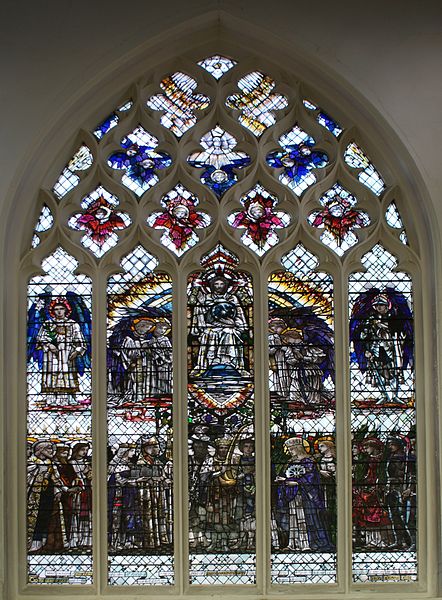
Te_Deum_window_by_Whall - cc-by-2.0 license


Te Deum Laudamus — We Praise You O God — is a traditional song of thanksgiving in the Church that is used on special occasions outside of the liturgy or in formal worship.

The videos below are of the ancient chant version dating from the fifth century, followed by Mozart’s version 12 centuries later.

The Te Deum window by Christopher Whall, from the church of St Mary the Virgin in Ware, England is an example of a physical structure depicting the church community joining with the heavenly realms in praise and thanksgiving.

Text and translation of the Te Deum.

TE DEUM laudamus: te Dominum confitemur. O GOD, we praise Thee: we acknowledge Thee to be the Lord.
Te aeternum Patrem omnis terra veneratur. Everlasting Father, all the earth doth worship Thee.
Tibi omnes Angeli; tibi Caeli et universae Potestates; To Thee all the Angels, the Heavens and all the Powers,
Tibi Cherubim et Seraphim incessabili voce proclamant: all the Cherubim and Seraphim, unceasingly proclaim:
Sanctus, Sanctus, Sanctus, Dominus Deus Sabaoth. Holy, Holy, Holy, Lord God of Hosts!
Pleni sunt caeli et terra maiestatis gloriae tuae. Heaven and earth are full of the Majesty of Thy glory.
Te gloriosus Apostolorum chorus, The glorious choir of the Apostles,
Te Prophetarum laudabilis numerus, the wonderful company of Prophets,
Te Martyrum candidatus laudat exercitus. the white-robed army of Martyrs, praise Thee.
Te per orbem terrarum sancta confitetur Ecclesia, Holy Church throughout the world doth acknowledge Thee:
Patrem immensae maiestatis: the Father of infinite Majesty;
Venerandum tuum verum et unicum Filium; Thy adorable, true and only Son;
Sanctum quoque Paraclitum Spiritum. and the Holy Spirit, the Comforter.
Tu Rex gloriae, Christe. O Christ, Thou art the King of glory!
Tu Patris sempiternus es Filius. Thou art the everlasting Son of the Father.
Tu ad liberandum suscepturus hominem, non horruisti Virginis uterum. Thou, having taken it upon Thyself to deliver man, didst not disdain the Virgin’s womb.
Tu, devicto mortis aculeo, aperuisti credentibus regna caelorum. Thou overcame the sting of death and hast opened to believers the Kingdom of Heaven.
Tu ad dexteram Dei sedes, in gloria Patris. Thou sitest at the right hand of God, in the glory of the Father.
Iudex crederis esse venturus. We believe that Thou shalt come to be our Judge.
Te ergo quaesumus, tuis famulis subveni: quos pretioso sanguine redemisti. We beseech Thee, therefore, to help Thy servants whom Thou hast redeemed with Thy Precious Blood.
Aeterna fac cum sanctis tuis in gloria numerari. Make them to be numbered with Thy Saints in everlasting glory.
V. Salvum fac populum tuum, Domine, et benedic hereditati tuae. V. Save Thy people, O Lord, and bless Thine inheritance!
R. Et rege eos, et extolle illos usque in aeternum. R. Govern them, and raise them up forever.
V. Per singulos dies benedicimus te. V. Every day we thank Thee.
R. Et laudamus nomen tuum in saeculum, et in saeculum saeculi. R. And we praise Thy Name forever, yea, forever and ever.
V. Dignare, Domine, die isto sine peccato nos custodire. V. O Lord, deign to keep us from sin this day.
R. Miserere nostri, Domine, miserere nostri. R. Have mercy on us, O Lord, have mercy on us.
V. Fiat misericordia tua, Domine, super nos, quemadmodum speravimus in te. V. Let Thy mercy, O Lord, be upon us, for we have hoped in Thee.
R. In te, Domine, speravi: non confundar in aeternum. R. O Lord, in Thee I have hoped; let me never be put to shame.


Read More

Posted by on Nov 15, 2014

Te Deum – Our Catholic Song of Thanksgiving

Discurso del Papa Francisco

800px-Petersdom_von_Engelsburg_gesehen - public domain

La conclusión del Sínodo Extraordinario termina la primera etapa del proceso de los obispos a reflexionar sobre cuestiones y necesidades pastorales de familias y los del sacramento de matrimonio. En su discurso al concluir el Sínodo, el Papa Francisco les agradeció a los participantes y al Espíritu Santo por el  éxito del sínodo. Tambíen el Papa recomienda a todos que sigan madurando las reflexiones y las ideas propuestas en sus conferencias episcopales como  segunda etapa del proceso. Luego, regresarán los obispos de nuevo para la tercera etapa del proceso, El Sínodo Ordinario sobre la Familia que empezará in Octubre de 2015.

Para el texto entero del discurso, haga clic abajo.

Discurso del Papa Francisco al concluir Sínodo Extraordinario de los Obispos sobre la Familia

Read More

Posted by on Oct 9, 2014

Te Deum – Our Catholic Song of Thanksgiving

Synods and Councils — What is Going On?

Mark Shea

Mark Shea


“Mark, have you been following the news coming out of the Synod? I’m sick with worry! Some of the ideas they are talking about aren’t at all what I learned from reliable Catholic sources!”

Yes. That’s true. And that’s *normal*. A conciliar event in the life of the Church is when, in the memorable description of Fr. Robert Barron, the Church “holds itself in suspense” as it makes up its mind. We do this too in moment of discovery and decision-making (if we are smart). We find that we face a problem, one which does not seem to yield to ways we have hitherto thought or methods we have hitherto used for navigating life. Click here for more…

Read More

Posted by on Oct 6, 2014

Te Deum – Our Catholic Song of Thanksgiving

Music Evokes the Sacred – The Piano Guys

The Flame of Music

The Flame of Music


The Piano Guys have produced many inspiring productions. Generally the Piano Guys will do a medley of two compositions. In this one they mix the theme from the movie The Mission with How Great Thou Art.  The Mission was a 1986 film which told the story of the Jesuit missions in Paraguay. The Iguassu Falls which form the backdrop of this video are also the general location of the Jesuit missions. The combination of the native Guarani music and dance with the European musical instruments and forms created a wonderful music that is still heard today.

The Guarani fought to maintain their freedom when Europeans sought to enslave them. In the war that followed, the missions were destroyed along with the Jesuits who stood with their Catholic parishioners. It is a tale of light and shadow, of grace and sin, and a struggle that still goes on in South America today as Pope Francis reminds us. Yet the music does not die but reflects the light of the Burning Bush.

Read More

Posted by on Oct 2, 2014

Holiness Throughout the Day – The Liturgy of the Hours

Holiness Throughout the Day – The Liturgy of the Hours

Many people of a “certain age” remember when priests would sometimes wander around the church yard holding a black leather bound book. It was called the Divine Office and was re-christened the Liturgy of the Hours after Vatican II.

The Liturgy of the Hours is the official prayer of the Church. Many religious orders such as the Dominicans, Franciscans, and  Benedictines pray the liturgy of the hours in a formal church setting with chant. St Dominic’s Church in San Francisco has a wonderful series on the Liturgy of the Hours in their online newsletter. The Liturgy of the Hours can be shared at home by couples and the entire family in ways that are suitable for children, making it a happy experience. In the home church, example is everything. Many people pray two of the hours – morning (lauds or praise) and evening prayer (vespers). Night prayer also know as compline makes a beautiful ending of the day.

For the digital generation, the Liturgy of the Hours can be found on sites such as www.bookofhours.org, www.universalis.com, and www.ibreviary.org. You can open the Liturgy of the Hours on your mobile phone or tablet and click on the links as opposed to the marking of sections with colored ribbons in the printed version. If you are not praying with a monastic community, some people recommend the digital version as a way to get started. For a special treat listen to the daily podcasts by the Sisters of  Perpetual Adoration of the Liturgy of the Hours.

Read More

Posted by on Sep 5, 2014

A Church for the Poor – The Vision of Pope Francis

A Church for the Poor – The Vision of Pope Francis


What of kind of church does Pope Francis envision? Jorge Bergoglio, in his initial public statements and even in the choice of his Papal name, Francis, has made it clear that the church needs to be a servant of the poor and the herald of the gospel. These terms come from Cardinal Avery Dulles’ Models of the Church and are based on the documents of the Second Vatican Council (1961-1965). While most of us tend to see the church as an institution and perhaps as a sacrament, Pope Francis is highlighting the notion of the church as a community, a school of disciples, which is the servant of the poor in its role as herald of the gospel.

This emphasis began before Vatican II but it became especially pronounced after the council in a movement called liberation theology. For St. John Paul II, this approach was more reminiscent of Marxism than the gospel, so he took certain steps to curtail it. Pope Benedict XVI, his successor, took a more measured view and focused on aspects of this theology that started from a pastoral and community viewpoint as opposed to a political one. At an important conference to promote this view in Aparecida, Brazil in 2007, Pope Benedict XVI chose Jorge Bergoglio, Archbishop of Buenos Aires to formulate this renewed expression of a church for the poor.

In a recent opinion column in the New York Times, Paul Vallely, Director of The Tablet, an international Catholic weekly publication based in London, outlines the history of Liberation theology and the Pope’s restoration and enhancement of it. The pope welcomed Fr. Gustavo Gutierrez to the Vatican earlier this year. Fr. Gutierrez began the movement with his 1971 book A Theology of Liberation. Pope Francis has also removed the block placed by St. John Paul II to the canonization process of Archbishop Oscar Romero of El Salvador who because of his opposition to political repression was shot while saying Mass. An even more telling sign is the Pope’s treatment of Nicaragua’s former foreign minister, Fr. Miguel D’Escoto Brockman. Fr. D’Escoto had been suspended from the priesthood by St. John Paul II and Pope Francis has lifted the suspension.

A pope who lives in a guest house and stands in the cafeteria line with his own tray has taken hold of the attention and imagination of the Catholic and non-Catholic world alike by being a voice for the voiceless. Pope Francis is leading us to be a different kind of church, one that is closer to the gospel, less secure, less majestic, ready to serve the suffering Christ in the destitute of the world.

Read More

Posted by on Aug 5, 2014

Stepping Out, Stepping Overboard

Stepping Out, Stepping Overboard


Peter sees Jesus coming toward him walking on the water in the wind and waves.
“Lord if it really is you – Call me”
In our troubled stormy lives we think we see Jesus
“If it is you – Call me”

When our job has crashed, when we have problems with our children, with our marriages
When we are dealing with illness or the death of a loved one
Our world is rocked – our boat is too small in this wind and waves
Jesus appears or does He?

We pick up the phone to ask for help — we start, we get overwhelmed
We are going to talk with our spouse or our children — we start, we get overwhelmed
We are going to tell the therapist about that terrible thing that happened to us — we start, we get overwhelmed
We start to deal with our diabetes, our obesity, our negativity — we start, we get overwhelmed

We are overwhelmed by the wind and waves of our own pain, our own fear, by the truth

Why do we doubt?
Jesus can walk on the wind and the waves
He heals the sick, raises the dead, drives out demons
Why do I think that He cannot help me? Cannot save me?

When the wind of my fear, the waves of my own pain, and truth are too much
He will reach out to save me,
Bring me back to the boat and
Calm the wind and the waves.

All we have to do is to step out, to step overboard.

A reflection on Matthew 14: 22-34

Read More

Posted by on Jul 25, 2014

Vocation as a “Worthy Dream”

Vocation as a “Worthy Dream”


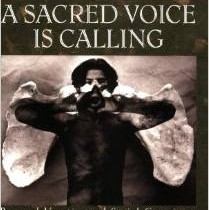
A Sacred Voice is Calling: Personal Vocation and Social Conscience is a remarkable book. John Neafsey argues that vocation is the seeking and finding of a “worthy dream” that makes all other possible options for spending one’s life pale in comparison. Social justice is a key component of vocation for all Christians since it flows from our call at Baptism and Confirmation to proclaim and make present the Kingdom of Heaven, God’s reign of peace and justice. Ordained ministry or a consecrated religious life might be that worthy dream for some. For others, the worthy dream will lead to a very different life path. All are calls to vocation.

Vocation Just for a Few?

Before and to some extent even after Vatican II, the notion of vocation was focused on ordained ministry or consecrated religious life. Vocation directors were and still are official recruiters for dioceses and religious orders. Today, when we hear of the “vocation crisis” or the shortage of “vocations”, the general reference is to the decline in the number of priests, brothers, and nuns.

While the concept of vocation continues to be applied more commonly to that of ordained or consecrated individuals, Neafsey demonstrates that Vatican II is gradually changing our understanding of what a vocation is. The concept of vocation as a sacred calling is developing today based on newly emerging understandings of human development, the Church itself, and our scriptural calling to live out the Good News. In particular, working toward social justice is a key component of any vocation and plays a primary role in deepening our relationship with God.

Vocation as a worthy dream for all

Neafsey’s notion of vocation as a worthy dream is radically different from the more static pre-Vatican II notion of becoming a priest or a consecrated religious. Limiting the concept of vocation to priests and religious is not optimal in a faith community in which all are seen as called and gifted: the community as presented in the Vatican II documents, particularly Gaudium et Spes (On the Church in the Modern World) and Lumen Gentium (On the Church). The worthy dream may indeed take one person on the path of servant leadership as a priest or deacon, but the worthy dream is the result of a perpetual vision quest and may lead another to a different path. This path of the servant leader is also the path of charity and of justice shared by all. It is our participation in the ministry of the Risen Christ.

Our lives in the Trinity are dynamic love encounters of each moment in chronological time (chronos) with God’s designated moment of divine action (kairos). Our calling to live fully in the Trinity is all about the agony and the ecstasy of falling, being, and remaining in love. Certainly, there is a close connection between our special gifts and talents or charisms and the Church as a structured community, since our gifts flow from the Holy Spirit. Working out our vocations is not necessarily free of conflict, doubt, and suffering. Yet we are called in Christ to the messiness of relationships with others in a relational God. We have only to read the letters of St. Paul to see that this is nothing new.

Yes, we need “vocations” as an institution, but in another sense “vocations” don’t exist. Spirit-filled, joyous people, however, do exist. By encouraging, nourishing, and loving each other, we are part of a larger cosmic focus of Divine Love that brings and holds everything in being. Dancing in that love is vocation. As an organization, all we have to do is to be open not to a job applicant but to someone on fire in Divine Love. Then we will be open to the Christ in our midst. Any other talk of vocation is merely a temptation to careerism, clericalism, or conceit.

Just as married love is a vision, a reality, a dream, and an ongoing quest, the same is true of the experience of hearing, hoping, believing, and the joyous union that is “vocation” in the more traditional sense. This notion of being in love with God and being called deeper may sound “non-traditional”. However, we have to look no further than the Scriptures and the tradition of the Church to realize how much the notion of the Church – the assembly of the faithful – as a modern industrial organization with job descriptions is a novel folly. It is certainly understandable due to our experience of government agencies and corporations that we might look at vocations as filling job positions. Unfortunately, we can lose sight of the sacred dimensions of the Church as a charismatic community incarnated into a human world and caught up in the divine spiral toward the Omega Point of fulfillment in Christ.

The gift of a worthy dream will take many shapes and forms. To be of service to others in teaching, healthcare, music, the arts, exploring nanotechnology, or astrobiology can be a worthy dream, taking many twists and turns. The same is true in ministry. We present ourselves to the community and test whether our deepest gladness meets the deepest need. We test the spirits that may be affecting us in discernment, and follow the Spirit in the Mystical Body of Christ that is the Church.


For more of Neafsey’s insights on vocation, read this interview from Programs for the Theological Exploration of Vocation.

Read More

Posted by on Jul 20, 2014

Theology As the Everyday Awareness of God in Our Lives

Theology As the Everyday Awareness of God in Our Lives

Anthony F. Krisak writes in “Theological Reflection: Unfolding the Mystery” that theology “is not an abstract musing ..but it is a challenging and thoughtful reflection on the way God’s hand is involved in the day to day experiences of men and women…Rather, theology is about God-with-Us (Emmanuel).”

The window of theology

Krisak makes it clear that reflecting on this divine encounter leads the observer to face “concrete, historical, and passionate movements and experiences.” Our experience becomes the “window of theology”. This window is useless if we understand mystery to be “unknowable ideas and complicated theories”. According to Krisak, if we understand  mystery as a continual unfolding event in and around us, theology can be that window to observe and interpret our own experience.

Theology as a window goes against the claims that God is unknowable and that we should just accept secondhand understandings of God provided to us by an intellectual elite. Theology as a window of observing and interpreting experience is a fundamental assumption in the primary project of Jesus, the coming of the Kingdom of Heaven. In the Gospels, Jesus tells us to observe the signs of the times and everyday experience — a person who sells everything for a fine pearl, the  rapid growth of the mustard tree from a tiny seed, the one who goes out to harvest a crop. It is faith that allows the sun to shine through the window of theology. “Through theological reflection, our intertwined lives with God become conscious and faithfully deliberate; in other words, we begin to take in more profoundly the sights and sounds and smell of our life with God and each other.”

Without theological reflection, the pressures of everyday living can cause us to lose sight of what we are all about. Krisak particularly warns ministers of this hazard, since his article appears in the Handbook of Spirituality for Ministers. However, it is easy to see how everyday lay people can also fail to pay attention to the action of God in their lives. Unfortunately, many are not even aware that they are called to reflect upon and deepen their experience of God by reflecting on and noticing God’s actions.

This is especially ironic since we live in a culture that focuses very heavily on relationships. We have large psychological, educational, and popular movements to help us find the right partners, to save our marriages, to raise our children properly, to organize our businesses, corporations, and churches. How do we improve our love life with God? How do we even relate to God? When we think about it, we know we do or at least we think we do. We are called to enter the Kingdom of Heaven, to proclaim it, and to bring it about in God’s grace. It is unfolding within us and around us.

What does theological reflection require?

Krisak wisely points out that the backdrop or context for our theological reflection is our shared faith in both the Hebrew and Christian traditions. To engage in fruitful theological reflection according to Krisak, we need to:

(1) understand the tools necessary for “cleaning up the window of theology”,

(2) consider the process of reflection in relationship to human experience, and

(3) take a look at the “major themes of our theological tradition” such as the incarnation and redemption,  among others.

In subsequent posts, I will review these three areas of focus that Krisak recommends for doing theological reflection and understanding the ways in which we are part of something much bigger than ourselves.

Image: “Simultaneous Windows” by Robert Delaunay,
1912, Public Domain


Read More

Posted by on Jun 23, 2014

Preaching and the Liturgy: Notes from Pope Francis

Preaching and the Liturgy: Notes from Pope Francis


The Joy of the Gospel, Pope Francis’ most recent Apostolic Exhortation, contains many wonderful and important topics for Christian living. One of the great advantages of the Pope’s exhortation is that it is easy to read and understand by the average reader. It is written in a clear, friendly, and non-technical manner. The only word that might need some explanation is “exhortation”. In Latin this is a type of speech given at a pep rally. It is a pep talk.

In The Joy of the Gospel, Pope Francis takes thoughts and ideas that can be complex and presents them in a clear way without watering them down. This review is the first in a series. We begin with the homily because it’s role is one of the least understood aspects of Catholic Christian life and liturgy.

The Homily

In sections 135 to 139 of The Joy of the Gospel, the Pope focuses on the homily. Technically, the homily is given by those to whom the Church has given the ministry of preaching — bishops, priests, and deacons. However, many lay people today give reflections on the scripture at prayer, scripture, and communion services in hospitals, jails, and labor camps. Some parishes have lay presiders for authorized communion services if priests are not available for Mass. Consequently, proclaiming the Gospel and preaching can happen, with the approval of the local bishop, in different situations outside the Mass by a wide variety of men and women who have been trained and approved. Sometimes, reflecting on the scriptures also happens in faith sharing groups and individual families.

So what does the Pope encourage us to do about homilies at Mass?

 137. It is worth remembering that “the liturgical proclamation of the word of God, especially in the eucharistic assembly, is not so much a time for meditation and catechesis as a dialogue between God and his people, a dialogue in which the great deeds of salvation are proclaimed and the demands of the covenant are continually restated”.[112] The homily has special importance due to its eucharistic context: it surpasses all forms of catechesis as the supreme moment in the dialogue between God and his people which leads up to sacramental communion.

 Pope Francis underscores the sacred sacramental nature of the homily as a “dialog between God and his people.” The homily is not entertainment, but it needs to give life and meaning to the celebration. In the context of the Mass the homily has to be short, according to Pope Francis, since it’s length can upset the “balance and rhythm” of the Eucharist. Preaching in the context of the liturgy becomes part of the offering to the Father and mediates the grace Christ pours out in the Mass. “This context demands that preaching should guide the assembly, and the preacher, to a life-changing communion with Christ in the Eucharist. This means that the words of the preacher must be measured, so that the Lord, more than his minister, will be the center of attention.”

“A life-changing communion with Christ in the Eucharist” seems like an impossible challenge. While the Pope makes it clear that this “life-changing communion” happens through the grace of God, how do we prepare ourselves to be open to such an experience as preachers and members of the assembly? Pope Francis recommends that preachers take a loving and maternal tone. Mothers are keenly aware of their children’s challenges, their strengths and weaknesses. The Pope assumes the ideal mother-child relationship of trust, happiness, and deep mutual love. Pope Francis characterizes the Lord’s teaching as a dialog. He defines dialog as “much more than the communication of a truth”. Dialog arises from the enjoyment of speaking and enriches people by the sharing of love for each other through conversation. In dialog persons share themselves. Talking with his people is something that the Lord enjoys. The Pope reminds preachers that their words and interaction should be focused on leading them to this same enjoyment of God’s people.

These few points do not even begin to scratch the surface of the Pope’s complete pep talk on preaching. What is remarkable are the themes of joy, enjoyment, and dialog. Very often the popular connotation of “preaching” is a negative, judgmental, and humiliating experience. Many times in the context of the Mass people are looking for a well articulated lesson about morality or Christian doctrine. The Pope and the Church, from the time of the Apostles, are calling us to something deeper, more radical, and very challenging. We are being called to enter the Divine conversation of the life of the Trinity, to hear the Divine Word and to be transformed both as speaker and recipient in the Holy Spirit’s dialog. Pope Francis urges us to take God at His Word.


The Joy of the Gospel – Apostolic Exhortation by Pope Francis,
United States Catholic Conference of Bishops, Washington, DC,
December 2013, also available at the Vatican web site.
Photo by CNS/Paul Haring

Read More