Pages Menu
RssFacebook
Categories Menu

Posted by on Feb 24, 2009

What are You Giving Up for Lent?

What are You Giving Up for Lent?

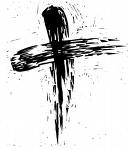
lent-cross-trinity-park-forest

In the “olden days when I was a girl,” the beginning of Lent was often met with the question, “What are you giving up for Lent?” The focus was on penance and self-mortification. Typically we gave up candy and television, though my mother allowed us to enjoy both on Sunday and my brother, whose birthday often fell during Lent, got to eat the candy from his slice of birthday cake.

The focus of Lent has changed in the past 40+ years and now we look to see what positive things we can do during Lent, to enrich our faith and to help those less fortunate around us. With this change of focus in mind, I’ve been reading the newspaper, listening to the  news on radio and TV and following the internet news on MSN.com in the past days and weeks. I’d like to share some gleanings from these sources obtained during the past 24 hours, with some thoughts about what maybe we should all give up for Lent!

The San Jose Mercury News reported today, February 24, 2009, that President Obama’s budget will include all government spending, including that for the military and the wars in which we are now engaged. The funding for war was never included in the budgets submitted by President Bush over the past 8 years, making it appear that total government spending was much lower than it actually was. (Hmm … I wonder how far my family would get if I left out a major portion of our expenses in my budget!)

Radio and TV news and talk radio shows: Critics of the proposed mortgage relief program are angry because they believe it will benefit people who “didn’t play by the rules” when buying or refinancing a home. They particularly condemn people who bought houses they now can’t afford or who got an adjustable rate mortgage whose payments have gone up too high, as well as those who are “upside down” on their loans because the real estate market has adjusted downward. (This despite the fact that lenders actively pushed such loans, encouraged refinancing into adjustable rate loans, and often left the self-employed with few options other than “stated income” loans for financing their homes as recently as 6 months ago.)

The SJ Mercury News again. As of 2007, 47% of senior citizens in California struggle to make ends meet. The Federal definition of a poverty level income was set at $10,000 annually in the 1950s and remains at that level. Nine to ten percent of California senior citizens fall below that income level. For the most part, these are people who played by the rules. Yet the funds to help them and those receiving disability payments from the state are being cut as part of the budget deficit solution here in California.  

Again the Mercury News. Public funding for family planning prevents an estimated 2 million unplanned pregnancies per year, resulting in approximately 800,000 fewer abortions. For each $1 spent on funding family planning, $4 is saved in Medicaid costs for prenatal care for lower income mothers. Nevertheless, opponents of funding these services claim that such services are a “shameful population control program that targeted low-income families.” [ Troy Newman of Operation Rescue speaking of the attempt by members of the House of Representatives to include such funding in the stimulus package.] (One wonders if there is any similar outrage about the ability of middle and upper income couples to pay for medications and/or services for planning the size of their families. Do only those with money have a say for themselves in such personal decisions?)

Also from today’s paper. Currently (2008), 46.6% of health care spending was paid by governments, including Federal, state and local funds. By 2018, over 51% will be paid by government sources, with no increase in entitlement programs (Medicare/Medicaid), amounting to a cost of $2.2 trillion. About 45 million Americans have no health insurance and the number is growing as people lose the jobs that provided it. COBRA coverage is too expensive for many of them because they no longer have jobs. Private insurance is also too expensive or cannot be purchased due to pre-existing conditions. The stimulus package helps those who lost their jobs after September 1, but not those whose jobs were lost in the 9 months of the recession which preceded that date. (The fact that care for the uninsured is much more expensive because they often wait until conditions are serious or life-threatening before seeking care at hospital emergency rooms has been well documented. Then hospitals charge everyone more to cover the cost of care that they must provide and write off in order to qualify for federal funding. Does this make sense?)

Federal deficits during the recent Bush administration began at $158 billion and ended at $455 billion, totalling $2.5 trillion. (Is that without including the war funding?)

The stock market continues to fall. Investors worry that there’s no end in sight to the recession, after one whole month of a new administration that had warned from the start that the economy would get worse before it could get better! (Hello… It’s going to take time to work our way out of this.)

So what should our response as Christians be?

We’re in a major recession. Many people have seen their savings lose 1/2 or more of their value. Lots of people who have had steady work, been responsible citizens, employers, employees, consumers, community members, etc. have lost jobs, taken pay cuts, lost their businesses. Even those with 30 year fixed rate mortgaes have seen them become unaffordable when unemployement, illness or disability hits a family.

It’s time to quit judging each other and instead exercise a bit of compassion. Yes, some made mistakes in judgement that got them into this trouble. Some spent more than they should have. A few have cheated on loans. More have been cheated on housing purchases. But most people played it straight. Most people honestly made their best efforts. Lots of them have been hit by forces beyond their ability to control or predict.

It’s time to quit blaming the victims.

For Lent this year, let’s give up judging others and instead focus on how each one of us can add 1 “brick” to rebuild our economy, our communities and the lives of our sisters and brothers.

Let’s nurture a spirit of hope, a hope that is essential before any change can begin and that will bring new energy to face the challenges.

Let’s stop the politics and rhetoric of division. It doesn’t help anyone to try to defeat the efforts of those trying to solve the tremendous problems we face. No one has all the right answers. Maybe if we actually talk with each other, we can learn from each other too and come up with better solutions.

Let’s remember that compassion is fundamental in this endeavor. The term itself refers to a sharing of passion, and passion includes both love and pain. So we share each other’s pain as we share each other’s love.

And finally, let’s care for God’s “Little Ones,” the ones who can’t care for themselves or solve their own problems without our help. As the past months have demonstrated, any one of us could become one of those needing help. And those who traditionally have needed help, generally need it even more now.

Read More

Posted by on Jan 19, 2009

What are You Giving Up for Lent?

From King to Obama – A Dream Being Realized

Rev. Martin Luther King, Jr.

Rev. Martin Luther King, Jr.


This post was written January 15 by Rafael Pozos for www.21stcenturycatholic.net. It is reprinted here with permission on the national holiday in honor of Dr. King’s birthday.

Today would have been the 80th birthday of one of the greatest Americans and also one of its own great popular theologians, the late Rev. Dr. Martin Luther King Jr. This day caused me to reflect on this great American prophet and the impact he had on all of our society – including American Roman Catholics. It’s true he was a Baptist Minister, and a consummate rhetorician – all very valuable when one is a reform Christian clergyman – but what he had to say, and said very consistently are things that very much agree with current Roman Catholic social teaching and they both draw from the common ancient Christian tradition they share.

In terms of the place of the speech in American history, it came during the famous march on Washington DC in the summer of 1963 – only months prior to the Kennedy assassination and right around the same time as the Second Vatican Council was called. Prior to that, King had successfully lead the effort to desegregate the busses in Montgomery Alabama, was one of the founding members of Southern Christian Leadership Conference and wrote a book about the Montgomery experience entitled Stride Twoard Freedom:the Montgomery Story among other things. Just prior to the march on Washington, he had been incarcerated in Birmingham, Alabama, where he had been leading a peaceful protest which had been met by attack dogs and fire hoses – all in plain view of the media – including the newly emerging television and what would become later the 24 hour news cycle.

Just as powerful as the images from Birmingham were in terms of starting to get the American public on the side of civil rights, was the setting for this key speech. It took place on the steps of the Lincoln memorial, a massive temple style monument to President Abraham Lincoln, who issued the Emancipation Proclamation, which was the first federal step to attempt to free the slaves in the US. In front of the statue of Lincoln, resplendent with his writing in the inner sanctum of the monument was where King gave the speech – which is really in a lot of ways more sermon than speech.

In this sermon, he exhorts us, using references from Amos and Isaiah to make his point. Starting with a reference to the Emancipation Proclamation, he mentions that despite it, black people still were not free 100 years later. Comparing the promise of liberty as articulated in our Constitution to a bad check, with insufficient funds, he then fundamentally rejects it in very eloquent and prophetic language which he closes with a reference from the book of Amos “….we will not be satisfied until ‘justice rolls down like waters, and righteousness like a mighty stream’(Amos 5:24)”

While King was quoting this in English, the Hebrew of this passage from Amos is far more powerful “Let judgment roll like water, and uprightness like a wadi” the context of this passage is the doom of Israel. A wadi is a flood valley which is dry most of the year. However when it rains, massive flash floods occur in the valley and take out everything in sight – often with no warning. A professor of mine, Fr. John Endres SJ, who studied in Israel said that he would hear of cases where somebody had been hiking in a wadi and the flood came on so fast and so massive that they couldn’t get away and drowned, with the body being found days later washed up somewhere. While King may not have seen this passage in Hebrew nor totally known how destructive a wadi flood can be, he would have  known that this passage came during a doom sequence for Israel… an ominous oracle for those who would oppose the civil rights movement.

After this, he transitions to the great dream he has, which nearly every American student is exposed to at least once in school. Deeply rooted in not just Christian tradition but also in our Declaration of Independence, which he calls our “creed”, it is a dream of equality and equal opportunity for all. This is such a radical shift that he quotes Isaiah 40:4-5 in making his point. “ I have a dream that one day every valley shall be exalted, every hill and mountain shall be made low, the rough places will be made plain, and the crooked places will be made straight; and the glory of the Lord shall be revealed and all flesh shall see it together.” He said, and followed it up by quoting lyrics of our first national anthem, saying “let freedom ring” In a series of exhortations starting with “let freedom ring”, he goes all over the country from north to west.

Even more powerfully, he continues to call for freedom in former slave territory in the southeastern United States. “But not only that: Let freedom ring from Stone Mountain of Georgia” he starts. Stone Mountain is significant because it was the main rallying point for the Ku Klux Klan, a white supremacy terror organization that is still active today which also conducts terror operations against Catholics. This on top of calling for freedom in Tennessee and Mississippi, one of the worst states for segregation further reinforces his point.  He then closes the sermon by looking forward to the day when everybody can join together and sing free at last. A bold and prophetic statement of faith in America and in God’s preference for the poor and disadvantaged – all things that most believers of all confessions of Christianity can get behind.

Sadly, King was gunned down by James Earl Ray in 1968 – a very bad year for the United States. Before the assassination, he said in a speech organizing sanitation workers in Memphis, TN:

Well I don’t know what will happen now. We’ve got some difficult days ahead. But it doesn’t matter to me now. Because I’ve been to the mountaintop. And I don’t mind. Like anybody, I would like to live a long life. Longevity has its place. But I’m not concerned about that now. I just want to do God’s will. And’ He’s allowed me to go up to the mountain. And I’ve looked over. And I’ve seen the promised land. I may not get there with you. But I want you to know tonight that we, as a people will get to the promised land. And I’m happy tonight. I’m not worried about anything. I’m not any fearing man. Mine eyes have seen the glory of the coming of the Lord.

It ended up being prophetic because the next day, he was dead. He was one of many martyrs for equality and for Christianity in general. He had a vision, a dream, and he paid the ultimate price for it just as our Catholic Latin American martyrs including Archbishop Oscar Romero and Fr. Ignacio Ellacuria, S.J. did for similar ideals.

Last November, part of Dr. King’s dream came true when for some the unthinkable happened. Barack Hussein Obama, a black Christian whose name sounds Muslim, was elected President of the United States. On Tuesday, the day after the United States observes the federal holiday commemorating his birth, he will be sworn in as the 44th President of the United States. Only in a country inspired by Dr King’s dream could something like this happen. In his policies, Obama will continue to advance King’s ideals. All of which we as American Catholic Christians we can agree on and support so we can all sing in the end “Free at last!”

http://www.youtube.com/watch?v=PbUtL_0vAJk – You Tube’s recording of the full version of Dr. King’s “I have a dream” speech.

Read More

Posted by on Nov 28, 2008

What are You Giving Up for Lent?

World AIDS Day Prayer Vigil

40 Hours of Prayer and Remembrance

40 Hours of Prayer and Remembrance

I received this invitation from Susan Weissert of the Maryknoll Fathers and Brothers AIDS Task Force. I invite you too to participate in this prayer vigil, remembering those who have died, those who live with the disease, and those whose lives have been irrevocably changed by the pandemic and asking God’s help in finding a way to prevent and cure HIV/AIDS.

December 1 is World AIDS Day.

To commemorate this day and the 27 years since the AIDS pandemic began, we invite you to participate in our 40-Hours Prayer Vigil. This devotion will last from Sunday, November 30 at 7:00 PM to Noon, Tuesday, December 2.

To participate, e-mail mkinformation@maryknoll.org with your Name, Location, and Day/Hour of Prayer (using Eastern Standard time). Please write 40-Hours in the Subject area of your e-mail.

Your name will be added to the list of participants from around the world who will offer one hour in prayer. Visit www.maryknoll.org/aidstf to see the list.

If you would like to receive action alerts on AIDS and other peace and social justice issues, please indicate that in your e-mail, too.

Peace and Advent blessings,

Susan Weissert
Maryknoll AIDS Task Force

List of 40-Hour Devotion Participants

Read More

Posted by on Nov 25, 2008

What are You Giving Up for Lent?

The Last Week of the Year – From the Feast of Christ the King to Advent

Feeding the Hungry in Jesus' Name - Baton Rouge

Feeding the Hungry in Jesus' Name - Baton Rouge, LA

Last Sunday we celebrated the Feast of Christ the King. The Gospel reading was from Matthew, speaking of the judgement of the nations on the last day. The King, a.k.a. The Son of Man, invites “the righteous” to enter the kingdom saying, “For I was hungry and you gave me food, I was thirsty and you gave me drink, a stranger and you welcomed me, naked and you clothed me, ill and you cared for me, in prison and you visited me.” When they ask when they gave him this service, He assures them, “Whatever you did for one of these least brothers [and sisters] of mine, you did for me.” He goes on to tell those who are not invited to enter the kingdom that when they denied this same care to the least, they denied it to Him. (Mt 25:31:46)

At this time of global economic crisis, with millions of people facing financial troubles they never expected to see, and other millions finding resources that were never enough in the first place becoming even more limited, these words ring loudly. They are a challenge to all of us – those who have just barely enough, those who still have plenty, those who have not enough at all. How do we recognize the Son of Man around us and what do we do to reach out and help?

I suggest that we look at this time as one for affirmation of hope and trust in our King. We have a King who cares so much about all of us, who loves us each so deeply, that He was willing to live among us and share in all that we experience. He was willing to challenge unjust structures and interpretations of the Law. He spoke up for God’s “little ones,” however old they were, who couldn’t speak up for themselves. He insisted that we are all created for the freedom of God, a freedom that allows us to do what is right and good for those in need, without worry about whether it is approved by those in power or authority. A freedom that lets us give of the little we have to help those with less. A freedom that can lead to the cross, but also to the joy of new life.

In the United States we celebrate Thanksgiving this week. Churches, schools, even gyms have been collecting food for weeks to share with “those less fortunate.” Many will offer dinners on Thanksgiving for those who are homeless or have no one with whom to share a meal. It is a special time when we reach out to each other in care.

The outreach will continue through Christmas. Gifts will be collected again at churches, schools, banks, and gyms for children and adults who might not receive a gift otherwise. Food baskets aren’t prepared and distributed for Christmas dinner, but collection of food for food pantries will continue throughout the year.

Then one calendar year ends and a new one begins – with hope and expectation of better times to come. It will be a time of especially high hopes in this country, as we see the beginning of a new presidency. And I wish all the best to those who will govern us. It’s not an easy job in the best of times – and these are not the best of times!

But what do we as people of faith bring to the party?

As Christians, we begin our new year at the end of this week. The first Sunday of Advent is next Sunday. A new year. New hopes. New expectations. New dreams.

Let us together move into this new year with a commitment to hope, to service, to caring for each other. Most of us will not ever have the chance or the means to effect dramatic change in this world. But remember, the little things are the ones that can be HUGE for an individual or a family. A gift of food, a gift of a smile, a gift of a kind word, a gift of hope, a gift of time for a visit. All of these affirmations of the value of the other person help ease the burden of hard economic times. Jesus wants to live in us and through us. We are to be His face, His voice, His touch to those around us. And when we reach out in service, we reach out to serve Him. When we graciously accept the loving help and kindness of people who reach out to us as well, we receive His love as well as return it to them.

As we move from the Feast of Christ the King into the new season of Advent, let it be with hope, trust and joy. Our God is with us. The Kingdom has begun. “Whatever you did for one of these … you did for me.”

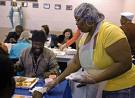
(Picture from http://www.2theadvocate.com/news/16945146.html in Baton Rouge, LA.)

Read More

Posted by on Nov 2, 2008

What are You Giving Up for Lent?

A Prayer for America At Election Time and Beyond

Immaculate Heart of Mary - Artist unknown - U. Dayton

Immaculate Heart of Mary - Artist unknown - U. Dayton

In the days and weeks leading up to the 2008 election in the United States, we’ve seen tons of ink, forests of paper and kilobytes of words on the internet used to address issues of life and freedom that we face as a nation. We at Theologika.net and sister site, 21stcenturycatholic.net offer our prayer for America at this time of the election and as we move into the challenges of the days, weeks and years to come. It is a prayer to Our Lady because she is the patroness of our country.

Most Blessed Virgin, Mary,

Our country is at its most critical crossroads in its history. We entrust it to your loving care.

Most Holy Mother, we beg you and your Son to be with us as we face this crossroads.

Overwhelmed by our problems and sins, we cry from the depths of our pain for your motherly protection and guidance.

Look with mercy on us and touch the hearts of your imperfect people.

Open our minds to the broader responsibilities of caring for your human family, which comes from our divine gift of freedom.

Guide and inform us so we can best deal with the issues of life and death, which have so grievously divided us.

Pray for us that we may receive the wisdom, clarity and openness of thinking we need to make the best choices we can on behalf of our human family, for our common good.

Oh Merciful Mother, intercede for us with your Son, who through the power of the Holy Spirit has entrusted to us the care of your people and creation and is the true source of our cherished rights of life, liberty and the pursuit of happiness.

We ask for this grace in the Name of Your  Son, our Lord Jesus Christ, who lives and reigns with the Father in the Unity of the Holy Spirit forever and ever. Amen.

May the Lord bless and guide each of us as we vote in accordance with our own individual consciences.

Read More

Posted by on Oct 29, 2008

What are You Giving Up for Lent?

Jim Wallis on “Faith Priorities” – A Trusted Authority’s Reflections

Jim Wallis

Jim Wallis

This article is quoted in full from Jim Wallis’ blog, God’s Politics. Wallis is editor-in-chief of Sojourners Magazine and a Theologika.net trusted authority. I received it October 23, 2008 in my email. I present it for your consideration.

My Personal ‘Faith Priorities’ for this Election 

In 2004, several conservative Catholic bishops and a few megachurch pastors like Rick Warren issued their list of “non-negotiables,” which were intended to be a voter guide for their followers. All of them were relatively the same list of issues: abortion, gay marriage, stem cell research, etc. None of them even included the word “poverty,” only one example of the missing issues which are found quite clearly in the Bible. All of them were also relatively the same as official Republican Party Web sites of “non-negotiables.” The political connections and commitments of the religious non-negotiable writers were quite clear.

I want to suggest a different approach this year and share my personal list of “faith priorities” that will guide me in making the imperfect choices that always confront us in any election year — and suggest that each of you come up with your own list of “faith” or “moral” priorities for this election year and take them into the voting booth with you.

After the last election, I wrote a book titled God’s Politics. I was criticized by some for presuming to speak for God, but that wasn’t the point. I was trying to explore what issues might be closest to the heart of God and how they may be quite different from what many strident religious voices were then saying. I was also saying that “God’s Politics” will often turn our partisan politics upside down, transcend our ideological categories of Left and Right, and challenge the core values and priorities of our political culture. I was also trying to say that there is certainly no easy jump from God’s politics to either the Republicans or Democrats. God is neither. In any election we face imperfect choices, but our choices should reflect the things we believe God cares about if we are people of faith, and our own moral sensibilities if we are not people of faith. Therefore, people of faith, and all of us, should be “values voters” but vote all our values, not just a few that can be easily manipulated for the benefit of one party or another.

In 2008, the kingdom of God is not on the ballot in any of the 50 states as far as I can see. So we can’t vote for that this year. But there are important choices in this year’s election — very important choices — which will dramatically impact what many in the religious community and outside of it call “the common good,” and the outcome could be very important, perhaps even more so than in many recent electoral contests.

I am in no position to tell anyone what is “non-negotiable,” and neither is any bishop or megachurch pastor, but let me tell you the “faith priorities” and values I will be voting on this year:

1.  With more than 2,000 verses in the Bible about how we treat the poor and oppressed, I will examine the record, plans, policies, and promises made by the candidates on what they will do to overcome the scandal of extreme global poverty and the shame of such unnecessary domestic poverty in the richest nation in the world. Such a central theme of the Bible simply cannot be ignored at election time, as too many Christians have done for years. And any solution to the economic crisis that simply bails out the rich, and even the middle class, but ignores those at the bottom should simply be unacceptable to people of faith.

2.  From the biblical prophets to Jesus, there is, at least, a biblical presumption against war and the hope of beating our swords into instruments of peace. So I will choose the candidates who will be least likely to lead us into more disastrous wars and find better ways to resolve the inevitable conflicts in the world and make us all safer. I will choose the candidates who seem to best understand that our security depends upon other people’s security (everyone having “their own vine and fig tree, so no one can make them afraid,” as the prophets say) more than upon how high we can build walls or a stockpile of weapons. Christians should never expect a pacifist president, but we can insist on one who views military force only as a very last resort, when all other diplomatic and economic measures have failed, and never as a preferred or habitual response to conflict.

3.  “Choosing life” is a constant biblical theme, so I will choose candidates who have the most consistent ethic of life, addressing all the threats to human life and dignity that we face — not just one. Thirty-thousand children dying globally each day of preventable hunger and disease is a life issue. The genocide in Darfur is a life issue. Health care is a life issue. War is a life issue. The death penalty is a life issue. And on abortion, I will choose candidates who have the best chance to pursue the practical and proven policies which could dramatically reduce the number of abortions in America and therefore save precious unborn lives, rather than those who simply repeat the polarized legal debates and “pro-choice” and “pro-life” mantras from either side.

4.  God’s fragile creation is clearly under assault, and I will choose the candidates who will likely be most faithful in our care of the environment. In particular, I will choose the candidates who will most clearly take on the growing threat of climate change, and who have the strongest commitment to the conversion of our economy and way of life to a cleaner, safer, and more renewable energy future. And that choice could accomplish other key moral priorities like the redemption of a dangerous foreign policy built on Middle East oil dependence, and the great prospects of job creation and economic renewal from a new “green” economy built on more spiritual values of conservation, stewardship, sustainability, respect, responsibility, co-dependence, modesty, and even humility.

5.  Every human being is made in the image of God, so I will choose the candidates who are most likely to protect human rights and human dignity. Sexual and economic slavery is on the rise around the world, and an end to human trafficking must become a top priority. As many religious leaders have now said, torture is completely morally unacceptable, under any circumstances, and I will choose the candidates who are most committed to reversing American policy on the treatment of prisoners. And I will choose the candidates who understand that the immigration system is totally broken and needs comprehensive reform, but must be changed in ways that are compassionate, fair, just, and consistent with the biblical command to “welcome the stranger.”

6.  Healthy families are the foundation of our community life, and nothing is more important than how we are raising up the next generation. As the father of two young boys, I am deeply concerned about the values our leaders model in the midst of the cultural degeneracy assaulting our children. Which candidates will best exemplify and articulate strong family values, using the White House and other offices as bully pulpits to speak of sexual restraint and integrity, marital fidelity, strong parenting, and putting family values over economic values? And I will choose the candidates who promise to really deal with the enormous economic and cultural pressures that have made parenting such a “countercultural activity” in America today, rather than those who merely scapegoat gay people for the serious problems of heterosexual family breakdown.

That is my list of personal “faith priorities” for the election year of 2008, but they are not “non-negotiables” for anyone else. It’s time for each of us to make up our own list in these next 12 days. Make your list and send this on to your friends and family members, inviting them to do the same thing.

For another article presenting Wallis’ views on issues facing American voters, see http://www.sojo.net/index.cfm?action=magazine.article&issue=soj0811&article=what-s-at-stake.

Read More

Posted by on Oct 28, 2008

What are You Giving Up for Lent?

Trusted Authority – Megan McKenna – On Voting


Theologian/Storyteller, Megan McKenna

Theologian/Storyteller, Megan McKenna

Today – one week before voting day for President of the United States – I’d like to offer a note I received in June from theologian, storyteller Megan McKenna. A friend had asked what her “rules” for choosing a candidate for political office would be. This was her response.

Dear folks,

Here is something I wrote in response to a question. It’s a place to start. Enjoy and feel free to comment and send me any of your thoughts. I’m sure I’ll be using it more and more as time goes on. Blessings, Shalom, Megan

Here are my rules (so to speak) for voting … rough form. They are more developed when I speak them.

I. Vote for the person you think will do the least amount of harm (war, nuclear weapons, new weapons, death penalty, economics, housing, health insurance, etc.).

2. Vote for the person you think will allow you and others with you to do the most amount of good (correcting and undoing the gutting of the Constitution, rights, freedoms in the US, etc. from the last 8 years), as well as work for legistation against the death penalty, for housing, decent wages, immigration (welcoming the stranger since we were all in that group once unless we are native Americans), universal health care, dialogue with other nations (trying to pull our international reputation out of where it is today because of Iraq/Afghanistan/torture, aggression, pre-emptive strikes, alliance with Israel, refusal to dialog with Iran/Sudan/Cuba/Palestine, etc.).

3. Remember – none of them [candidates and political parties] is interested in the kingdom of justice for all and peace (the peace of Christ – nonviolent resistance to evil) and life ever more abundantly for all.

4. Do not vote one issue … no matter what it is. There are 6.8 billion people in the world, nearly 2/3 of them living at subsistence level, in need of clean water, basic food, shelter, medicine, education, dignity, freedom from violence, the freedom to migrate and a hope for their children. There is also the destruction of the earth and the greed of the few/major nations like us and the G8 over-using natural resources and thinking only in terms of profit, nationalism/and a war that in the last 8 years has, on an average wasted over $800 billion a year on wanton destruction of Iraq (a country the size of New Jersey) and Afghanistan (already in the 11 century when we started bombing). Yet we do nothing in regards to Burma (Myanmar) the Sudan, Zimbabawe or any other country that is beset by dictators/military regimes, etc.

5. VOTE… If you don’t, then you are even more responsible for what happens. Not to choose is to choose – we are all accountable for what happens in this country.

6. Vote for the person who will think long term – Supreme Court justices, economics, and especially in regards to other countries, internationally. We have little or no respect around the world – because of torture, lies, Guantanamo, immigration practices, arrogance towards others, rendition of citizens, the ignoring of our own Constitution and laws and our inordinate living (consumption of oil, resources, food, etc.). At home – the housing, mortgage crisis – people need their homes back, they need universal medical insurance and education that is not tiered according to race/economics.

7. Pray, read the scriptures. Who would Jesus, in the power of the Spirit who calls God Our Father (all of us the beloved children of God, blessed and loved, no exceptions), vote for? And get involved with others. Make your choice. Look at and know what needs to be confronted and dealt with – the Middle East question of Jerusalem/Israel/Palestine, 2 states, the wall; the ongoing wars and how to get troops out and how to dialog so that war is not considered an option ever – no matter what. And look for integrity, honesty, truthfulness.

That’s it … in a nutshell. Each “rule” or thing to remember could be elaborated on with the principles of justice, social teaching and the gospel.

Blessings,

Megan

Read More

Posted by on Oct 20, 2008

What are You Giving Up for Lent?

Fidelius and Diabolus: The Not So Gay Marriage Dialog

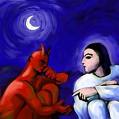
Image taken from oneyearbibleimages.com

Image taken from oneyearbibleimages.com

Diabolus: How’s it going?

Fidelius: You know we can’t talk – why do you persist?

Diabolus: That might be true if I were the Devil, but what if I’m your conscience?

Fidelius: There are no views but those of the Church.

Diabolus: True, but what about Church teaching, which acknowledges the “Sensus Fidelium” or Sense of the Faithful?

Fidelius: Stop bugging me Diabolus.

Diabolus: How do you know that’s my name?

Fidelius: You’re tempting me to think for myself. You’re torturing me.

Diabolus: No one can control your mind and heart. What’s bothering you?

Fidelius: I will take my counsel from my confessor, not from a post-Pepperoni heartburn!

Diabolus: “Pepperoni.” What a great name! Why don’t you call me that?

Fidelius: You are what you are.

Diabolus: And what is that?

Fidelius: The Tempter, the Evil One.

Diabolus: Have I ever suggested that you do anything wrong? Did I set your eye to wandering or encourage you to blow up when the Angels didn’t make the pennant?

Fidelius: Good people are tempted under the guise of good.

Diabolus: So, you’re a good person?

Fidelius: Yes. Generally, that is.

Diabolus: So then, why are you thinking about “it” again.

Fidelius: What “it”?

Diabolus: You know. Your conflict about gays.

Fidelius: They’re disgusting, you know that.

Diabolus: That’s not an uncommon opinion.

Fidelius: They make me squirm – and now they want to get married!

Diabolus: So, you think that it would be better to encourage them to stay with promiscuity as opposed to having a life of fidelity?

Fidelius: There can be nothing good in an act that is “intrinsically evil”.

Diabolus: So, you mean that you and Cynthia have never done anything “kinky”?

Fidelius: Shut up. We’re married.

Diabolus: My point exactly. You know, pleasure in marriage used to be called concupiscence.

Fidelius: What’s that?

Diabolus: You know – messed up like everything else after the fall of Adam and Eve.

Fidelius: So now you presume to teach me moral theology!

Diabolus: No. You learned it at that expensive Catholic college. Remember – the one you drank your way through?

Fidelius: Yeah, but it was after Vatican II. They weren’t Catholic anyway.

Diabolus: You mean like old Father Sullivan, who came to class in his cassock with the old yellowed pages on St. Thomas Aquinas?

Fidelius: He was different.

Diabolus: Yeah – he made you sweat to get a “C”. Not like the easy liberal that you gave you a “B+” for some beer can “sculpture” you threw together at the last minute.

Fidelius: Yeah, he was real.

Diabolus: Wasn’t he the guy that told you to have a happy sex life when you got married?

Fidelius: How do you know that? That was in confession!

Diabolus: Remember? I was there.

Fidelius: All I felt was so dirty.

Diabolus: You thought that he was going to throw the book at you.

Fidelius: Yeah, but he didn’t.

Diabolus: But there was a sin you didn’t confess.

Fidelius: What do you mean?

Diabolus: You remember. The time you stopped your fraternity brothers from beating up David Farnsworth, the fag?

Fidelius: He wasn’t gay – besides, “fag” isn’t politically correct.

Diabolus: Yeah. That’s why you found him dying in the AIDS ward a few years later at St. Mary’s, when you were helping the administration get their finances in order! A young guy out of business school and you go through the wrong door!

Fidelius: He never had a chance.

Diabolus: What do you mean? We all have free will. We all make choices.

Fidelius: His only moral choice was not to have sex.

Diabolus: He could have had a partner. You know – spend their lives together and all that? Maybe adopt a kid?

Fidelius: It would have been one mortal sin piled on another. He’d be deeper in Hell than he is now.

Diabolus: You don’t believe that.

Fidelius: Well, I heard Fr. Sullivan got to him before it was too late. But Purgatory’s no picnic.

Diabolus: So why did you pay for the Plenary Indulgence for him?

Fidelius: I didn’t pay for it. I just made an offering.

Diabolus: Strange. All this good will. Did you have a thing for this guy?

Fidelius: He was a guy. Got it? Like anybody. He deserved some decency, some respect.

Diabolus: But not a home.

Fidelius: He wasn’t homeless. He was making good money as an attorney.

Diabolus: No one to come home to; just work, parties, the bars …

Fidelius: He knew marriage was for straights. He was a good Catholic.

Diabolus: Yeah right. A gay can be a good Catholic; as likely as the Good Samaritan.

Fidelius: The Samaritan was real.

Diabolus: Maybe – or was he just a way for Jesus to show up the “good” people who had no compassion?

Fidelius: We can’t encourage gay culture. We’d be undermining the family; the basis of society.

Diabolus: Right. We can’t encourage a culture of life and fidelity.

Fidelius: It’s wrong. Remember, God made Adam and Eve – not Adam and Steve.

Diabolus: An interesting piece of demagoguery, but it doesn’t seem very compassionate.

Fidelius: The kids’ll get the wrong idea. They’ll think it’s okay.

Diabolus: Is that why so many gay people hate themselves?

Fidelius: It’s not my problem.

Diabolus: David became your problem when you saved him from that pack of apes.

Fidelius: I would have done it for anybody. Nobody deserves that kind of hate.

Diabolus: So where do you stop on this slippery slope?

Fidelius: It’s easy. The Church says, don’t beat ’em up but don’t let ’em get married.

Diabolus: That’s why you and Cynthia have only 3 kids – after 20 years?

Fidelius: We couldn’t have afforded more kids. You know that. With Cynthia’s problems it probably would have killed her.

Diabolus: So you love your wife more than God?

Fidelius: There’s a difference between God and the Church.

Diabolus: So who’s being the Devil now?

Fidelius: It’s in the Apostles Creed… “I believe in God, the Father Almighty.” Toward the end it says “I believe in one, holy, catholic, and apostolic church.”

Diabolus: Conscience. That weasel thing you picked up from those liberal priests!

Fidelius: It was a Vatican II thing. I had to write a paper on it.

Diabolus: So you did learn something!

Fidelius: Only because Fr. Sullivan made me re-write it 3 times.

Diablolus: I can’t imagine St. Thomas being on the side of conscience. He was a real theologian – and a saint.

Fidelius: Yeah. It’s a big thing for him – like it was for those Moslems philosophers he studied.

Diabolus: They only blow up stuff.

Fidelius: Conscience. You know – “formed according to the teaching of the Church.”

Diabolus: So why did Aquinas end up on the list of forbidden books so long?

Fidelius: He was accused of subjecting God to human reason.

Diabolus: Well I gotta go. Time “to prowl about seeking the ruin of souls”.

Fidelius: What about me?

Diabolus: You’re hopeless!

Fidelius: Hopeless?

Diabolus: Just the opposite, I’m afraid. No sale here today.

Fidelius: What about gay marriage?

Diabolus: Deciding that by a crowd? I like lynchings. Remember? But you know, it’s not my thing. You should look at that WMD “weapons of mass destruction” bracelet you wear.

Fidelius: It’s WWJD! What would Jesus do?

Diabolus: Yeah. I wonder. Later dude.. out’a here..

Read More

Posted by on Sep 27, 2008

What are You Giving Up for Lent?

St. Vincent de Paul – September 27

St. Vincent de Paulimage by Monastery Icons

St.Vincent de Paul is one of those saints whose mark on society has been so great that we often take their contributions for granted. Men and women through the centuries have been moved to serve the poor because of his example, as priests, nuns, and lay persons. Through the society which bears his name, the St. Vincent de Paul Society, members work across the United States and around the world, providing help both for those who face long term challenges and those who are “down on their luck” for a short time. 

Last year, Randy wrote a biographical post for the feast of St. Vincent de Paul. Lots of good information is there, along with links to other sites. This year, I asked members of orders founded by St. Vincent de Paul and his associates for one thing they’d like the world to know about him. These were responses I received, in order received.

From Sr. Mary Frates, DC – Vocation Director, Daughters of Charity, DePaul Provincial House

Thank you for this opportunity.  St. Vincent De Paul is well known for making an impact on the society of his day through organizing service to the very poorest.  What I would like people to know about Vincent is that he paid attention to everything that was happening around him and it was this attention to the present moment that drew him to take action to help those in need.

From Fr. Ray Van Dorpe, C.M.  Assistant Provincial, Midwest Province of the Congregation of the Mission

I would like people to know that St. Vincent de Paul was a man far ahead of his time.  He was one of the first to organize the laity for charitable works of mercy that were not dependent on the support of the local pastor.  These “Confraternities of Charity” later became the Ladies of Charity, an international organization and part of the larger Vincentian Family, along with the Congregation of the Mission, the Daughters of Charity, and the Society of St. Vincent de Paul, to name but a few.  St. Vincent was also ahead of his time in putting women to work outside the structures of cloistered life (the Daughters of Charity).  He also was one of those who revolutionized the formation of the clergy in France and other countries and developed a sophisticated ministry of preaching missions in poor rural parishes (the Congregation of the Mission).  But more important than all these accomplishments was his love for the poor and his deep desire to bring the Good News to the poorest of God’s people.

Thank you for sharing your insights. May the Lord continue to bless your ministry and that of Vincentians around the world.

Read More

Posted by on Sep 15, 2008

What are You Giving Up for Lent?

Feast of the Day – Our Lady of Sorrows – September 15

Mothers of the Plaza de Mayo

The Feast of Our Lady of Sorrows follows the Feast of the Exaltation of the Holy Cross by one day. On this day we remember the prophecy of Simeon when Mary and Joseph took Jesus to the temple for the first time. Simeon blessed them and said to Mary, “Behold, this child is destined for the fall and rise of many in Israel, and to be a sign that will be contradicted; and you yourself a sword will pierce, so that the thoughts of many hearts may be revealed.” (Lk 2:33-35)

This feast was not part of the official liturgical cycle of the Church until the mid-1600s, though it was celebrated in some locations as early as the 13th century. Sometimes it is known as the feast of the Seven Sorrows of Mary and includes mention of seven events from Jesus’ childhood and passion.

Our Lady of Sorrows is a title of Mary with which many women and men can identify. Bearing and raising a child is not an easy task, though it can be an extremely rewarding adventure. There are countless joys and sorrows along the way. And make no mistake about it – the commitment of parent to child is one that does not stop when the child reaches adulthood! It is a commitment for life and beyond. In our belief in the Communion of Saints and life after death, we recognize that those who went before us still care about us and look out for us. Parents who are with the Lord do not cease to be parents of those who still remain here. The relationship is just transformed.

In thinking about this feast, it came to me that surely Our Lady of Sorrows is especially close to mothers, fathers and family of those who are killed prematurely. I’m thinking of those who “disappeared” in Central and South America in recent years – victims of political violence and/or persecution for their actions in living and teaching the Gospel. I’m thinking of victims of terrorism in the Middle East – including those on both sides of the Israeli-Palestinian question and those dying almost daily in Iraq. I’m thinking of those whose children were killed in wars – Iraq, Iran, Afghanistan, India, Pakistan, Bangladesh, Sudan, Ruwanda, Brundi and so many, many others. We see the pictures year after year and our hearts become numb. Yet for all of them, and with all of them, Our Lady of Sorrows weeps. And so should we all.

And then … we must commit ourselves to work for peace. So that those who have given their lives will not have died in vain. So that those who believe that “might makes right” will learn that only love makes right. So that we truly become a community where we live our belief that what we do to the least of Jesus’ sisters and brothers, we do to Him.   

May it be so.

Read More

Posted by on Sep 11, 2008

What are You Giving Up for Lent?

Theocracy or Secular Society – Reflections

September 11 used to be just another day in the ninth month of the year. But the acts of terrorism which were committed on this date in 2001 in the United States changed that reality. Now, in most countries of the world, September 11 is a day to remember and mark with speeches, prayers, visits to “sacred sites” and news reports. For some few, it is a day remembered as a great victory against the most powerful representative of secular society in the world. For most, it is seen as a great tragedy, in which lives of innocent people were lost, personal freedoms were threatened, and excuses provided for nations to go to war.

Believing with George Santayana that “Those who do cannot remember the past are condemned to repeat it,” I add that those who do not understand the fundamental concepts underlying social systems are also condemned to repeat history. Accordingly, I offer some reflections as an anthropologist on structures and realities that shape societies and social interaction.

In a Nutshell

For those with only a few moments to spare, here are my thoughts in a nutshell.

We’re dealing with a clash of cultures, specifically in terms of family structures and political systems. The “corporate family” and “theocratic” political system that was the norm for most cultures throughout most of human history has been challenged by an upstart system. In this new system, it’s the “nuclear family,” with its focus on the individual and personal choice, as well as its “secular” political structure, that are the ideal.

Some of the first cracks in the old system began to appear around 2000 years ago, with the teachings of Jesus and His early followers. More followed as Christians began caring for the sick and teaching children (including girls) and insisting that women had rights in marriage. Still more appeared towards the end of the religious wars that followed the Reformation, as religious dissidents began to move to the New World. With the ratification of the Bill of Rights as part of the American Constitution, the secular society as a political system was born.

Today we’re dealing with a side-effect of that event. Secular societies offer the opportunity for people of all faiths to work together to their fullest potential, to make this world a better place for all. Unfortunately, not all human choices are made for the common good, under any social or political system, so we also see people doing things that are very wrong. Sometimes religious people get frightened by that and think we should just go back to religious law – theirs, of course. Splinter groups of them may turn to violence and terror, killing innocent people in an attempt to change a political system. That’s what the events of September 11 and other terrorist activities of the past century have been about – political systems and family structure. Often disguised as defense of religious beliefs – but at base a question of political systems and family structure.

A violent response cannot stop violence of this type. In dealing with the problems that breed discontent and lead to social upheaval (unemployment, hunger, lack of safety, etc.), economic solutions are more often effective. Education, employment opportunities, health care, housing – all contribute to social stability and take the wind out of the sails of the terrorists. That’s the response we should be offering to the world!

Now, for those who have a little more time.

Definitions and More Details

Begining at the begining – a few definitions and clarifications are in order.

Nuclear Family – The nuclear family is one that includes adults – generally but not exclusively a man and a woman – and their children, whether naturally born or adopted. It does not include grandparents, aunts, uncles, cousins, godparents or other friends.

In the nuclear family, the individual tends to be seen as having intrinsic value. Having an individual opinion and making personal choices is valued. Individuals are allowed to decide and act for themselves and it is expected that at a certain age and maturity, the individual will leave the nuclear family and live his or her own life. Many will enter into committed relationships, legally recognized by the society, and start new nuclear families of their own. The family in which they were raised is called the “family of origin” and is distinct from the family created upon reaching adulthood and entering into their own newly formed nuclear families. In American society, the nuclear family is the type of family structure that is the norm.

Corporate Family – A corporate family is like a business. It includes many more people than a nuclear family. It is multi-generational. It has an identity and existence of its own, apart from that of any individual member of the family. The continuation of the family takes precedence over the desires or even the sheer survival of the individual. Issues of honor are seen in terms of the larger family and individual lives may be sacrificed to maintain family honor. Marriage is a matter of alliances between corporate families – not something for two individuals to choose for themselves. One’s sexuality belongs to the family and one’s duty is to provide children for the continuance of the family. Individual opinions and preferences are not of deciding importance. In fact, the mere possibility of having an individual opinion may not enter the mind of a member of a culture in which the corporate family is (or has been) the rule.

Corporate families can take a variety of forms, depending on rules of inheritance and identification. In some, identity and property are passed through the male line (patrilineal) and in others through the female line (matrilineal). Somewhat more rarely, identity and inheritance can come from both lines. (This is more common in nuclear families, however.)

The vast majority of world societies take the corporate family model as the preferred model. It is only relatively recently that the nuclear family has arisen on the social scene of the world – and that in relatively few cultures. Nevertheless, with the spread of Western culture through the media, exposure to the nuclear family and the type of culture that accompanies it is increasing.

Theocracy – A form of political organization in which the legal foundations of the society are the laws of the dominant, governing religion or religious body. Theocracies have a long history in the world. Any culture, ancient or modern, in which religious rules are the ones by which disputes are resolved and individual or group actions judged as a matter of law is a theocracy.

Secular Society – A form of political organization in which the legal foundations of the society are distinct from the laws of religious organizations or groups of believers. The laws of secular societies may be, and generally are, based on certain principles drawn from the religious beliefs of their members, but religious law is distinct and carefully separate from the law governing the wider society. Secular societies have emerged relatively recently in the history of the world.

Freedom – The concept of freedom I will use is that which states that an individual can act or behave according to his or her conscience, to the mutual benefit of both the individual and other persons who will be affected by the action. In cases in which what benefits one does not benefit others, the one may not have the right to act or behave in the manner he or she desires. Sometimes the greater good or the rights of other people take precedence. Freedom does not mean license to behave however I choose and the rest be damned! Freedom entails a great responsibility to act for the common good, trusting that the larger good will also benefit the individual in the long run. In this, the concept of freedom draws much from the corporate family tradition, but it recognizes the rights of the individual to choose, apart from the interests of the corporate family, and to look at his or her own interests and those of the larger community.

So what does all this have to do with us today?

Corporate family structure and theocracy as a basis for political organization have been the dominant forms of organization during much of the history of human culture. Some of the first cracks in the system that we see historically resulted from the teachings of Jesus. When Jesus told the rich young man to sell everything he had, give the money to the poor, and come follow him, (Mt 19:21) that was demanding a major break from the corporate family. When Jesus told another young man to let the dead bury the dead, in response to his request for permission to bury his father before becoming a disciple, (Mt 8:22) that was an even greater break. 

The early church continued the process of separation. In the Acts of the Apostles, ( Acts 2:42-47) we see a community of believers who have sold all, combined their resources, and share all things in common. They have left their ancestral corporate families and joined into a new form of family – family still being needed for mutual support and protection. We know that not all went smoothly. There were disputes between Jews and Greeks, concerns over whether all resources had been contributed or not, complaints about fair distribution of resources, etc. The first persecution of the church in Jerusalem broke up the communal experiment and the Followers of the Way were dispersed, taking the Good News of the freedom of God’s children with them into the Roman Empire.( Acts 4-8)

In each community where the Gospel took root, communities formed. Christian community became a new social unit and each person’s gifts were seen as contributing to build up “the Body of Christ.” (Eph 4: 1-16) Individuals became important because the gifts they received built up the whole community. We’re still not to a nuclear family model yet in this understanding, but birth families were not primary in this scheme of things.

When religions become State sponsored or mandated, when religious law becomes the law of the land and all are required to become members of that religion (or at least live by its rules), some common patterns emerge. We see forced conversions, wars over definitions of points of belief, torture of those who do not believe “correctly,” and State sponsored executions of non-believers or heretics (those with beliefs deemed to be untrue). This pattern held true with the legalization of Christianity and its establishment as the religion of the Roman Empire. 

On large scale, we see destabilization of entire societies resulting from the persecution of non-conforming religious communities. In Spain, for example, both during the time of the Visigoths and the time of the reunification of the kingdoms under Ferdinand and Isabella, there was an attempt to enforce unity in religion, political governance, and military might. In both cases, the society was ultimately destabilized by the creation of persecuted minorities. During the Visigothic period, those minorities welcomed the invading Muslim forces which overthrew the Visigothic kings. (Ironically, Muslim rule itself was undermined in Spain by the 12th century as the result of a turn towards fundamentalism.) During the 15th and 16th centuries, the expulsion of Jews and Muslims from Spain resulted in the loss of large numbers of people with valuable skills and professions – banking, medicine, science – not fields a successful nation can manage without. The Inquisition, which did not originally begin in Spain but was a force there for far too long, was a terrible example of what can happen when religious beliefs become the legal norm.

The religious wars that accompanied and followed the Reformation finally were resolved with a great compromise. The religion of the ruler of a nation would be the religion of all his or her subjects. So, any time the religion of the ruler changed, everyone had to change religions. It sounded good on paper, but if one truly believes that one’s faith is the one, true, unchanging faith, one can’t just change it because a new ruler has come into power! Fortunately, a New World had been discovered, and dissidents could go there and have their own colonies, with their own religious beliefs. And so it happened.

The English colonies in North America did not begin as places with freedom of religion. That developed much later. In a couple of colonies there was tolerance of different beliefs. One colony was set up as a refuge for Catholics. But by the time of the American Revolution, Catholics were not allowed to vote in any colony. In fact, Charles Carroll of Carrollton, a signer of the Declaration of Independence, was not a voting “citizen” of his own colony until the mid-1770s when the laws excluding Catholics were repealed. It was only with the ratification of the Bill of Rights in 1791 that the separation of Church and State in the United States was enshrined as the law of the land. A secular society was born.

So what does all this have to do with September 11 and the acts of terrorism in the United States?  I’d like to say it’s simple, but it’s not. The actions of those who planned and carried out the attacks were those of terrorists, acting out of misguided religious beliefs perhaps, but still terrorists. Their goals were not religious conversion. They were from a group that promotes theocracy as the preferred political structure, specifically Islamic fundamentalist theocracy. (This is not to be mistaken for a mainstream Islamic faith.) The United States, as the largest and most powerful secular society in the world, was a natural target in an essentially political battle.

Terrorism is not an act of religion. It is a political act, whether seen in Northern Ireland, Israel, Palestine, Iraq, Iran, Afghanistan, New York City, Sudan, or in the bombing of abortion clinics or the homes of scientists engaged in animal research studies. It is an act of political violence. So the question becomes, how do we respond to political violence? One school goes back to the old, “an eye for an eye and a tooth for a tooth” (revenge).  Another says, “give them a little bit and maybe they’ll go away happy” (appeasement). Another says, political issues must be resolved with social solutions and tools. Look at the core issues – economics, healthcare, education, jobs, security for families, safety from violence. The Peace Corps initiative of the Kennedy administration is an example of this approach, which has resulted in much positive change in the world.

The response to the events of September 11, the military invasions of two countries claimed to have been responsible in some form for the actions of the terrorists, has not been a success. It will not be easy to undo all the harm that has resulted from those actions. But as we go forward, as Americans, as Christians, as people of good will in an increasingly tiny world, it is critical to be aware of the past, of the differences between societies based on corporate families and those based on nuclear families, of the danger of placing religious law as the law of the land, of the great protection members of all faiths receive from living in a secular society, and of the resulting freedom to work for the betterment of social conditions and life for people throughout the world. Secular societies can be welcoming places for people of all faiths. Together, protected by freedom of religion, we can do great things.

For related information, see:

God’s Crucible: Islam and the Making of Europe, 570-1215, by David Levering Lewis 

The Voice, The Word, The Books: The Sacred Scripture of the Jews, Christians, and Muslims, by F.E. Peters

A Peace to End All Peace: The Fall of the Ottoman Empire and the Creation of the Modern Middle East, by David Fromkin

Secularity and the Gospel: Being Missionaries to our Children, by Ronald Rolheiser, OMI

Three Cups of Tea: One Man’s Mission to Promote Peace … One School at a Time, by Greg Mortensen

Post edited and revised Sept. 26, 2008 by the author.

Read More

Posted by on Sep 9, 2008

What are You Giving Up for Lent?

St. Peter Claver – September 9 – Patron Saint of Slaves

Peter Claver was born in Catalonia in 1581. He attended the University of Barcelona before entering the Jesuits at the age of 20. During his study of philosophy in Majorca, he was encouraged by the porter, Br. Alphonsus Rodriguez, to travel as a missionary to the Americas. In 1610, Peter Claver arrived in Cartagena, in present day Colombia.

Cartagena was the center of the slave trade in the Americas at that time.

Slavery has had a long history in human relations. To this very day there are people enslaved in our world. Even within Christianity for most of its history, slavery was seen as one of those realities of life that are simply unquestioned until relatively recently. St. Paul, for example, wrote instructions on the proper behavior of slaves and sent an escaped slave who had become a Christian home to his master, with instructions to his Christian master to treat the slave well (Philemon). But there were no instructions to free him.

The West African slave trade that brought so many people to the Americas in chains had its roots in the Crusades. Pope Nicholas V, in a papal bull titled Dum Diversas (June 18, 1452), allowed the perpetual enslavement  of Saracens and pagans captured during the Crusades, because they were seen as enemies of God and Christianity. It seems ludicrous today, but that’s what people believed at the time. Later, on January 8, 1455, in Romanus Pontifex, he also authorized European dominion over newly discovered lands and the enslavement of non-Christian peoples living there. At that time, the Americas had not yet been “discovered” by Europeans, at least not by a Europe in any way ready or able to begin to colonize them.

Once Columbus and his crew brought word back of their findings, both Spain and Portugal, the foremost seafaring European peoples of the time, wanted to claim lands in America. Pope Alexander VI, on May 4, 1493, in Inter Caetera, divided the Americas between Spain and Portugal. He commanded Spain “to instruct the aforesaid inhabitants and residents and dwellers therein in the Catholic faith, and train them in good morals.” 

Despite the instructions of Alexander VI, military leaders and economic developers (colonists) had begun to enslave the native peoples whom they encountered in the Americas. Many had died of European diseases, against which they had no immunity. By May 29, 1537, Pope Paul III issued another papal bull dealing with the question of enslavement of peoples, Sublimus Dei. In this one, he specifically forbade the enslavement of the indigenous peoples of the Americas, based on the fact that they are rational beings with souls. He further extended this prohibition to the enslavement of all other previously unknown peoples. Unfortunately, the peoples of West Africa did not count as “previously unknown peoples” – at least it had been know there were people living there – so enslaving them was not strictly forbidden.

Into this context, Peter Claver entered as a young man, not yet a priest. There he met Fr. Alfonso de Sandoval, another Spanish Jesuit who had earlier dedicated his life to the care of African slaves. Working with Fr. Alfonso, Peter Claver dedicated his life as well to this ministry, declaring himself “the slave of the negroes forever.” For the next 44 years, he served the slaves of Cartagena, from the time the ships arrived bringing them chained in the holds through their time of bondage on the plantations and in the mines.

The work of caring for the slaves was not easy. It was not unopposed. It was not welcomed by “the powers that be” of Cartagena. It was not even always welcomed by his superiors or by members of local parishes.

Each month, as the slave bearing ships arrived, Peter Claver went out to meet them, taking food, medicines, and other supplies with him. He went into the holds of the ships and began to care for those who were nearest death, caring for people with diseases such as smallpox and leprosy (Hansen’s Disease). He organized a group of helpers who spoke the various languages of the peoples arriving. They went with him to the slave pens, speaking to the newly arrived and helping to care for them. As the new slaves recovered their health and strength, Peter, Alfonso, and their helpers began to teach them about Jesus and to baptize those who accepted the faith. Despite official Church instructions, many people still questioned the humanity of these captives and opposed teaching them the faith or accepting them into the Church. This opposition did not stop Peter Claver and those who worked with him. They simply worked and prayed harder.

Care for the slaves did not stop at the slave pens. As men, women and children were purchased and set to work in the mines and on plantations, Peter Claver continued to be their advocate. He visited them, celebrated the sacraments with them, admonished their owners to treat them justly, and continued to teach and care for them. He refused to stay with the owners of the plantations and mines. When he visited slaves, he stayed with them in their homes.

Over time, he gained some respect in Cartagena, if for no other reason than that he was consistent and persistent in following his calling. People began to believe that it was because of his work and his presence that they had escaped many potential disasters (think hurricanes, pirates, etc.).  The slave markets were not closed during his lifetime. But somewhere around 300,000 people received care, love, instruction in the faith and baptism through the ministry of St. Peter Claver. Not a bad record!

Read More

Posted by on Jun 24, 2008

What are You Giving Up for Lent?

Saint of the Day: St. John the Baptist – June 24


St. John the Baptist is the last of the prophets and the first of those to approach the Kingdom. He occupies a place of transition. Christ acknowledges him in a strange way in Luke 7:24-28:

When the messengers of John had left, Jesus began to speak to the crowds about John. “What did you go out to the desert to see – a reed swayed by the wind?
Then what did you go out to see? Someone dressed in fine garments? Those who dress luxuriously and live sumptuously are found in royal palaces.
Then what did you go out to see? A prophet? Yes, I tell you, and more than a prophet.
This is the one about whom scripture says: ‘Behold, I am sending my messenger ahead of you, he will prepare your way before you.’
I tell you, among those born of women, no one is greater than John; yet the least in the kingdom of God is greater than he.”

Somehow the least in the Kingdom of God is greater than John. The least are greater than this courageous prophet who spoke truth to power and was beheaded for his efforts. Aren’t those of the Kingdom not born of women? Isn’t John’s courage and faithfulness a model for all Christians? Christians are born again of water and the Holy Spirit. John announces the coming of the Lord and for all of the wonder and importance of this role, it is not as privileged as the least in the Kingdom of God.

The feast of St. John the Baptist is a time to reflect on the privilege and grace of our invitation to the Kindgom. In the earlier verses of this chapter, Jesus tells the the messengers of St. John to report to him what the signs of the Kingdom are: the blind see, the lame walk, the sick are cured.

Maybe it’s time to see where we are in the Kingdom.

Read More

Posted by on May 2, 2008

What are You Giving Up for Lent?

The Prophet and the Politician: Sen. Obama and Rev. Wright

obama_wright-rev.jpg

Many friendships have been lost on the rocks and shoals of political campaigns. The falling out between Senator Barak Obama and the Reverend Jeremiah Wright is the latest example of such casualties. What is most striking is the Rev. Wright’s strident message. He would probably say that this style is a cultural feature of the African-American church. In a response to questions at the Washington Press Club, Rev. Wright said that he had told Mr. Obama, that if he is elected President, Rev. Wright would be coming after him as the leader of a repressive government.

Is this prophecy – speaking truth to power – or is it an ego trip? Rev. Wright went to some effort in his address to the National Association for the Advancement of Colored People (NAACP) to stress the prophetic nature of his ministry and its African-American style. However, Rev. Wright appeared to have transgressed certain boundaries of acceptable political speech. His condemnation of the United States after the 9/11 terrorist attacks, positing them as something that was the natural outcome of United States’ policies abroad, went too far in many people’s minds. His appraisal of Louis Farrakanh, the Black Muslim leader who advocates Black separatism and superiority, as one of the most influential persons in the 20th and 21st centuries raised additional hackles More alarming was his support for the idea that the United States had created the HIV/AIDS virus to decimate African-Americans.

It was all too much for Barak Obama and for most of the people of the United States.

So how far do you go in prophecy, especially in the prophecy of invective? There is an argument to be made that the 9/11 attack had a lot to do with American actions against Osama Bin Laden that drove him from exile in Sudan to Afghanistan. Any student of U.S. history knows that American policies in many parts of the world have been part of oppression. Yet do you condemn a nation that has also had a history of doing many good things on the world stage?

What struck me most was the Rev. Wright’s anger. Was it the anger of a prophet zealous for his God or was it the anger of African-American oppression, frustration, and futility? When Sen. Obama first addressed the issue of the Rev. Wright’s preaching in a landmark speech on race in America, his talk was full of restraint, understanding, and hope. The element of hope has been greatly reduced in the Rev. Wright’s recent speeches.

Ironically, the title of Sen Obama’s second book, The Audacity of Hope, is taken from one of Rev. Wright’s sermons. In fact, it actually concludes his autobiography, Dreams From My Father. It is clear that Rev. Wright infused Sen. Obama with a deep sense of hope over 20 years ago. The prophecies of Jeremiah and others in the Old Testament tend to hold out an element of hope of future redemption – of reconciliation.

Unfortunately, two roads are diverging in the wood and the nation must decide whether it will pursue the road of hope or the politics of despair, division, and personal destruction.

Read More

Posted by on May 1, 2008

What are You Giving Up for Lent?

The Feast of St. Joseph the Worker – May 1

christ-in-the-house-of-his-parents-sir_john_everett_millais_002.jpg 

The Feast of St. Joseph the Worker is a relatively new one in the Catholic liturgical calendar, though feasts of St. Joseph are not. Celebrating St. Joseph’s vocation as a carpenter, a worker, dates formally to 1955 when the feast was proclaimed by Pope Pius XII as a response to Communist celebrations of a festival honoring workers on May 1.

It’s not uncommon for the Church to take non-Christian celebrations and give them a Christian focus. Celebrations such as Christmas and the Feast of All Saints, for example, have been set for times when non-Christian communities into which Christian witnesses/missionaries were entering were celebrating their own religious or civic feasts. Sometimes we say those feasts were “baptized” — a kind of shift in interpretation to give new meanings to old rhythms and rituals.

Reverence for human labor and an insistence on the protection of workers predated the Communist revolutions in the Soviet Union and other nations of the world. The writers of the Gospels noted that Jesus was the son of a carpenter from Nazareth, and that He was also a carpenter. His first disciples were fishermen, tax collectors, home makers — the everyday, ordinary folk now celebrated as “workers” on May Day.

Pope Leo XIII laid out the biblical and intellectual foundations of contemporary Catholic social teaching with his encyclical, Rerum Novarum, subtitled On Capital and Labor, in 1891. From that first encyclical, through the 20th Century and into the 21st, the Church, through the writings of its Popes and Bishops, has insisted that the dignity of human labor and human laborers is to be respected and protected. No perfect social system exists – from communism through capitalism, the negative excesses of all have been critiqued and the benefits of all have been noted.

The Church insists that laborers are entitled to a fair wage. Employers have a right to make a reasonable profit, but not to excessive profits at the expense of the health and safety of their employees. Working conditions must be safe. The poorest of the poor must have a chance to live with basic human dignity and security assured. Those who are in positions of power must use that power to protect the powerless. Those with education must look out for those who have not. People of faith must speak on behalf of those treated unjustly.

Fundamentally, we are a family — God’s family. And we are responsible for each other. Each of us has our own “work” to do. Whether our work is to build bridges, tend the sick, educate the children, prepare the meals, or write blog posts, we each have a calling to work for the good of all and to build up the community.

On this Feast of St. Joseph the Worker, may we be aware of the work of great and small in this world, respect the gifts we all bring, and be attentive to protect those whose labors are least valued and respected.

Read More