Pages Menu
RssFacebook
Categories Menu

Posted by on Apr 18, 2008

Tectonic Faith Shift: Evangelicals – Pro Life, Pro Obama

Tectonic Faith Shift: Evangelicals – Pro Life, Pro Obama

religion-and-politics.jpg

Those who would dismiss theology as a parlor game need only look at the alliance of evangelicals with the political right in the United States. Before the emphasis on “family values,” evangelicals had a rich tradition of struggling for social justice and equality as sign of announcing the Kingdom.

There has been another Great Awakening – a cyclical occurrence in United States history. Evangelicals are disenchanted with the policies of the political right on global warming, military adventures, and the neglect of those in need. There is a growing feeling among evangelicals that they have been used by the large financial and industrial interests to further an agenda which is far from pro-life in the broader sense of the health, well being, and development of people and the environment.

Frank Schaeffer, a scion of one the founders of the Religious Right, issues a writ of divorce with his post at http://vox-nova.com entitled Pro Life, Pro Obama. Check it out.

Read More

Posted by on Mar 13, 2008

Tectonic Faith Shift: Evangelicals – Pro Life, Pro Obama

Campaign USA 2008 – Moral Choices #1 – Priorities

religion-and-politics.jpg

The coming of God’s kingdom in a free society can be a messy affair – since we enjoy the wonderful freedom and moral obligation to vote. Morality – what we actually do – is about the dialog between the heart and the mind over the best thing to do. Ethics is the reasoned system we use to evaluate choices.

This post is the first in a series on the moral choices in picking a candidate. Beliefnet’s “God-0-meter” tracks the statements of U.S. candidates for president and rates them on a scale from secularist (we don’t need God or religion) to theocrat (God will run the country through our clergy.) The secularist and theocrat labels are unfortunate because they are so extreme in our political system that they seem comical.

Generally, the hot button moral issues are questions of individual sexual morality: abortion, homosexuality, gay marriage, sex education, condoms for HIV / AIDs prevention, U.S. funding for overseas birth control. Many believers focus on the abortion issue and want to make the procedure illegal once more. For the most part, these are efforts to make public policy reflect traditional personal Judaeo-Christian morality as it did in the mid-20th century.

Social issues are usually things such as prayer in the schools, creationism versus evolution, displaying the Ten Commandments in courtrooms, and religious displays in public spaces. Public funding for private religious schools by voucher payments garners a lot of support. These issues are actually questions of the relationship between faith communities and the government.

There is a movement to broaden the question of moral choices in public policy. “Covenant for a New America” is an effort led by Jim Wallace of Sojourner’s magazine to unite liberals and conservatives to “make overcoming poverty a non-partisan agenda. look at the very broad priorities of human dignity and freedom: poverty, health care, education, equality of opportunity, and economic development. Stewardship of creation in terms of protecting the environment and minimizing global warming is now being emphasized. This movement represents a return by Evangelicals to social reform issues that were a focus during the first half of the 20th century. Major liturgical churches, such as Catholics, Episcopalians, Lutherans, and Presbyterians, are placing a renewed emphasis on social gospel issues.

How do you choose a candidate morally? If your candidate wants to outlaw abortion, prevent the legalization of gay marriage, and require every courtroom to display the Ten Commandments, is that a morally correct choice? What if your candidate gets into office and then cuts support services for mothers, including access to birth control, and women are again forced to risk their lives in illegal back street abortions? What if your candidate wants to outlaw the death penalty, increase social programs, and use more diplomacy than military force in international relations? Is it a moral choice to support that candidate if he or she also advocates birth control to prevent the need for abortion and allows the price of energy to stay high to encourage new energy saving technologies and reduce green house gas emissions?

The problem is that there is a broad spectrum of Christian values with a variety of applications to public policy.

In the following posts we will take a look at the leading U.S. presidential candidates against the backdrop of a broad moral spectrum.

Read More

Posted by on Feb 5, 2008

Tectonic Faith Shift: Evangelicals – Pro Life, Pro Obama

Feast of the Day – Ash Wednesday

ash-wednesday.jpg

“…As we live through this Ash Wednesday, may the crosses of ashes that mark our foreheads be a reminder to us and to those we meet that we belong to your Son. May our worship and prayer and penitence this day be sustained throughout these 40 days of Lent. Bring us refreshed and renewed to the celebration of Christ’s resurrection at Easter.” – A Prayer for Ash Wednesday

Ash Wednesday marks the beginning of the Lenten season of preparation and renewal for the Easter Triduum. The season of Lent has an ancient and interesting history. From the earliest centuries there were various periods of preparation for Easter. The tradition of prayer, fasting, and alms giving has evolved over time. Lent used to begin on Sunday like the other liturgical seasons. However, Pope St. Gregory the Great moved it to Wednesday to acurately mark 40 days – not counting Sundays – prior to Easter.

Ashes have a long history and deep significance in the Bible. Sack cloth and ashes are ancient symbol of mourning and repentance. Fasting and almsgiving are also prominent in the Old and New Testaments. Fasting focuses our attention on our need for God and alms giving reminds us that our service to the poor and the marginalized is service to God.

With the renewed focus on the baptism of adult catechumens at the Easter Vigil, Lent has become, once again, a time in which the community recalls, relives, and renews its life in the Paschal Mystery – the Crucifixion, Death, and Resurrection of Christ.

Read More

Posted by on Jan 22, 2008

Tectonic Faith Shift: Evangelicals – Pro Life, Pro Obama

Saint of the Day? – Martin Luther King, Jr.

martin-luther-king-jr.jpg

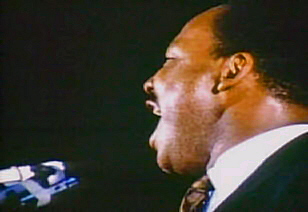
Martin Luther King Jr. (January 15, 1929 – April 4, 1968) achieved a moral stature and Christian witness that continues to inspire people of all faiths across the world. His life and work is commemorated not as a feast of the Roman Calendar but of the United States, on the third Monday of January each year. The human rights leader and Nobel Peace Prize laureate was 35 at the time of his assassination in Memphis, Tennessee.

Most people are familiar with his “I Have A Dream Speech” on the National Mall in Washington, D.C. However his final speech, delivered on April 3, 1968, “I Have Been to the Mountain Top,” not only presaged his death, but summarized his great vision for us all. You can hear by clicking on this link. It is well worth hearing in its entirety, not only because Dr. King was one of the great masters of English rhetoric, but the actual spoken message in its wonderful cadences, rich inflections, and profound rhythms stirs the soul with their inspiration.

Is Dr. King a saint? It is ironic to pose this question in regard to a Baptist minister, whose denomination – among others – has criticized the “worship” of the saints by Catholics. Like Dorothy Day, we can probably assume that Dr. King would dissuade us from giving him the title and remind us to return to the work of serving the least among us.

What is most remarkable about Dr. King’s legacy was the Christian witness of non-violence. Very easily, Dr. King could have kept the oppression of black people in the United States on a political level and built a base of power for himself. He also could have kept it on a “spiritual” level by focusing on the “next” life. Dr. King did neither. As a result, he elevated the whole movement to one of social justice and human rights for the children of God – of the “I” encountering the “thou” of the other person.

Let us develop a kind of dangerous unselfishness. One day a man came to Jesus, and he wanted to raise some questions about some vital matters of life. At points he wanted to trick Jesus, and show him that he knew a little more than Jesus knew and throw him off base….

Now that question could have easily ended up in a philosophical and theological debate. But Jesus immediately pulled that question from mid-air, and placed it on a dangerous curve between Jerusalem and Jericho. And he talked about a certain man, who fell among thieves. You remember that a Levite and a priest passed by on the other side. They didn’t stop to help him. And finally a man of another race came by. He got down from his beast, decided not to be compassionate by proxy. But he got down with him, administered first aid, and helped the man in need. Jesus ended up saying, this was the good man, this was the great man, because he had the capacity to project the “I” into the “thou,” and to be concerned about his brother.

Go and do likewise. (Luke 10:37)

Like anybody, I would like to live a long life. Longevity has its place. But I’m not concerned about that now. I just want to do God’s will. And He’s allowed me to go up to the mountain. And I’ve looked over. And I’ve seen the Promised Land. I may not get there with you. But I want you to know tonight, that we, as a people, will get to the promised land!

And so I’m happy, tonight.

I’m not worried about anything.

I’m not fearing any man!

Mine eyes have seen the glory of the coming of the Lord!!

Read More

Posted by on Jan 12, 2008

Tectonic Faith Shift: Evangelicals – Pro Life, Pro Obama

The Feast of the Baptism of the Lord

baptism-of-jesus.jpg 

The third Sunday after Christmas is the Feast of the Baptism of the Lord. On this day we recall that Jesus went out to the Jordan River, where his cousin John was baptizing, and himself entered into the water to be baptized. All four of the gospels tell of this event, in which the Spirit of the Lord came to rest upon Jesus, like a dove. Matthew, Mark and Luke tell us that a voice spoke from the heavens, saying, “You are my beloved Son; with you I am well pleased.” John tells us that John the Baptist told his disciples, “Behold the Lamb of God, who takes away the sins of the world.”

Jesus’ baptism was a life changing event for him. He went out into the desert to pray and to ponder and absorb the immensity of what had been revealed to Him as He stood in the water with John. This experience of coming to know that He is God’s Beloved Son was the foundation for His entire ministry. When He returned from the desert, He began going among the people and spreading the Good News that God cares about what happens to people here and now, that God loves even the most insignificant person, that loving actions speak louder that pious prayers, that joy and peace are signs of the presence of God.

Each of us, in our own baptisms, have been given the gift of sharing in the life and work of Jesus. This feast is a reminder to us of that great gift and of the fact that our response is to be like that of Jesus – to go out now and share the same Good News through our actions in our daily lives, with peace and joy and love.

Read More

Posted by on Jan 12, 2008

Tectonic Faith Shift: Evangelicals – Pro Life, Pro Obama

Quote of the Day – Megan McKenna

mckenna01.jpg

The majority of the world is struggling to survive under awful conditions, while the Church in the US seems preoccupied with in-house issues of liturgy, teaching, words, and a few issues in the US politics/power. The bulk of Catholics worldwide are struggling with poverty, the earth/resources/
globalization, immigration and how to love one’s enemies, not superficial issues. … The Church must become an alternative witness of hope and other ways to live than the dominant ones that are destroying people, cultures and the earth itself. The Church must become small communities living justice, caring for the poor.”

Megan McKenna, as quoted in “Prophetic Voices in the Church,” Observer, January 2008

Read More

Posted by on Jan 8, 2008

Tectonic Faith Shift: Evangelicals – Pro Life, Pro Obama

5 Loaves, 2 Fish, and a Lesson for the Community

loaves-fish.jpg

Today’s Gospel reading is from St. Mark, the story known as “the feeding of the five thousand” (Mk 6:34-44).

In this familiar story, Jesus and the twelve apostles have traveled across the Sea of Galilee to a deserted area, to get away from the crowds of people and get a bit of rest. The people had seen where they were going and followed on foot, around the lake. Mark says that Jesus was “moved with pity” when He saw them and began to teach them. It was getting late and the disciples suggested that Jesus should send the people back to the towns so they could find food and places to spend the night.

Jesus surprised them by telling them to feed the people themselves. They protested that it would cost “two hundred days’ wages” to feed so many. This didn’t faze Jesus. Instead, He asked, “How many loaves do you have? Go and see.” They returned with the news that they had five loaves and two fish. Jesus instructed them to have the people sit down in groups. Then He took the food they had, blessed it, broke it into pieces and told the disciples to pass it out among the people.

When everyone had eaten their fill, they gathered up what was left and found they had 12 baskets full of leftovers.

In this last week of the Christmas season, following our celebration of the shining forth of the light to the Gentiles too, what are we to make of this story? Why is it told here?

It seems to me that it’s here with good reason.

First, however, it’s important to understand a bit about the customs of the people at the time. We’re used to going places and taking a food with us, which we can eat in front of others without experiencing any social requirement to share it with people who are not part of our group. That was not the case in Palestine at the time. If you had food, you could only eat it if you had enough to share with those in the group with whom you found yourself. Hence the disciples’ dilemma – where and how could they get so much food?

It seems to me that we should assume that families took some food along with them when going out into a deserted area with their children. Most of us would grab something for the children (and for ourselves too, in most cases) when racing out the door to see a celebrity, if for no other reason than to keep the children quietly occupied during the event. I don’t think it would have been that much different in those days.

However, no one would have had enough to feed all of those around them, so the food would have stayed packed up, hidden within the robes and traveling bags of the people.

When Jesus told the disciples to share what they had with the large crowd (5,000 men plus women and children), He didn’t tell them He was going to multiply the food miraculously. He just gave thanks for the food they had, asked a blessing on the meal, and began sharing it. With that example, everyone else who had food with them was freed to take it out too, and share it with those around them. It became a great picnic! No one was restricted to only what they owned or had brought. On the other hand, no would have felt compelled to hide or guard what they had. All could share it. And the result was that there were 12 baskets more of food than was needed!

During this week, as we reflect on the great gift of salvation having been extended to all peoples, this lesson is appropriate. We each have something. It may not be much. But it is something that we can share with the community, with our community on a local level and with our larger global community. There are problems that need to be solved. There are wrongs to be righted. There are joys and sorrows to be shared. None of us can do everything. None of us can change all of the structures of our society or our church. None of us can even meet all of the needs of our individual families. However, all of us can step out in faith and do a little bit. Show a little compassion. Give a hand to someone who is down. Listen to someone who needs a friendly ear. Pray with someone who is alone.

As we do this in faith, we join the larger community of Christian witnesses who have truly changed the world, one problem and one little step at a time. Jesus asks us to look at what gifts we have, give thanks for them, and then start sharing them with those we meet. As we respond to His leadership, “miracles” will happen in our world.

Read More

Posted by on Dec 29, 2007

Tectonic Faith Shift: Evangelicals – Pro Life, Pro Obama

Saint of the Day 12/29 – St. Thomas Becket – When Politics and Religion Don’t Mix

220px-thomas_becket_murder.JPG

December 29 is the feast of St. Thomas Becket, Archbishop of Canterbury. Thomas Becket was born to an upper middle class family around 1118 in London. As a boy, he learned the ways of the upper class from family friends, including hunting, jousting, horsemanship, and how to behave as a gentleman. He was educated in civil and canon (Church) law in England, France, and Italy. Upon his return to England, he began working for Theobald, then Archbishop of Canterbury. Theobald was so impressed with his abilities that he gave Thomas a variety of positions, including Archdeacon of Canterbury. It should be noted, that one did not need to be a priest to serve in these positions. Theobald recommended Thomas for the position of Lord Chancellor when the position became open and Henry II agreed.

As Lord Chancellor, Thomas was one of the most powerful men in England. At the time, Henry II was actively trying to bring the Church in England under greater royal control. Thomas Becket helped in this by his collection of taxes on all landholders, including the Church. Church leaders in England rightly saw him as their adversary in the struggle.

Thomas was a friend of Henry II, to the degree that anyone could be a friend to a king in those days. They spent free time together and Thomas shared in the pleasures of the Court, including those common to courtiers. Henry sent his son to live with Thomas for a while and the young prince became very fond of Thomas.

All was well until 1162. When Theobald died, the position of Archbishop of Canterbury was given to Thomas Becket. Henry II assumed that his loyal servant, companion in pleasure, and Lord Chancellor, would continue to be “his man” as head of the church in England.

Thomas Becket, on the other hand, became more religious. He resigned as Lord Chancellor and began to consolidate the power of the position of Archbishop of Canterbury. A series of conflicts arose between Archbishop and King over governance of the Church and clergy, control of lands, and the relationship with Rome. There were trials, exiles, reconciliations, excommunications, and much upheaval in the following years. Finally, four of Henry’s men killed Thomas in the Cathedral at Canterbury, believing they were doing so on the King’s orders. Edward Grim, an eyewitness to the event, reported that Thomas’ last words were, “For the name of Jesus and the protection of the Church, I am ready to embrace death.”

Three years later, in 1173, Thomas Becket was canonized by Pope Alexander. But the story didn’t end there. Over the centuries that followed, the story of Thomas Becket was interpreted and reinterpreted. He was seen as enemy and as hero by those who followed. The site of his tomb was a popular tourist/pilgrim destination. His remains were moved to a shrine at Trinity Chapel in 1220 and continued to attract visitors. Henry VIII destroyed the shrine of Becket’s tomb and his bones, ordering that his name no longer be mentioned in England. In more recent times, plays, movies, biographies, and operas have all been written about the tumultuous history of Thomas Becket and Henry II.

Today, as we look at the modern world, we might think that such things could never happen now. Yet their tale should be a cautionary one for all of us.

What happens when the powers of the world clash with the mission of faith? What should be the role of religious leaders in the political sphere? What role should faith play in public life, especially for those chosen to govern a nation of people from many faiths? Does it work to have religious leaders govern a modern nation? Who should be governed by religious law – everyone or just clerics? When clerics break civil law, should they be subject to civil courts?

These questions and more are seething in world politics and international relations. We see countries in which religious law is the law of the land. We see countries in which members of faith-based insurgency movements are killing those they see as breakers of religious laws or as enemies of their faith. Candidates for political office are murdered, suicide bombers kill elected officials and members of the general public alike, and voters are advised to look to their faith in deciding which candidate merits their support.

Somehow, all this does not seem consistent with the will of a power whom we believe to be Love (1 John 4:16).

Maybe the better approach would be to look at the fruits of religious belief. Are the hungry fed? Are children, even the girls, educated? How do we care for the sick? Can everyone get the care they need? Do people have shelter from the elements – homes in which they can feel safe and raise their children in peace? Can ideas be exchanged freely, without fear of murder following? How do we treat the elderly? Do we treasure new life? Can we laugh with each other rather than at each other? Do we treat our enemies with respect and justice? Is justice tinged with mercy?

The great insight of the founders of the American political system was that in order for religion to be most free, and in practice most influential, it must be unhinged from politics. And as we select the politicians who will lead us in the next 2-4 years, we need to remember that stated religious beliefs are not necessarily the best measures of what the fruits of their leadership will be.

Read More

Posted by on Dec 25, 2007

Tectonic Faith Shift: Evangelicals – Pro Life, Pro Obama

Christmas Day – December 25 – The First Day of Christmas

nativity-anton.jpg

There are many wonderful movies and stories associated with Christmas. Charles Dickens’ “A Christmas Carol,” the famous Frank Capra movie, It’s a Wonderful Life,  starring James Stewart and Donna Reed, and other stories from around the world, depict the coming of grace and peace in the darkness of poverty, hunger, disillusionment and despair. They have happy endings but are very dark.

These stories and movies are an apt testimony to the theology of Christmas in its broader context. They are reminders of hope, joy, and peace. There is also the darker side of Christmas for billions around the globe lost in starvation, oppression, and loneliness.

Generally, Christmas is a day reserved for family and close friends, but you might want to re-think that. Christmas miracles are something you can do on December 25th and other days. Remember that old acquaintance or friend with mental health problems? How about a quick call, a card, or a short letter? Do you know someone far from home? Someone in prison? In the hospital? Suffering from cancer or HIV/AIDS? How about doing something special like a card with a personal note? Mrs. Jones up the street with very few visitors probably wouldn’t mind a brief visit or a quick hello. A small celebration for international students can ease the pain of Christmas away. For non-Christian international students, it is a wonderful experience of joyous hospitality.

We have 12 special days of Christmastide to be miracle workers. As tiny Tim said “God bless us everyone.”

Read More

Posted by on Dec 13, 2007

Tectonic Faith Shift: Evangelicals – Pro Life, Pro Obama

Saint of the Day – St. Lucy of Syracuse: Hope for an End to Religious Violence

st-lucy-of-syracuse.jpg

December 13 is the feast day of the early Christian martyr, St. Lucy of Syracuse (283-304). There is really very little that is known about her, except that she was killed under the persecution of the Emperor Diocletian. She was revered by the early church and her name has been included in the Eucharistic prayer of the Mass in Rome from the early centuries.

This lack of information did not prevent subsequent generations of Christians from creating an elaborate legend. In it a beautiful young woman decides to dedicate herself to God as a virgin, gives her dowry to the poor, and her rejected suitor denounces her as a Christian. Her beautiful eyes are gouged out, but God miraculously gives her an even more beautiful pair of eyes. This led to Medieval and later depictions of St. Lucy carrying her gouged out eyes on a plate.

In northern Europe and Scandinavia, celebration of the feast of St. Lucy adopted pre-Christian elements of worship of the goddess Freya and observances of the winter solstice. Freya’s chariot is pulled by cats across the winter sky. Distributing cat shaped rolls on St. Lucy’s day is still a popular custom. Lucy means light, so the association with the winter solstice is not surprising. Candles were lit on St. Lucy’s day and girls would sometimes wear wreaths with lighted candles in their hair. (Please do not do this at home, or anywhere else for that matter!)

While the legends associated with St. Lucy elaborate the sufferings of a martyr, what is overlooked when we separate historical fact from fantasy is the reality of violent religious persecution and the witness of Christians in the most dire of circumstances. We might have the impression from our notions of ancient history that the wholesale murder of Christians occurred only under certain Roman emperors. However, persecutions and the witness of Christians have continued to the present day. There are some estimates that 65% of Christian martyrs actually gave their lives in the 20th century and the trend is continuing in the current century.

From Palestine to India to China and North Korea, through Africa and Latin America, Christians are being oppressed and killed for their faith. The conflicts are with Moslems, Hindus, Communists, right wing dictatorships, and leftist guerillas. Certainly, Christians have oppressed and killed members of other Christian and non-Christian groups. Clearly, religious, ethnic, tribal, and political conflicts will continue to lead to oppression and death. Many times the veneration of martyrs of any group is used to move a community to violence.

Nevertheless, as Christians, when we commemorate martyrs such as St. Lucy, we should re-commit ourselves to the beatitudes, especially “Blessed are the peacemakers.” Our witness – the Greek word is marturia – should be to remove the social and political causes of violence and oppression for all groups. This is a naive and foolishly unrealistic goal, but so is the Kingdom of Heaven, as testified to by martyrs like St. Lucy.

Read More

Posted by on Dec 10, 2007

Tectonic Faith Shift: Evangelicals – Pro Life, Pro Obama

The Evangelical Prophets of Advent: Preparing the Way

isaiah.jpg

We often think of prophets as people in robes holding a staff rebuking a king or trying to point out the error of our ways. In this season of Advent, the prophets are taking a different tack.

Pastor Rick Warren, author of The Purpose Driven Life, comments in his interview with Krista Tippett, that Evangelicals are returning to an emphasis on personal AND social morality. He recounted how the Catholic Church had continued to emphasize both at a time in the mid-20th century when Evangelicals focused on personal salvation and morality, while Protestants focused on social morality issues such as racism, poverty, and human rights.

Kay Warren responded to a series of questions about their Saddleback, CA church’s mission to combat HIV / AIDS in Africa. Krista Tippett asked her how she could reconcile issues of sexual promiscuity and the use of condoms. Her answer was telling. Kay Warren made an important distinction between ideal positions on morality and their pastoral application. She said that in an ideal world, abstinence before marriage and fidelity in marriage were ideal solutions to the prevention of HIV /AIDS. However, condoms can’t be disregarded because they save lives in many situations in which women and men have no real control over the behavior of their spouses.

The Warren’s HIV / AIDS initiative has enlisted the help of prominent people on both sides of the political spectrum. People from the left and the right have groused about the other side being included. However, the Warrens, insist that their mission is not about politics, but faith and compassion for all people.

In a previous interview with Jim Wallis, the author of God’s Politics: How the Right Gets it Wrong and the Left Doesn’t Get It, and founder of “Covenant for a New America,” Krista Tippett focused on Wallace’s campaign to combat poverty and the dehumanization it brings.

Previous Evangelical leaders, such as Billy Graham, Pat Robertson, and James Dobson, have had the ear of the rich and powerful, in addition to the ear of millions of people. Their influence on key political figures from Richard Nixon to the current President Bush has been noted.

According to Krista Tippett, new leaders like Jim Wallace and Rick and Kay Warren now have this same influence, but with a broader message. Wallis not only has the ear of Presidential candidates, but he is close to the new Prime Minister of the United Kingdom, Gordon Brown, and the newly elected Prime Minister of Australia, Kevin Rudd. Rick and Kay Warren are also sought out by the powerful. The difference between this new group of Evangelical leaders and the older group is an emphasis on salvation – personal, economic, and spiritual – as brought about by the activity of God in the assembly – the church. Salvation in Christ comes through the community that is church.

These leaders reflect a broader movement among younger Evangelicals, who are emphasizing the transcendent and the immediate dimensions of faith in ministering to people in need as ministering to Christ. According to Krista Tippett, these young Evangelicals are called the “New Monastics” and live in communities emphasizing simplicity and service to the disenfranchised.

People familiar with the history of Evangelicals and other branches of Christianity will realize that there is nothing “new” in these developments. Yet they are wonderful to behold.

Read More

Posted by on Dec 8, 2007

Tectonic Faith Shift: Evangelicals – Pro Life, Pro Obama

Saint of the Day – St. Juan Diego Cuauhtlatoatzin

st-juan-diego.jpg

December 9 is the feast day of St. Juan Diego (1474-1548), who was born Cuauhtlatoatzin (kwah-oot-laht-oh-ahtzin) – Talking Eagle. St. Juan Diego was declared a saint – on July 31, 2002, – by Pope John Paul II on his visit to Mexico City. The Pope declared him protector of the indigenous peoples of the Americas and reminded the thousands who gathered of their responsibility to promote social justice and equality for their oppressed and marginalized brothers and sisters.

Juan Diego was a member of the Chichimeca nation, in the Anahuac Valley, near Tenochitlán – present day Mexico City. He was a landowner, farmer and weaver of mats, and a married man. He was 47 when he witnessed the conquest of Tenochitlán by Hernán Cortez in 1521. He and his wife were baptized in 1524 or 1525 by the first missionaries, who were Franciscans. He took the baptismal name of Juan Diego and his wife’s baptismal name was María Lucía. A few years later, María Lucía became ill and died.

On Sunday, December 9, 1531, while he was walking to Mass, he saw an apparition of the Virgin Mary on the hill of Tepeyac. Our Lady of Tepeyac would become known more widely as Our Lady of Guadalupe, because of the similarity of the dark complexioned Virgins in both Tepeyac and Guadalupe in Spain.

St. Juan Diego spent the rest of his life as a hermit and caretaker of the chapel which had been built on the hill of Tepeyac after the apparition, at the request of the Lady. The Virgin Mary appeared as a Native American to a Native American Christian. The impact on the vast indigenous population and the Spanish conquerors was stunning. Not only did this apparition mark the beginning of massive conversions, it was also the beginning of the Great Mixing – El Gran Mestizaje – the creation of a new uniquely Mexican ethnic group, blending Europeans and the indigenous peoples.

While it would be nice to give this post a Hollywood ending by enlarging the camera angle from the Indian kneeling before the Virgin Mary and panning to a sweeping vista of sunrise over the great volcanoes surrounding Mexico City, we really should not. St. Juan Diego’s life was a very gritty reality. The death of his wife and millions of other native people from European conquest and disease was another layer of bitter sadness laid on top of the hardships of being subject to the Aztecs. St. Juan Diego saw everything he knew and understood swept away before his eyes – something that later generations of Mexicans would also experience more than once.

He appears to be one of the few saints who tried to avoid The Lady he knew was waiting for him, because his uncle was very ill and he needed to get a priest for his uncle before he died. Instead, she met him as he tried to get around the hill of Tepeyac. The Lady reassured him that his uncle would be okay and that he should just trust in her. He did, and as they say, the rest is history – the history of a new day for a vanquished people.

Read More

Posted by on Dec 4, 2007

Tectonic Faith Shift: Evangelicals – Pro Life, Pro Obama

Ancient Roots of a Modern Imperative

edward_hicks_-_peaceable_kingdom.jpg

Sometimes I hear people speak disapprovingly about the actions and dreams of those who work for social justice. The “harrumphs” are loudest about those still living and active. Once the activist is no longer living and doing disturbing things, he or she is not such a threat and some of what was done begins to seem self-evidently correct. People like Dorothy Day and Martin Luther King, Jr. come to mind as examples of people whose work today is praised but during their lifetimes was often criticized and/or condemned. 

The reading from Isaiah today reminded me that social justice is not a new concept or dream. Even in ancient Israel, the prophet had to remind the people that the one who comes from the Lord and upon whom the spirit of the Lord rests will be concerned with justice for the poor.

“… a shoot shall sprout from the stump of Jesse, and from his roots a bud shall blossom. The spirit of the Lord shall rest upon him: a spirit of wisdom and of understanding, a spirit of counsel and of strength, a spirit of knowledge and of fear of the Lord, and his delight shall be the fear of the Lord.

Not by appearance shall he judge, nor by hearsay shall he decide, but he shall judge the poor with justice, and decide aright for the land’s afflicted. He shall strike the ruthless with the rod of his mouth, and with the breath of his lips he shall slay the wicked. Justice shall be the band around his waist, and faithfulness a belt upon his hips.” (Isaiah 11:1-6)

The reading goes on to describe what has been called “the peaceable kingdom” where the wolf is a guest of the lamb and a child leads a calf and a young lion who graze together. The entire picture of this wonderful time and place of peace hinges on the justice brought by this shoot from Jesse’s stump. Once justice for the poor and faithfulness are the norm for the world’s societies, “Then the wolf shall be a guest of the lamb, and the leopard shall lie down with the kid; … There shall be no harm or ruin on all my holy mountain; for the earth shall be filled with knowledge of the Lord, as water covers the sea.” (Isaiah 11:6-9)

The struggle for social justice, a struggle/imperative which continues today, does indeed have ancient roots!

Read More

Posted by on Dec 2, 2007

Tectonic Faith Shift: Evangelicals – Pro Life, Pro Obama

New Year Hopes – The First Sunday of Advent

plow.bmp

Today is the first day of a new liturgical year. Happy New Year, everyone!

The first reading today is from the book of Isaiah, a vision of a world at peace.

“In days to come, the mountain of the Lord’s house shall be established as the highest mountain and raised above the hills. All nations shall stream toward it; many peoples shall come and say: ‘Come, let us climb the Lord’s mountain, to the house of the God of Jacob, that he may instruct us in his ways and we may walk in his paths.’

For from Zion shall go forth instruction, and the word of the Lord from Jesrusalem. He shall judge between the nations, and impose terms on many peoples. They shall beat their swords into plowshares and their spears into pruning hooks; One nation shall not raise the sword against another, nor shall they train for war again.

O house of Jacob, come let us walk in the light of the Lord!”
                                                                       Isaiah 2: 2-5

May these words be our guide in the coming year, as we work to bring peace and justice to our families, our communities, our nations, and our world.

Read More

Posted by on Nov 28, 2007

Tectonic Faith Shift: Evangelicals – Pro Life, Pro Obama

The Kingdom of Heaven – Then and Now

siege-of-jerusalem.jpg

As Advent and the beginning of the new liturgical year approach, the readings are replete with messages of apocalypse, end times, and the reign of God.

The central theme of Jesus’ teaching in the Gospels is the approaching Kingdom of Heaven. To enter the Kingdom we must be like children, we must leave everything behind, we must have faith even as small as that of a mustard seed. The reign of heaven, the dominion of heaven, the regime of heaven, are all ways of emphasizing the transformative nature of the rule of God on earth. Jesus before Pilate says, “My kingdom is not of this world.” In His prayer teaching us to pray, Jesus says, “Your kingdom come – Your will be done on earth as it in heaven.”

The history of Christianity is replete with efforts to make society conform to Christian teachings in order to bring about a kingdom quite different from what Jesus announced. The movie, The Kingdom of Heaven, is a modern take on crusades and comes at a pivotal time in relations between Christians and Moslems. The movie is a contemporary fable about how we all should live together in peace and religious tolerance. Certainly it is a good message, but the movie defies history to make its point. The movie presents the major protagonists – Christian and Moslem – as moderate enlightened people who might have made a go of it if religious hotheads on both sides had not inflamed the situation. The truth is that the protagonists were – like people of their time – religious. There would be no real motivation for the crusaders to leave Europe without their religious conviction. Nor would the Moslems have allowed the Christians to ransom themselves when Jerusalem was under seige if they hadn’t believed that the Christians would follow through on their threat to destroy The Dome of the Rock and other Islamic holy places. Of course, the conflict was not entirely about religion. There were issues of political and economic power. Yet, ultimately, both sides declared that it was God’s will.

While it might be fashionable to condemn the Christian response to the collapse of the Byzantine Empire, it obscures the fact that freedom of religion and religious tolerance were radical 18th century concepts. Benjamin Franklin and other key leaders of the American Revolution were not “Christians” as we understand the term. They were deists and Freemasons who saw religion as an impediment to social reform and progress. For the deist, God created a clockwork universe, set it in motion, and had nothing more to do with it. Jesus was a good teacher of morality and only that. The state should not establish or endorse a religion to the exclusion of others. While this approach provided a fertile ground for faith in the new republic, its implementation in the French Revolution led to wholesale slaughter and the destruction of France’s religious culture.

Even now, we struggle with the concept of religious freedom. There is a fear that tolerance leads to cultural and religious relativism. One is as good as another. Christians believe that the full revelation of God is in Christ Jesus. Moslems believe that Muhammed is the Seal of the Prophets. Many Christians believe that law and social policy should reflect Christian moral norms. With the legalization of divorce, birth control, and homosexuality, the current hold out positions are abortion and fetal stem cell research. Other Christians emphasize the social gospel and the need to inform the human conscience while leaving it free.

So what happened to the Kingdom of Heaven in all of this permissiveness and relativism? The challenge remains. Radical compassion is not compatible with the power politics of the state or our need to control others. There will always be this struggle between the Kingdom which is already here and the Kingdom to come, which we would rather put off indefinitely.

“When the Son of Man returns, will he find faith on the earth?” Luke 18:8

Read More