Pages Menu
RssFacebook
Categories Menu

Posted by on Mar 20, 2008

Each Little Light …

Each Little Light …

western-electric-lantern.jpg

Dr. Megan McKenna uses many stories in her teaching, claiming that all stories are true and some actually happened. She tells this story, one that actually happened, about a community she visited in India. It was a very small village, with an even smaller Catholic community. The community generally gathered in the evening. As dusk fell, her hosts invited her to go outside and look around. In the gathering darkness, she saw the hills around the village come to life with little twinkling lights. The lights began to move across the hills and gradually to converge on the small building which served as their church.

In the middle of the church, there was a large iron contraption, with many arms jutting out from the center. As the people arrived, they hung their family’s lantern on one of the arms. When it became clear that no more people were coming, the contraption, now a chandelier, was hoisted up over the gathered people. It shone over the altar, giving light to the entire community as they celebrated Mass together. Then, when the time came to leave, the chandelier was again lowered and each family took its own lantern. But rather than go home, they went out from their celebration to visit the homes of the members of the community who had not been able to join them that night. They knew exactly who was missing because those lanterns had not been on the chandelier giving light to the community!

A lesson Megan drew from this experience and shared with my parish community is that we aren’t really a community until we know who is missing when we gather to worship.

I thought of this story when, along with many thousands of others, I attended Sunday afternoon liturgy in the Anaheim Arena as part of the Los Angeles Religious Education Congress 2008. The arena was beautifully decorated. The music was outstanding. Cardinal Mahoney was presiding, along with many bishops and priests of the archdiocese. The deacons were there with their wives, entering and leaving in the processions together. It was altogether a wonderful time and place to be.

It happened to be the Sunday when the Gospel is the story of the healing of the man born blind. This is one of the three Sundays when we celebrate “The Scrutinies” as part of the Rite of Christian Initiation for Adults (RCIA). The focus of the second Scrutiny is the ways in which we are blind. The prayer of those preparing for Baptism, Confirmation and/or Eucharist at Easter, as well as of the larger community, is for deliverance from those forms of blindness.

After the homily, when the time came for the Scrutiny, those preparing for the “Easter sacraments” (Baptism, Confirmation and Eucharist), were invited to kneel around the altar in the center of the Arena. Their sponsors stood before them as they knelt there. And we were all invited to pray with them, then raise our hands in prayer over them, asking the Lord’s blessing on them as they left with their catechists to continue reflecting on the Scriptures and preparing for Easter. Then they all rose and left the Arena.

I was sitting in the third tier of seats, so I had a great view of the floor and all the proceedings. It was an impressive sight, because approximately 5 rows of people on both sides of the aisle on the main floor left the room together. There was a huge hole in the middle of the community gathered there for worship. Although I didn’t know any of those people personally, I knew who was missing from that community! Those who will bring their own light of insights and God’s unique presence to our/their communities when they are welcomed into full participation in the Church at the Easter Vigil.

I remembered Megan’s story and also her statement that the gospels were written by the Christian community for those who were becoming new members of the community. They are for the instruction of new Christians, and the gift of the RCIA, and of those preparing to join the community, is the opportunity to see these stories anew and to experience their power to change lives – the lives of new followers of The Way and of those who maybe have begun to take it for granted.

As we celebrate the many liturgies of the next few days, I invite you to look around and see who is missing. Who needs us to reach out in love and ease a burden, or offer a word of hope and consolation? Who is homebound? Who is discouraged? Who has been hurt by our institution or our community? Who have we ourselves hurt? As we reach out in love to those missing, we will experience the Resurrection of Jesus in a deeper way and we will become a sign of love to the world, just as those little lights coming down the hillside were a sign of a loving community in one small Indian village.

Read More

Posted by on Mar 20, 2008

Each Little Light …

Holy Thursday on the California Coast

cal-coast-spring.jpg

Holy Week on the California coast, from Pt. Mendocino above San Francisco to the Mexican border, is a place of spring time sun, deep blue skies, and blossoming flowers. At the Equinox, the ocean loses its grayness and picks up more yellows, subtle greens and muted turquoise. The salt air becomes more pungent, as the kelp forests put on new growth to accommodate the explosion of trillions upon trillions of sea plants and animals. The succulents and coastal chaparral burst out in purples, roses, and pinks, peppered with the bright yellow of sour grass blossoms. The Santa Cruz redwoods seem to stretch, fresh washed from the winter storms, looking forward to the morning and evening fog that gives them sustenance and flourishes their layered ecosystems that change every 20 feet upward, dancing in the dappled ray filled sunlight of the forest canopy.

It is a time of happiness and rejoicing. Sunglasses come out, flip flops slap the pavement, and shorts replace the winter denim, even though the day time temperatures are barely in the mid-60s. It is the coming of First Summer, before the Fog Season that begins on Memorial Day in late May and ends on Labor Day in early September. On the Central Coast, we host our first guests during Spring Break and settle in to enjoy the peaceful days before our June to August onslaught of shivering, fog-bitten visitors and their much welcome tourist dollars.

Aren’t we supposed to be down or at least subdued during Holy Week? How can we rejoice Saturday evening and Easter if we have somehow not rationed that joy? We should at least lament our unfaithful adherence to our Lenten resolutions – right? Christ’s terrible torture and death stayed the arm of a rightfully vengeful Father, so shouldn’t we show at least some token of fear for not being swept out into hellfire? If God’s Spring and Passover are any indication, maybe Cotton Mather had it wrong. Maybe we are a lot more than “Sinners in the Hand of an Angry God.”

If we, and all creation, are the overflowing love of the Trinity, are we the products of a God who can somehow demand the death of the the Eternal Word Made Flesh, God’s very immediate recognition and instantaneous self-acceptance, who shares the eternal dance of the Three in the joy of the Holy Spirit? Yes, much of the language that shapes our souls is a reflection of the fallen world where the Word “pitched his tent” – the actual Greek expression we use in the Creed. Yes, Jesus died and saved us in his rising from the dead. Yes, Jesus is the Lamb of God. Yes, we are the reason, we are his motivation for sharing our lives and submitting to the capital punishment of being tortured to death by an occupying superpower. Perhaps, the gravest sin of pride is to even think that we were the cause. Yes, God as Love couldn’t bear to leave us to the fate of hatred, despair, and alienation.

Why should people celebrating their rescue be glum, depressed, lost in narcissistic guilt? Why is this night different from any other night? It is the Passover of the Lord. If we are not washed in joyful Spring, can we share the Passover meal? Can we have any part in Him?

Read More

Posted by on Mar 18, 2008

Each Little Light …

Holy Week – Salvation Through Suffering or Self Actualization?

cherry-blossom.jpg

The profound Christian mysteries of Holy Week – the Last Supper, the Passion, Death, and Resurrection – are part of a cycle that we often break up into pieces. We can focus on the suffering Christ or move more comfortably to the Resurrected Christ. We can focus on the suffering humanity of Christ or His triumphant divinity. The problem of course is holding the contradiction to arrive at the truth by affirming the opposites. Is Christ human or divine? Yes.

In our lives, are we supposed to unfold and blossom in all of our God given gifts or do we have to exercise discipline and self-scrutiny and trim away important parts of ourselves – our sensuality, our connectedness with the earth, our search for joy and happiness? It seems that from the 1700s to the mid-20th century there was an emphasis on asceticism – a word created in the enlightenment – for the rational and spiritual to dominate at the expense of the heart, the emotions, and all things physical. Even the great secular Freudian construct of the human person posits a dominant super ego, the besieged ego, and the troublesome impish id of desire and impulse that seeks to undo the ethical correctness of the super ego and the reasonableness of the ego.

The psychology of Maslow is known for its emphasis on the self-actualization of the human person. The focus of Christian existentialism in the 20th century was on authenticity. In the late 20th century, the immanence of God with us was emphasized, as opposed to the previous focus on God’s utter transcendence. The re-emergence of Catholic and Protestant teaching of the social gospel has focused on the rights and dignity of individuals and communities to develop their gifts, free of domination and exploitation.

Of course, as we all know, we pay a price for our self-actualization and for advocating this freedom for others. That price is suffering – due to our own imperfect attempts at being authentic or “real”, the fear and resistance of ourselves and others to freedom, and the forces of oppression which come upon us in violence, social disapproval, or our own lack of will.

When we come right down to it, it is often more comfortable to stay in our zone of known suffering than to accept the insecure joy of resurrection. If I experience love, joy, and some glimmer of self-actualization, it will always be imperfect, and the “blues” (the dark days) will return. It may be a spiral upward, but it’s also a lot of insecurity and hassle and change. We have to live ambiguously. We don’t have the answers. In fact, we have to affirm opposites. Who needs this tension?

The bad times and the good times – through both there is only one guarantee – challenge.

Read More

Posted by on Mar 10, 2008

Each Little Light …

In Search of God: Dr. Rowan Williams, Archbishop of Canterbury

sunrise.jpg

What do you tell yourself or others when there is doubt about the existence of God? I would like to recommend an interview with Dr. Rowan William, the Archbishop of Canterbury and head of the Church of England. The interviewer, John Humphrys, is from Channel 4 of the BBC.

The interview starts off in a genteel enough manner but builds into some rather intense exchanges. It is not a debate. In fact Humphrys begins by asking for a sales pitch – to be converted. Wisely, the Archbishop leads Humphrys to question his own questions in a manner similar to Socratic dialog.

It is a very good example of pastoral teaching, even if the inquirer does not seem to be entirely sincere. Take a look at the text or listen to the podcast.

Read More

Posted by on Feb 14, 2008

Each Little Light …

Valentine’s Day Reflections 2008

 love.bmp

February 14 is Valentine’s Day, a day focused on love. Marketers have been promoting their products for several weeks now – trying to convince us that their particular product is the best possible way to say “I love you” to that special someone in our lives. And lots of us will buy something to express our love for those special people with whom we share our lives.

I remember one year when I received a waffle iron for Valentine’s Day. The women at the shop where my husband was getting his hair cut were horrified that he would get a small kitchen appliance for me. But he was right – I was thrilled. I love waffles and the old waffle iron I’d gotten 10 years earlier at a garage sale had finally broken – metal fatigue. It was a wonderful gift. We had waffles for dinner that night!

Valentine’s Day is a feast whose origins are found in legends about holy men who lived long ago. We don’t know much about St. Valentine, or even which man he actually was – there were several Valentines who were martyred in ancient days. The name means worthy and was popular in Roman times.

Many of the traditions related to Valentine’s day had their origins in the Middle Ages. It was believed then that birds began to choose their mates in mid-February, so the day seemed appropriate for celebrating romantic love. Fr. James McSweeney, on his website, www.todayismygifttoyou.com has a couple of lovely pieces about St. Valentine and love today.

Another essay I found this morning is by Timothy Chambers, a philosophy teacher at the University of Hartford in Connecticut. He talks about love potions mentioned in old legends and about what is really necessary for love – the stuff that can’t come out of a bottle. Of course, physical attraction is important in human love (and it might conceivably be produced by a “love potion”), but even more important are memories of happy times together, trust and faith in the beloved and the free choice to love in bad times as well as in the good times.

My wish for you today is that you know love. A love deeper than the sea and higher than the sky. The love that fills your being with the unshakeable certainty that nothing can ever come between you and the Lover, between you and your Creator. You are loved and loveable because you were loved into existence and are held in existence by that same love. Just as you are. With all your gifts and faults. You are loved.

Peace be with you. Now and always. Happy Valentine’s Day.

Read More

Posted by on Feb 7, 2008

Each Little Light …

Christ in the Desert and the County Jail

christ-of-maryknoll.jpg

On Shrove Tuesday, while much of the world was at Mardi Gras, I was praying and sharing scripture with a small group of inmates at the county jail. Our scripture was the Temptation of Christ (Luke 4:1-19). One thing that emerged in our prayer and reflection was Christ’s acceptance of the Father’s way of rejecting power and advantage in the announcement of the Kingdom.

Why take the hard way? God could have redeemed us in many different ways. Why such a horrible death? Why did the Spirit drive Jesus into the wilderness after his baptism by John? Why was the Son of God fasting and praying for 40 days?

One of our group restated a common view that the offenses of humanity had become so severe that God demanded the most severe appeasement. I suggested that maybe the answer was in the persistence of evil in our lives. For so many of the men I was praying with, their lives had been damaged by forces beyond their control – poverty, addiction, and mental illness. (Hardened criminals generally don’t come to a prayer meeting in our jail. The faith of those who do come is something, I am sure that Jesus did not find in Israel and does not find in most respectable Christians.)

Christ, who was like us in all things but sin, chose to identify with the powerless and to put his faith in the Father through non-violence. Utter foolishness – according to St. Paul. In our suffering and defeat how could we be one with a God who was not defeated – a God who was not an utter failure? Did the Father exact this humiliation out of a some perverse pleasure unworthy of a human father?

That community of Divine love – Father, Son, Holy Spirit – Creator, Redeemer, Breath of Life come to the heart as love. Love can never be forced. True love can never come through power, glamour, or glitz. As we reflected and prayed it became more obvious to us that God can only come to us in compassion and that is how we come to him. Yet compassion is not compatible with power, wealth, and success – like a camel passing through the eye of the needle.

God with us. God like us. Powerless in love.

Read More

Posted by on Feb 5, 2008

Each Little Light …

Feast of the Day – Ash Wednesday

ash-wednesday.jpg

“…As we live through this Ash Wednesday, may the crosses of ashes that mark our foreheads be a reminder to us and to those we meet that we belong to your Son. May our worship and prayer and penitence this day be sustained throughout these 40 days of Lent. Bring us refreshed and renewed to the celebration of Christ’s resurrection at Easter.” – A Prayer for Ash Wednesday

Ash Wednesday marks the beginning of the Lenten season of preparation and renewal for the Easter Triduum. The season of Lent has an ancient and interesting history. From the earliest centuries there were various periods of preparation for Easter. The tradition of prayer, fasting, and alms giving has evolved over time. Lent used to begin on Sunday like the other liturgical seasons. However, Pope St. Gregory the Great moved it to Wednesday to acurately mark 40 days – not counting Sundays – prior to Easter.

Ashes have a long history and deep significance in the Bible. Sack cloth and ashes are ancient symbol of mourning and repentance. Fasting and almsgiving are also prominent in the Old and New Testaments. Fasting focuses our attention on our need for God and alms giving reminds us that our service to the poor and the marginalized is service to God.

With the renewed focus on the baptism of adult catechumens at the Easter Vigil, Lent has become, once again, a time in which the community recalls, relives, and renews its life in the Paschal Mystery – the Crucifixion, Death, and Resurrection of Christ.

Read More

Posted by on Jan 26, 2008

Each Little Light …

Saints of the Day – Sts. Timothy and Titus – January 26

friendship.jpg

Everybody needs friends – a real support network. St. Paul was no exception and he was very fortunate to have Timothy and Titus, not only as helpers and proteges in his missionary work, but as very close friends.

Their story, as told in the Acts of the Apostles and the Pastoral Epistles, shows their work on behalf of the Gospel. Yet there is so much more between the lines. Timothy went to be with St. Paul when he was under house arrest in Rome. St. Paul was anguished about Timothy’s own arrest. St. Paul made sure that Titus was not circumcised in Jerusalem – that he did not have to conform to that church’s notion that Baptism was not enough to enter the Kingdom of Heaven.

St. Paul could be lonely, discouraged, and moody like anyone else dealing with fatigue, mistrust, and the problems of the Christian communities which he founded. Even though his vocation was startling, miraculous and public, St. Paul wavered. He bargained with God. He was thoroughly human.

Timothy caught a lot of grief for being young and having to somehow soothe the roiling in various communities of the Faith. Titus had the unenviable task of delivering letters from St. Paul which were not exactly “good news” for the recipients. Unlike the postal service, he couldn’t excuse himself and take off. He had to stay and work things out.

The French saying, “The more things change, the more they stay the same,” applies to Christian communities from the very beginning to the present. As much as St. Paul and his friends relied on prayer, their friendship was a sacrament that many of us have experienced. Most of the time it is all too easy to forget that we are more than church members. To survive and reach past our own limitations and those of others, true devoted friends are the sacrament of God’s presence.

Read More

Posted by on Jan 24, 2008

Each Little Light …

Saint of the Day: St. Francis de Sales – January 24

st-francis-de-sales.jpg

St. Francis de Sales (1567-1622) is an interesting counterpoint to John Calvin (1509-1564) who preceded him. Both men are united by the City of Geneva. Calvin was its spiritual leader and made it a great center of the Reformation and St. Francis de Sales would become bishop of Geneva, although his headquarters were in Annecy, since Geneva no longer permitted Catholicism. Both men were well educated. Their fathers had intended for them to be lawyers and high government officials. Both studied theology and were perplexed by the issue of predestination – that certain people were saved and others were not because it had all been determined by God from eternity.

The notion of predestination overwhelmed St. Francis as a young student at Paris and almost crushed him, because he felt that he had been damned from all eternity for all eternity. He became physically ill and depressed and could barely get out of bed. Calvin dealt with it by assuming that he and members of his Reformed Church had been predestined for salvation.

St. Francis left his bed and in prayer at church, in front of a statue of the Blessed Mother, he affirmed his belief in God as a God of love. Our salvation rests on our faith and reliance on a God of love; on God who is love. This transformative experience would lead not only to a long life spent reforming and re-establishing Catholicism, but more importantly, suffusing that Catholicism with the gentleness of the Love of God.

This focus on divine love renewed a sense of spiritual priorities as seen in the Gospels. Exterior practices and observances, including penance and mortification, were second to a conversion of the mind, heart, and spirit. He led many back to Catholicism not so much by his learned teaching and writing but by the simplicity of his life as a bishop and his comfort in visiting the small towns and the countryside of his diocese at risk of his personal safety.

It might be easy for Catholics to focus on the triumph of St. Francis as a major figure in the Counter-Reformation, but this would miss the point of his life. St. Francis called people to an authentic Christianity based on the history and tradition of the Catholic Church. Yet his focus on the faith and its sacraments was a focus on the Divine Love. It was a protest against the emptiness of a faith based on predestination and severity and it was also a re-affirmation of a joyous faith of love as presented in the Gospels. His life and teaching presented a path of profound reformation and conversion for all Christians and those who seek God with a sincere heart.

St. Francis de Sales’ spirituality became a centerpiece for the religious order of The Visitation that he would found with St. Jane Frances de Chantal and for centuries of Catholics who would follow. St. Francis de Sales also inspired the founding of the Oblates of St. Frances de Sales and the Salesians of St. John Bosco.

His great works include: Introduction to the Devout Life, Treatise on the Love of God, and The Catholic Controversy.

Read More

Posted by on Jan 22, 2008

Each Little Light …

Saint of the Day? – Martin Luther King, Jr.

martin-luther-king-jr.jpg

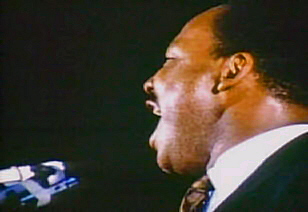
Martin Luther King Jr. (January 15, 1929 – April 4, 1968) achieved a moral stature and Christian witness that continues to inspire people of all faiths across the world. His life and work is commemorated not as a feast of the Roman Calendar but of the United States, on the third Monday of January each year. The human rights leader and Nobel Peace Prize laureate was 35 at the time of his assassination in Memphis, Tennessee.

Most people are familiar with his “I Have A Dream Speech” on the National Mall in Washington, D.C. However his final speech, delivered on April 3, 1968, “I Have Been to the Mountain Top,” not only presaged his death, but summarized his great vision for us all. You can hear by clicking on this link. It is well worth hearing in its entirety, not only because Dr. King was one of the great masters of English rhetoric, but the actual spoken message in its wonderful cadences, rich inflections, and profound rhythms stirs the soul with their inspiration.

Is Dr. King a saint? It is ironic to pose this question in regard to a Baptist minister, whose denomination – among others – has criticized the “worship” of the saints by Catholics. Like Dorothy Day, we can probably assume that Dr. King would dissuade us from giving him the title and remind us to return to the work of serving the least among us.

What is most remarkable about Dr. King’s legacy was the Christian witness of non-violence. Very easily, Dr. King could have kept the oppression of black people in the United States on a political level and built a base of power for himself. He also could have kept it on a “spiritual” level by focusing on the “next” life. Dr. King did neither. As a result, he elevated the whole movement to one of social justice and human rights for the children of God – of the “I” encountering the “thou” of the other person.

Let us develop a kind of dangerous unselfishness. One day a man came to Jesus, and he wanted to raise some questions about some vital matters of life. At points he wanted to trick Jesus, and show him that he knew a little more than Jesus knew and throw him off base….

Now that question could have easily ended up in a philosophical and theological debate. But Jesus immediately pulled that question from mid-air, and placed it on a dangerous curve between Jerusalem and Jericho. And he talked about a certain man, who fell among thieves. You remember that a Levite and a priest passed by on the other side. They didn’t stop to help him. And finally a man of another race came by. He got down from his beast, decided not to be compassionate by proxy. But he got down with him, administered first aid, and helped the man in need. Jesus ended up saying, this was the good man, this was the great man, because he had the capacity to project the “I” into the “thou,” and to be concerned about his brother.

Go and do likewise. (Luke 10:37)

Like anybody, I would like to live a long life. Longevity has its place. But I’m not concerned about that now. I just want to do God’s will. And He’s allowed me to go up to the mountain. And I’ve looked over. And I’ve seen the Promised Land. I may not get there with you. But I want you to know tonight, that we, as a people, will get to the promised land!

And so I’m happy, tonight.

I’m not worried about anything.

I’m not fearing any man!

Mine eyes have seen the glory of the coming of the Lord!!

Read More

Posted by on Jan 20, 2008

Each Little Light …

“Behold the Lamb of God” — “I did not know him.”

flower-gift.jpg 

The “Book of Signs” in the Gospel of St. John begins with the story of John the Baptist – the Baptist’s statement of his own role in preparing the way of the Lord and his witness to the role of Jesus. John the Baptist saw Jesus coming and told his disciples, “Behold the Lamb of God …” He also admitted to them, “I did not know him … but the one who sent me to baptize with water told me, ‘On whomever you see the Spirit come down and remain, he is the one who will baptize with the holy Spirit.'” (Jn 1: 29, 33) Based on the Baptist’s testimony, Andrew, brother of Simon Peter, and John, son of Zebedee, followed after Jesus and became his first disciples.

How truly even today we do not recognize the Lord came clearly to me about this time seventeen years ago. My husband and I had two wonderful sons, and we had been hoping to have another child. Everything seemed to point to it being the right time and I had become pregnant as we hoped. Then in mid-January, it all fell apart. The baby in my womb died. We found out the news on a Saturday, but there was no need to do anything immediately, so the decision was made to wait until Monday to arrange for further treatment.

We went ahead and took down our Christmas tree. We had the birthday party for our firstborn, with most of his classmates attending, as we had planned. And on Monday morning, as symptoms of the miscarriage appeared, we went to Kaiser and I had the procedure to complete the process.

It was a very difficult time. We had very much wanted that child. And it was not to be.

The previous year, we had received a free overnight stay at a nice hotel up in the California wine country, to be used at a time of our choice. So we decided to go there a week or so later. That evening, I went for a walk through the courtyard by myself. I was praying. It wasn’t easy to pray during those couple of weeks. I asked the Lord, “Where have you been?” And I received his response in a series of images of faces that came into my mind. The couple who had stayed into the evening after the birthday party, so we wouldn’t have to be alone with our sorrow. The nurse who did the preliminary exam and shared that she too had lost a baby, but now had a healthy child. Another nurse who held my hand and told me it was OK to cry, as the procedure began. The doctor who was so kind and gentle. My parents, who sent flowers. They had never sent flowers before that day, but they did when I needed them. The other relatives who sent cards and plant arrangements. My son’s teacher, herself a young widow, who came after school and spent a couple of hours with me, just being there.

As all of these images and memories came to me, I knew where Jesus had been. He was right there, in his body, the People of God, the Mystical Body of Christ, about whom I had learned as a child. He was with me.

Behold the Lamb of God. Like John the Baptist, I did not recognized him when he came in person through all those wonderfully kind and thoughtful people. But the Lord is kind, and, like the Baptist, I got a second chance to recognize him – in the images of their faces that came to me that night.

Where is the Lamb of God in your life today? Keep your eyes and ears open. He is here, hoping you’ll recognize him in those around you. He’s here, too, hoping you’ll be helping him today to reach those who need his touch today.

Behold the Lamb of God!

Read More

Posted by on Jan 18, 2008

Each Little Light …

Christian Unity: A Week of Prayer – Chair of Unity Octave

chair-of-unity-poster-2008.jpg

One hundred years ago, a group of Episcopalians – the Franciscan Friars and Sisters of the Atonement – led by Fr. Paul Thomas Wattson and Sr. Mary Lurana White in Garrison, New York at Graymoors, started the observance of a week of prayer for Christian unity. The whole story is fascinating and encouraging since it traces the emergence of ecumenism in the 20th century. Fr. Wattson and the Franciscan Order of Atonement, which he co-founded, entered the Catholic Church in 1909 but continued to promote Christian Unity.

During the 1920s and 30s there was a growing movement for Christians to observe a week of prayer for Christian unity. During the Second Vatican Council (1962-1965), interfaith dialogue and prayer received a new emphasis with the 1964 issue of the Decree on Ecumenism, which called prayer the core of the ecumenical effort and encouraged Catholics to observe a week of prayer. In 1966, the Faith and Order Commission of the World Council of Churches and the Vatican Secretariat for Christian Unity began working on a common set of prayers for the Octave. Since 1968, The Graymoor Ecumenical and Interreligious Institute has facilitated and published the international texts for use in the United States. In 1991, a Sunday was incorporated into the week of prayer. Each year’s theme is developed by an ecumenical group whose members are appointed by the World Council of Churches and the Pontifical (Catholic) Council on Ecumenism. The 2008 theme is “Pray without ceasing” (1 Thes. 5-17).

Read More

Posted by on Jan 17, 2008

Each Little Light …

Saint of the Day: St. Anthony the Great – January 17

stanthony-abbot.jpg

The feast of St. Anthony the Great (251-356) is January 17. In the Egyptian or Coptic Orthodox and Coptic Catholic Churches, the feast day is January 30. He is also known as St. Anthony the Abbot and is an early example of the Christian monk. What we know of his life comes from a biography written by St. Athanasius, the patriarch of Alexandria in Egypt. The account was written in Latin and had a major impact on the development of monasticism in the West. Devotion to St. Anthony is less prominent in the East.

St. Anthony is best known for his literal following of the Gospel. According to St. Athanasius, St. Anthony’s parents died when he was a young man. Hearing the call of Christ in St. Matthew’s Gospel to sell everything he had and come follow Christ, St. Anthony, who had inherited a substantial estate from his parents, did just that. He spent his life in the desert, primarily alone, although toward the end of his life he did supervise some other monks who had joined him. They lived with the fundamental rule to work and pray, which would later be echoed by St. Benedict of Nursia.

What is noticeable in the account of St. Athanasius is the theme of spiritual warfare with the devil. St. Anthony overcame many temptations through prayer and faith. His life in the desert brought him the same temptations that Christ encountered during His soujourn in the desert. What is even more notable is that St. Anthony emerged from his time of testing as someone enlightened who could comfort and heal, someone people sought out not for his wisdom or knowledge, but for his goodness and genuine holiness.

As postmodern people, we have a highly developed notion of individual psychology and it can be difficult to relate to someone like St. Anthony. Our notion of self-actualization appears to get in the way of such an extreme life style of self renunciation. However, it is hard to see how such enlightenment is not the highest form of self-actualization. Today our spiritual heroes, such as Mother Teresa, have chosen a very challenging path not unlike that of St. Anthony. What desert are we being called to?

Read More

Posted by on Jan 12, 2008

Each Little Light …

The Feast of the Baptism of the Lord

baptism-of-jesus.jpg 

The third Sunday after Christmas is the Feast of the Baptism of the Lord. On this day we recall that Jesus went out to the Jordan River, where his cousin John was baptizing, and himself entered into the water to be baptized. All four of the gospels tell of this event, in which the Spirit of the Lord came to rest upon Jesus, like a dove. Matthew, Mark and Luke tell us that a voice spoke from the heavens, saying, “You are my beloved Son; with you I am well pleased.” John tells us that John the Baptist told his disciples, “Behold the Lamb of God, who takes away the sins of the world.”

Jesus’ baptism was a life changing event for him. He went out into the desert to pray and to ponder and absorb the immensity of what had been revealed to Him as He stood in the water with John. This experience of coming to know that He is God’s Beloved Son was the foundation for His entire ministry. When He returned from the desert, He began going among the people and spreading the Good News that God cares about what happens to people here and now, that God loves even the most insignificant person, that loving actions speak louder that pious prayers, that joy and peace are signs of the presence of God.

Each of us, in our own baptisms, have been given the gift of sharing in the life and work of Jesus. This feast is a reminder to us of that great gift and of the fact that our response is to be like that of Jesus – to go out now and share the same Good News through our actions in our daily lives, with peace and joy and love.

Read More

Posted by on Jan 11, 2008

Each Little Light …

“Pretty Good News”

solar-flare.jpg

Many years ago, in the olden days when I was young (as one of my children once put it), we had a new young assistant pastor in our parish. He blew into town and began immediately making changes in the parish – cleaning out closets, tossing stuff for which he didn’t see an immediate need, organizing new people to participate in ministries, etc. It was not an easy time for those of us who had been ministering in the parish for many years and had just happened to be out of town for a couple of weeks when he arrived and found no one filling our places in the community. Some toes got crunched. Some feelings got hurt. Some people moved into new ministry in other communities. And some people got newly involved in service within the community who might never have stepped up to serve if he hadn’t asked them! As they say, with every cloud, there’s a silver lining.

I thought of this today as I reflected on this week’s readings from the First Letter of St. John that have appeared in the daily Mass liturgies. Their themes have been those of light shining in darkness, of love overcoming all else, and of living in the light, letting God’s light and love shine forth into our world through our love of those around us.

One day in that long ago time, I received a note in the mail from Fr. New Young Priest. I had done something for which he was sending a “Thank you” note. (I’ve no idea today what it was.) Those were the days when it was a new, exciting idea to cut a picture from a magazine and make your own notes and cards. He had cut a picture of a young woman from a magazine and glued it to a half sheet of blue paper. He wrote a quote from John’s Gospel beside it. “The light shines in the darkness, and the darkness has not overcome it” (Jn 1:5) It was a very simple note, but striking in its simplicity and power. On the back of the note, he wrote, “Pretty good news, huh!” and a simple thanks, with his signature.

The note really touched me. It was so lovely that I covered it with clear contact paper and taped it to the wall in my room. When I left home after college, I took it with me. Once in a while, I still find it in my attic, in a box of well loved treasures from my childhood and youth, and it always brings a smile.

He was right. And St. John was right. That the light cannot be overcome by even the greatest darkness is indeed “pretty good news.”

Read More