Pages Menu
RssFacebook
Categories Menu

Posted by on Mar 17, 2008

Saint of the Day: St. Patrick – March 17

Saint of the Day: St. Patrick – March 17

st-patrick.jpg

St. Patrick (Patricius in Latin and Naomh Padraig in Irish) lived from 378 to 493 according to accepted estimates. There is actually very little that we know about him which is not legend. Scholars tend to accept his Declaration (Confessio) as genuine and some will accept a letter addressed to Corotic as the work of the Saint.

What we do know is that he probably came from Great Britain or Brittany and that his family had connections with the Romans who still ruled the area until they left Great Britain in 406. His father was a deacon and his grandfather was a priest. He was captured at age 16 by slavers, along with many of the people on his father’s estate. St. Patrick lived as slave shepherd, exposed to the elements and deprived of adequate food and clothing for six years until he was able to escape. He experienced a very definite call to return to Ireland as a missionary and was ordained a priest.

St. Patrick was not the first missionary to go to Ireland. Palladius, a deacon from Gaul (present day France for the most part), may have been sent by Pope Celestine I, who died in 431. Apparently, Palladius was still active until around 461. Saints Auxilius, Secundus, and Irsenius also appear to have been early missionaries.

In fact, much of what has become attributed to St. Patrick appears to be the blending or conflation of traditions related to Palladius, according to T. F. O’Rahilly’s “The Two Patricks” in a 1942 landmark published lecture. O’Rahilly was a controversial Celtic scholar who brought modern methods of linguistic and historical criticism to bear on Irish history and literature such as St. Fiacc’s hymn of St. Patrick.

The Rev. Alban Butler, in his 1864 Lives of the Saints, presents the more common traditional view of the life of St. Patrick, while avoiding much of the devotional accounts which had no historical basis. Indeed, this absence of historical information has allowed various generations to re-invent St. Patrick in different ways. Irish Catholics see him as the founder and bulwark of the church in union with Rome. Irish Protestants see him as the founder of the Irish Church, with its own particular traditions and identity. St. Patrick is beloved by New Age devotees as the priest who conserves the Druidic relationship to the elements of the earth and the heavens with the sun centered cross. Raucous celebrations of the Saint’s feast day in the United States by Irish immigrants and their descendants began as a defiant affirmation by oppressed and reviled refugees and have developed into a celebration of Irish success and acceptance in a land that had received them with hostility.

What is common in these visions of St. Patrick is his concern for the oppressed, the enslaved, and the forgotten. Obviously, this was the greater part of his motivation to return to Ireland, the land of his captivity. He opposed not only the enslavement of his converts, but the institution of slavery itself, 1300 years before Christianity would take the same stance in the mid 1800’s. Ireland is unique in the early history of Christian expansion because violence was not used to introduce the new religion. St. Patrick and his fellow missionaries helped abolish human sacrifice, limit tribal warfare, and laid the foundations of a culture and civilization that would be one of the marvels of the West, until its conquest and destruction by the English under Cromwell, from 1649-52.

Nevertheless, the spirit of Celtic Christianity has been preserved in the worldwide Irish diaspora and laid the foundation for vibrant Catholic communities in North America, Australia, and the rest of the English speaking world. Just as Ireland kept alive the flame of learning in the Dark Ages and returned that light back to Europe, the oppression of English rule and economic hegemony over the last three centuries has led ongoing waves of Celtic culture to spread around the world. Ireland’s current success as a center of hardware and software development in the Information Age heralds a new day, in which the non-Celtic are coming to the Emerald Isle to find peace and prosperity.

Every culture and civilization has its foundational myth. In St. Patrick ( and Palladius), Ireland has a founder whose faith and enduring achievements are not only the subject of legend but the historical basis of the Irish trajectory in world culture.

Read More

Posted by on Mar 13, 2008

Saint of the Day: St. Patrick – March 17

Campaign USA 2008 – Moral Choices #1 – Priorities

religion-and-politics.jpg

The coming of God’s kingdom in a free society can be a messy affair – since we enjoy the wonderful freedom and moral obligation to vote. Morality – what we actually do – is about the dialog between the heart and the mind over the best thing to do. Ethics is the reasoned system we use to evaluate choices.

This post is the first in a series on the moral choices in picking a candidate. Beliefnet’s “God-0-meter” tracks the statements of U.S. candidates for president and rates them on a scale from secularist (we don’t need God or religion) to theocrat (God will run the country through our clergy.) The secularist and theocrat labels are unfortunate because they are so extreme in our political system that they seem comical.

Generally, the hot button moral issues are questions of individual sexual morality: abortion, homosexuality, gay marriage, sex education, condoms for HIV / AIDs prevention, U.S. funding for overseas birth control. Many believers focus on the abortion issue and want to make the procedure illegal once more. For the most part, these are efforts to make public policy reflect traditional personal Judaeo-Christian morality as it did in the mid-20th century.

Social issues are usually things such as prayer in the schools, creationism versus evolution, displaying the Ten Commandments in courtrooms, and religious displays in public spaces. Public funding for private religious schools by voucher payments garners a lot of support. These issues are actually questions of the relationship between faith communities and the government.

There is a movement to broaden the question of moral choices in public policy. “Covenant for a New America” is an effort led by Jim Wallace of Sojourner’s magazine to unite liberals and conservatives to “make overcoming poverty a non-partisan agenda. look at the very broad priorities of human dignity and freedom: poverty, health care, education, equality of opportunity, and economic development. Stewardship of creation in terms of protecting the environment and minimizing global warming is now being emphasized. This movement represents a return by Evangelicals to social reform issues that were a focus during the first half of the 20th century. Major liturgical churches, such as Catholics, Episcopalians, Lutherans, and Presbyterians, are placing a renewed emphasis on social gospel issues.

How do you choose a candidate morally? If your candidate wants to outlaw abortion, prevent the legalization of gay marriage, and require every courtroom to display the Ten Commandments, is that a morally correct choice? What if your candidate gets into office and then cuts support services for mothers, including access to birth control, and women are again forced to risk their lives in illegal back street abortions? What if your candidate wants to outlaw the death penalty, increase social programs, and use more diplomacy than military force in international relations? Is it a moral choice to support that candidate if he or she also advocates birth control to prevent the need for abortion and allows the price of energy to stay high to encourage new energy saving technologies and reduce green house gas emissions?

The problem is that there is a broad spectrum of Christian values with a variety of applications to public policy.

In the following posts we will take a look at the leading U.S. presidential candidates against the backdrop of a broad moral spectrum.

Read More

Posted by on Mar 12, 2008

Saint of the Day: St. Patrick – March 17

Will Robots Have Souls?: Singularity and the Nerdpacolipse

hal-2001.jpg“Hello Dave.”

There is a point of view among artificial intelligence researchers and speculators that human intelligence will be surpassed in a burst of development by machines, called the singularity. Others have referred fancifully to this event as the “nerdpocalypse,” obviously playing on the term apocalypse. A materialist view of the human mind is very compatible with this type of speculation. If human consciousness and intelligence can be reduced to the chemistry and physics of neurons, machines should, logically, arrive at the point of complexity in which they experience their own conscious intelligence. The first example of this sudden and surprising emergence of identity and agency is the computer HAL in Kubric’s 1968 epic film, “2001: A Space Odyssey.” HAL’s calm and chilling response to the astronaut’s request to save his life and open the pod doors was, “I am sorry, I don’t think I can do that, Dave,” and made the implications of artificial intelligence far from theoretical.

What is more interesting is keeping the non-materialist view of mind as a faculty of the non-physical soul. When machines display animal levels of intelligence, have they received an animal soul in the sense that Aristotle and St. Thomas described it? Will highly advanced machines – some of them large carbon based self replicating systems in water – have a “human” soul when they manifest a personality?

Some of the options are grim, like the Matrix in the 1999 movie of the same name which conquers and almost obliterates the human race. Others, like Marvin, the paranoid android ( who is also desperately depressed ) in Douglas Adams 1978 “Hitchhiker’s Guide to the Galaxy,” show that the Sirius Cybernetics Corporation’s line of “real people personalities” was, maybe, not such a good idea. The computer which operates the Starship “Heart of Gold” and its infinite improbability drive has at least three very human and irritating personalities.

If and when artificial intelligence stops being artificial will we have created something in our own likeness or in God’s?

Read More

Posted by on Mar 11, 2008

Saint of the Day: St. Patrick – March 17

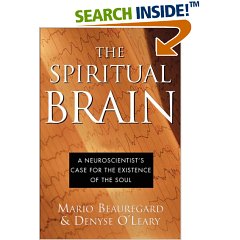
The Spiritual Brain – A Neuroscientist’s Case for the Existence of the Soul

the-spiritual-brain-2.jpgHarper Collins

Neuroscientist Mario Beauregard, Ph.D. and journalist Denyse O’Leary have written a very detailed and easy to understand account of the debate about whether the mind is merely the result of the chemical action of billions of neurons or whether it is something non-material, something spiritual.

Their conclusion, not surprisingly, is that there is rational scientific evidence indicating that the mind, a faculty of the soul, is spiritual. The approach is painstakingly rational. The book begins by examining the most recent affirmations of the materialist approach. Currently, Breaking the Spell: Religion as a Natural Phenomenon (Daniel Dennett), The God Delusion (Richard Dawkins), God is Not Great (Christopher Hitchens), and Letters to a Christian Nation (Sam Harris) are very popular anti-theistic books. There are conferences such as the Science Network’s “Beyond Belief” and the popular You-Tube Blasphemy Challenge. This materialist trend argues that science proves that there is nothing beyond the chemistry and physics of matter and energy.

Beauregard and O’Leary take these arguments apart very carefully in a scientifically rigorous manner and disprove them. More importantly, the book presents the results of Beauregard’s neuro-imaging studies of Carmelite nuns to actually document the neuronal activity associated with religious experience. Basically, religious states / mystical experiences (RSMEs according to the authors) are complex phenomena that involve many parts of the brain. They are not the result of genes or the by-product of certain parts of the brain. None of this proves the existence of God or of the soul. However, it does re-affirm the rationality and the moral dimensions of the choice of material versus spiritual explanations of religious experience.

This is a very good book for college students and educated members of the general public. An important book not only for the apologetics of faith in the post-modern world, The Spiritual Brain establishes the objective reality of religious states / mystical experiences (RSMEs) that are related to complex interpersonal transcendent encounters.

Tolle Lege.

Read More

Posted by on Mar 10, 2008

Saint of the Day: St. Patrick – March 17

In Search of God: Dr. Rowan Williams, Archbishop of Canterbury

sunrise.jpg

What do you tell yourself or others when there is doubt about the existence of God? I would like to recommend an interview with Dr. Rowan William, the Archbishop of Canterbury and head of the Church of England. The interviewer, John Humphrys, is from Channel 4 of the BBC.

The interview starts off in a genteel enough manner but builds into some rather intense exchanges. It is not a debate. In fact Humphrys begins by asking for a sales pitch – to be converted. Wisely, the Archbishop leads Humphrys to question his own questions in a manner similar to Socratic dialog.

It is a very good example of pastoral teaching, even if the inquirer does not seem to be entirely sincere. Take a look at the text or listen to the podcast.

Read More

Posted by on Mar 8, 2008

Saint of the Day: St. Patrick – March 17

Saint of the Day: St. John of God – March 8

st-john-of-god-2.jpg

St. John of God (1495 -1555) was born Joao Cidade in Montemor-o-Novo (Evora) in Portugal on March 8, 1495. He spent much of his life working in Spain for the Mayoral family in Oropeza as a shepherd. Later he became a soldier of fortune, enlisting twice in the army. After his second enlistment, which had taken him to Austria to fight the Turks, he traveled through Spain and North Africa. Juan Ciudad, as he was known in Spanish, settled in Granada and became a seller of books on chivalry and religion.

In 1537, St. John of God heard a sermon by St. John of Avila and underwent an intense conversion experience. His reaction was extreme. He destroyed his book shop and acted deranged for several days. He was finally committed to the Royal Hospital of Granada, since he seemed to have gone mad. A few months later, he left, calm of spirit, and put himself under the direction St. John of Avila. After a brief pilgrimage to the shrine of Our Lady of Guadalupe in southern Spain, he returned to Granada and took up his work in service of the poor.

He became known as Juan de Dios, John of God, because of his great love and service to the destitute and the ill. St. John of God was given a habit by the local bishop, who also confirmed the name everyone had given him. He was very good not only at soliciting money and support for his hospital but he also created a relationship between the donors and the recipients. Volunteers provided services and the recipients were encouraged to pray for their benefactors. He was at ease with all levels of society and was especially known for listening to people’s problems and offering encouragement if nothing else. St. John of God reached out to the most despised members of society, the prostitutes, and helped many to find other ways to support themselves and lead lives of dignity.

On his birthday, March 8, 1555, a day that would become his feast day, St. John of God went to his reward. The co-workers he had attracted, formed a religious order, the Hospitaller Brothers of St. John of God, to carry on his work all over the world. The core of St. John of God’s spirituality is hospitality – that virtue of acceptance and care that sees Christ in the guest at the door and among those most in need.

Read More

Posted by on Feb 11, 2008

Saint of the Day: St. Patrick – March 17

Feast of the Day: Our Lady of Lourdes – February 11

our-lady-of-lourdes.jpg

“The Lady took the rosary that she held in her hands and she made the sign of the cross. Then I commenced not to be afraid. I took my rosary again; I was able to make the sign of the cross; from that moment I felt perfectly undisturbed in mind. I knelt down and said my rosary, seeing this Lady always before my eyes. The Vision slipped the beads of her rosary between her fingers, but she did not move her lips. When I had said my rosary the Lady made a sign for me to approach, but I did not dare. I stayed in the same place. Then, all of a sudden, she disappeared. I started to remove the other stocking to cross the shallow water near the grotto so as to join my companions. And we went away. As we returned, I asked my companions if they had seen anything. ‘No,’ they replied. ‘And what about you? Did you see anything?’ ‘Oh, no, if you have seen nothing, neither have I.’

“I thought I had been mistaken. But as we went, all the way, they kept asking me what I had seen. I did not want to tell them. Seeing that they kept on asking I decided to tell them, on condition that they would tell nobody. They promised not to tell. They said that I must never go there again, nor would they, thinking that it was someone who would harm us. I said no. As soon as they arrived home they hastened to say that I had seen a Lady dressed in white. That was the first time.” [2]

On realising that she alone had seen the apparition, and not her companions, she asked her sister Toinette not to tell anyone what had happened. Toinette, however, was unable to keep silent, and told their mother, Louise Soubirous. Both girls received a beating, and Bernadette was forbidden by her mother from returning to the Grotto again.[3]

On Thursday February 11, 1858, Bernadette Soubirous, an impoverished, uneducated, 14 year old French peasant, had an experience that would not only change her life but would make would make her home town an international destination for pilgrims. Bernadette was not unlike many of the millions of girls around the world today growing up in stark poverty. Her parents and 5 siblings lived in a one room prison cell that had been abandoned because it was no longer fit for prisoners. Bernadette’s father was a miller and her mother took in laundry.

St. Bernadette would have a total of 18 encounters with the Lady of the grotto. The last one would be July 16. In the process of these visits, a miraculous spring of water would appear. People would be healed. The Lady would refer to herself as the Immaculate Conception. The grotto would be closed by authorities and people forbidden to pray there by the mayor of Lourdes.

Today, Lourdes hosts 15 million pilgrims a year. Paris is the only city in France that has more hotel rooms. The beautiful young woman, who died at the age of 33 from tuberculosis of the bone, refused to return to the grotto seeking a cure, saying only that the water was for others. Today 150 years after the first apparition, St. Bernadette’s body is still marvelously intact and uncorrupted.

St. Bernadette and the events of Lourdes met with intense skepticism and careful investigation by religious, political, and scientific authorities. Subject to medical and scientific review, thousands of healings have been documented which do not have a natural explanation. Yet only a fraction of the sick and infirm are healed physically. The prayerfulness and the experience of a community of faith continues to draw millions every year.

There is a saying associated with Lourdes that is especially appropriate. “To those who believe no explanation is necessary; to those who do not believe no explanation is possible.”

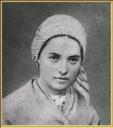
st-bernadette-of-lourdes.jpg St. Bernadette – the young girl

st-bernadette-soubirous.jpg St. Bernadette – at rest

Read More

Posted by on Feb 8, 2008

Saint of the Day: St. Patrick – March 17

Saint of the Day: St. Josephine Bahkita – February 8

st-josephine-bakhita.jpg

St. Josephine Bahkita (1869-1947) was born in Olgossa in the province of Darfur, Sudan. She was kidnapped and sold into slavery at the age of 7 and was sold 5 times in the markets of El Obeid and Khartoum. Her suffering and abuse were immense. Her fourth owner, an Ottoman army officer, had her and his other slaves tatooed and scarred to mark them as his property. Once the sons of her owner beat her so severely that she could not move from her straw pallet for a month. Her fifth buyer was the Italian consul ,who treated her more humanely, but nevertheless gave the 16 year old to one of his friends, who made her a nanny to his daughter. St. Josephine and the girl she cared for were sent to the Canossian Daughters of Charity in Venice while the parents returned to Africa.

Upon their return, St. Josephine refused to leave with them. In the ensuing court case, the Canossian Sisters and the Patriarch of Venice intervened on her behalf. The court upheld her freedom and she returned to the Canossian Sisters. She spent the rest of her life happily as the door keeper in the convent in Schio and was in frequent contact with the community. St. Josephine was known for her cheerfulness and holiness. In her later years, her order asked her to write her memoirs and to give talks about her life story. Efforts to declare her a saint began soon after her death in 1947 and she was canonized (declared a saint) in 2000.

As terrible as her story of slavery is, it might be more bearable if we could relegate it to the horrors of 19th century Africa. Unfortunately, turmoil in Darfur and human trafficking are even more prominent today. There might be some solace in St. Josephine’s designation as the patron saint of Sudan, except that genocide in Darfur is directed at Christians and animists by a hostile government in Sudan which is protected from international sanction by its commercial ties with China. The persecution of Christians has spread to other African countries in recent years as well.

St. Josephine is remarkable not only because she was able to survive such a cruel childhood and adolescence, but because she rose from it in a spirit full of happiness. Bitterness, depression, anxiety, even hostility, and self-destruction are the more likely outcomes of such an horrendous youth. Credit also has to go to the Canossian Sisters who could have turned a blind eye to the plight of an African and not opposed a prominent family. St. Josephine could have taken a certain morose refuge with the Sisters, but instead she became an unassuming beacon of holiness.

I don’t think that she would want us to forget about Darfur and the resurgence of slavery in our globalized economy. What will we say when we meet her one day? Make a donation to help out.

Image of St. Josephine Bahkita from the website of the Canossian Daughters of Charity.

Read More

Posted by on Feb 7, 2008

Saint of the Day: St. Patrick – March 17

Christ in the Desert and the County Jail

christ-of-maryknoll.jpg

On Shrove Tuesday, while much of the world was at Mardi Gras, I was praying and sharing scripture with a small group of inmates at the county jail. Our scripture was the Temptation of Christ (Luke 4:1-19). One thing that emerged in our prayer and reflection was Christ’s acceptance of the Father’s way of rejecting power and advantage in the announcement of the Kingdom.

Why take the hard way? God could have redeemed us in many different ways. Why such a horrible death? Why did the Spirit drive Jesus into the wilderness after his baptism by John? Why was the Son of God fasting and praying for 40 days?

One of our group restated a common view that the offenses of humanity had become so severe that God demanded the most severe appeasement. I suggested that maybe the answer was in the persistence of evil in our lives. For so many of the men I was praying with, their lives had been damaged by forces beyond their control – poverty, addiction, and mental illness. (Hardened criminals generally don’t come to a prayer meeting in our jail. The faith of those who do come is something, I am sure that Jesus did not find in Israel and does not find in most respectable Christians.)

Christ, who was like us in all things but sin, chose to identify with the powerless and to put his faith in the Father through non-violence. Utter foolishness – according to St. Paul. In our suffering and defeat how could we be one with a God who was not defeated – a God who was not an utter failure? Did the Father exact this humiliation out of a some perverse pleasure unworthy of a human father?

That community of Divine love – Father, Son, Holy Spirit – Creator, Redeemer, Breath of Life come to the heart as love. Love can never be forced. True love can never come through power, glamour, or glitz. As we reflected and prayed it became more obvious to us that God can only come to us in compassion and that is how we come to him. Yet compassion is not compatible with power, wealth, and success – like a camel passing through the eye of the needle.

God with us. God like us. Powerless in love.

Read More

Posted by on Feb 5, 2008

Saint of the Day: St. Patrick – March 17

Feast of the Day – Ash Wednesday

ash-wednesday.jpg

“…As we live through this Ash Wednesday, may the crosses of ashes that mark our foreheads be a reminder to us and to those we meet that we belong to your Son. May our worship and prayer and penitence this day be sustained throughout these 40 days of Lent. Bring us refreshed and renewed to the celebration of Christ’s resurrection at Easter.” – A Prayer for Ash Wednesday

Ash Wednesday marks the beginning of the Lenten season of preparation and renewal for the Easter Triduum. The season of Lent has an ancient and interesting history. From the earliest centuries there were various periods of preparation for Easter. The tradition of prayer, fasting, and alms giving has evolved over time. Lent used to begin on Sunday like the other liturgical seasons. However, Pope St. Gregory the Great moved it to Wednesday to acurately mark 40 days – not counting Sundays – prior to Easter.

Ashes have a long history and deep significance in the Bible. Sack cloth and ashes are ancient symbol of mourning and repentance. Fasting and almsgiving are also prominent in the Old and New Testaments. Fasting focuses our attention on our need for God and alms giving reminds us that our service to the poor and the marginalized is service to God.

With the renewed focus on the baptism of adult catechumens at the Easter Vigil, Lent has become, once again, a time in which the community recalls, relives, and renews its life in the Paschal Mystery – the Crucifixion, Death, and Resurrection of Christ.

Read More