Pages Menu
RssFacebook
Categories Menu

Posted by on Apr 26, 2026

Shoe-d Away or Welcomed In?

Shoe-d Away or Welcomed In?

We always had dogs when I was a girl and there were many individual quirks that distinguished each of them. One did not like my Grandmother. Another disliked my Aunt. We knew what had caused the issue with Grammy, but none of us was ever sure what my Aunt might have done to make the dog believe she was an enemy. Regardless of the reason, he was absolutely convinced.

She lived in another town several hours away, so he didn’t see her often, but he always barked ferociously when he saw her and moved to guard the door of the house to prevent her entry. As a result, she usually simply came in through the front door rather than the back. It was just easier on the dog and the rest of us that way.

One day, she was in town for a gathering at the home of another family member. She had traveled several hours that day to get there and was tired, so she left earlier than the rest of us did. When we stopped to think, we realized she didn’t have a key to the house, so how was she going to get in?

We hurried home and found the lights on inside the house and the dog loose in the backyard. He had been locked in the kennel when we left, so he wouldn’t go over the fence and take an unsanctioned walk for a bit before we returned. (He had no hesitation about going over the fence when it seemed urgent to him. He also knew how to open the latch on the gate, but that’s another story.)

We went into the house and asked my Aunt how she had gotten in past the dog. The key, after all, was kept inside the locked kennel. She laughed and said, “I shoed him out!”

We all heard shoo-d (past tense of shoo) and were confused. What would shooing a barking, angry dog do that would allow her to get past, retrieve the key, and get safely into the house? But that wasn’t the word she used. It was shoed, but not in the sense one would use to describe putting a shoe on a horse. She explained that she simply picked up the tennis shoe that he loved to chase and retrieve in a game of fetch and tossed it to the far corner of the yard. She stepped into the kennel, got the key, and went into the house before he returned and realized what had just happened. We all had a good laugh at that. She had shoe-d the dog.

I find myself remembering this story as I reflect on Jesus’ description of himself as both shepherd of a flock that is protected in a locked, gated sheepfold and as the gate himself. He reminded his listeners that the shepherd enters and leaves the enclosure through a gate, opened by a gatekeeper. The sheepfold has sheep from many flocks, but his sheep recognize his voice and, reassured by his presence, follow him out the gate and into the pasture for the day. Each sheep has a name and is known to the shepherd, who uses the name to call the sheep to come along. Anyone who doesn’t have the key or the gatekeeper’s permission to enter must find another way in. Thieves come in over the fence, not through the gate. The sheep do not voluntarily come to the thieves and follow them.

A bit later, Jesus adds another layer to the image. “Amen, amen, I say to you, I am the gate for the sheep.” “Amen, amen…” We might phrase it as, “Listen up, guys, this is important!” Jesus is not only the shepherd. Jesus tells us he is the gate through which those who follow his call will enter and leave the sheepfold to go out to the pasture for the day, before returning to its safety for the night. (Jn 10:1-10)

As a good shepherd, he comes to bring abundant life to his sheep, unlike the thieves who steal them in order to kill and eat them.

Our challenge is to hear and recognize the call of this Good Shepherd in our lives. We hear so very many voices, many of which sound very rational and reasonable. Nations and peoples are described as enemies who can never be trusted. Former allies are criticized and insulted. Bombs are dropped and children are killed. It seems like the world has gone mad, made to dance like a puppet in the hands of a mad puppeteer.

Which voices are we to trust? Which people are the dangerous Aunt who must not get past us in our role as guard dogs? Are they really dangerous? Do they throw a shoe for us to chase, so we forget we don’t like or trust them? Or do others who want to fool us throw the shoe, so we won’t notice what they are doing? Are they trying to “shoe” us?

As we celebrate Good Shepherd Sunday, let’s keep our eyes and ears open to hear the voice of the Lord, our Shepherd, calling us to be kind and gentle with those we meet, and to be careful not to judge or jump to conclusions about the intentions of other people, especially those whose ways are different than our own. Let’s be hopeful, knowing that we and the rest of our human brothers and sisters are also loved by God and called to relationship with each other and with our divine Father, our brother Jesus, and the Holy Spirit, the Holy Breath of God, our sister Wisdom. Let’s not get distracted by that “shoe,” whatever it is.

In the Kingdom of God today, here and now as well as in the future, will we be shoe-d away or welcomed in as we welcome others to come with us? Which will we choose?

Readings for the Fourth Sunday of Easter – Cycle A


Read More

Posted by on Apr 12, 2026

One Wave at a Time – Love Flows

One Wave at a Time – Love Flows

I stood on a cliff beside Monterey Bay one afternoon and watched the waves coming ashore. It was a relatively calm day, the big storms were a day and a half away yet and the ocean was peaceful. Wave after wave came ashore, washing up over the rocks at the base of the cliff and the seawall built a few years earlier when waves from a very strong storm had washed away much of the cliff and threatened to take the road along its edge too. Now it was all peaceful.

The waves came in, broke gently on the rocks, and retreated back into the Bay. Another set came in gently, broke on the rocks, and retreated once again. The process continued long after I walked on along the path. The waves came in, broke on the rocks, and returned to the deeper water.

Was it the same drop or molecule of water each time? Not any easy way to know the answer to that one. Any particular molecule of water might come in and out innumerable times and I would never be able to see any difference in the picture of the waves coming and going. Yet there is no reason to assume that every drop of water might not eventually have a chance to come in and kiss the rocks at the shore. The ocean has been here for a very long time! And so has the shore, though it changes more frequently.

And there’s the lesson for us who have such short lifespans in comparison to the water and shore. Each time the water comes to the shore, its kiss softens the rock against which it meets with a bump. Some bumps are soft and gentle. Others are fierce and strong, tearing at the very foundation of the cliff. Either kind of wave contributes to the change in shape of the shoreline. Even the very gently touching waves change the shape of the shore by softening and washing away a tiny bit of the rock each time they touch. Just so, each time we act with kindness and gentleness, the rock of pain and suffering born by another person is touched and softened. It’s rarely a dramatic event, but over time, change happens.

On the Second Sunday of Easter, we celebrate Divine Mercy. The merciful love of God might be compared to the ocean. It is, of course, even bigger than the ocean or anything else we can imagine, but stick with me and the image anyway for a moment.

God chose to become one of us in Jesus of Nazareth, to share everything we humans experience, including betrayal at the hand of his friends and a painful death. The wave of divine love washed up on the shore with a kiss of gentle love and healing for those whom Jesus met in his life. Then it washed back out to the great sea, finding strength and perseverance through times spent in prayer. Even in the garden the night before he died, Jesus stepped back to find the strength to continue to move forward, sharing  and witnessing to the love of the Father. He died trusting in the Father’s love as his mission was finished.

But God wasn’t finished yet. Just as the ocean keeps sending waves to wash up on the shore, God didn’t stop. Death could not destroy the one who is Love any more than the shore can stop or hold the waves. Jesus rose from death and returned to continue his mission through his friends.

On the evening of that first Easter, Jesus’ friends were locked away, hiding from the authorities, afraid they might be the next ones to face death for having been his friends. They were also embarrassed about having denied or deserted him when he was arrested.

Without warning, he was there among them. The first words he said were, “Peace be with you.” He didn’t scold them or make them feel bad about having failed. He spoke words of healing and love – “Peace be with you.” And then, St. John tells us, he passed his commission from the Father on to his friends. “As the Father has sent me, so I send you.” And to give them the strength and ability to carry the mission forward, he breathed on them, sharing the Holy Spirit with them and giving them the authority to forgive sin. (Jn 20:19-31)

The unlimited ocean of Divine Love would now continue to touch the shores of human worries, fears, pain, and failure with the joy and peace of forgiveness and healing. More little waves would begin to wash up against the rocks of anger, fear, pain, and loss in their communities, softening the hardness to allow them to float in a love that wants to surround and carry them forward.

The community of believers grew as the word was shared and their lives attracted others who would share in the work of caring for each other and those in need. (Acts 2:42-47) The example of their lives and service would speak louder than words through the centuries. Sometimes people forgot the importance of living in humble service and tried to impose their ways on others. In the long term, that never works well. The example of those who instead trusted the presence of that great ocean of Love as they washed up against the hardened rocks and hearts are long remembered as we see the fruits of their labor within our communities and world.

As we move through these weeks of Easter, may we remain open to being a small part of that ocean of love that fills and sustains our lives and our world. May we be willing to be gentle rather than violent, hopeful rather than despairing, sharing rather than scrabbling greedily for the riches of the world, healing rather than wounding.

Each of us has multiple opportunities to be the face, voice, and hands of the Lord each day. I pray that we hang onto this calling as it seems the world around us grows colder and crazier each day. The ocean sometimes rages, but the raging of the ocean of Divine Love, the Lord, is an even stronger experience of love and healing than what we know in ordinary life. It is not destructive. It builds up stores of hope and joy that are stronger than anger or fear. These moments of encounter with the power of Love, sharing in the experience of Jesus’ friends on the first Easter, give us the strength and courage to become part of the little waves that will change our lives and our world.

Let’s keep our eyes, ears, and heart open to become a part of this marvelous adventure.

Easter peace and joy be yours.

Readings for the Second Sunday of Easter – Divine Mercy Sunday – Cycle A

 

Read More

Posted by on Apr 8, 2026

The Sun was Overcome

The Sun was Overcome


The sun was overcome at 3:00 in the afternoon

And the land convulsed

And the soldiers, the torturers also shook

And blood and water spilled from the divine cup


The sun of our lives went dark

And the darkness flowed everywhere

And even overtaking more than the earth

And invading even the human heart of hope.


The sun darkened for the suffering

And for the prisoners

And for the hungry

And those stumbling with drugs.


The sun of the lost darkened

And the wandering soul in search of love

And the boys and the girls orphaned by war

And the political prisoners, the disappeared.


The light in the darkness paled

And hope fails in a moment

And in a moment the Lord of power and might cries out

And He feels abandoned like the millions.


The very horizons of faith are dimmed

And in a moment, we ask why

And in a moment, we share the blindness of the world

And we are beyond consolation by the torture and death of the Lord.


Our vision becomes dark

And we feel blind

And we do not know why

And in a moment, we feel the darkness at midday.


The sun hides itself; the heavens darken; we see the Virgin Mother

And the women full of faith, full of courage

And St. John

And in our hearts and through hers a light, a flame


Beyond the darkness of the light, our Lady of Sorrows contemplates the mystery

And the sword foretold pierces her heart

And the Angel Gabriel comforts her who said yes

And the celestial choirs are anguished by the sobs of the one without sin.


Our souls are darkened by problems, anguish, and tragedy

And we take refuge in the darkness of midday in bitterness, violence, and rebellion

And we ask why

And the dark clouds ignore us.


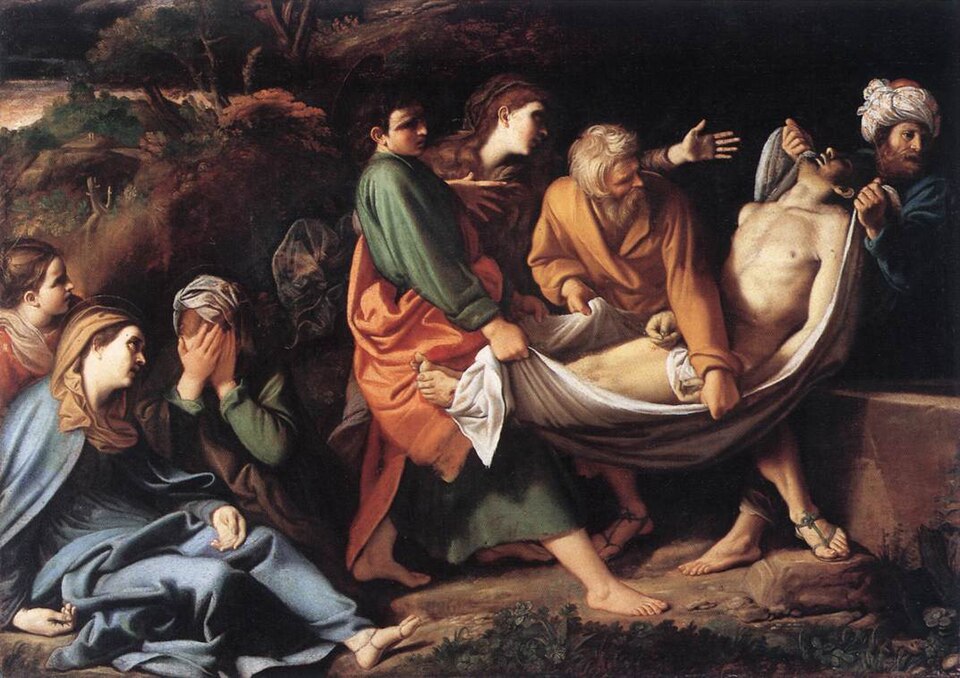
The darkness becomes even deeper when the body is lowered from the cross

And in the lap of Our Mother

And she who hugged the little one celebrated by the heavenly choir

And she hugs him for the last time; the choirs of heaven stricken and mute only rain down tears.


The spirit of today’s disciples, our spirit, darkens

And Joseph of Arimathea gives his tomb to the Poor One

And Nicodemus weighed down with expensive ointments

And anoints the Master’s beautiful body shredded with wounds


The news darkens our hearts

And we see the young smashed by war

And we are shocked by the waves of refugees despised and feared

And we see drug addicts in the street, once babies nursing at the breast.


Rescued by first light, we will never suffer the darkness again

And we wait in hope for the dawn of the open tomb

And the women running with the unbelievable news

And Mary of Magdala asking the gardener finds her love


The darkness dissipates away

And in the light of the Paschal Candle

And in the light of the church awash in points of light

And never again the darkness of night at midday.


Our lives are never darkened again

And the shadow is powerless

And grief is changed into joy

And tears are dry and senseless.


The day awakens

Christ Risen is not obscured

Light from Light

True God from True God

Amen


Se Oscureció el Sol  -Translation by Dcn Randolfo Pozos

Notes on translation. Throughout my years of study of classical languages and Spanish, I have been taught and experienced the fact that one of the more difficult things to convey in another language is poetry. Google Translate and other AI tools can do a reasonable job of transliterating, but they have more trouble translating at times. “Se oscurece,” which is the scaffolding for this poem, has diverse meanings and allusions that can be translated many ways. Among others, it can mean to darken, to shadow, to block, to obscure, to hide and to lose from sight. Metaphorically, it came mean to be lost, to be depressed, to not perceive. I have used the impersonal form. It darkens, it is obscured, is neither passive nor active in our use of English while it is very common in Spanish and conveys the middle voice of classical Greek. Using “and” while correct is too literal. Ending with “d” closes off the rhythm as opposed to launching it. I have tried to convey these nuances in the translation, but the results are unsatisfying. – Dcn Randolfo Pozos

Read More

Posted by on Apr 3, 2026

The Sun was Overcome

Se Oscureció el Sol


Se oscureció el sol a las tres de la tarde

Y conmovida tembló la tierra

Y temblaban los soldados los verdugos

Y salió del cáliz divino sangre y agua.


Se oscureció el sol de la vida

Y la oscuridad invadía todas partes

Y más invadía no solo la tierra

Y además invadía la esperanza del corazón humano.


Se oscureció el sol de los sufriendo

Y de los presos

Y de los hambrientos

Y de los tropezando por las drogas.


Se oscureció el sol de los perdidos

Y el alma errante buscando el amor

Y el niño y la niña huérfanos de la guerra

Y de los presos políticos, los desaparecidos.


Se oscureció la luz en las tinieblas

Y por momento se falle la esperanza

Y por momento grita el Señor de los ejércitos

Y como millones se siente abandonado.


Se oscurecieron los horizontes de la fe

Y por momento preguntamos por qué

Y por momento compartimos con el mundo la ceguedad

Y por el suplicio y la muerte del Señor nos quedamos desconsolados.


Se oscureció nuestra visión

Y sentimos ciegos

Y no sabemos por qué

Y por momento tememos la oscuridad al medio día.


Se oscureció el cielo y vemos la Virgen Madre

Y las mujeres fieles y valiosas

Y San Juan

Y en nuestros corazones por ella se brilla una luz, una llama.


Se oscureció no tanto la luz; La Virgen de los Dolores contempla los misterios

Y una espada precedida atravesando su corazón

Y el ángel Gabriel confortando la que dijo sí

Y se angustian los coros celestiales los llantos de la sin mancha.


Se oscurecen nuestros corazones en dificultades, angustias, tragedias

Y en la oscuridad de pleno día nos refugiamos en amargura, violencia, y rebelión

Y preguntamos por qué

Y las nubes oscuras nos ignoran.


Se oscurecen aún más en la bajada del cuerpo santo de la cruz

Y se pone en el seno de nuestra madre

Y ella que abrazaba al niño festejado por el coro celestial

Y lo abraza por última vez y el coro angélico, atónito, y mudo llueve lágrimas.


Se oscurece el ánimo de nosotros los discípulos de hoy

Y José de Arimatea su sepulcro le da al pobre

Y Nicodemo cargado de ungüentos costosos

Y unge el lindo cuerpo del maestro arrastrado de heridas.


Se oscurecen nuestros corazones las noticias

Y vemos los jóvenes atropellados por las guerras

Y vemos asustados las olas de refugiados despreciados y temidos

Y vemos los drogadictos en la calle una vez bebés mamando.


No se oscurecen nosotros jamás, aliviados por la aurora

Y esperamos la madrugada de la tumba abierta

Y las mujeres corriendo con las noticias increíbles

Y María de Magdala hace pregunta del jardinero y encuentra a su amado.


Se dispersa la oscuridad

Y en la luz del cirio

Y en la luz de la iglesia iluminada

Y jamás la noche oscura in pleno día.


Se oscurecen jamás nuestras vidas

Y la sombra ya inútil

Y llantos convertidos en gozo

Y lágrimas secas e inválidas.


El día se amanece.

No se oscurece Cristo Resucitado.


Luz de luz

Dios Verdadero de Dios Verdadero.


Amen.

Traducción al inglés

Read More

Posted by on Jan 10, 2026

The Spirit of God Descending on Him Like a Dove

The Spirit of God Descending on Him Like a Dove

How does God come to us? What signs or wonders are seen? Will there be lightning or thunder? Will the earth shake? Will the winds blow fiercely? How does God come to us? Would we recognize his coming when it happened?

All four Gospels describe the moment when Jesus experienced the coming of the Father to him personally.

Jesus’ cousin John, son of Elizabeth and Zacharia, was a prophet. When they were both around 30 years old, John came out of the desert and began preaching and baptizing people in the waters of the Jordan River. He preached repentance from sin and spoke of the imminent arrival of the one who would bring the reign of God to the world. John described himself as a “voice crying in the wilderness.” His role – to call all people to prepare for this world-transforming event.

And then the day came.

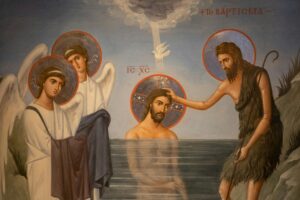
Jesus came to the Jordan from his home in Galilee. He listened to John and then approached the river to be baptized. John was taken aback. “I need to be baptized by you, and yet you are coming to me?” But Jesus was adamant. “Allow it for now, for thus it is fitting for us to fulfill all righteousness.” In more contemporary words, “It’s OK. We need to do it this way!”

Jesus entered the water and John poured some of it over him. As he left the river, “the heavens were opened for him, and he saw the Spirit of God descending like a dove and coming upon him.” Wow.

As if that weren’t enough, a voice from the heavens spoke: “This is my beloved Son, with whom I am well pleased.” (Mt 3:13-17)

Of those present, John the Baptist also heard the words, because each of the gospels describes them as having been heard. Did all hear them as clearly spoken words? John did, because in at least one instance he told his followers what he had heard. But who knows what anyone else heard. Another gospel says the voice thundered. For those to whom it mattered, the words were clear!

The image of the Spirit descending like a dove is also important here. While the landing of any bird is not without a certain amount of fluttering wings and outstretched feet, a dove coming out of the sky unexpectedly is much different than a bird of prey such as a hawk, falcon, or eagle – smaller and with a much less fearsome beak, among other things!

A dove is a sign of peace. In the time of Noah, for example, it was a dove that was sent forth to see if dry land was appearing again – the earth no longer covered by the flood waters. The return of the dove with a small branch that had leaves was a great sign of hope. God’s anger had abated and the flood would end. People could again live on the earth.

We all too often think only great signs and wonders will announce the coming of important changes or personages. Strong leaders will be needed to bring peace and keep away enemies. Powerful armies will guarantee peace. Organized companies will provide the products and services we need most efficiently. And so forth and so on.

But what all too often happens is that we forget that it’s in the small, everyday interactions that true peace and justice are born. Only there do they gain the traction to spread. Mighty armies and powerful nations simply cannot do it.

Jesus was called by a voice from the heavens. However, it was not a mighty bird but rather a dove that came upon him at that moment. In the same way, when the Lord comes to individuals, it’s not typically with a great display of power and energy. It’s in a quiet embrace of love that permeates every pore of that person’s being and gently says, “I love you.” After receiving that gentle, quiet embrace, everything is different. Nothing can be the same again, because “I am loved.” And if I, who am not perfect, am loved, then so must you be loved.

Another prophet, Isaiah, spoke of the coming of the Lord’s servant long ago. “Here is my servant whom I uphold, my chosen one with whom I am well pleased, upon whom I have put my spirit.” This chosen one is not a person who is going to go out shouting at people, breaking things, or otherwise breaking up the society and world in which they live. This servant is coming to establish justice on earth. How? What will be the sign of the coming of the servant? This person will be “a light for the nations” who opens the eyes of the blind, releases prisoners, and brings people into the light out of darkness. (Is 42:1-4, 6-7)

Is this for one nation only? Blessedly, not at all. As the apostle Peter discovered when he was called to the home of the Centurion Cornelius and found the Lord had already poured the Spirit out on that household as well, “God shows no partiality. … in every nation whoever fears him and acts uprightly is acceptable to him.” Peter also declared as he spoke that day, “God anointed Jesus of Nazareth with the Holy Spirit and power. He went about doing good and healing all those oppressed by the devil, for God was with him.” (Acts 10:34-38)

With the celebration of the Baptism of the Lord, we close the Christmas season and enter into the mysteries of the adult life of Jesus.

What will this new season bring? How will we live the love we have received? Where will we seen Christ in those around us? What concrete actions will show the presence of the Holy Spirit in our lives, reaching out through us to those in need or those most vulnerable to the harmful results of local, national, or international policies and actors.

Pray with me for the courage to open our eyes, to open our hearts, and to open our ears. The courage to notice the Spirit coming into our lives and hear the voice of the Lord whispering and calling to us, “This is who you are – one whom I love dearly, my beloved child.”

Peace be with you.

Readings for The Baptism of the Lord – Cycle A

Cyprian Consiglio, O.S.B. Cam has a wonderful song I share with you today. This is Who You Are

Read More

Posted by on Jan 5, 2026

Governing With Justice – Rescuing the Poor and Afflicted

Governing With Justice – Rescuing the Poor and Afflicted

“O God, with your judgment endow the king, and with your justice the king’s son.”

With these words from Psalm 72 at Epiphany, we are introduced to a new vision of what it means to govern – to govern with justice.

When the king and his son govern with the Lord’s judgment, the result is not what so often happens historically. Historically, many rulers have come to power through violence or trickery. Others grow up as children of rulers, having their every whim granted. They assume this will continue for the rest of their lives and set out to make it so. The result of this common pattern is not peace and justice for the community. It is all too often oppression, poverty, anger, frustration, and sometimes outright rebellion and wars. The opposite result occurs when governing with the Lord’s judgment.

The psalmist sings of justice flowering and profound peace from sea to sea for all time, and, in a reference some might have heard in recent years, “from the River to the ends of the earth.” The term, the river, refers to the land of Abraham’s birth, in Ur of the Chaldees – a land currently known as Iraq. In other words, this justice and peace are to flow through all the world.

Kings will bring gifts and tribute/money and pay him homage. Nations will serve this king. Why? Because he rescues the poor and the afflicted. He takes pity on the poor and saves their lives. Not a common picture of the typical reason kings or rulers receive tribute from others. (Ps 72:1-2, 7-8, 10-11, 12-13)

The promise of Isaiah for Jerusalem seems in many ways to contrast dramatically with the image from Psalm 72. “Rise up in splendor, Jerusalem! Your light has come, the glory of the Lord shines upon you.” This prophecy speaks of darkness covering the earth until the Lord comes, shining over the land with glory – a light to guide the way of nations and kings. Prosperity, reunion of peoples gathering from afar, rich gifts from the powerful – all will be part of the splendor of Jerusalem. This was a great promise made to a people returning from exile, yet it is much more as well.

Notice, the psalm also speaks of kings bringing tribute and peoples of all nations serving the Lord. This isn’t the kind of kingdom or nation state we see in human history. This is something greater. Jerusalem is not just the capital of Israel. It’s not the city or land over which so many have fought through the centuries and continue to fight. This is the place where the Lord’s justice and glory shine forth. Those who approach it from all over the world bring rich gifts to share with all. Yet it is not those rich gifts that make it the wondrous place that it is. What matters is the presence of the Lord, the light shining forth to the world. Those who come to this place proclaim their praise of the Lord, the Lord appearing in glory. (Is 60:1-6)

St. Paul explains that this gathering of peoples is enlarged through the coming of Jesus to include all peoples of the earth – Jews and Gentiles alike. All are now heirs of God’s kingdom and grace. All are “members of the same body, and copartners in the promise” received through the gospel, the good news, of Christ Jesus. The old barriers that divided the world into those chosen and those rejected have been destroyed. All are invited to this relationship with the Lord whose light shines forth through the darkness. (Eph 3:2-3a, 5-6)

Light shining forth – new understandings – Epiphany.

The Lord came into the world as a baby, part of a normal human family. Yet his coming was not a humdrum event. Born during a census that required people to move from the towns in which they were living to the towns of their ancestors, he was greeted by the poor – shepherds who received word from heavenly messengers.

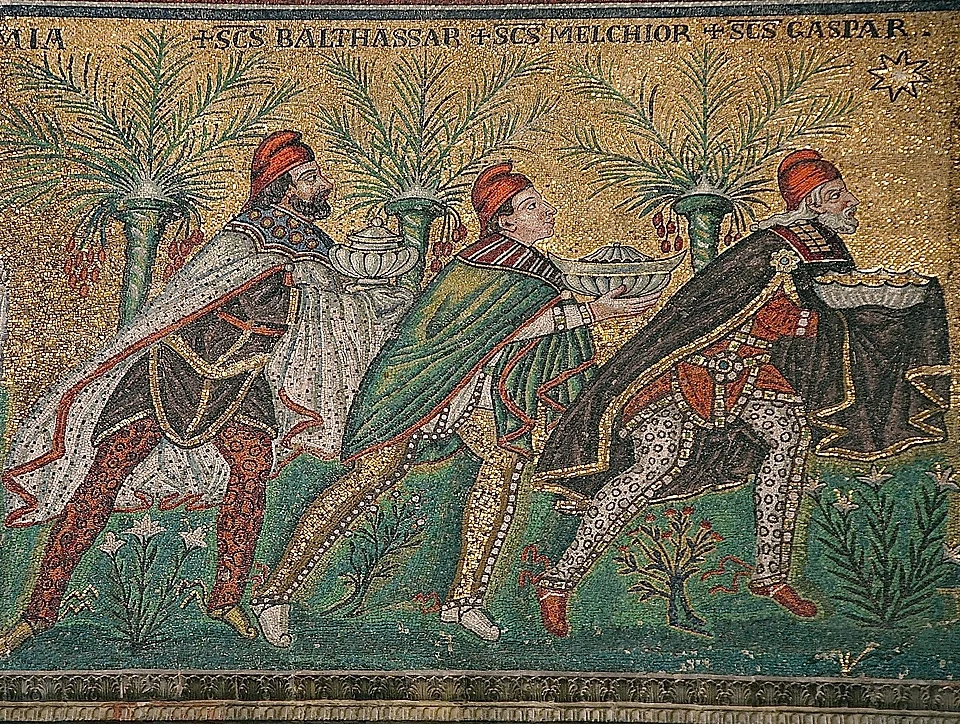
Shepherds were not the only visitors Jesus received. Wise men from eastern lands also came to visit, according to St. Matthew. Constellations in the sky which they had observed indicated a very special king was to be born in the land of Israel. They set out to visit the newborn and bring appropriate gifts. Being practical people, they first checked in at the palace to see the newborn, but that wasn’t where this king was to be found. The ruling king’s advisors checked the predictions for where the great king, the anointed one of the Lord, was to be born and reported that he would likely be found in Bethlehem.

The wise men, magi, found Jesus and his parents in Bethlehem. They offered their gifts and praise – gifts for a king. A greater king than any other. The one foretold in Psalm 72 and Isaiah. The one who would rule with justice and mercy, caring for the poor.

The magi returned home by a different route, to protect this child from Herod, the local king. They were changed by the experience of meeting this child and his family and carried that with them on their journey home. (Mt 2:1-12)

Shortly after the magi left Bethlehem, so did Joseph with Mary and Jesus – in the middle of the night. Into Egypt they traveled to escape the danger posed by Herod. As political refugees, they left everything behind to protect their child. Had they remained, he would have been killed with the other baby boys by Herod’s soldiers.

How are we to respond to these images and promises today? How and where does the light shine forth through our words and actions. Where do we look to find justice and peace? How do we care for the poor and afflicted? Is this only a personal responsibility or is it a communal one – something local and national governments are also called to do?

As we enter into another calendar year, with wars raging, countries competing economically and ideologically, arguments among peoples who have different visions for the future and understandings of who is responsible to help the young, the old, the newcomer, the neighbor, we will be forced to address these questions.

Epiphany, light shining forth, new understandings – justice and wise judgment as gifts from our God – may all these be characteristic of all who are followers of the Lord God. May we keep our eyes and hearts open to find the child sent from on high, bringing light and life to our world. And may we be partners in the great task of serving those least able to protect themselves and prosper. With this heavenly king, may we have pity for the lowly and the afflicted, reaching out to save the lives of the poor.

Readings for The Epiphany of the Lord – Cycle A
Read More

Posted by on Nov 23, 2025

Shepherd of a People – A True King’s Role

Shepherd of a People – A True King’s Role

What kinds of qualities do we expect in a King? Historically, kings have been warriors. They have protected the lands they own by use of their armies and in the process the people who live on those lands were also protected. Kings have gone to war and conquered new lands. They have made and enforced the rules, including how much is to be paid in taxes by the people of the land. They make treaties with other rulers. Their children, especially their sons, are expected to follow them as rulers or warriors. Marriages between the children of the kings of different lands serve as the bonds that establish and maintain peace among them. Any who challenge the power of the king will soon find themselves punished, imprisoned, or executed. The king’s power is absolute.

Most modern monarchs are more limited in their ability to command obedience. Many monarchies are parliamentary, giving elected officials a role in making decisions for the country/kingdom. However, these reductions of the power of the ruler were not easily won and are strictly guarded by the people of such nations.

In the early years of Israel’s monarchy, the transition from one king to the next was not predetermined. The King’s son did not automatically inherit the throne. In fact, the Lord had chosen the new king for Israel before the ruler, King Saul, was anywhere near the end of his rule. Saul had not followed the Lord’s instructions and had fallen out of favor as a result. The prophet Samuel, following the Lord’s directions, selected David, the youngest son of a shepherd family in Bethlehem, to be the next king. Samuel anointed David, but the rest of the people had no idea this had occurred.

When Saul died, it took a while for the different factions among the twelve tribes to figure out who should be king of all. Eventually, they decided on David, the shepherd who had killed Goliath and played important roles in many conflicts with enemies of Israel.

Three reasons were given for this choice. First, they were related – all were descendants of Abraham, Isaac, and Jacob. Secondly, David had played important military and leadership roles under King Saul. Thirdly, and most importantly, the Lord had called him: “You shall shepherd my people Israel and shall be commander of Israel.”

David agreed to accept the role and was anointed formally and publicly to serve as King of Israel.

It’s important to note here, that his role was not envisioned initially as being a warrior. He was to continue to be a shepherd. From among the descendants of this shepherd, the Messiah would be born. (2 Sam 5:1-3)

Being human, David was not perfect. He made plenty of mistakes in his years as ruler and suffered the tragic results of many of them. But the original vision of the Lord was not changed. David was to be a shepherd. This was the role the Lord gave as the model for the vocation of king.

On this last Sunday of the liturgical year, we recognize and celebrate Our Lord Jesus Christ, King of the Universe. It’s a big title and a big deal. King of the Universe! That’s a lot more than king of any nation on earth, even a great empire such as Rome! How could a simple carpenter turn out to be King of the Universe?

God’s ways are not always our ways. Just as the Lord chose a shepherd boy to become king of Israel, He became one of us, entered into our human lives and history, as Jesus, the son of a carpenter in a small conquered nation, part of a huge empire. Over the course of three years, Jesus moved from sharing the insights he received at his baptism in the Jordan about the coming of the Kingdom of God with simple fishermen and shepherds to healing the sick, feeding the hungry, preaching and teaching the crowds who hungered for God’s intervention in their lives and the coming of the kingdom.

Many of those who followed expected Jesus to lead a revolution against the Romans. Many were not prepared to hear him speak of forgiveness and mercy. But enough did listen and follow him that the authorities became worried. What would Rome do to them all if this man led a revolution? It would not be a quiet, peaceful, solution.

As Jesus hung dying on the cross, a convicted criminal, four different images emerged of his possible role as king. First was the taunting of the rulers of the people who challenged him to prove himself God’s chosen one by coming off the cross by his own power. Second came the soldiers, taunting him. “If you are King of the Jews, save yourself.” Again, it was a question of earthly power. The third image came from one of the men crucified with him. “Are you not the Christ? Save yourself and us.” Again, show and claim earthly power as proof of kingship.

The fourth image was accurate. The other man who had been crucified, Dismas, spoke up, chiding the first who had demanded Jesus save them all. He proclaimed, “this man has done nothing criminal.” Then he spoke words recognizing the position and power, the true kingship of Jesus. “Jesus, remember me when you come into your kingdom.” To this man, Jesus gave a response. “Amen, I say to you, today you will be with me in Paradise.” (Lk 23:35-43)

A king is not saved by his army. A king is not saved by his horse. A king doesn’t work miracles or pull strings to save himself. A true king, an eternal king, is the one who leads with love and forgiveness, bringing others along with him. Like a shepherd caring for his sheep.

In the process, the power of darkness was overcome. Humanity received the inheritance for which we were all created – to join the holy ones in light, forgiven for our wrong choices and failures to love. The Son of the Most High has given himself to lead us into forgiveness and new life.

The beautiful hymn included in the letter to the Colossians reminds us. “He is the image of the invisible God, the firstborn of all creation… before all things, and in him all things hold together… head of the body, the church… the beginning… firstborn of the dead… in him all the fullness was pleased to dwell and through him to reconcile all things for him…” (Col 1:12-20)

It’s a great celebration of the wonders of the gift of Jesus to all of us. A shepherd king for us all. A carpenter who listened to the Spirit’s voice, then shared that good news with us, his sisters and brothers.

As we celebrate today, may we remember who our King is. The shepherd who leads a people dedicated to care for each other, for our earth, for the universe. We feed the hungry, clothe those who need the basics, including winter coats, shoes, warm clothes. We help make sure children can go to school, people who need healthcare can get it, and those who are not able to find work they can do still have the basic necessities. Each of us has unique gifts. May we use these gifts as we follow our King, loving and protecting those in need.

Long Live Christ the King. ¡Viva Cristo Rey!

Readings for the Solemnity of Our Lord Jesus Christ, King of the Universe – Cycle C

A beautiful hymn remembering the words of the crucified thief. Jesus, Remember me.


Read More

Posted by on Nov 9, 2025

Temples – Literal and Symbolic – Signs of God’s Presence

Temples – Literal and Symbolic – Signs of God’s Presence

The temple, as a place of worship, has ancient roots. Temples are found in many ancient civilizations, serving as the place where the divine and human meet and interact. The divine being is believed to live in the temple and the people bring their hopes, dreams, and sacrifices to offer there, hoping always for the favor of the god. Yet, more than just physical buildings, temples – literal and symbolic – serve as signs of the presence of the divine among the people.

During the time of the Babylonian captivity, when the temple in Jerusalem had been destroyed and most of the people taken into exile, the prophet Ezekiel spoke of a vision he had received. An angel led him to the new temple. There he saw water flowing from under the threshold of the door which faced to the east. It flowed down the side of the mountain towards the south, into the dry lands along the Jordan River, including the Dead Sea and the lands continuing from there to the Red Sea. This area was known as the Arabah or Aravah, a word meaning dry lands.

The water flowing from the temple was fresh, pure water in which fish could thrive, orchards could grow, and all kinds of creatures could live. As the water from the temple entered the salty water of the dry lands, it also made those waters fresh again. (Ez 47:1-2, 8-9, 12)

The prophecy was fulfilled when the people of Israel returned to their home in Judea. The temple was rebuilt and remained on the holy mountain in Jerusalem until it was destroyed by the Romans in 70 C.E.  Jesus, his family, and his followers all worshiped at the temple in Jerusalem and offered sacrifices there.

On one occasion early in Jesus’ public life, he visited the temple in Jerusalem for Passover. Many animals were offered for sale there by merchants who purchased them to re-sell them to the faithful for sacrificial offerings. This wasn’t a time in which transactions all happened with pieces of paper or digital code. Coins and physical objects were exchanged. Animals were purchased and given to the priests for sacrifice to the Most High. Special coins had to be used for these transactions, so money-changers also had booths in the market areas of the outer parts of the temple. It was a noisy, smelly market-like area – not at all like what we associate with a place of worship.

Jesus was outraged by the way the temple had been transformed from a place of worship into what looked very much like any other marketplace, with sellers taking advantage of buyers whenever possible. He made of whip with cords and used it to chase them all out of the temple. “Take these out of here, and stop making my Father’s house a marketplace.”

Needless to say, those in charge confronted him. “What sign can you show us for doing this?” He replied, “Destroy this temple and in three days I will raise it up.” The authorities expressed a very valid skepticism at that: “This temple has been under construction for forty-six years, and you will raise it up in three days?”

The words used to express the idea of temple in Greek took different forms. One referred to the entire building. The other referred to the inner sanctuary, the place where the Most High was present. The word Jesus used to describe the temple of his life and body in St. John’s account of this event was the word for the inner sanctuary. The dwelling of the Most High within him could not be destroyed – it would be raised up again.

When Jesus rose from the dead on the third day, his followers remembered his words and believed the words of the Hebrew Scriptures, the prophecies that foretold his coming. (Jn 2:13-22)

Jesus’ human life became the new temple and from it, life-giving blessings would flow like the river from the temple foreseen by Ezekiel. His followers shared this good news with all they met.

St. Paul reminded the people of Corinth, “You are God’s building.” Paul laid the foundation of the Good News of Jesus, others continued the process, building on that foundation. A new community, a new temple in which the Spirit of God would dwell, arose on that foundation. He explained and promised, “you are the temple of God, … the Spirit of God dwells in you … the temple of God, which you are, is holy.” (1 Cor 3:9c-11, 16-17)

We are the descendants of those early followers of Jesus, called to be temples of God, the One who lives within us. The water that flows out from us to water the land takes the form of care for the poor, the vulnerable, immigrants, children, those who are sick or dying. The Beatitudes express beautifully the waters of loving care we are to send flowing into our own worlds.

Nevertheless, we are not simply symbolic or theoretical beings. We are humans, living in a very real world of very tangible buildings, roads, rivers, mountains, and so forth. We gather together in special places to share our faith and pray together. We’re all in this together, as children of God and the sisters and brothers of Jesus. We share the same Holy Spirit and we together eat the Bread of Life and drink the Cup of Salvation when we gather for Eucharist.

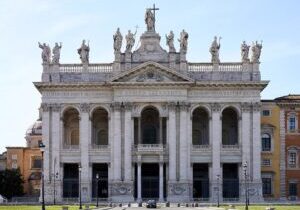
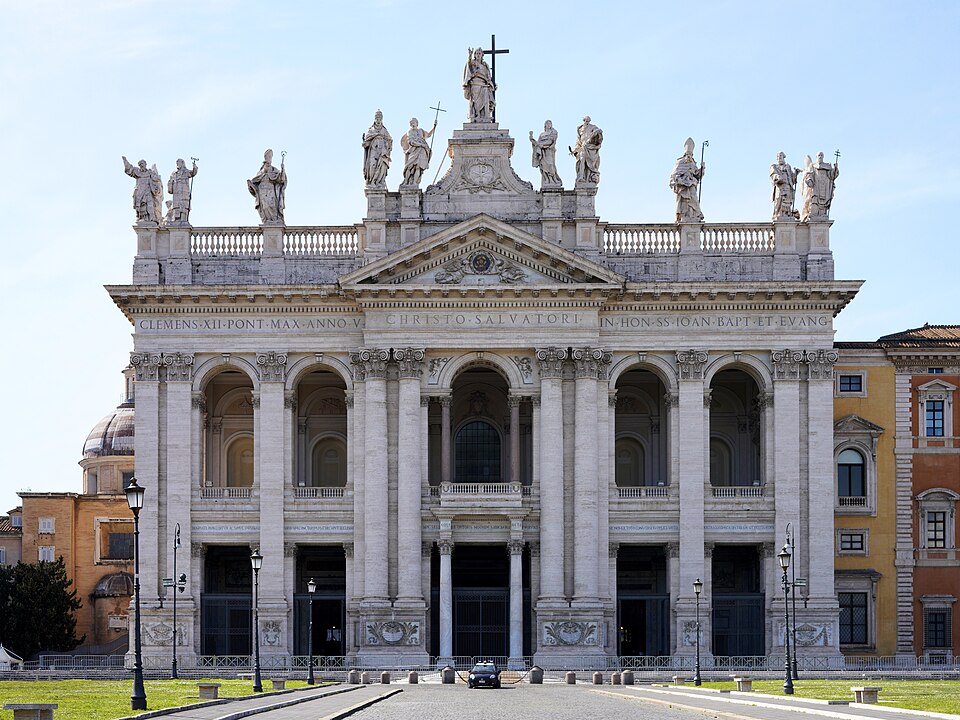
As early as the time of Emperor Constantine, when Christianity became legal in the Roman Empire, one church in Rome has been especially dedicated. Since 324, the Lateran Basilica has been the Cathedral of Rome. A basilica was a large, rectangular building, in which many different functions took place. It was a public area in the city near the forum and temple. The name Lateran comes from the name of the family on whose land it was built. The formal name of the church is Archbasilica of the Most Holy Savior and Saints John the Baptist and John the Evangelist at the Lateran.

The Lateran Basilica is the Pope’s cathedral in Rome. It is outside the walls of Vatican City. The Pope is the Bishop of Rome, as well as head of the Roman Catholic Church.

The Basilica was dedicated on November 9, 324. It has been repaired and rebuilt multiple times since then and is still in use. A temple – literal and symbolic – a sign of God’s presence among us.

As we celebrate the dedication of the Lateran Basilica today, we also celebrate that love, the waters of divine blessing, that flows from the Father, Son, and Holy Spirit through each of us out into our world today.

Readings for the Feast of the Dedication of the Lateran Basilica


Read More

Posted by on Nov 2, 2025

The Souls of the Just are in the Hand of God

The Souls of the Just are in the Hand of God

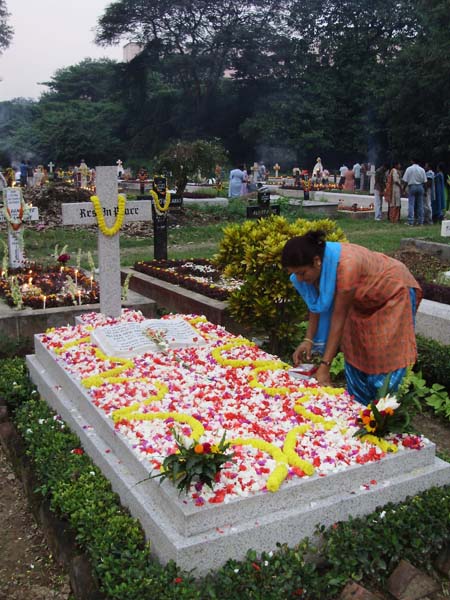
Commonly known as All Souls Day, or Día de los Muertos in our area, this day which follows immediately after the Feast of All Saints is one of special comfort and commemoration. The very first reading for the day begins “The souls of the just are in the hand of God.” It continues, “and no torment shall touch them.”

As best we can tell, only humans have a conscious awareness of the reality of death and its certainty for each person. We don’t know to what extent members of other species who gather to mark the death of members of their flock or herd or pod have an awareness of this reality. But elephants, dolphins, and other primates gather to mourn/mark the death of members of their communities. As humans, we have many ideas, fears, myths, and legends about death and what happens to those whose bodies cease to live.

One thing we do know. Not all people die peacefully in their beds, surrounded by loved ones and in no distress. Death does not always come easily. Death is sometimes perceived as having come too soon. Death has seemingly always been a tool used by powerful or angry people to punish or control others. And then what happens to those who have died? That’s not easy to verify either.

The Book of Wisdom shares some insights from Greek-speaking Jews in Egypt, collected about 100 years BCE. The author spoke words of encouragement for those who were suffering death unjustly – “they shall be greatly blessed, because God … found them worthy – as gold in the furnace.”

The great insight here is that death is not a sign of God’s anger or abandonment of those who live good lives, or those whose actions anger the rich or powerful. God is there to lift them up and place them in position to “judge nations and rule over peoples.” (Wis 3:1-9)

Jesus himself spoke a great promise, “I will not reject anyone who comes to me.” And why not? Why not turn away from those who reject his teachings? Why not get hurt or angry with people and reject them as others might? Jesus explains that it’s not about him. He has come to do the will of the one who sent him, his heavenly father. “This is the will of the one who sent me, that I should not lose anything of what he gave me, but that I should raise it on the last day.” The father wants everyone to have eternal life. So does our brother Jesus. (Jn 6:37-40)

What else do we notice and celebrate on this great feast day? We are children of God, through the power of the Holy Spirit. We call God Father, Abba! Abba is more like Dad or Daddy as a term of affection. We have an Abba who is not looking for slaves. He wants us to use our minds, our hearts, our entire beings to reach out and witness to his love. As we do, when we meet opposition, he will remember us and be with us. He will not abandon us when the end comes to each one. We are to be free as the children of God now and when our final day comes. And even more, all of creation is sharing in this same time of growth and hope. (Rom 8:14-23)

As we move forward, may we remember all those whom we have known and loved, celebrate their lives, and trust that we will meet again in the kingdom of our Father.

Commemoration of All the Faithful Departed (All Souls) – Cycle C
Multiple readings are options for this day. 

Read More

Posted by on Nov 1, 2025

A Great Multitude Which No One Could Count

A Great Multitude Which No One Could Count

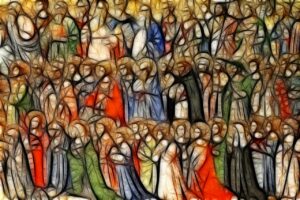
The Feast of All Saints is upon us – a celebration of a love so vast it cannot be contained and overflows into all of creation, including humans of every nation, race, people and tongue. We celebrate the lives of all those who have opened their hearts to receive this overflowing love. In the Book of Revelation, St. John describes his vision of the gathering of all the Lord’s people. Those gathered form “a great multitude, which no on could count.” One hundred forty-four thousand of them – an expression of abundance based on the foundation of the twelve tribes of Israel.

Are we to take this vision literally, or is there something else going on here? If literal interpretation is selected, it’s not really a very hopeful passage! With a few billion humans alive today and countless others who have come before, one hundred forty-four thousand represents less than a drop in a bucket! So, no, this is not a message to be taken literally.

We live in a world filled with contradictions and uncertainty. Most people are doing their best to make the choice to be ethical, to do the right thing, to leave the world a better place than they found it. Most live and work in communities of family and friends, not expecting ever to make any significant contribution to human history. In fact, most have no interest whatsoever in becoming a famous ‘mover and shaker” in the world. Way too much work and not enough real fun along the way! Fame, maybe. But real, deep enjoyment of life in all its complexity? Not as easy to come by.

Those gathering around the throne of the Lamb are typically not the famous or those recognized as wise or powerful. They are described as a great multitude and are people who have plunged into the life of the Lord – “washed themselves in the blood of the Lamb.”

The Lamb of God – the one whose life is given as gift and sacrifice to bring all into that overflowing love from which all spring. And the blood? The life-giving, life-sustaining blood or life-force.

All who enter into this flowing love and allow it to flow through them as well become part of the great multitude gathered in the throne room.

The imagery is not one we often understand deeply in our worlds today. There are still monarchies and absolute rulers whose whims are law, but for those in Western or Western-influenced societies, with a voice in selection of who governs, this imagery is a bit strange. Lambs? Blood? Even the peoples whose faith experience began this way no longer relate to the image.

And yet, here it is again! A multitude gathering from all nations, races, tongues, and peoples to celebrate with the Lord of all. (Rev 7:2-4, 9-14)

How do we gather? St. John tells us we gather as the children of God – sons and daughters, brothers and sisters of Christ. Life here and now is not easy. We are still unrecognized by the world around us, but the day will come when this is revealed. The quiet lives of ordinary people who are channels of love to those around them, sharing what they themselves received from those of many generations before the, are all signs of the Lord’s kingdom. They are the multitude who come joyfully into the throne room of the Lamb. (1 Jn 3:1-3)

Is there a way to recognize them here and now? Well, yes, as a matter of fact, there is. St. Matthew passes on Jesus’ non-secret recipe:

“Blessed are the poor in spirit, for theirs is the Kingdom of Heaven”

“Blessed are they who mourn, for they shall be comforted,”

“Blessed are the peacemakers, for they will be called children of God”

Jesus gives us all a list of the kinds of people who will make up this great multitude. Peacemakers, meek folks, those clean of heart, those who hunger and thirst for righteousness (justice). These kinds of activities are not going to be welcomed in their societies. Yet these are the acts of love, the channels of that overflowing love from which all springs. The kingdom of heaven is theirs! (Matt 5:1-12a)

May our lives too be channels of love and lead to the Lord’s kingdom!

Readings for the Solemnity of All Saints – Cycle C

Read More

Posted by on Sep 14, 2025

He Humbled Himself – God Greatly Exalted Him

He Humbled Himself – God Greatly Exalted Him

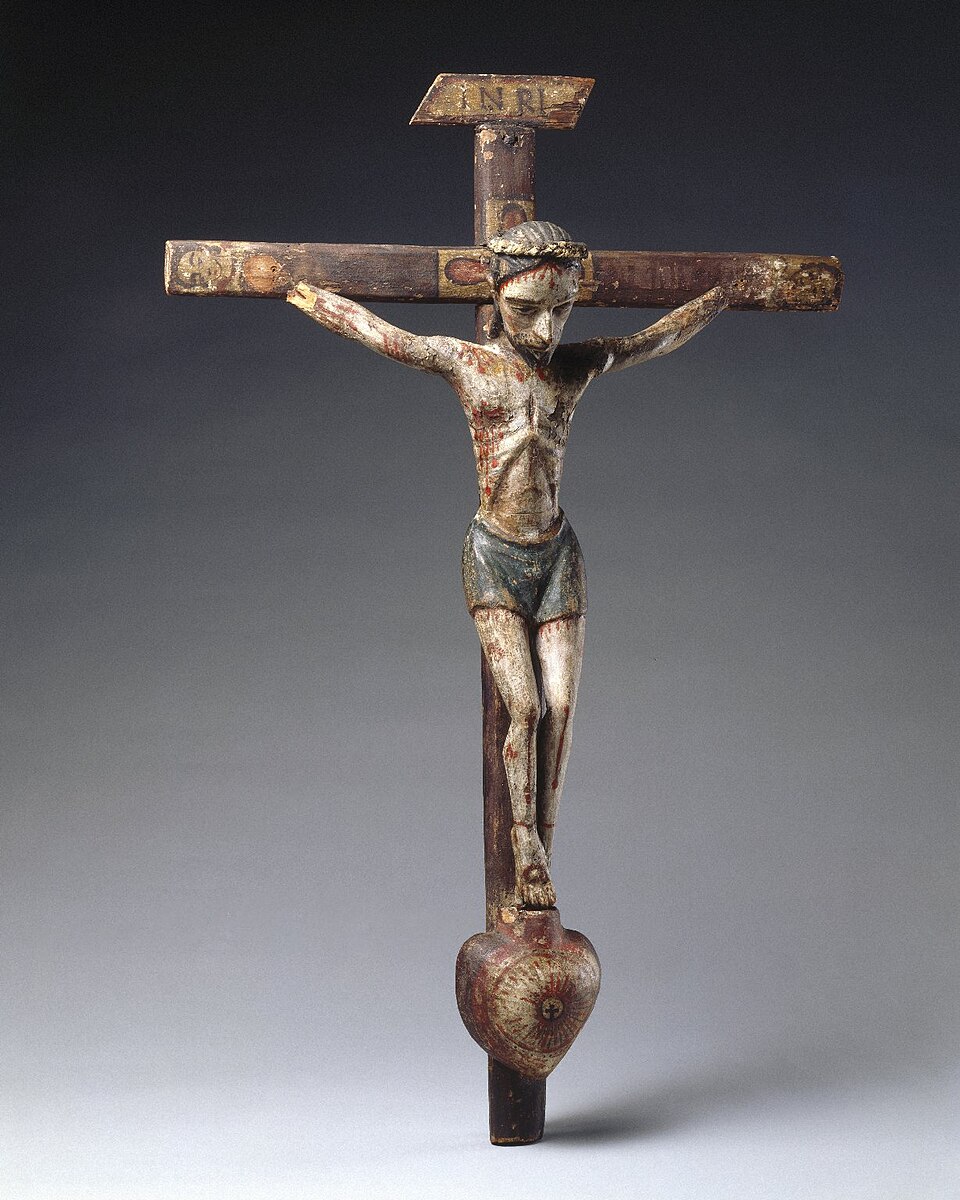
Wooden crucifix by José Rafael Aragón (ca. 1795-1862)One afternoon, when I was in high school, my teacher handed out a surprise test. We were told to read the instructions and complete it, then turn it in and we could leave. This was not the regular thing, but not unheard of to be allowed to leave the room once an exam had been completed. Little did any of us expect to be humbled by the experience.

We all started reading and completing the exam. The first line of the instructions said to read through all the questions before beginning. Sure, sure. What a waste of time, right?

Most of us just started working on the questions, beginning with number one and working our way down the page. At one point, we were instructed to say a word out loud, and one by one, we did.

Eventually, I got to the end of the test, on the back of the page, and was embarrassed to read the final entry. “Now that you have read the entire test first, put your name on the first page and go home.”

I don’t remember if any of my classmates had actually followed the instructions, read the entire two pages, put their name on the page and left early. A couple of people had left before I got to that last entry, and I was a bit surprised. But it never occurred to me that the first instruction might actually be important to follow exactly!

It’s a silly example, but all too often, we don’t pay attention to the details of what we are asked to do. We jump in, assuming we’re smart enough or talented enough to do whatever has been asked, but we don’t stop to think that maybe there’s a better way to accomplish the same goal. We are proud of our abilities and forget our limitations. Humility does not come naturally to us.

On September 14, we celebrate The Exaltation of the Holy Cross. This is an ancient feast and important enough to take the place of the regular Sunday liturgical readings. This year, we won’t be hearing the readings for the Twenty-fourth Sunday in Ordinary Time! Instead, we will hear of a love so deep that this humble love shines forth in glory as the Lord enters into creation and transforms all.

Wisdom from an Ancient Hymn

St. Paul quotes a hymn in his letter to the Philippians that was sung in the early Church, celebrating the coming of Jesus, the Christ, into our world. “Christ Jesus, though he was in the form of God, did not regard equality with God something to be grasped.”

These words were composed very early in the lives of the Christian community. Hundreds of years of reflection on the wonder of the Incarnation have followed the initial dawning of understanding of this amazing reality. God has come to be a human named Jesus, subject to all the limitations of human life. He did not hold onto the powers and privileges of being God. Instead, he accepted humbly all the limitations of human existence, including condemnation as a criminal to death on a cross.

St. Paul reminds his readers, including those of us hearing his words today, of the response of God to this self-humbling of Jesus. “God greatly exalted him and bestowed on him the name which is above every name…” (Remember, the word name means more than just what one is called – it refers to power.)

In Jesus, the Word of God, humbled himself. He, as a member of the Trinity, did not have to become one of us. But because he did it wholeheartedly and faithfully to his last breath, Jesus has been raised up and is recognized as Lord. In the process, our understanding of God is enhanced! “Jesus Christ is Lord, to the glory of God the Father.” (Phil 2:6-11)

Serpents in the Desert

The image of something raised up on a pole or cross is found early in the Hebrew Scriptures too. While the Israelites were traveling in the desert after the Exodus, there was a need for food to feed such a large group. The Lord sent manna each morning for them to collect for breakfast and birds in the evening for them to have for dinner. But after a few years, it began to be a bit boring to eat the same old thing every day. After all, how many ways can you prepare the manna to eat?

They complained to Moses about being in the desert and what God was providing for them. “We are disgusted with the wretched food!”

Hummm. Not necessarily a good idea to insult the one providing your meals, but what bad thing could happen?

Fortunately for the people, God is not vengeful. Things could have gotten really bad. Instead, they only got a little bad – unless you happened to be one of the folks bitten by the cobra-like serpents they ran into as they traveled! Some of those who were bitten died and the people came racing to Moses, apologizing for having complained about him and the Lord’s care for them.

The Lord had Moses make a bronze model of the serpent and hang it on a pole, so that any who had been bitten could be healed by looking at it. This Moses did and those who were bitten were healed.

The serpent on the pole was both a reminder of the wrongdoing of the people and a source for healing. The source of punishment was transformed into a source for reconciliation with a God who could also be humble and forgiving with his people. (Num 21:4b-9)

A visitor in the night

Early in his public life, a Pharisee named Nicodemus visited Jesus one night. Nicodemus had some questions for him, specifically about how and by what authority he was preaching and healing. As their conversation continued, Jesus spoke of the perspective of one who has “come down from heaven, the Son of Man.” (This is John’s Gospel, in which Jesus is more aware of his unique connection to the Father and it shows in his conversations.) He reminded Nicodemus of the time Moses “lifted up the serpent in the desert” and commented that the Son of Man would also have to be lifted up in order for all who believe in him to have eternal life.

Jesus’ next words are ones of amazing promise. “God so loved the world that he gave his only son … so that those who believe in him … might have eternal life.” God didn’t send Jesus to condemn humanity. God came himself in Jesus to bring life to all. God is humble enough to do what is needed to reach each of us, because God loves us so deeply. (Jn 3:13-17)

And so?

We humans will continue to bumble our way through life – often failing to recognize in our pride the simpler reality of mutual help and the need we all have for love and forgiveness along the way. But God doesn’t forget and keeps coming around, hoping we will remember the next time and ask for help when we need it and also humbly offer help and forgiveness to others when we can.

God so loved the world that he humbled himself to save us, to re-establish the original bond formed in creation. Now we are called each day to live that reconciliation and the connection we have with God, each other, and all of creation.

Readings for the Feast of the Exaltation of the Holy Cross – Cycle C


Read More

Posted by on Jun 29, 2025

Peter and Paul – Unlikely Heroes

Peter and Paul – Unlikely Heroes

Peter and Paul – One a Galilean fisherman, the other a Pharisee, scholar of the Law, immigrant from the city of Tarsus in the province of Cilicia in Asia Minor, and Roman citizen. The first’s original name was Simon and the other’s was Saul.

The chances they would ever meet, let alone become co-workers, sharing the news of the coming of the Christ to all they met and serving as leaders in the community of disciples of Jesus were miniscule. Both would eventually meet their death in Rome in 64 CE – capital city of the Empire. According to tradition, Peter was crucified, upside down per his request. Paul, as a Roman citizen, was beheaded – crucifixion was reserved for non-citizens!

A simple fisherman

Simon/Peter first met Jesus in the fishing town of Capernaum. Jesus saw him, mending and drying nets with his brothers after a long fruitless night of fishing. They had not caught anything. St Luke tells us that Jesus got into the boat to teach the people gathered on the shore. After a while he told Simon and the others to take the boat out again and toss out their nets for a catch. What nonsense! Fish didn’t bite or get caught during the day.

But something about Jesus was different, compelling even, and so they set out again. Imagine their amazement when the nets filled to overflowing with fish! They had to call the other boat with whom they usually worked to come help. Both boats were filled to the brim and more. Simon dropped to his knees and begged Jesus to leave him, a sinner not worthy of such a miracle. Jesus’ response was totally unexpected. “Do not be afraid, from now on you will be catching men.” They took their boat to the shore, left everything – boat, nets, fish, even families – to follow this man. And, oh, the wonders they would see.

Through the next three years they witnessed healings of all kinds, children and adults raised to life again, storms on the Sea of Galilee calmed at a word, thousands of people fed with just a few fish and loaves of bread, a triumphal entry into Jerusalem, and so much more. All the while, Jesus was teaching them about the Father and the Kingdom of God.

So many people came to hear Jesus and follow, but Simon held a special place among the twelve who were his closest friends. More than just followers, disciples, they were his friends. Clueless friends sometimes, but Jesus was patient with them and kept teaching about the Kingdom.

They traveled through the Galilee, Samaria, and Judea. Many times Jesus had to correct their expectations of who the Messiah would be and what their role would be. After the times he had fed thousands of people who had come to listen to him with just a few fish and loaves of bread, he asked his disciples one day, “Who do people say that I am?” They replied that folks thought he might be Elijah the prophet returned to earth, or John the Baptist raised from the dead, or Jeremiah or some other prophet. Then Jesus asked a more personal question. “Who do you say that I am.” Simon replied, “You are the Christ, the Son of the Living God.” Pretty daring words, but Jesus didn’t deny it. He acknowledged what Simon had said, adding, “… You are Peter (Rock) and on this rock I will build my church.” (Mt 16:13-19)

No one understood what Jesus meant at the time. Peter continued to learn without clearly seeing what was coming, even denying he knew Jesus in the garden of the high priest during the trial. He didn’t believe when Mary of Magdala brought word of the resurrection and he and the others hid in fear of the authorities before the coming of the Holy Spirit at Pentecost. Yet Peter became and remained the leader of the community. He and the other apostles, none of them trained in theology or leadership, learned how to lead a community and proclaim boldly what they had seen and heard. They preached, they healed the sick and lame, they witnessed to the religious leaders about what they had seen and come to believe, and rejoiced when as a result they were publicly whipped and otherwise shamed.

When Herod was persecuting the community, Peter was arrested. Herod planned to have a trial and execute him after the festival of Unleavened Bread. Sixteen soldiers were set to guard him, lest he escape. The community prayed fervently for his release, and God answered. The night before his trial, while sleeping chained to two soldiers – one on each side of him – an angel came and woke Peter. The chains that held him bound to the guards dropped away. The angel was quite practical, telling him to get his belt and pouch and to put on his cloak, then follow. He was led out of the prison, past the other guards and out the door and the iron gate, which rose silently and automatically as they approached. He found himself free on the streets of Jerusalem. He went to the house of John Mark, where all were amazed to see him, assumed he must be a ghost, and then gave thanks for his release. Afterwards, he wisely left the area to work in another community. (Acts 12:1-11)

A Pharisee and Student of the Law

Paul/Saul, on the other hand, was a tent-maker by trade. He never met Jesus before Jesus’ arrest, condemnation, death, and resurrection. In fact, he was so absolutely positive these people were liars and heretics – probably low-life scum out to take advantage of others and lead them astray – that he actively set about to arrest and convict them of crimes punishable by death.

When Stephen was arrested and charged with heresy, Saul was among those outraged by his words testifying to his faith. He watched over with approval the robes of those who stoned Stephen to death – the first to die as a martyr, a witness to the coming of the Kingdom.

Following Stephen’s death, Saul led a group from Jerusalem to Damascus to arrest the Christians there. On the road, he met Jesus and his life was turned upside down! Left blind by the vision of Jesus with whom he spoke, he went on to Damascus and there was visited by Ananias, who taught him of Jesus’ life and teaching. Saul, now known as Paul, became such a persuasive preacher that the community had to lower him in a basket outside the city walls in order for him to avoid death at the hands of Jewish authorities there!

Folks in Jerusalem were not ready to trust or welcome him. The leaders eventually accepted him, but his preaching was so compelling it attracted too much attention from the authorities. It was decided that it would be better for all if he just went home to Tarsus and went back to making tents.

Several years later, he was called back to Antioch and sent on the first of his missionary journeys to another part of western Asia Minor to preach the Gospel. He found a more willing audience among non-Jews, though he always began with the Jewish communities in his preaching.

His ministry to the Gentiles, combined with Peter’s experience in the house of Cornelius when the Spirit came upon the Romans there before they were baptized, led to the decision at the Council of Jerusalem, called to determine whether folks had to become Jews in order to be Christians. The decision, based on the experiences of Peter and Paul, was that it was not necessary and the Church set out on a new and broader path.

Eventually, both Peter and Paul ended up in Rome. Peter went there freely to work with new Christians in the city. Paul appealed to Rome for trial after having been arrested in Jerusalem. It was his right as a Roman citizen to be tried in Rome. Both died there.

Paul wrote of his life and hope for the future to his close friend and disciple, Timothy, as his death approached. His words have been an inspiration for centuries. (2 Tim 4:6-8, 17-18)

A new leader was chosen for the people of Rome after Peter’s death. To this day, the Bishop of Rome, as successor to Peter, is the leader of the Roman branch of the Catholic church community.

Heroes who changed the world

Two very unlikely heroes. One with little formal education. One with quite a lot of it. One from a conquered country. One a citizen of the conquering nation because he was born in a city of the empire. In art, one is portrayed carrying a set of keys and the other with a book and a sword. Peter and Paul.

Together, they became essential leaders of a community whose beliefs transformed the world in which they lived. Western civilization developed in a different way than it would have before they accepted the call they received to go out to the ends of the earth and teach everyone about the man they had met who turned out to be the Son of God, the Chosen One come to show humans how to live as children of God, heirs to a greater Kingdom.

None of us is likely to become as famous as they became. But each of us is also called to be part of that Kingdom they brought from a seemingly insignificant land out into the broader world. Each of us will influence others as well, for better or worse, in hearing about and choosing to become part of the Kingdom or not.

In that Kingdom they helped introduce to the rest of the world, the poor are helped to find food and shelter, welcome from the community and a chance to build a new life. Those who are sick receive care. Those who are from less honored communities are respected. Those whose lives are threatened by the strong are given refuge.

We are the ones called today. We follow Peter and Paul, and so many, many others after them as we live our lives in service to the Lord through our own families and communities, and even to the ends of the earth.

As the psalmist proclaims in song, “Taste and see how good the Lord is: blessed the one who takes refuge in him.” (Ps 34:2-3, 4-5, 6-7, 8-9)

Peter and Paul – unlikely heroes, who model a life of faith and witness for us all.

Readings for the Solemnity of Saints Peter and Paul, Apostles – Cycle C


Read More

Posted by on Jun 22, 2025

Bread and Wine – Sacrifice to the Lord

Bread and Wine – Sacrifice to the Lord

Bread. Wine. Two ancient foods that nourish and bring pleasure, even joy, to millions of people today and untold millions of millions of people through the ages. Before the days when humans first domesticated animals and raised them for a source of food, they dried and ground plants, mixed in some liquid, heated the mixture on stones by a fire, and ate their bread.

Bread is one of the most important foods ever developed by humans. It comes in many flavors, shapes, and colors. It is made of many different grains, though wheat is the most commonly used. Some breads are leavened, others are not. Methods used to make the bread rise (leavened bread) are varied. Some use naturally occurring yeast, others use manufactured yeast. Some use chemicals such as soda or baking powder. Others use steam or forcing bubbles into the dough.

All are recognized as critical elements in the of food, of nutrition for life and growth, for humanity.

It is striking as we celebrate the Feast of the Body and Blood of Christ, that bread and wine are the elements associated with this gift of himself given to us by Jesus at the Last Supper.

Often, we think of Jesus as the Lamb of God. And in terms of the tradition of sacrificing young animals to a deity, this makes sense. After all, in our foundational stories we hear of animals being sacrificed. Abel’s sacrifice of a lamb was accepted, while Cain’s sacrifice of first fruits was not. It wasn’t, of course, because the farmer’s gifts were less valued, just that he hadn’t given the best of the crop. But that’s another story for another time.

For a pastoral people, the sacrifice of animals was the most common way to honor and seek the favor of their God. It’s noteworthy, therefore, that even before the establishment of the Covenant between God and Abram, in which his name was changed to Abraham, we hear of the thanksgiving sacrifice of Melchizedek.

Melchizedek was a king at Salem (Peace), a place later known as Jerusalem. Abram and his men joined the forces of Melchizedek in defeating the invading armies of five other kings, and rescuing his brother Lot, whom they had captured. (Gen 14:1-17)

After this successful campaign, Melchizedek, who was also a priest, offered a sacrifice of bread and wine in thanksgiving and blessed Abram. (Gen 14:18-20)

Bread and lamb were part of the Passover meal, celebrated at the time of the Exodus and annually after that. Wine was used by all for drinking. Water alone was not safe – too much danger of bacterial contamination. So wine was mixed into water (or vice versa), making it safe to drink.

After the Resurrection, St. Paul enlarges our picture of the importance of bread and wine, with his first letter to the Corinthians. We often think of the Gospels as the first stories of Jesus’ life, but Paul’s letters came earlier. In this letter, he writes of what he has heard from the eyewitnesses present at Jesus’ last meal, his disciples.

I received from the Lord what I also handed on to you, that the Lord Jesus … took bread, and … broke it and said, “This is my body that is for you. Do this in remembrance of me…This cup is the new covenant in my blood. Do this, as often as you drink it, in remembrance of me.” (1 Cor 11:23-26)

Whenever we come together in prayer, remembering as we break and share the bread, He is present and giving himself to us, to nourish our lives of faith and discipleship – the bread of life. We do the same with the wine we share – his life’s blood poured out for all, to share divine life with all.

From the very beginning, we as a community have shared the meal. When we do it, we enter a different dimension or realm of reality. We don’t always notice. We’re used to it. But visitors from other cultures or faith traditions notice something different, something special when we really enter into our liturgy of thanksgiving.

An early taste of the great generosity of God can be glimpsed in the experience of the very large crowd who went out into an arid countryside to hear Jesus’ words. John tells us the crowd numbered five thousand men – that didn’t include women and children! Even today, that would be an amazingly large crowd.

Evening was approaching. People were going to need to eat. Practical folks would send them home or to the nearest town to get food. That’s what the disciples recommended. But Jesus never claimed to be practical. He trusted the Father would provide.

“Have the people sit down in groups of about fifty.” This done, he took the food offered – five loaves and two fish, blessed them, and started breaking off pieces to share them with those gathered. Before long, everyone had eaten their fill. More surprising – there were 12 basketfuls left over! (Lk 9:11b-17)

How it all happened doesn’t really matter, though often that is the first thing we wonder. What really matters is to notice the overwhelming abundance and generosity poured out to and through all gathered in that arid place – enough for all to share and celebrate.

We celebrate the great gift of sharing in the life of God, eating the bread of life, drinking the lifeblood become wine for all to share.

Bread. Wine. Ancient gifts – still bring life today.

How do we respond? How do we take our experience of Eucharist into our daily lives? Do we welcome people from other lands, other communities, other beliefs and traditions? Do we share food, clothing, healthcare, education, opportunities for a better life?

This is our call. As disciples of the Lord, sharers in the life of the Lord, may we open our hearts this week and do our share of the work of bringing the kingdom to birth!

Bread and wine – life to share.

Readings for the Solemnity of the Most Holy Body and Blood of Christ


Read More

Posted by on Jun 15, 2025

The Lord Possessed Me – Wisdom Speaks!

The Lord Possessed Me – Wisdom Speaks!

There is something uniquely satisfying about creating something new, something unique, something for which there may not be a pattern already handy. A vision pops into mind of what might be, generally not already fully formed, but an inkling that “Gee, this would be fun to try – let’s see where it goes!”

Sometimes the idea doesn’t work out – too complicated, too expensive, too…  Other times, with a bit of time, the idea develops and something beautiful comes into being.

When I was teaching religious education many years ago, I always had the children work on a cross-stitch project before class started or when they finished drawing the picture and writing a short paragraph about the lesson into their books. At that time, I had a combined 3rd and 4th grade class. One project had a series of symbols of common prayers, but with children from two grades, and knowing half of them had already completed the symbols project, I decided to do something different the next year.

We were learning about sacraments that year, so I thought, “Why not make something for the parish that could be used at Mass?” Just a simple little thing, right? RIGHT!

I designed a pattern for the children – a grapevine, with clusters of grapes. Half would do the pattern one direction and the other half would do it the opposite direction.They set out to do it with a will. Some understood quickly how to do cross-stitch. Others needed more help. But all worked diligently on their panel. By the end of the year, only one had finished – he was already doing cross-stitch at school, so it was easier for him.

The next year I was expecting a baby in January, so I passed the class on to another teacher. I set to work finishing the panels. A couple of years later, after sewing a chasuble, combining the panels, and sewing it onto the garment, it was finished. Some of the children proudly presented it to the pastor at Sunday Mass.

It is such a delight to see it used. Doesn’t happen very often, but still, beautiful.

The many adventures in creating something from scratch came to mind as I read the passage from the book of Proverbs today. It speaks of the joy and delight of the creation of something new and beautiful.

Thus says the wisdom of God:
“The Lord possessed me, the beginning of his ways,
the forerunner of his prodigies of long ago;
from of old I was poured forth,
at the first, before the earth.

Wisdom was there before creation – part of the Creator’s very being, pouring forth into all that was created. Wisdom was the craftsman, in Spanish – the architect, the delight of the Creator working to bring all that had been envisioned into being.

“I was beside him as his craftsman,
and I was his delight day by day,
playing before him all the while,
playing on the surface of his earth;
and I found delight in the human race.”

Such a wonderful image – our Creator, possessor of Wisdom from before all time, delights in wisdom, playing through of creation and delighting in it, including in all human beings. (Prv 8:22-31)

The love of God is poured forth into the world through Jesus as we believe and accept it. God can give nothing but love, because God is Love. God’s Spirit, the Holy Breath of God, breathes out that love to all – into the very depths of our being. As we open our hearts to receive it, we share in the delight of wisdom dancing and playing through creation. As we care for the environment and our fellow people, the spirit of truth speaks to us, helping us understand the message of Jesus, sharing all that comes from the Father. As he reminds us, “Everything that the Father has is mine” and the Spirit “will take from what is mine and declare it to you.” (Jn 16:12-15)

We celebrate this wonder of one God – Father, Son, and Holy Spirit. We don’t really understand it. We think in terms of our human experience of separate identities and characteristics. But whenever the Father is present, so are the Son and the Holy Spirit. Wisdom dances in delight, poured forth from God into all of creation and our very lives. We don’t always notice, but when we do, it’s like seeing a magnificent sunrise or sunset, or crafting something truly beautiful, or hearing a delightful birdsong, or watching the love and trust of a child with a loving parent.

This week, as we go through our days, may we be open to hear the whisper of wisdom still pouring through our world and our lives, creating something new and beautiful each day that we may not yet perceive. May we trust that we are loved even when things are hard. God is present there too, with us, sharing our experience, holding and carrying us through it all. (Rom 5:1-5)

Share a smile. Give a hand to someone who needs it. Encourage someone who is struggling. Welcome a stranger. Speak up for someone who is being silenced.

The Lord is present in our lives and days. Wisdom isn’t pushy or loud. May we watch for her in the quiet moments, opening our hearts to her working in our lives and in the world around us.

Readings for the Solemnity of the Most Holy Trinity (aka, Trinity Sunday) – Cycle C


Read More

Posted by on Jun 8, 2025

Lord Send Out Your Spirit

Lord Send Out Your Spirit

Living beside the ocean, one becomes intimately aware of seasonal changes in its mood and the shifting weather patterns that accompany those moods. In late spring and summertime, the ocean is mostly rather calm. Sometimes there’s better surf than others and people come from other areas to go surfing, happily riding the waves, but the ocean is quiet. We don’t hear the waves crashing on the shore or the winds raging across the water and over the land. As fall approaches, we hear the sea lions and birds returning from their summer journeys chatting away happily, but the ocean is still mostly quiet.

But in the winter, it’s a different story. The waves begin to crash on the shore with little warning. We hear them a block or more away. The crashing can continue for a day or two before the storm arrives at the shore, its raging far out in the ocean awakening the waves. When we hear the waves begin crashing onto the rocks and cliffs along the shore, we know it’s time to be sure things that can blow away in a storm are put away or safely secured outside. The strong winds will follow and rain will pelt down until the storm has raced on to the east, bringing water to the land once again.

The winter storms have passed now and spring has brought flowers and drying fields. (It’s coastal California here and grass is green in the winter and dry in summer.) Easter season has reached its end and Pentecost has arrived.

Pentecost is a festival with ancient roots. It was a day of celebration long before Jesus’ time. Fifty days after the Sabbath of Passover, the gift of the Law to Israel, handed to Moses by the Lord, is celebrated. The official name of the festival is Shavuot, the Feast of Weeks.  It is traditionally the wheat harvest festival. The name Pentecost simply means fifty.

Like Easter, Pentecost has a Vigil celebration. In the vigil, the readings trace salvation history from very early times. Beginning when all people spoke the same language, the story of the Tower of Babel is told, explaining how it came to be that we no longer understand each other’s words. Then comes the story of the gift of the Law, given by God to Moses, accompanied by thunder, lightning, clouds, smoke, earthquakes and the sound of the trumpet. The readings that follow recount the promises and examples of results of the Lord’s sharing of the Spirit, bringing life to dry bones, promising that the people would see visions and prophesy when the Lord poured forth his Spirit on the world.

Wind, fire, clouds, smoke – the coming of the Lord is a big deal. Like the waves crashing on the shore before the winter storms arrive.

Fifty days after the sabbath following Passover, the disciples were still a group of very frightened people. They remained in hiding in the Upper Room, fearing for their lives if it were known they were followers of Jesus. They had seen the Risen Lord, but who would ever believe it! And the Roman authorities and the leaders of their own people would not be happy to hear that the problem of Jesus had not gone away with his execution…

But Jesus had promised more than once to send the Spirit, the Advocate, who would remind them of all he had taught them. This Spirit would take them even farther forward in their understanding of the Father and his love for all people and all of creation. It was too much for them to understand before the Resurrection.

On the morning of Pentecost, the promise was fulfilled. “Suddenly there came from the sky a noise like a strong driving wind, and it filled the entire house… There appeared to them tongues as of fire, which parted and came to rest on each one of them. And they were all filled with the Holy Spirit and began to speak in different tongues, as the Spirit enabled them to proclaim.”

Wind, fire, power from on high. And the ancient division from Babel was overturned. Their words could be understood by all who heard them. “We hear them speaking in our own tongues of the mighty acts of God.” (Acts 2:1-11)

We all share in this life, this anointing with the Spirit of God. Through our baptism, we enter into the community of the children of God. In Confirmation, we receive the grace to begin speaking more clearly the Lord’s presence and word through our lives and our words.

As a community, we share the Good News with our world. God loves each and every person, totally and without reservation. Creation is good and worthy of our loving care. Those with special needs are to be loved and receive the extra care they may need. Strangers must be welcomed, because they too are our sisters and brothers, children of God.

Through the Spirit, the Holy Breath of God, the barriers among peoples are broken down. Barriers of language are vanquished. Differences among our cultures or our physical appearance no longer matter. Our infinitely creative Father likes diversity! We are all equal in God’s sight and love. We are all included in the great big hug God offers to his children.

As Pentecost comes this year, may our ears be opened to hear the Lord’s voice calling us to welcome all we meet, all who come seeking opportunity, all who are ready to offer their own gifts from God. Those gifts take many shapes and forms. The child who will never mature to adulthood may offer a simple, beautiful appreciation of the present moment that the rest of us miss in our hurry to do the next thing on our list. The older person who depends on others for help has stories to tell that remind us of other times and places filled with love. The delight of the newcomer who finds safety and acceptance and opportunity in a new land is to be treasured and appreciated.

We never know where or when we will meet the Lord. So, this week, let’s be open to meeting him in each person we meet. Let’s reach out with a smile or a kind word. Let’s offer patience and humor when delays arise. Let’s live as if God really loves us and we know it. Because, tell you a secret, he does! Just as the waves on the shore carry news of what’s going on farther out to sea, the smiles and little kindnesses tell the story of the love of God.

Lord, send out your Spirit. Fill the hearts of your faithful and renew the face of the earth!

Readings for Pentecost – Cycle C


Read More