Pages Menu
RssFacebook
Categories Menu

Posted by on Mar 18, 2008

Holy Week – Salvation Through Suffering or Self Actualization?

Holy Week – Salvation Through Suffering or Self Actualization?

cherry-blossom.jpg

The profound Christian mysteries of Holy Week – the Last Supper, the Passion, Death, and Resurrection – are part of a cycle that we often break up into pieces. We can focus on the suffering Christ or move more comfortably to the Resurrected Christ. We can focus on the suffering humanity of Christ or His triumphant divinity. The problem of course is holding the contradiction to arrive at the truth by affirming the opposites. Is Christ human or divine? Yes.

In our lives, are we supposed to unfold and blossom in all of our God given gifts or do we have to exercise discipline and self-scrutiny and trim away important parts of ourselves – our sensuality, our connectedness with the earth, our search for joy and happiness? It seems that from the 1700s to the mid-20th century there was an emphasis on asceticism – a word created in the enlightenment – for the rational and spiritual to dominate at the expense of the heart, the emotions, and all things physical. Even the great secular Freudian construct of the human person posits a dominant super ego, the besieged ego, and the troublesome impish id of desire and impulse that seeks to undo the ethical correctness of the super ego and the reasonableness of the ego.

The psychology of Maslow is known for its emphasis on the self-actualization of the human person. The focus of Christian existentialism in the 20th century was on authenticity. In the late 20th century, the immanence of God with us was emphasized, as opposed to the previous focus on God’s utter transcendence. The re-emergence of Catholic and Protestant teaching of the social gospel has focused on the rights and dignity of individuals and communities to develop their gifts, free of domination and exploitation.

Of course, as we all know, we pay a price for our self-actualization and for advocating this freedom for others. That price is suffering – due to our own imperfect attempts at being authentic or “real”, the fear and resistance of ourselves and others to freedom, and the forces of oppression which come upon us in violence, social disapproval, or our own lack of will.

When we come right down to it, it is often more comfortable to stay in our zone of known suffering than to accept the insecure joy of resurrection. If I experience love, joy, and some glimmer of self-actualization, it will always be imperfect, and the “blues” (the dark days) will return. It may be a spiral upward, but it’s also a lot of insecurity and hassle and change. We have to live ambiguously. We don’t have the answers. In fact, we have to affirm opposites. Who needs this tension?

The bad times and the good times – through both there is only one guarantee – challenge.

Read More

Posted by on Feb 11, 2008

Holy Week – Salvation Through Suffering or Self Actualization?

Feast of the Day: Our Lady of Lourdes – February 11

our-lady-of-lourdes.jpg

“The Lady took the rosary that she held in her hands and she made the sign of the cross. Then I commenced not to be afraid. I took my rosary again; I was able to make the sign of the cross; from that moment I felt perfectly undisturbed in mind. I knelt down and said my rosary, seeing this Lady always before my eyes. The Vision slipped the beads of her rosary between her fingers, but she did not move her lips. When I had said my rosary the Lady made a sign for me to approach, but I did not dare. I stayed in the same place. Then, all of a sudden, she disappeared. I started to remove the other stocking to cross the shallow water near the grotto so as to join my companions. And we went away. As we returned, I asked my companions if they had seen anything. ‘No,’ they replied. ‘And what about you? Did you see anything?’ ‘Oh, no, if you have seen nothing, neither have I.’

“I thought I had been mistaken. But as we went, all the way, they kept asking me what I had seen. I did not want to tell them. Seeing that they kept on asking I decided to tell them, on condition that they would tell nobody. They promised not to tell. They said that I must never go there again, nor would they, thinking that it was someone who would harm us. I said no. As soon as they arrived home they hastened to say that I had seen a Lady dressed in white. That was the first time.” [2]

On realising that she alone had seen the apparition, and not her companions, she asked her sister Toinette not to tell anyone what had happened. Toinette, however, was unable to keep silent, and told their mother, Louise Soubirous. Both girls received a beating, and Bernadette was forbidden by her mother from returning to the Grotto again.[3]

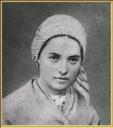
On Thursday February 11, 1858, Bernadette Soubirous, an impoverished, uneducated, 14 year old French peasant, had an experience that would not only change her life but would make would make her home town an international destination for pilgrims. Bernadette was not unlike many of the millions of girls around the world today growing up in stark poverty. Her parents and 5 siblings lived in a one room prison cell that had been abandoned because it was no longer fit for prisoners. Bernadette’s father was a miller and her mother took in laundry.

St. Bernadette would have a total of 18 encounters with the Lady of the grotto. The last one would be July 16. In the process of these visits, a miraculous spring of water would appear. People would be healed. The Lady would refer to herself as the Immaculate Conception. The grotto would be closed by authorities and people forbidden to pray there by the mayor of Lourdes.

Today, Lourdes hosts 15 million pilgrims a year. Paris is the only city in France that has more hotel rooms. The beautiful young woman, who died at the age of 33 from tuberculosis of the bone, refused to return to the grotto seeking a cure, saying only that the water was for others. Today 150 years after the first apparition, St. Bernadette’s body is still marvelously intact and uncorrupted.

St. Bernadette and the events of Lourdes met with intense skepticism and careful investigation by religious, political, and scientific authorities. Subject to medical and scientific review, thousands of healings have been documented which do not have a natural explanation. Yet only a fraction of the sick and infirm are healed physically. The prayerfulness and the experience of a community of faith continues to draw millions every year.

There is a saying associated with Lourdes that is especially appropriate. “To those who believe no explanation is necessary; to those who do not believe no explanation is possible.”

st-bernadette-of-lourdes.jpg St. Bernadette – the young girl

st-bernadette-soubirous.jpg St. Bernadette – at rest

Read More

Posted by on Feb 5, 2008

Holy Week – Salvation Through Suffering or Self Actualization?

Feast of the Day – Ash Wednesday

ash-wednesday.jpg

“…As we live through this Ash Wednesday, may the crosses of ashes that mark our foreheads be a reminder to us and to those we meet that we belong to your Son. May our worship and prayer and penitence this day be sustained throughout these 40 days of Lent. Bring us refreshed and renewed to the celebration of Christ’s resurrection at Easter.” – A Prayer for Ash Wednesday

Ash Wednesday marks the beginning of the Lenten season of preparation and renewal for the Easter Triduum. The season of Lent has an ancient and interesting history. From the earliest centuries there were various periods of preparation for Easter. The tradition of prayer, fasting, and alms giving has evolved over time. Lent used to begin on Sunday like the other liturgical seasons. However, Pope St. Gregory the Great moved it to Wednesday to acurately mark 40 days – not counting Sundays – prior to Easter.

Ashes have a long history and deep significance in the Bible. Sack cloth and ashes are ancient symbol of mourning and repentance. Fasting and almsgiving are also prominent in the Old and New Testaments. Fasting focuses our attention on our need for God and alms giving reminds us that our service to the poor and the marginalized is service to God.

With the renewed focus on the baptism of adult catechumens at the Easter Vigil, Lent has become, once again, a time in which the community recalls, relives, and renews its life in the Paschal Mystery – the Crucifixion, Death, and Resurrection of Christ.

Read More

Posted by on Feb 5, 2008

Holy Week – Salvation Through Suffering or Self Actualization?

Saint of the Day: St. Agatha – February 5

st-agatha.jpg

St. Agatha was a virgin martyr around the year 251 in Catania, Sicily. That is all we really know about her. She was honored widely in many parts of Europe and, centuries later, legends were written about her martyrdom. However, The Catholic Encyclopedia gives little credit to this story, since it appears that it was written much later to depict heroism and miracles without any real historical information.

The legend is almost stylized. She was a beautiful young woman from a noble family who refused the advances of a Roman official. She was tortured and put through many trials but was steadfast in her faith. While it is unfortunate that we know so very little about St. Agatha, it is telling that such a male dominated society as Rome would focus on the importance of young women and their great courage.

Women played a significant role in the development of early Christianity. St. Paul refers to the deaconness Phoebe and to other prominent women leaders. There is good historical evidence that well-to-do Greek and Roman women were among the first believers. Widows, who generally had very little power and wealth, would find a secure place in Christian communities, which saw to their needs.

Perhaps the best legacy of St. Agatha and these brave women, a legacy that we can truly celebrate, is a commitment to and a concern for the women and girls in our midst. Despite the advances made in industrialized societies, the lot and fate of women and girls is one of continued oppression and exploitation throughout the world. While I could recount some of the cultural celebrations observed on St. Agatha’s feast day or mention that she is invoked to protect people from eruptions of Mt. Etna, there is a greater import in the brief historical note that gives us her name and documents her martyrdom. The power and strength of God are manifest in the feminine.

Read More

Posted by on Feb 2, 2008

Holy Week – Salvation Through Suffering or Self Actualization?

Feast of the Day: The Presentation of Christ in the Temple – February 2

presentation-icon.jpg

St. Joseph & Prophetess Anna; St. Mary, the Christ Child, & the Prophet Simeon

The Feast of the Presentation of Christ in the Temple is February 2 and is known in the West as the Feast of the Purification of the Blessed Virgin Mary. Around 450 in Jerusalem, people began holding lighted candles during the Liturgy on this day and it became known as Candlemas. The feast has always had more prominence in the East. However, it has been celebrated in the West since the 11th Century. It marks the formal end of the Christmas season.

The presentation commemorates the ritual purification of Jewish mothers on the 40th day after birth and the redemption offering for first born sons. (Luke 2:22-40) At the temple, the Holy Family meet Simeon who had prayed for the coming of the Messiah and had been assured by God that he would not see death until he had seen the Savior of Israel.

28 Simeon took him in his arms and praised God, saying:
29 “Sovereign Lord, as you have promised,
you now dismiss your servant in peace.
30 For my eyes have seen your salvation,
31 which you have prepared in the sight of all people,
32 a light for revelation to the Gentiles
and for glory to your people Israel.”

33 The child’s father and mother marveled at what was said about him.

34 Then Simeon blessed them and said to Mary, his mother: “This child is destined to cause the falling and rising of many in Israel, and to be a sign that will be spoken against,
35
so that the thoughts of many hearts will be revealed. And a sword will pierce your own soul too.”

36 There was also a prophetess, Anna, the daughter of Phanuel, of the tribe of Asher. She was very old; she had lived with her husband seven years after her marriage,
37
and then was a widow until she was eighty-four. She never left the temple but worshiped night and day, fasting and praying.
38
Coming up to them at that very moment, she gave thanks to God and spoke about the child to all who were looking forward to the redemption of Jerusalem.
39 When Joseph and Mary had done everything required by the Law of the Lord, they returned to Galilee to their own town of Nazareth.

40 And the child grew and became strong; he was filled with wisdom, and the grace of God was upon him.

There is really not much more to say, except to note the gratitude of Simeon and Anna and the bewilderment of Joseph and Mary. For those of us who have had the joy, bewilderment, and sleep deprivation characteristic of new parents, the experience rings true. So do the words of prophets in our lives – those strange outsiders who many times see our children more clearly than we can.

As glorious as the Canticle of Simeon is, there is a prayer that I learned when I was a new father:

“Lord, please help me to see my children the way other people do.” It is always unsettling – always a revelation.

Read More

Posted by on Jan 28, 2008

Holy Week – Salvation Through Suffering or Self Actualization?

Saint of the Day: St. Thomas Aquinas – January 28

st-thomas-aquinas.jpg

St. Thomas Aquinas, the Angelic Doctor (c. 1225 – 1274), has been and continues to be one of the most influential forces shaping Catholic theology and philosophy. He was born at Roccasecca castle, the home of his father, Count Landulf, in the Kingdom of Naples. His mother was Theodora, Countess of Theate, and was related to the Hohenstafuen dyanasty of Holy Roman emperors. St. Thomas’s uncle, Sinbald, was the abbot of the first Benedictine monastery, Monte Cassino, and the family planned for him to succeed his uncle as abbot.

At the age of 5, St. Thomas was sent to Monte Cassino to begin his studies. At 16 he was sent to the University of Naples, where he came under the influence of the Order of Preachers – the Dominicans -who were innovators in a new style of religious life very different from that of traditional orders such as the Benedictines. St. Thomas upset his family by announcing his intention of joining the Dominicans. This action not only destroyed the family’s ambition to retain the power and prestige of Monte Cassino, but it was almost akin to running off with a band of hippies. Unable to convince him to renounce this foolishness, his family kidnapped him and held him for a year in the family castle of San Giovanni. Finally, Pope Innocent IV intervened and St. Thomas joined the Dominicans at 17.

St. Thomas and the Dominicans of his time introduced an entirely new way of approaching the faith. For 12 centuries, the Church teachers of the faith appealed to the authority of the scriptures and previous teachers such as St. Augustine or other Fathers of the Church. The scholastic movement, embodied by St. Thomas and his teacher St. Albert the Great, began with an open inquiry based on logic and reason. The traditional Faith was accepted as true, but thoughtful and logical reason were presented as to why it might not be true. Ultimately, various statements of belief were upheld, not only on the authority of the Church or tradition, but by reason and logic as well.

The format of the scholastic argument is the back bone of St. Thomas’s two major works, The Summa Theologica and the Summa Contra Gentiles. It is hard for us as post-modern people to imagine what a daring and threatening approach this was for the time. In fact the 1200s were a time of immense change in Europe. Trade and communications with the East had been reopened and with them came a flood of new and ancient knowledge. Trade and commerce increased the power and prestige of market towns at the expense of the countryside. Monastic schools gave way to early universities. The great Cathedrals began to dominate the landscape. The traditional clergy were overshadowed by the two great orders of mendicant friars (the begging brothers) – the Dominicans and the Franciscans.

St. Thomas, and his contemporary members of the scholastic movement, absorbed and transformed Islamic and Greek philosophy, science, technology, and mathematics. In particular, the Thomistic school of scholasticism is known for reviving the philosophy of Aristotle and its logic.

Over the centuries, scholastic philosophy would evolve and change in a variety of ways and St. Thomas – contrary to his own method – became the authority. Instead of being a fresh and bold inquiry, scholasticism degenerated into a catalog of arguments and answers to be memorized and repeated. In the Enlightenment of the 17th and 18th centuries, scholasticism and Thomism were disregarded by secular philosophies reliant only on reason. Thomism was also marginalized in training programs for priests.

In the late 1800s, there was a movement to restore Thomism as a defense against the secular philosophies of the Enlightenment and to renew some intellectual vigor in Catholic circles. It was an attempt to come to grips with the modern world and met heavy resistance. In the early 1900s, Thomism began to assume some prominence and neo-Thomism emerged with a renewed interest in the relationship between faith and reason. It is a long and complicated story, but it reflects the enduring importance of the work of St. Thomas and the changing moods of society and philosophy.

The core question persists. What can we know of God through reason? The second question follows. How reasonable is our faith?

If we want to honor a man who was a mystic, a saint, and an intellectual, it seems that we have to take on the openness of his inquiry and the wonder he beheld in faith.

Read More

Posted by on Jan 26, 2008

Holy Week – Salvation Through Suffering or Self Actualization?

Saints of the Day – Sts. Timothy and Titus – January 26

friendship.jpg

Everybody needs friends – a real support network. St. Paul was no exception and he was very fortunate to have Timothy and Titus, not only as helpers and proteges in his missionary work, but as very close friends.

Their story, as told in the Acts of the Apostles and the Pastoral Epistles, shows their work on behalf of the Gospel. Yet there is so much more between the lines. Timothy went to be with St. Paul when he was under house arrest in Rome. St. Paul was anguished about Timothy’s own arrest. St. Paul made sure that Titus was not circumcised in Jerusalem – that he did not have to conform to that church’s notion that Baptism was not enough to enter the Kingdom of Heaven.

St. Paul could be lonely, discouraged, and moody like anyone else dealing with fatigue, mistrust, and the problems of the Christian communities which he founded. Even though his vocation was startling, miraculous and public, St. Paul wavered. He bargained with God. He was thoroughly human.

Timothy caught a lot of grief for being young and having to somehow soothe the roiling in various communities of the Faith. Titus had the unenviable task of delivering letters from St. Paul which were not exactly “good news” for the recipients. Unlike the postal service, he couldn’t excuse himself and take off. He had to stay and work things out.

The French saying, “The more things change, the more they stay the same,” applies to Christian communities from the very beginning to the present. As much as St. Paul and his friends relied on prayer, their friendship was a sacrament that many of us have experienced. Most of the time it is all too easy to forget that we are more than church members. To survive and reach past our own limitations and those of others, true devoted friends are the sacrament of God’s presence.

Read More

Posted by on Jan 25, 2008

Holy Week – Salvation Through Suffering or Self Actualization?

Feast of the Day: Conversion of St. Paul – January 25

st-paul-conversion.jpg

January 25 is the feast of the Conversion of St. Paul (Acts 22). Most of us are familiar with the story. Saul – his original name – was a Pharisee who was persecuting the very first Christians. (At that early stage believers called themselves Followers of the Way. The name Christian would come about later in Antioch)

St. Paul was on his way to Damascus with documents authorizing him to arrest and bring back Christians to Jerusalem for trial by the religious authorities. Scripture makes no reference to a horse, which is usually part of the depiction of the scene in which St. Paul is blinded by a bright light and falls to the ground. He hears a voice utter the now famous words “Saul, why are you persecuting me.” In the exchange, St. Paul asks who it is that is speaking to him – the response, “I am Jesus, the Nazarene..”

According to scripture, we know that Paul was from Tarsus and that he was also a Roman citizen. His letters to the early congregations (churches) are the oldest documents in the New Testament. They reveal a man who is thoroughly Jewish in his mode of thinking and speech. Yet he is Christianity’s link to the larger Hellenistic world.

For those who like to emphasize the important role of St. Peter in the development of the Church, it can come as a shock that he and St. Paul disagreed so strongly about the incorporation of non-Jews, or gentiles. Some of us contemporary Catholics – with a certain sense of ironic humor – see this conflict as the first among many between a Pope and a theologian.

What is most significant about St. Paul’s conversion is his acceptance by the leadership of the early Christian community. Although they had substantial reasons to distrust his sincerity, they forgave an enemy – even one who had been an accomplice in the stoning of St. Stephen, the first martyr. They forgave a man who arrested and imprisoned their family members and friends. The book of the Acts of the Apostles shows that the leadership and the community had their misgivings, but they helped the repentant Saul to demonstrate his conversion, acting as mentors, teachers, and friends. Some helped more than others, and many not at all, yet it was enough.  And as they say… the rest is history.

Read More

Posted by on Jan 24, 2008

Holy Week – Salvation Through Suffering or Self Actualization?

Saint of the Day: St. Francis de Sales – January 24

st-francis-de-sales.jpg

St. Francis de Sales (1567-1622) is an interesting counterpoint to John Calvin (1509-1564) who preceded him. Both men are united by the City of Geneva. Calvin was its spiritual leader and made it a great center of the Reformation and St. Francis de Sales would become bishop of Geneva, although his headquarters were in Annecy, since Geneva no longer permitted Catholicism. Both men were well educated. Their fathers had intended for them to be lawyers and high government officials. Both studied theology and were perplexed by the issue of predestination – that certain people were saved and others were not because it had all been determined by God from eternity.

The notion of predestination overwhelmed St. Francis as a young student at Paris and almost crushed him, because he felt that he had been damned from all eternity for all eternity. He became physically ill and depressed and could barely get out of bed. Calvin dealt with it by assuming that he and members of his Reformed Church had been predestined for salvation.

St. Francis left his bed and in prayer at church, in front of a statue of the Blessed Mother, he affirmed his belief in God as a God of love. Our salvation rests on our faith and reliance on a God of love; on God who is love. This transformative experience would lead not only to a long life spent reforming and re-establishing Catholicism, but more importantly, suffusing that Catholicism with the gentleness of the Love of God.

This focus on divine love renewed a sense of spiritual priorities as seen in the Gospels. Exterior practices and observances, including penance and mortification, were second to a conversion of the mind, heart, and spirit. He led many back to Catholicism not so much by his learned teaching and writing but by the simplicity of his life as a bishop and his comfort in visiting the small towns and the countryside of his diocese at risk of his personal safety.

It might be easy for Catholics to focus on the triumph of St. Francis as a major figure in the Counter-Reformation, but this would miss the point of his life. St. Francis called people to an authentic Christianity based on the history and tradition of the Catholic Church. Yet his focus on the faith and its sacraments was a focus on the Divine Love. It was a protest against the emptiness of a faith based on predestination and severity and it was also a re-affirmation of a joyous faith of love as presented in the Gospels. His life and teaching presented a path of profound reformation and conversion for all Christians and those who seek God with a sincere heart.

St. Francis de Sales’ spirituality became a centerpiece for the religious order of The Visitation that he would found with St. Jane Frances de Chantal and for centuries of Catholics who would follow. St. Francis de Sales also inspired the founding of the Oblates of St. Frances de Sales and the Salesians of St. John Bosco.

His great works include: Introduction to the Devout Life, Treatise on the Love of God, and The Catholic Controversy.

Read More

Posted by on Jan 21, 2008

Holy Week – Salvation Through Suffering or Self Actualization?

Saint of the Day: St. Agnes of Rome – January 21

st-agnes-gauld.jpg

St. Agnes (291-304) was a twelve year old Roman girl who was killed on January 21, 304 because she refused to marry the son of the Prefect Sempronius. Agnes was killed because she was a Christian virgin and wished to remain so. She is an early heroine of the church at Rome and is mentioned in the Eucharistic Prayer – the Great Thanksgiving – of the Mass.

There is very little we know about her except that she was a real historical person. Her faith and her strength at such a young age were seen as remarkable by Christian and non-Christian alike. In and of itself, it was considered a miracle. Agnes’s defiance of authority was not only rare, it was also foolhardy, particularly for a woman, let alone a girl, in her time and culture. In a culture which was licentious and in which the slaves and less powerful had no control of their own futures, let alone of their own bodies, Christianity would set a new standard which we take for granted today in a post-Christian world.

St. Agnes was martyred in the last great wave of persecution under the Emperor Diocletian. Within 20 years of her death, Christianity would become legalized in the Empire and the love of Christ for which she died would spread beyond her time and place throughout history. Human rights: dignity, autonomy, opportunity – the right to be whole, free, in love, caught up in the divine – were announced by the faith of a young girl of faith a long time ago.

Read More

Posted by on Jan 18, 2008

Holy Week – Salvation Through Suffering or Self Actualization?

Christian Unity: A Week of Prayer – Chair of Unity Octave

chair-of-unity-poster-2008.jpg

One hundred years ago, a group of Episcopalians – the Franciscan Friars and Sisters of the Atonement – led by Fr. Paul Thomas Wattson and Sr. Mary Lurana White in Garrison, New York at Graymoors, started the observance of a week of prayer for Christian unity. The whole story is fascinating and encouraging since it traces the emergence of ecumenism in the 20th century. Fr. Wattson and the Franciscan Order of Atonement, which he co-founded, entered the Catholic Church in 1909 but continued to promote Christian Unity.

During the 1920s and 30s there was a growing movement for Christians to observe a week of prayer for Christian unity. During the Second Vatican Council (1962-1965), interfaith dialogue and prayer received a new emphasis with the 1964 issue of the Decree on Ecumenism, which called prayer the core of the ecumenical effort and encouraged Catholics to observe a week of prayer. In 1966, the Faith and Order Commission of the World Council of Churches and the Vatican Secretariat for Christian Unity began working on a common set of prayers for the Octave. Since 1968, The Graymoor Ecumenical and Interreligious Institute has facilitated and published the international texts for use in the United States. In 1991, a Sunday was incorporated into the week of prayer. Each year’s theme is developed by an ecumenical group whose members are appointed by the World Council of Churches and the Pontifical (Catholic) Council on Ecumenism. The 2008 theme is “Pray without ceasing” (1 Thes. 5-17).

Read More

Posted by on Jan 12, 2008

Holy Week – Salvation Through Suffering or Self Actualization?

The Feast of the Baptism of the Lord

baptism-of-jesus.jpg 

The third Sunday after Christmas is the Feast of the Baptism of the Lord. On this day we recall that Jesus went out to the Jordan River, where his cousin John was baptizing, and himself entered into the water to be baptized. All four of the gospels tell of this event, in which the Spirit of the Lord came to rest upon Jesus, like a dove. Matthew, Mark and Luke tell us that a voice spoke from the heavens, saying, “You are my beloved Son; with you I am well pleased.” John tells us that John the Baptist told his disciples, “Behold the Lamb of God, who takes away the sins of the world.”

Jesus’ baptism was a life changing event for him. He went out into the desert to pray and to ponder and absorb the immensity of what had been revealed to Him as He stood in the water with John. This experience of coming to know that He is God’s Beloved Son was the foundation for His entire ministry. When He returned from the desert, He began going among the people and spreading the Good News that God cares about what happens to people here and now, that God loves even the most insignificant person, that loving actions speak louder that pious prayers, that joy and peace are signs of the presence of God.

Each of us, in our own baptisms, have been given the gift of sharing in the life and work of Jesus. This feast is a reminder to us of that great gift and of the fact that our response is to be like that of Jesus – to go out now and share the same Good News through our actions in our daily lives, with peace and joy and love.

Read More

Posted by on Jan 6, 2008

Holy Week – Salvation Through Suffering or Self Actualization?

Quote of the Day – Madeleine L’Engle on Jesus and the Star

newborn.jpg 

Like every newborn, he has come from very far.
His eyes are closed against the brilliance of the star.
So glorious is he, he goes to this immoderate length
To show his love for us, discarding power and strength.
Girded for war, humility his mighty dress.
He moves into the battle wholly weaponless.
                                                     – Madeleine L’Engle

This lovely poem was quoted in our local diocesan newspaper, Observer, in the January 2008 edition. It seemed perfect for the feast of the Epiphany. For the entire article, see http://www.dioceseofmonterey.org/observer/2008/jan/newborn.htm

Read More

Posted by on Jan 6, 2008

Holy Week – Salvation Through Suffering or Self Actualization?

The Feast of the Epiphany – The Three Kings

magi.jpg

Epiphany – literally the shining forth – was traditionally celebrated on January 6 but is now observed on the second Sunday after Christmas. St. Matthew’s Gospel (2:1-12) is the only one to recount the story. This feast is of singular importance because it is the first manifestation of Christ to non-Jews. It is also remarkable in that the importance of Jesus is reflected in the stars and attracts the attention of Zoroastrian priest-astrologers in Persia who come to pay homage to the newborn king.

St. Matthew’s account does not tell us the number of Magi -literally magoi or “Great Ones” – and certainly they were not kings. For those familiar with current contemporary science fantasy books, the term in Greek for the visitors is Mages – magicians or sorcerers. The term is generally translated as Wise Men, softening the sense of black or destructive magic. The three gifts of gold, frankincense, and myrrh were seen as offerings for a god, according to St. John Chrysostom in the second century. Some scholars characterize this story as a non-historical account which has symbolic importance for the very special divine status of the Christ child.

Was there a star? Well yes and no. According to Ball State University astronomer, Ron Kaitchuck, contemporary astronomical research – which has its origins in this same priestly Zoroastrian caste – indicates that there were unusual conjunctions of key planets in significant constellations. The story is somewhat complicated because we are not sure of the actual month or year of the birth of Christ. (When the Christian calendar was being established, an error in arithmetic changed the count by 3 years. Christ was actually born in 3 B.C. – we think.) Astrophysicist Grant Matthews, at Notre Dame University, has found supernovae which he suggests as potential candidates.
Creationists who are also well credentialed scientists have come up with some interesting scenarios to explain the Christmas “Aster”. The Greek term we translate as star can be just about any light in the heavens. (You want to watch out for bad “asters” or “dys-asters”.)

Lambert Dolphin, an accomplished physicist, has published an updated account of the Christmas Star by Barry Setterfield, an Austrailian astronomer who has tried to reconcile literal biblical accounts of the young age of the earth with a novel approach to scientific dating that assumes the duration of atomic processes does vary over time. Needless to say, Setterfield’s ideas are not considered to be in the scientific mainstream. However, his account of the ancient night sky and the dating of Christ’s birth follow a rigorous logic. His approach is also shared by another noted astronomer, Craig Chester of the Monterey Institute for Research in Astronomy.

While Setterfield and Craig issue the traditional warning against the practice of astrology and the occult, it is hard to see anything else in their analysis of the ancient star patterns other than ancient astrology. It is a curious contradiction that we are supposed to watch for signs and portents in the heavens and assign some religious predictive meaning to them by interpreting the scriptures but we are to avoid astrology. Clearly, the admonitions are meant to avoid pre-Christian and other earth based religions that attempt to manipulate the transnatural or “buy off” disasters with various types of animal sacrifice.

When the ancient night sky can be traced to certain historical events, such as the Roman census and the rise and fall of various rulers, it has a certain grounding. If we look at Setterfield’s and Chester’s analysis of sky charts to reveal the creation of the world or the coming of the apocalypse, there is really nothing to ground these speculations except for a string of assumptions that don’t seem to be supported by outside verifiable evidence.

Whether we believe it happened or see it only as a shining metaphor of the favor of Heaven, the Star and the Magi are portents of the coming of all people to faith.

Read More

Posted by on Jan 3, 2008

Holy Week – Salvation Through Suffering or Self Actualization?

Feast of the Day January 3 – The Holy Name of Jesus

christus_ravenna_mosaic.jpgihs-monogram-name-jesussvg.png

Currently, January 3 is the feast of the Holy Name of Jesus. The feast has a long history and has been celebrated on different dates – most of which have been after the 8th day of Christmas and related to the naming of Jesus at his circumcision or bris. According to scripture (Mt. 1:25), St. Joseph was told to give him the name Yeshua -“YHWY (the Lord) saves,” because the child would save His people. (YHWY -Yahwey – God’s name is not pronounced by devout Jews and the term “Adonai “- the Lord – is used instead.) Joshua was actually the more common version of the name and was probably the name to which Jesus responded. To make a long story short, Yoshua got transliterated into Greek as Ioshua and Yeshua got transliterated as Iesus. Interestingly, if you reverse the order of the two elements you come up with Isaiah.

All of this was neatly summarized by a neon sign on a church in Ventura, CA where I grew up. The sign was made in the form of a cross. Running vertically downward was “God Saves,” interrupted by the cross bar emblazoned with “Jesus.” I used to attend Holy Name Society Masses, followed by breakfast in the parish hall with my father. (The pancakes and the hot cocoa were good and more than welcome in the days when we fasted from midnight, or at least three hours before Mass.) It was actually a fairly nice father-son affair, and although the focus was on devotion to Christ, there was a very clear focus on using clean language and carefully using the Holy Name.

Although my father was an oil field welder and we lived in a blue collar world, in which the Holy Name was just another throw away swear word, I noticed that men took note of my father’s language. It gave him a dignity without being sanctimonious or judgmental. Tony Pozos didn’t swear, was a man of his word, and his welding crews did not get injured on the job. What impressed me most was my father’s fidelity to the Holy Name pledge which we recited at the meetings. Like me, he was far from perfect. However, my Dad held himself to certain standards, which he passed on to me by example.

Later, as the result of my parents’ hard work and sacrifice, when I moved into the white collar world, I was surprised that gifted and talented men and women could be so coarse in language and cavalier with the name of Jesus. What struck me most is the lack of respect people showed for themselves and others. If we can take the wonder of “God Saves” and make it a curse, it reflects a profound despair and anger. To do this casually out of habit reflects a coarsening of the the soul and our relationships. It bespeaks a deep pessimism, far from hope. “What goes into a man’s mouth does not make him ‘unclean,’ but what comes out of his mouth, that is what makes him ‘unclean.’ ” (Mt. 15:11)

Read More