Pages Menu
RssFacebook
Categories Menu

Posted by on Oct 2, 2014

Holiness Throughout the Day – The Liturgy of the Hours

Holiness Throughout the Day – The Liturgy of the Hours

Many people of a “certain age” remember when priests would sometimes wander around the church yard holding a black leather bound book. It was called the Divine Office and was re-christened the Liturgy of the Hours after Vatican II.

The Liturgy of the Hours is the official prayer of the Church. Many religious orders such as the Dominicans, Franciscans, and  Benedictines pray the liturgy of the hours in a formal church setting with chant. St Dominic’s Church in San Francisco has a wonderful series on the Liturgy of the Hours in their online newsletter. The Liturgy of the Hours can be shared at home by couples and the entire family in ways that are suitable for children, making it a happy experience. In the home church, example is everything. Many people pray two of the hours – morning (lauds or praise) and evening prayer (vespers). Night prayer also know as compline makes a beautiful ending of the day.

For the digital generation, the Liturgy of the Hours can be found on sites such as www.bookofhours.org, www.universalis.com, and www.ibreviary.org. You can open the Liturgy of the Hours on your mobile phone or tablet and click on the links as opposed to the marking of sections with colored ribbons in the printed version. If you are not praying with a monastic community, some people recommend the digital version as a way to get started. For a special treat listen to the daily podcasts by the Sisters of  Perpetual Adoration of the Liturgy of the Hours.

Read More

Posted by on Sep 1, 2014

A Prayer for All Who Work

A Prayer for All Who Work


O God, who through human labor
never cease to perfect and govern the vast work of creation,
listen to the supplications of your people
and grant that all men and women
may find work that befits their dignity,
joins them more closely to one another
and enables them to serve their neighbor.
Through our Lord Jesus Christ, your Son,
who lives and reigns with you in the unity of the Holy Spirit,
one God, for ever and ever.
Amen.

Collect For the Sanctification of Human Labor,
The Roman Missal, 2010

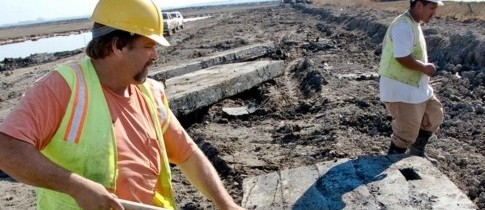
Image: Workers Construction on Road

Read More

Posted by on Aug 5, 2014

Stepping Out, Stepping Overboard

Stepping Out, Stepping Overboard


Peter sees Jesus coming toward him walking on the water in the wind and waves.
“Lord if it really is you – Call me”
In our troubled stormy lives we think we see Jesus
“If it is you – Call me”

When our job has crashed, when we have problems with our children, with our marriages
When we are dealing with illness or the death of a loved one
Our world is rocked – our boat is too small in this wind and waves
Jesus appears or does He?

We pick up the phone to ask for help — we start, we get overwhelmed
We are going to talk with our spouse or our children — we start, we get overwhelmed
We are going to tell the therapist about that terrible thing that happened to us — we start, we get overwhelmed
We start to deal with our diabetes, our obesity, our negativity — we start, we get overwhelmed

We are overwhelmed by the wind and waves of our own pain, our own fear, by the truth

Why do we doubt?
Jesus can walk on the wind and the waves
He heals the sick, raises the dead, drives out demons
Why do I think that He cannot help me? Cannot save me?

When the wind of my fear, the waves of my own pain, and truth are too much
He will reach out to save me,
Bring me back to the boat and
Calm the wind and the waves.

All we have to do is to step out, to step overboard.

A reflection on Matthew 14: 22-34

Read More

Posted by on Dec 17, 2013

The Week before Christmas – A Time for Stillness

Please join us in the joyful anticipation of Christmas during this time of stillness and waiting that is Advent. We remind ourselves that the celebration of Christmas begins on the Eve of the Nativity, the 24th. There are two weeks to celebrate this great feast of God with us. Leave the hustle and bustle and share the gift of peace with your loved ones.

The O Antiphons which are sung before the Magnificat at Vespers set the tone for each day of this special week.

December 17 – O Sapientia

“O Wisdom, O holy Word of God, you govern all creation with your strong yet tender care. Come and show your people the way to salvation.”


What wisdom is this folly?

That God should come to share our death?

What Word of God, the Fullest Godself Expression on High

That governs all, would come for us in such lowliness?

O Wisdom? O Foolishness of Divine Love,

You seek us out, O Wisdom from on high.

Read More

Posted by on Oct 24, 2013

Seeking God, Decision-Making and the Ignatian Examen

Seeking God, Decision-Making and the Ignatian Examen

three-candles-by Alice Birkin

Finding Peace and Freedom

We cannot find peace if we are arguing with God in whatever form we perceive the sacred. The Divine Reality loves us without reservation. We cannot find happiness and peace in any other place. Even non-believers will only find peace in the Reality that has created the universe and encloses all of it within Itself. God has given everything in the universe love and freedom. God’s love is total. It encompasses everything that promotes our growth and transformation. We have been created for union with this sacred reality, so we learn and experience during all our lives ways to be like God: to be knowing, understanding, wise, discerning, reverent, courageous and in awe of the transcendent. Everything in the universe has degrees of freedom. The nature of everything determines the degrees of freedom. I cannot flap wings and fly. I cannot breathe under water just as I am. I will always be a middle child. But, there are many ways in which I can determine my course in life, work with limitations or with strengths.

As I live my life I have many possibilities before me. I also have a certain amount of freedom. If I believe in the reality of God, I see myself in a relationship with God, a God who is close or distant. All religious and spiritual traditions have concepts of the relationship of human powers and divine powers. These relationships involve change, improvement, decision, freedom, human failure, consequences and divine intervention. The theological terms often used for these phenomena are: conscience or consciousness, grace, nature, discernment, acts, harm or sin and moral good, and judgment or karma.  If I am thinking about getting more money I have a number of reasons as to why I want more money, what I possibly want to do to get money, and what the pros and cons are with various options. I can look at the decision from many angles. I can line up my ideas and come up with what I think will work the best. I can talk to others or read various sources. I can also present this to God in prayer and say: “Please tell me what You see as best for me.”

This is not easy to do because most people feel that God does not think of my little side to things; God is only interested in the Bigger Picture and saints or martyrs. In fact, God is very interested in individuals. God as most Westerners conceive of God is a personal Reality who sees us fully and knows exactly what would make us happy. We are still not too sure about that because it sounds too mature for us. Attending to our health and saving money may sound difficult, so long term happiness planning may seem very hard. I am the first to say that buying something new sounds like fun. But, wanting to surrender to God as our source of wisdom and a guide is the only way to have peace.  We are also very rational in the West and often think God is so intangible or un-provable as to be neither reliable nor a reality with which we can have a two-way communication.

Time for Centering

Taking time each day to practice centering in God for the direction of our day and our lives is necessary. There are many ways to do this: journaling, walking a labyrinth, and having a spiritual counseling session are ways to think and pray through where I am in my life, where I feel drawn, and what God sees in me that I might benefit from.  Another way to have an experience of being counseled by God is the Ignatian Examen.

Very briefly, sit quietly and think of or imagine things you are truly grateful for. They can be big or small: Clean sheets, good food, your dog, ways you have been loved, accomplishments, a family member or friend, your house or job etc.  Tell God what you are grateful for. See, if God has given you things you are grateful for: a rescue in life, money you needed, safety, a trip you took.  Then think of the things in yourself or your life which you have chosen that have harmed you, undermined your well being, or side-tracked you.  These can also be big or small: being resentful, feeling superior, or not being willing to do something new that you need to do. Ask God to help you with these fears or hurts that have held you away from Him. Lastly, ask God how you can spend the next part of your day or life doing what is best.  You will get answers. You can surrender to what is best and see how much more peace-filled you are. I do this every day, sometimes more than once. I act on what I hear and I am much more at peace.

Image: Three Candles by Alice Birkin, public domain

Read More

Posted by on Oct 16, 2013

Seeking God, Decision-Making and the Ignatian Examen

Self-Donation is not Self-Mutilation: The Spiritual Practice of Attention to Others


good-friends by George Hodan - public domain

Self-donation and attention to others

Self-donation is the spiritual practice of attention to others. It does not refer to any sort of self-mutilation or injury but rather to the self-control and self-knowledge that allows one person to be attentive to another person.

Attention to others can be extremely difficult. Giving up time for others can feel stressful. There are two things that strike me about these two possibilities. In my own experience I am often in the presence of another person and cannot give him or her my full attention for even 5 minutes! Secondly, my stress is often due to my creating a stressful lifestyle. If I procrastinate with doing stressful but important tasks, then I am jumpy. I have clever avoidance behaviors when faced with things at work such as updating the database (which I dislike) or writing Thank You notes (which are absolutely necessary and can quickly become a huge mountain). I have to do an Examen (an important Ignatian spiritual practice for me) every day in order to commit to a schedule for the day. I decide what time I need to go to bed that night. I set up what I want or need to accomplish that day. I work my way back to where I am in the day. I decide if I will exercise. If I do not do this I get into really negative schedules. I have a background which makes me anxious, so I have to avoid avoiding!

“Avoid avoiding” and “focus” as spiritual practices?

What has this got to do with being attentive to others? When I allow myself to avoid things I do not like or to procrastinate, I am more anxious or depressed. When I feel that way I cannot be at peace. When I feel this way I do not focus on people. I am restless. If I keep referring myself to God or Jesus (in the Examen, for example) knowing that with God’s help I am keeping my commitment, I feel pleased with life and myself.  I get the things done in a day that I need to do. I do both uncomfortable and fun tasks. I get enough sleep. I do the Tai Chi, stretching or core strengthening I need that day. I eat the right things — even the Kale and Collard Greens I need for my liver and to keep my blood sugar down for my “prevent diabetes” regime. I read a few pages from each book I want to finish. I also have time now to go to an older friend’s apartment and give her a massage that she needs. I don’t feel deprived and we enjoy the time together. I hone my acupressure skills and she feels better.

A second thing I have learned is that I often do not really attend to others even when I have the time. I have a habit of letting my mind jump around, trying to think of something clever or even attention-getting to say. I also feel the need to fix another’s situation. But, the more mature part of me just wants to affirm others. I do not have to impress them. Maybe a natural sacrifice would be to listen and support others, not have an opinion? I think others often just want someone to really listen.

Discernment in everyday experiences

Authentic self-donation or self-giving does not have to harm me. I can discern if I would enjoy it. I also can tell if I am over-scheduled and creating anxiety for myself. I can ask God in prayer to show me what he dreams for me. He may want me to buy a greeting card for someone and send it off or maybe he prefers I just draw a squiggle on a piece of paper and say I love you and I am praying for you and mail that.  I feel called to give people quality attention when I am with them. For me that is a key spiritual practice.

It also can be a contemplative experience in the Ignatian sense of the term. I have discovered lately that when I am in some conversations, part of my mind can have a simultaneous conversation with God. I have said to God in abbreviated ways things such as: “Should I say ….. to her?” and I get an answer. I receive very brief images from God or feelings related to the person. Those words, images or feelings are easy to interpret and help me attend to the other and not to focus on me. I feel very loved by God when I am willing to be there for the other. It is about surrender to being loving. It is a gift to the other and a gift to me.

Read More

Posted by on Jul 31, 2013

Seeking God, Decision-Making and the Ignatian Examen

Becoming Radiant in the Presence of the Lord


Sun Shining Through Clouds

The readings of the Church recently have been focused on the experience of entering into the Presence of the Lord and spending time there. One way of describing the experience of spending time with God is to use the word prayer.* An ancient definition of prayer, attributed to St. Augustine, is this: “Prayer is lifting our minds and hearts to God.” On this feast of St. Ignatius Loyola, it seems fitting to spend a few moments reflecting on ways we enter into the presence of God and the results of doing so.

Jesus taught his followers to be very direct and straightforward in their prayers, asking for what they needed with confidence and persistence. They were (and we are) to ask for the coming of God’s kingdom and that God’s will be done both in heaven and on earth. Their prayer was also to include such seemingly mundane issues as requesting their daily bread and forgiveness for having hurt others,  failing to live in loving ways, as well as the much more serious concern that they be spared from the soul-shaking temptations that sometimes afflict even good and holy people at difficult points during their lives. Jesus himself spoke familiarly and intimately with God, calling him Abba — a word that means Father in the sense of a loving parent, a “Dad,” or even the “Daddy” of a small child. The result of the conversation would not always be the reception of exactly what was requested or preferred (remember the Agony in the Garden and Jesus’ prayer there), but it was always frank and based in trusting love. Those who learn to rely on God for the “little” things (daily bread and forgiveness) become more able to rely on God for the big things (courage to make the hard decisions and accept the consequences of following the Lord).

Among those whose relationship with God we have seen as examples are Abraham, who spoke with God directly, pleading for the salvation of Sodom and Gomorrah if as few as ten good men could be found within their walls. Many years later, Moses met God and entered into the cloud with God for forty days, returning to the people with the gift of the Law that would guide their lives in holiness. When Moses returned to the people, his face was so radiant it was frightening to the people. He covered his face when among them and only lifted the veil when he again entered into the presence of God. Jesus’ friend Martha, who had spent many hours in easy friendship with him, did not hesitate to speak frankly to him, complaining at one point that she had been left to do all the work of entertaining the large group of people who accompanied him on his visit. But Martha also is known for her declaration of faith in Jesus: “I believe that you are the Christ, the Son of God, he who is coming into the world.” These and many others model for us the importance of speaking directly with God and of doing so on a regular basis.

Ignatius called his followers to contemplation in action, recognizing that the fundamental basis for a fruitful discipleship is the time spent in the company of the Lord. Out of the experience of friendship with God comes the gift of seeing how God would respond to those we meet in our lives today and the courage to act accordingly.

Entering into the presence of the Lord is not for the faint of heart. The great mystery of Love is not tame, nor is it particularly predictable. Love is a powerful force that can sweep away obstacles but can also be as gentle as a mountain stream bubbling through a meadow and washing the feet of children playing by its side. Yet as we enter regularly into the Presence, we are changed subtly and profoundly. Peace, joy, patience, gentleness, kindness, persistence, confidence, compassion, and zeal for justice become characteristic of ones who have spent much time with the Lord. Like Moses, if to a somewhat lesser degree, they become radiant with the joy of that relationship. And when at last they return to their Father and we remember them with love, sometimes we portray that radiance with a golden aura or halo surrounding their heads.

*Philip St. Romain offers a good presentation of Christian prayer and contemplation. See also Fr. Ron Shirley’s reflections on prayer.

Public Domain image by Robert & Mihaela Vicol

Read More

Posted by on Feb 15, 2013

Seeking God, Decision-Making and the Ignatian Examen

Deserted Places and Deep Waters – Lent 2013 Begins

transportation-boat-on-water_w725_h485

The Gospel readings for the Saturday and Sunday immediately prior to the beginning of Lent 2013 speak deeply of two themes that can sustain us as believers during Lent and the transition of leadership in the Roman Catholic Church that will result from the resignation of Pope Benedict XVI. Theme one is the importance of taking time to rest and be with the Lord in prayer. Theme two is the call to go with the Lord into “deep water” to find an abundant catch.

In Saturday’s reading from the sixth chapter of Mark, Jesus tells his disciples, “Come away by yourselves to a deserted place and rest a while.” (Mk 6:30) They all get into a boat and head off across the water. The people see where they are going and follow along by land. By the time Jesus and the disciples arrive at the “deserted place” they find it full of people. Jesus takes pity on them and begins to teach and heal. It was a very short time that he and the disciples had to rest and recharge their energies, yet with God’s help it was enough.

Sunday’s Gospel reading (Lk 5:1-11) presents the story of Jesus’ call of Peter and his brother. Jesus came to the seashore. People were crowding closely about him, so he asked Peter to pull his boat out a bit from the shore and sat there to teach them. When he’d finished, he told Peter to “Put out into deep water and lower your nets for a catch.” Peter and his crew had been working all night and caught nothing. He informed Jesus of this fact, but agreed to do what had been requested. When they lowered the nets, the nets were filled with fish to the point of breaking. They had to call another boat to help bring in all the fish and get safely back to shore. When Peter asked Jesus to leave him because he was not worthy to be with such a powerful person, Jesus instead called Peter to follow him and become a “fisher of men.”

Time out to rest and pray

As a people, we have dealt with some difficult issues in recent years, in our Church and in our local communities. Taking time to rest and pray a bit seems a good place to start the next chapter of our story. Many of the world’s people have experienced more difficult economic times than normal. Far too many live lives of dire poverty despite working long hours. The poor, the elderly, the children, the ill, and so many others struggle simply to survive. Yet despite the great needs of the world around us, we are called to take time to find deserted places where we can be alone with the Lord. Only with the Lord can we hope to reach out consistently with compassion to serve those most in need of help. Only with the Lord can we hope to find wise solutions to the economic and environmental challenges we face. Only with the Lord can we strengthen our families in the many forms they take and support each other in our commitments of fidelity, mutual love, and support for a lifetime together. Only with the Lord can we choose life consistently from womb to tomb: safeguarding the lives of women, children, the elderly, the ill, the imprisoned, the immigrant, and all others who are most vulnerable.

Deep waters and transitions

And what of that “deep water?” Deep waters are places of danger. Storms develop quickly. Waves can overwhelm a small boat easily. Psychologists note that deep water in dreams stands for the depths of our unconscious mind — places where we deal with difficult issues and create a new synthesis and basis for our daily activities and beliefs. The expression, “He’s gotten himself into deep water,” is used to describe a situation in which there is some real risk of failure, regardless of how sincerely or with what good will the person embarked on a course of action.

Times of transition are always times of being in “deep water” in one way or another. Certainties of the past may no longer hold. Future patterns and realities cannot be described with any assurance. Old ways pass away. New ways are not yet here. We are in a liminal or threshold state: neither here nor there, waiting to see what will unfold and what new wisdom will be gained as we move into the next phase of our lives. The truly great news is that the Lord is here with us in our little boats out in deep water. Because the Lord is here with us, an abundant catch awaits our labors. As we trust his word and move ahead, the Lord calls each of us with Peter and his brothers, to  become fishers of men, following faithfully and moving beyond the life we know and with which we are comfortable into the unknown future of service in God’s Kingdom.

As we move forward towards Holy Week, the celebration of the Triduum, and Easter, may we remember to take time to be alone with the Lord and then move with him back into our worlds to care for God’s people with His compassion.

Let this be our prayer:

Come Holy Spirit. Rekindle the fire of love within each of us and our Church. Guide those who will elect the next Bishop of Rome to carry out the mission of St. Peter as leader of the community. Gift them with wisdom and understanding as they evaluate potential leaders, as well as the courage to trust that the Lord will always be with the Church as we move into the future with all its challenges and joys. Help us to be people of prayer and reflection, as well as people willing to move out of our comfort zones into the deep waters of faithfulness in discipleship, knowing that with the Lord’s help, regardless of who is chosen to be the next Holy Father, all will be well in the end.

Happy, Joyful, and Peaceful Lent!

 Public domain image: Transportation boat on water by John Cossick


Read More

Posted by on Dec 20, 2012

Las Posadas: Food, Fiesta and Community

Singing echoes through the softly lit streets of the towns, cities, and neighborhoods of Mexico as residents prepare for Christmas, through the para-liturgical tradition of Las Posadas. Processions of townspeople, led by a couple dressed as Mary and Joseph, wind their way through the streets, going from home to home asking for “posada” (shelter). Finally, the procession is welcomed into a home, and the people pray together as the “fiesta” commences.

Las Posadas is a Mexican Catholic Advent tradition that marks the beginning of the Christmas season. Taking place from the 16th-24th of December every year, Las Posadas is a nine day community celebration in preparation for the birthday of Christ; a novena that is a mix of religious devotion and relaxation. Ultimately, Las Posadas is about accepting Christ, the Bread of Life, into one’s home and heart. It functions as an extension of the Eucharist, catalyzed by the fiesta culture. Food, both physical and spiritual, is an important element of the fiesta, because it is nearly impossible to have a Christian festival without food.

Las Posadas is a fiesta; a religious fiesta in the sense that it provides sacred time and space to show a sacred event.  The fiestas of Las Posadas reenact Mary and Joseph’s journey to Bethlehem, a journey that is considered sacred because it directly led to the birth of Christ in Bethlehem. Also, the fiestas gather the community in a ritual that parallels the structure of a Mass, emphasizing two more sacred elements of Las Posadas: the community and the Eucharist.

Evangelization in a New World

Las Posadas began in 1578 in Mexico in the village of San Agustín Acolman. Augustinian missionaries received permission from Pope Sixtus V to celebrate special Masses in order to make Christianity more attractive and  to evangelize the Aztecs. Because of the syncretism that occurred when the missionaries introduced Catholicism to indigenous Americans, Las Posadas resembles the Aztec celebration of the birth of the sun and war god, Huitzilopochitli. The missionaries wanted a way to teach the gospel and extend the Eucharist to a large, illiterate population and needed a way that the Aztecs would accept, so they took advantage of the timing of the birth of Huitzilopochitli to introduce the birthday of their own important, sacred figure, Jesus Christ. In las misas del Aguinaldo (special Masses for the Advent season), they included nativity scenes and lights, sang villancicos (Christmas carols), and broke a piñata. The celebration of Las Posadas grew from these original Masses. Mary and Joseph’s journey to Bethlehem, as told in Luke 2:1-7, is featured in Las Posadas, a celebration that includes elements similar to those of the celebration for Huitzilopochitli. (All night and during the day after Huitzilopochitli’s birthday, people customarily had parties in many houses throughout the town, at which guests delighted in foods and statues of their gods made from blue corn dough.)

Days of Prayer and Celebration

Las Posadas begins on the evening of December 16th and ends on Christmas Eve. These nine days dedicated to prayer are called a “Novena.” Originally, a novena referred to the nine days of prayer before the Feast of Pentecost, but in Las Posadas it also represents the nine months of Mary’s pregnancy. Each night, a young woman and a young man – usually teenagers – dress as Mary and Joseph and go to three different, predetermined houses, asking for posada (shelter). They are accompanied by a candle-lit procession that includes musicians, children dressed as angels and shepherds, and anyone else who would like to join. At the first two houses, the procession of peregrinos (pilgrims) is turned away by groups of people inside the houses, who play the part of the innkeepers who denied Mary and Joseph shelter. The interactions between the peregrinos and the “innkeepers” happen in the form of call-and-response songs. Through several verses, the peregrinos ask for shelter and are denied entry by the innkeepers. The last verse is sung only when the procession is welcomed into the last house.

At the last house, the peregrinos are welcomed and the whole community gathers for prayers and a party. Once all the peregrinos have entered, everyone prays the Act of Contrition, asking for forgiveness for their sins. Often, they will also pray the rosary, and/or hold a short prayer service. This part of the fiesta mirrors the Liturgy of the Word (the first part of a Mass). Soon the prayerful ritual gives way to food, games, and dancing. Nevertheless, ritual that promotes spiritual communion is still present in the fiestas, and parallels the Liturgy of the Eucharist (the second part of a Mass) — sharing a meal and celebrating the forgiveness of sin in the Eucharist. The fiestas grow in excitement with each passing night, but at each are ritual elements, including food and drink, candles, Nativity scenes, and piñatas filled with fruits, nuts, and candies.

Piñatas, Sin and Forgiveness

Traditional piñatas are shaped like stars and have seven points, each point representing a cardinal sin. People swing at the piñata with their eyes covered by blindfolds to signify their true faith in God and His mercy. Thus, when they break the piñata and are showered with sweet candies, the people act out the experience of conquering sin and receiving forgiveness and blessing from God. This is also a dramatization of how everyone’s sins are forgiven during the Eucharist, when Catholics remember how Christ died so that the sins of the world would be forgiven and confess their own sin through the Confiteor. Although perhaps not broken every night, the piñata nevertheless demonstrates the way food is used to teach religion, extend the message of the Eucharist into the home, and catalyze the fiesta spirit.

Sharing Food and Creating Communitas

The fiesta spirit continues through each of the nine days, never seeming to lag. On Christmas Eve, the final stop for the peregrinos is the church, where they celebrate La Misa de Gallo, a Midnight Mass, in which they share in the Body and Blood of Christ – a shorter but still powerful religious fiesta in which a sacred meal is re-enacted. After the Mass, the longest fiesta of Las Posadas commences. Along with a piñata and the small dessert items served at the fiestas on each of the previous nights, people prepare and share their favorite foods at the reception after Mass. Typical foods include tamales, pozole (pork soup), sopa de albóndigas (meat-ball soup), pollo con mole (chicken in mole sauce), bacalao (codfish stew), natillas (a type of thick custard), and buñelos (deep-fried pancakes sprinkled with sugar). Champurado (spiced hot chocolate), atole (a corn based drink), and ponche (punch) are also served. Although these are some of the more traditional foods consumed during the Advent and Christmas seasons, there are no foods that are specifically reserved for Las Posadas. Therefore, it does not matter what food is served, since the sharing of food itself symbolizes and strengthens the community.

Las Posadas makes the Gospel come alive in a cultural experience of spiritual communion in which the people welcome Christ into their homes and lives. This spiritual communion results from the transformation of Jesus’ body, “…the living bread that came down from heaven” (John 6:51), in the Eucharist into spiritual food. The ritual of Las Posadas reflects the mystery of the Eucharist because the people of the community act as living bread through their acts of hospitality and generosity in caring for others. Additionally, the fact that Las Posadas is a religious fiesta, and thus directly tied to Catholic Hispanic fiesta culture, draws the community together and builds the spirit of communitas. Communitas is a deep spirit of community – a spiritual communion where all the members are united in the same consciousness, usually through a ritual. Las Posadas is a way in which Mexican Catholics realize communitas through the Eucharist and fiesta. Thus, the fiesta catalyzes, yet also results from, the ritual of Las Posadas and is thoroughly intertwined with food, both spiritual and physical; physical food is the visceral symbol that gathers the community and provides the base for rituals, in which it is transformed into spiritual food. Therefore, it nourishes the body and the spirit.

Although there are traditions around the world in many different religions that fulfill the same functions, Las Posadas is one of the best examples of the way Mexican Catholics have taken the Eucharist and made it part of their cultural experience through the fiesta. Today, the fiesta spirit is spreading beyond Mexicans and Latinos. In some cases non-Latinos are attracted to the religious and spiritual aspects of Las Posadas. For others, Latinos and non-Latinos, a more secularized version of Las Posadas, in which the prayerful aspects are downplayed or ignored and the focus is on family and community, is more comfortable and attractive. Nevertheless, although those who celebrate a secular version of Las Posadas think that they are leaving Catholicism behind, they cannot escape the fact that even in any secular form, Las Posadas is still a religious fiesta celebrating and strengthening the spiritual connection between community members. Despite dropping all of the prayers, they are living the communitas of the Eucharist in their celebration, since even the secularized ritual parallels the structure of a Mass. Thus, without realizing it, many people are attracted to the religious and spiritual aspect of Las Posadas. What they experience is a community dimension of the Eucharist as seen in the transformation of profane (non-sacred) food into sacred nourishment for the spirit and community. Through that shared experience of celebrating a religious fiesta, people of all cultures strengthen their bond with their communities, uniting community, religion, and food.

Read More

Posted by on Aug 11, 2012

A Quote from St. Clare for her Feast Day

St. Clare of Assisi was a friend of Francis of Assisi and founder of the Poor Clares. Her advice to her sisters and other followers, as well as for us today is this:

Place your mind before the mirror of eternity! Place your soul in the brilliance of glory! Place your heart in the figure of the divine substance! And transform your whole being into the image of the Godhead Itself through contemplation!

Read More

Posted by on May 23, 2012

The Feast of Pentecost, The Holy Spirit and The Seven Gifts: Why it Matters

Today more than ever we dig deep within to center ourselves around calm and inner peace.  We don’t do this to tranquilize ourselves. We do this to be in the best possible position to live fully.  For believers, this includes seeking a real growing relationship with God.  There is a dance going on between our decisions and actions and God’s involvement in our lives, a dance which we call grace.  We have freedom and gifts.  God has insight, power and ingenuity.  If we consent to His involvement in our lives, He can move us into positive places we cannot even imagine.

The person of the Trinity whom we identify as a creative and loving agent of action and change is the Holy Spirit.  This person is believed to be the action of God in the world — both visible and invisible.  One of the names for the Holy Spirit is the Paraclete.  This is an ancient Greek word meaning “one who consoles, uplifts, comforts.”  In the New Testament it also is translated as “helper” and “advocate.”  The Holy Spirit or Paraclete is the divine reality whom we celebrate on Pentecost.  “Pentecost” comes from the word “pente” meaning fifty which refers to 50 days after Easter. At the Last Supper Jesus said he was going to send us the Paraclete.  He let us know that this third person of the Trinity, who expresses the love between the Father and the Son, would be the spirit of Christ operative in the created world — that we would not be alone.

On Pentecost we focus on God as Paraclete in the world of space and time, of the particulars of life.  The Paraclete comforts and uplifts us by working in us and in our lives to give us greater holiness and power for good in the world.  We speak of the work the Paraclete does in us as the Seven Gifts of the Holy Spirit.  We are going to take a look at all seven in a series of posts.  In the Bible there are a number of lists of  spiritual gifts of the Holy Spirit. They can be found in Isaiah 11, Romans, 1 Corinthians, Ephesians, and 1 Peter. These are all indeed gifts of the Paraclete, but many of the “gifts” in these texts are roles and leadership skills that are gifted by God.  The Seven Gifts on which we will focus are basic qualities that all human persons need no matter what they do in life.  We are given these seven gifts at baptism but the Sacrament of Confirmation gives us to grace to live these fully out in the world of decision and action.

Knowledge is the first gift we will consider.  In the everyday world we use knowledge constantly.  It matters that I know how to get my car fixed or that it is important to check the oil periodically.  A dentist needs to know how to work on my teeth.  Knowledge as a gift of the Paraclete who wants to help us grow fully first includes the knowledge of God.  As we mature we will know God more and will also develop in our images, concepts, and feelings about God.  We will come to know ourselves better and better as well.  To the extent that we are open we will come to more and more realistic and energizing knowledge of God and ourselves.  If we fear God we may learn more positive things about God — maybe from talking to others.  If we are depressed we may find out why.  Much of this knowledge is from God.  We think we are learning on our own.  But, in fact, it is the Paraclete who is offering us knowledge all the time.  We have resistances in us and God is working all the time to help us see the truth, often a positive truth.  God presents ideas to us from different angles constantly and we can consent to be open to these prompts.  My eye may fall on a magazine in the doctor’s office and suddenly I can feel myself slightly more inclined to actually do exercise every day.  The ideas in the article, the knowledge, may have made it easier to see how I can move into a new life skill.

Knowledge of others is also a great gift.  I may not know why a neighbor or relative is so hard for me to get along with and then find out that he is in pain all the time.  I may then find out that the medication he is on has terrible side effects from a commercial on television.  Or, I may find out that an adult school near me has a watercolor class that is very reasonable in price.  I may need that for my emotional life.  The Paraclete is gifting us with knowledge internally and from external sources all the time.  We only need to consent to not try to control what the this Consoler sends our way. God sees us totally and knows what we need.  We can practice a daily Examen or a time of reflection on how things are going and ask to see what we need to see.  In that way we can receive the gift of knowledge and become more fully who we were born to be.

Read More

Posted by on May 7, 2012

Seeking God, Decision-Making and the Ignatian Examen

Quote of the Day: Thomas à Kempis


Thomas von Kempen

These words of Thomas à Kempis are a good reminder to us today, as they were to his contemporaries of the 15th Century and have been to thousands of  Christians in the intervening centuries. As we decide what we will do each day and why, the better course is to choose based on God’s criteria.

“God regards the greatness of the love that prompts a man, rather than the greatness of his achievement.”


Read More

Posted by on Apr 20, 2012

Seeking God, Decision-Making and the Ignatian Examen

How Can God Heal Abuse and Trauma?

A door can still open ...

As we reflect on the Resurrection of Christ we cannot help but wonder how it changed anything.  Christians believe that the triumph of life over death and light over darkness was more than just an isolated event in history.  The Resurrection is understood as a cosmic event in which the entire space-time reality was shot through with God’s presence. The world remained a mix of “wheat and weeds,” but after the Resurrection the indwelling Spirit of God works within that reality to bring about unprecedented healing, growth and holiness.

Abuse and trauma are never acceptable.  I experienced abuse for many years — verbal, physical and sexual.  It hurts and bends the person.  The damage is deep and reaches into all  the dimensions of one’s life.  Psycho-therapeutic experiences are normally necessary for someone to heal from the pain, anger and fear that come from abuse.  Telling the stories of abuse are a key part of healing. Practicing to work with life in new ways in order to avoid negative patterns is also helpful.  Using affirmations to counter self-hatred is important.  Setting boundaries and being firm about values helps the person to feel less vulnerable.

But there is a point when talking it out and new ways of living and communicating fall short of healing.  There is a well of pain that often does not go away.  Underneath all the hard work there is still a raw person who does not feel safe.  It is very hard to trust anyone.

I learned to not-trust any adults.  I also learned not to trust myself because I could not overcome my fear in order to fight back. I learned to criticize everything I thought, said and did.  I betrayed myself over and over out of fear.  What to do?  I knew there was a God out there but was not sure He would be interested in me.  This is a normal reaction from someone who has been regarded as unimportant and worthy of abuse.

If the traumatized person can pray at all, a door can open to safety that starts as the tiniest crack.  Within the mix of inner voices and emotions there is one voice which reaches into the sticky pain and feels or sounds safe.  The traumatized person is uniquely blessed to be able to discern the difference between his own inner voices and the voice of God.  This is because the abused person called out to herself over and over during the horrible times and discovered that at the time she had no power over the abuser.  The personal thoughts and voice of the abused one were complicit with the abuser. The abused person also knows the voice of the culture and the Devil because both of them bring inner chaos, depression and self-abuse.

If such a person can pray, even pray to be able to pray, there will begin the tiniest feeling of longing for love.  This is a miracle, because traumatized people usually do not want to feel anything.  Seeking love and finding authentic love from others and God can heal wounds.   It is a long process, but with the support of a therapist and a spiritual director the person traumatized by abuse can take a chance on attachment.  Abused persons on Ignatian retreats or practicing Ignatian contemplation have experienced amazing experiences of God loving them.  The voice of God within them is telling them that they are his beloved, that they are special.  People who have been abused often do not want to hear that voice because it will open up a floodgate of sadness.  But, after the crying, the voice does not disappear.  They are not talking to themselves.

Contemplative prayer experiences are real.  When Jesus said, “The kingdom of God is within you,” he meant it.  Taking a chance on God doing something with the pain is worthwhile.  There are forms of injury only he can heal.

 Image by Paolo Neo, public domain

Read More

Posted by on Mar 18, 2012

Asceticism and Mysticism: The Two are Linked

The point of all efforts to change and grow is happiness. Happiness  involves becoming more and more conscious of who we are, what we want and need, and how to get these.   A lot of life is spent exploring all of this. We enjoy ourselves and suffer in the journey to try things out, learn new skills, problem solve, experiment.  We also react to phenomena,and defend and harm ourselves and others at times.  In the midst of this we learn to distinguish between gains and satisfactions that are short term vs. long term and things that may feel good and are helpful and things that feel good and are toxic.  I may love ice cream but if I eat a  lot of it I may trade away my joy because it can make me sick.

Identifying how I feel when I do things is important.  If I feel peaceful when I make a decision, the decision is probably going to be beneficial.  If I feel uncomfortable when I make a decision but decide to do the activity or acquire the commodity anyway, the end will probably be harmful for me.  If I do something out of fear it probably will ultimately harm me – i.e. marrying someone so I will not be alone is  not a good reason to marry someone.   Taking a job one loaths because the money is needed is something one should only do as a last resort.  It would be wise to ransack one’s soul, talk to every friend, pray and brainstorm about any weird angle on jobs before just settling for a terrible job.  It is often the case that our lives are forcing us to look at possibilities that up to this point we have had a closed mind about.  These interior markers are very reliable if one learns the art of discernment and is also given the grace of discernment.  The famous historian of religion, Joseph Campbell, was asked by Bill Moyers if he had a sense that he was guided when he made decisions.  Campbell replied that he felt the helping hands of many beings when he had the courage to do what he knew was right.

So, making a commitment to live an honest, non-addictive life – a life in which I can be my true self – requires the skills to discern the right path for me.  That kind of life is surrendered to the truth.  It is a life that is not grasping, fearful or egotistical.  It can be a life that is loving, just, courageous.  This is not an easy thing.  From the Catholic point of view, it is impossible unless one is empowered by a love that keeps one from despair.  The more one seeks love and justice, the more one also sees insensitivity and selfishness. We also become acutely aware of our own entanglement in fear, loneliness, pain, anger and disappointment.  We want to feel safe but we want to be creative and compassionate.  How to do that?

If people are connected to a reality that is larger than themselves – a community or a transcendent being – that person can go beyond his/her fears and trust.  The ability to do this has to be rooted in experience.  Faith/trust in life cannot be totally blind.  It has to be based on an encounter with goodness/love.  In the Catholic context people have experiences all the time of peace, the presence of the Sacred, being blessed and guided.  No one can prove the existence of God.  Experts of all stripes can reduce religious belief to a projection of one’s neurons or psychology.  The scientific method can be paraded out and empiricism presented as the only acceptable measure of whether the spiritual is real.  In the end all of those super respectable criteria are a chimera.  We don’t have to accept the idea that our reality fits itself into an instrument of measurement that we have created if the reality we want to define is greater than the instrument – i.e. if God is infinite yet personal, that Sacred Reality is well beyond the physics of our situation as we know it.

In the normal committed spiritual life people educate themselves and have important insights and growth.  But, within the context of meditation and a reflected upon life people also have periodic religious experiences.  These experiences sustain and guide them.  They are not addictive but energizing, healing and challenging.  These experiences are not just for the Saints.  And, becoming closer to God is not a “crutch.”  It is a break through to the way reality is.  Asceticism and mysticism are brother and sister.  I wouldn’t have it any other way.

Read More

Posted by on Feb 22, 2012

Seeking God, Decision-Making and the Ignatian Examen

Almsgiving, Prayer and Fasting – Lenten Practices in Our Lives Today

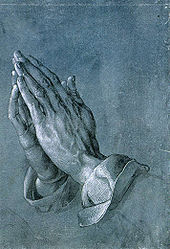
Praying Hands - Albrecht Durer

Ash Wednesday, the first day of Lent, brings with it a reminder from Jesus of the importance of 1) caring for each other, especially those in need, 2) staying in close communication with God, and 3) strengthening our physical, mental, and spiritual lives through actions that help us develop more control over the urges that don’t lead us to God. The traditional names for such activities are almsgiving, prayer, and fasting.

Catholics who grew up before and during the years of Vatican II often think first of fasting or giving up something as the activity of choice for Lent. This practice was generally phrased in terms of “What are you giving up for Lent?” There were (and still are) days in which fasting from normal amounts of food was required of adults between the ages of 21 and 59. However, there were other days in the year which were also set aside for fasting, so that was not unique to Lent. What was unique to Lent was giving up something: candy, television, movies, cigarettes, drinking, etc.

Ash Wednesday’s reading from Matthew 6:1-18 is a reminder that all three practices are important and even interdependent. They are also to be done quietly, without great fanfare, and without even congratulating ourselves on how well we’re managing to do them! So, how can we — citizens of a busy, busy world — find time to pray, identify and organize resources to share with others, and make fasting somehow different than dieting?

A few thoughts come to mind.

1) Almsgiving: The sharing of worldly treasures has been a mark of the Christian community since its earliest years. Christians recognized from at least the time of St. John’s Gospel, and before, that Jesus is present in the community.  To the extent that anyone is suffering from lack of basic necessities, those who do not lack them have failed to meet the needs of Jesus. This is a hard teaching sometimes, especially when times are tough and there is little left over to share. Remember: we are called to share our time, talents, and treasures. If what you have is time, then give of that. If what you have is talent (maybe for telephoning or organizing a bake sale), offer that talent to help provide for those who need food or shelter. If you have enough money (treasure) to support yourself and your family, then share from what you have; maybe eating more simply for a few meals or waiting an extra month before buying that new pair of jeans, and giving the savings to feed those who don’t have enough.

The important thing is to be open to sharing what you have and creatively listening for the opportunities to do so.

2) Prayer: Time for prayer is not easy to find —  if you think you have to set aside an hour a day to pray. On the other hand, if you remember to intersperse prayer into your entire day, then it becomes easier. A quick thank you for the morning as you open your eyes, a blessing over breakfast, a smiled expression of gratitude for a pretty sight on the way to work or the joy of a child exploring her world, a few moments of reflection on how the day is going at lunchtime, a quick prayer for the right words to say in conversation with a friend or co-worker, a blessing at the end of the day, a few moments of reading scripture while supervising a child’s bathing — all are ways to pray in a busy life. God is present in all of these moments and in the unpleasant, difficult moments as well. But God generally doesn’t burst into our lives and shout, “Do This Now!” God is much more subtle, inviting us to notice the presence of the divine in the everyday creation in which we live, and always leaving us free to respond to that presence as we choose.

3) Fasting: Limiting the amount of food eaten, or not eating at all, is the generally understood meaning of fasting. Going hungry on occasion is a good thing to do. It helps develop a greater appreciation of the gift of food. It also helps strengthen the will, so when other things must be declined, the will is strong enough to do so. However, fasting from food is only one way to fast. The practice of “giving up something” was a form of fasting. When we turned off the television on weekdays during Lent during my childhood, we broke its spell and no longer felt we had to watch any programs. We had time to do things together as a family that we didn’t do when the television was on: board games, music, conversation, outdoor play, cooking together, etc.

Fasting today may mean limiting our consumption of: consumer goods, recreational activities, social media including Facebook, television, text messages, tweets, online games, lunches or dinners out, or (insert your own time-consuming activity).  It creates a space for other things – for God to be noticed and heard.

Perhaps, out of fasting in this broader sense will come opportunities for prayer and resources for almsgiving as well. Then the circle of activities that quietly draw us closer to God will have become complete.

Praying Hands by Albrecht Durer – Public domain image

Read More